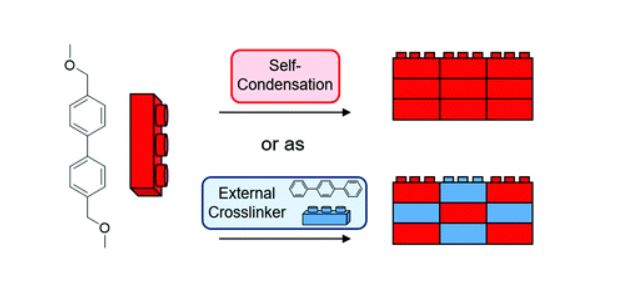
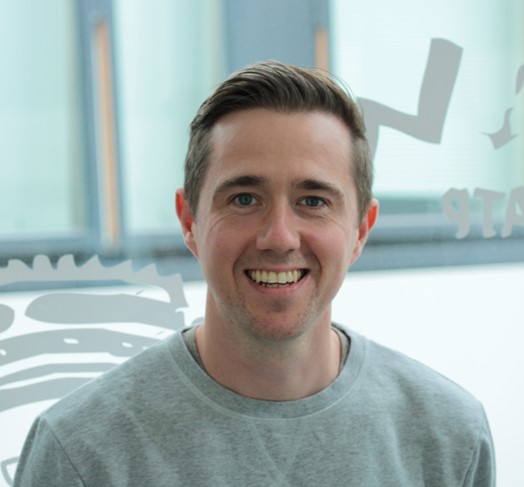
Rob Woodward recently published his first independent research article with ChemComm. We wanted to celebrate this exciting milestone by finding out more about Rob and his research. Check out his #ChemComm1st article: ‘The design of hypercrosslinked polymers from benzyl ether self-condensing compounds and external crosslinkers’
We asked Rob a few questions about his experience in the lab and publishing with ChemComm. Read more below.
What are the main areas of research in your lab and what motivated you to take this direction?
Our primary research focus is the design and production of new porous organic polymers and carbons for a variety of separation and storage applications. These include solid-state extraction to remove pollutants from water, fractionation of complex mixtures, gas separation and storage, energy storage, and even catalysis. In order to approach such a wide variety of applications, we utilise a class of densely crosslinked porous polymers, known as hypercrosslinked polymers. The key feature of these networks is their simple and robust synthesis, allowing a vast array of aromatic compounds to be used as monomeric building blocks.
Our motivation is to try to use hypercrosslinked polymers to establish a platform for targeted adsorbent design. This would enable the engineering of networks customised to tackle specific problems. For example, if certain chemical functionalities or textural properties are known to be beneficial for a given application, we can envision a sort of ‘plug-and-play’ approach, in which various building blocks are used to produce adsorbents with the desired properties. Hypercrosslinked polymers are generally low-cost and have excellent chemical and thermal stabilities, issues that plague many classes of porous materials. Coupled with tailored design, these features may make hypercrosslinked polymers suitable for a broad range of applications, while remaining technically competitive with leading adsorbents.
Can you set this article in a wider context?
The article represents a new approach to the formation of hypercrosslinked polymers, in which conventional aliphatic crosslinkers are replaced with these benzyl ether aromatic compounds. The synthetic process remains the same, but the textural properties of the resulting polymer can be vastly improved, simply by changing a reagent. These compounds also showed unexpected benefits for hypercrosslinking reactions, allowing better control over the porous properties of networks and for reductions in the amount of catalyst required during synthesis, something currently considered a significant setback for hypercrosslinked polymers.
In a wider context, this work opens new routes to hypercrosslinked polymers where conventional approaches may fail or give poor results, presenting synthetic chemists more options with respect to designing new and improved adsorbents.
What do you hope your lab can achieve in the coming year?
Although I have been building my independent research profile while at Imperial College, I was just very recently appointed to an Assistant Professor position in The University of Vienna’s Faculty of Chemistry. This is really the beginning of my independent academic career with regards to establishing my own lab and research group. So, in all honesty, this year will look like a success to me if we can get the laboratory up and running, begin to build a strong research foundation, and establish a network in Vienna to try to begin some local collaborative work. We do have some exciting work due to come out soon which we hope to build from in the short term, but I won’t say too much about that just yet…
Describe your journey to becoming an independent researcher.
I was awarded both my MChem (2008) and PhD (2013) from The University of Liverpool, which is also my hometown. My PhD focused on the synthesis of responsive polymeric surfactants and colloidal systems. I then took up a short post-doctoral position in Prof. Andy Cooper’s group, where I first worked with porous polymeric materials. In 2014, I moved to London for a position in Imperial College London’s Department of Chemical Engineering in the Polymer and Composite Engineering group. There I started to explore other types of porous polymers, as well as investigating their application to several problems, such as energy storage, biomass treatment, and gas separation and storage. I was lucky to have great supervisors who were supportive of me establishing my own independent work. In 2017, I was awarded the Sir William Wakeham prize by Imperial for my research, which gave me the belief that I could pursue a career in academia. Finally, I was offered the role in Vienna just a few weeks ago! So, I am very excited to get that underway and to continue to explore my chosen research avenues.
What is the best piece of advice you have ever been given?
Tough question! Well, my dad always tells me that sometimes you must be a bit cheeky to get what you want – but I’m not sure how well that would go down with a review panel! I have had many great mentors in my academic life too, all of whom have given me advice that I will take forward. However, my PhD supervisor, Dr. Jonathan Weaver, not only taught me to face my demons head on but also assured me that I was able to. He taught me not to take life too seriously and that fostering happiness in all facets of your life was the key to success. Jon passed away at only 32 years old, before we could finish the PhD together, so his advice and guidance has become very special to me.
Why did you choose to publish in ChemComm?
I definitely envisioned the article as a Communication, a short proof of concept for this new approach to making hypercrosslinked polymers. I chose ChemComm as I know it has a great reputation and a broad readership, making it an ideal platform for me to report my work to researchers around the globe. Furthermore, this is the third article I have published in ChemComm (the first as an independent researcher) and the entire process has always been very smooth and transparent, so I was very happy to return.
Rob obtained his PhD from The University of Liverpool (UK) in 2013, before completing a short post-doctoral position in Prof. Andy Cooper’s group. In 2014 he moved to Imperial College London’s Department of Chemical Engineering, where he joined the Polymer and Composite Engineering group and began to build his independent research profile in the design and application of porous polymers. This year Rob was appointed as an Assistant Professor at the University of Vienna’s Institute of Materials Chemistry, marking the beginning of his independent academic career. Find Rob on Twitter: @robbiewoody
Read Rob’s #ChemComm1st article and others in our new collection ChemComm Milestones – First Independent Articles. Follow us on Twitter for the latest #ChemCommMilestones news.
Comments Off on ChemComm Milestones – Rob Woodward











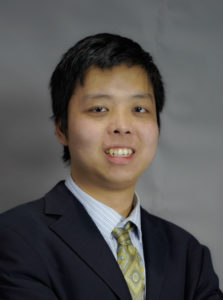 Tianyu Liu obtained his Ph.D. (2017) in Chemistry from the University of California, Santa Cruz, in the United States. He is passionate about the communication of scientific endeavors to both the general public and other scientists with diverse research expertise to introduce cutting-edge research to broad audiences. He is a blog writer for Chem. Comm. and Chem. Sci. More information about him can be found at