Visualising DNA sequences

A new, fast way to analyse DNA has been developed by European scientists that could be used to sequence the genomes of viruses and in the future help tackle genetic disorders such as schizophrenia and congenital heart defects. 

Current DNA sequencing methods are able to sequence short regions of the genome (302 to 15002 bases in length). Regions that are either duplicated or deleted relative to a reference genome are an important cause of structural variation in the human genome with links to a variety of genetic disorders. Using current sequencing methods, studying these repeats is time consuming and labour intensive. 

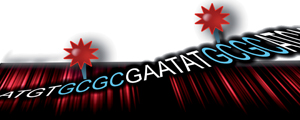
Now, Robert Neely and colleagues, at Catholic University Leuven, Belgium, have used a DNA methyltransferase enzyme to label the 5′-GCGC-3′ DNA sequences with a fluorescent marker. Immobilising and stretching the DNA on a surface then produces a unique and reproducible pattern when combined with the fluorescent markers. The result is a ‘fluorocode’ – a simple description of the DNA sequence, which can be read and analyzed like a barcode. 
DNA

Sequences of DNA are tagged with a fluorescent marker

DNA barcodes using fluorescent tagging can be read quickly as labelled samples pass a detector, but Neely’s fluorocode gives significantly enhanced resolution and uses a much smaller number of DNA molecules. ‘The method from unlabelled DNA to fluorocode can be achieved in less than 8 hours for a DNA molecule that is around 50000 bases in length,’ says Neely. Current single molecule mapping methods have a timeframe of around one week for analysing individual genomes. 

Kalim Mir, an expert in DNA sequencing and genomics at the Wellcome Trust Centre for Human Genetics, University of Oxford, comments, ‘the advantage the system has over conventional optical mapping is that it can provide ultra-high density mapping of genomic DNA and could easily be extended to much longer fragments from larger genomes, from bacteria to humans. The most significant challenge the authors face is to scale the technique up to the human genome.’ 

The group now plan to scale the fluorocode up from viral genomes to bacterial and on to eukaryotic genomes with the immediate aim of producing multi-coloured fluorocodes with even more detail. 

Carl Saxton

Find out more in the Chemical Science Edge article.

Digg This
Reddit This
Stumble Now!
Share on Facebook
Bookmark this on Delicious
Share on LinkedIn
Bookmark this on Technorati
Post on Twitter
Google Buzz (aka. Google Reader)

Versatile solvent-free method for functionalising carbon nanotubes

Carbon nanotubes can now be functionalised on a large scale more cleanly and efficiently than before, improving their commercial viability for engineering, catalysis and bionanotechnology.

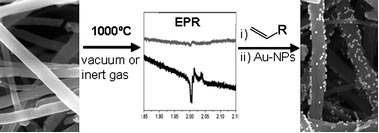
Milo Shaffer, at Imperial College London, and colleagues, have exploited existing surface oxide defects present in most carbon nanotubes to attach a variety of organic molecules to their surfaces. Surface functionalisation can improve a nanotube’s compatibility with particular environments, such as electrolytes, or can provide a direct function, such as catalytic activity. Conventional functionalisation methods are time-consuming and inconvenient. They also generate a lot of liquid waste, commonly toxic or corrosive. Although some solvent-free methods are known, they are poorly reproducible and often degrade the graphite framework and affect the nanotube’s intrinsic properties.

Carbon nanotubes before and after functionalisation

Shaffer heated the nanotubes to 1000 ºC under an inert atmosphere, which caused the defect groups to desorb, leaving reactive surface radicals. When he added functional monomers, such as vinyl compounds, to the activated nanotubes, the monomers polymerised, forming oligomers grafted to the nanotube surface.

This thermochemical method can be applied entirely in the gas phase, which simplifies work-up, improves scalability and makes it compatible with existing gas phase processes for commercially producing nanotubes.

Read the full Chemical Science Edge Article to find out more.

Digg This
Reddit This
Stumble Now!
Share on Facebook
Bookmark this on Delicious
Share on LinkedIn
Bookmark this on Technorati
Post on Twitter
Google Buzz (aka. Google Reader)

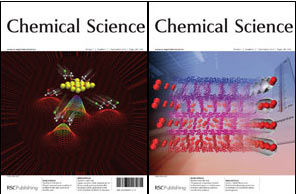
Chemical Science Issue 3 now online!

Read issue 3 for free online and catch up with the latest exceptional research from leading scientists including Michel Orrit, Linda Hsieh-Wilson, Kendall Houk, Kyoko Nozaki and David Leigh.

The outside front cover supplied by Cynthia Friend represents her work on the oxygen-assisted cross-coupling of methanol with alkyl alcohols on metallic gold. On the inside front cover, Susumu Kitagawa and colleagues illustrate their discovery of a temperature-responsive porous compound that can selectively separate molecules.

Issue 3 outside and inside covers

Don’t miss a thing! Sign up for the Chemical Science e-alert and newsletter to stay up-to-date with the latest news.
Digg This
Reddit This
Stumble Now!
Share on Facebook
Bookmark this on Delicious
Share on LinkedIn
Bookmark this on Technorati
Post on Twitter
Google Buzz (aka. Google Reader)

New insights into dendron gene delivery

Gene therapy has the potential to revolutionise personal medicine but delivering the genes into cells is a major challenge. Dendrons offer a potential solution as their many ligands bind strongly to DNA but now scientists are reporting that smaller dendrons with fewer ligands can actually be better at gene delivery than larger ones. 

Previous studies show that larger dendrons bind DNA more strongly than smaller ones because they have a higher positive charge and form more contacts with the DNA. But as large dendrons are more difficult to synthesise, David Smith, at the University of York, UK, and colleagues have been investigating other ways to improve dendron–DNA interactions.

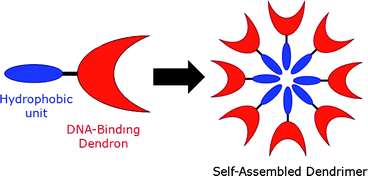
self-assembling dendrons for DNA binding and gene delivery

The team designed spermine-functionalised dendrons capable of self-assembling then used multiscale modelling to understand the impact of the self-assembly process on their ability to bind and deliver DNA. Surprisingly, the smaller dendrons were better at binding DNA because they self-assembled more effectively to form an aggregate with a higher charge density. Also, two hydrophobic cholesterol units (rather than one) at the dendron focal point resulted in enhanced gene delivery in vitro. These dendrons assemble into a different shape and pack DNA more effectively, says Smith.

To find out more, read the Edge article.

Digg This
Reddit This
Stumble Now!
Share on Facebook
Bookmark this on Delicious
Share on LinkedIn
Bookmark this on Technorati
Post on Twitter
Google Buzz (aka. Google Reader)

2011 ISACS conference details just announced

Following the great success of the first 3 ISACS meetings held July 2010, ISACS 4-6 have now been confirmed. Find out why 97% of delegates said they’d attend another ISACS meeting, by joining one of next year’s events.

Jason Chin discusses reprogramming the code of life (ISACS1)

Jason Chin discusses reprogramming the code of life (ISACS1)

Almost 500 delegates attended the first three ISACS meetings (International Symposia on Advancing the Chemical Sciences), held in San Francisco, Budapest, and Hong Kong, this July. The events, held in support of the launch of the new RSC journal Chemical Science, received critical acclaim from the delegates: survey results from over 100 attendees, suggest an incredible 97% would seek to attend future ISACS meetings! Why not find out why these events were so well received, by planning to attend one of the 2011 meetings?

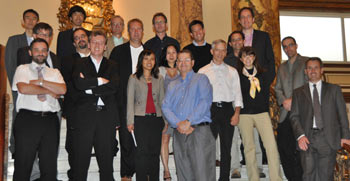
ISACS2 Speakers with RSC staff

ISACS2 Speakers with RSC staff

The next three ISACS meetings are now confirmed as:

ISACS4 – Challenges in Renewable Energy
5-8 July 2011, Boston, USA

ISACS5 – Challenges in Chemical Biology
26-29 July 2011, Manchester, UK

ISACS6 – Challenges in Organic Materials & Supramolecular Chemistry
2-5 September 2011, Beijing, China

Further information will be available in due course, but hold these dates in your diary to be part of the next suite of three ISACS meetings.

ISACS1 Speakers

ISACS1 Speakers

Read more about the success of the 2010 ISACS events. And please do not hesitate to contact me if you have any questions about these events.

Robert Eagling
Managing Editor, Chemical Science

Digg This
Reddit This
Stumble Now!
Share on Facebook
Bookmark this on Delicious
Share on LinkedIn
Bookmark this on Technorati
Post on Twitter
Google Buzz (aka. Google Reader)

Non-covalent chiral catalysis in water

Scientists report the first example of Brønsted acid asymmetric catalysis in aqueous solution.

Water is an attractive reaction medium as it is cheap, clean, non-toxic and non-flammable. Also, its high heat capacity makes it ideally suited to exothermic reactions on an industrial scale. There are a number of reports of metal catalysed asymmetric reactions in the presence of water, as well as organocatalytic reactions involving covalent bonding, but until now a non-covalent, asymmetric organocatalytic reaction has remained elusive.

Magnus Rueping and Thomas Theissmann at Aachen University, Germany, performed enantioselective hydrogenation of quinolines using a chiral phosphoric acid catalyst in water. Phosphoric acid forms a hydrogen bond with the quinoline, and directs the dihydropridine hydride donor to a particular face.

This hydrogen-bonding catalysis occurs despite the fact that water is an excellent hydrogen donor, due to the phenomenon of ‘hydrophobic hydration’. Interaction between water molecules at the hydrophobic-hydrophilic interface causes the contact surface between water and substrate molecules to be minimised, reducing the possibility for water to participate in hydrogen-bonding, explains Rueping. The selectivity of the catalyst was further improved by adding bulky organic side chains that create a hydrophobic pocket for the substrate.

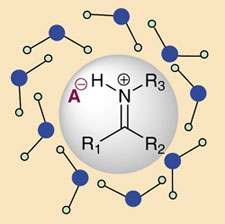
hydrophobic hydration

A hydrophobic site is created allowing catalysis to take place

Rueping says, ‘Non covalent asymmetric activation in aqueous solution has been considered impossible due to fast proton transfer in protic media. Our solution based on the principle of hydrophobic interaction allowed us to develop a Brønsted acid catalysed reaction in aqueous solution that provides the products in good yields and with excellent enantioselectivities.’

Peter Dalko from the Paris Descartes University in France says, ‘the discovery of the efficient reaction conditions is only part of the cake, since the rational behind the observed selectivity is also worth reflection. Hydrophobic interactions are well known in enzymology and are evoked to explain stereoselectivity in many enzymatic transformations. This concept is now emerging in chemistry as a major paradigm.’

Rueping is confident that it could be carried out on a larger scale. ‘Typically we use one equivalent of the dihydropyridine, but for large scale processes catalytic amounts of hydride donor would be used. Given that recycling of dihydroypyridines in water is already possible, the new Brønsted acid catalysed process in aqueous solution paves the way for large scale application.’

Jacob Bush

Read the full Chemical Science Edge article

Digg This
Reddit This
Stumble Now!
Share on Facebook
Bookmark this on Delicious
Share on LinkedIn
Bookmark this on Technorati
Post on Twitter
Google Buzz (aka. Google Reader)

Clean energy from cobalt catalysts

Only a single metal centre is needed to catalyse the reduction of oxygen to produce water, opening the door to more efficient fuel cells in the future, say researchers in the US.

Converting solar energy to chemical energy using solar fuel cells and releasing stored energy from hydrogen fuel cells involves two key multielectron redox reactions – oxidising water to evolve oxygen and the reverse, reducing oxygen to water. It is the second reaction that limits the application of hydrogen fuel cells at the moment, as it generally requires expensive metal catalysts, such as platinum.

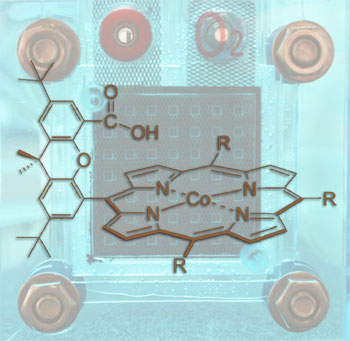
Cobalt porphyrin catalyst

Cobalt porphyrin catalyst could improve fuel cell technology

Nature achieves similar results in many different catalytic systems using metalloenzymes that contain bi- or multimetallic reaction sites, which has provided inspiration for development of bimetallic porphyrin catalysts. Now Daniel Nocera and colleagues at Massachusetts Institute of Technology have shown for the first time that single centre cobalt porphyrins anchored on carbon nanotubes can efficiently catalyse the reduction of oxygen, as long as they also contain a proton transfer group.

The positioning of the proton transfer group – in this case a carboxylic acid – the correct distance away from the cobalt is essential to stops the catalyst from partially reducing the oxygen, which is often a key problem in maintaining the efficiency of these reactions, explains Nocera.

Nocera’s porphyrins are much more efficient than existing cobalt catalysts and are made easily in two steps, so could invigorate the design of future fuel cells using cobalt over its more costly metal cousins.

Minhua Shao, an expert in fuel cell technologies at UTC Power in the US, believes that the results are ‘important to guide the design and development of non-precious metal electrocatalysts for oxygen reduction reaction in fuel cells’.

This is something Nocera is keen to develop, saying that he is now ‘focusing on improving the catalysts by lowering the amount of energy needed for the reaction’.

Jon Watson
 
Digg This
Reddit This
Stumble Now!
Share on Facebook
Bookmark this on Delicious
Share on LinkedIn
Bookmark this on Technorati
Post on Twitter
Google Buzz (aka. Google Reader)

Chemical Science poster prize awarded at GRC Organic Reactions & Processes

Congratulations to Tyler Davis from Vanderbilt University, USA, who won the Chemical Science poster prize at the Gordon Research Conference on Organic Reactions and Processes held on 18-23 July at Bryant University, Rhode Island, USA.

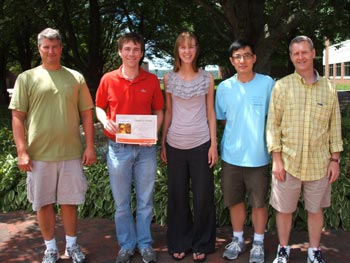
Rodney Parsons, Tyler Davis, Joanne Thomson, Richard Hsung and Todd Nelson

From left to right: Rodney Parsons (vice chair), Tyler Davis (poster prize winner), Joanne Thomson (deputy editor, Chemical Science), Richard Hsung (chair) and Todd Nelson (vice chair)

Tyler was invited to give a short oral presentation on his work entitled ‘Chiral proton catalysis: Guidelines for the development of more reactive bifunctional catalysts, and the first enantioselective synthesis of chiral cis-4,5-disubstituted imidazolines’.

The conference marked its 57th consecutive year in existence, celebrating the diversity in organic chemistry. Topics included natural product total synthesis, method development, catalytic transformations and reaction mechanisms, with the speakers and audience reflecting the broad impact organic chemistry has had both in academia and industry.

Many thanks to the conference chair, Richard Hsung (University of Wisconsin), and vice chairs, Rodney Parsons (Bristol-Myers Squibb) and Todd Nelson (Merck & Co), for organising such a superb conference and helping to judge the posters.

Digg This
Reddit This
Stumble Now!
Share on Facebook
Bookmark this on Delicious
Share on LinkedIn
Bookmark this on Technorati
Post on Twitter
Google Buzz (aka. Google Reader)

Bert Meijer wins Akzonobel Science Award

Many congratulations to Professor Bert Meijer, from Eindhoven University of Technology, who has been chosen as the winner of the AkzoNobel Science Award for 2010, for his outstanding contributions to advancing polymer and organic chemistry.


The AkzoNobel Science Awards are presented annually in recognition of outstanding scientific contributions by individuals in the fields of chemistry and materials science.

An independent panel of judges bestowed Meijer with this honour for his numerous achievements, including patented technology that led to the development of the first nano- container (also known as the dendritic box), and the synthesis and development of supramolecular polymers. Meijer was the first scientist to translate the idea of a supramolecular polymer into a viable product with polymer-like properties and resulted in a worldwide revolution in this branch of chemistry.

Followers of the RSC’s new flagship journal, Chemical Science, will also know that Meijer was the first person to publish work in the new journal. A rare accolade coincidentally shared with Meijer’s PhD supervisor Hans Wynberg, who authored the first ChemComm article more than 45 years ago! Why not take a look at the article, which is freely available to all.

Meijer is also a valued member of the ChemComm Editorial Advisory Board, and more recently he has been appointed to the Chemical Science International Editorial Advisory Board.

The ChemComm and Chemical Science team would like to take this opportunity to congratulate Bert on this fantastic achievement.

Have you got an exciting, high impact piece of work you would like to submit to Chemical Science?

Why not submit to Chemical Science today! 

Digg This
Reddit This
Stumble Now!
Share on Facebook
Bookmark this on Delicious
Share on LinkedIn
Bookmark this on Technorati
Post on Twitter
Google Buzz (aka. Google Reader)

Final installment for ISACS 3

The 3rd and final International Conference on Advancing the Chemical Sciences (ISACS) got off to a blistering start in Hong Kong on Tuesday (20th), covering ‘Challenges in Inorganic and Materials Chemistry’.


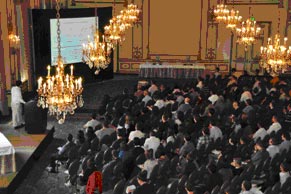
ISACS 3 hosted in Hong Kong

Following the opening remarks given by the CEO of the RSC, Dr Richard Pike, distinguished Professor of Energy, Daniel Nocera (MIT), introduced the first session. Before introducing the speakers, Professor Nocera praised the new RSC journal, Chemical Science, and it’s flexible format commenting that this style had also been recently adopted by another leading general chemistry journal. Throughout the conference many of the speakers presented results published in Chemical Science.

After the Chair’s opening remarks, Professor Graetzel was introduced and presented on the latest developments in solar energy conversion systems. The energy theme was continued with the second talk, with Professor Jean-Marie Tarascon looking at how chemistry is driving the development of new electrode materials for lithium ion batteries. 


During the ISACS 3 talks

The quality of the science continued to impress, with presentations on main group chemistry (Power), single molecule magnets (Long), Carbene chemistry (Hillhouse) and multinuclear sandwich chemistry (Murahashi). Day one ended with a switch to bioinorganic chemistry, with Professor Chris Chang (UC Berkeley) wowing the audience with the latest cutting edge developments in the field of molecular imaging.

Day two continued where day one left off. Chemical Science Associate Editor, Professor Jeffrey Long, introduced two pioneers from the field of Metal-Organic Frameworks (MOFs), Professors Kitagawa and Yaghi. Professor Kitagawa spoke on coordination polymers with integrated functional pores whilst Professor Yaghi presented on ‘sequences’ and ‘codes’ in MOF chemistry. In the latter talk, and in line with the theme of the conference, Professor Yaghi outlined 5 key challenges from the field of MOF chemistry. The morning session closed with a truly impressive array of beautiful large structures from Professor Manfred Scheer (the role of polyphosphorus units in transition metal chemistry) and catalysis with butterflies from Professor Hans-Jorg Grutzmacher. 


ISACS 3 hosts welcoming the conference delegates to Hong Kong

As the audience broke for lunch the feeling was one of excitement for the remaining talks still to come from world leading inorganic researchers (Cummins, Che, Yam, Fujita, Yang, Nocera and Xu).

For any further details about the ISACS meetings or Chemical Science please visit our website.

Also watch this space for ISACS 4-6, due to be held in 2011, details will be announced shortly.

Digg This
Reddit This
Stumble Now!
Share on Facebook
Bookmark this on Delicious
Share on LinkedIn
Bookmark this on Technorati
Post on Twitter
Google Buzz (aka. Google Reader)