
Meet our author… Barbara Zajc

Barbara Zajc is an organic chemist working at The City College and The City University of New York. Her research interests cover, among other things, the regioselective fluorination of bioactive molecules, the synthesis and study of fluorinated carcinogen analogues, polycyclic aromatic hydrocarbons and modified nucleosides.

Zajc’s recent communication, published in ChemComm, utilises ‘Click’ chemistry and Julia-
Kocienski olefination to synthesise vinyl and fluorovinyl triazoles: Facile synthesis of 4-vinyl- and 4-fluorovinyl-1,2,3-triazoles via bifunctional “click-olefination” reagents

Below, Barbara takes some time away from her research to talk to us…

What initially inspired you to become a scientist?

Anything related with nature and life has always interested me, and chemistry is one of the basic sciences for understanding how things work.  When I was an undergraduate at the University of Ljubljana (Slovenia), I became involved with research and I enjoyed it.  So when the opportunity arose to join a research group and pursue a Ph.D. , this became a natural choice.

What was your motivation behind the work described in your ChemComm article?

One focus of our research is the development of methods for the regiospecific introduction of fluorine into organic molecules. We are exploring the synthesis and reactivity of specific fluorinated building blocks, leading to diverse fluorinated molecules via a modular assembly approach.  We are also interested in the role fluorine has on the reactivity of various reagents, compared to a hydrogen atom.  We have previously developed a series of novel Julia-Kocienski reagents for the synthesis of various functionalised vinyl fluorides.  In this particular work we were interested in developing “multifunctionalisable” Julia-Kocienski reagents that would allow quick and facile introduction of different substituents at N– and vinyl moieties, during assembly of the vinyl or fluorovinyl triazole scaffold.

Why did you choose ChemComm to publish your work?

For many years now, ChemComm has remained a prestigious journal, with broad readership and high-impact.  I am impressed with the Editorial department’s speed of review, the publication process, and the “error-free” reproduction of our submitted material.

Where do you see your research heading next?

We are planning on using this particular method we have developed for the synthesis of new classes of vinyl and fluorovinyl triazoles of potential biological importance.

What do enjoy doing in your spare time?

Hiking in nature, watching wildlife, occasionally visiting an art gallery, going to the opera or a classical music concert, reading a good novel and skiing when I find the time.

If you could not be a scientist, but could be anything else, what would you be?

I was always fascinated with nature and in particular with the animal world.  If I was not a chemist, I would have loved to be an animal behaviour observer.

Other organic chemistry articles recently published in our sister journal Chemical Science that might interest you include:-

Catalytic asymmetric allylic alkylation employing heteroatom nucleophiles: a powerful method for C–X bond formation
Barry M. Trost, Ting Zhang and Joshua D. Sieber
Chem. Sci., 2010, 1, 427-440
DOI: 10.1039/C0SC00234H, Perspective

Continuous flow multi-step organic synthesis
Damien Webb and Timothy F. Jamison
Chem. Sci., 2010, 1, 675-680
DOI: 10.1039/C0SC00381F, Minireview

Digg This
Reddit This
Stumble Now!
Share on Facebook
Bookmark this on Delicious
Share on LinkedIn
Bookmark this on Technorati
Post on Twitter
Google Buzz (aka. Google Reader)

Breathe out for personalised medicine

A method to analyse drug levels in the body could allow people with epilepsy to avoid weeks of blood tests, claim scientists from Switzerland.

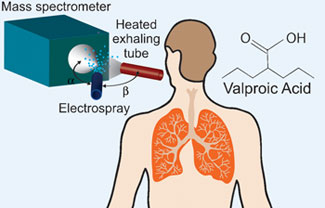
Valproic acid is an anticonvulsant drug used in the treatment of epilepsy; however, in the body, the acid binds to proteins and the concentration also can be influenced by over-the-counter medicines. The variations in the concentration mean that the amount of pharmacologically relevant valproic acid needs to be carefully monitored for the first few weeks and the dosage adjusted to compensate. The concentration is normally measured using blood samples from patients, and it can take a long time for the results to come back.

Now, Renato Zenobi at the Swiss Federal Institute of Technology in Zurich and co-workers have developed a method to measure valproic acid metabolite levels in breath using electrospray mass-spectrometry.

 
Using a breath test, scientists can measure levels of the anticonvulsant drug valproic acid in the body to determine the correct dosage for individual patients

See Chemistry World for the full news story 

Link to journal article
Real-time, in vivo monitoring and pharmacokinetics of valproic acid via a novel biomarker in exhaled breath
Gerardo Gamez, Liang Zhu, Andreas Disko, Huanwen Chen, Vladimir Azov, Konstantin Chingin, Günter Krämer and Renato Zenobi
Chem. Commun., 2011, DOI: 10.1039/c1cc10343a

Digg This
Reddit This
Stumble Now!
Share on Facebook
Bookmark this on Delicious
Share on LinkedIn
Bookmark this on Technorati
Post on Twitter
Google Buzz (aka. Google Reader)

Novel methodologies for synthesising pyroglutamates

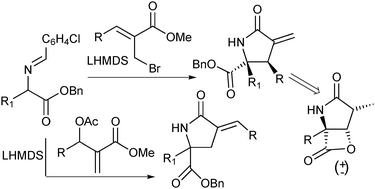
Several pyroglutamate-based natural products have been found to exhibit potent anti-cancer and anti-microbial properties. Although their syntheses have been a focus of research for many groups, their is still room for improvement in the development of highly tunable methodologies for the diverse functionalisation of the pyroglutamate ring.

Venkatram R. Mereddy and co-workers have  developed a novel and exceptionally short methodology for the synthesis of such functionalised pyroglutamates via alkylation of amino acid-derived iminoesters with allyl bromides or allyl acetates, easily obtained by Bayliss-Hilman reaction.

To learn more download the ChemComm communication, available for free until March 28th

Digg This
Reddit This
Stumble Now!
Share on Facebook
Bookmark this on Delicious
Share on LinkedIn
Bookmark this on Technorati
Post on Twitter
Google Buzz (aka. Google Reader)

A new class of molecular propellers

Scientist based in Italy have recently demonstrated a new class of molecular propellers based upon polyoxometalates (POMs).

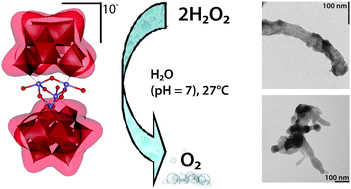
POMs consist of a cluster of transition metal oxides that are water soluble and are used for a wide range of applications. In particular, Andrea Sartorel and Marcella Bonchio, from the Univerity of Padova, are interested in their use as photosynthetic oxygen-evolving catalysts. The team studied a series of POMs with different metal centres and their catalytic performance in the disproportionation of hydrogen peroxide (H2O2) to water and oxygen.

They found that of all the POMS studied, Ru4(SiW10)2 performed the best in terms of oxygen evolution. This production of oxygen could then be used to create movement of the POM;  in effect using H2O2as fuel to create oxygen that then propels the POM material in aqueous solution. A video of this can be seen here. This represents a step towards the use of light-driven molecular machines based on POMs.

If you are interested in finding out more, then why not download Sartorel and Bonchio’s ChemComm article for free today? Also, don’t forget to leave a comment below!

Digg This
Reddit This
Stumble Now!
Share on Facebook
Bookmark this on Delicious
Share on LinkedIn
Bookmark this on Technorati
Post on Twitter
Google Buzz (aka. Google Reader)

Intramolecular cycloaddition leads to the pentacyclic core of cortistatins

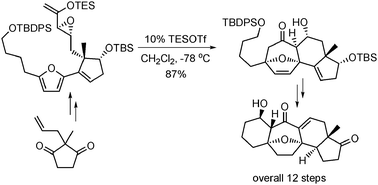
Synthesising intriguing bioactive natural products in the most expedient and atom-efficient manner remains a highly active and competitive field of research. Cortistatins A and J, first isolated from the marine sponge Corticium simplex in 2006, have been identified as effective anti-angiogenics, which studies have found could suppress cancer recurrence when given in conjunction with traditional cancer drugs.

Lok Lok Liu and Pauline Chiu at the University of Hong Kong have reported a concise, high yielding, asymmetric synthesis of the pentacyclic framework of the cortistatins, in 12 steps from commercially available starting materials. Their synthesis employs a highly diastereoselective intramolecular [4+3] cycloaddition of epoxy enolsilanes as the key step and brings them close to their ultimate goal.

To find out more, download the ChemComm communication for free up until March 28th

To start a discussion, leave your comments below and for a related blog post see the Totally Synthetic blog pages.

Digg This
Reddit This
Stumble Now!
Share on Facebook
Bookmark this on Delicious
Share on LinkedIn
Bookmark this on Technorati
Post on Twitter
Google Buzz (aka. Google Reader)

Meet our author… Greg Qiao

Greg Qiao is a polymer scientist and engineer at the University of Melbourne in Australia. His research interests cover various polymerisation techniques, including controlled free radical polymerisations, in a bid to synthesise novel polymeric architectures, biodegradable and functional polymers.  

Qiao’s recent communication, published in ChemComm, touches upon his interest in using polymers as coatings for the automotive industry or as potential drug delivery vehicles: ‘Star Polymers Composed Entirely of Amino Acid Building Blocks: A Route towards Stereospecific, Biodegradable and Hierarchically Functionalized Stars‘  

Below, Greg takes some time away from his research to talk to us… 

What initially inspired you to become a scientist?
When I was a child, I always dreamed of becoming a scientist. I chose science and engineering as my major when starting university and fell in love with both chemistry and chemical engineering.  I’ve always believed that science and technology can change and improve life for the human society.

Greg Qiao

What was your motivation behind the work described in your ChemComm article?
My research group has spent over 10 years in the field of controlled synthesis and characterisation of core crosslinked star (CCS) polymers. We initially used controlled free radical polymerisation methods, including nitroxide–mediated polymerisation (NMP) and atom transfer radical polymerisation (ATRP) methods, to synthesise CCS polymers and study their properties including molecular morphology and solution rheology. We also studied CCS analogues for their suitability as additive to automotive paint.
 
Five years ago, we started to synthesise CCS polymers with alternative polymerisation methods including ring opening polymerisation (ROP) for selectively degradable CCS. More recently, we have been working on new ways to form CCS which is fully biodegradable and biocompatible.  In this work, we developed a new process by using peptide synthesis as a controlled chain growth method to produce CCS. This process not only uses entirely naturally occurred amino-acid precursors, but also provides more convenient approaches to functionalise CCS at its core, along the arms and at the end of the arms. We are hoping this work can lay foundation for the new peptide-based drug delivery vehicles.


Why did you choose ChemComm to publish your work?
Because of the fast and broad readership, as well as its high impact.
 
Where do you see your research heading next?
We wish to develop this unique peptide-based CCS as a drug carrier for delivering drugs to targeted cells. My other research direction is using the controlled polymerisation method to create an efficient and thickness-controlled surface coating technology. 
 
What do enjoy doing in your spare time?
Reading a good article that has a completely fresh, new idea.
 
If you could not be a scientist, but could be anything else, what would you be?
Politician or publican servant – something to serve the public.

Other polymer articles recently published  in ChemComm that might also interest you include:-

Emerging synthetic approaches for protein–polymer conjugations
Rebecca M. Broyer, Gregory N. Grover and Heather D. Maynard
Chem. Commun., 2011, 47, 2212-2226
DOI: 10.1039/C0CC04062B, Feature Article

 Functional, star polymeric molecular carriers, built from biodegradable microgel/nanogel cores
Jay A. Syrett, David M. Haddleton, Michael R. Whittaker, Thomas P. Davis and Cyrille Boyer
Chem. Commun., 2011, 47, 1449-1451
DOI: 10.1039/C0CC04532B, Communication

A synthetic approach to a fullerene-rich dendron and its linear polymer via ring-opening metathesis polymerization
Jonggi Kim, Myoung Hee Yun, Junghoon Lee, Jin Young Kim, Fred Wudl and Changduk Yang
Chem. Commun., 2011, Advance Article
DOI: 10.1039/C0CC05470D, Communication

Cationic and charge-neutral calcium tetrahydroborate complexes and their use in the controlled ring-opening polymerisation of rac-lactide
Michael G. Cushion and Philip Mountford
Chem. Commun., 2011, 47, 2276-2278
DOI: 10.1039/C0CC04348F, Communication
 

And also from our sister journal Chemical Science, a Perspective and an Edge Article for you to read:-

 Triggered structural and property changes in polymeric nanomaterials
Jason M. Spruell and Craig J. Hawker
Chem. Sci., 2011, 2, 18-26
 

Cylindrical micelles from the living crystallization-driven self-assembly of poly(lactide)-containing block copolymers
Nikos Petzetakis, Andrew P. Dove and Rachel K. O’Reilly
Chem. Sci., 2011, Advance Article


Digg This
Reddit This
Stumble Now!
Share on Facebook
Bookmark this on Delicious
Share on LinkedIn
Bookmark this on Technorati
Post on Twitter
Google Buzz (aka. Google Reader)

Confining supramolecular soft materials

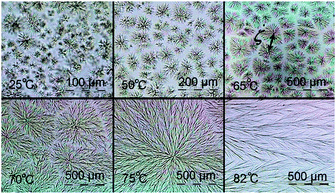
Confining soft materials in a small space has a dramatic effect on the formation of fibre networks and their resulting properties. 


Optical micrographs of the gels studied

Xiang Yang Liu and collaborators showed that the formation of fibre networks under volume confinement is independent of temperature and solute concentration. They need to do more studies to understand the mechanism but say that their work should help scientists design new soft functional materials on a micro-/nanometre scale.

Fancy delving some more into the results reported? Then why not download the communication* today and leave some comments on the blog below. Perhaps you have a question for the authors, or you could tell us what you found interesting about these results.

 *This communication will be free to access until the 25th March 2011.

Digg This
Reddit This
Stumble Now!
Share on Facebook
Bookmark this on Delicious
Share on LinkedIn
Bookmark this on Technorati
Post on Twitter
Google Buzz (aka. Google Reader)

Potential route to a universal biosensing platform

A fully functional surface-tethered protein switch has been reported by US scientists. It is the first step towards a universal biosensor platform, they claim. 

Peter Searson, at John Hopkins University, Baltimore, and colleagues attached a protein switch with a maltose binding protein input domain and a beta-lactamase output domain to a gold surface. When maltose bound to the input domain, it switched on the beta-lactamase’s activity, which the team measured using the yellow-to-red colour change that took place as it hydrolysed the beta-lactam ring in nitrocefin.  Different input domains could be coupled to the same output domain, offering a potential route to a universal biosensing platform.

Read Surface-tethered protein switches, recently published as an Advance article in ChemComm.

Digg This
Reddit This
Stumble Now!
Share on Facebook
Bookmark this on Delicious
Share on LinkedIn
Bookmark this on Technorati
Post on Twitter
Google Buzz (aka. Google Reader)

Approaching deadline for Emerging Investigator Lectureship nominations

Recognising and rewarding the very best emerging talent within the chemical sciences – submit your nominations by 28th February 2011

Time is running out to nominate your colleagues for the ChemComm Emerging Investigator Lectureship 2011. Send your nominee’s details to the ChemComm Editorial Office by 28th February 2011.

And remember, to be eligible for the ChemComm Emerging Investigator Lectureship, the candidate should be within the first eight years of completing their PhD. Find out more….

Digg This
Reddit This
Stumble Now!
Share on Facebook
Bookmark this on Delicious
Share on LinkedIn
Bookmark this on Technorati
Post on Twitter
Google Buzz (aka. Google Reader)

Nanoflowers for protein immobilisation and separation

It is the quest of many a materials scientist to form core-shell nanostructures by self-assembly, in order to generate materials with unique structures and functions. In this area, hierarchical nanoarchitectures assembled from nanoscale units have recently stimulated tremendous interest because these superstructures might avoid aggregation and maintain high specific surface areas. In addition, magnetic materials have received considerable interest,  due to their ability to selectively capture target objects from complex mixtures.

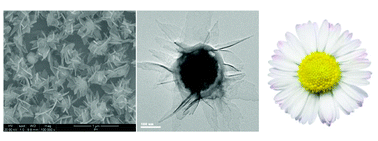
Ken Cham-Fai Leung and colleagues – based in Hong Kong and Hefei, China – have reported a facile synthesis of monodispersed microparticles composed of superparamagnetic Fe3O4 cores, a SiO2 shell and a hierarchical g-AlOOH periphery with Au nanoparticles, obtaining nanoflower structures resembling daisies. As proof of principle for their use as selective protein capturing agents, these nanoflowers were applied as absorbents to successfully remove bovine serum albumin from bovine blood.

To find out more download the ChemComm communication, which is free to access until 15th March 2011.

Start a discussion about this research by leaving comments below.

Digg This
Reddit This
Stumble Now!
Share on Facebook
Bookmark this on Delicious
Share on LinkedIn
Bookmark this on Technorati
Post on Twitter
Google Buzz (aka. Google Reader)