Archive for the ‘Subject Areas’ Category

Meet our author… Greg Qiao

Greg Qiao is a polymer scientist and engineer at the University of Melbourne in Australia. His research interests cover various polymerisation techniques, including controlled free radical polymerisations, in a bid to synthesise novel polymeric architectures, biodegradable and functional polymers.  

Qiao’s recent communication, published in ChemComm, touches upon his interest in using polymers as coatings for the automotive industry or as potential drug delivery vehicles: ‘Star Polymers Composed Entirely of Amino Acid Building Blocks: A Route towards Stereospecific, Biodegradable and Hierarchically Functionalized Stars 

Below, Greg takes some time away from his research to talk to us… 

What initially inspired you to become a scientist?
When I was a child, I always dreamed of becoming a scientist. I chose science and engineering as my major when starting university and fell in love with both chemistry and chemical engineering.  I’ve always believed that science and technology can change and improve life for the human society.

Greg Qiao

What was your motivation behind the work described in your ChemComm article?
My research group has spent over 10 years in the field of controlled synthesis and characterisation of core crosslinked star (CCS) polymers. We initially used controlled free radical polymerisation methods, including nitroxide–mediated polymerisation (NMP) and atom transfer radical polymerisation (ATRP) methods, to synthesise CCS polymers and study their properties including molecular morphology and solution rheology. We also studied CCS analogues for their suitability as additive to automotive paint.
 
Five years ago, we started to synthesise CCS polymers with alternative polymerisation methods including ring opening polymerisation (ROP) for selectively degradable CCS. More recently, we have been working on new ways to form CCS which is fully biodegradable and biocompatible.  In this work, we developed a new process by using peptide synthesis as a controlled chain growth method to produce CCS. This process not only uses entirely naturally occurred amino-acid precursors, but also provides more convenient approaches to functionalise CCS at its core, along the arms and at the end of the arms. We are hoping this work can lay foundation for the new peptide-based drug delivery vehicles.


Why did you choose ChemComm to publish your work?
Because of the fast and broad readership, as well as its high impact.
 
Where do you see your research heading next?
We wish to develop this unique peptide-based CCS as a drug carrier for delivering drugs to targeted cells. My other research direction is using the controlled polymerisation method to create an efficient and thickness-controlled surface coating technology. 
 
What do enjoy doing in your spare time?
Reading a good article that has a completely fresh, new idea.
 
If you could not be a scientist, but could be anything else, what would you be?
Politician or publican servant – something to serve the public.

Other polymer articles recently published  in ChemComm that might also interest you include:-

Emerging synthetic approaches for protein–polymer conjugations
Rebecca M. Broyer, Gregory N. Grover and Heather D. Maynard
Chem. Commun., 2011, 47, 2212-2226
DOI: 10.1039/C0CC04062B, Feature Article

 Functional, star polymeric molecular carriers, built from biodegradable microgel/nanogel cores
Jay A. Syrett, David M. Haddleton, Michael R. Whittaker, Thomas P. Davis and Cyrille Boyer
Chem. Commun., 2011, 47, 1449-1451
DOI: 10.1039/C0CC04532B, Communication

A synthetic approach to a fullerene-rich dendron and its linear polymer via ring-opening metathesis polymerization
Jonggi Kim, Myoung Hee Yun, Junghoon Lee, Jin Young Kim, Fred Wudl and Changduk Yang
Chem. Commun., 2011, Advance Article
DOI: 10.1039/C0CC05470D, Communication

Cationic and charge-neutral calcium tetrahydroborate complexes and their use in the controlled ring-opening polymerisation of rac-lactide
Michael G. Cushion and Philip Mountford
Chem. Commun., 2011, 47, 2276-2278
DOI: 10.1039/C0CC04348F, Communication
 

And also from our sister journal Chemical Science, a Perspective and an Edge Article for you to read:-

 Triggered structural and property changes in polymeric nanomaterials
Jason M. Spruell and Craig J. Hawker
Chem. Sci., 2011, 2, 18-26
 

Cylindrical micelles from the living crystallization-driven self-assembly of poly(lactide)-containing block copolymers
Nikos Petzetakis, Andrew P. Dove and Rachel K. O’Reilly
Chem. Sci., 2011, Advance Article


Digg This
Reddit This
Stumble Now!
Share on Facebook
Bookmark this on Delicious
Share on LinkedIn
Bookmark this on Technorati
Post on Twitter
Google Buzz (aka. Google Reader)

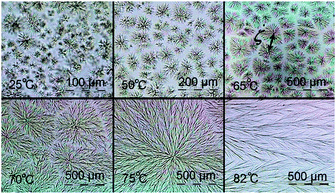
Confining supramolecular soft materials

Confining soft materials in a small space has a dramatic effect on the formation of fibre networks and their resulting properties. 


Optical micrographs of the gels studied

Xiang Yang Liu and collaborators showed that the formation of fibre networks under volume confinement is independent of temperature and solute concentration. They need to do more studies to understand the mechanism but say that their work should help scientists design new soft functional materials on a micro-/nanometre scale.

Fancy delving some more into the results reported? Then why not download the communication* today and leave some comments on the blog below. Perhaps you have a question for the authors, or you could tell us what you found interesting about these results.

 *This communication will be free to access until the 25th March 2011.

Digg This
Reddit This
Stumble Now!
Share on Facebook
Bookmark this on Delicious
Share on LinkedIn
Bookmark this on Technorati
Post on Twitter
Google Buzz (aka. Google Reader)

Potential route to a universal biosensing platform

A fully functional surface-tethered protein switch has been reported by US scientists. It is the first step towards a universal biosensor platform, they claim. 

Peter Searson, at John Hopkins University, Baltimore, and colleagues attached a protein switch with a maltose binding protein input domain and a beta-lactamase output domain to a gold surface. When maltose bound to the input domain, it switched on the beta-lactamase’s activity, which the team measured using the yellow-to-red colour change that took place as it hydrolysed the beta-lactam ring in nitrocefin.  Different input domains could be coupled to the same output domain, offering a potential route to a universal biosensing platform.

Read Surface-tethered protein switches, recently published as an Advance article in ChemComm.

Digg This
Reddit This
Stumble Now!
Share on Facebook
Bookmark this on Delicious
Share on LinkedIn
Bookmark this on Technorati
Post on Twitter
Google Buzz (aka. Google Reader)

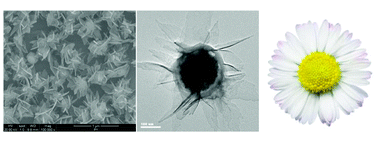
Nanoflowers for protein immobilisation and separation

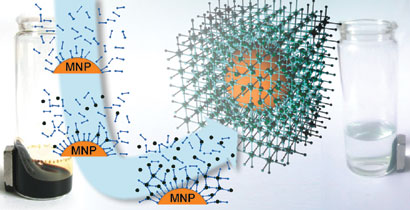
It is the quest of many a materials scientist to form core-shell nanostructures by self-assembly, in order to generate materials with unique structures and functions. In this area, hierarchical nanoarchitectures assembled from nanoscale units have recently stimulated tremendous interest because these superstructures might avoid aggregation and maintain high specific surface areas. In addition, magnetic materials have received considerable interest,  due to their ability to selectively capture target objects from complex mixtures.

Ken Cham-Fai Leung and colleagues – based in Hong Kong and Hefei, China – have reported a facile synthesis of monodispersed microparticles composed of superparamagnetic Fe3O4 cores, a SiO2 shell and a hierarchical g-AlOOH periphery with Au nanoparticles, obtaining nanoflower structures resembling daisies. As proof of principle for their use as selective protein capturing agents, these nanoflowers were applied as absorbents to successfully remove bovine serum albumin from bovine blood.

To find out more download the ChemComm communication, which is free to access until 15th March 2011.

Start a discussion about this research by leaving comments below.

Digg This
Reddit This
Stumble Now!
Share on Facebook
Bookmark this on Delicious
Share on LinkedIn
Bookmark this on Technorati
Post on Twitter
Google Buzz (aka. Google Reader)

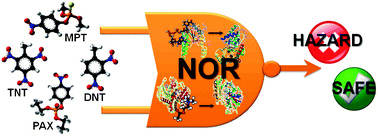
Enzyme logic biosensor for security surveillance

Scientists in the US have made a system that rapidly detects both explosives and nerve agents, providing a simple yes-no response. The technique could replace two time-consuming tests that are currently used to assess these threats.

Joseph Wang and colleagues from the University of California, San Diego, combined their expertise in threat detection and electrochemical biosensors with the biocomputing experience of Evgeny Katz from Clarkson University, Potsdam, NY. The team produced an enzyme-based logic gate with the ability to simultaneously detect both nitroaromatic explosives and organophosphate nerve agents.

Graphical abstract: High-fidelity determination of security threats via a Boolean biocatalytic cascade

See Chemistry World for the full news story and download the ChemComm article to find out more.

Digg This
Reddit This
Stumble Now!
Share on Facebook
Bookmark this on Delicious
Share on LinkedIn
Bookmark this on Technorati
Post on Twitter
Google Buzz (aka. Google Reader)

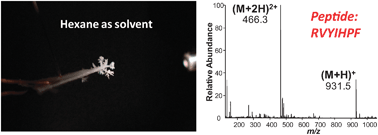
Paper spray ionisation of polar analytes using non-polar solvents

US analytical scientists have used non-polar solvents for the paper spray ionisation of polar compounds.

Polar compounds are normally ionised in mass spectrometry using a desorption ionisation method, such as MALDI, or from solution in a polar solvent using electrospray ionisation (ESI). However, ESI does not usually tolerate non-polar solvents and, as many reactions or purifications of compounds occur in non-polar solvents, this can present some difficulties.

Graham Cooks and co-workers from Purdue University have extended the scope of the recently developed paper spray ionisation technique to allow the use of non-polar solvents. When a low voltage is exposed to a triangle of paper wetted with a solvent such as hexane or toluene, droplets of that solvent are produced.  Polar compounds that are deposited on the paper are transported by the non-polar solvent compounds despite being sparingly soluble in them.

This technique can be applied to biological compounds, such as nucleotides, phospholipids and peptides, and avoids a typical problem associated with ESI where there capillary may clog when a non-ideal solvent is used. Furthermore, compounds may be analysed simply by ionising spots separated via TLC.

If you want to find out more then download the ChemComm article today. For wider look at analytical chemistry, why not check out these papers in our sister journal Chemical Science?

Digg This
Reddit This
Stumble Now!
Share on Facebook
Bookmark this on Delicious
Share on LinkedIn
Bookmark this on Technorati
Post on Twitter
Google Buzz (aka. Google Reader)

Negishi cross-coupling using a bulky Pd-NHC catalyst

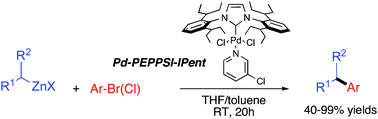
The hugely important field of transition metal catalysed C–C cross-coupling has come a long way over the years, but efficient coupling between Csp2 and secondary Csp3 centres remains a challenge. To achieve just that, Michael Organ and his colleague Selcuk Calimsiz (York University, Toronto) have developed and used a bulky Pd-NHC (N-heterocyclic carbene) catalyst called Pd-PEPPSI-IPent.

In the reactions of secondary alkylzincs with a variety aryl or heteroaryl halides, this catalyst provided excellent regioselectivity for the branched product over the isomerised unbranched product, far outperforming the less bulky Pd-PEPPSI-IPr analogue.

To see the impressive scope of the reaction download the ChemComm communication for free up until 7th March 2011 and leave your comments below.

Digg This
Reddit This
Stumble Now!
Share on Facebook
Bookmark this on Delicious
Share on LinkedIn
Bookmark this on Technorati
Post on Twitter
Google Buzz (aka. Google Reader)

MOF magnets deliver drugs

German scientists have encapsulated nanomagnets inside metal organic frameworks (MOFs). The MOF magnets can be filled with a drug, which is released when a magnetic field is applied. 

Stefan Kaskel from the Technical University of Dresden and colleagues made the MOF magnets by integrating superparamagnetic iron oxide particles into carboxylate MOFs. ‘Carboxylate molecules stabilise and activate the nanoparticles,’ explains team member Martin Lohe.

The group then loaded their MOF with ibuprofen and found that they were able to trigger and control its release by simply applying an external magnetic field. The magnetic field heats the magnets in the MOF, which causes the load to burst from the framework.

Superparamagnetic functionalisation of MOFs enables magnetic heating to trigger drug delivery

MOFs in which the frameworks themselves are magnetic have been made before, but they are not easy to manipulate. Kaskel’s embedded MOF magnets, however, can easily be manipulated from the outside. Magnetic fields can penetrate human skin, and magnetic triggers that could be used to release the drugs are already available on the market. However, before the MOF magnets can be used in the human body, toxicity tests will need to be done.

‘An enhanced sustainability of industrial and medical processes is crucial for our future,’ says Lohe. ‘Magnetically functionalised MOFs could be a small building block on this path.’

‘The particles will certainly increase the possibility of using nanoMOFs for drug delivery applications in the near future,’ agrees Christian Serre, an expert in porous solids from the University of Versailles  in France, ‘and they’ll add a new tool to the emerging domain of MOFs in biomedicine.’ 

Ruth Doherty


Link to ChemComm article

 Heating and separation using nanomagnet-functionalized metal–organic frameworks
Martin R. Lohe, Kristina Gedrich, Thomas Freudenberg, Emanuel Kockrick, Til Dellmann and Stefan Kaskel,

Chem. Commun., 2011, DOI: 10.1039/c0cc05278g


Digg This
Reddit This
Stumble Now!
Share on Facebook
Bookmark this on Delicious
Share on LinkedIn
Bookmark this on Technorati
Post on Twitter
Google Buzz (aka. Google Reader)

Palladium impurites are not essential for gold catalysis

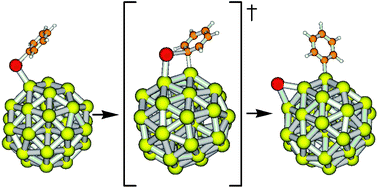
Spanish scientists have proved that gold alone can catalyse cross-coupling reactions, following a claim made last year that palladium impurities in the gold are essential for the catalysis. 

Avelino Corma from the Polytechnic University of Valencia and colleagues used kinetic and theoretical studies to prove that gold can catalyse the Sonogashira coupling reaction between phenylacetylene and iodobenzene. ‘Gold nanoparticles are active enough to promote the reaction, regardless of the presence or absence of palladium,’ says Corma.

Graphical abstract: Gold catalyzes the Sonogashira coupling reaction without the requirement of palladium impurities

Read the full news story in Chemistry World and download Corma’s ChemComm communication

Digg This
Reddit This
Stumble Now!
Share on Facebook
Bookmark this on Delicious
Share on LinkedIn
Bookmark this on Technorati
Post on Twitter
Google Buzz (aka. Google Reader)

Novel chemical tag illuminates protein cholesterylation in cells

UK chemists have for the first time used a chemical probe to study the post- translational cholesterylation of proteins in living cells.

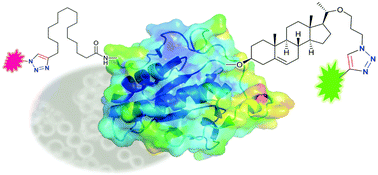
Post-translational modification (PTM) in cells plays an important role in the function of proteins in vivo. One example is the mammalian Hedgehog (Hh) protein family: the post-translational cholesterylation of Sonic hedgehog (shh) protein regulates its secretion. However, mis-regulation of this protein can promote different types of cancers. Therefore a simple way of studying this type of modification is important.

Graphical abstract: Bioorthogonal chemical tagging of protein cholesterylation in living cells

Edward Tate and colleagues at Imperial College, London have done just this. They first modified cholesterol molecules to bear an azide group and then gave this to their target cells, where it was used in PTM. They next managed to attach, via ‘click’ chemistry, a dye molecule called TAMRA to the modified proteins that carried the synthetic cholesterol. The team used this dye for ‘fluorescence visualisation’ of the target protein.

When compared to traditional techniques for studying cholesterylated proteins, this new method stacks up well. It makes significant savings in both time and expense, as well as avoiding the use of potentially harmful radiation. Furthermore, Tate suspects that in the future an optimised version of this process might be used to search for new cholesterylated proteins.

Want to find out more? Then download the ChemComm article for free today. You can also check out coverage of this article in C&EN.

Digg This
Reddit This
Stumble Now!
Share on Facebook
Bookmark this on Delicious
Share on LinkedIn
Bookmark this on Technorati
Post on Twitter
Google Buzz (aka. Google Reader)