Archive for the ‘Subject Areas’ Category

Yong-Qiang Tu joins the ChemComm Editorial Board

Yong-Qiang TuOn behalf of the ChemComm Editorial Board, I am delighted to welcome Professor Yong-Qiang Tu as the new ChemComm Associate Editor for organic chemistry.

Professor Tu is a council member of Chinese Chemistry Society and the president of Gansu Chemistry Society. His current research interests centre on tandem rearrangement reactions and their application to the total syntheses of bioactive alkaloids, synthetic studies of biologically active natural products, and the construction of C-C and C-N bonds via C-H functionalisations.

Professor Tu’s editorial office is now open for submissions, welcoming urgent communications highlighting the latest advances in organic chemistry.

Find out more about Professor Tu’s research by reading these exciting articles:

Total synthesis of (±)-maistemonine and (±)-stemonamide
Zhi-Hua Chen, Yong-Qiang Zhang, Zhi-Min Chen, Yong-Qiang Tu and Fu-Min Zhang
Chem. Commun., 2011,47, 1836-1838, DOI: 10.1039/C0CC02612C, Communication

Enantioselective bromination/semipinacol rearrangement for the synthesis of β-bromoketones containing an all-α-carbon quaternary center
Hui Li ,  Fu-Min Zhang ,  Yong-Qiang Tu ,  Qing-Wei Zhang ,  Zhi-Min Chen ,  Zhi-Hua Chen and Jian Li
Chem. Sci., 2011,2, 1839-1841, DOI: 10.1039/C1SC00295C

Are you an organic chemist based in North America? Submit your research to Michael Krische, ChemComm North American Associate Editor for organic chemistry.

Digg This
Reddit This
Stumble Now!
Share on Facebook
Bookmark this on Delicious
Share on LinkedIn
Bookmark this on Technorati
Post on Twitter
Google Buzz (aka. Google Reader)

Quick and clean way to make intermediates for dyes and pharmaceuticals

Scientists in China have developed a quick and clean way to reduce nitroarenes to aminoarenes, which are common intermediates for making dyestuffs, pharmaceuticals and agricultural chemicals.

Sodium borohydride and molecular hydrogen are commonly used for this reaction but their hydrogen elements cannot reduce nitroarenes under mild reaction conditions. Usually, expensive noble-metal catalysts are necessary to activate the hydrogen elements in the reductants.

Here, the researchers have used a vanadium-doped porous TiO2 with highly active hydrogen, which can instantly (<10s) and selectively reduce nitroarenes to aminoarenes under ambient conditions without catalysts. After being consumed by nitroarenes, the active hydrogen species can be regenerated by irradiating the V-doped TiO2 with UV light.

Link to journal article
Porous vanadium-doped titania with active hydrogen: a renewable reductant for chemoselective hydrogenation of nitroarenes at ambient condition
J Su et al
Chem. Commun., 2012, DOI: 10.1039/c2cc33969b

Digg This
Reddit This
Stumble Now!
Share on Facebook
Bookmark this on Delicious
Share on LinkedIn
Bookmark this on Technorati
Post on Twitter
Google Buzz (aka. Google Reader)

Silica sheets to deliver DNA into cells for disease prevention and treatment

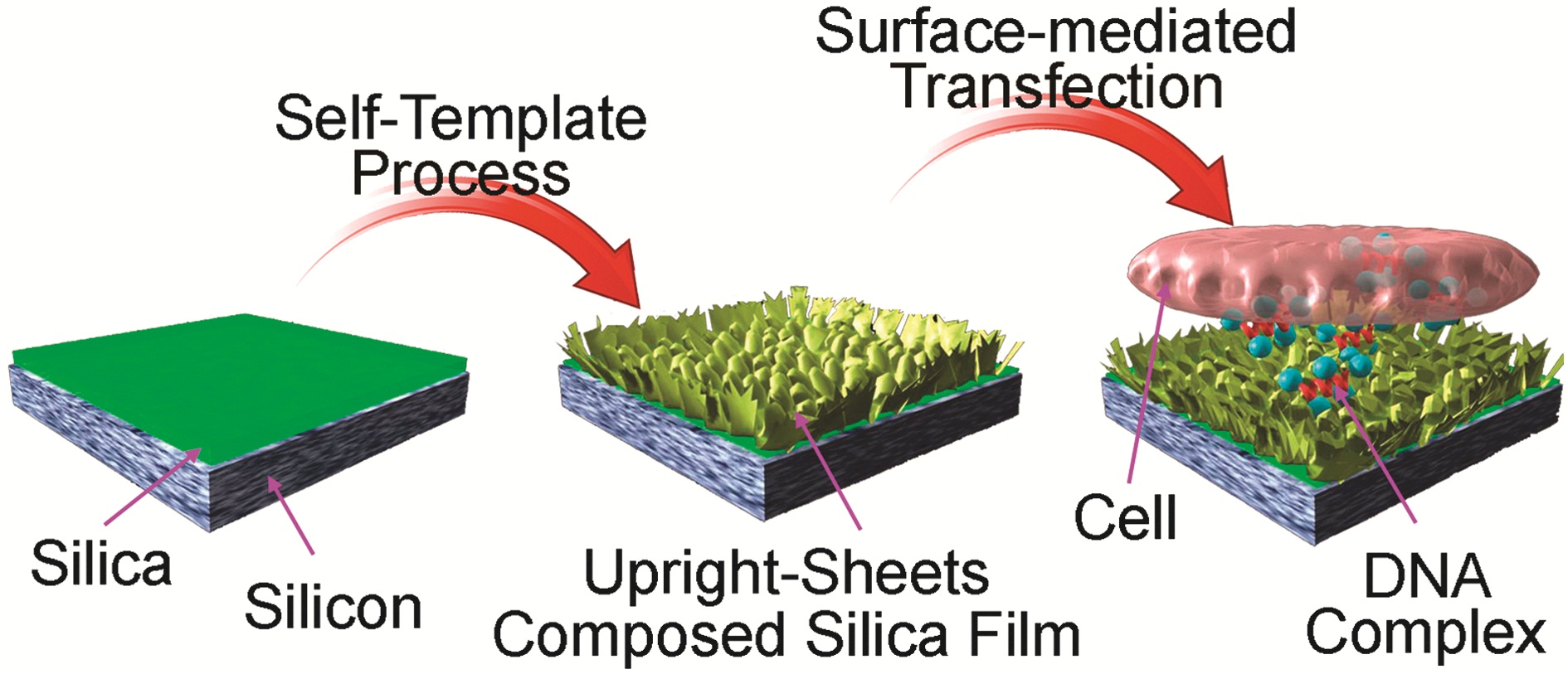
Scientists in Japan have made a new DNA delivery substrate based on networks of bio-friendly upright silica sheets. The network of sheets forms a porous film on to which they can immobilise DNA, ready for delivery (transfection) into cells. The transfection efficiency of the silica film is approximately double that of solution-based transfection. Gene transfection is a potential method for preventing and treating diseases and analysing cell functions.


Silica sheets to deliver DNA into cells for disease prevention and treatment

Link to journal article
Silica-based Gene Reverse Transfection: Upright Nanosheet Network for Promoted DNA Delivery to Cell

Q Ji et al

Chem. Commun., 2012, DOI: 10.1039/c2cc34289h


Digg This
Reddit This
Stumble Now!
Share on Facebook
Bookmark this on Delicious
Share on LinkedIn
Bookmark this on Technorati
Post on Twitter
Google Buzz (aka. Google Reader)

Bendy non-volatile flash memory data storage device

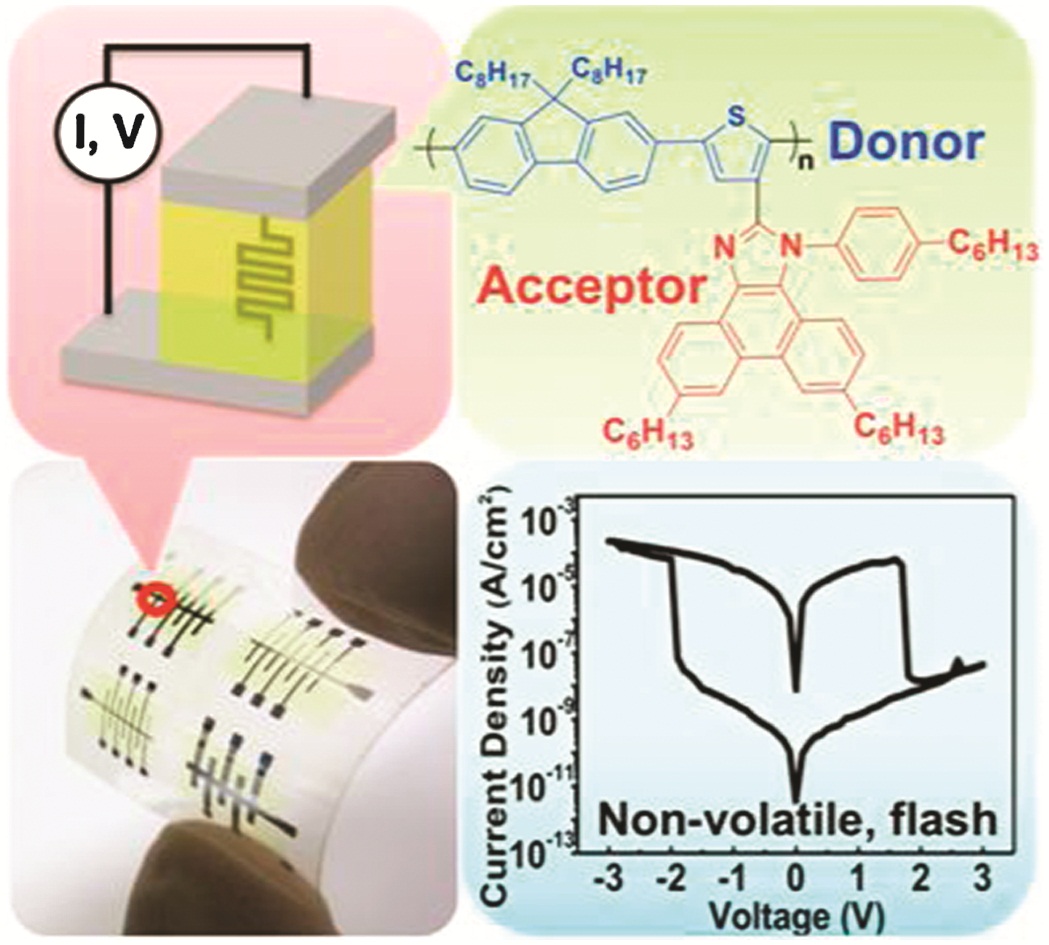
Scientists in Taiwan have made a flexible memory device, which they say could open up a new design approach for high performance flexible non-volatile resistive memory devices. Non-volatile devices are computer memory devices that can retain stored information even when not powered, for example read-only memory, flash memory, hard drives and floppy disks. 

The team’s device consists of a single-layer donor-acceptor conjugated polymer fabricated on plastic polyethylene naphthalene. It displayed a low threshold voltage (±2V), low switching power (~100µW cm-2), large on/off memory window (104), good retention (>104s) and excellent endurance against electrical and mechanical stimuli, they say.

Bendy non-volatile flash memory data storage device


Link to journal article
Poly(fluorene-thiophene) Donor Tethered Phenanthro[9,10-d]imidazole Acceptor for Flexible Nonvolatile Flash Resistive Memory Devices

H-C Wu et al
Chem. Commun
., 2012, DOI: 10.1039/c2cc34257j

Digg This
Reddit This
Stumble Now!
Share on Facebook
Bookmark this on Delicious
Share on LinkedIn
Bookmark this on Technorati
Post on Twitter
Google Buzz (aka. Google Reader)

A new type of conducting polymer

Scientists in the US have reported a new type of conducting polymer, generated by a ROMP (ring opening metathesis polymerisation) reaction. The new polymers could have potentially useful properties, they say.

They reacted the complex (η5-C5H5)Ir(η4-C6H6) with Grubbs’ catalyst to give a polyacetylene consisting of cyclopentadienyliridium bound s-cis butadiene moieties separated by C=C linkages, a previously unavailable polyacetylene type.

Link to journal article
Ring Opening Metathesis Polymerization of an
η4-Benzene Complex: A Direct Synthesis of a Polyacetylene with a Regular Pattern of Π Bound Metal Fragments
P D Zeits, T Fiedler and J A Gladysz
Chem. Commun.,
2012, DOI: 10.1039/c2cc32150e

Digg This
Reddit This
Stumble Now!
Share on Facebook
Bookmark this on Delicious
Share on LinkedIn
Bookmark this on Technorati
Post on Twitter
Google Buzz (aka. Google Reader)

Film to aid drug metabolism study

A way to study drug metabolism using cytochrome P450 enzymes (which are involved in the metabolism of over 60% of clinically used drugs) has been developed by scientists in China.

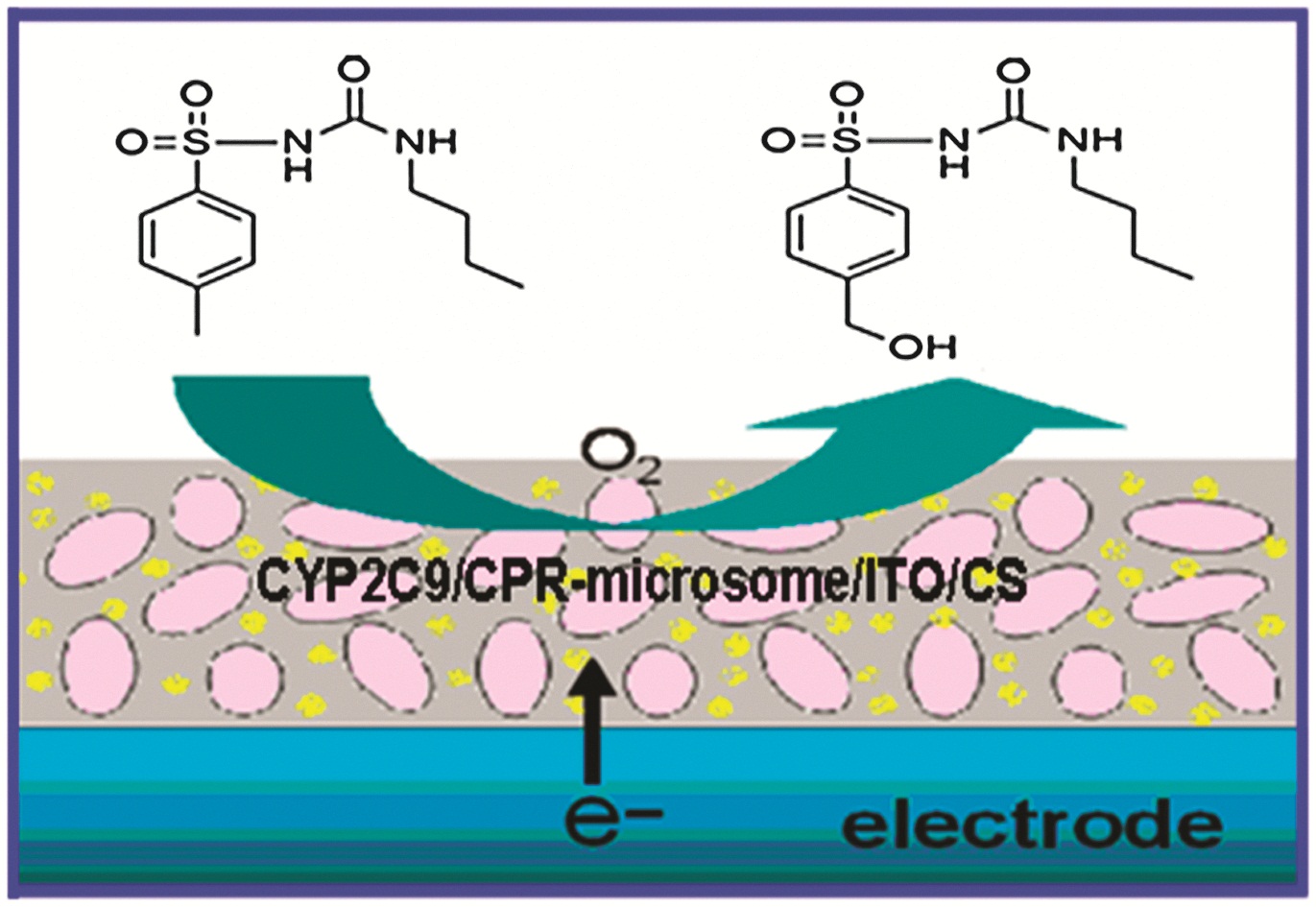
The team made a film of indium tin oxide nanoparticles (they have good conductivity) and cytochrome P450s encapsulated by chitosan (which are biocompatible) on a carbon electrode. They were able to bioelectronically initiate cytochrome P450 catalysis by replacing electron donation from expensive nicotinamide adenine dinucleotide phosphate with electrodes.

The system has potential for applications in drug discovery and development by monitoring substrate metabolism and enzyme inhibition. Other applications include biosensors for toxicity analysis and bioreactors for chemical synthesis.

Film to aid drug metabolism study


Link to journal article
Electrochemically Driven Drug Metabolism via Cytochrome P450 2C9 Isozyme Microsomes with Cytochrome P450 Reductase and Indium Tin Oxide Nanoparticle Composites

X Xu et al
Chem. Commun.,
2012, DOI: 10.1039/c2cc33575a

Digg This
Reddit This
Stumble Now!
Share on Facebook
Bookmark this on Delicious
Share on LinkedIn
Bookmark this on Technorati
Post on Twitter
Google Buzz (aka. Google Reader)

Macrocycle insulation for molecular wires

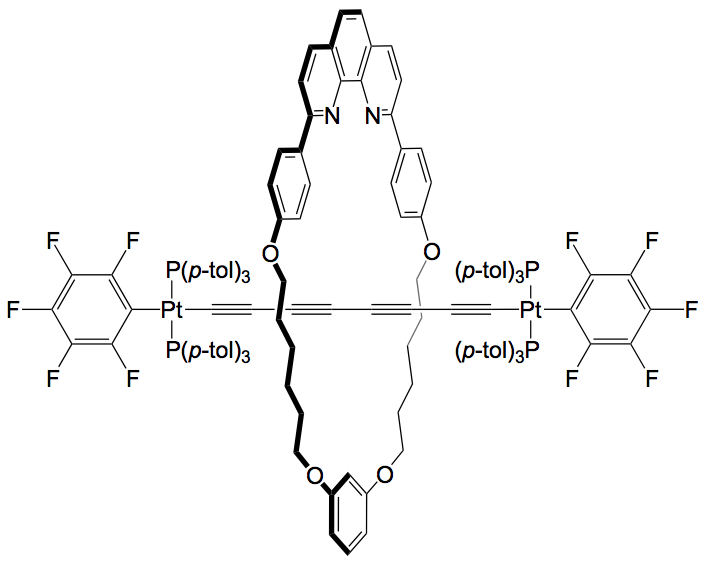
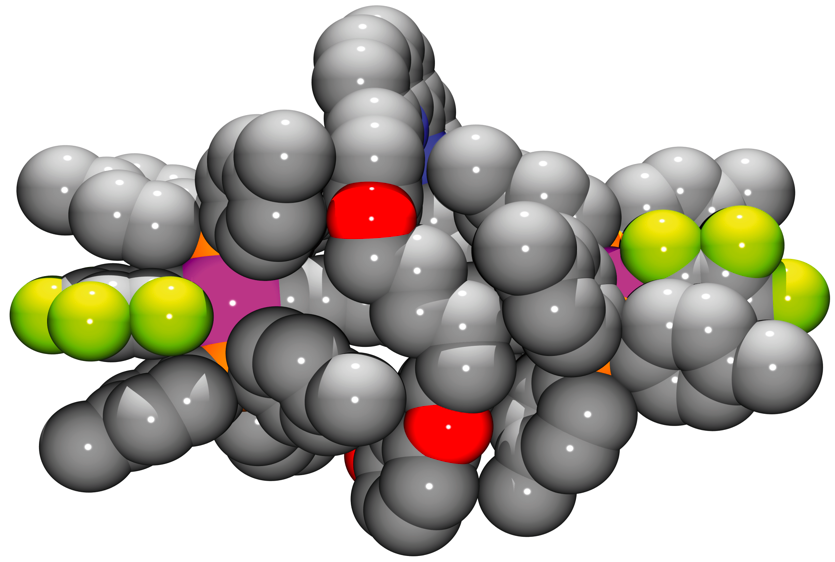
Researchers in Texas are using rotaxane formation to sterically protect or “insulate” molecular wires.

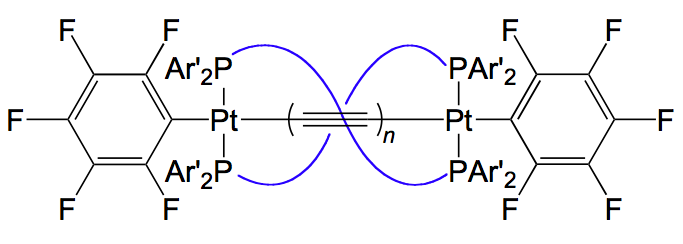
Molecular wires, in which an unsaturated linker separates two or more redox active metal sites, are of great research interest. These structures allow phenomena such as electron delocalisation or transport between the two redox sites. John Gladysz’s group at Texas A&M University have an ongoing interest in dimetallic polyynediyl complexes, in which two metal centres are linked by conjugated polyynediyl linkers that they now hope to “insulate” to reduce interactions between wires and the external environment. A previous approach used long alkyl bis-phosphine, which wrapped around the wire in a double helix to complex both metal centres. However, this gave two enantiomers, which interconverted rapidly in solution via uncoiling of the protective ligands.

The Gladysz group are now reporting a straightforward solution to this problem. They found that by synthesising their bis-platinum wire in the presence of a 33-membered macrocycle, they could incorporate the wire as the thread of a rotaxane complex. This provides a more robust protection for the wire which is unaffected by dynamic processes.

This work shows a fantastic application of rotaxane chemistry for protection of a molecular wire. What’s more, the synthesis of this rotaxane is adaptable, and the Gladysz group are working on exciting new and improved systems including longer polyynediyl linkers and redox inactive macrocycles to improve the properties of the insulated wires.

The full communication can be downloaded here.

Cally Haynes

Digg This
Reddit This
Stumble Now!
Share on Facebook
Bookmark this on Delicious
Share on LinkedIn
Bookmark this on Technorati
Post on Twitter
Google Buzz (aka. Google Reader)

Deadline Approaching – ICPOC 21 poster abstracts

There is still just time to submit your poster abstract to the 21st IUPAC International Conference on Physical Organic Chemistry (ICPOC 21) but don’t delay.

The deadline date of 13 July is for both poster abstracts and early bird registrations.

Why join ICPOC21?

Professor Hiromitsu Maeda
, Ritsumeikan University, Japan has won the 2012 ChemComm Emerging Investigator Lectureship and will delivering his lecture at ICPOC 21.

This annual award recognises an emerging scientist in the early stages of their independent academic career. Professor Maeda’s has been particularly commended for his contributions to the fields of organic chemistry, supramolecular chemistry and materials science.

In addition to the outstanding plenary sessions, there will be three parallel sessions over the five days comprising invited lectures and contributed talks, as well as poster sessions.

A broad range of scientists from across the whole community who share a quantitative perspective on chemistry will be there, providing an opportunity to discuss and celebrate the current status, development, and the future of physical organic chemistry.

Make sure you are one of them! Don’t miss the poster abstract submission and early bird registration deadline – 13 July.

Digg This
Reddit This
Stumble Now!
Share on Facebook
Bookmark this on Delicious
Share on LinkedIn
Bookmark this on Technorati
Post on Twitter
Google Buzz (aka. Google Reader)

A new catalyst for asymmetric aziridination

Aziridines are used extensively as intermediates for organic synthesis. The strained three-membered heterocycles reveal amino groups on ring-opening and therefore provide access to a variety of useful products. Enantioselective methods for forming aziridine rings are highly desirable because enantiopure amino-compounds represent important targets for both natural product synthesis and in the discovery of novel therapeutics.

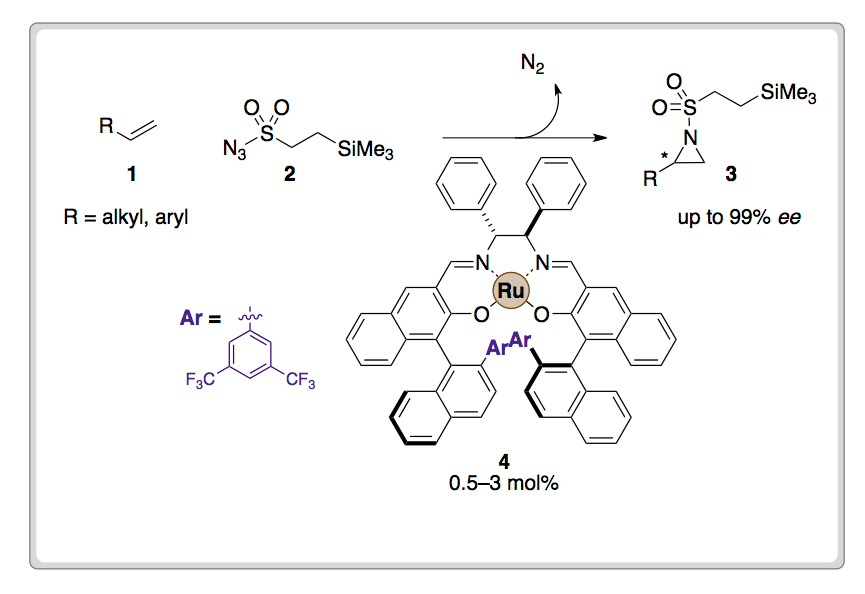
Researchers from Kyushu University in Japan have reported a newly designed Ru(CO)salen complex (4), which acts as an efficient catalyst for asymmetric aziridination of alkenes.

Reaction of olefinic substrates (1) with 2-(trimethylsilyl)ethanesulfonyl (SES) protected azide (2) in the presence of the Ru(CO)salen complex 4 afforded enantioenriched aziridine products. 4 efficiently decomposes azides under ambient conditions and also catalyses asymmetric aziridination.

Judicious selection of an appropriate azide protecting-group also influenced the design of the catalyst. The researchers chose to include an appropriately located C–F  bond within the ligand in order to improve tolerance of 4 to reacting electrophiles.

Low catalyst loadings enabled the highly enantioselective azirdination of a variety of substrates possessing conjugated or non-conjugated terminal or cyclic olefins.

Find out more – download the communication for free for a limited period.

Digg This
Reddit This
Stumble Now!
Share on Facebook
Bookmark this on Delicious
Share on LinkedIn
Bookmark this on Technorati
Post on Twitter
Google Buzz (aka. Google Reader)

Additional benefit of cancer drug

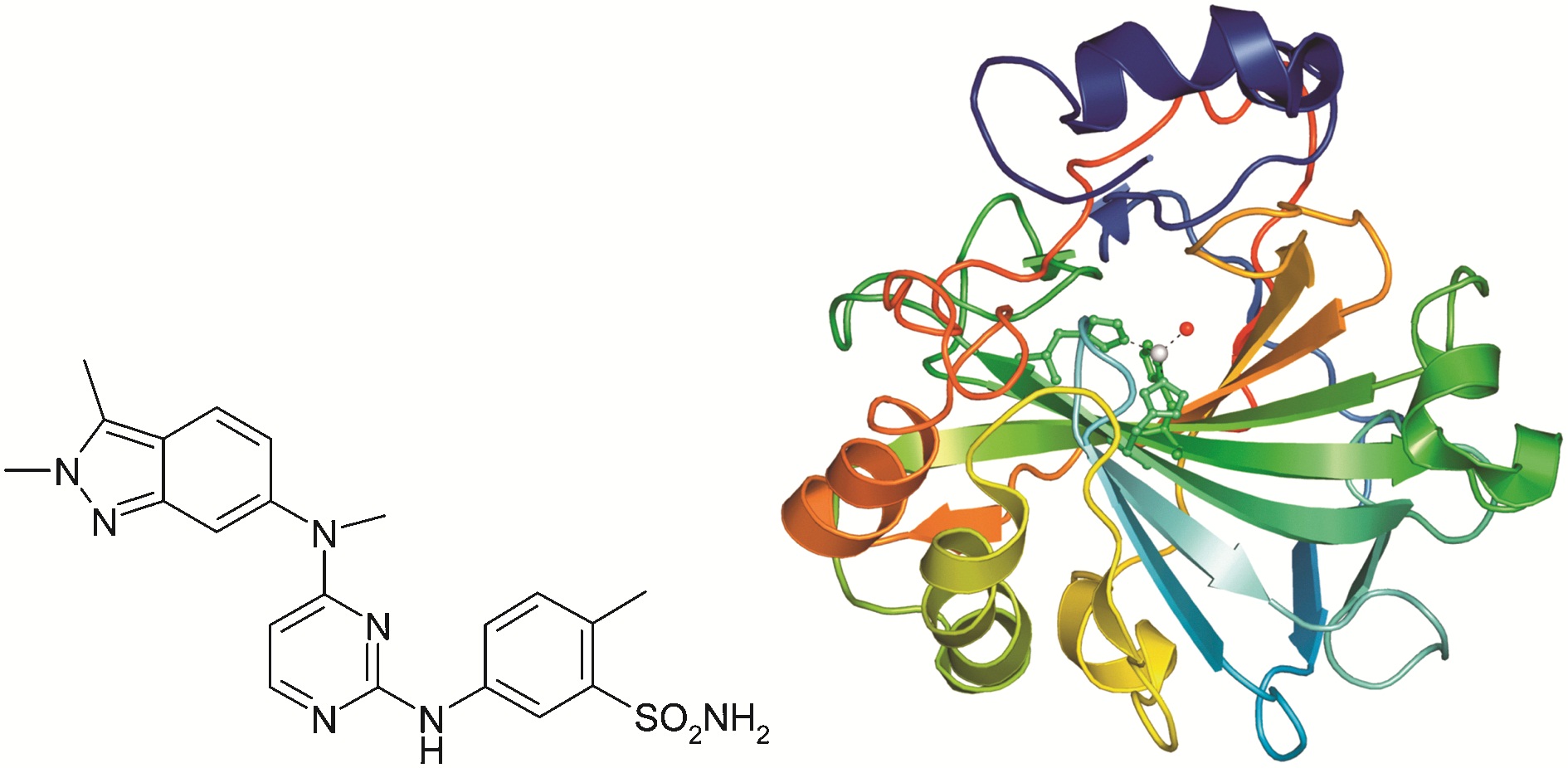
A new clinically used cancer drug thought to work by inhibiting kinase enzymes also strongly inhibits carbonic anhydrase (CA) enzymes, reveal scientists in Italy.

Scientists did not evaluate the CA inhibition activity of pazopanib before its approval for the treatment of a variety of different cancers, including lung, breast and ovarian cancers. But Claudiu Supuran and colleagues recognised part of the drug’s structure – a primary sulfonamide moiety – is often found in drugs that can inhibit CAs. So they tested pazopanib along with some other related structures and found that the drug did indeed inhibit CAs. They estimate that a significant proportion of the drug’s therapeutic effect on hypoxic tumors is due to its strong CA inhibitory properties.


Link to journal article
Polypharmacology of sulfonamides: Pazopanib, a multitargeted receptor tyrosine kinase inhibitor in clinical use, potently inhibits several mammalian carbonic anhydrases
J-Y Winum et al
Chem. Commun., 2012, DOI: 10.1039/c2cc33415a

Digg This
Reddit This
Stumble Now!
Share on Facebook
Bookmark this on Delicious
Share on LinkedIn
Bookmark this on Technorati
Post on Twitter
Google Buzz (aka. Google Reader)