Graphene oxide diversifies soil bacteria

Article written by Richard Massey

Soil bacteria communities become richer and more diverse on exposure to graphene oxide, new research shows.1 This unexpected finding, unearthed by scientists in China, highlights that despite graphene oxide’s potential for widespread environmental release, little is known about its ecological impact.

Digging deeper into the environmental impact of nanomaterial contamination © Shutterstock

Graphene oxide’s abundance of surface oxygen-containing groups makes it a useful precursor to the graphene-based materials poised to revolutionise electronics and nanoproduct industries. Soil ecosystems will likely bear the brunt of nanomaterial contamination and while previous studies have looked at graphene oxide’s effect in pure bacterial cultures, soil is a much more complicated medium with diverse microbial communities that demand closer investigation. Now a team led by Xiangang Hu and Qixing Zhou’s of Nankai University has studied the effects of graphene oxide in the soil for 90 days using high-throughput sequencing analysis.

To read the full article visit Chemistry World.

Graphene oxide regulates the bacterial community and exhibits property changes in soil
Junjie Du, Xiangang Hu and Qixing Zhou  
RSC Adv., 2015,5, 27009-27017
DOI: 10.1039/C5RA01045D, Paper

Digg This
Reddit This
Stumble Now!
Share on Facebook
Bookmark this on Delicious
Share on LinkedIn
Bookmark this on Technorati
Post on Twitter
Google Buzz (aka. Google Reader)

RSC Advances sponsors 6th Iberian Meeting on Colloids and Interfaces

RSC Advances is proud to sponsor the 6th Iberian Meeting on Colloids and Interfaces, which will be held in the Hotel Guimarães – Guimarães, Portugal, from 8th to 10th July 2015.

6th Iberian Meeting on Colloids and Interfaces

The meeting will consist of 5 Plenary Lectures and 5 Invited Lectures, given by outstanding young researchers, together with a large number of Oral Contributions and Posters.

The topics covered will include all areas of colloid and interface science, from a broad and interdisciplinary perspective.

View the preliminary programme here.

Abstract submission deadline: 31 March 2015
Early bird registration: 1 April 2015


Register and submit your abstract now!

Digg This
Reddit This
Stumble Now!
Share on Facebook
Bookmark this on Delicious
Share on LinkedIn
Bookmark this on Technorati
Post on Twitter
Google Buzz (aka. Google Reader)

Engineered bacteria synthesise palladium biosorbent

Article written by Emma Cooper

Although catalytic converters are crucial in the fight against air pollution, they do release palladium into the environment © Shutterstock

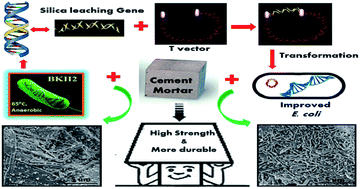
Genetically modified Escherichia coli can synthesise a protein that could work as a palladium biosorbent to recover the precious metal from polluted water, new research shows. 

Catalytic converters are hugely important for controlling car exhaust fumes but small amounts of the palladium, and other platinum group elements, that form their main active component are leaking into and contaminating the environment. ‘Global palladium resources are scarce,’ warns sustainability expert Magdalena Titirici, of Queen Mary University of London, UK, who was not involved in the study. ‘Therefore recovering noble metals such as palladium from the urban environment using low cost and environmentally friendly adsorbents is of major importance.’

To read the full article visit Chemistry World.

Designed biomolecule–cellulose complexes for palladium recovery and detoxification
Ian Sofian Yunus and Shen-Long Tsai  
RSC Adv., 2015,5, 20276-20282
DOI: 10.1039/C4RA16200E, Paper

Digg This
Reddit This
Stumble Now!
Share on Facebook
Bookmark this on Delicious
Share on LinkedIn
Bookmark this on Technorati
Post on Twitter
Google Buzz (aka. Google Reader)

Those burgers look soy good!

Written by Sarah Brown, web writer for RSC Advances

In the early days of wooing my current beau, I tried to impress by claiming my homemade burgers were superior to all in the land. A bold claim, you’d agree, so the scientist in me amended that to ‘probably superior’. Anyway, I went to prepare said burgers with my secret recipe. In preparation, I defrosted the mince from the freezer that day, only to return to find the meat had gone a bit brown and smelled a bit, well, weird. (I still made the burgers and they didn’t taste so good, but as I said, it was the early days so we both pretended not to notice.)

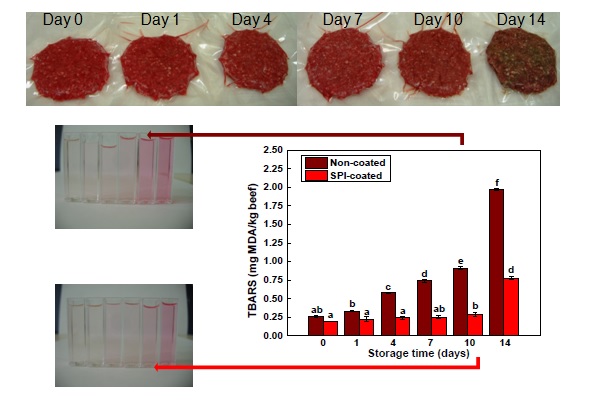
Pedro Guerrero and colleagues have now developed a way of applying natural soy protein coatings to beef patties, extending their shelf-life stability. Writing in RSC Advances, they describe how these coatings provide a barrier to oxygen, delaying the formation of that brown colour (metmyoglobin) and unpleasant odour and taste.

Application of soy protein coatings and their effect on the quality and shelf-life stability of beef patties

Although synthetic antioxidants are known in the industry to prevent food spoiling, consumers are increasingly interested in the journey that their food has taken from farm to fork. Guerrero and co-workers successfully demonstrate the development and application of a soy-based coating to meat patties through the successful preservation of the meat compared to uncoated patties. They investigated the degree of lipid oxidation, microbiological content and texture changes. And, in the name of science, some people took part in a taste test, which I am sure was a burden.

As people try to eat as naturally as possible and reduce food waste, soy coatings could be a contender for increased customer satisfaction.

To find out more, click below to read the full article in RSC Advances.

Application of soy protein coatings and their effect on the quality and shelf-life stability of beef patties, Pedro Guerrero, Maurice G. O’Sullivan, Joe P. Kerry and Koro de la Caba, RSC Adv., 2015, 5, 8182-8189 (DOI: 10.1039/C4RA13421D)


Sarah Brown Sarah Brown is a guest web-writer for RSC Advances. Sarah hung up her lab coat after finishing her PhD and post-doctorate in nanotechnology for diagnostics and therapeutics and now works in academic publishing. When not trying to explain science through ridiculous analogies, you can often find her crocheting, baking or climbing, but not all at once.

Digg This
Reddit This
Stumble Now!
Share on Facebook
Bookmark this on Delicious
Share on LinkedIn
Bookmark this on Technorati
Post on Twitter
Google Buzz (aka. Google Reader)

Shock tactics for drug delivery

Article written by Megan Tyler

The shock wave device does not need to touch the mouse to trigger the drug release

Scientists in India have developed a shock wave-based drug delivery system that could be used to administer insulin in diabetic patients and reduce the need for painful injections. A similar strategy could also increase the efficacy of antibiotic treatment to diabetic wounds.

In recent years, stimuli responsive drug delivery systems have come to the fore. Such systems enable greater control over where and when drugs are released in the body, ultimately providing more localised and sustained treatment with better overall results. Systems that are responsive to external stimuli such as ultrasound, infrared light and magnetic fields have all been reported, but often require specialist equipment that can be expensive to buy or difficult to operate, and this has limited their application in real clinical situations.

To read the full article please visit Chemistry World.

Remotely triggered micro-shock wave responsive drug delivery system for resolving diabetic wound infection and controlling blood sugar levels
Divya Prakash Gnanadhas, Monalisha Elango, Midhun Ben Thomas, Jagadeesh Gopalan and Dipshikha Chakravortty  
RSC Adv., 2015,5, 13234-13238
DOI: 10.1039/C4RA15270K, Paper

Digg This
Reddit This
Stumble Now!
Share on Facebook
Bookmark this on Delicious
Share on LinkedIn
Bookmark this on Technorati
Post on Twitter
Google Buzz (aka. Google Reader)

Straightening out capacitance measurements

Article written by Sage Bowser

Supercapacitors are used in memory backup systems and portable electronics as well as high-power devices © Shutterstock

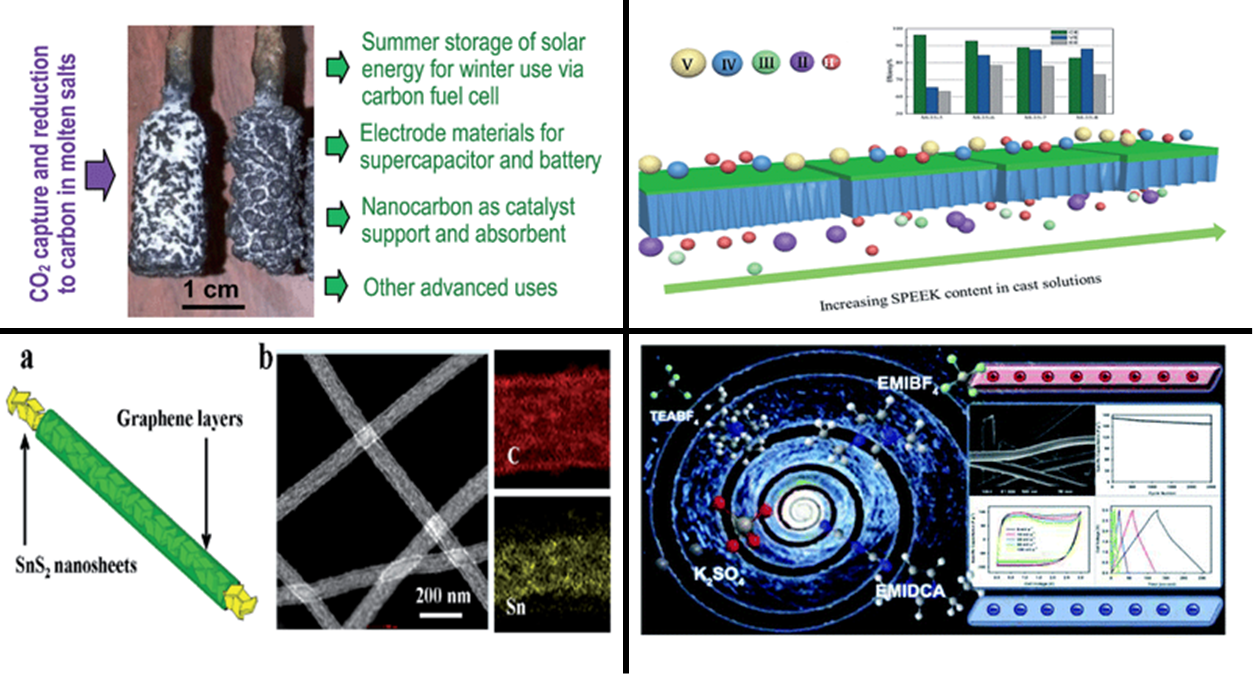
Researchers in the UK have designed a simple and inexpensive circuit that can linearise the charge–discharge behaviour of a capacitor. This could solve one of the most important problems plaguing the development of supercapacitors – the need for a straightforward measurement method for the amount of electrical charge they can store at a given voltage, known as capacitance. 

The circuit, reported by the group of Craig Banks at Manchester Metropolitan University, can be added to researchers’ existing cyclic voltammetry, electrochemical impedance spectroscopy and galvanostatic charge–discharge setups. It requires only two precise resistors and a variable capacitor of similar capacitance to the supercapacitor under investigation, components which cost as little as £5.

To read the full article visit Chemistry World.

A new approach for the improved interpretation of capacitance measurements for materials utilised in energy storage
Dimitrios K. Kampouris, Xiaobo Ji, Edward P. Randviir and Craig E. Banks  
RSC Adv., 2015,5, 12782-12791
DOI: 10.1039/C4RA17132B, Paper

Digg This
Reddit This
Stumble Now!
Share on Facebook
Bookmark this on Delicious
Share on LinkedIn
Bookmark this on Technorati
Post on Twitter
Google Buzz (aka. Google Reader)

Introducing our latest themed collection on Tribology

An introduction to this Tribology themed collection from Guest Editors James Batteas (Texas A&M University), Graham Leggett (University of Sheffield) and Scott Perry (University of Florida)…

Lubricating bicycle gears

© Shutterstock

We are pleased to present to you this themed RSC Advances collection on Tribology.  The field of tribology is where chemistry and mechanics meet.  It represents a challenging cross-disciplinary arena focusing on the widely recognized problems associated with friction, adhesion and wear that impact a range of materials systems, from machined engine parts, to space craft and satellites, to medical implants, to micro and nanoscale machine technologies. The energy losses in machines through friction and wear also represent a significant economic impact, solutions to which could dramatically aid in the ever increasing challenges of the energy needs of modern society. 

In this themed collection, work in the area of tribology is presented across the spectrum from applied to fundamental and computational studies of materials systems. 

Click here to read more…

Digg This
Reddit This
Stumble Now!
Share on Facebook
Bookmark this on Delicious
Share on LinkedIn
Bookmark this on Technorati
Post on Twitter
Google Buzz (aka. Google Reader)

Sunlight activates radical approach to dengue eradication

Article written by Vicki Marshall

Researchers in Brazil have created floating blocks that could be added to stagnant water to suppress the transmission of dengue fever.

The floating bricks support an iron oxide catalyst

Over 40% of the world’s population is thought to be at risk from dengue, according to World Health Organization estimates. It is spread through the bite of the Aedes aegypti mosquito and symptoms include high fever, joint pain and vomiting.

To read the full article please visit Chemistry World.

A photocatalytic process for the eradication of dengue through ˙OH generation in the presence of sunlight and iron oxide
G. V. Pereira, V. A. Freitas, H. S. Oliveira, L. C. A. Oliveira and  J. C. Belchior 
RSC Adv., 2014,4, 63650-63654
DOI: 10.1039/C4RA13435D

Digg This
Reddit This
Stumble Now!
Share on Facebook
Bookmark this on Delicious
Share on LinkedIn
Bookmark this on Technorati
Post on Twitter
Google Buzz (aka. Google Reader)

Smartphones develop a taste for red wine

Written by Sarah Brown, web writer for RSC Advances

Colormetric sensor array that can distinguish red wines by grape and oxidation state using principal component analysisYou can find me with great infrequency (ahem) pacing the wine, beers and spirit aisles of the supermarket trying to select the best wine for the occasion that I may be attending, be it dinner at friends or watching season four of Game of Thrones, alone, with a pizza. It may amaze you to know that, despite this penchant for the finer things in life, my wine tasting ability is a work in constant progress. Currently, my selection criterion for a bottle comprises two factors; 1) how pretty is the bottle and 2) how special is the special offer on it?

Finally, to save me from my ignorance, Tu San Park and co-workers have developed a paper microfluidic chip for red wine tasting. Their recent publication in RSC Advances details the development of a colormetric sensor array that can distinguish red wines by grape and oxidation state using principal component analysis. This isn’t just good news for me; This could be employed in the wine industry as a simple  and low cost quality control check, helping to minimise the variation inherent by employing taste panellists.

What is exciting about this assay is the room for development. The authors have been investigating the alignment of the assay with a smartphone application that would be able to image the areas of interest and measure the red, green and blue pixel intensities. This data would then be reduced for principal component analysis.

The benefits of this low cost, portable check are obvious, especially for small wineries and also, small wine drinkers, like myself.

To find out more, click below to read the full article in RSC Advances. It’s free to access for the next 4 weeks:

Paper microfluidics for red wine tasting, Tu San Park, Cayla Baynes, Seong-In Cho and Jeong-Yeol Yoon, RSC Adv., 2014, 4, 24356–24362 (DOI: 10.1039/C4RA01471E)


Sarah Brown Sarah Brown is a guest web-writer for RSC Advances. Sarah hung up her lab coat after finishing her PhD and post-doctorate in nanotechnology for diagnostics and therapeutics and now works in academic publishing. When not trying to explain science through ridiculous analogies, you can often find her crocheting, baking or climbing, but not all at once.

Digg This
Reddit This
Stumble Now!
Share on Facebook
Bookmark this on Delicious
Share on LinkedIn
Bookmark this on Technorati
Post on Twitter
Google Buzz (aka. Google Reader)

Mirror mirror on the ocean

Written by Dannielle Whittaker

A methyl cellulose–carrageenan foam

Long-life foams that can act as oceanic mirrors are being explored by scientists in the UK. These reflective foams could one day ease global warming by managing incoming solar radiation. 

Planetary albedo is the proportion of sunlight reflected by Earth’s surface; two main areas contribute – land and ocean. Oceanic albedo is primarily caused by naturally occurring bubbles or foams produced by surface waves called whitecaps. They create an oceanic mirror but without them, ocean reflectance is only around 5%. Whitecaps, however, are short-lived, urging research into persistent foams that boost albedo.  

To read the full article visit Chemistry World.

Long-term stabilization of reflective foams in sea water
Alex Aziz, Helen C. Hailes, John M. Ward and Julian R. G. Evans  
RSC Adv., 2014,4, 53028-53036
DOI: 10.1039/C4RA08714C

Digg This
Reddit This
Stumble Now!
Share on Facebook
Bookmark this on Delicious
Share on LinkedIn
Bookmark this on Technorati
Post on Twitter
Google Buzz (aka. Google Reader)