



We are delighted to introduce the next contribution to our New Principal Investigators collection.
Read the paper
Para-substituted benzoic acid ruthenium(ii) complexes: structural features modulating cytotoxicity
Jocely L. Dutra, Pedro H. S. Marcon, Gustavo Moselli, Fabiano M. Niquini, João Victor F. da Costa, Carlos André F. Moraes, Ataualpa A. C. Braga, Javier Ellena, Alzir A. Batista and João Honorato de Araujo-Neto
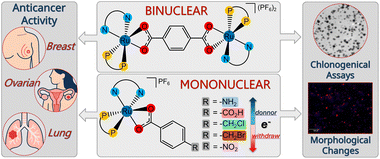
This work explores a series of para-substituted benzoic acid ruthenium(II) complexes and how small changes in their structure affect cytotoxicity. By combining synthesis, crystallographic characterization, and biological assays, it was observed that even small modifications in ligand substitution can significantly affect biological behaviour. This study reinforces how important structural information is for understanding and designing new bioactive metal complexes.
Meet the Principal Investigator
 |
João Honorato is an Assistant Professor at the University of São Paulo, Brazil, and the group leader of Metallis Vitae, a research group which operates at the intersection of bioinorganic chemistry and crystallography. His research combines synthesis, structural determination, and biological studies to understand how atomic-level structure influences biological activity. He’s especially interested in diffraction techniques and how emerging methods such as MicroED are expanding the limits of structural science and allowing us to study increasingly challenging systems. He obtained his MSc in Chemistry (2016) and PhD in Sciences (2020) from the Federal University of São Carlos (UFSCar), in the field of Inorganic Chemistry. He completed a postdoctoral fellowship in crystallography at the São Carlos Institute of Physics (IFSC/USP). He was awarded the Young Researcher Award by the Young Researchers Division of the Brazilian Chemical Society (JPSBQ), in partnership with the Royal Society of Chemistry (RSC). |
What are the big research questions your group will be focussing on?
At Metallis Vitae, we are fascinated by one central question: how can atomic-level structure explain biological activity? We are particularly interested in bioactive metal complexes and in understanding how small structural variations affect properties such as stability, interaction with biomolecules, and cytotoxicity. A major part of our work involves structural determination using diffraction techniques. I’m especially excited about the possibilities opened by MicroED, mainly because it allows us to obtain high-resolution structural information from crystals that would traditionally be considered too small or too difficult. More broadly, we want to strengthen the connection between structure and function, using crystallography not just as a characterization tool, but as a way to understand and guide chemical design.
What inspired you to get into science?
Curiosity, but also a bit of frustration with not knowing how things really work. I became fascinated by the idea that the behaviour of a molecule can often be explained by something invisible to the naked eye: the arrangement of atoms. When I first started working with crystallography, it completely changed how I viewed chemistry. Suddenly, chemistry was no longer only about reactions and formulas, it became something visual and tangible. That ability to “see” matter at the atomic level still feels incredible to me.
What advice would you give to those who are seeking their first group leader position?
Try to build your own scientific identity as early as possible. It is very easy to stay inside the comfort zone of your previous training, but starting a group is really about deciding what kind of science you want to create and what questions you genuinely want to answer. Also, don’t be afraid of learning new techniques or entering new areas. Some of the most exciting things happening in science today are exactly at the interface between fields. And finally, remember that science is deeply collaborative. A healthy and motivated group environment matters just as much as good ideas.





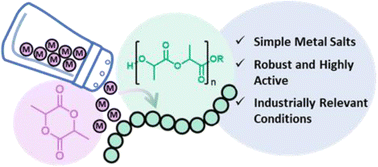

 Tracking changes inside cells is essential for understanding both normal biological functions and disease processes. Fluorescent probes are valuable tools for this purpose, offering advantages over genetically encoded alternatives. Despite significant advances in organelle-specific probes, several challenges persist. This work highlights key design strategies for such probes, including cellular uptake mechanisms and the interplay between the properties of the target organelle and the physicochemical characteristics of the probe. Additionally, it showcases recent advancements and addresses current challenges in the development of organelle-targeted fluorescent probes.
 After completing her BSc at Universitas Indonesia (UI), Samira Husen Alamudi received her PhD in chemistry from the National University of Singapore (NUS) in 2015 under the supervision of Prof. Young-Tae Chang. She then pursued postdoctoral studies at NUS and later worked as a Research Fellow at the Agency for Science, Technology and Research (A*STAR), Singapore, with Prof. Young-Tae Chang and Prof. Ichiro Hirao until 2021. She subsequently worked in the biotechnology industry before joining UI in 2023, where she is currently an assistant professor. Her research interests include the development of small fluorescent probes for monitoring intracellular dynamics in native cellular environments.