Archive for May, 2026

Sandip Murarka Joins RSC Advances as an Associate Editor

RSC Advances are delighted to welcome Sandip Murarka, IIT Jodhpur, India as an Associate Editor!

Dr. Murarka pursued his PhD from WWU Münster under the supervision of Prof. Armido Studer. After completing his Ph.D. (2013), he worked as a Max-Planck postdoctoral research fellow in the laboratory of Prof. Herbert Waldmann at Max Planck Institute of Molecular Physiology, Dortmund (2013-2016). Following a year long stay (2016-2017) as a Team Leader at Syngene International Limited, a pharmaceutical company, he decided to return to academia. In May 2017, he joined the Indian Institute of Technology Jodhpur, India, as an Assistant Professor and was promoted to the post of Associate Professor in June 2022. He is currently the Head of the Chemistry department at IIT Jodhpur.

Dr. Murarka’s current research activities include the study of novel activation modes and the development of chemoselective and sustainable synthetic transformations. His research group utilizes sustainable chemical tools, such as base-metal catalysis, photocatalysis, and electro-organic synthesis, to convert feedstock chemicals to value-added compounds and pharmaceutically relevant molecular architectures.

He is a recipient of the Humboldt Fellowship for Experienced Researchers (2026) by AvH Foundation, CRSI Bronze Medal (2026) by Chemical Research Society of India, Thieme Chemistry Journal Award (2022) by Thieme, and Merck Young Scientist Award (runners up, 2023) by Merck. He is an Early Career Advisory Board Member (ECAB) of journals, such as ChemistrySelect (Wiley-VCH), Chemistry an Asian Journal (Wiley-VCH), and Organic Chemistry Frontiers (RSC). He is also an elected Fellow of the Royal Society of Chemistry (FRSC).

Sandip’s research areas include all things Organic Catalysis.

Read some of Sandip’s recent Royal Society of Chemistry Publications:

1. Photoredox-Catalyzed Multicomponent Transformation Towards Functionalized trans-2,3-Disubstituted Indolines
M. Siva Prasad, Sneha Chandra, Prahallad Meher, Sandip Murarka*
Chem. Commun., 2026,62, 589-593

2. Iron Photocatalysis Towards Site-Selective C(sp3)-H Alkylation of Glycines and Peptides
Satya Prakash Panda, M. Siva Prasad, Prahallad Meher, Oliver Reiser*, Sandip Murarka*
Chem. Sci., 2025, 16, 22084-22090

3. Photoredox-Catalyzed Arylative and Aryl Sulfonylative Radical Cascades Involving Diaryliodonium Reagents: Synthesis of Functionalized Pyrazolones
Karan Ramdas Thombare, Sushanta Kumar Parida, Prahallad Meher, Sandip Murarka*
Chem. Commun., 2024,60, 13907-13910

4. Direct C-H Alkylation of 3,4-Dihydroquinoxaline-2-one with N-(acyloxy)phthalimide via Radical-Radical Cross Coupling
Sudhir Kumar Hota, Gulshan Singh, Sandip Murarka*
Chem. Commun., 2024,60, 6268-6271

5. Visible light photoredox-catalyzed arylative cyclization to access benzimidazo[2,1-a]isoquinolin-6(5H)-ones
Prahallad Meher, Raj Kumar Samanta, Sourav Manna, Sandip Murarka*
Chem. Commun., 2023,59, 6092-6095
Submit your Organic Catalysis papers for consideration by Sandip Murarka.

Check out our author guidelines for information on our article types or find out more about the advantages of publishing in a Royal Society of Chemistry journal.

Keep up to date with our latest Popular Advances, Reviews, Collections & more by following us on Bluesky. You can also keep informed by signing up to our E-Alerts.

Digg This
Reddit This
Stumble Now!
Share on Facebook
Bookmark this on Delicious
Share on LinkedIn
Bookmark this on Technorati
Post on Twitter
Google Buzz (aka. Google Reader)

Andrea Goldson-Barnaby joins RSC Advances as an Associate Editor

RSC Advances is delighted to welcome Andrea Goldson-Barnaby, The University of the West Indies, Jamaica, as an Associate Editor!


Dr. Andrea Goldson-Barnaby is a graduate of The University of the West Indies, Jamaica where she pursued a BSc, doing a double major in Chemistry and Food Chemistry followed by a M Phil in Applied Organic Chemistry. While at The University of the West Indies she worked as a synthetic chemist at Tanaud International BV. A Canadian Commonwealth Scholar, she pursued doctoral studies in Food Science at the University of British Columbia, Canada where she was the recipient of several awards (Dr Wilson Henderson Memorial Graduate Fellowship, Student Leadership Recognition Award, Graduating Class of Agriculture 1921 Graduate Scholarship). Currently she is a Senior Lecturer in the Department of Chemistry at The University of the West Indies, Kingston, Jamaica where she serves as the Head of the Food Chemistry Division and a Fellow of the Caribbean Academy of Science. She was the recipient of the Principal’s Award for Most Outstanding Researcher/Research Activity, for three consecutive years (2017/2018, 2018/2019 and 2019/2020) as well as best research publication in 2019. Dr Goldson-Barnaby is involved in capacity building of the local Food Industry and has been conducting Food Safety Preventive Controls Alliance, Human Food Workshops since 2017. She enjoys doing science outreach and serves as the Faculty Advisor for the American Chemical Society (ACS) Jamaica International Student Chapter and Secretary of the Caribbean Academy of Science.

Research Areas: Food Chemistry, including:
Chemistry of food processing
Chemistry of food safety
Chemistry of food structure
Chemistry of food packaging
Food analysis
Food colloids

Discover some of Andrea’s publications:
Biochemical properties of tree ripened and post-harvest ripened Mangifera indica (cv. East Indian)
Kimberly A. Blissett, Machel Emanuel, Andrea Goldson-Barnaby*
International Journal of Fruit Science, 19(4), 452–463.

Free Radical Scavenging Capacity, Carotenoid Content, and NMR Characterization of Blighia sapida Aril Oil
Andrea Goldson-Barnaby*, Jesse Clarke, Dane Warren, Kailesha Duffus
Journal of Lipids,2018,1762342

Phenylalanine ammonia lyase activity, antioxidant properties, fatty acid profile, mineral content and physiochemical analyses of Cissus sicyoides berries
Andrea Goldson-Barnaby*, Ratmond Reid, Dane Warren
Journal of Berry Research. 7, 117-127.

Micro-encapsulation of ginger (Zingiber officinale) extract by spray drying technology
Kelly Simon-Brown, Kevin Mis Solval, Aranee Chotiko, Luis Alfaro, Vondel Reyes, Chen Liu, Bennett Dzandu, Emanuel Kyereh, Andrea Goldson-Barnaby, Ian Thompson, Zhimin Xu, Subramaniam Sathivel*
LWT – Food Science and Technology. 70, 119-125

Submit your Food Chemistry papers for consideration by Andrea Goldson-Barnaby

Check out our author guidelines for information on our article types or find out more about the advantages of publishing in a Royal Society of Chemistry journal.

Keep up to date with our latest Popular Advances, Reviews, Collections & more by following us on Bluesky. You can also keep informed by signing up to our E-Alerts.

Digg This
Reddit This
Stumble Now!
Share on Facebook
Bookmark this on Delicious
Share on LinkedIn
Bookmark this on Technorati
Post on Twitter
Google Buzz (aka. Google Reader)

Meet João Honorato de Araujo-Neto: New Principal Investigator

New Principal Investigator banner

We are delighted to introduce the next contribution to our New Principal Investigators collection.

Read the paper

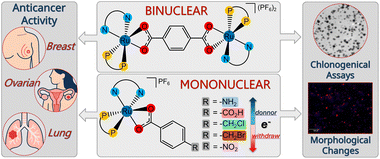
Para-substituted benzoic acid ruthenium(ii) complexes: structural features modulating cytotoxicity

Jocely L. Dutra, Pedro H. S. Marcon, Gustavo Moselli, Fabiano M. Niquini, João Victor F. da Costa, Carlos André F. Moraes, Ataualpa A. C. Braga, Javier Ellena, Alzir A. Batista and João Honorato de Araujo-Neto


Graphical abstract: Para-substituted benzoic acid ruthenium(ii) complexes: structural features modulating cytotoxicity

This work explores a series of para-substituted benzoic acid ruthenium(II) complexes and how small changes in their structure affect cytotoxicity. By combining synthesis, crystallographic characterization, and biological assays, it was observed that even small modifications in ligand substitution can significantly affect biological behaviour. This study reinforces how important structural information is for understanding and designing new bioactive metal complexes.

Meet the Principal Investigator

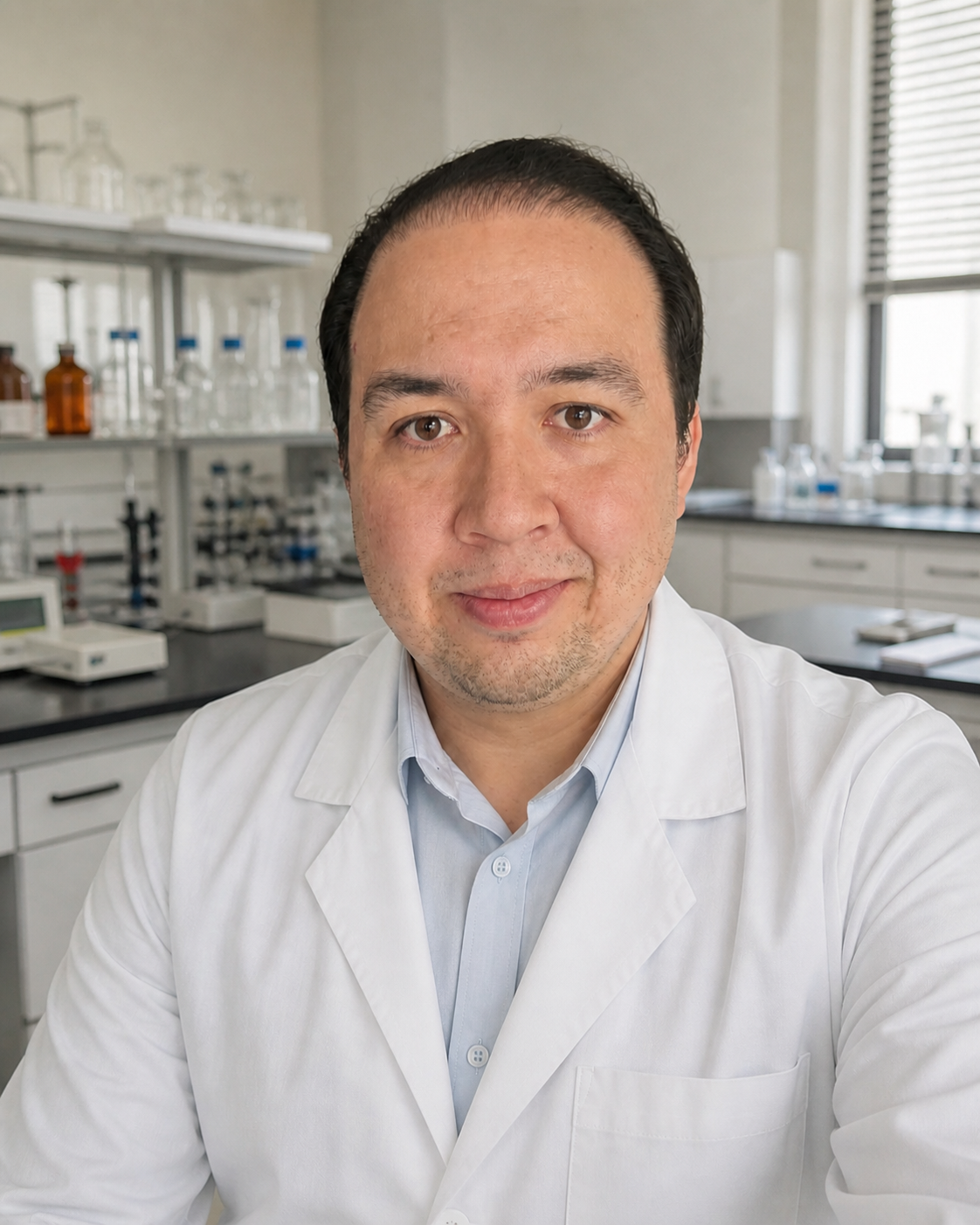
João Honorato de Araujo-Neto João Honorato is an Assistant Professor at the University of São Paulo, Brazil, and the group leader of Metallis Vitae, a research group which operates at the intersection of bioinorganic chemistry and crystallography. His research combines synthesis, structural determination, and biological studies to understand how atomic-level structure influences biological activity. He’s especially interested in diffraction techniques and how emerging methods such as MicroED are expanding the limits of structural science and allowing us to study increasingly challenging systems. He obtained his MSc in Chemistry (2016) and PhD in Sciences (2020) from the Federal University of São Carlos (UFSCar), in the field of Inorganic Chemistry. He completed a postdoctoral fellowship in crystallography at the São Carlos Institute of Physics (IFSC/USP). He was awarded the Young Researcher Award by the Young Researchers Division of the Brazilian Chemical Society (JPSBQ), in partnership with the Royal Society of Chemistry (RSC).

What are the big research questions your group will be focussing on?

At Metallis Vitae, we are fascinated by one central question: how can atomic-level structure explain biological activity? We are particularly interested in bioactive metal complexes and in understanding how small structural variations affect properties such as stability, interaction with biomolecules, and cytotoxicity. A major part of our work involves structural determination using diffraction techniques. I’m especially excited about the possibilities opened by MicroED, mainly because it allows us to obtain high-resolution structural information from crystals that would traditionally be considered too small or too difficult. More broadly, we want to strengthen the connection between structure and function, using crystallography not just as a characterization tool, but as a way to understand and guide chemical design.

What inspired you to get into science?

Curiosity, but also a bit of frustration with not knowing how things really work. I became fascinated by the idea that the behaviour of a molecule can often be explained by something invisible to the naked eye: the arrangement of atoms. When I first started working with crystallography, it completely changed how I viewed chemistry. Suddenly, chemistry was no longer only about reactions and formulas, it became something visual and tangible. That ability to “see” matter at the atomic level still feels incredible to me.

What advice would you give to those who are seeking their first group leader position?

Try to build your own scientific identity as early as possible. It is very easy to stay inside the comfort zone of your previous training, but starting a group is really about deciding what kind of science you want to create and what questions you genuinely want to answer. Also, don’t be afraid of learning new techniques or entering new areas. Some of the most exciting things happening in science today are exactly at the interface between fields. And finally, remember that science is deeply collaborative. A healthy and motivated group environment matters just as much as good ideas.

Digg This
Reddit This
Stumble Now!
Share on Facebook
Bookmark this on Delicious
Share on LinkedIn
Bookmark this on Technorati
Post on Twitter
Google Buzz (aka. Google Reader)