Archive for November, 2024

October 2024 RSC Advances Review Articles

Welcome to October’s Review round up!

Every month we update our 2024 Reviews in RSC Advances collection to showcase all of the review articles published in RSC Advances in 2024. Don’t forget to come back next month to check out our latest reviews.

We hope you enjoy reading and as always, all of our articles are open access so you can easily share your favourites online and with your colleagues.

Explore the full collection!


Browse a selection of our October reviews below:

From green chemistry to biomedicine: the sustainable symphony of cobalt oxide nanoparticles
Annu, Muskan Sahu, Somesh Singh, Satypal Prajapati, Dinesh K. Verma and Dong Kil Shin
RSC Adv., 2024, 14, 32733-32758

Research progress of Mn-based low-temperature SCR denitrification catalysts
Jiadong Zhang, Zengyi Ma, Ang Cao, Jianhua Yan, Yuelan Wang, Miao Yu, Linlin Hu and Shaojing Pan
RSC Adv., 2024, 14, 32583-32601

The synergistic effect of adsorption and Fenton oxidation for organic pollutants in water remediation: an overview
Junzhe Song, Linan Zhu, Sheng Yu, Guobiao Li and Dong Wang
RSC Adv., 2024, 14, 33489-33511

Production, characterization and environmental remediation application of emerging phosphorus-rich biochar/hydrochar: a comprehensive review
Qilong Ge, ChunJuan Dong, GuoYing Wang, Jing Zhang and Rui Hou
RSC Adv., 2024, 14, 33649-33665

A comprehensive review on self-cleaning glass surfaces: durability, mechanisms, and functional applications
Suqi Xue, Shanglei Yang, Xiner Li, Qiubo Li and Bangguo Hu
RSC Adv., 2024, 14, 34390-34414

Insulating materials based on silica aerogel composites: synthesis, properties and application
K. I. Goryunova and Y. N. Gahramanli
RSC Adv., 2024, 14, 34690-34707
 

Submit to RSC Advances today! Check out our author guidelines for information on our article types or find out more about the advantages of publishing in a Royal Society of Chemistry journal.

Keep up to date with our latest Popular Advances, Reviews, Collections & more by following us on X. You can also keep informed by signing up to our E-Alerts.

Digg This
Reddit This
Stumble Now!
Share on Facebook
Bookmark this on Delicious
Share on LinkedIn
Bookmark this on Technorati
Post on Twitter
Google Buzz (aka. Google Reader)

RSC Advances Announces Co-Review

RSC Advances is delighted to announce that it has launched co-review.

RSC Advances aims to support authors, researchers and reviewers at all stages of their career. The team behind RSC Advances always endeavours to promote innovative ideas that enable opportunities for all.

We are therefore excited to announce the option for co-review at RSC Advances. The co-review process allows two individuals to collaborate on the peer review of a manuscript and both reviewers eligible for recognition through the Web of Science Reviewer Recognition Service.

The launch of co-review aims to provide a way for early career researchers who assist their supervisor reviewing a manuscript the chance for recognition and to receive credit for their contribution.

Co-review enables early-career researchers to develop their skills in peer review through collaboration with an experienced colleague and to demonstrate experience that may further their career. Please note that co-reviewers must meet the RSC’s peer reviewer eligibility criteria to review for RSC Advances. More information can be found at our Author and Reviewer Hub.

Here are what our Co-Editors in Chief had to say:

“We are really excited to launch this new initiative and to give early-career researchers the opportunity to take part in, and importantly, get recognition for their contribution to peer review. RSC Advances strives to ensure excellent peer review for all our authors and this new initiative, alongside transparent peer review, gives a strong opportunity to train and support the next generation of reviewers” – Karen Faulds, Editor-in-Chief, RSC Advances.

“The RSC Advances Reviewer Panel is at the heart of our journal. We now want to propagate that reviewing experience to the next generation of scientists, and co-review will be a great way to do this. Innovations in ScholarOne will allow experienced reviewers to pass on their expertise to more junior colleagues, and for both to get credit for the work” – Russell J. Cox, Editor-in-Chief, RSC Advances.

To support our early career researchers and those who are just starting to write reviewer reports we ran a blog series earlier this year titled ‘Perfecting Peer Review’ which provides insights from our Associate Editors in review writing. We encourage all reviewers, from the very experienced to the brand new to check out that series here!  We hope everyone will be able to find some useful tips and tricks on review writing.

To find out more about co-review, please read our Editorial here.

We wish all our reviewers the best, and we look forward to receiving your next reviewer report!


Digg This
Reddit This
Stumble Now!
Share on Facebook
Bookmark this on Delicious
Share on LinkedIn
Bookmark this on Technorati
Post on Twitter
Google Buzz (aka. Google Reader)

Meet Oisín N. Kavanagh: New Principal Investigator

We are delighted to introduce the first contribution to our New Principal Investigators collection.

Read the paper

Cystine crystal nucleation and decay in the context of cystinuria pathogenesis and treatment

Kimberley Noble and Oisín N. Kavanagh

Meet the Principal Investigator

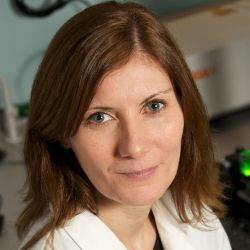
Oisín N. Kavanagh is a pharmacist and Senior Lecturer in Pharmaceutics at the School of Pharmacy, Newcastle University and Senior Fellow of the Higher Education Academy. He received the Gold Medal from the Pharmaceutical Society of Northern Ireland in 2017 and completed his clinical training in his hometown of Derry before moving to the University of Limerick to undertake his PhD. He was awarded a Fulbright scholarship to the School of Pharmacy, University of Michigan and was subsequently appointed to a Lectureship at Newcastle University in 2021. His research interests are centred around the relationship between drug physical properties and their pharmacokinetics. He is PI for multiple research streams funded by government and charitable organisations. This includes an EPSRC-funded project (EP/Y014596/1) investigating drug-induced crystalluria and a project funded by Action Medical Research/LifeArc focused on engineering new drug formulations for cystinosis, a rare disease.

Check out the video below where Oisín summarises his recent paper:

You’ve recently started your own group, what are the big research question/s your group will be focussing on?

The central vision for my team is to develop fundamental understanding to describe the relationships between drug supersaturation and pharmacokinetics. This has brought us to work on two applications (1) crystal engineering to modulate the pharmacokinetics of absorption and (2) contextualising supersaturation processes in the kidney with pharmacokinetics to predict drug induced crystalluria.

What inspired you to get into science?

If I cast my mind back, I can’t remember ever wanting to be anything other than a scientist. I suppose the path forward became a little clearer during my time at university, where I studied Pharmacy. There, I developed a solid foundation in pharmaceutical sciences and worked every summer in the research labs of Professor John Callan. This experience was formative for me.

What advice would you give to those who are seeking their first group leader position?

This is a difficult path and there are moments when things look bleak… in those times, try to remember why you’re doing this – and then get at it!

Digg This
Reddit This
Stumble Now!
Share on Facebook
Bookmark this on Delicious
Share on LinkedIn
Bookmark this on Technorati
Post on Twitter
Google Buzz (aka. Google Reader)

ATAS – AnXAS 2024 Workshop Poster Prize Winners

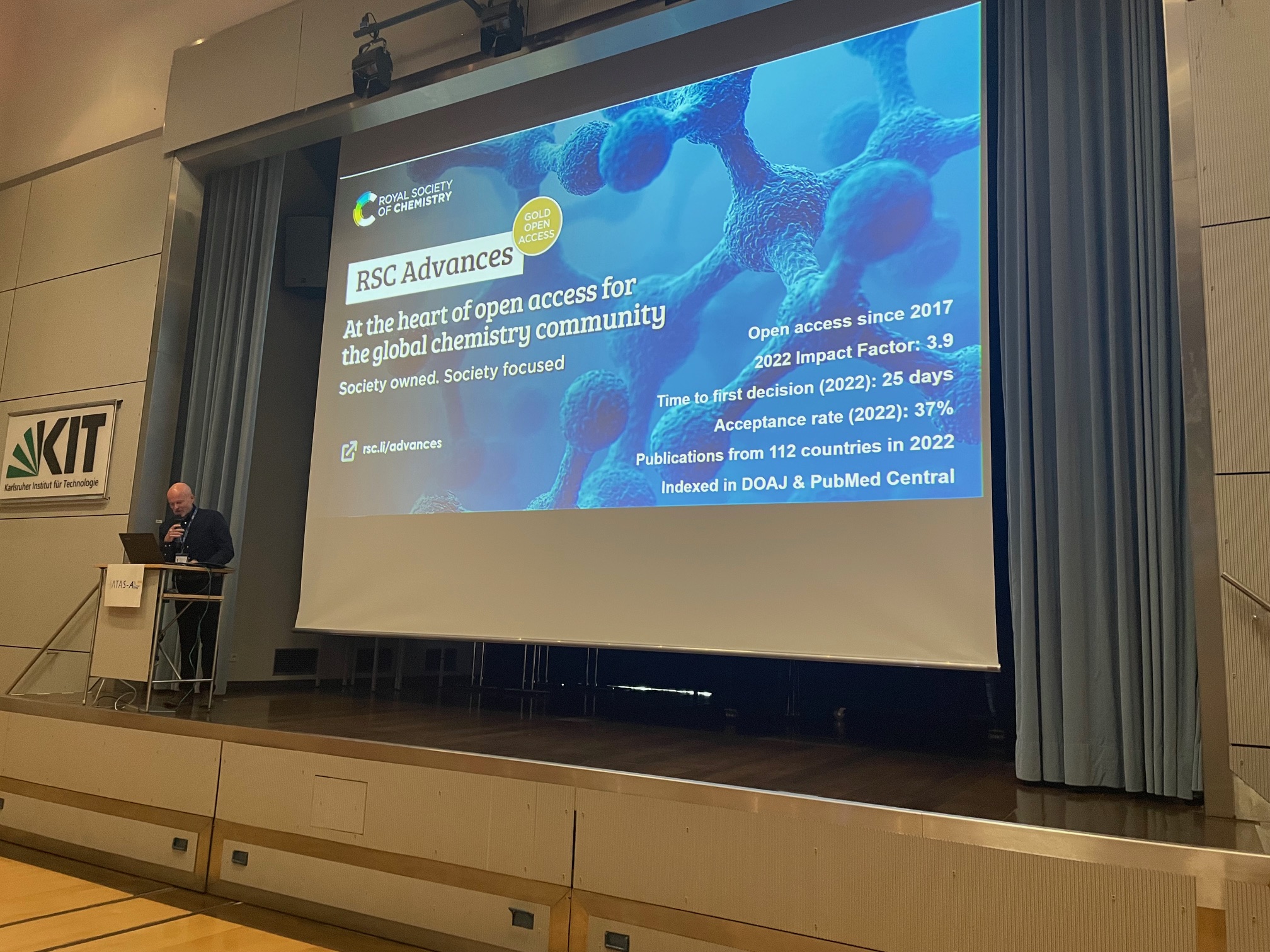
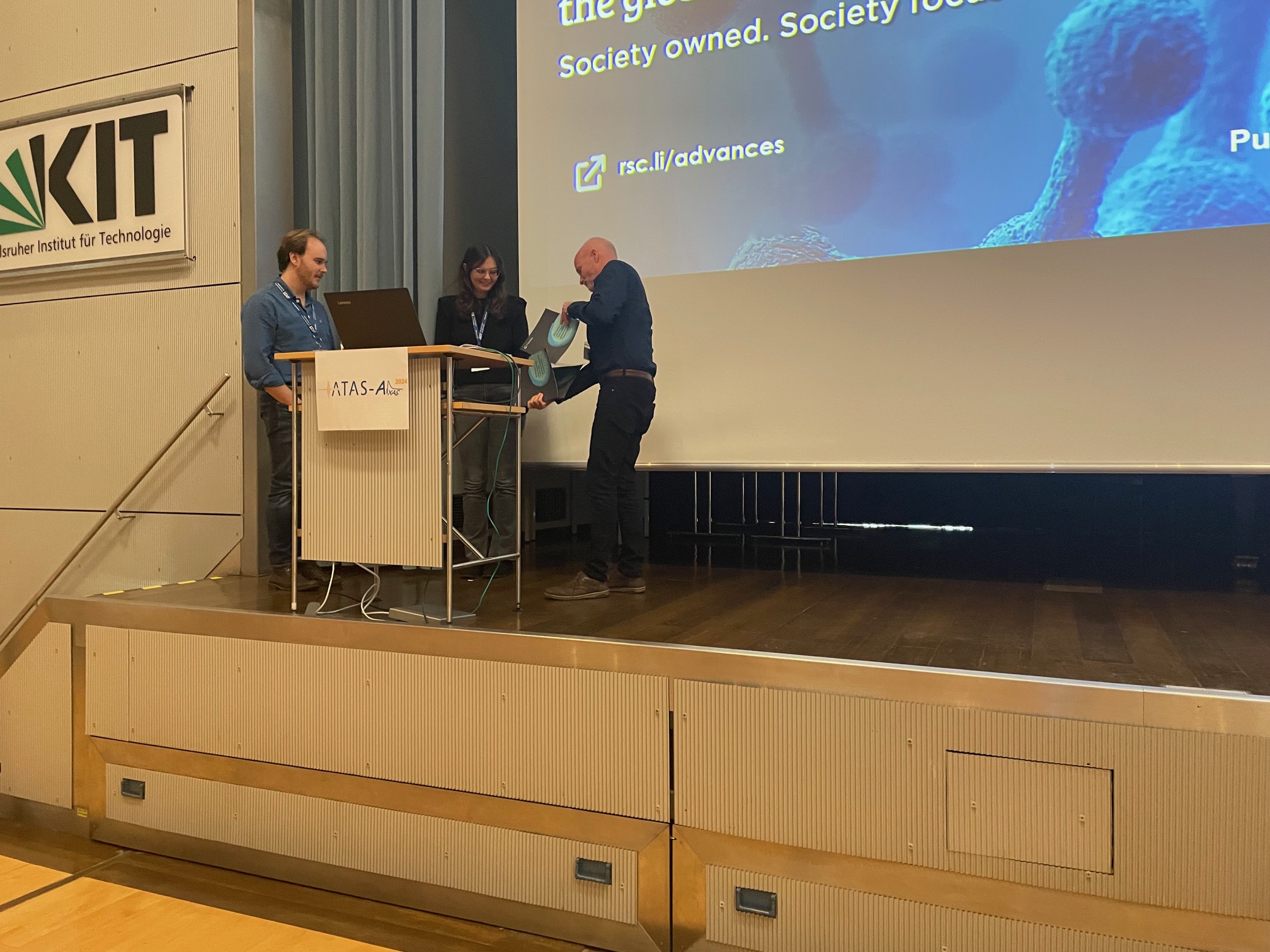
The second ATAS – AnXAS workshop was held in Karlsruhe, Germany between the 17th-21st of October 2024. RSC Advances was delighted to award poster prizes to three outstanding researchers in the field.

The awardees of ATAS – AnXAS 2024, the 2nd Joint Workshop were as follows:

Best posters (voted for by all participants of the poster session):

Emily Reynolds

“Development and Application of a Microfluidic Set-Up for In-Situ Studies of Formation Kinetics of La- and U-Complexes Using High Resolution Spectroscopic Methods”

Karlsruhe Institute of Technology, Germany

Nathan M. Alcock

“Determination of actinide central-field covalency with 𝟑𝒅𝟒𝒇 resonant inelastic X-ray scattering (RIXS)”

University of Manchester, Manchester

Best young scientist oral presentation award (voted for by the scientific advisory board):

Janik Lohmann

“Investigation of gluconate complexation with trivalent Eu, Pu and Am using CE-ICP-MS”

Johannes Gutenberg-Universität Mainz, Germany

Congratulations to our winners!

Digg This
Reddit This
Stumble Now!
Share on Facebook
Bookmark this on Delicious
Share on LinkedIn
Bookmark this on Technorati
Post on Twitter
Google Buzz (aka. Google Reader)