Archive for the ‘news’ Category

Getting down to the beer bones of it

Posted on behalf of Sarah Brown, web writer for RSC Advances

‘Waste not, want not’ my mother dearest would say, a strong proponent of cling-film and pourer of scorn on sell-by dates.  She would be delighted to read that scientists have been able to produce potential scaffolds for bone grafts from beer production waste.

The waste contains phosphorous, silicon, magnesium and calcium – the main components of bone – making it an ideal candidate to develop treatments, coatings, grafts and implants for osteo-based trauma.

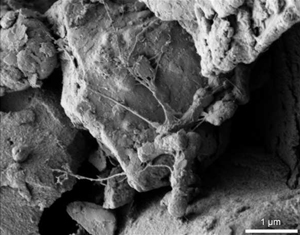
Osteoblasts grown on a 3D biomaterial matrix

Osteoblasts grown on a 3D biomaterial matrix

Reporting their work in RSC Advances, M. Angeles Martin-Luengo and co-workers investigated the residues from three different beer production plants in Spain to determine whether their origin would affect their suitability as biomaterial precursors.

The authors performed in vitro cell proliferation assays in the presence of the beer waste materials of different plants and found no discernable difference between the different wastes. No cytotoxicity was observed either, encouraging further investigations into their use in bone tissue engineering.

One of the major advantages of using beer production waste is the reduced cost in producing these medical aids compared with conventional materials. While commercial materials currently sell at $150 per gram, beer production waste costs around $40 per ton.

In short, these potential biomaterials are environmentally and economically friendly – I’ll drink to that! 

Interested in finding out more? Read the full article using the link below:

Preparation, characterization and in vitro osteoblast growth of waste-derived biomaterials 
M. Angeles Martin-Luengo and co-workers
RSC Adv.,2014, 4, 12630-12639


Sarah Brown Sarah Brown is a guest web-writer for RSC Advances. Sarah hung up her lab coat after finishing her PhD and post-doctorate in nanotechnology for diagnostics and therapeutics and now works in academic publishing. When not trying to explain science through ridiculous analogies, you can often find her crocheting, baking or climbing, but not all at once.
Digg This
Reddit This
Stumble Now!
Share on Facebook
Bookmark this on Delicious
Share on LinkedIn
Bookmark this on Technorati
Post on Twitter
Google Buzz (aka. Google Reader)

Super strong hydrogel

Researchers from China have accidently discovered a super strong, super stretchy hydrogel, which has the potential to be used in tissue engineering.

Originally developed in the 1950s when Otto Wichterle and Drahoslav Lim invented soft contact lenses, supramolecular hydrogels are gel-like polymers that can absorb water. Akin to natural soft tissue, their networks are held together by reversible non-covalent interactions making them attractive materials for biomedical applications.

Hydrogels have good elasticity, but their mechanical weakness lets them down. Now, a new, stronger hydrogel with ‘amazing molecular properties’ has been created by Mingyu Guo and He Huang at Soochow University. The group were making water-dispersible polyurethane adhesives and noticed that strong stretchable gels formed when the samples were left in the air for a couple of days.

Interested? If so, read the full article at Chemistry World here

Digg This
Reddit This
Stumble Now!
Share on Facebook
Bookmark this on Delicious
Share on LinkedIn
Bookmark this on Technorati
Post on Twitter
Google Buzz (aka. Google Reader)

Microbes reduce coal’s carbon footprint

Written by Rachel Purser-Lowman for Chemistry World

bacteria on coalWith energy demands rising and the increasing importance of low-carbon technologies, scientists in Canada are investigating the microbial conversion of coal into methane, to find a way that coal, especially low grade unmineable coal, can be used, whilst minimising its environmental impact.

Methane, the primary constituent of natural gas, releases significantly less carbon dioxide, when burned, than coal. Biological generation of methane in a coal seam results from microbial activity that starts during the early stages of coal formation.

Increased pressure and heat eventually destroys the microbes, but secondary methane production can occur when meteoric water infiltrates the cooled coal, bringing new microbes and nutrients.

Interested? If so, read the full article at Chemistry World here!

Digg This
Reddit This
Stumble Now!
Share on Facebook
Bookmark this on Delicious
Share on LinkedIn
Bookmark this on Technorati
Post on Twitter
Google Buzz (aka. Google Reader)

I love carbon quantum dots. Full stop.

Posted on behalf of Sarah Brown, web writer for RSC Advances

I love dots. The dot is one of the protagonists in the Morse code. Dot Branning in Eastenders is one resilient lady. The addition of a dot changes the length of a musical note and turns cougars into leopards. But some of the best dots have to be quantum dots, and more specifically carbon quantum dots. 

In a review recently published in RSC Advances, Pengju Luo and co-authors give an insight into the rise of carbon-based quantum dots and the growing competition they represent to semiconductor quantum dots. 

Synthesised from ingredients you could get down at the local supermarket (eg, fruit juice, caramel and BBQ’d meat), carbon-based quantum dots are a non-toxic alternative to cadmium-based quantum dots – important for application in biomedical imaging and therapies. 

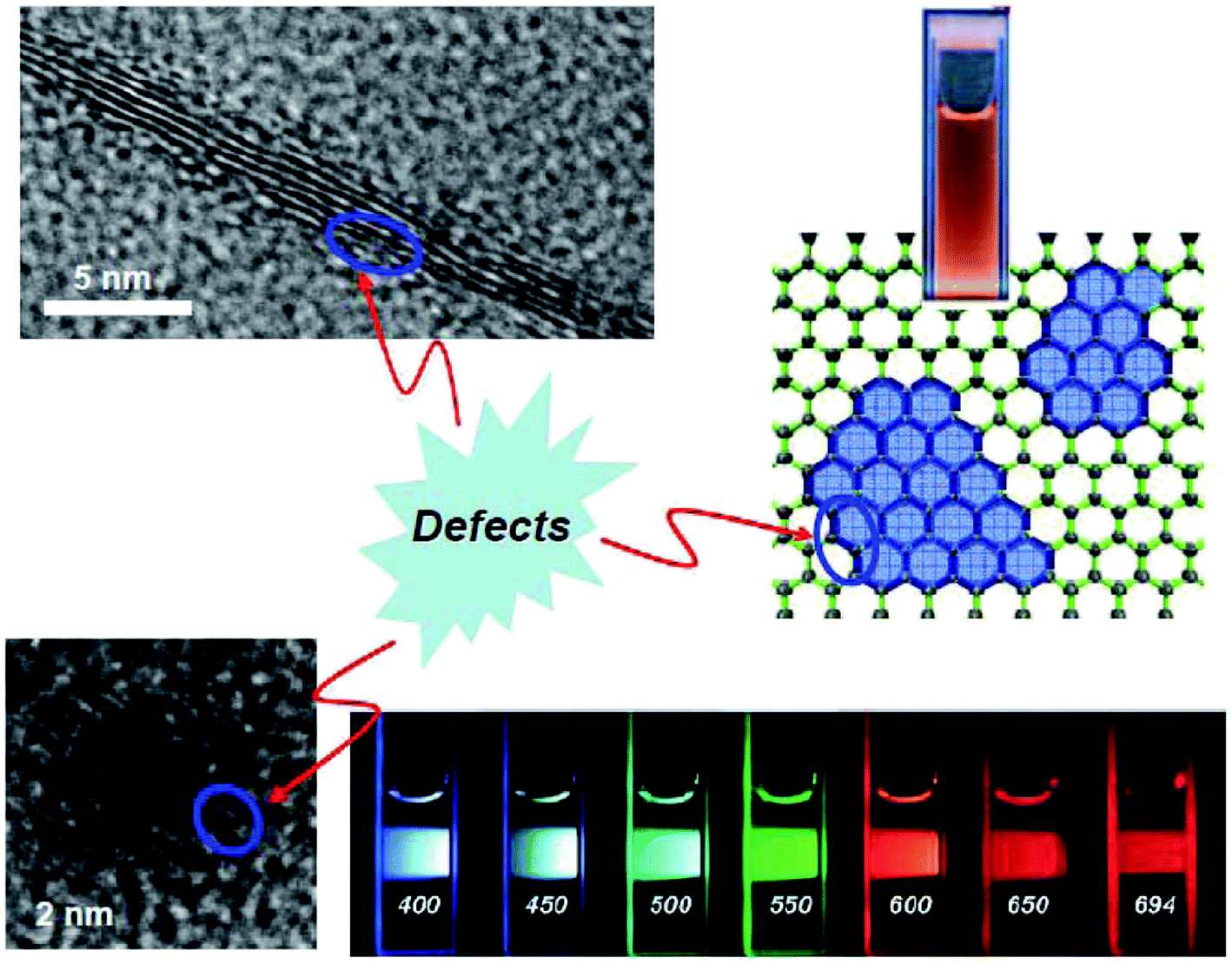
Quantum Dots 

It’s the defects of the carbon nanostructures that give rise to emissions that can be detected in the near infrared and red fluorescence regions, reducing interference from background signals which is promising for tissue analysis applications. The aqueous solubility, photochemical stability and non-blinking performance further underline the advantages of this class of quantum dot. The authors illustrate this with examples of their usage in vitro, ex vivo and in vivo studies.  

Although there is still work to be done, after reading this review, you can no longer claim to be naive, or should I say naïve, about the importance of carbon-based quantum dots.

Find out more by reading the full review:

Carbon-based quantum dots for fluorescence imaging of cells and tissues
P. G. Luo, F. Yang, S. -T. Yang, S. K. Sonkar, L. Yang, J. J. Broglie, Y. Liu and Y. – P. Sun
RSC Adv., 2014, 4, 10791-10807 DOI: 10.1039/C3RA47683A 


Sarah Brown Sarah Brown is a guest web-writer for RSC Advances. Sarah hung up her lab coat after finishing her PhD and post-doctorate in nanotechnology for diagnostics and therapeutics and now works in academic publishing. When not trying to explain science through ridiculous analogies, you can often find her crocheting, baking or climbing, but not all at once.


Digg This
Reddit This
Stumble Now!
Share on Facebook
Bookmark this on Delicious
Share on LinkedIn
Bookmark this on Technorati
Post on Twitter
Google Buzz (aka. Google Reader)

Nanofair 2014 – 10th International Nanotechnology Symposium

The 10th International Nanotechnology Symposium – Nanofair 2014 – will be held at the International Congress Center Dresden, Germany between the 1st-3rd July 2014.

The theme for Nanofair 2014 is “New ideas for industry” and will provide a forum for presenting current research and exchanging ideas and information between scientists and engineers for industry, research laboratories and academia.  Contributions presented at the conference will cover fundamental scientific aspects as well as application orientated research and development.  Specific topics include:

  • Functional nanocomposites
  • Nanostructured surfaces
  • Nanomaterials for life sciences
  • Nanomaterials for energy applications
  • Nanoelectronics & photonics
  • Processing aspects of nanomaterials
  • Nanoanalytical methods
  • Carbon nanotubes & graphene

In addition, the 2nd Dresden Nanoanalysis Symposium of the Dresden Centre for Nanoanalysis will be held as part of nanofair 2014 on the 2nd July.  This international symposium will provide highlights in the field of nanoanalysis and its applictions in materials science and engineering, advanced electronics, energy research and other branches.

Registration deadline is the 6th June 2014 – click here to register today.

Digg This
Reddit This
Stumble Now!
Share on Facebook
Bookmark this on Delicious
Share on LinkedIn
Bookmark this on Technorati
Post on Twitter
Google Buzz (aka. Google Reader)

Blurred bonds rationalised by heavy atom tunnelling

Written by Jennifer Newton for Chemistry World

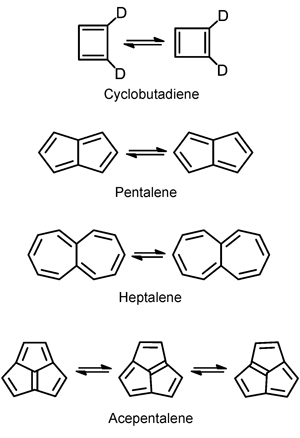
A new theoretical study of anti-aromatic systems has attributed the unusual way that their π-bonds shift to quantum tunnelling. These intriguing findings suggest that even though heavy atom tunnelling is rare, its effect is far from negligible.

antiaromatic compounds

Quantum-mechanical tunnelling is a process by which a particle can cross a potential barrier without having enough energy to go over it. It is a completely quantum effect based on the wave nature of the particle and is connected to the de Broglie wavelength, which gets shorter as the mass of the particle gets higher. Therefore, only the lightest particles can tunnel, and in chemistry it means that it is almost impossible for anything but hydrogen. Or that is what we were taught at university . . . .

Interested in learning more? Read the full story at Chemistry World

Digg This
Reddit This
Stumble Now!
Share on Facebook
Bookmark this on Delicious
Share on LinkedIn
Bookmark this on Technorati
Post on Twitter
Google Buzz (aka. Google Reader)

Molecules mimic mesmerising mathematics

Written by Stephen McCarthy for Chemistry World

 Computer models that show how organic molecules could assemble into molecular quasicrystals may open the door to new materials with exotic properties.

Imitating the famous mathematical patterns known as Penrose tilings, Dimitri Laikov of Moscow State University in Russia, designed two complementary molecular ‘tiles’ and modelled their supramolecular interactions. The resulting assembly shows the aperiodicity and five-fold rotational symmetry characteristic of quasicrystals – the first time that a complex with this property has been predicted


Interested? If so, read the full article at Chemistry World here!

Digg This
Reddit This
Stumble Now!
Share on Facebook
Bookmark this on Delicious
Share on LinkedIn
Bookmark this on Technorati
Post on Twitter
Google Buzz (aka. Google Reader)

Pumping gone soft

Written by Harriet Brewerton for Chemistry World

Scientists are a step closer to producing soft machines that are efficient and long-lasting enough for practical applications.

 Soft pump

Engines and other machinery are currently composed of rigid parts that bear considerable forces and degrade over time. They are also limited to moving in a certain direction or around a certain axis. In nature many mechanical processes are carried out using soft materials that are nevertheless highly durable, efficient and capable of deforming and returning to their original shape in complex ways, for example the heart.

Interested? If so, read the full article at Chemistry World here.

Digg This
Reddit This
Stumble Now!
Share on Facebook
Bookmark this on Delicious
Share on LinkedIn
Bookmark this on Technorati
Post on Twitter
Google Buzz (aka. Google Reader)

RSC Advances is now on Twitter

Want to keep up with all the latest news from RSC Advances?

You can now follow us on Twitter @RSC_Adv.

The feed features news on the latest HOT articles, themed issues, review articles and journal announcements. It is also a great place to follow news from the Royal Society of Chemistry, with updates on the latest conferences and bursaries as well as featuring news from our other journal publications.

Check out the feed at www.twitter.com/rsc_adv and start following RSC Advances today!

RSC Advances Twitter feed  

Digg This
Reddit This
Stumble Now!
Share on Facebook
Bookmark this on Delicious
Share on LinkedIn
Bookmark this on Technorati
Post on Twitter
Google Buzz (aka. Google Reader)

Cystic fibrosis treatment clears the way

Stabilising a mucus attacking enzyme with cross-links could allow it to be delivered orally to fight infections in cystic fibrosis patients.

Pseudomonas aeruginosa is one of the commonest opportunistic pathogens in cystic fibrosis. The bacterium produces alginate, a polysaccharide which causes significant mucus build-up in the lungs and intestine. In addition to affecting patients’ quality of life, this also significantly obstructs the delivery of antibiotics, requiring increased dosages which can lead to antibiotic resistance and an increased chance of side-effects.

Guillermo Castro at the National University of La Plata in Argentina, and his team, investigate the delivery of drugs with significant administrative problems’…

Interested? If so, read the full article at Chemistry World here.

Cross-linking alginate lyase in the presence of BSA stabilises the enzyme but leaves the active site intact
Please click on the below title to access the original article which is free to access until 7th April 2014 :

Development of novel alginate lyase cross-linked aggregates for the oral treatment of cystic fibrosis
G. A. Islan, Y. N. Martinez, A. Illanes and G. R. Castro
RSC Adv., 2014, 4, 11758-11765
DOI: 10.1039/C3RA47850E

Digg This
Reddit This
Stumble Now!
Share on Facebook
Bookmark this on Delicious
Share on LinkedIn
Bookmark this on Technorati
Post on Twitter
Google Buzz (aka. Google Reader)