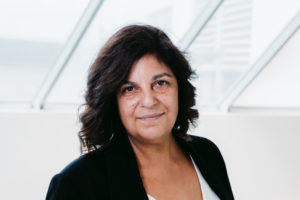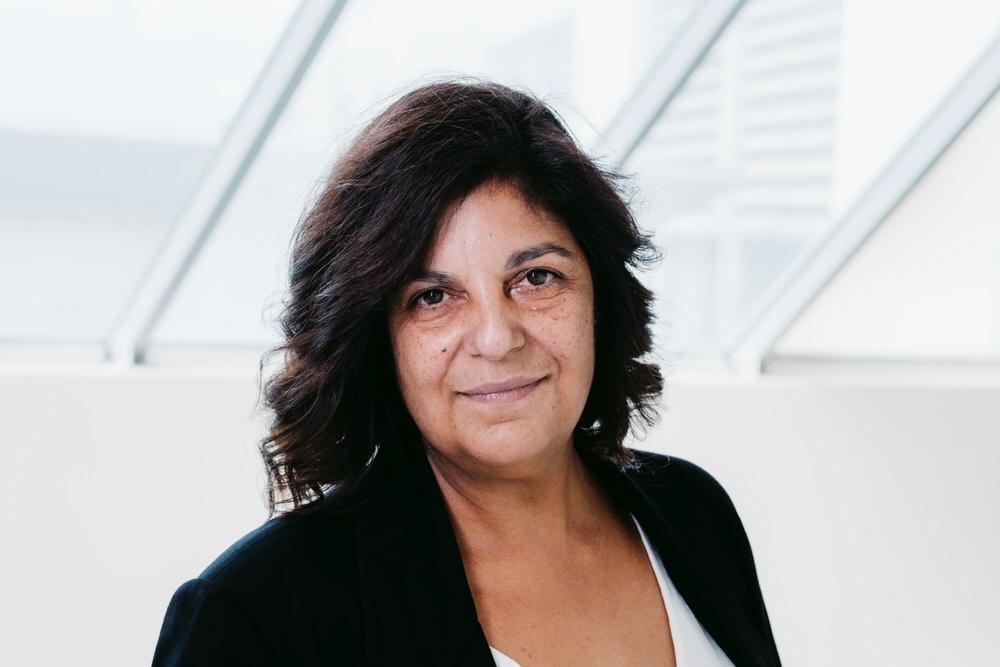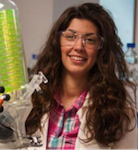

We are delighted to announce Professor Eva Blasco (Heidelberg University, Germany) as the recipient of the 2026 Polymer Chemistry lectureship!
This award, now in its twelfth year, honours an early-career researcher who has made a significant contribution to the polymer chemistry field. The recipient is selected by the Polymer Chemistry Editorial Board from a list of candidates nominated by the community.
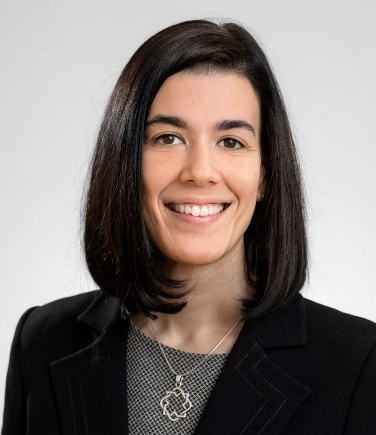
Eva Blasco studied chemistry at the University of Zaragoza (Spain), where she also completed her doctorate. She then received an Alexander von Humboldt Postdoctoral Research Fellowship in 2014, with which she carried out her research in the groups of Prof. C. Barner-Kowollik (Polymer Chemistry) and Prof. M. Wegener (Physics) at the Karlsruhe Institute of Technology (KIT) in Germany. During this time, she spent a research stay in Brisbane (Australia) and subsequently worked as a group leader at KIT. In October 2020, she started as Junior Professor at Heidelberg University and in January 2023 she was appointed W3 Professor at the newly founded Institute for Molecular Systems Engineering and Advanced Materials (IMSEAM).
She has published more than 125 publications and has been awarded several prizes including the Ernst-Haage and Dr.-Hermann-Schnell (GDCh) prizes in 2022, the Young Investigator Award of the Spanish Chemical Society in 2023 and the 2024 Advance Science Young Innovator Award.
Her research interests include the development of new functional and sustainable polymer materials for 3D and 4D printing, especially on the micro- and nanoscale.
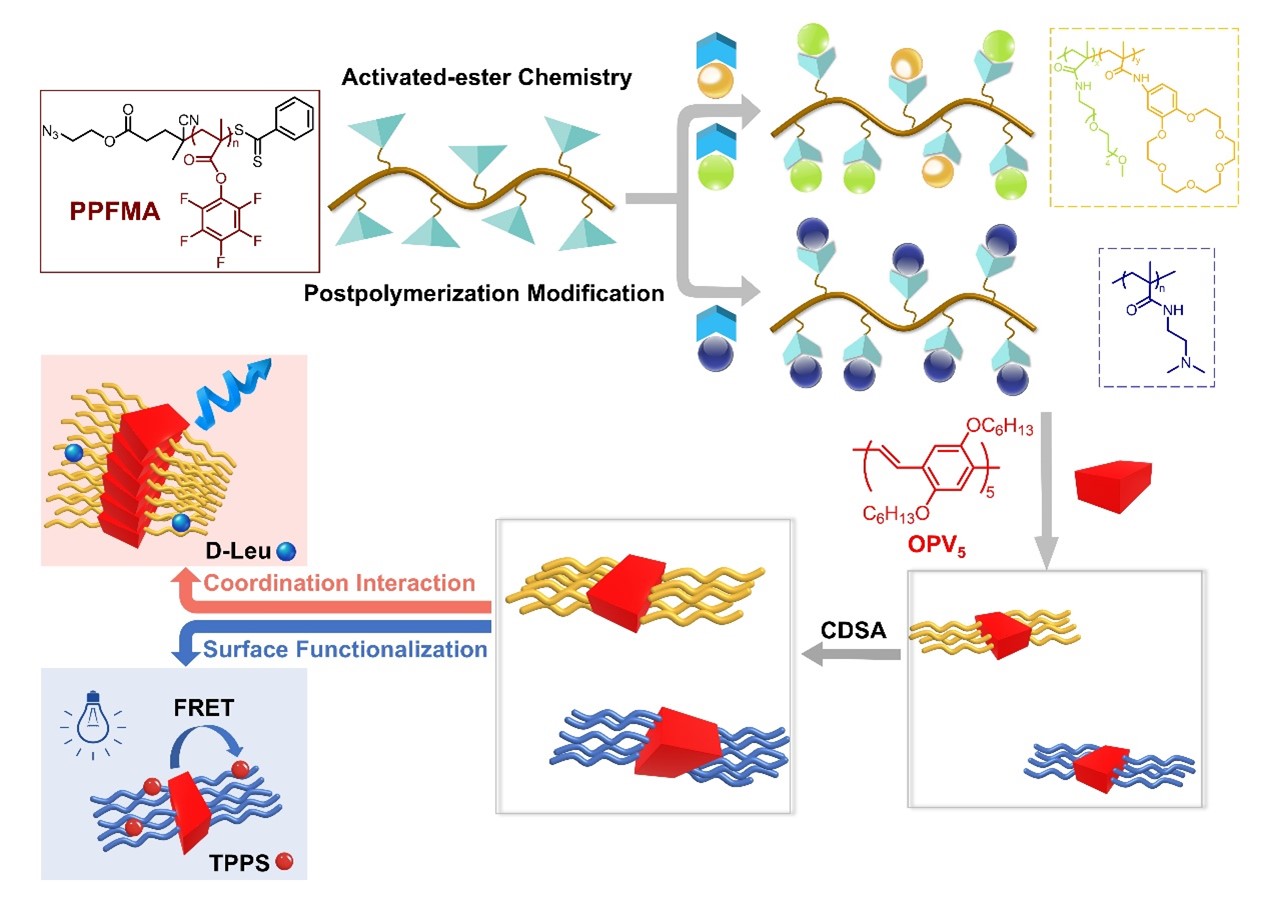
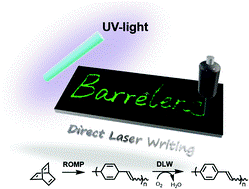
To learn more about Professor Blasco’s research, have a look at her most recent open access publication in Polymer Chemistry “High resolution light-based 3D printing of a bio-sourced monomer with tuneable depolymerisation”. You can also check articles from our previous lectureship winners in our lectureship winners collection.
 |
“My first first-author paper was published in Polymer Chemistry, which makes this recognition particularly meaningful.” |
Read our interview with Professor Blasco below:
How has your research evolved from your first article to this most recent article?
My first first-author paper was published in Polymer Chemistry, which makes this recognition particularly meaningful. Since then, our research has evolved from a strong focus on polymer synthesis toward more application-driven work. However, the core philosophy remains the same: using the tools of macromolecular chemistry to design advanced materials. Today, we are especially excited to translate these materials into solutions that address societal challenges.
What excites you most about your work and what has been the most exciting moment of your career so far?
I feel very fortunate to work with a dynamic and talented team. What excites me most is not only the big breakthroughs, but also the everyday progress, the small steps in the lab, the moment when an experiment finally works, or when a student gains confidence in their ideas. Seeing the continuous development of my students and postdocs, from their first experiments to becoming independent scientists, is one of the most rewarding aspects of my career.
In your opinion, what are the most important questions to be asked/answered in your field of research?
Polymers are everywhere, and one of the key challenges is to better understand and control the relationship between molecular design and material function. At the same time, developing more sustainable and functional materials, and translating them into real-world applications, remains in my opinion a central question in the field.
How do you feel about Polymer Chemistry as a place to publish research on this topic?
Polymer Chemistry has a special place in my career, as it was the journal of my first first-author publication. I consider it a leading platform for high-quality and cutting-edge research in polymer science, and it continues to be an important venue for the community.
Which of your Polymer Chemistry publications are you most proud of and why?
It is difficult to choose, as every publication has its own story and significance. However, the first one is always special as it marked an important milestone in my career and my connection to the journal.
In which upcoming conferences or events (online or in person) may our readers meet you?
I am planning to attend several conferences this year, starting with the Bordeaux Polymer Conference 2026, held in June in Bordeaux. I will then attend the Gordon Conference on Additive Manufacturing of Soft Materials in July, followed by ESP2026 in Vienna in September. I always welcome the opportunity to connect and discuss research in person.
Can you share one piece of career-related advice or wisdom with early career scientists?
Stay curious and follow your ideas with passion. Science is a long-term journey, and resilience is just as important as creativity.
How do you spend your spare time?
I enjoy spending time with my family and staying active through sports.
We would like to thank everyone who nominated a candidate for the 2026 Polymer Chemistry Lectureship. The Editorial Board had a very difficult task in choosing a winner from the many excellent and worthy candidates.
Please join us in congratulating Professor Blasco on winning this award!