
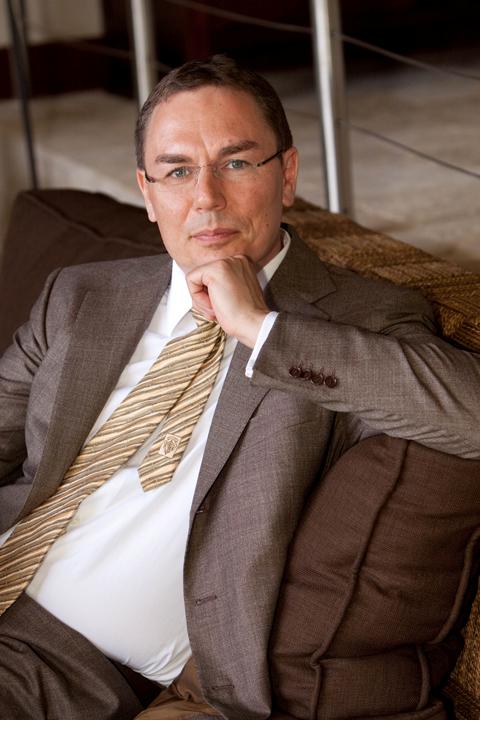
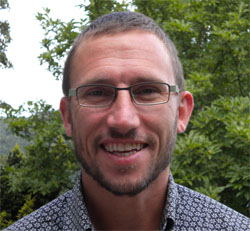
 Dr. Marcus Weck is a Professor in the Department of Chemistry and the Associate Director of the Molecular Design Institute at NYU. Before joining NYU in 2007, he was a member of the faculty in the School of Chemistry and Biochemistry at the Georgia Institute of Technology. He received his M.S. degree (diploma) from the University of Mainz, Germany, under the supervision of Professor Helmut Ringsdorf. Dr. Weck obtained his Ph.D. degree in organic and polymer chemistry from the California Institute of Technology in 1998 under the direction of Professor Robert H. Grubbs. The same year, he joined the group of Professor George M. Whitesides at Harvard University as a German Academic Exchange Service Postdoctoral Fellow. Dr. Weck’s research interests are in the areas of organic and polymer chemistry as well as materials science. Emphases include: 1) the development of novel synthetic methodologies for copolymer functionalization and their applications in materials science, 2) biological inspired materials, 3) the synthesis of complex polymers for biomedical applications, 4) polymeric organic light-emitting diodes, and 5) the use of soluble supports in catalysis. His research accomplishments have been recognized with the following awards: Ralph E. Powe Junior Faculty Enhancement Award, NSF CAREER Award, Blanchard Assistant Professor Award, 3M-Nontenure Faculty Award, DuPont Young Professor Award, Sigma Xi Young Faculty Award, a CETL/BP Junior Faculty Teaching Excellence Award, an Alfred P. Sloan Fellowship, and a Camille Dreyfus Teacher-Scholar Award.
Please follow the link for further information on Marcus’ research group and his recent paper in Polymer Chemistry.
What was your inspiration in becoming a chemist?
This goes back a long time. In high school, I was only really good in chemistry and biology. Both topics came naturally and I loved them. In particular doing hand-on experiments was great and really inspiring. Therefore, I decided to study chemistry. Unfortunately, my first 2-3 years of undergrad education in Germany was anything but exciting, motivating or inspiring. Thankfully, I made the right choice and joined the Ringsdorf group for my diploma thesis. Helmut is an amazing and motivating advisor and I was hooked again. During my PhD studies at Caltech in Bob Grubbs’ group I was always sure that I would go back to Germany and work in industry. It was actually Bob who suggested to me that I should consider academics.
What was the motivation behind the research in your recent Polymer Chemistry paper?
My group is fascinated by the challenge to develop polymeric supports for well-defined catalysts that allow the catalytic reaction to proceed with higher activities and potentially higher selectivities than using the original homogeneous catalyst. We are always in search for new support systems that allow for higher catalyst activities and/or selectivities. We view shell-crosslinked micelles (SCM) as unique catalyst supports since they can be varied and tuned easily and allow for easy functionalization with catalytically active moieties in the core (thereby creating a nanoreactors) and/or the periphery (allowing for easy access of substrate in the aqueous solvent). The SCMs described in the article are based on poly(norbornene)s since my group has a long history of the use of living ring-opening metathesis polymerization (ROMP) to create block copolymers for a variety of applications. In the Polymer Chemistry publication, we employ the hydrolytic kinetic resolution (HKR) using Co-salen catalysts which was developed by Eric Jacobsen at Harvard over a decade ago as the benchmark catalytic transformation.
Why did you choose Polymer Chemistry to publish your work?
I view Polymer Chemistry as one of the premier polymer journal in the world (RSC was lacking a polymer journal for a long time). In general, I try to vary the journals I submit my research group’s work to. Often the audience is slightly different and it is important to us to disseminate our work broadly.
In which upcoming conferences may our readers meet you?
In March I will be at the Spring ACS meeting in San Diego and in January I am heading to Qatar for the14th international IUPAC Conference on polymers.
How do you spend your spare times?
Before the end of July, I would spend my spare free time listening to classical music at home or going to the opera in NYC. In July, my wife and I welcomed our first kid. At this point, my spare time is changing diapers and trying to get some sleep.
Which profession would you choose if you were not a scientist?
I would LOVE to be a music conductor. Listening to classical music allows me to relax (it also helps to write papers and proposals). Unfortunately, I do not play any instruments and would be a lousy conductor.


 Christophe Detrembleur was born in Verviers (Belgium) in 1974 and he studied chemistry at the University of Liège (Belgium). In March 2001, he obtained his PhD under the supervision of Prof. Robert Jérôme at the Center for Education and Research on Macromolecules (CERM), University of Liège, Belgium. His major research topic was the search for new regulators for the controlled radical polymerisation of (meth)acrylic monomers. In parallel, he also contributed to the development of new functional aliphatic polyesters. He was an invited researcher at IBM, Almaden Research Center, California (USA) under the supervision of Dr. J. Hedrick for three months in 1998. In May 2001, he joined the Research Center of Bayer AG in Leverkusen (Germany), where he worked on materials synthesis and polymer processing. In January 2003, he moved to the polyurethane research division at Bayer, where he was involved in the development of new high performance UV coatings. In October 2003, he was awarded a permanent Research Associate position at CERM under the auspices of the National Fund for Scientific Research (F.R.S.-FNRS). In October 2008, he was promoted Senior Research Associate by the F.R.S.-FNRS and heads a research team at CERM. His main research projects are in the field of new controlled radical polymerisation techniques, preparation of new polymeric materials by these techniques, and contribution of macromolecular engineering to nanotechnology.
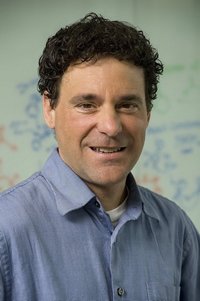
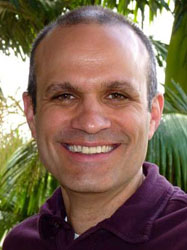 Marc Hillmyer received his B.S. in Chemistry from the University of Florida in 1989 and his Ph.D. in Chemistry from the California Institute of Technology in 1994. After completing a postdoctoral research position in the University of Minnesota’s Department of Chemical Engineering and Materials Science he joined the Chemistry faculty at Minnesota in 1997. He is currently a Distinguished McKnight University Professor of chemistry and leads a research group focused on the synthesis and self-assembly of multifunctional polymers. In addition to his teaching and research responsibilities, Marc also serves as an Associate Editor for the ACS journal Macromolecules and is the director of the Center for Sustainable Polymers at the University of Minnesota.