
Archive for October, 2021

Call for papers: Tailoring Dispersity and Shape of Molecular Weight Distributions


We are delighted to announce a call for papers for our latest themed collection on “Tailoring dispersity and shape of molecular weight distributions” Guest Edited by Athina Anastasaki (ETH Zurich) and Brett Fors (Cornell University).


This special issue will cover new synthetic or engineering methods to tailor polymer dispersity or the shape of molecular weight distributions. This includes discrete or nearly monodispersed materials and the properties thereof. Submissions where the effect of varying either the dispersity or the shape of molecular weight distributions are also encouraged and can be illustrated in any type of property of applications.


You can access the online collection here to look at the first few contributions to this collection.


Manuscripts should be submitted via the Royal Society of Chemistry’s online submission service available at https://mc.manuscriptcentral.com/py. Please add a “note to the editor” in the submission form when you submit your manuscript to say that this is a submission for the themed collection. The Editorial Office reserves the right to check suitability of submissions in relation to the scope of the collection.


All manuscripts will be subject to the journal’s usual peer review process. Accepted manuscripts will be added to the online collection as soon as they are online and they will be published in a regular issue of Polymer Chemistry.

If you have any questions about the journal or the collection, then please do contact the Editorial Office at polymers-rsc@rsc.org.

Digg This
Reddit This
Stumble Now!
Share on Facebook
Bookmark this on Delicious
Share on LinkedIn
Bookmark this on Technorati
Post on Twitter
Google Buzz (aka. Google Reader)

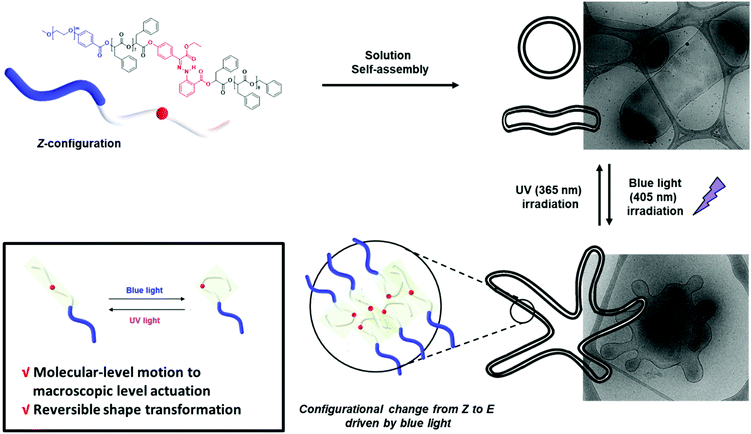
Paper of the month: On-demand shape transformation of polymer vesicles via site-specific isomerization of hydrazone photoswitches in monodisperse hydrophobic oligomers

Wang et al. synthesized amphiphilic block copolymers bearing photoswitches and evaluated the effect of the photoswitch number and position on solution self-assembly.

Diverse applications of amphiphilic block copolymers (BCPs) stem from their ability to self-assemble into nanostructures with well-defined architectures the shape of which has been shown to bear significant effect on BCP nanostructure properties and applications. In this aspect, photo-triggered polymer vesicles (polymersomes) have been extensively investigated for on-demand cargo delivery as light-triggered conformational changes of the BCPs offer macroscopic actuation of the nanocarriers and enable reversible mass transport through the vesicular membrane without permanent disruption. However, the effect of the number and location of the photoswitches in the BCP on their conformational change has been challenging to study.

To address this, Kim and collaborators synthesized amphiphilic block copolymers composed of hydrophilic polyethylene glycol (PEG) blocks and discrete oligo(phenyllactic acid) (OPLA) blocks containing hydrazone-based photoswitches at specific positions. The photoswitches were selected on the basis of their ability to undergo EZ isomerization upon light irradiation causing a conformational change on the hydrophobic block. As a result, vesicles formed via cosolvent self-assembly were shown to undergo a reversible shape transformation upon irradiation with UV or visible light. Importantly, the location and number of photoswitches per polymer was shown to have a significant effect. When the hydrazone-based photoswitch was embedded in the middle of the hydrophobic OPLA chains a dramatic membrane deformation was observed causing reversible shape transformation from polymeric vesicles to urchin-like structures. In contrast, when the hydrazone-based photoswitches were embedded at the junction of the hydrophilic and the hydrophobic block, the self-assembled nanocarriers did not undergo shape transformation when irradiating with different light sources. This indicates that the position of the switch in the hydrophobic moiety of the BCP is a decisive factor determining the shape transformation of the nanoparticles driven by the light-induced configurational change of the hydrazone-based photoswitches. It was further shown that when the number of photoswitches embedded in the OPLA chains was increased, the extent of shape transformation was significantly enhanced.

This study offers new insights on the design and development of BCPs for the fabrication of polymersomes tailored for a wide range of potential applications involving on-demand release of cargo molecules.

Citation to the paper: On-demand shape transformation of polymer vesicles via site-specific isomerization of hydrazone photoswitches in monodisperse hydrophobic oligomers, Polym. Chem., 2021,12, 5027-5036.

Link to the paper: https://pubs.rsc.org/en/content/articlelanding/2021/py/d1py00981h


Dr. Kelly Velonia is an Advisory Board Member and a Web Writer for Polymer Chemistry. She joined the Department of Materials Science and Technology in 2007. Research in her group focuses on the synthesis and applications of bioconjugates and biopolymers.


Digg This
Reddit This
Stumble Now!
Share on Facebook
Bookmark this on Delicious
Share on LinkedIn
Bookmark this on Technorati
Post on Twitter
Google Buzz (aka. Google Reader)

We are very pleased to announce that Professor Athina Anastasaki has joined Polymer Chemistry as an Associate Editor

Profile picture of Athina AnastasakiAthina Anastasaki completed her PhD studies at the University of Warwick under the supervision of Professor Dave Haddleton and received the Jon Weaver Award for the best PhD thesis in Polymer Chemistry in the United Kingdom. She then commenced a Monash-Warwick post-doctoral appointment between Monash University (with Professor Tom Davis) and the University of Warwick (with Professor Haddleton). In 2016, she was awarded an Elings fellowship and a Global Marie Curie Fellowship to conduct research at the University of California in Santa Barbara working alongside Professor Craig Hawker. She is now an Assistant Professor at the Materials Department of ETH Zurich and has published 100 peer-reviewed articles and she recently received the 2020 Hanwha-Total IUPAC Young Scientist Award and an ERC Starting Grant. Her research focuses on controlled radical polymerization, self-assembly of polymeric materials, polymerization mechanisms and complex materials of different dispersities and architectures. You can follow her on Twitter @AthinaAnastasa1.


Quote from Athina about the future of Polymer Chemistry: Polymers will continue playing an important role in our everyday life and I hope that we manage to become as good at unmaking them as we are at making them. Sustainability will play a key role for future polymer development and Polymer Chemistry will be the best forum for such articles

Check out our themed collections on ‘Sustainable polymers’ and ‘Plastics in a circular economy’ to read some of the exciting work we have published in this area.


Athina’s favourite Polymer Chemistry articles

Here are four publications that Athina has chosen as her favourite recent articles in Polymer Chemistry.


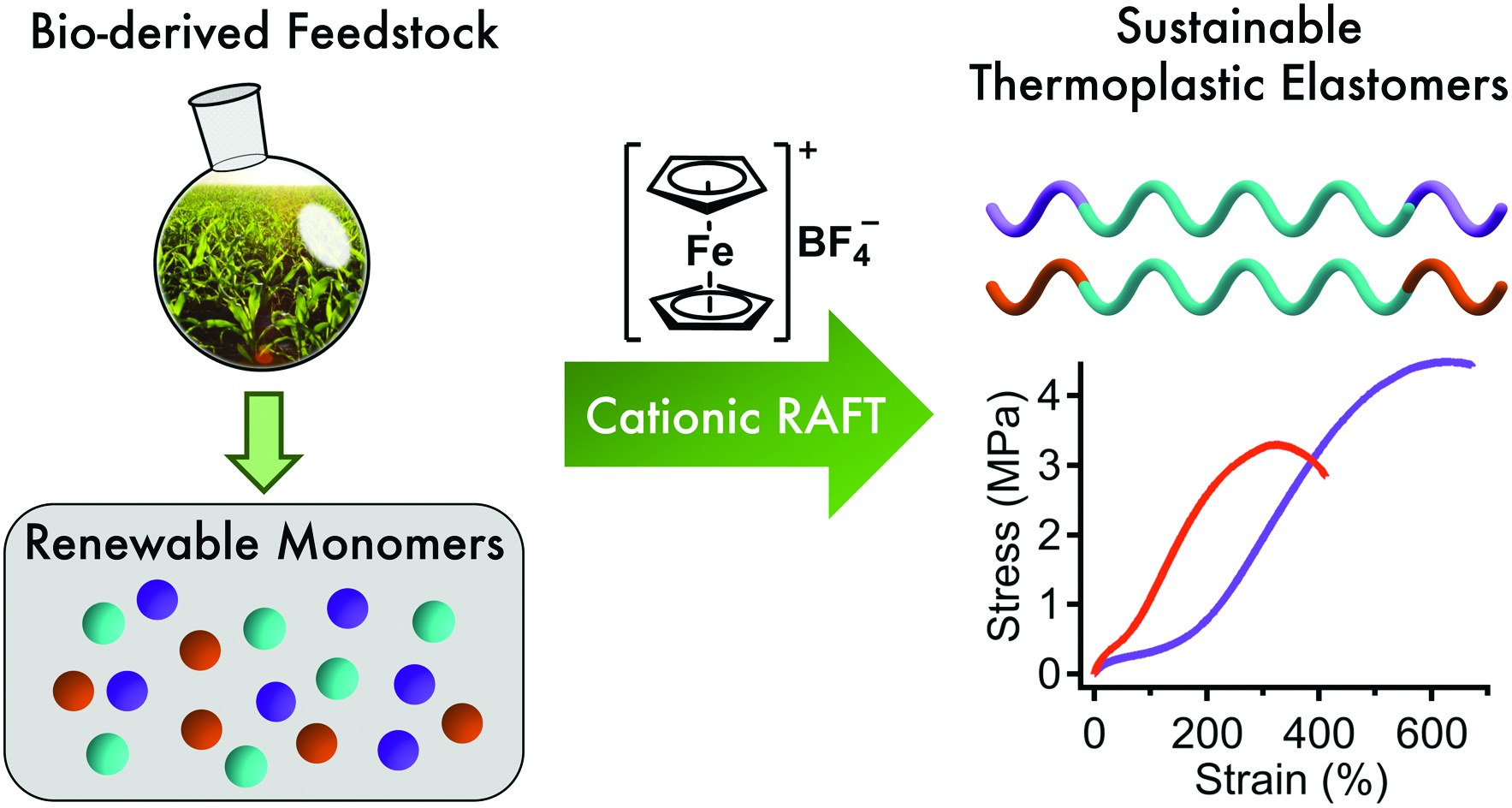
Sustainable thermoplastic elastomers produced via cationic RAFT polymerization
Scott Spring, Red Smith-Sweetser, Stephanie Rosenbloom, Renee Sifri and Brett Fors

Polymer Chemistry, 2021, 12, 1097-1104


Thermoresponsive dynamic BAB block copolymer networks synthesized by aqueous PISA in one-pot
Pauline Biais, Marie Engel, Olivier Colombani, Taco Nicolai, François Stoffelbach and Jutta Rieger

Polymer Chemistry, 2021, 12, 1040-1049


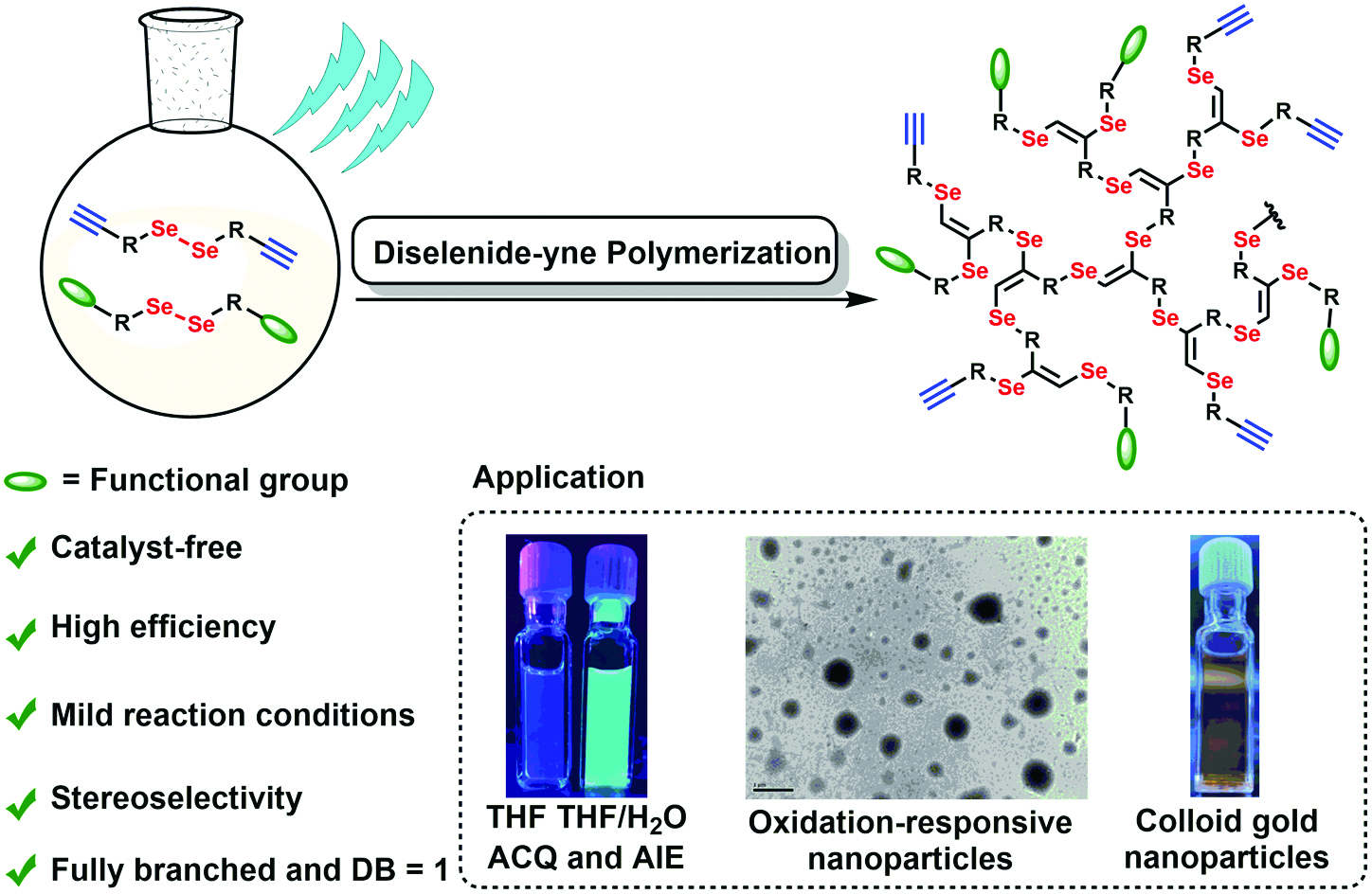
Diselenide–yne polymerization for multifunctional selenium-containing hyperbranched polymers
Xiaofang Lin, Sisi Chen, Weihong Lu, Ming Liu, Zhengbiao Zhang, Jian Zhu and Xiangqiang Pan

Polymer Chemistry, 2021, 12, 3383-3390


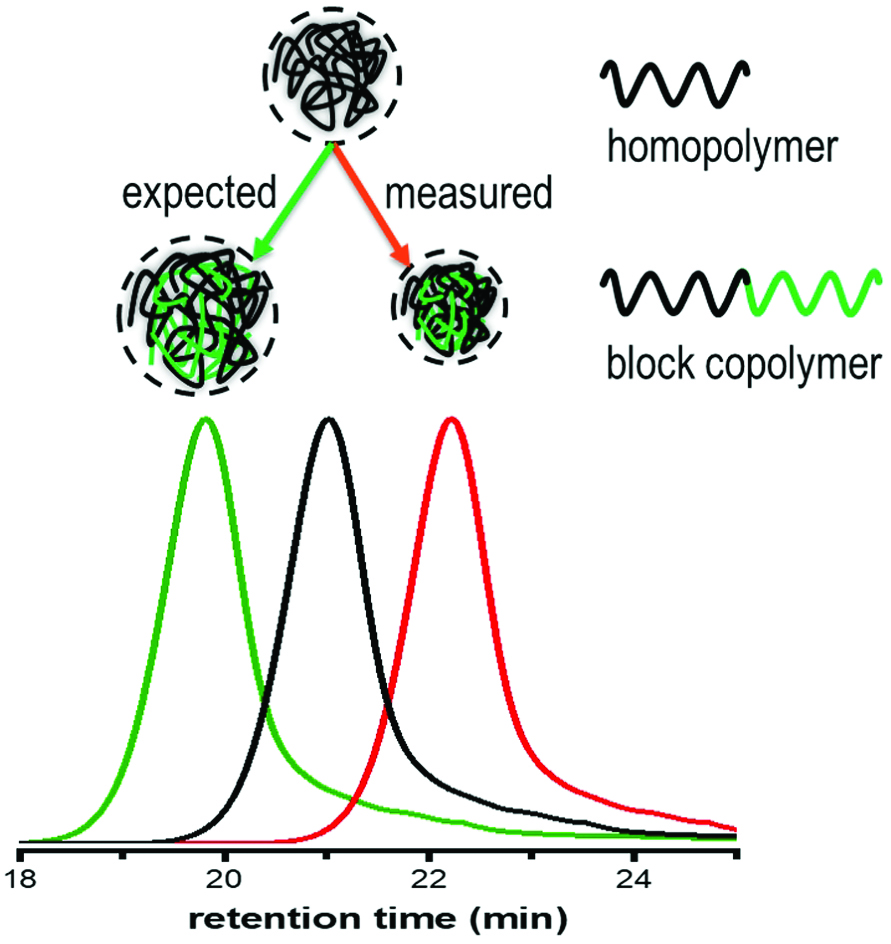
The block copolymer shuffle in size exclusion chromatography: the intrinsic problem with using elugrams to determine chain extension success
Kai Philipps, Tanja Junkers and Jasper Michels

Polymer Chemistry, 2021, 12, 2522-2531


All these articles are currently FREE to read until 15 November 2021!


Digg This
Reddit This
Stumble Now!
Share on Facebook
Bookmark this on Delicious
Share on LinkedIn
Bookmark this on Technorati
Post on Twitter
Google Buzz (aka. Google Reader)