


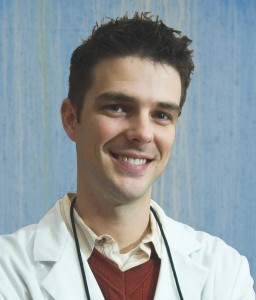
 Brent Sumerlin is Harold Jeskey Trustee Associate Professor in Department of Chemistry at Southern Methodist University. His research group focuses on well-defined polymeric materials with selected functionality, composition, and molecular architecture. Their particular interest is on polymers that are water-soluble and stimuli-responsive. Such “smart” polymers have the ability to self-assemble or dissociate in solution in response to changes in their surroundings. Potential target applications include controlled and targeted drug delivery, surface modification, and the synthesis of self-healing materials. Their further interests are at the interface of bio-, organic, and polymer chemistry, with particular focus on fusing the fields to prepare materials with synergistic properties. Please follow the link for further information on Brent’s research group and his recent paper in Polymer Chemistry.
What was your inspiration in becoming a chemist?
One of my high school chemistry instructors, Mr. Philip R. Dail, taught with such infectious enthusiasm that it became impossible for me to imagine becoming anything other than a chemist.
What was the motivation behind the research in your recent Polymer Chemistry paper?
For the last few years, we have attempted to capitalize on our expertise in the area of water-soluble polymers and controlled polymer synthesis to modify proteins with polymers for potential therapeutic and catalytic applications. Exciting work by several groups has shown that controlled radical polymerization (CRP) is ideal for the preparation of polymer-protein conjugates. In our opinion, one of the most significant qualities of CRP is that it enables the preparation of block copolymers by the sequential polymerization of two monomers. Therefore, we thought it was important to demonstrate the potential of CRP for the direct synthesis of block copolymer-protein conjugates.
Why did you choose Polymer Chemistry to publish your work?
We approach the synthesis of polymer-protein conjugates from the perspective of polymer chemists rather than biochemists. One basic method to demonstrate control during a “living” polymerization process is to investigate the retention of end group functionality by chain extension during a second polymerization. Indeed, we thought any polymerization we conducted by grafting from a protein should be judged by the same criteria that would be applied to controlled polymerizations with more traditional low molecular weight initiators (or chain transfer agents, in the case of RAFT). Therefore, we think these findings are exciting and fundamental polymer chemistry results and that Polymer Chemistry is the ideal venue in which to highlight them.
In which upcoming conferences may our readers meet you?
I will attend the Polymers Gordon Research Conference at Mount Holyoke College in Massachusetts in June 2011 and the National Meeting of the American Chemical Society in Denver, Colorado in August 2011. The results from our recent paper will be presented in Denver in the International Year of Chemistry Symposium: Controlled Radical Polymerization that I am co-organizing with Professors Krzysztof Matyjaszewski (Carnegie Mellon University) and Nicolay Tsarevsky (Southern Methodist University).
How do you spend your spare time?
Generally, I’m happily chauffeuring my two daughters to school, ballet, gymnastics, and birthday parties. If I have time on my own, I enjoy reading.
Which profession would you choose if you were not a scientist?
I think I would also have enjoyed journalism. I would love the opportunity to travel and cover current events – especially if I were allowed to editorialize!




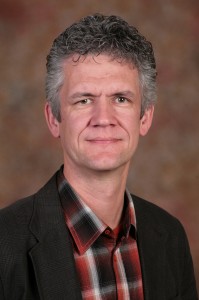
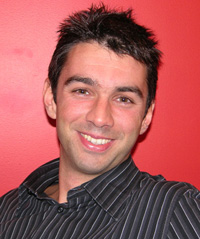 Dr. Cyrille Boyer received his PhD in polymer chemistry in 2005 from the University of Montpellier II. His PhD was in collaboration with Solvay-Solexis and devoted to the synthesis of new graft copolymers using grafting “onto” under the supervision of Prof. B. Boutevin and Prof. J.J. Robin. In 2005, he undertook an engineer position with Dupont Performance and Elastomers dealing with the synthesis of original fluorinated elastomers using controlled radical polymerization (e.g., iodine transfer polymerization). In October 2006, he joined the Centre for Advanced Macromolecular Design (CAMD) as a senior research fellow under the direction of Prof. Tom Davis. In 2009, he got an Australian Post-Doctoral Fellowship from the Australian Research Council (ARC). Recently, Dr. Cyrille Boyer has been appointed as a Nanomedicine Lecturer at the University of New South Wales. His research interests mainly cover the preparation of well-defined polymers for drug delivery and imaging applications, protein-polymer conjugates and hybrid organic-inorganic nanoparticles using controlled radical polymerization. He is also working on the preparation of new systems for energy storage using hybrid organic/inorganic nanomaterials. He has co-authored over 70 peer-reviewed research papers, including two book chapters and two international patents.
 Didier Gigmes got his education in chemistry at the University Paul Cezanne (Marseille, France). In 1998, he received his PhD in organic chemistry under the guidance of Prof. Paul Tordo (Marseille, France). He completed a first postdoctoral fellowship at Elf-Atochem, North America in Pennsylvania (USA) under the supervision of Dr. Gary Silverman. Then, he came back to France to work as a postdoctoral fellow under the supervision of Prof. Paul Tordo in Marseille. In 2001 he obtained a position of researcher at CNRS to develop nitroxide-mediated polymerization (NMP). In 2008 he defended his Habilitation at the University of Provence and became a group leader in June 2008. In October 2010, he was appointed Research Director at CNRS. During the past few years he has been working on the development of NMP and particularly the design of a highly efficient SG1-based alkoxyamine. After a significant contribution to the understanding of the mechanisms involved in NMP, one of his main concerns is now to promote NMP in material science for various applications such as biomaterials, environment and energy.
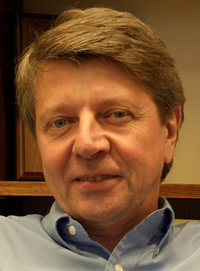 Krzysztof (Kris) Matyjaszewski received his PhD degree in 1976 at the Polish Academy of Sciences under Prof. S. Penczek. Since 1985 he has been at Carnegie Mellon University where he is currently J. C. Warner University Professor of Natural Sciences and director of Center for Macromolecular Engineering. He is also Adjunct Professor at the University of Pittsburgh and at the Polish Academy of Sciences. Kris is the editor of Progress in Polymer Science and Central European Journal of Chemistry. His publications have been cited over 42,000 times. His research interests include controlled/living radical polymerization, catalysis, environmental chemistry, and advanced materials for optoelectronic and biomedical applications.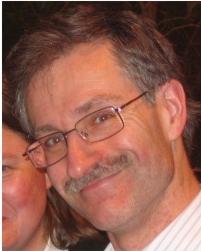
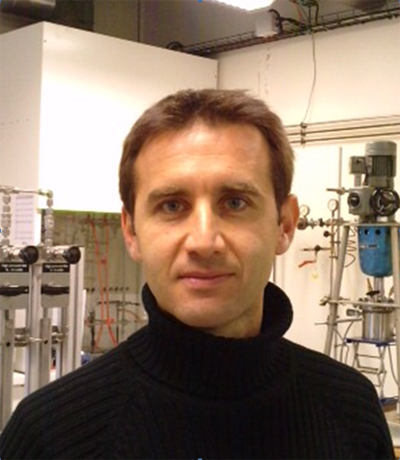 Franck D’Agosto studied chemistry at the Ecole Nationale Supérieure de Chimie in Mulhouse (France). He completed a PhD in Polymer Chemistry at the joint unit between CNRS and bioMérieux (University of Lyon, France) before working at the University of Sydney (Australia) as a postdoctoral fellow in the Key Center for Polymer Colloids. Since 2002, he has been a researcher at the CNRS in the Chemistry and Process of Polymerization Team in C2P2 laboratory (Lyon, France). His research interests focus on the control of polymer architectures by the use of different polymerization chemistries – such as catalytic and controlled free radical polymerizations – either performed in solution or in dispersed media.