Meet our author… Yanbin Huang

Based at Tsinghua University in China, Yanbin Huang’s group works at the interface between polymer science and pharmaceutical science, specifically on synthetic polymers as the active pharmaceutical ingredients (API), drug-polymer conjugates, and drug/polymer solid dispersions.

Why not read Yanbin Huang’s latest ChemComm publication on ‘Toward the synthesis of sequence-controlled vinyl copolymers’? It will be free to access until the 5th of January, 2011. 
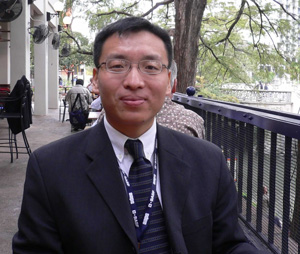
Yanbin Huang

Yanbin took some time out from his research to answer a few questions for us…  

What initially inspired you to become a scientist? 

I wanted to become a professor since I learned there was such a profession, probably attracted by its freedom and intellectual excitement, but also because five other family members had been teachers. Later on in college, I found out that research was part of being a professor, and found that I enjoyed discovering and creating new things as well as teaching what i’d learned. 

What was your motivation behind the work described in your ChemComm article? 

Our paper is about a strategy to synthesise vinyl copolymers with monomer-level sequence control. I was trained as a polymer scientist at Tsinghua University and always found it tempting to unify the synthetic and biological macromolecules into one coherent polymer science, with the only difference between them being to what extent we can control the sequence of the chain structure. I started dreaming about sequence-controlled vinyl copolymers in 2000 when I was still a PhD student in Professor Peppas’ group at Purdue, and in the summer of 2009 I finally figured out the working strategy to do this. 

Why did you choose ChemComm to publish your work? 

For its large and diverse readership and great reputation in chemical science. 

Where do you see your research heading next? 

The detailed chemistry still needs improvement. For example, the yield of each synthesis cycle should be higher than 95% to make it practical for a long polymer chain.  I hope our results so far have shown that this mono-addition followed by transformation strategy works and more groups will start working on these problems (there are already several great groups, including Professors Sawamoto and Kamigaito in Japan, and Professor Lutz in Europe, who are working on sequence-control vinyl copolymer synthesis). Afterwards, we can study the vinyl copolymers similar to proteins, i.e., to design its sequence, synthesise it, and then investigate its physics and biological activities. 

What do enjoy doing in your spare time? 

Reading books, watching movies, taking long walks and having dinner with my family and friends. 

If you could not be a scientist, but could be anything else, what would you be? 

I actually had serious plans to become a movie director like Ingmar Bergman and Hsiao-Hsien Hou. 


So, ‘that’s a wrap’ from Yanbin Huang, but if you fancy reading more about his research and the communication he discusses (recently published in ChemComm), then download the article today, which is free to access until the New Year (5th January)!

Digg This
Reddit This
Stumble Now!
Share on Facebook
Bookmark this on Delicious
Share on LinkedIn
Bookmark this on Technorati
Post on Twitter
Google Buzz (aka. Google Reader)

Wrapping pseudorotaxanes around fullerenes

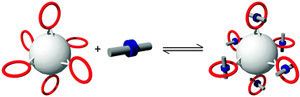
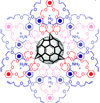
Scientists in the US have shown that mono- and hexakis-adducts of C60 fullerenes with crown ether rings can be made and then used as recognition sites for dibenzylammonium cationic derivatives, forming [2]- and [7]pseudorotaxanes, in solution.

The team are now busy exploring whether this hydrogen bonded recognition motif can be used to anchor C60 onto nanoparticles and flat surfaces.

Fraser Stoddart and his dedicated team at Northwestern University used NMR spectroscopy to look at the solid-state superstructure in more detail.


Fancy reading more? Then why not download the communication today, published in ChemComm, it will be free to access until the end of December.

Digg This
Reddit This
Stumble Now!
Share on Facebook
Bookmark this on Delicious
Share on LinkedIn
Bookmark this on Technorati
Post on Twitter
Google Buzz (aka. Google Reader)

New class of singlet carbenes

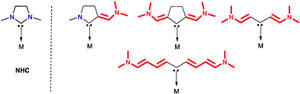
Cheap and readily available halo vinamidinium salts have been found to be valuable precursors for a new class of singlet carbenes flanked by enamines, say scientists in Germany.

Alois Fürstner and his colleagues from the Max-Planck-Institut für Kohlenforschung, believe that the resulting metal complexes (which are stable and rich in electrons) may have a promising future in homogeneous catalysis.

Fancy reading more? Then why not download the communication today, published in ChemComm it will be free to access until the 24th December.


Digg This
Reddit This
Stumble Now!
Share on Facebook
Bookmark this on Delicious
Share on LinkedIn
Bookmark this on Technorati
Post on Twitter
Google Buzz (aka. Google Reader)

Top ten most accessed articles in October

This month sees the following articles in ChemComm that are in the top ten most accessed:-

Supramolecular gel chemistry: developments over the last decade 
Jonathan W. Steed 
Chem. Commun., 2011, Advance Article, DOI: 10.1039/C0CC03293J, Highlight 

A highly selective OFF-ON fluorescent sensor for zinc in aqueous solution and living cells 
Huili Chen, Wei Gao, Miaoli Zhu, Hongfei Gao, Jinfang Xue and Yingqi Li 
Chem. Commun., 2010, 46, 8389-8391, DOI: 10.1039/C0CC02134B, Communication  

Convenient route to water-sensitive sol-gel precursors using click chemistry 
Nirmalya Moitra, Joël J. E. Moreau, Xavier Cattoën and Michel Wong Chi Man  
Chem. Commun., 2010, 46, 8416-8418, DOI: 10.1039/C0CC03417G, Communication 

Mechanisms in aminocatalysis 
Martin Nielsen, Dennis Worgull, Theo Zweifel, Björn Gschwend, Søren Bertelsen and Karl Anker Jørgensen 
Chem. Commun., 2010, Advance Article, DOI: 10.1039/C0CC02417A, Feature Article 

Synthesis of a novel magnetic drug delivery system composed of doxorubicin-conjugated Fe3O4 nanoparticle cores and a PEG-functionalized porous silica shell 
Feng-Hua Chen, Li-Ming Zhang, Qing-Tao Chen, Yi Zhang and Zhi-Jun Zhang 
Chem. Commun., 2010, 46, 8633-8635, DOI: 10.1039/C0CC02577A, Communication 

Generation of benzyne from benzoic acid using C-H activation 
Alastair A. Cant, Lee Roberts and Michael F. Greaney 
Chem. Commun., 2010, 46, 8671-8673, DOI: 10.1039/C0CC02547J, Communication   

Metal-catalysed cleavage of carbon-carbon bonds 
Masahiro Murakami and Takanori Matsuda 
Chem. Commun., 2011, Advance Article, DOI: 10.1039/C0CC02566F, Highlight 

Catalysts for CO2/epoxide copolymerisation 
Michael R. Kember, Antoine Buchard and Charlotte K. Williams 
Chem. Commun., 2011, Advance Article, DOI: 10.1039/C0CC02207A, Feature Article  

Gold nanorods for platinum based prodrug delivery 
Yuanzeng Min, Chengqiong Mao, Dechen Xu, Jun Wang and Yangzhong Liu 
Chem. Commun., 2010, 46, 8424-8426, DOI: 10.1039/C0CC03108A, Communication  

Visual and fluorogenic detection of nerve agnet simulant via Lossen rearrangement of rhodamine-hydroxmate 
Shoufa Han, Zhongwei Xue, Zhen Wang and Ting Bin Wen 
Chem. Commun., 2010, 46, 8413-8415, DOI: 10.1039/C0CC02881A, Communication  

Why not take a look at the articles today and blog your thoughts and comments below.

Fancy submitting an article to ChemComm? Then why not submit to us today or alternatively email us your suggestions. 

Digg This
Reddit This
Stumble Now!
Share on Facebook
Bookmark this on Delicious
Share on LinkedIn
Bookmark this on Technorati
Post on Twitter
Google Buzz (aka. Google Reader)

Rapid screening for enzyme activity

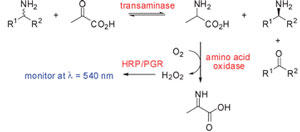
UK scientists have developed a fast and sensitive method for screening transaminase activity and enantioselectivity, using D- and L-amino acid oxidases, allowing new amine substrates to be rapidly identified.

Nicholas Turner and colleagues from the University of Manchester and Richard Lloyd from Chirotech Technology Ltd in Cambridge, use inexpensive and readily available reagents. Moreover the technique only requires a UV/Vis-plate reader to operate in 96-well microtitre plate format. The team plan to develop this assay further and hopefully use it for high-throughput screening of transaminase libraries.

Fancy reading more? Then why not download the communication today, which will be free to access until the end of December.

This article is also part of the ‘Enzymes and Proteins’ web themed issue, showcasing the highest quality papers in the field of chemical biology, specifically research that deals with enzymes and proteins. Why not take a look at this online collection and read some other relevant papers in this area.

Digg This
Reddit This
Stumble Now!
Share on Facebook
Bookmark this on Delicious
Share on LinkedIn
Bookmark this on Technorati
Post on Twitter
Google Buzz (aka. Google Reader)

Drug delivery by bursting microcapsules

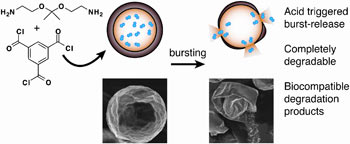
Acid degradable microcapsules that deliver their cargo by bursting in acidic environments have been made by US chemists. The non-toxic capsules could be used to deliver drugs directly to cells, claim Jean Fréchet, at UC Berkeley, and colleagues.

Bursting microcapsules

Download Fréchet’s communication for FREE until 24th December. You might also be interested in a recent J. Mater. Chem. article on a tumour-targeting drug carrier with a pH-controlled release system, which uses graphene oxide as the carrier.

Digg This
Reddit This
Stumble Now!
Share on Facebook
Bookmark this on Delicious
Share on LinkedIn
Bookmark this on Technorati
Post on Twitter
Google Buzz (aka. Google Reader)

A testament to undergraduates & women in science

Great research can start anywhere including your own undergraduate laboratory, as recently demonstrated by scientists in the US. 

Whilst running a teaching laboratory at the Texas Woman’s University, Manal Rawashdeh-Omary had senior undergraduate students attempting to reproduce literature findings published 10 years previously by Rasika Dias (from the University of Texas at Arlington) her collaborator. The students were asked to recreate a trinuclear silver pyrazolate complex, where one group of students obtained the expected non-luminescent dry product, whilst the other attained an unexpected green-luminescent product. Rather than simply dismissing the green product as experimental error, Rawashdeh-Omary directed her research group to investigate the reason for this ‘mistake’.  

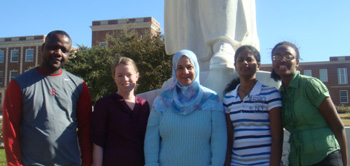
(From left to right): Samuel Kiplagat, Tiffany Vaughan, Manal Rawashdeh-Omary, Shylaja Dharanipathi & Jacqueline Washington

The group realised that the green-luminescent complex was actually reacting with benzene – a highly toxic chemical, known for its carcinogenic properties. By incorporating the complex into thin films, the sensor could detect minute amounts of benzene vapour (and other small organic vapours) with remarkable reversibility, selectivity, speed and sensitivity. This is an important development for environmental and health issues, as well as making advancements in fundamental chemical phenomena for donor-acceptor and acid-base chemistry.

It is refreshing to see high quality research coming from universities and departments actively supporting women in science. Texas Woman’s University is the largest university primarily for women in the USA, with over 90% of the undergraduate population being female. Omary explains that many of the staff and students are mothers, balancing their research and studies with family responsibilities. So it is inspiring to learn that top quality research can be produced from all levels of academia and this is a true testament to undergraduates, showing what hard work and dedication can achieve.


Fancy reading more about this on/off benzene sensor? Then why not download the article today, which has been published in ChemComm and will be free to access until the 24th December. 

Written by Edward Morgan 

Digg This
Reddit This
Stumble Now!
Share on Facebook
Bookmark this on Delicious
Share on LinkedIn
Bookmark this on Technorati
Post on Twitter
Google Buzz (aka. Google Reader)

Versatile variation on the Fischer indole synthesis

UK chemists have developed a new variation on a famous route to indoles that uses more readily available starting materials.

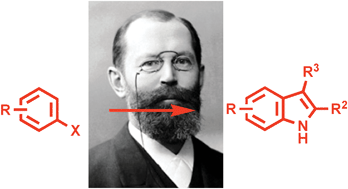
The Fischer reaction involves the functionalisation of an unactivated C-H position by way of a [3,3]-sigmatropic shift. It is simple and convenient – it couples a mono-functionalised arene with a readily available ketone or aldehyde – but is hindered by the lack of availability of aryl hydrazine starting materials.

Instead Christopher Moody and Martyn Inman at the University of Nottingham started from readily available haloarenes. They converted them into a wide range of indoles in just two steps by halogen-magnesium exchange, quenching with di-tert-butyl azodicarboxylate, then reacting with ketones under acidic conditions.

Graphical abstract: A two step route to indoles from haloarenes—a versatile variation on the Fischer indole synthesis

This new variation is simple and versatile, says Moody, making it a highly practical alternative modern protocol for making the fundamentally important indole ring system.

Download the article for free until 24th December and let us know what you think of this new route below.

Digg This
Reddit This
Stumble Now!
Share on Facebook
Bookmark this on Delicious
Share on LinkedIn
Bookmark this on Technorati
Post on Twitter
Google Buzz (aka. Google Reader)

5th ChemComm International Symposium

The 5th ChemComm  International Symposium will take place in Japan and China in May 2011. The purpose of RSC journal symposia is to bring together scientists in a stimulating and friendly environment that will foster collaborations between the researchers and the universities involved in the meetings.

The symposium will feature three one-day meetings. Each one day meeting will feature a selection of lectures covering organic chemistry and catalysis given by some of the world’s leading international scientists. The first one-day meeting, will be held at Kyoto University, Japan, before the symposium moves to China for two further events. The second one-day meeting will be held in Lanzhou University with the final instalment taking place at Nankai University, Tianjin. The symposium is organised by Chemical Communications, the Royal Society of Chemistry and the local host organisations.

The symposium will appeal to academic and industrial scientists with an interest in organic chemistry and catalysis. Attendance at the symposium is free of charge and student participation is strongly encouraged.

For more information on the dates, venues and speakers please visit the symposium website.

ChemComm Editor Robert Eagling with his two Korean hosts from the 4th ChemComm symposia

ChemComm Editor Robert Eagling with his two Korean hosts from the 4th ChemComm symposium

Digg This
Reddit This
Stumble Now!
Share on Facebook
Bookmark this on Delicious
Share on LinkedIn
Bookmark this on Technorati
Post on Twitter
Google Buzz (aka. Google Reader)

Controlled manipulation of cells using catalytic microbots

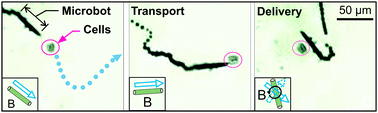
Microjet engines called microbots that can transport cells within a fluid to any desired location have been developed by scientists in Germany.

Manipulating nanomachines to transport biological matter in the body has been a challenge until now. Samuel Sanchez, from the Institute for Integrative Nanosciences in Dresden, and colleagues have shown that by using a magnet it is possible to navigate a microbot towards a specific cell within the body, pick it up from point A and transport it to point B.

The group made machines made up of hollow tubular structures containing a thin layer of platinum on the inside. They found that the machines moved independently in a peroxide solution when controlled externally by a small magnet manipulated with a joystick. The microbots can be directed towards suspended cells in solution, where they pick them up and transport them to the desired location. They released the cells from the tube by rapidly turning the magnet.

Graphical abstract: Controlled manipulation of multiple=

Sanchez and his team hope that in the future their microbots could perform visionary tasks within the body. “I would like to see our microbots swimming inside the bodies of animals, delivering drugs to required locations, for example, in the vicinity of cancer cells or replacing diseased cells with healthy ones,” he says.

For more information download Sanchez’s communication, where you can find videos of the swimming microbots in the ESI.

Digg This
Reddit This
Stumble Now!
Share on Facebook
Bookmark this on Delicious
Share on LinkedIn
Bookmark this on Technorati
Post on Twitter
Google Buzz (aka. Google Reader)