Confining supramolecular soft materials

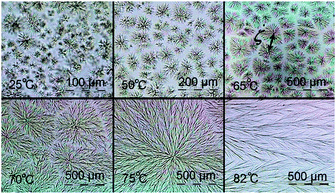
Confining soft materials in a small space has a dramatic effect on the formation of fibre networks and their resulting properties. 


Optical micrographs of the gels studied

Xiang Yang Liu and collaborators showed that the formation of fibre networks under volume confinement is independent of temperature and solute concentration. They need to do more studies to understand the mechanism but say that their work should help scientists design new soft functional materials on a micro-/nanometre scale.

Fancy delving some more into the results reported? Then why not download the communication* today and leave some comments on the blog below. Perhaps you have a question for the authors, or you could tell us what you found interesting about these results.

 *This communication will be free to access until the 25th March 2011.

Digg This
Reddit This
Stumble Now!
Share on Facebook
Bookmark this on Delicious
Share on LinkedIn
Bookmark this on Technorati
Post on Twitter
Google Buzz (aka. Google Reader)

Potential route to a universal biosensing platform

A fully functional surface-tethered protein switch has been reported by US scientists. It is the first step towards a universal biosensor platform, they claim. 

Peter Searson, at John Hopkins University, Baltimore, and colleagues attached a protein switch with a maltose binding protein input domain and a beta-lactamase output domain to a gold surface. When maltose bound to the input domain, it switched on the beta-lactamase’s activity, which the team measured using the yellow-to-red colour change that took place as it hydrolysed the beta-lactam ring in nitrocefin.  Different input domains could be coupled to the same output domain, offering a potential route to a universal biosensing platform.

Read Surface-tethered protein switches, recently published as an Advance article in ChemComm.

Digg This
Reddit This
Stumble Now!
Share on Facebook
Bookmark this on Delicious
Share on LinkedIn
Bookmark this on Technorati
Post on Twitter
Google Buzz (aka. Google Reader)

Approaching deadline for Emerging Investigator Lectureship nominations

Recognising and rewarding the very best emerging talent within the chemical sciences – submit your nominations by 28th February 2011

Time is running out to nominate your colleagues for the ChemComm Emerging Investigator Lectureship 2011. Send your nominee’s details to the ChemComm Editorial Office by 28th February 2011.

And remember, to be eligible for the ChemComm Emerging Investigator Lectureship, the candidate should be within the first eight years of completing their PhD. Find out more….

Digg This
Reddit This
Stumble Now!
Share on Facebook
Bookmark this on Delicious
Share on LinkedIn
Bookmark this on Technorati
Post on Twitter
Google Buzz (aka. Google Reader)

Nanoflowers for protein immobilisation and separation

It is the quest of many a materials scientist to form core-shell nanostructures by self-assembly, in order to generate materials with unique structures and functions. In this area, hierarchical nanoarchitectures assembled from nanoscale units have recently stimulated tremendous interest because these superstructures might avoid aggregation and maintain high specific surface areas. In addition, magnetic materials have received considerable interest,  due to their ability to selectively capture target objects from complex mixtures.

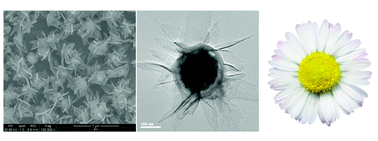
Ken Cham-Fai Leung and colleagues – based in Hong Kong and Hefei, China – have reported a facile synthesis of monodispersed microparticles composed of superparamagnetic Fe3O4 cores, a SiO2 shell and a hierarchical g-AlOOH periphery with Au nanoparticles, obtaining nanoflower structures resembling daisies. As proof of principle for their use as selective protein capturing agents, these nanoflowers were applied as absorbents to successfully remove bovine serum albumin from bovine blood.

To find out more download the ChemComm communication, which is free to access until 15th March 2011.

Start a discussion about this research by leaving comments below.

Digg This
Reddit This
Stumble Now!
Share on Facebook
Bookmark this on Delicious
Share on LinkedIn
Bookmark this on Technorati
Post on Twitter
Google Buzz (aka. Google Reader)

Congratulations to Jean-François Nierengarten

Jean-François NierengartenWhat’s special about Gene delivery with polycationic fullerene hexakis-adducts?

Well, that’s the topic of Jean-François Nierengarten’s recent ChemComm communication, rated as ‘hot’ by the referees and free to access* until 15th March. It is also his 25th independent research article in ChemComm.

To celebrate this achievement, Professor Nierengarten has taken some time out from his research to speak to ChemComm about his career.

What inspired you to become a scientist?
As far as I remember, I was always fascinated by natural sciences and wildlife. I started to study biology at the University of Strasbourg (Université Louis Pasteur at that time) with the idea of becoming a zoologist to discover unknown animals in the Amazon rainforest or in other wild places in the world. On the way, I discovered chemistry thanks to a couple of outstanding teachers and definitively switched from biology to chemistry after I met Jean-Pierre Sauvage at the end of my first year of Master. Fortunately, after my Master, I had the chance to prepare my PhD under the guidance of Jean-Pierre, and thus to become a chemist.

What was your motivation behind the work described in your ChemComm article?
The work described in this paper is a part of our research program on the use of click chemistry for the post-functionalisation of fullerene hexa-adducts (Chem. Commun. 2008, 2450; 2010, 46, 3860 and 4160; 2011, 47, 1321). The initial driving force for this work was to apply the synthetic methodology developed in the group to the preparation of new molecules with specific properties. As very often happens, applications with our compounds rely on collaborations with colleagues having the appropriate expertise. Indeed, Jean-Serge Remy, a well-established scientist in the field of transfection and synthetic vectors, is a very good friend and discussing about science one Friday evening in a pub brought us to the idea of testing fullerene hexa-adducts as synthetic vectors. We thus prepared a series of hexa-substituted fullerene derivatives decorated with dendritic branches bearing peripheral ammonium groups. Jean-Serge and his co-workers could then show that polyplexes prepared from DNA and these globular polycationic fullerene derivatives exhibit remarkable gene delivery capabilities. This result was quite unexpected as a generally admitted rule for the design of gene delivery vectors is that compact globular polycations with an isotropic distribution of positive charges are not suitable candidates for such studies. The results reported in our ChemComm article show that this is indeed not the case.

Why did you choose ChemComm to publish your work?
For fast publication of our important findings, ChemComm is an obvious choice. Over the years, it has been always a pleasure to work with the RSC Journals in general and with ChemComm in particular. All the steps from the submission to the publication are very efficient and all is organized in a very professional way. Publishing our work in ChemComm is also the guarantee for high visibility. Finally, I am a supporter of European journals in general and strongly believe that the best of European chemistry should be reported in European journals. Having top quality journals in Europe is essential to give credit to the European chemical community.

Where do you see your research heading next?
In addition to their remarkable gene delivery capabilities, the fullerene hexa-adduct derivatives have also revealed a very low toxicity if any. The fullerene hexa-adduct core is therefore a particularly appealing 3D-scaffold for the development of new multifunctional bioactive molecules. Based on the versatile fullerene hexa-adduct building blocks already developed in our group (Chem. Commun. 2010, 46, 4160), the successive grafting of up to three different groups on the fullerene core can be efficiently achieved. We are currently working on a new generation of vectors bearing targeting subunits for specific gene delivery to selected cells and/or fluorescent probes to monitor their intracellular pathway by confocal microscopy.

What do enjoy doing in your spare time?
Spending time with Iwona, my wife, and our two kids, cooking, listening to music, travelling. I like also reading and playing the guitar but have less and less time for it!

What would you be if you weren’t a scientist?
Hopefully as happy as I am to be a scientist! I guess that it could be the case if I would be an ébéniste [cabinet maker]. During my childhood, I had a lot of fun making stuff from wood in the workshop of my godfather, a very talented ébéniste particularly gifted for marquetry. I could spend hours watching him applying pieces of veneer to form decorative patterns or pictures onto the commodes or the tables he was restoring.

Also of interest:
Less is more – multiscale modelling of self-assembling multivalency and its impact on DNA binding and gene delivery
Paola Posocco, Sabrina Pricl, Simon Jones, Anna Barnard and David K. Smith
Chem. Sci., 2010, 1, 393-404

*Access our free content any time, any place – register for an RSC Publishing personal account today

Digg This
Reddit This
Stumble Now!
Share on Facebook
Bookmark this on Delicious
Share on LinkedIn
Bookmark this on Technorati
Post on Twitter
Google Buzz (aka. Google Reader)

Announcing the ChemComm Emerging Investigators issue 2012

Profiling the very best research from scientists in the early stages of their independent careers

Following the success of the inaugural ChemComm Emerging Investigators issue, we are delighted to announce the forthcoming 2012 Emerging Investigators issue. All interested parties should contact the ChemComm Editorial Office in the first instance.

This issue is dedicated to profiling the very best research from scientists in the early stages of their independent careers from across the chemical sciences. We hope to feature principal investigators whose work has the potential to influence future directions in science or result in new and exciting developments.


Also of interest:
ChemComm Emerging Investigator Lectureship:
Submit your nominations by 28th February 2011

Digg This
Reddit This
Stumble Now!
Share on Facebook
Bookmark this on Delicious
Share on LinkedIn
Bookmark this on Technorati
Post on Twitter
Google Buzz (aka. Google Reader)

Enzyme logic biosensor for security surveillance

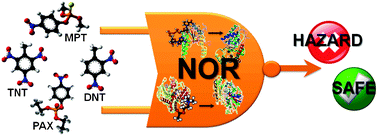
Scientists in the US have made a system that rapidly detects both explosives and nerve agents, providing a simple yes-no response. The technique could replace two time-consuming tests that are currently used to assess these threats.

Joseph Wang and colleagues from the University of California, San Diego, combined their expertise in threat detection and electrochemical biosensors with the biocomputing experience of Evgeny Katz from Clarkson University, Potsdam, NY. The team produced an enzyme-based logic gate with the ability to simultaneously detect both nitroaromatic explosives and organophosphate nerve agents.

Graphical abstract: High-fidelity determination of security threats via a Boolean biocatalytic cascade

See Chemistry World for the full news story and download the ChemComm article to find out more.

Digg This
Reddit This
Stumble Now!
Share on Facebook
Bookmark this on Delicious
Share on LinkedIn
Bookmark this on Technorati
Post on Twitter
Google Buzz (aka. Google Reader)

Sleeping Trojan horse to transport metal ions into cancer cells

Waking up to new possibilities in imaging

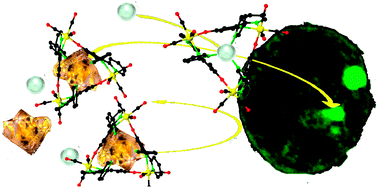
UK researchers have used a cage-like molecule to smuggle metal ions into cells, which could improve medical imaging.

Medical imaging often requires getting unnatural materials such as metal ions into cells. Scientists have therefore had to come up with ways to disguise these compounds to get them past the cell membranes. Michael Coogan and colleagues at Cardiff University have come up with a way to avoid the current difficulties with some of these imaging treatments.

Graphical abstract: A ‘Sleeping Trojan Horse’ which transports metal ions into cells, localises in nucleoli, and has potential for bimodal fluorescence/PET imaging

Find out their solution by reading the news story in Chemistry World and downloading Coogan’s ChemComm communication.

Digg This
Reddit This
Stumble Now!
Share on Facebook
Bookmark this on Delicious
Share on LinkedIn
Bookmark this on Technorati
Post on Twitter
Google Buzz (aka. Google Reader)

CASH pictures and poster prize winners

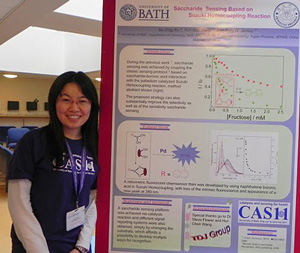
New year, new start and it seems that the Catalysis and sensing for Health (CASH) meeting got the ball rolling. Held last week at the University of Bath, many delegates travelled across the globe to be there. It seems much fun was had by all and below you can see a small glimpse into what went on…

Professors Evans, Maruoka and Ishihara enjoying a coffee break in the CASH meeting

Nothing quite like catching up with friends

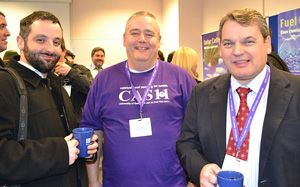
ChemComm Editor Robert Eagling grabbing a cuppa with conference organiser Tony James and ex-ChemComm Associate Editor Andy Evans

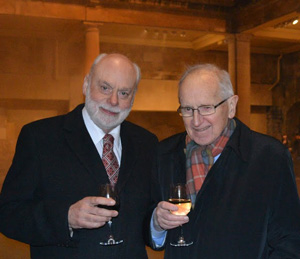
Sir Professor Fraser Stoddart enjoying the Civic Reception at the Roman Baths

Also, many congratulations to the poster prize winners for the RSC Publishing prizes, who each received an RSC book to help them with their studies:-

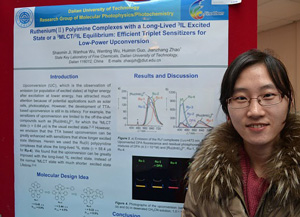
Poster prize winner Shaomin Ji

Poster prize winner Suying Xu

The general chemistry team (Chemical Science, ChemComm and Chem Soc Rev) will be attending many conferences this year, so why not take a look at our conference plans and see if our paths will cross during 2011? Alternatively, feel free to contact us for information or help with any other questions or queries.

Digg This
Reddit This
Stumble Now!
Share on Facebook
Bookmark this on Delicious
Share on LinkedIn
Bookmark this on Technorati
Post on Twitter
Google Buzz (aka. Google Reader)

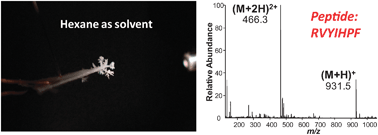
Paper spray ionisation of polar analytes using non-polar solvents

US analytical scientists have used non-polar solvents for the paper spray ionisation of polar compounds.

Polar compounds are normally ionised in mass spectrometry using a desorption ionisation method, such as MALDI, or from solution in a polar solvent using electrospray ionisation (ESI). However, ESI does not usually tolerate non-polar solvents and, as many reactions or purifications of compounds occur in non-polar solvents, this can present some difficulties.

Graham Cooks and co-workers from Purdue University have extended the scope of the recently developed paper spray ionisation technique to allow the use of non-polar solvents. When a low voltage is exposed to a triangle of paper wetted with a solvent such as hexane or toluene, droplets of that solvent are produced.  Polar compounds that are deposited on the paper are transported by the non-polar solvent compounds despite being sparingly soluble in them.

This technique can be applied to biological compounds, such as nucleotides, phospholipids and peptides, and avoids a typical problem associated with ESI where there capillary may clog when a non-ideal solvent is used. Furthermore, compounds may be analysed simply by ionising spots separated via TLC.

If you want to find out more then download the ChemComm article today. For wider look at analytical chemistry, why not check out these papers in our sister journal Chemical Science?

Digg This
Reddit This
Stumble Now!
Share on Facebook
Bookmark this on Delicious
Share on LinkedIn
Bookmark this on Technorati
Post on Twitter
Google Buzz (aka. Google Reader)