Top ten most accessed articles in February

This month sees the following articles in ChemComm that are in the top ten most accessed:-

Porous metal-organic frameworks as platforms for functional applications 
Hai-Long Jiang and Qiang Xu 
Chem. Commun., 2011, 47, 3351-3370, DOI: 10.1039/C0CC05419D, Feature Article 

Iron-catalyzed direct amination of azoles using formamides or amines as nitrogen sources in air 
Jian Wang, Ji-Ting Hou, Jun Wen, Ji Zhang and Xiao-Qi Yu 
Chem. Commun., 2011, 47, 3652-3654, DOI: 10.1039/C0CC05811D, Communication 

A bright tetranuclear iridium(iii) complex 
Etienne Baranoff, Enrico Orselli, Lionel Allouche, Davide Di Censo, Rosario Scopelliti, Michael Grätzel and Md. Khaja Nazeeruddin 
Chem. Commun., 2011, 47, 2799-2801, DOI: 10.1039/C0CC05029F, Communication 

Light operated molecular machines 
Serena Silvi, Margherita Venturi and Alberto Credi 
Chem. Commun., 2011, 47, 2483-2489, DOI: 10.1039/C0CC03829F, Highlight 

Novel C  3-symmetric n-type tris(aroyleneimidazole) and its analogs: synthesis, physical properties and self-assembly 
David Hanifi, Dennis Cao, Liana M. Klivansky and Yi Liu 
Chem. Commun., 2011, 47, 3454-3456, DOI: 10.1039/C0CC04753H, Communication 

Triarylboron-functionalized 8-hydroxyquinolines and their aluminium(iii) complexes 
Vladimir Zlojutro, Yi Sun, Zachary M. Hudson and Suning Wang 
Chem. Commun., 2011, 47, 3837-3839, DOI: 10.1039/C0CC04573J, Communication 

Dinuclear Ru(ii) complexes of bis-(dipyrid-2′-yl)triazine (bis-dpt) ligands as efficient electron reservoirs 
Marie-Pierre Santoni, Garry S. Hanan, Bernold Hasenknopf, Anna Proust, Francesco Nastasi, Scolastica Serroni and Sebastiano Campagna 
Chem. Commun., 2011, 47, 3586-3588, DOI: 10.1039/C0CC03245J, Communication 

A near-infrared fluorescent sensor for detection of cyanide in aqueous solution and its application for bioimaging 
Xiaoqiang Chen, Seong-Won Nam, Gun-Hee Kim, Nari Song, Yongsuk Jeong, Injae Shin, Seog K. Kim, Jinheung Kim, Sungsu Park and Juyoung Yoon 
Chem. Commun., 2010, 46, 8953-8955, DOI: 10.1039/C0CC03398G, Communication 

Acene-linked conjugated polymers with ratiometric fluorescent response to 1O2 
Jingjing Zhang, Syena Sarrafpour, Robert H. Pawle and Samuel W. Thomas III 
Chem. Commun., 2011, 47, 3445-3447, DOI: 10.1039/C0CC05770C, Communication 

Heating and separation using nanomagnet-functionalized metal-organic frameworks 
Martin R. Lohe, Kristina Gedrich, Thomas Freudenberg, Emanuel Kockrick, Til Dellmann and Stefan Kaskel 
Chem. Commun., 2011, 47, 3075-3077, DOI: 10.1039/C0CC05278G, Communication 

Why not take a look at the articles today and blog your thoughts and comments below.

Fancy submitting an article to ChemComm? Then why not submit to us today or alternatively email us your suggestions.

Digg This
Reddit This
Stumble Now!
Share on Facebook
Bookmark this on Delicious
Share on LinkedIn
Bookmark this on Technorati
Post on Twitter
Google Buzz (aka. Google Reader)

RSC Publishing Recognises Outstanding ChemComm Achievements in China

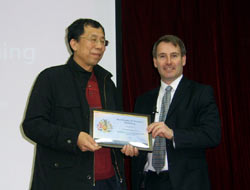
This week Dr James Milne (RSC Publishing) presented a certificate of achievement to Professor Hongjie Zhang, at Changchun Institute of Applied Chemistry. 

Professor Zhang was recognised for his prolific published research over the last year. RSC has published 17 of Professor Zhang’s papers – making him the most successful author from China during the year and three of these papers were published in ChemComm

Read Professor Zhang’s excellent work published in ChemComm: 

High intensity focused ultrasound and redox dual responsive polymer micelles
Yongwen Li, Rui Tong, Hesheng Xia, Hongji Zhang and Juan Xuan, Chem. Commun., 2010, 46, 7739-7741 (DOI: 10.1039/C0CC02628J)

Selective synthesis of dibenzo[a,c]cyclooctatetraenes via palladium-catalyzed [4+4] cyclic homocoupling of borylvinyl iodobenzene derivatives
Hui-jun Zhang, Junnian Wei, Fei Zhao, Yun Liang, Zitao Wang and Zhenfeng Xi, Chem. Commun., 2010, 46, 7439-7441 (DOI: 10.1039/C0CC02380A)

Making a [Co24] metallamacrocycle from the shuttlecock-like tetranuclear cobalt-calixarene building blocks
Yanfeng Bi, Guancheng Xu, Wuping Liao, Shangchao Du, Xinwu Wang, Ruiping Deng, Hongjie Zhang and Song Gao, Chem. Commun., 2010, 46, 6362-6364 (DOI: 10.1039/C0CC01844A)

Dr Milne and Dr Daping Zhang (RSC Publisher, China) are on a tour of China where they will visit seven universities/institutes and four companies in Beijing, Changchun, Shanghai and Xiamen.

Digg This
Reddit This
Stumble Now!
Share on Facebook
Bookmark this on Delicious
Share on LinkedIn
Bookmark this on Technorati
Post on Twitter
Google Buzz (aka. Google Reader)

New tool for speeding up porous materials discovery

A new tool (Infrasorb-12) for screening porosity has been developed by scientists in Germany. The tool identifies high surface area materials in a very short time with high accuracy.  The researchers say that Infrasorb-12 development will speed up the discovery of new porous materials significantly and broaden the wide range of materials suitable for gas storage, selective adsorption, catalysis, and life science applications.

Further information:
High-throughput screening: speeding up porous materials discovery
Philipp Wollmann, Matthias Leistner, Ulrich Stoeck, Ronny Grünker, Kristina Gedrich, Nicole Klein, Oliver Throl, Wulf Grählert, Irena Senkovska, Frieder Dreisbach and Stefan Kaskel, Chem. Commun., 2011, DOI: 10.1039/C1CC10674K

Also of interest:
Modifying MOFs: new chemistry, new materials
Seth M. Cohen, Chem. Sci., 2010, 1, 32-36 (DOI: 10.1039/C0SC00127A)

Digg This
Reddit This
Stumble Now!
Share on Facebook
Bookmark this on Delicious
Share on LinkedIn
Bookmark this on Technorati
Post on Twitter
Google Buzz (aka. Google Reader)

Carbon dioxide adsorption in porous phosphine coordination material

US, UK and Korean scientists have made a new porous phosphine coordination material, PCM-11. The material is an unusual 8,4-connected coordination polymer with an open 3-D pore structure, say the researchers. 

The team formed the material by reacting Mg(II) with tris(para-carboxylato)triphenylphosphine oxide. The highly ionic nature of the metal–ligand bonding results in excellent thermal stability upon desolvation (>460 ºC), they say. PCM-11 is easily activated for small molecule sorption at low temperature without the requirement for solvent pre-exchange.  It adsorbs 47.5 wt% CO2 at 11.6 bar and 30ºC.

Find out more in the ChemComm communication:
High capacity CO2 adsorption in a Mg(II)-based phosphine oxide coordination material
Alisha M. Bohnsack, Ilich A. Ibarra, Peter W. Hatfield, Ji Woong Yoon, Young Kyu Hwang, Jong-San Chang and Simon M. Humphrey, Chem. Commun., 2011, DOI: 10.1039/C1CC10754B

Digg This
Reddit This
Stumble Now!
Share on Facebook
Bookmark this on Delicious
Share on LinkedIn
Bookmark this on Technorati
Post on Twitter
Google Buzz (aka. Google Reader)

Meet our author… Barbara Zajc

Barbara Zajc is an organic chemist working at The City College and The City University of New York. Her research interests cover, among other things, the regioselective fluorination of bioactive molecules, the synthesis and study of fluorinated carcinogen analogues, polycyclic aromatic hydrocarbons and modified nucleosides.

Zajc’s recent communication, published in ChemComm, utilises ‘Click’ chemistry and Julia-
Kocienski olefination to synthesise vinyl and fluorovinyl triazoles: Facile synthesis of 4-vinyl- and 4-fluorovinyl-1,2,3-triazoles via bifunctional “click-olefination” reagents

Below, Barbara takes some time away from her research to talk to us…

What initially inspired you to become a scientist?

Anything related with nature and life has always interested me, and chemistry is one of the basic sciences for understanding how things work.  When I was an undergraduate at the University of Ljubljana (Slovenia), I became involved with research and I enjoyed it.  So when the opportunity arose to join a research group and pursue a Ph.D. , this became a natural choice.

What was your motivation behind the work described in your ChemComm article?

One focus of our research is the development of methods for the regiospecific introduction of fluorine into organic molecules. We are exploring the synthesis and reactivity of specific fluorinated building blocks, leading to diverse fluorinated molecules via a modular assembly approach.  We are also interested in the role fluorine has on the reactivity of various reagents, compared to a hydrogen atom.  We have previously developed a series of novel Julia-Kocienski reagents for the synthesis of various functionalised vinyl fluorides.  In this particular work we were interested in developing “multifunctionalisable” Julia-Kocienski reagents that would allow quick and facile introduction of different substituents at N– and vinyl moieties, during assembly of the vinyl or fluorovinyl triazole scaffold.

Why did you choose ChemComm to publish your work?

For many years now, ChemComm has remained a prestigious journal, with broad readership and high-impact.  I am impressed with the Editorial department’s speed of review, the publication process, and the “error-free” reproduction of our submitted material.

Where do you see your research heading next?

We are planning on using this particular method we have developed for the synthesis of new classes of vinyl and fluorovinyl triazoles of potential biological importance.

What do enjoy doing in your spare time?

Hiking in nature, watching wildlife, occasionally visiting an art gallery, going to the opera or a classical music concert, reading a good novel and skiing when I find the time.

If you could not be a scientist, but could be anything else, what would you be?

I was always fascinated with nature and in particular with the animal world.  If I was not a chemist, I would have loved to be an animal behaviour observer.

Other organic chemistry articles recently published in our sister journal Chemical Science that might interest you include:-

Catalytic asymmetric allylic alkylation employing heteroatom nucleophiles: a powerful method for C–X bond formation
Barry M. Trost, Ting Zhang and Joshua D. Sieber
Chem. Sci., 2010, 1, 427-440
DOI: 10.1039/C0SC00234H, Perspective

Continuous flow multi-step organic synthesis
Damien Webb and Timothy F. Jamison
Chem. Sci., 2010, 1, 675-680
DOI: 10.1039/C0SC00381F, Minireview

Digg This
Reddit This
Stumble Now!
Share on Facebook
Bookmark this on Delicious
Share on LinkedIn
Bookmark this on Technorati
Post on Twitter
Google Buzz (aka. Google Reader)

Breathe out for personalised medicine

A method to analyse drug levels in the body could allow people with epilepsy to avoid weeks of blood tests, claim scientists from Switzerland.

Valproic acid is an anticonvulsant drug used in the treatment of epilepsy; however, in the body, the acid binds to proteins and the concentration also can be influenced by over-the-counter medicines. The variations in the concentration mean that the amount of pharmacologically relevant valproic acid needs to be carefully monitored for the first few weeks and the dosage adjusted to compensate. The concentration is normally measured using blood samples from patients, and it can take a long time for the results to come back.

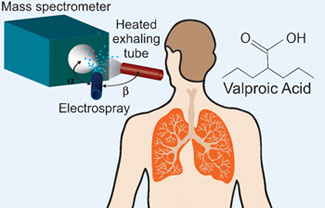
Now, Renato Zenobi at the Swiss Federal Institute of Technology in Zurich and co-workers have developed a method to measure valproic acid metabolite levels in breath using electrospray mass-spectrometry.

 
Using a breath test, scientists can measure levels of the anticonvulsant drug valproic acid in the body to determine the correct dosage for individual patients

See Chemistry World for the full news story 

Link to journal article
Real-time, in vivo monitoring and pharmacokinetics of valproic acid via a novel biomarker in exhaled breath
Gerardo Gamez, Liang Zhu, Andreas Disko, Huanwen Chen, Vladimir Azov, Konstantin Chingin, Günter Krämer and Renato Zenobi
Chem. Commun., 2011, DOI: 10.1039/c1cc10343a

Digg This
Reddit This
Stumble Now!
Share on Facebook
Bookmark this on Delicious
Share on LinkedIn
Bookmark this on Technorati
Post on Twitter
Google Buzz (aka. Google Reader)

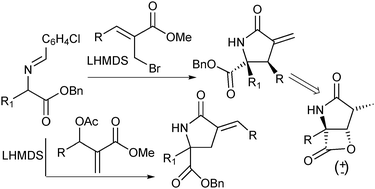
Novel methodologies for synthesising pyroglutamates

Several pyroglutamate-based natural products have been found to exhibit potent anti-cancer and anti-microbial properties. Although their syntheses have been a focus of research for many groups, their is still room for improvement in the development of highly tunable methodologies for the diverse functionalisation of the pyroglutamate ring.

Venkatram R. Mereddy and co-workers have  developed a novel and exceptionally short methodology for the synthesis of such functionalised pyroglutamates via alkylation of amino acid-derived iminoesters with allyl bromides or allyl acetates, easily obtained by Bayliss-Hilman reaction.

To learn more download the ChemComm communication, available for free until March 28th

Digg This
Reddit This
Stumble Now!
Share on Facebook
Bookmark this on Delicious
Share on LinkedIn
Bookmark this on Technorati
Post on Twitter
Google Buzz (aka. Google Reader)

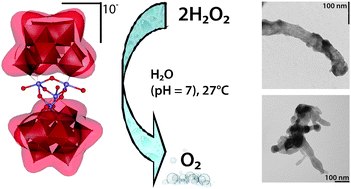
A new class of molecular propellers

Scientist based in Italy have recently demonstrated a new class of molecular propellers based upon polyoxometalates (POMs).

POMs consist of a cluster of transition metal oxides that are water soluble and are used for a wide range of applications. In particular, Andrea Sartorel and Marcella Bonchio, from the Univerity of Padova, are interested in their use as photosynthetic oxygen-evolving catalysts. The team studied a series of POMs with different metal centres and their catalytic performance in the disproportionation of hydrogen peroxide (H2O2) to water and oxygen.

They found that of all the POMS studied, Ru4(SiW10)2 performed the best in terms of oxygen evolution. This production of oxygen could then be used to create movement of the POM;  in effect using H2O2as fuel to create oxygen that then propels the POM material in aqueous solution. A video of this can be seen here. This represents a step towards the use of light-driven molecular machines based on POMs.

If you are interested in finding out more, then why not download Sartorel and Bonchio’s ChemComm article for free today? Also, don’t forget to leave a comment below!

Digg This
Reddit This
Stumble Now!
Share on Facebook
Bookmark this on Delicious
Share on LinkedIn
Bookmark this on Technorati
Post on Twitter
Google Buzz (aka. Google Reader)

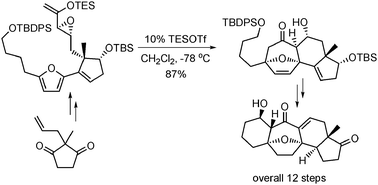
Intramolecular cycloaddition leads to the pentacyclic core of cortistatins

Synthesising intriguing bioactive natural products in the most expedient and atom-efficient manner remains a highly active and competitive field of research. Cortistatins A and J, first isolated from the marine sponge Corticium simplex in 2006, have been identified as effective anti-angiogenics, which studies have found could suppress cancer recurrence when given in conjunction with traditional cancer drugs.

Lok Lok Liu and Pauline Chiu at the University of Hong Kong have reported a concise, high yielding, asymmetric synthesis of the pentacyclic framework of the cortistatins, in 12 steps from commercially available starting materials. Their synthesis employs a highly diastereoselective intramolecular [4+3] cycloaddition of epoxy enolsilanes as the key step and brings them close to their ultimate goal.

To find out more, download the ChemComm communication for free up until March 28th

To start a discussion, leave your comments below and for a related blog post see the Totally Synthetic blog pages.

Digg This
Reddit This
Stumble Now!
Share on Facebook
Bookmark this on Delicious
Share on LinkedIn
Bookmark this on Technorati
Post on Twitter
Google Buzz (aka. Google Reader)

Meet our author… Greg Qiao

Greg Qiao is a polymer scientist and engineer at the University of Melbourne in Australia. His research interests cover various polymerisation techniques, including controlled free radical polymerisations, in a bid to synthesise novel polymeric architectures, biodegradable and functional polymers.  

Qiao’s recent communication, published in ChemComm, touches upon his interest in using polymers as coatings for the automotive industry or as potential drug delivery vehicles: ‘Star Polymers Composed Entirely of Amino Acid Building Blocks: A Route towards Stereospecific, Biodegradable and Hierarchically Functionalized Stars 

Below, Greg takes some time away from his research to talk to us… 

What initially inspired you to become a scientist?
When I was a child, I always dreamed of becoming a scientist. I chose science and engineering as my major when starting university and fell in love with both chemistry and chemical engineering.  I’ve always believed that science and technology can change and improve life for the human society.

Greg Qiao

What was your motivation behind the work described in your ChemComm article?
My research group has spent over 10 years in the field of controlled synthesis and characterisation of core crosslinked star (CCS) polymers. We initially used controlled free radical polymerisation methods, including nitroxide–mediated polymerisation (NMP) and atom transfer radical polymerisation (ATRP) methods, to synthesise CCS polymers and study their properties including molecular morphology and solution rheology. We also studied CCS analogues for their suitability as additive to automotive paint.
 
Five years ago, we started to synthesise CCS polymers with alternative polymerisation methods including ring opening polymerisation (ROP) for selectively degradable CCS. More recently, we have been working on new ways to form CCS which is fully biodegradable and biocompatible.  In this work, we developed a new process by using peptide synthesis as a controlled chain growth method to produce CCS. This process not only uses entirely naturally occurred amino-acid precursors, but also provides more convenient approaches to functionalise CCS at its core, along the arms and at the end of the arms. We are hoping this work can lay foundation for the new peptide-based drug delivery vehicles.


Why did you choose ChemComm to publish your work?
Because of the fast and broad readership, as well as its high impact.
 
Where do you see your research heading next?
We wish to develop this unique peptide-based CCS as a drug carrier for delivering drugs to targeted cells. My other research direction is using the controlled polymerisation method to create an efficient and thickness-controlled surface coating technology. 
 
What do enjoy doing in your spare time?
Reading a good article that has a completely fresh, new idea.
 
If you could not be a scientist, but could be anything else, what would you be?
Politician or publican servant – something to serve the public.

Other polymer articles recently published  in ChemComm that might also interest you include:-

Emerging synthetic approaches for protein–polymer conjugations
Rebecca M. Broyer, Gregory N. Grover and Heather D. Maynard
Chem. Commun., 2011, 47, 2212-2226
DOI: 10.1039/C0CC04062B, Feature Article

 Functional, star polymeric molecular carriers, built from biodegradable microgel/nanogel cores
Jay A. Syrett, David M. Haddleton, Michael R. Whittaker, Thomas P. Davis and Cyrille Boyer
Chem. Commun., 2011, 47, 1449-1451
DOI: 10.1039/C0CC04532B, Communication

A synthetic approach to a fullerene-rich dendron and its linear polymer via ring-opening metathesis polymerization
Jonggi Kim, Myoung Hee Yun, Junghoon Lee, Jin Young Kim, Fred Wudl and Changduk Yang
Chem. Commun., 2011, Advance Article
DOI: 10.1039/C0CC05470D, Communication

Cationic and charge-neutral calcium tetrahydroborate complexes and their use in the controlled ring-opening polymerisation of rac-lactide
Michael G. Cushion and Philip Mountford
Chem. Commun., 2011, 47, 2276-2278
DOI: 10.1039/C0CC04348F, Communication
 

And also from our sister journal Chemical Science, a Perspective and an Edge Article for you to read:-

 Triggered structural and property changes in polymeric nanomaterials
Jason M. Spruell and Craig J. Hawker
Chem. Sci., 2011, 2, 18-26
 

Cylindrical micelles from the living crystallization-driven self-assembly of poly(lactide)-containing block copolymers
Nikos Petzetakis, Andrew P. Dove and Rachel K. O’Reilly
Chem. Sci., 2011, Advance Article


Digg This
Reddit This
Stumble Now!
Share on Facebook
Bookmark this on Delicious
Share on LinkedIn
Bookmark this on Technorati
Post on Twitter
Google Buzz (aka. Google Reader)