Archive for January, 2021

Toroids or fibres? The different assemblies for scissor-shaped azobenzene dyads

Imagine if a pile of laundry could spontaneously organise itself into a neat, folded pile of clothes (and how useful this would be!). This principle can actually happen for some molecules in a process known as self-assembly, whereby a molecule or molecules will organise themselves spontaneously to form a supramolecular structure. Molecules can be specifically designed to self-assemble, by relying on the inclusion of functional groups and motifs that create repulsions and interactions to form unique nanostructures and functional materials.

Researchers in Japan have been studying scissor-shaped azobenzene dyads that can self-assemble by folding, using π-π stacking and hydrogen-bonding (Figure 1a and 1b). They previously observed two key self-assembly processes for two example dyads with formation of either toroidal (doughnut-shaped) structures through intramolecular folding, which can subsequently stack onto each other to create tubular motifs; or fibre/ribbon-type structures through one-dimensional helical stacking. The researchers hypothesised that these different self-assembly pathways could be attributed to differences in the degree of intermolecular aggregation of the dyads and set about verifying this using alkylated or perfluoroalkylated azobenzene dyads (2 and 3, Figure 1a) that have different aggregation properties.

Figure 1. a) Structure of azobenzene dyads 1-3. b) Structure of the folded dyad. (c and d) Self-assembly pathways for dyads 2 (c) and 3 (d).

The researchers prepared the supramolecular assemblies of the new dyads by cooling hot solutions (at 90 °C) of 2 or 3 in methylcyclohexane. Both absorption spectroscopy and dynamic light scattering (DLS) measurements indicated self-assembly of the dyads after cooling to 20 °C, and the resulting assemblies precipitated from the cooled solutions with minutes. The structures of these assemblies were then revealed by atomic force microscopy (AFM), showing different nanostructures for 2 and 3. The alkylated dyad 2 assembled into both toroidal and cylindrically extended nanostructures (Figure 2a and b), where the cylinders were composed of stacked toroidal components (as in Figure 1c). On the other hand, the perfluoroalkylated dyad 3 assembled into entangled fibres after cooling (Figure 2c and d), with no well-defined nanostructures observed even with moderate heating.
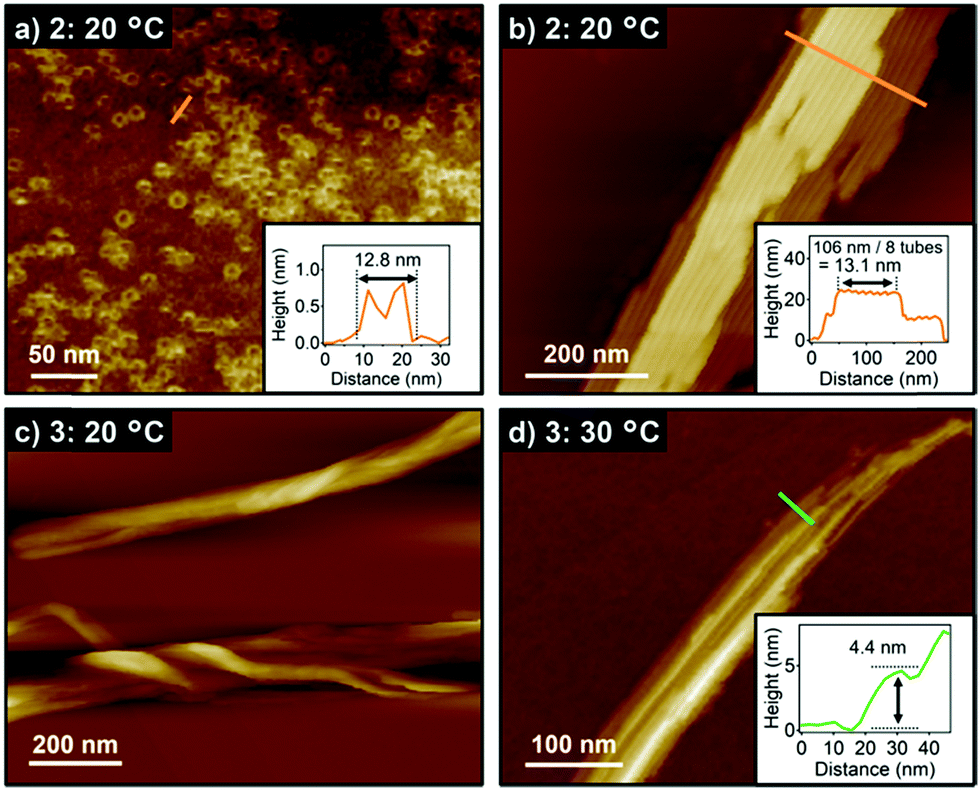
Figure 2. AFM images of the dyad assemblies after cooling to 20 °C. a) toroids of 2 and b) nanotubes of 2, with insets showing cross-sectional analyses along the orange lines. (c and d) supramolecular fibres of 3 [c) cooling to 20 °C and d) cooling to 30 °C], with inset showing cross-section analysis along the green line.

The researchers investigated the two different self-assembly pathways of 2 and 3 using multiple characterisation techniques. They found that the perfluoroalkylated dyad 3 self-assembles directly into extended fibres as a result of the enhanced intermolecular interactions provided by fluorophilic interactions, whereas the unique toroidal assembly for the alkylated dyad 2 is a result of weak molecular interactions. The extended fibres of self-assembled dyad 3 were found to form organogels at higher concentrations, in which the researchers also studied the photoresponsive properties. Overall, the results confirm the original hypothesis of different self-assembly pathways for dyads with different aggregation properties, and this study will guide future work into creating targets that can switch their self-assembly pathways under external stimuli.


To find out more, please read:

Self-assembly of alkylated and perfluoroalkylated scissor-shaped azobenzene dyads into distinct structures

Hironari Arima, Takuho Saito, Takashi Kajitani and Shiki Yagai *

Chem. Commun., 2020, 56, 15619-15622


About the blogger:

Photograph of the author, Samantha AppsDr. Samantha Apps recently finished her post as a Postdoctoral Research Associate in the Lu Lab at the University of Minnesota, USA, and obtained her PhD in 2019 from Imperial College London, UK. She has spent the last few years, both in her PhD and postdoc, researching synthetic nitrogen fixation and transition metal complexes that can activate and functionalise dinitrogen. Outside of the lab, you’ll likely find her baking at home, where her years of synthetic lab training has sparked a passion in kitchen chemistry too.


Digg This
Reddit This
Stumble Now!
Share on Facebook
Bookmark this on Delicious
Share on LinkedIn
Bookmark this on Technorati
Post on Twitter
Google Buzz (aka. Google Reader)

ChemComm Milestones – Conrad Goodwin

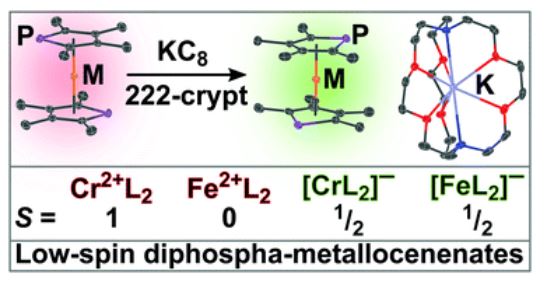
We were delighted to speak to Conrad Goodwin about his #ChemComm1st article as a corresponding author: Low-spin 1,1′-diphosphametallocenates of chromium and iron. Find out more about Conrad and his research in our interview below.

What are the main areas of research in your lab and what motivated you to take this direction?
I’m currently a PostDoc Fellow working at Los Alamos National Laboratory. My main research is into redox, electronic structure, and covalency in transuranium elements, those after uranium. As such I’m always thinking of new ligands and metal-element bonds that might be interesting and help us learn more about how the actinides interact with the rest of the periodic table. These are really scarce resources though, not to mention the radiation hazard, so I’ve got to make use of opportunities to contribute elsewhere as well. I was inspired by some work from my time at Manchester working on anionic transition metal metallocenes, and decided to look into using these phospholide ligands to achieve the same thing and see how the phosphorous would change the bonding and structure. As an added benefit, these new anionic 1,1’-diphosphametallocenates can act as bidentate monoanionic ligands for the other side of my work into actinides.

Can you set this article in a wider context?
Metallocenes are everywhere: ferrocene even works as an anti-knocking agent in petrol for cars. The oxidation (taking an electron away) of metallocenes is also a defining feature, and one many chemists will be familiar with. Whether that’s simply because they’ve seen the [Fc]+/0 couple in electrochemisty, used [Co(Cp*)2] as a reducing agent, or perhaps they’ve seen a popular f-element version like [Sm(Cp*)2]. But going the other way, reduction (adding an electron), has been barely explored until recently with the report of [Mn(Cp*)2] anions and [M(Cpttt)2] (M = Mn, Fe, Co; Cpttt = {C5H2tBu3}). The former [Mn(Cp*)2] anion is really stable, it’s an 18e metallocene – but the latter Cpttt examples were all very temperature sensitive.
What we tried to do here was use a slightly different ligand set to try and hit a middle-ground between these stability extremes, and address two problems we saw with the previous examples: 1) the steric bulk of Cp* and Cpttt help stabilize those complexes but also make the metal quite inaccessible to do any further chemistry; 2) by adding a Lewis-basic phosphorous into the ligand we have added a binding site which means we have an anionic complex where the charge is spread across two rings, and a metal of our choosing in the middle. I think this has the potential to be a very interesting new ligand set, complementary to the ubiquitous ferrocenophane class, but where the anionic charge formally resides at the metal.

What do you hope your lab can achieve in the coming year?
The coming year (2021) is actually my last at Los Alamos, and hopefully my last as a PostDoc. I’m hoping to make the move to run my own research group by the end of 2021. As for my current work, we have several transuranium projects that are wrapping up, and whose publication I hope will excite the broader chemical community about these elements. We’ve got some work comparing lanthanide and actinide covalency, a topic that’s really relevant now as the debate surrounding green energy and nuclear fuels continues, and another exploring organometallic chemistry right at the edge of the periodic table.

Describe your journey to becoming an independent researcher.
I’m currently in a halfway house towards independence. After my PhD I was lucky enough to receive an EPSRC Doctoral Prize which was a 1-year PostDoc Fellowship to do a short research project based on my own proposal, but within an established lab. I finished this and then moved to Los Alamos as a J. Robert Oppenheimer Distinguished Postdoctoral Fellow which again was to do work that I proposed to do but I’m still supervised by a mentor (Andrew Gaunt). So this afforded me the flexibility to pursue a little piece of independent research on the phosphametallocenes here. As for my next steps to independence, my work at Los Alamos working with transuranium elements has afforded me a skillset and expertise with an area of the periodic table not many get to work in. So I’m trying to leverage this towards an independent career and research group working in this area.

What is the best piece of advice you have ever been given?
“Have you tried crystallizing that from toluene?” – David P. Mills, in regards to every molecular compound ever. But jokes aside, I’ve been fortunate enough to meet and learn from some of the giants in the molecular f-element research field, and they have all said some variation of: “Approach research with an open mind and question established dogma”. This is so important, and applies to every level of doing basic research. It can be as simple as: whatever way you were taught to do something doesn’t have to be the only way – so learn from others; to not assuming that certain elements behave a certain way and going out of your way to dispel that assumption. I know of at least one academic who tries to recruit PhD students from outside of their own research field so that they come to their lab with a blank slate and won’t be tempted to assume something will/won’t work.

Why did you choose to publish in ChemComm?
I’m a big fan of the RSC’s activities and also the publishing model. ChemComm has a really broad readership and I wanted this work to be seen and help ignite this new area of research into anionic metallocenes. On top of that the editorial team were incredibly helpful and responsive, which made the whole process really easy.

Conrad Goodwin undertook both graduate and doctoral studies at the University of Manchester, completing a PhD in f-element silylamide chemistry with Dr David Mills in 2017. He then undertook a one-year EPSRC Doctoral Prize fellowship focussed on low-coordinate and low oxidation-state amido and organometallic lanthanide complexes as precursors to record-breaking single molecule magnets. In 2018 he subsequently moved to the United States to undertake a J. Robert Oppenheimer Distinguished Postdoctoral Fellowship at Los Alamos National Laboratory with Dr Andrew Gaunt. His research interests focus on the interrelation of oxidation state and covalency in transuranium elements, and on organometallic transuranium chemistry. Find Conrad on Twitter: @ConradGoodwin

Read Conrad’s #ChemComm1st article and others in ChemComm Milestones – First Independent Articles. Follow the hashtag #ChemCommMilestones on our Twitter page for more: @ChemCommun

Digg This
Reddit This
Stumble Now!
Share on Facebook
Bookmark this on Delicious
Share on LinkedIn
Bookmark this on Technorati
Post on Twitter
Google Buzz (aka. Google Reader)

ChemComm Milestones – Artur Kasprzak

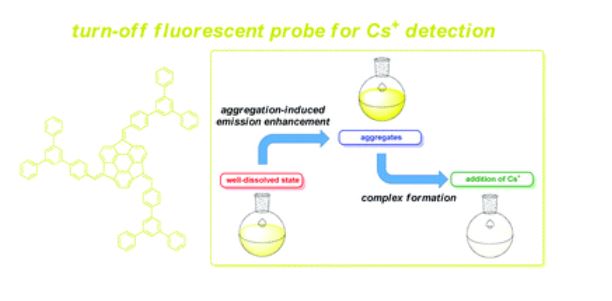
It is the start of 2021 and we want to talk about more emerging scientists in our community. Beginning with Artur Kasprzak who recently published his #ChemComm1st article: ‘Disaggregation of a sumanene-containing fluorescent probe towards highly sensitive and specific detection of caesium cations‘.


Read our interview with Artur below.

What are the main areas of research in your lab and what motivated you to take this direction?
My lab is working in various areas of chemistry, including ferrocene systems, magnetic nanomaterials, biologically active dendrimers, sumanene-tethered systems, pi-conjugated molecules, and many more. We are a young group of organic and materials chemists. The compounds and materials that we create might offer many interesting properties and applications, such as catalysis or analyte recognition. All these points make us passionate about our fields of enterprise.

Can you set this article in a wider context?
In this ChemComm article we merged several topics in chemistry, namely (i) modification of sumanene, a fullerene fragment exhibiting many interesting properties, (ii) aggregation-induced emission enhancement effect (AIEE), which is a unique property that has not been commonly reported for sumanene-derived compounds, (iii) caesium cation (Cs+) induced disaggregation feature. The last point of our work is especially interesting, since site-selective Cs+ recognition is indeed the novel feature of sumanene derivatives that has been explored by my group and the group of prof. H. Sakurai (Osaka University). Additionally, it has an important wider application, since Cs+ detection is of a highest environmental because significant amounts of caesium has been detected in many radiated, post-disaster areas (like after the nuclear plant accident Fukushima-Daiichi in 2011). With our compound we can detect such low Cs+concentrations like 1.5·10-7 M !

What do you hope your lab can achieve in the coming year?
Hopefully, many great things! Now, we are intensively investigating ferrocene and sumanene chemistry and we anticipate that these chemistries can provide such wonderful results as these recently published in ChemComm. My research group has recently been preparing new organized structures bearing ferrocene or sumanene motifs, so we would like to study these exciting chemistries even more and publish these results in such respected journals as ChemComm. We are always seeking for potential collaborators so we would like to expand our areas of enterprises in the coming year.

Describe your journey to becoming an independent researcher.
From the very beginning of my scientific career, I was fortunate enough to collaborate with many great scientists that have been very kind and inspirational. Now, I appreciate it even more than before. I think that expanding the research horizons and scientific interests was the thing that enabled me to become an independent scientist that can collaborate with many researchers in various interesting fields. In my opinion everything is about enjoying the chemistry and seeing beyond your areas of enterprise. In my case, continually expanding the knowledge in various fields and keeping in touch with many experts really stimulated my independent researcher career. Now, I do my very best to guide my students through the same scientific career path that once I undertook.

What is the best piece of advice you have ever been given?
Work hard and be creative. To me it sounds like the best way to become a great scientist!

Why did you choose to publish in ChemComm?
In my opinion, ChemComm is the world’s leading chemical journal that publishes cutting-edge articles in general chemistry. Thus, when we considered the most suitable journal to publish these interesting results, ChemComm was our first choice! Additionally, I have also had many good experiences in publishing with RSC, because of its professionalism at every publication step as well as fast publications times.

Artur Kasprzak received his B.S. (2015), M.S. (2016) and PhD (2020) in Chemistry from Faculty of Chemistry, Warsaw University of Technology (Poland) under the supervision of Prof. Mariola Koszytkowska-Stawinska and Dr. Magdalena Poplawska. He has also spent half a year in the group of Prof. Hidehiro Sakurai at Osaka University working on the applications of sumanene-containing molecules towards the design of Cs+ recognition materials. His PhD thesis was focused on the synthesis and applications of functional materials based on the carbon-encapsulated iron nanoparticles. Now, working as an assistant professor at Warsaw University of Technology and leading a young research group (Functional Organic Compounds Group, a subgroup of Biofunctional Materials Group) he explores the chemistry and applications of π-conjugated molecules, metallocene-tethered systems and nanomaterials.
ORCID: 0000-0002-4895-1038
Researchgate: https://www.researchgate.net/profile/Artur_Kasprzak
www: http://zcho.ch.pw.edu.pl/skl_kas.html

Read Artur’s work and more #ChemComm1st articles in ChemComm Milestones – First Independent Articles. Follow us on Twitter @ChemCommun.

Digg This
Reddit This
Stumble Now!
Share on Facebook
Bookmark this on Delicious
Share on LinkedIn
Bookmark this on Technorati
Post on Twitter
Google Buzz (aka. Google Reader)

One-dimensional carbon ladders

Nanomaterials are small and mighty. Scaling down to the molecular level imparts desirable properties to materials, for example high conductivity that is useful for electronic applications. Conjugated polymers (CPs) are one-dimensional nanomaterials with promising potential in optoelectronics and spintronics, due to their enhanced conductivity as a result of the delocalised π-electrons along the backbone of the polymer. Doubly-linked CPs, referred to as π-conjugated ladder polymers, have more unique features compared to their singly-linked counterparts, but such nanomaterials are often difficult to synthesise.

Polycyclic aromatic molecules such as acenes have shown potential as organic semiconductors and are therefore ideal materials for new CPs, but polymer formation by coupling the acenes is limited by repulsions between hydrogen atoms of adjacent acene motifs. These constraints can be overcome by installing wider ethynylene or cumulene π-conjugated bridges between the acenes, as demonstrated by researchers from Spain and the Czech Republic in their design and synthesis of a new one-dimensional π-conjugated ladder polymer (Figure 1). This ladder polymer is based on doubly-linked pentacenes (5 linearly-fused benzene rings).

(a) shows the chemical structures in a scheme of the precursor (brominated pentacene) and the polymer structure (ladder pentacene polymer), where the pentacene is 5 linearly fused benzene molecules. (b) and (c) show brighter spots on a dark surface that correspond to the chains of new polymer, where in (c), the individual pentacenes can be differentiated (d) and (e) show even more detail where the fine structure of the pentacenes and linkages of the polymer can be made out.

Figure 1. (a) The synthesis of the ladder polymer, starting from the 8BrPN precursor. (b) Wide STM image showing chains of the new polymer on the Au(111) surface. (c) Close-up high-resolution STM image of one polymer chain corresponding to the green rectangle in (b). (d) nc-AFM image of the molecular structure of the ladder polymer. (e) Simulated nc-AFM image of (d).

The new conjugated ladder polymer was synthesised by vacuum deposition of the precursor molecule (5,7,12,14-tetrakis(dibromomethylene)-5,7,12,14-tetrahydropentacene, 8BrPN) onto a gold surface, Au(111). Subsequent thermal treatment up to 360 °C resulted in the formation of ethynylene linkages between the pentacenes, forming a ladder polymer on the gold surface (Figure 1a). The researchers determined the ladder polymer structure using scanning tunnelling microscopy (STM) and non-contact atomic force microscopy (nc-AFM) techniques, as shown in Figure 1b-e. The STM images showed mostly one-dimensional chains with some disordered segments (Figure 1b), and the close-up image in Figure 1c confirms the double-linkages between each pentacene. The nc-AFM images show even more detail, confirming that the backbone of the polymer contains the pentacenes, doubly-linked to adjacent moieties in the 5,7,12 and 14 positions (Figure 1d/e). The nc-AFM characterisation also confirmed ethynylene (–C≡C–) rather than cumulene (=C=C=) linkages, shown by the brighter regions in the middle of the connections that correspond to the ethynylene triple bonds.

The researchers also probed the electronic structure of the new polymer on the gold surface using scanning tunnelling spectroscopy (STS). They determined an electronic bandgap that is 0.22 eV larger than that of a singly cumulene-linked pentacene polymer, thus demonstrating the advantages of the ladder-type structure in this instance. The technique used to create the pentacene ladder polymer in this report could be adopted for the creation of other π-conjugated ladder polymers with varying acenes, which could ultimately be useful for new nanomaterials in optoelectronics and spintronics.


To find out more, please read:

On-surface synthesis of doubly-linked one-dimensional pentacene ladder polymers

Kalyan Biswas, José I. Urgel, Ana Sánchez-Grande, Shayan Edalatmanesh, José Santos, Borja Cirera, Pingo Mutombo, Koen Lauwaet, Rodolfo Miranda, Pavel Jelínek,* Nazario Martín* and David Écija*

Chem. Commun., 2020, 56, 15309–15312


About the blogger:

Photograph of the author, Samantha AppsDr. Samantha Apps recently finished her post as a Postdoctoral Research Associate in the Lu Lab at the University of Minnesota, USA, and obtained her PhD in 2019 from Imperial College London, UK. She has spent the last few years, both in her PhD and postdoc, researching synthetic nitrogen fixation and transition metal complexes that can activate and functionalise dinitrogen. Outside of the lab, you’ll likely find her baking at home, where her years of synthetic lab training has sparked a passion in kitchen chemistry too.


Digg This
Reddit This
Stumble Now!
Share on Facebook
Bookmark this on Delicious
Share on LinkedIn
Bookmark this on Technorati
Post on Twitter
Google Buzz (aka. Google Reader)