Archive for the ‘News’ Category

Journal of Materials Chemistry issue 44 out now!

The latest issue of Journal of Materials Chemistry is now online. You can read the full issue here:


The outside front cover features an article on Sequential logic and random access memory (RAM): a molecular approach by Graham de Ruiter and Milko E. van der Boom


Multishelled Co3O4-Fe3O4 hollow spheres with even magnetic phase distribution: Synthesis, magnetic properties and their application in water treatment is the article highlighted on the inside front cover by Xi Wang, Yeteng Zhong, Tianyou Zhai, Yanfeng Guo, Shimou Chen, Ying Ma, Jiannian Yao, Yoshio Bando and Dmitri Golberg


Issue 44 contains the following Highlight and Feature articles:

To keep up-to-date with all the latest research, sign up for the journal’s e-alerts or RSS feeds or follow Journal of Materials Chemistry on Twitter.

Digg This
Reddit This
Stumble Now!
Share on Facebook
Bookmark this on Delicious
Share on LinkedIn
Bookmark this on Technorati
Post on Twitter
Google Buzz (aka. Google Reader)

Journal of Materials Chemistry article featured in Chemistry World: Graphene robot has some smooth moves

 
A remote controlled graphene-based robot that picks up an object, moves it to a desired location and then drops it, has been developed by scientists in China. The robot could be used to perform surgery that is not easily done by hand.

Yi Xie at the University of Science and Technology of China, Hefei, and colleagues made the robot by combining an actuator,  a device that converts energy into motion, with an electronic device, which responds to infrared light to curl and uncurl to pick up and drop objects. Interested to know more? Read the full article in Chemistry World here…

Large-area graphene realizing ultrasensitive photothermal actuator with high transparency: new prototype robotic motions under infrared-light stimuli
Changzheng Wu, Jun Feng, Lele Peng, Yong Ni, Haiyi Liang, Linhui He and Yi Xie
J. Mater. Chem., 2011
DOI: 10.1039/c1jm13311j

Digg This
Reddit This
Stumble Now!
Share on Facebook
Bookmark this on Delicious
Share on LinkedIn
Bookmark this on Technorati
Post on Twitter
Google Buzz (aka. Google Reader)

Poster prize at Recent Appointees in Materials Science

Congratulations to Dr Paul Roach for winning a Journal of Materials Chemistry poster prize at Recent Appointees in Materials Science.

 Folashade Kuforiji, left and Paul Roach, right

Folashade Kuforiji (left) and Paul Roach (right)


The title of Dr Roach’s winning poster was: Directing Biological Response through Material Properties

Dr Paul Roach is a Lecturer in Biomedical & Cell Engineering at Institute for Science and Technology in Medicine, Keele University, UK. Recent Appointees in Materials Science was held 14th – 16th September in Bristol, UK.

Digg This
Reddit This
Stumble Now!
Share on Facebook
Bookmark this on Delicious
Share on LinkedIn
Bookmark this on Technorati
Post on Twitter
Google Buzz (aka. Google Reader)

Journal of Materials Chemistry issue 43 out now!

The latest issue of Journal of Materials Chemistry is now online. You can read the full issue here:

JMC 42 OFC


The outside front cover features an article on Conjugated rod–coil and rod–rod block copolymers for photovoltaic applications by Ming He, Feng Qiu and Zhiqun Lin


JMC 43 IFC


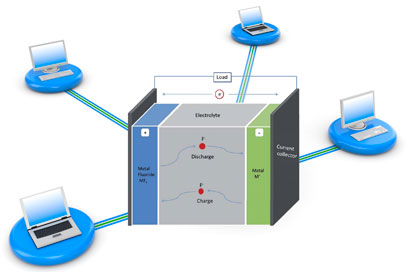
Batteries based on fluoride shuttle is the article highlighted on the inside front cover by M. Anji Reddy and M. Fichtner


Issue 43 contains the following Highlight and Feature articles:

To keep up-to-date with all the latest research, sign up for the journal’s e-alerts or RSS feeds or follow Journal of Materials Chemistry on Twitter.

Digg This
Reddit This
Stumble Now!
Share on Facebook
Bookmark this on Delicious
Share on LinkedIn
Bookmark this on Technorati
Post on Twitter
Google Buzz (aka. Google Reader)

Journal of Materials Chemistry article featured in Chemistry World: Fluoride shuttle batteries lift off

Scientists in Germany say that a rechargeable battery that works on the basis of fluoride transfer between electrodes could have a better storage capacity than current batteries.

The battery, developed by Maximilian Fichtner and Munnangi Anji Reddy from the Karlsruhe Institute of Technology, is based on a ‘fluoride shuttle’ – the reversible transfer of fluoride anions from one electrode to the other, depending on whether the battery is being charged or discharged. Interested to know more? Read the full article in Chemistry World here…

Computer network with Battery

The lightweight batteries perform as well as heavier batteries, which is important for mobile applications

Batteries based on fluoride shuttle
M. Anji Reddy and M. Fichtner
J. Mater. Chem., 2011
DOI: 10.1039/c1jm13535j

Digg This
Reddit This
Stumble Now!
Share on Facebook
Bookmark this on Delicious
Share on LinkedIn
Bookmark this on Technorati
Post on Twitter
Google Buzz (aka. Google Reader)

Chameleon clothes to detect falling oxygen levels

A cloth that changes colour when oxygen levels drop has been developed by scientists in China. The cloth could be used to make clothes that monitor oxygen levels for miners, high altitude adventurers and space explorers.

Xi Chen and colleagues at Xiamen University combined the chameleon cloth with a digital camera to capture real-time images, giving a quick readout of oxygen levels. Locating an oxygen deficiency to prevent danger is very important, says Chen. ‘When I saw on television that coal miners were trapped in mines and died because of a lack of oxygen, I felt sad and tried to figure out a simple method to detect oxygen.’

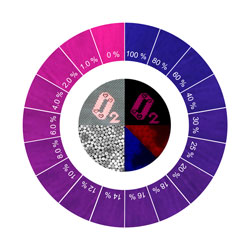
Image showing colours of cloth at different oxygen levels

The dyes in the chameleon cloth are excited under UV light and emit in the visible region, which is captured on a digital camera.
The picture shows the colours at different oxygen concentrations

The team made the detector by coating oxygen-sensitive polystyrene microparticles onto cotton thread and embroidering the thread into a piece of cloth. First, the microparticles were loaded with a blue hydrophobic stilbene reference dye and an oxygen-sensitive red dye. ‘The biggest challenge was selecting suitable dyes,’ says Chen. The dyes had to be hydrophobic, photostable, non-toxic (or have low toxicity) and not leak after encapsulation, he adds. Interested to know more? Read the full article in Chemistry World here…

Chameleon clothes for quantitative oxygen imaging
Xu-dong Wang, Ting-yao Zhou, Xin-hong Song, Yaqi Jiang, Chaoyong James Yang and Xi Chen
J. Mater. Chem., 2011, Advance Article
DOI: 10.1039/C1JM14162G

Digg This
Reddit This
Stumble Now!
Share on Facebook
Bookmark this on Delicious
Share on LinkedIn
Bookmark this on Technorati
Post on Twitter
Google Buzz (aka. Google Reader)

Using eggshells to remove toxic water pollutants

Scientists in China have developed an absorbent material made from waste eggshell membrane that can remove Cr(VI) from contaminated water.

Chromium is usually found in water systems in two main states: Cr(III) and Cr(VI). But, while Cr(III) is needed for metabolism, Cr(VI) is highly toxic and carcinogenic to living organisms, and unfortunately, this form is highly mobile.

This ability to move quickly in a system means that developing an efficient and cost effective method to remove Cr(VI) from contaminated water is important. Current methods for removal include reduction, ion exchange and absorption. Of these, absorption is popular because it is simple and effective.

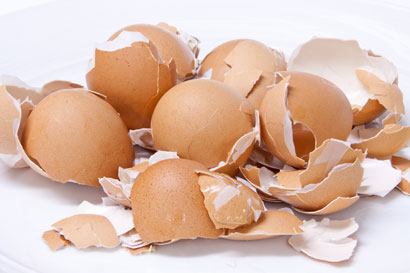
Eggshells

Not only did the eggshell membrane remove Cr(VI) from contaminated water, it also reduced some of it to the less toxic Cr(III)

Biosorption is a type of absorption that uses a material that is not man-made, usually some kind of waste material. Yuming Huang and Bin Liu from Southwest University, Chongqing, have designed a new biosorbent using eggshells. ‘As the by-product of food processing and manufacturing plants, eggshells represent a significant waste because they are traditionally useless after the production of eggs and egg derivatives,’ says Huang. ‘Using this waste to produce useful biomaterial for removal of Cr(VI) from water may be a good choice and opens up a pathway to using biowaste to treat toxic metals from water.’ Interested to know more? Read the full article in Chemistry World here…

Polyethyleneimine modified eggshell membrane as a novel biosorbent for adsorption and detoxification of Cr(VI) from water
Bin Liu and Yuming Huang
J. Mater. Chem., 2011
DOI: 10.1039/c1jm12329g

Digg This
Reddit This
Stumble Now!
Share on Facebook
Bookmark this on Delicious
Share on LinkedIn
Bookmark this on Technorati
Post on Twitter
Google Buzz (aka. Google Reader)

Instant Health Checks for Buildings and Bridges: J. Mater. Chem. article featured in Scientific American

A Journal of Materials Chemistry communication by Simon Laflamme, Guggi Kofod and co-workers has been featured in Scientific American (Instant Health Checks for Buildings and Bridges).

In their paper (Strongly enhanced sensitivity in elastic capacitive strain sensors) the team demonstrate the capacitance response of capacitive elastic strain sensors can be enhanced more than 50 times by grafting of conducting polymer to the elastomer backbone. These sensors could be used to detect strain and structural fatigue in buildings, bridges and other large structures.

Graphical abstract: Strongly enhanced sensitivity in elastic capacitive strain sensors

Interested to know more about mechanoresponsive materials? Why not read June’s themed issue.

To keep up-to-date with all the latest research, sign up for the journal’s e-alerts or RSS feeds or follow Journal of Materials Chemistry on Twitter.

Digg This
Reddit This
Stumble Now!
Share on Facebook
Bookmark this on Delicious
Share on LinkedIn
Bookmark this on Technorati
Post on Twitter
Google Buzz (aka. Google Reader)

Top Ten most-read Journal of Materials Chemistry articles in August

This month sees the following articles in that are in the top ten most accessed in August:

Highly efficient red electrophosphorescent device incorporating a bipolar triphenylamine/bisphenylsulfonyl-substituted fluorene hybrid as the host 
Fang-Ming Hsu, Chen-Han Chien, Ya-Jou Hsieh, Chen-Hao Wu, Ching-Fong Shu, Shun-Wei Liu and Chin-Ti Chen 
J. Mater. Chem., 2009, 19, 8002-8008 
DOI: 10.1039/b910292b 

Mesoporous titania photocatalysts: preparation, characterization and reaction mechanisms 
Adel A. Ismail and Detlef W. Bahnemann 
J. Mater. Chem., 2011, 21, 11686-11707
DOI: 10.1039/c1jm10407a 

A review of advanced and practical lithium battery materials 
Rotem Marom, S. Francis Amalraj, Nicole Leifer, David Jacob and Doron Aurbach 
J. Mater. Chem., 2011, 21, 9938-9954 
DOI: 10.1039/c0jm04225k 

Carbazole and thienyl benzo[1,2,5]thiadiazole based polymers with improved open circuit voltages and processability for application in solar cells 
Hunan Yi, Solyman Al-Faifi, Ahmed Iraqi, Darren C. Watters, James Kingsley and David G. Lidzey 
J. Mater. Chem., 2011, 21, 13649-13656 
DOI:10.1039/c1jm12089a 

Light-trapping nano-structures in organic photovoltaic cells 
Doo-Hyun Ko, John R. Tumbleston, Abay Gadisa, Mukti Aryal, Yingchi Liu, Rene Lopez and Edward T. Samulski 
J. Mater. Chem., 2011, Advance Article
DOI:10.1039/c1jm12300a 

Recent progress of high performance organic thin film field-effect transistors 
Qing Meng, Huanli Dong, Wenping Hu and Daoben Zhu 
J. Mater. Chem., 2011, 21, 11708-11721 
DOI: 10.1039/c1jm10243e 

TiO2 nanotubes: Structure optimization for solar cells 
Junfeng Yan and Feng Zhou 
J. Mater. Chem., 2011, 21, 9406-9418 
DOI: 10.1039/c1jm10274e 

Magnetic nanoparticles: recent advances in synthesis, self-assembly and applications 
Srikanth Singamaneni, Valery N. Bliznyuk, Christian Binek and Evgeny Y. Tsymbal 
J. Mater. Chem., 2011, Advance Article 
DOI: 10.1039/c1jm11845e 

A general strategy to prepare graphene-metal/metal oxide nanohybrids 
Junyi Ji, Guanghui Zhang, Hongyu Chen, Yang Li, Guoliang Zhang, Fengbao Zhang and Xiaobin Fan 
J. Mater. Chem., 2011, 21, 14498-14501 
DOI:10.1039/c1jm12970h 

Nanoparticles for hydrogen generation 
Christopher E. Bunker and Marcus J. Smith 
J. Mater. Chem., 2011, 21, 12173-12180 
DOI: 10.1039/c1jm10856e 

Why not take a look at the articles today and blog your thoughts and comments below.

Fancy submitting an article to Journal of Materials Chemistry ? Then why not submit to us today!

Digg This
Reddit This
Stumble Now!
Share on Facebook
Bookmark this on Delicious
Share on LinkedIn
Bookmark this on Technorati
Post on Twitter
Google Buzz (aka. Google Reader)

Congratulations to the poster prize winners at ECME 2011

Congratulations to Giulia Grancini (IFN-CNR: Politecnico di Milano, Italy) and Matthijs Cox (Eindhoven University of Tecnology, The Netherlands) for winning the Journal of Materials Chemistry poster prizes at the 11th European Conference on Molecular Electronics (ECME 2011).

 Matthijs Cox with his winning poster

Matthijs Cox’s, winning poster was called “Tuning Spin Interactions in Organic Semiconductors”.

 Giulia Grancini with her winning poster

Giulia Grancini’s poster was  entitled “4D-Imaging of Interfacial Charge Transfer State in Crystalline P3HT:PCBM Blend”.

ECME 2011 was held in 7th – 10th September in Barcelona, Spain.

Digg This
Reddit This
Stumble Now!
Share on Facebook
Bookmark this on Delicious
Share on LinkedIn
Bookmark this on Technorati
Post on Twitter
Google Buzz (aka. Google Reader)