

Single-Atom Catalysts for Sustainable Energy and Environmental Applications
Open Call for Papers until 11 September 2026
We are delighted to announce this open call for papers to contribute to a themed collection for Journal of Materials Chemistry A and Materials Advances on Single-Atom Catalysts for Sustainable Energy and Environmental Applications, guest edited by Soo Young Kim (Korea University, Republic of Korea), Wee-Jun Ong (Xiamen University Malaysia, Malaysia), Mingyang Xing (East China University of Science and Technology, China) and Xing Xu (Shandong University, China).

Scope
Single-atom catalysts (SACs) have emerged as a frontier in heterogeneous catalysis, offering exceptional activity, selectivity, and atom efficiency through precise control of isolated active sites. This themed collection will showcase the most recent advances in SAC research, with an emphasis on their design, synthesis, and characterization, as well as the fundamental understanding of catalytic processes at the atomic scale.
We welcome contributions covering all aspects of SAC development, including innovative strategies for atom dispersion and stabilization, tailoring of coordination environments, and elucidation of metal–support interactions. Studies addressing SACs for electrochemical, photocatalytic, and thermocatalytic reactions—such as CO₂ reduction, water splitting, nitrogen fixation, and selective oxidation—are of particular interest. We also encourage submissions exploring dual-atom and hybrid catalyst systems, multifunctional SAC platforms, and integrated applications combining catalysis with energy storage, sensing, or pollutant remediation.
Research articles that provide mechanistic insights through advanced theoretical modeling and in situ/operando characterization techniques—including X-ray diffraction, X-ray photoelectron spectroscopy, X-ray absorption spectroscopy, and Raman spectroscopy—are highly encouraged. This collection aims to provide a forum for cutting-edge studies that not only expands the fundamental understanding of single-atom catalysis but also accelerate the translation of these materials toward practical, sustainable technologies.
Submissions to the journal should contain chemistry in a materials context and should fit within the scope of Journal of Materials Chemistry A or Materials Advances. Please see the journal website for more information on the journal scope, standards, article types and author guidelines.
Submit your high-quality research
This call for papers is open for the following article types:
- Communications
- Full papers
If you would like to contribute to this themed collection, you can submit your article directly to the online submission service for Journal of Materials Chemistry A or Materials Advances. Please mention that this submission is a contribution to the Single-Atom Catalysts for Sustainable Energy and Environmental Applications collection in the “Themed issues” section of the submission form and add a “Note to the Editor” that this is from the Open Call. The Editorial Office reserves the right to check suitability of submissions in relation to the scope of both the journal and the collection, and inclusion of accepted articles in the final themed issue is not guaranteed.
Please also note that all submissions will be subject to initial assessment and rigorous peer review to meet the usual high standards of Journal of Materials Chemistry A and Materials Advances.
If you have any questions about the journal or the collection, then we would be happy to answer them.
Guest Editors
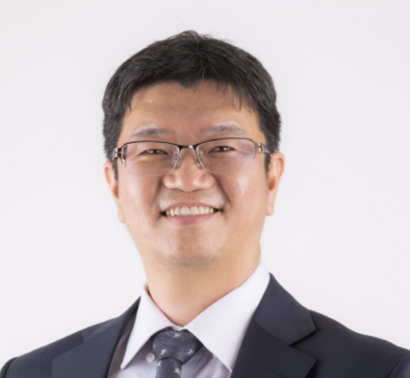
Soo Young Kim (Korea University, Republic of Korea)
Prof. Soo Young Kim received the B.S., M.S., and Ph. D. degrees in materials science and engineering from Pohang University of Science and Technology (POSTECH) in South Korea. His laboratory is composed of two groups. One group is focusing on organic-based semiconductors, including organic light-emitting diodes, perovskite light-emitting diodes, perovskite solar cells, and perovskite memories. The other group is focusing on the synthesis of two-dimensional materials and its application to the hydrogen evolution reaction and CO2 reduction. He has produced more than 400 publications and H-index is 86 (google scholar).
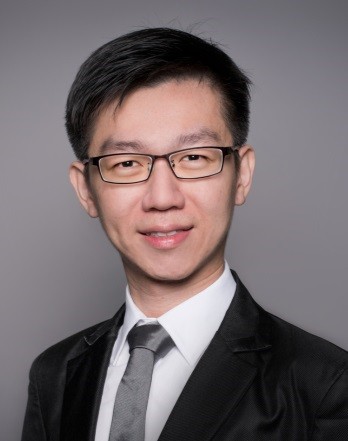
Wee-Jun Ong (Xiamen University Malaysia, Malaysia)
Wee-Jun Ong received his B.Eng. and Ph.D. in chemical engineering from Monash University. He is a Professor and Assistant Dean in School of Energy and Chemical Engineering at Xiamen University Malaysia. Starting from 2021, he serves as the Director of Center of Excellence for NaNo Energy & Catalysis Technology (CONNECT). Since September 2024, I have been an Adjunct Professor of College of Engineering at Korea University. Previously, he was a scientist at Agency for Science, Technology and Research (A*STAR), Singapore. In 2019, he was a visiting scientist at Technische Universität Dresden and a visiting professor at Lawrence Berkeley National Laboratory. His research interests include nanomaterials for photo(electro)catalytic and electrochemical H2O splitting, CO2 reduction, alcohol oxidation, H2O2 production, plastic reforming, and N2 fixation as well as H2 storage.
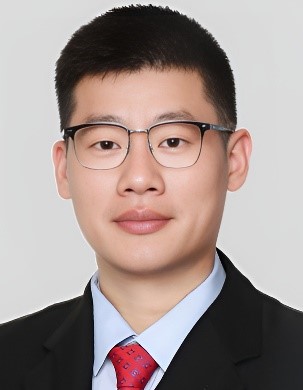
Mingyang Xing (East China University of Science and Technology, China)
Professor Dr Mingyang Xing graduated from Weifang University in Shandong Province with a bachelor’s degree in chemistry in 2006 and a doctorate in applied chemistry from East China University of Science and Technology in 2012 (supervisor: Professor Zhang Jinlong); From October 2015 to October 2016, the University of California, Riverside” for 1 year, co-tutor: Professor Yadong Yin; Since 2012, he has been employed by the Institute of Fine Chemicals of East China University of Science and Technology, and has served as a lecturer, associate professor and professor. In 2021, he was hired as the deputy director of Shanghai Multi-media Environmental Catalysis and Resource Engineering Technology Research Center.
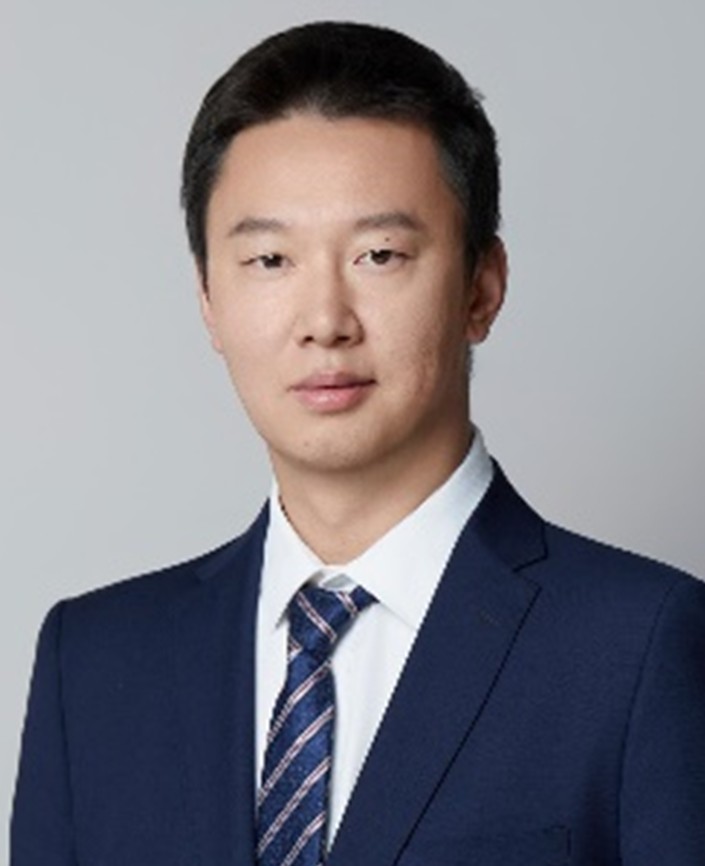
Xing Xu (Shandong University, China)
Xing Xu is a Professor of Environmental Science and Engineering at Shandong University. He received his MSc and PhD from Shandong University in 2009 and 2014. His research focuses on the rational design and application of environmental functional materials, low-carbon and energy-efficient strategies for pollution control and resource recovery, and the integration of material innovation with systems-level environmental engineering. As corresponding author, he has published over 250 peer-reviewed papers in leading journals across environmental science, chemistry, and materials science, including PNAS, Chemical Society Reviews, Nature Communications, Angewandte Chemie International Edition, Advanced Materials, Environmental Science & Technology, Water Research, and Applied Catalysis B: Environmental. His work has garnered over 18,000 citations and an H-index of 69 (Web of Science), with 32 papers designated as ESI Highly Cited Papers and 6 as ESI Hot Papers.


