Archive for July, 2019

Guiding Light with Molecular Crystals

We’re all used to communications and computing happening at high, and seemingly ever-increasing speeds. Continuing on this trajectory requires the development of materials capable of acting as micro/nanoscale waveguides that don’t experience interference effects from strong external electromagnetic fields. Molecular crystals represent an exciting but relatively under-explored materials class due to their inherently limited emission and absorption properties. However, an international group of researchers recently combined two different crystalline materials with complementary optical properties in a filled-hollow crystal architecture, involving no binding materials or polymer matrices.
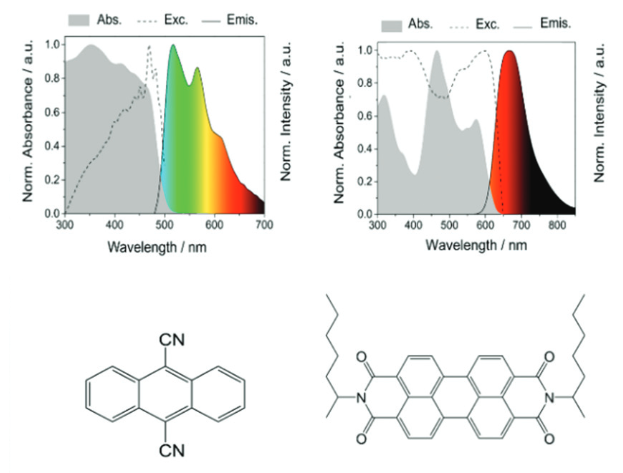
Figure 1. Spectra and structure of DCA (left) and PDI (right).

The group used 9,10-dicyanoanthracine (DCA) as the hollow outer crystal, with a perylene diimide derivative (PDI) as the interior compound (Figure 1). When combined, these two compounds exhibit fluorescence that covers the visible and near-IR portions of the electromagnetic spectrum. The researchers grew hollow crystals of DCA with diameters ranging from 50-400 μm in diameter with pores of 10-200 μm and filled them with 1-50 μm PDI crystal fibrils manually by hand(!) (Figure 2) (I honestly can’t imagine how many crystals ended up broken during that experimental learning curve!). The assembled structure for study had a single hollow DCA crystal filled with 18 individual PDI fibrils to create the waveguide.
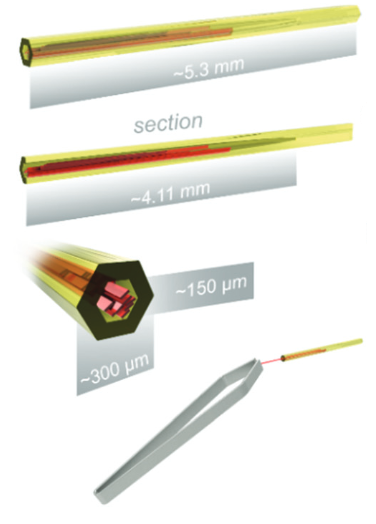
Figure 2. Schematic of hollow crystal architecture (top) with demonstration of construction (bottom).

When the researchers excited the full structure with a 365 nm continuous wavelength LED, both crystal components emitted light that was guided down to the opposite end. The specific makeup of the spectrum depends on the point of illumination; only the excited compounds emit. This supports the active waveguiding capabilities of the materials. The emissive properties can also be controlled by changing the excitation wavelengths to exclude the absorbance of one of the molecular crystals. PDI can be selectively excited using light above 550 nm and both PDI and DCA act simply as passive waveguides for light in the infrared region of the spectrum, of particular importance for wireless communication. This study represents an exciting next step for organic molecular materials as optical waveguides with a new architecture for devices.

To find out more please read:

A filled organic crystal as a hybrid large-bandwidth optical waveguide

Luca Catalano, Patrick Commins, Stefan Schramm, Durga Prasad Karothu, Rachid Rezgui, Kawther Hadef and Panče Naumov

Chem. Commun, 2019, 55, 4921-4924.

About the blogger:

Beth Mundy is a PhD candidate in chemistry in the Cossairt lab at the University of Washington in Seattle, Washington. Her research focuses on developing new and better ways to synthesize nanomaterials for energy applications. She is often spotted knitting in seminars or with her nose in a good book. You can find her on Twitter at @BethMundySci.

Digg This
Reddit This
Stumble Now!
Share on Facebook
Bookmark this on Delicious
Share on LinkedIn
Bookmark this on Technorati
Post on Twitter
Google Buzz (aka. Google Reader)

HOT Chemical Communication articles for April

All of the referee-recommended articles below are free to access until  15th August 2019.

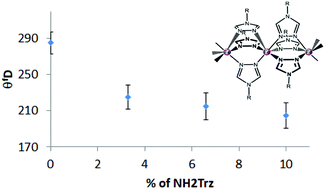
Drastic lattice softening in mixed triazole ligand iron(II) spin crossover nanoparticles
Mario Piedrahita-Bello, Karl Ridier, Mirko Mikolasek, Gábor Molnár, William Nicolazzi, Lionel Salmon* and Azzedine Bousseksou*
Chem. Commun., 2019, 55, 4769-4772
DOI: 10.1039/C9CC01619H, Communication

___________________________________________________________


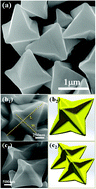
Highly symmetrical, 24-faceted, concave BiVO4 polyhedron bounded by multiple high-index facets for prominent photocatalytic O2 evolution under visible light
Jianqiang Hu, Huichao He, Liang Li, Xin Zhou,* Zhaosheng Li,* Qing Shen, Congping Wu, Adullah M. Asiri, Yong Zhou* and Zhigang Zou
Chem. Commun., 2019, 55, 4777-4780
DOI: 10.1039/C9CC01366K, Communication


___________________________________________________________


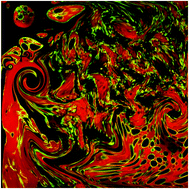
Controlling the morphological evolution of a particle-stabilized binary-component system
Tao Li,* Jason Klebes, Jure Dobnikar* and Paul S. Clegg
Chem. Commun., 2019, 55, 5575-5578
DOI: 10.1039/C9CC01519A, Communication


___________________________________________________________


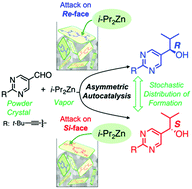
Formation of enantioenriched alkanol with stochastic distribution of enantiomers in the absolute asymmetric synthesis under heterogeneous solid–vapor phase conditions
Yoshiyasu Kaimori, Yui Hiyoshi, Tsuneomi Kawasaki, Arimasa Matsumoto and Kenso Soai*
Chem. Commun., 2019, 55, 5223-5226
DOI: 10.1039/C9CC01875A, Communication


___________________________________________________________


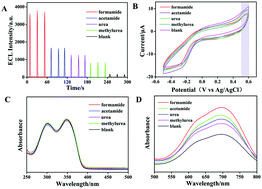
Rapid screening of the hydrogen bonding strength of radicals by electrochemiluminescent probes
Qinghong Xu, Jiali Liang, Xu Teng, Xin Yue, Ming Lei, Caifeng Ding and Chao Lu*
Chem. Commun., 2019, 55, 5563-5566
DOI: 10.1039/C9CC01210A, Communication


___________________________________________________________


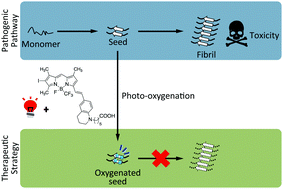
Photo-oxygenation inhibits tau amyloid formation
Takanobu Suzuki, Yukiko Hori, Taka Sawazaki, Yusuke Shimizu, Yu Nemoto, Atsuhiko Taniguchi, Shuta Ozawa, Youhei Sohma,* Motomu Kanai* and Taisuke Tomita*
Chem. Commun., 2019, 55, 6165-6168
DOI: 10.1039/C9CC01728C, Communication


___________________________________________________________

Digg This
Reddit This
Stumble Now!
Share on Facebook
Bookmark this on Delicious
Share on LinkedIn
Bookmark this on Technorati
Post on Twitter
Google Buzz (aka. Google Reader)

4th Annual UK Porous Materials Conference

The Annual UK Porous Materials Conference (UKPorMat), now in its 4th year, was held at Cardiff University on the 1st and 2nd of July 2019. The meeting, organised and chaired by the committee members of the RSC Porous Materials Interest Group, aims to bring together researchers working in the expanding field of porous materials, which includes metal-organic frameworks (MOFs), covalent-organic frameworks (COFs), porous organic cages, porous organic polymers, polymers of intrinsic microporosity and much more.

The Royal Society of Chemistry was delighted to be a part of the event, sponsoring a number of poster and talk prizes:

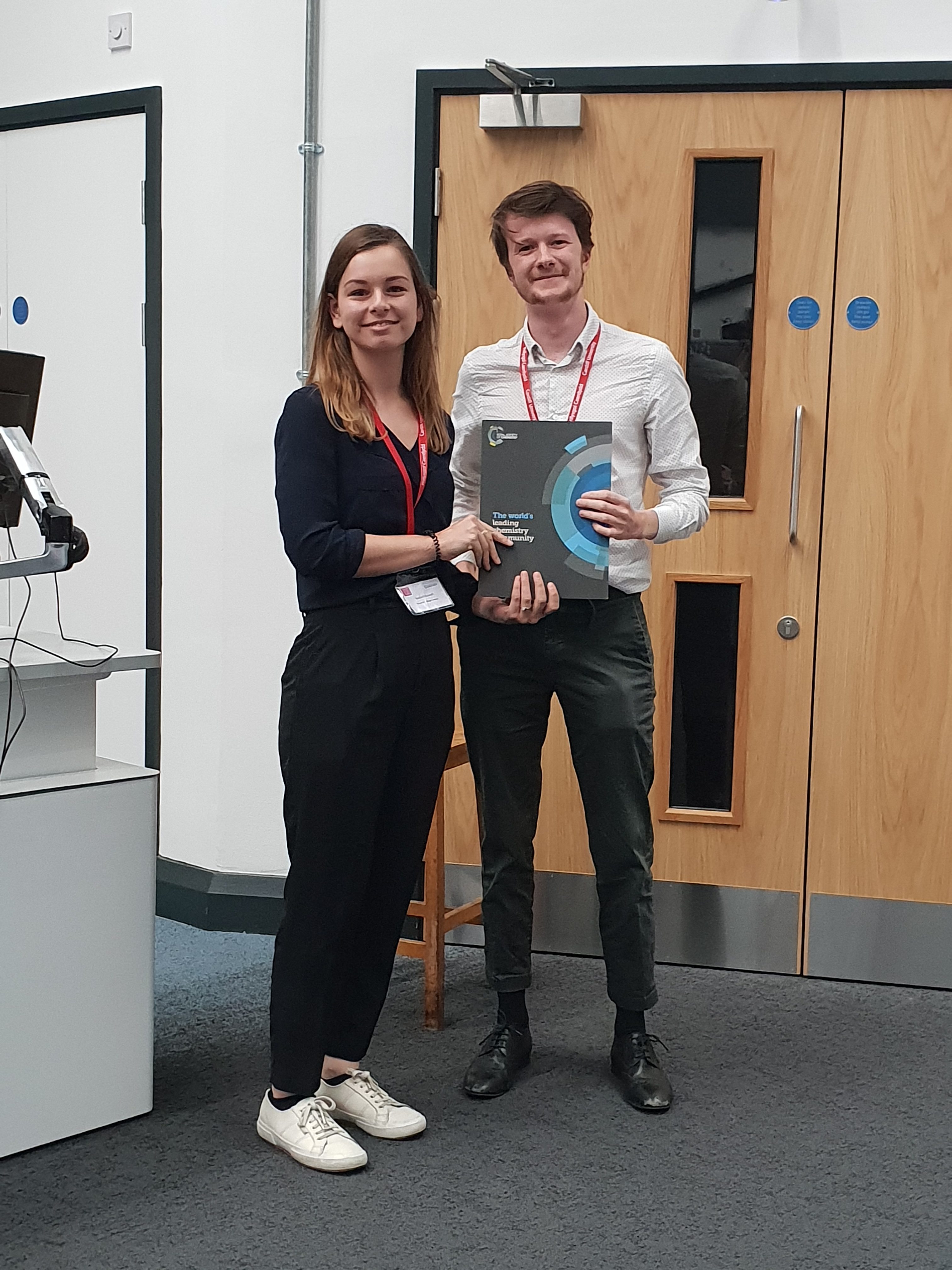
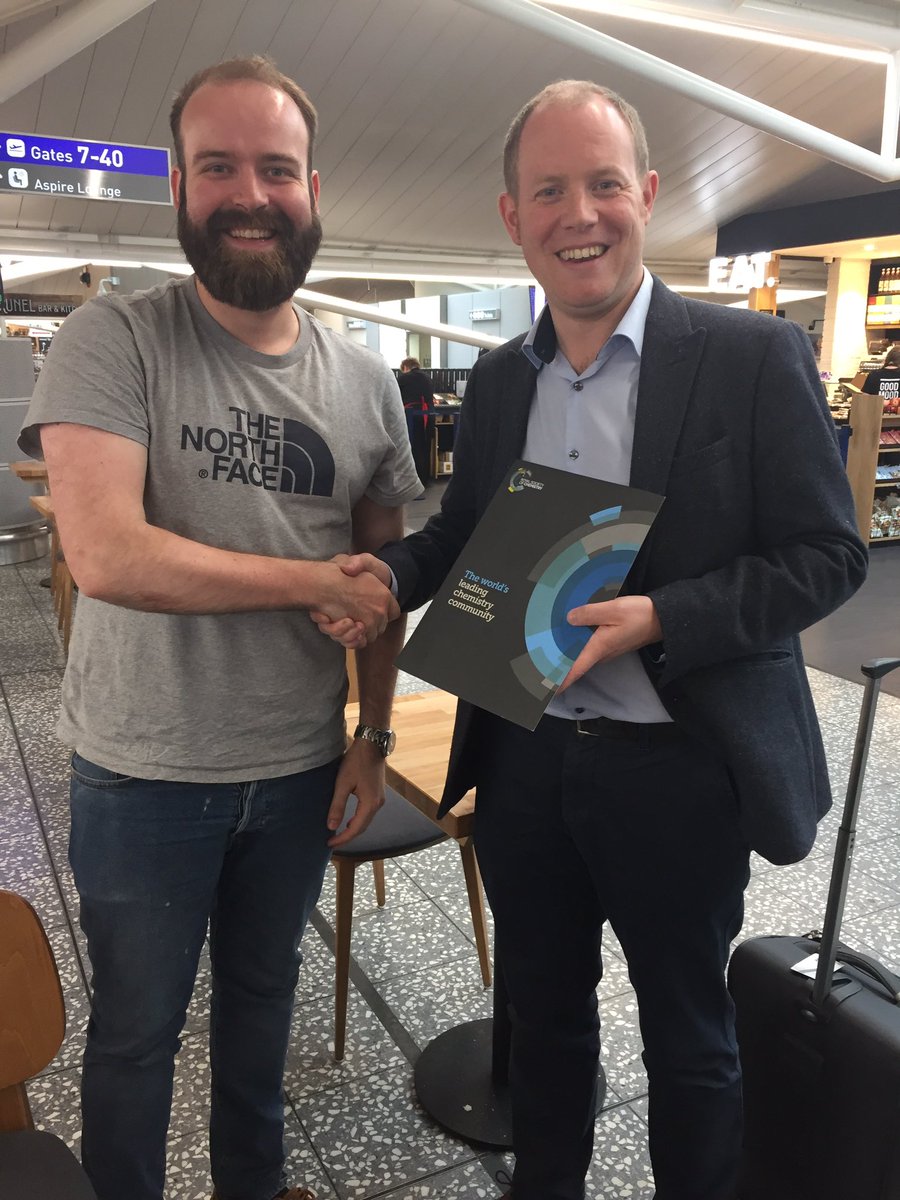
  • Giulia Schukraft (Imperial College London) was awarded the ChemComm Poster Prize
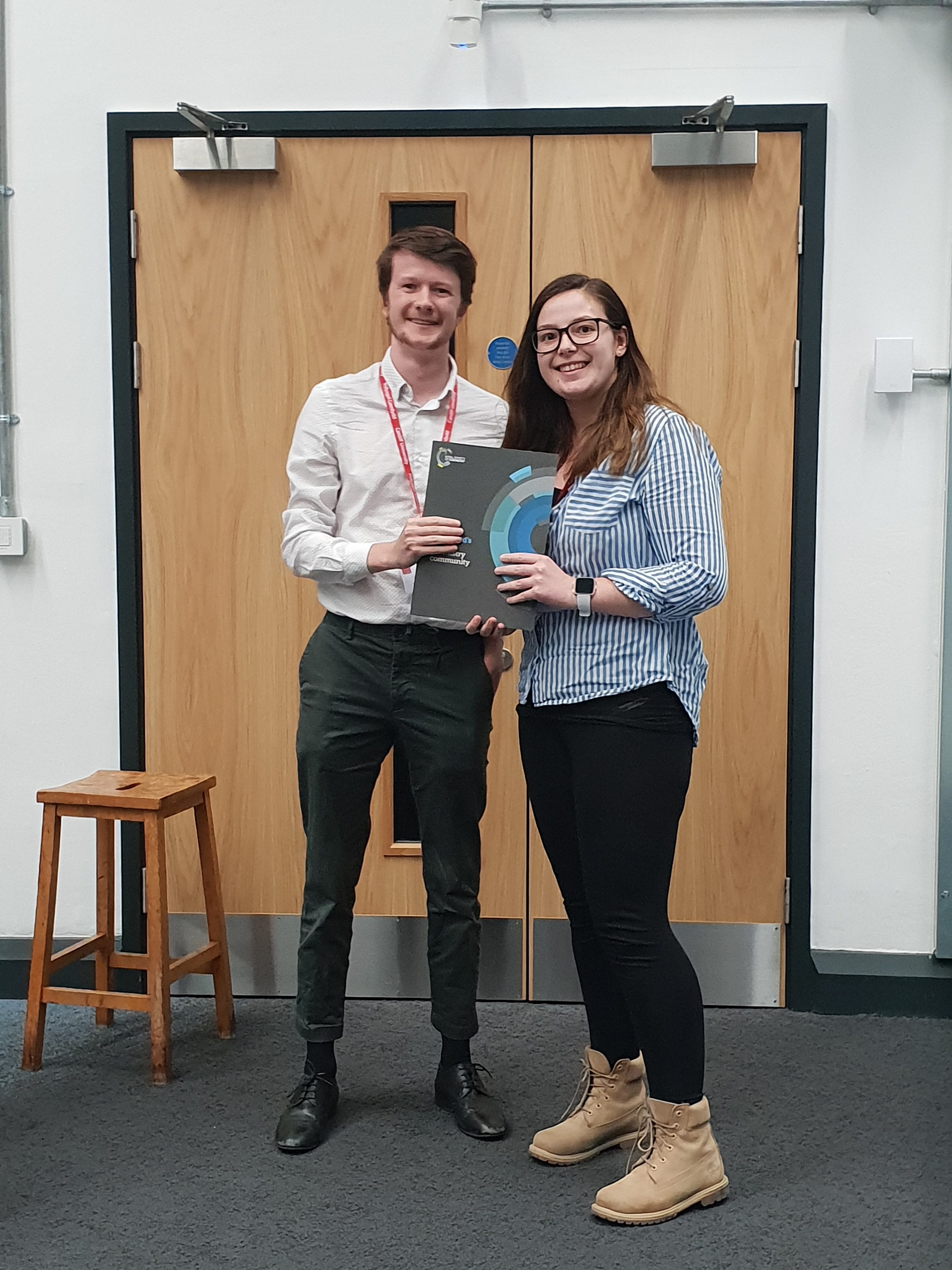
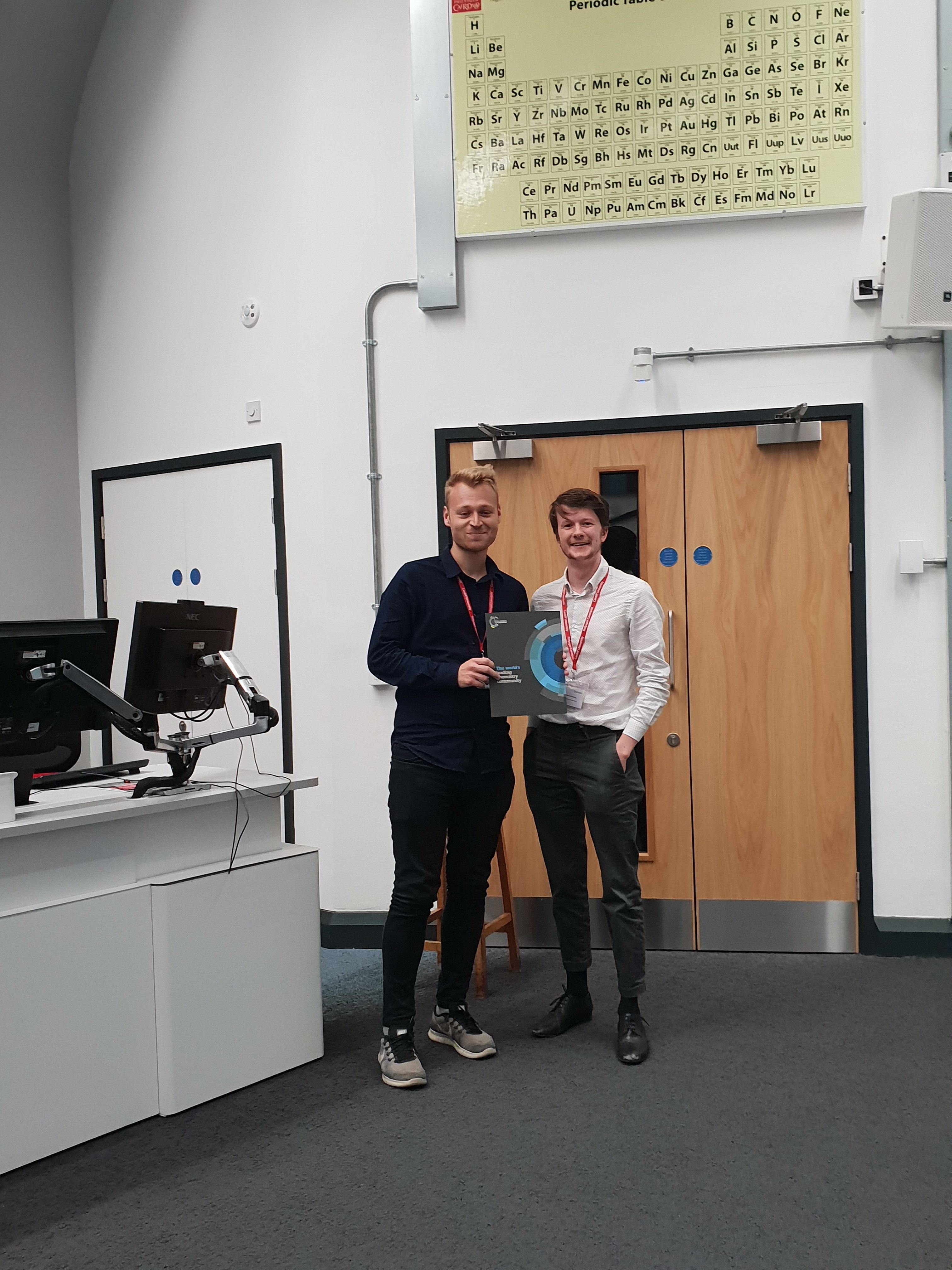
  • Iona Doig (University of Southampton) was awarded the Materials Horizons Poster Prize
  • Alexander Thom (University of Glasgow) was awarded the CrystEngComm Poster Prize
  • Alex James (University of Sheffield) was awarded the Chemical Science Prize for Best Talk

Congratulations to all of the prize winners!


Giulia Schukraft (left) receiving the ChemComm prize from Chris Harding (right)

Iona Doig (right) receiving the Materials Horizons prize from Chris Harding (left)

Alexander Thom (left) receiving the CrystEngComm prize from Ross Forgan (right) Alex James (left) receiving the Chemical Science prize from Chris Harding (right)

Special thanks to the organizers and committee members of the RSC Porous Materials Interest Group:

Dr Thomas Bennett (University of Cambridge)

Dr Andrea Laybourn (University of Nottingham)

Dr Ross Forgan (University of Glasgow)

Dr Darren Bradshaw (University of Southampton)

Dr Tim Easun (Cardiff University)

Dr Timothy Johnson (Johnson Matthey Technology Centre)

Professor Tina Düren

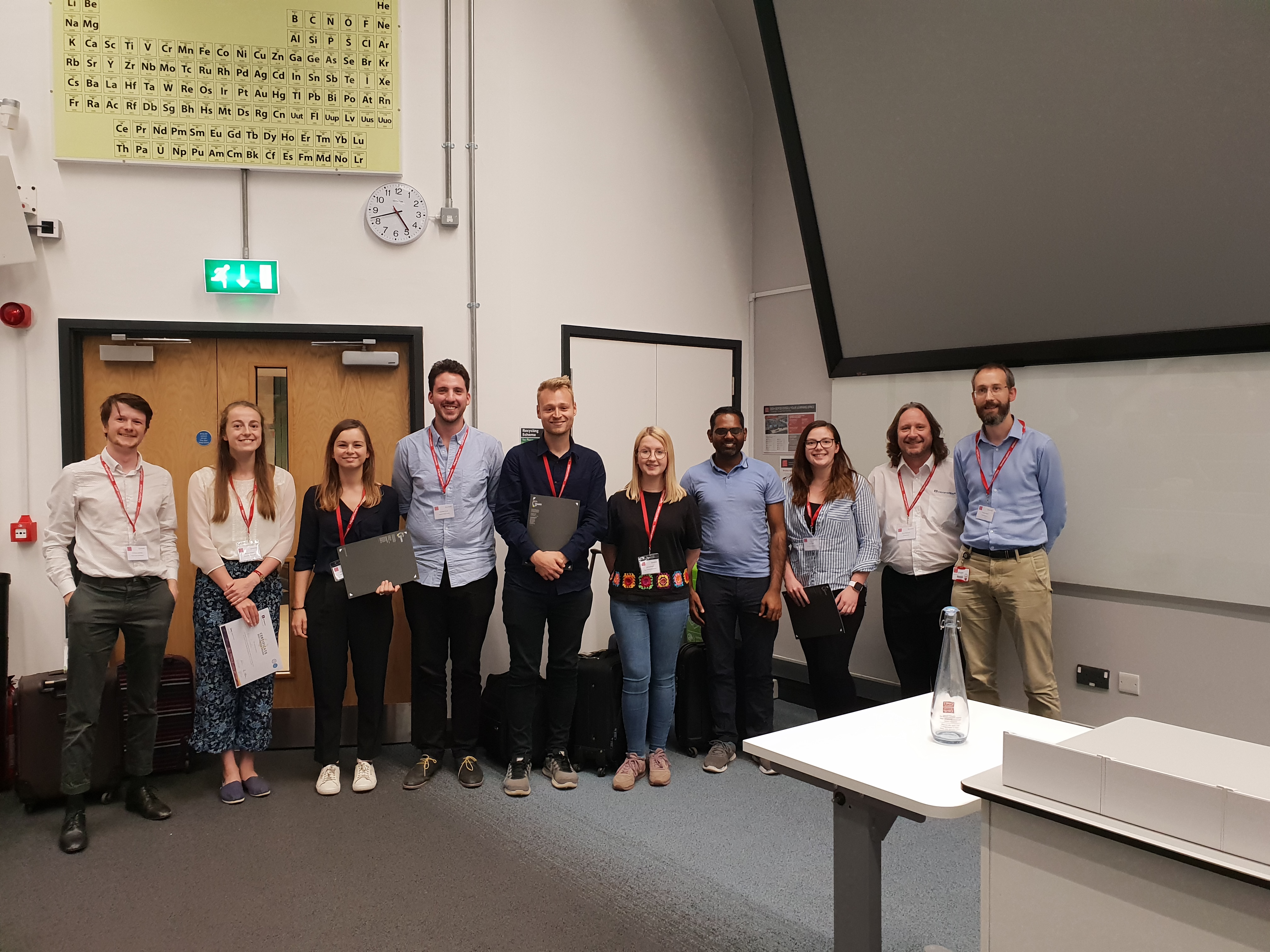
Prize-winners at the close of the 4th Annual UK Porous Materials meeting (Cardiff, 1st-2nd July 2019)


Digg This
Reddit This
Stumble Now!
Share on Facebook
Bookmark this on Delicious
Share on LinkedIn
Bookmark this on Technorati
Post on Twitter
Google Buzz (aka. Google Reader)