Archive for the ‘Hot Article’ Category

HOT ChemComm articles for May

A bright and responsive europium probe for determination of pH change within the endoplasmic reticulum of living cells
Brian K. McMahon, Robert Pal and David Parker
Chem. Commun., 2013, Advance Article
DOI: 10.1039/C3CC42308E

Free to access until 2nd June 2013


Photoswitchable NHC-promoted ring-opening polymerizations
Bethany M. Neilson and Christopher W. Bielawski
Chem. Commun., 2013, Advance Article
DOI: 10.1039/C3CC42424C

Free to access until 2nd June 2013


11CO2 Fixation: A Renaissance in PET Radiochemistry
Benjamin Rotstein, Steven H Liang, Jason Holland, Lee Collier, Jacob Hooker, Alan Alexander Wilson and Neil Vasdev
Chem. Commun., 2013, Accepted Manuscript
DOI: 10.1039/C3CC42236D

Free to access until 2nd June 2013

Digg This
Reddit This
Stumble Now!
Share on Facebook
Bookmark this on Delicious
Share on LinkedIn
Bookmark this on Technorati
Post on Twitter
Google Buzz (aka. Google Reader)

Metal organic frameworks for moisture-triggered fragrance release

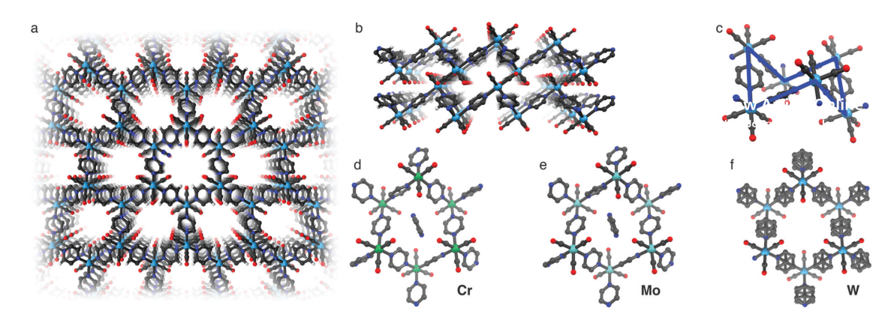
The controlled release of fragrance molecules is of great interest in the development of fragranced products such as deodorants, as the volatility of the fragrance molecules can reduce the action of the product over time.  In this HOT ChemComm article, Jing Li and her group at Rutgers University, New Jersey have joined forces with researchers from Colgate-Palmolive Company to investigate using metal organic frameworks (MOFs) to take up and release fragrances in response to external stimuli.

frangrance release by MOFs

MOFs are a class of porous materials that are receiving a significant amount of research interest.  In particular, their ability to take up and store small molecules makes them an exciting prospect for storing gases, such as hydrogen, for catalysis and for drug delivery.

In this study, researchers examined the ability of some zinc based MOFs containing hydrophobic channels to take up and release the fragrances ethyl butyrate and D-limonene.  They found that the release of these fragrances could be triggered by moisture.

Importantly, both the hydrophilic ethyl butyrate and the hydrophobic D-limonene could be stored and released in this way, whereas leading encapsulation technologies based on modified starch are generally only useful for storing hydrophobic fragrances.  MOFs could therefore well find commercial applications for storing a wide range of fragrances.

Read this ‘HOT’ ChemComm article today!

Encapsulated recyclable porous materials: an effective moisture-triggered fragrance release system
John Vaughn, Haohan Wu, Bisera Efremovska, David H. Olson, Jairajh Mattai, Claudio Oritz, Allen Puchalski, Jing Li and Long Pan
Chem. Commun., 2013, Advance Article
DOI: 10.1039/C3CC41236A

Cally Haynes is a guest web-writer for ChemComm.  She is currently a post doctoral researcher  at the University of Southampton, and her research interests include the supramolecular chemistry of anions.  When not in the laboratory, she likes travelling and watching football.

Digg This
Reddit This
Stumble Now!
Share on Facebook
Bookmark this on Delicious
Share on LinkedIn
Bookmark this on Technorati
Post on Twitter
Google Buzz (aka. Google Reader)

Nitrogen-containing graphene-like structures: Theory and experiment combine to reveal active sites

There is significant interest in nitrogen-containing electrocatalysts, driven by the need to find cost-effective and efficient material solutions for replacing platinum in polymer electrolyte membrane fuel cells.  However, the active sites of non-platinum group metal, oxygen reduction reaction electrocatalysts have been contentious for over 50 years.

Fortunately researchers are agreed that Metal(Me)-Nx centres may serve as possible active sites but whether it is Me-N2 or Me-N4 remains unresolved.  X-ray Photoelectron Spectroscopy (XPS) would be the ideal technique to answer this question if it didn’t rely on the use of reference spectra; none exist for the Me-N2 species which makes it less than ideal.

Fitting of DFT calculated curves to experimental results.

Kateryna Artyushkova, Plamen Atanassov and their team have overcome this problem by using density functional theory (DFT) to calculate the binding energy shifts of the species.  Calculating the binding energy shifts, rather than just the binding energies, allows the team to overcome the challenges associated with DFT calculations including; treatment of the core electrons and the poorly screened Coulomb potential near the nucleus.

Once validated, the DFT output can be used as input for XPS curve fitting.  This has revealed rearrangement around Cobalt-Nx centres in an oxidizing atmosphere and supports the understanding of these catalysts as vacancy-and-substitution defects in a graphene-like matrix.

This work demonstrates the synergy between experiment and theory which allows critical information to be extracted that might otherwise remain hidden.

For more, read this ChemComm article in full:

Density functional theory calculations of XPS binding energy shift for nitrogen-containing graphene-like structures
K. Artyushkova, B. Kiefer, B. Halevi, A. Knop-Gericke, R. Schlogl and P. Atanassov
Chem. Commun., 2013, 49, 2539-2541
DOI: 10.1039/C3CC40324F

Iain Larmour is a guest web-writer for ChemComm.  He has researched a wide variety of topics during his years in the lab including nanostructured surfaces for water repellency and developing nanoparticle systems for bioanalysis by surface enhanced optical spectroscopies.  He currently works in science management with a focus on responses to climate change.  In his spare time he enjoys reading and photography.

Digg This
Reddit This
Stumble Now!
Share on Facebook
Bookmark this on Delicious
Share on LinkedIn
Bookmark this on Technorati
Post on Twitter
Google Buzz (aka. Google Reader)

X-ray nanoscopy of cobalt Fischer–Tropsch catalysts at work

Cobalt Fischer–Tropsch catalysts have been investigated in both 2-D and 3-D, by scientists in the Netherlands and the US, using in situ hard X-ray transmission X-ray microscopy (TXM). The FischerTropsch process is an important step in the production of liquid fuels from natural gas, biomass or coal.

Tomographic elemental mapping revealed the 3-D distribution of cobalt over the catalyst particles showing that cobalt is heterogeneously concentrated in the centre of the catalyst particles. 2-D chemical mapping allowed them to follow the chemical composition of the catalyst particles under reaction conditions.

This is the first time that this particular catalyst has been observed at the single particle level under reaction conditions, allowing the team to get a true picture of the deactivation of the catalyst which will provide information to help improve the catalyst’s productivity.

‘HOT’ Communication – read for free today:

X-ray Nanoscopy of Cobalt Fischer-Tropsch Catalysts at Work
Korneel Cats , Inés González-Jiménez , Yijin Liu , Johanna Nelson , Douglas van Campen , Florian Meirer , Ad M.J. van der Eerden , Frank M F de Groot , Joy C. Andrews and Bert Weckhuysen
Chem. Commun., 2013, DOI: 10.1039/C3CC00160A

Digg This
Reddit This
Stumble Now!
Share on Facebook
Bookmark this on Delicious
Share on LinkedIn
Bookmark this on Technorati
Post on Twitter
Google Buzz (aka. Google Reader)

HOT ChemComm articles for April

Cleavable trifunctional biotin reagents for protein labelling, capture and release
Yinliang Yang and Steven H.L. Verhelst
Chem. Commun., 2013, Accepted Manuscript
DOI: 10.1039/C3CC42076K

Free to access until 26th May 2013


PCR based magnetic assembled sensor for ultrasensitive DNA detection
Chuanlai Xu
Chem. Commun., 2013, Accepted Manuscript
DOI: 10.1039/C3CC41674G

Free to access until 26th May 2013


ATRP synthesis of poly(2-(methacryloyloxy)ethyl choline phosphate): A multivalent universal biomembrane adhesive
Xifei Yu, Xiaoqiang Yang, Sonja Horte, Jayachandran N. Kizhakkedathu and Donald Brooks
Chem. Commun., 2013, Accepted Manuscript
DOI: 10.1039/C3CC41895B

Free to access until 26th May 2013

Click here for more free HOT ChemComm articles for April!

Digg This
Reddit This
Stumble Now!
Share on Facebook
Bookmark this on Delicious
Share on LinkedIn
Bookmark this on Technorati
Post on Twitter
Google Buzz (aka. Google Reader)

ChemComm HOT articles for early 2013

Aptamer-targeted hyperbranched polymers: towards greater specificity for tumours in vivo
Daniel J. Coles, Barbara E. Rolfe, Nathan R. B. Boase, Rakesh N. Veedu and Kristofer J. Thurecht
Chem. Commun., 2013, Advance Article
DOI: 10.1039/C3CC00127J

C3CC00127J


Shape assisted fabrication of fluorescent cages of squarate based metal–organic coordination frameworks
Kolleboyina Jayaramulu, Katla Sai Krishna, Subi J. George, Muthuswamy Eswaramoorthy and Tapas Kumar Maji
Chem. Commun., 2013, Advance Article
DOI: 10.1039/C3CC39190F

C3CC39190F

Click to read more HOT articles!

Digg This
Reddit This
Stumble Now!
Share on Facebook
Bookmark this on Delicious
Share on LinkedIn
Bookmark this on Technorati
Post on Twitter
Google Buzz (aka. Google Reader)

Gold nanoparticles reveal fingerprints

Gold nanoparticles capped with mercaptocarboxylic acids, followed by silver precipitation, have been used to develop latent fingerprints on paper as high quality negative images. Scientists writing in the journal ChemComm say that the effect stems from hydrogen bonding between the carboxylic group and the paper cellulose.

Recovering fingerprints from paper is a common task for forensic scientists, but often the developed marks are faint. A common approach, therefore, is to use a developing agent that sticks to the clean paper substrate, rather than the fingerprint itself, yielding a reversed image.

The technique described in this study is much less affected by sweat composition, and could improve the yield of latent fingerprints.

Read the ‘HOT’ ChemComm article today for free:

A novel approach to fingerprint visualization on paper using nanotechnology: reversing the appearance by tailoring the gold nanoparticles’ capping ligands
Sanaa Shenawi , Nimer Jaber , Joseph Almog and Daniel Mandler
Chem. Commun., 2013, DOI: 10.1039/C3CC41610K

Digg This
Reddit This
Stumble Now!
Share on Facebook
Bookmark this on Delicious
Share on LinkedIn
Bookmark this on Technorati
Post on Twitter
Google Buzz (aka. Google Reader)

Porous organic polymers filter toxins from the air

In a search for the next generation of filtration materials, for use in devices such as gas masks, a group of US scientists has synthesised a series of porous organic polymers (POPs) bearing metal-catecholate groups. By changing the molecular building blocks the researchers were able to tailor the materials to hydrogen bond to, and consequently remove, different toxins, such as ammonia.

POPs are very similar in nature to metal-organic frameworks (MOFs) but do not suffer from such instability, particularly towards water, making them ideal for use as filters in real-word environments.

Read this ‘HOT’ Communication now:

Removal of airborne toxic chemicals by porous organic polymers containing metal–catecholates
Mitchell H. Weston , Gregory W. Peterson , Matthew A. Browe , Paulette Jones , Omar K. Farha , Joseph T. Hupp and SonBinh T. Nguyen
Chem. Commun., 2013,49, 2995-2997

Digg This
Reddit This
Stumble Now!
Share on Facebook
Bookmark this on Delicious
Share on LinkedIn
Bookmark this on Technorati
Post on Twitter
Google Buzz (aka. Google Reader)

Making Bispirin: A new drug to fight both indigestion and pain

Until now, drugs which fight gastrointestinal infections and those which treat acute inflammation have been found to interfere with each other.  For instance, people infected with the Helicobacter pylori bacterium have needed to deal with the additional risk of gastrointestinal bleeding associated with the use of aspirin and other inflammatory drugs.

Australian research chemists, led by Philip C. Andrews of Monash University, have designed a new drug which treats gastrointestinal infections and acute inflammation at the same time.  They have successfully synthesized bispirin, a bismuth acetylsalicylate complex which combines the effectiveness of bismuth carboxylate compounds as anti-infection agents with that of acetyl­salicylic acid (aspirin) as an anti-inflammatory drug.  Their initial tests have shown that bispirin’s antibacterial effects are comparable or better than those of current bismuth drugs, and investigations of bispirin’s anti-inflammatory activity are currently in progress.

Making Bispirin_graphical abstract

This journal article has also been recently featured on C&ENread it here.

Read this ‘HOT’ ChemComm article in full:

Making Bispirin: synthesis, structure and activity against Helicobacter pylori of bismuth (III) acetylsalicylate
Philip C. Andrews, Victoria L. Blair, Richard L. Ferrero, Peter C. Junk and Ish Kumar
Chem. Commun., 2013, 49, 2870-2872
DOI: 10.1039/C3CC40645H

Digg This
Reddit This
Stumble Now!
Share on Facebook
Bookmark this on Delicious
Share on LinkedIn
Bookmark this on Technorati
Post on Twitter
Google Buzz (aka. Google Reader)

If you like it, then you should put two rings on it

Microring resonators are pretty amazing things, offering label-free biosensing by coupling with light and then circulating the photons inside the cavity of the ring, enhancing the interaction between the light and the analytes.

However, I like to think of traditional microring resonators as tents: difficult to construct. They require a submicrometer gap between the input waveguide and the resonator ring structure to allow the coupling of light and before you can even get to that stage, you need to make the microring resonator, which requires a series of complex fabrication steps (FIG 1a).  In this Communication, which is part of ChemComm’s Microfluidics themed web collection, Professor Jonathan Cooper and his colleagues at Glasgow University and at the International Islamic University Malaysia’s CTS Department have made (what I think of as) the double pop-up tent equivalent– or as they call it, the dual disk resonator (DDR). Made from SU8, an epoxy-based polymer used in microfluidics chips, it can be patterned in a single lithographic step. Not only that, but the DDR uses a gapless design and two rings, increasing the sensitivity of the device (FIG 1b).

FIG 1: The hard way or the easy way (a) the traditional microring resonator with submicrometer gap (b) gapless dual disk resonator

Once they had constructed the DDR, the team characterised the optical sensitivity of the device using sucrose solutions to vary the refractive index of the sample above the waveguide. They then went on to show that the sensor could be used to evaluate the dynamics of antibody interactions on surfaces, exploring avidin-biotin-based immobilisations; sharp resonance shifts confirmed the assembly and disassembly of constructs.

The simpler fabrication shows great promise, as the authors suggest that the sensitivity of the device could be greatly improved by coupling more disks to it– in which case Beyoncé might soon be singing ‘if you like it, then you should put a chain on it.’

Read this ‘HOT’ ChemComm article today:

Polymer dual ring resonators for label-free optical biosensing using microfluidics

Muhammad H. M. Salleh, Andrew Glidle, Marc Sorel, Julien Reboud and Jonathan M. Cooper

Chem. Commun., 2013, Advance Article

DOI: 10.1039/C3CC38228A

Digg This
Reddit This
Stumble Now!
Share on Facebook
Bookmark this on Delicious
Share on LinkedIn
Bookmark this on Technorati
Post on Twitter
Google Buzz (aka. Google Reader)