Author Archive

Emerging Investigators Series 2023 – Author Spotlight – Henry Chu

We are delighted to present the 2023 edition of the RSC Advances Emerging Investigators series! Following the success of our 2022 edition, we are excited to continue highlighting the chemistry research being conducted by some of the leading investigators in our community.

This year’s Series Editors were Professor Shirley Nakagaki (Federal University of Paraná, Brazil) and Dr Fabienne Dumoulin (Acıbadem Mehmet Ali Aydınlar Universit, Türkiye). Eight articles were selected to support emerging researchers who are already making strides in their respective fields of research, both nationally and internationally. In this series, researchers address issues around water pollution, and develop analytical tools for the detection of biologically relevant substances. We also showcase efforts to prepare and characterize new compounds, as well as computational and theoretical research. Read all about the contributions in this accompanying Editorial.

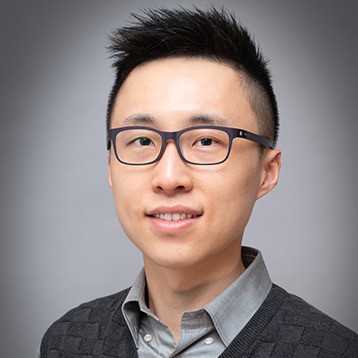
We would like to take this opportunity to highlight an author from the series, Henry Chu. We interviewed Henry to find out more about his area of research and his contribution to the series.
Unidirectional drying of a suspension of diffusiophoretic colloids under gravity

Jinjie Xu, Zhikui Wang and Henry C. W. Chu

RSC Adv., 2023,13, 34852-34865

Henry Chu is an Assistant Professor in Chemical Engineering and an Affiliate Assistant Professor in Mechanical and Aerospace Engineering at University of Florida (UF). He obtained a M.Phil. from The University of Hong Kong advised by Professors Chiu-On Ng and Kwok Wing Chow, and a Ph.D. from Cornell University advised by Professor Roseanna Zia. He was a Postdoctoral Fellow at Carnegie Mellon University, working with Professors Aditya Khair, Robert Tilton, Stephen Garoff, and Todd Przybycien. The research theme of his group is heterogeneous soft matter transport and design, covering topics such as complex fluid dynamics, colloid and interface science, electrokinetics, and rheology. His group develops predictive multi-scale computational tools and fundamental theory to address National Academy of Engineering Grand Challenges, emphasizing on close collaboration with experimental groups to translate knowledge into applications. His work has been recognized through awards, including UF Global Faculty Fellowship, The Royal Society of Chemistry Soft Matter Emerging Investigator, American Chemical Society Petroleum Research Fund Doctoral New Investigator Grants, and the U.S. Department of Energy Geosciences Research Grants.

1. Could you briefly explain the focus of your article to the non-specialist (in one or two sentences only) and why it is of current interest?

The focus of our article is to simulate and understand the enhancement in the thickness of the colloidal film produced by unidirectional drying an electrolyte-colloid suspension, under normal and microgravity. This is of current interest in manufacturing microstructured materials for ground-based and in-space applications, such as thermal coatings, electrodes, and photonic crystals.

2. How big an impact could your results potentially have?

Our work demonstrates an order-of magnitude enhancement in the thickness of the colloidal film due to the enhanced colloidal transport by the solute concentration gradient generated during unidirectional drying.

3. Could you explain the motivation behind this study?

The enhanced colloidal transport by a solute concentration gradient, known as diffusiophoresis, has been ignored in prior modeling. Prior to our simulations, we envisioned that diffusiophoresis will be pivotal in the drying process, since the typical velocity of colloidal transport by diffusiophoresis is significantly larger than that by solvent evaporation in a drying cell.

4. In your opinion, what are the key design considerations for your study?

The key design consideration for our study is to employ direct numerical simulations and develop a macrotransport theory to analyze the advective-diffusive transport of an electrolyte-colloid suspension in a unidirectional drying cell under the influence of gravity and diffusiophoresis.

5. Which part of the work towards this paper proved to be most challenging?

The most challenging but enjoyable part of this work is to educate and guide my students to complete this first project of them. We are glad that we made it!

6. What aspect of your work are you most excited about at the moment?

The theme of our research is heterogeneous soft matter transport and design. We are excited about developing predictive multi-scale computational tools and fundamental theory to address emerging National Academy of Engineering Grand Challenges, emphasizing on close collaboration with experimental groups to translate knowledge into applications.

7. How has your research evolved from your first article to this particular article?

I am grateful to my undergraduate, master’s, doctoral, and postdoctoral research mentors, who guided me from my first article in hydrophobic microchannel flows to other published work in complex fluid dynamics, colloid and interface science, electrokinetics, and rheology. This article pertains to electrokinetic flows and is a tribute to my mentors 🙂

8. What is the next step? What work is planned?

Diffusiophoresis, the novel component of our article, is one of the specializations of our research group. We are excited about disseminating more of our discoveries of the fundamentals and applications of diffusiophoresis in the future!

9. Why did you want to publish in RSC Advances?

We published our article in RSC Advances, since our work was partly inspired by a high-quality article published in the same journal.

10. What are your thoughts on open access publishing?

Open access publishing is beneficial to disseminate knowledge, especially to institutes or individuals which cannot afford the traditional subscription model.

RSC Advances Royal Society of Chemistry

Submit to RSC Advances today! Check out our author guidelines for information on our article types or find out more about the advantages of publishing in a Royal Society of Chemistry journal.

Keep up to date with our latest  Popular Advances articles, Reviews, Collections & more by following us on Twitter. You can also keep informed by signing up to our E-Alerts.

Digg This
Reddit This
Stumble Now!
Share on Facebook
Bookmark this on Delicious
Share on LinkedIn
Bookmark this on Technorati
Post on Twitter
Google Buzz (aka. Google Reader)

RSC Advances Emerging Investigators Series 2023 – Meet the Authors

We are delighted to present the 2023 edition of the RSC Advances Emerging Investigators series! Following the success of our 2022 edition, we are excited to continue highlighting the chemistry research being conducted by some of the leading investigators in our community.

This year’s Series Editors were Professor Shirley Nakagaki (Federal University of Paraná, Brazil) and Dr Fabienne Dumoulin (Acıbadem Mehmet Ali Aydınlar Universit, Türkiye). Eight articles were selected to support emerging researchers who are already making strides in their respective fields of research, both nationally and internationally. In this series, researchers address issues around water pollution, and develop analytical tools for the detection of biologically relevant substances. We also showcase efforts to prepare and characterize new compounds, as well as computational and theoretical research. Read all about the contributions in this accompanying Editorial.

Please see below the biographies of some of the brilliant authors who have been published in the 2023 collection:

Henry Chu

Unidirectional drying of a suspension of diffusiophoretic colloids under gravity

Henry Chu is an Assistant Professor in Chemical Engineering and an Affiliate Assistant Professor in Mechanical and Aerospace Engineering at University of Florida (UF). He obtained a M.Phil. from The University of Hong Kong advised by Professors Chiu-On Ng and Kwok Wing Chow, and a Ph.D. from Cornell University advised by Professor Roseanna Zia. He was a Postdoctoral Fellow at Carnegie Mellon University, working with Professors Aditya Khair, Robert Tilton, Stephen Garoff, and Todd Przybycien. The research theme of his group is heterogeneous soft matter transport and design, covering topics such as complex fluid dynamics, colloid and interface science, electrokinetics, and rheology. His group develops predictive multi-scale computational tools and fundamental theory to address National Academy of Engineering Grand Challenges, emphasizing on close collaboration with experimental groups to translate knowledge into applications. His work has been recognized through awards, including UF Global Faculty Fellowship, The Royal Society of Chemistry Soft Matter Emerging Investigator, American Chemical Society Petroleum Research Fund Doctoral New Investigator Grants, and the U.S. Department of Energy Geosciences Research Grants.

Bernardo Almeida Iglesias

First report of trans-A2B-corrole derived from a lapachone derivative: photophysical, TD-DFT and photobiological assays

Bernardo Almeida Iglesias received his Ph.D. degree from Institute of Chemistry of University of Sao Paulo in 2012, under the guidance of Professor Koiti Araki. Currently, he is Assistant Professor at the Federal University of Santa Maria – Brazil and CNPq Scholarship (PQ-2). His research interests are focused on the synthesis and photobiology of tetrapyrrole macrocycles (porphyrins and corroles) for application in bioinorganic chemistry and photodynamic therapy applications. Authorized 170 research papers and actuates as Coordinator of Chemistry at FAPERGS (Rio Grande do Sul State Research Foundation).

Moses O. Alfred

Distribution and toxicity of dihydroxybenzenes in drinking water sources in Nigeria

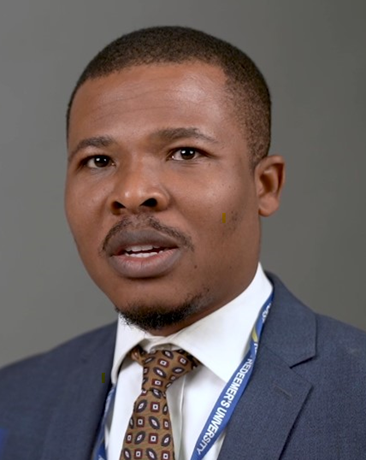
Dr Moses O Alfred holds a Ph.D. in Industrial Chemistry and an MSc in Environmental and Analytical Chemistry from Redeemer’s University, Nigeria, building upon his foundational BSc in Industrial Chemistry from Adekunle Ajasin University. Throughout his academic journey, Dr Alfred has garnered prestigious scholarships, including The World Academy of Science Master’s Degree Scholarship, the African-German Network of Excellence in Sciences (AGNES) mobility grant, the TWAS-CNPq Sandwich Ph.D. Fellowship and, recently, the Alexander von Humboldt Georg Forster Postdoctoral Fellowship showcasing his exceptional dedication to advancing environmental science. Renowned for his groundbreaking research in the investigation of water quality issues, water purification, and pollution control, Dr. Alfred’s innovative work not only surveys water pollution but also focuses on developing low-cost materials from waste matter to remove toxic contaminants from water sources. His contributions, including novel adsorbents and photocatalytic materials, have earned him international recognition and invitations to present at esteemed conferences and workshops. As an educator, Dr Alfred mentors and supervises students at Redeemer’s University and the African Centre of Excellence for Water and Environmental Research (ACEWATER), shaping the next generation of environmental scientists. Driven by his passion for environmental sustainability, Dr. Alfred’s research, peer review activities, and commitment to mentorship continue to leave a lasting impact on the field, inspiring future scientists.

Vanessa Nascimento

Synthesis and evaluation of photophysical, electrochemical, and ROS generation properties of new chalcogen-naphthoquinones-1,2,3-triazole hybrids

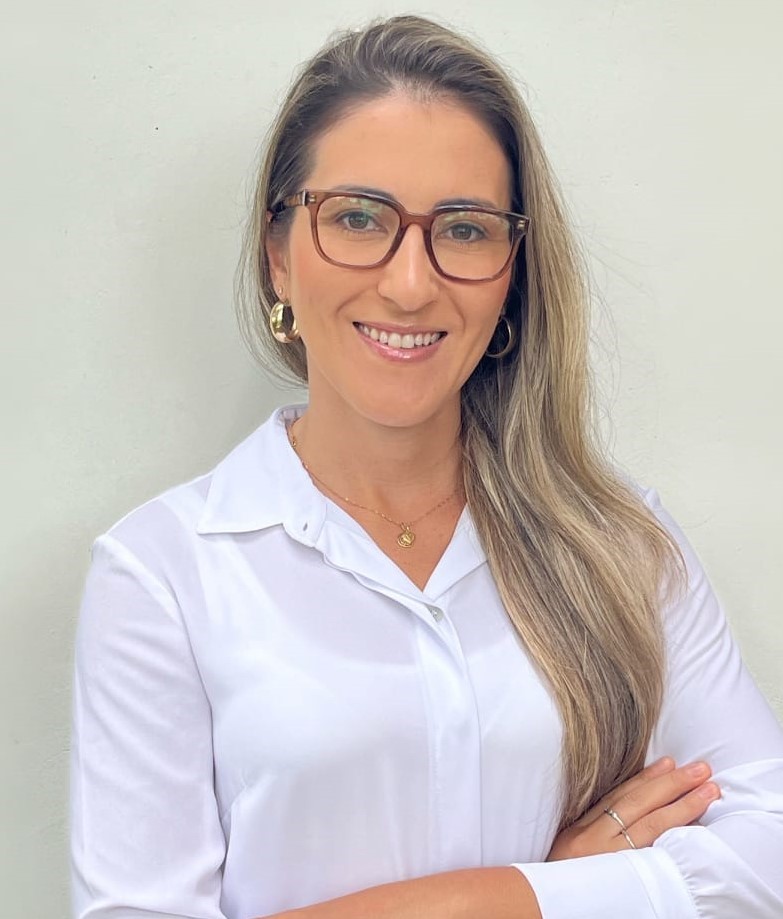
Mother of twins Arthur and Lucca (6 years old). She graduated in Industrial Chemistry from the Universidade Federal de Santa Maria (2009). Master (2011) and PhD in Chemistry from the Universidade Federal de Santa Catarina, with a period funded by PDSE/Capes, at UNIPG, Italy (2015). She completed her postdoctoral, under the supervision of Prof. Dr. Faruk Nome, also at UFSC. Since 2016, she has been an Adjunct Professor in the Department of Organic Chemistry at the Universidade Federal Fluminense, where she leads the research group: SupraSelen (SupraSelen Laboratory). She has experience in Chemistry, with an emphasis on Organic Synthesis. Her field of activity mainly covers the synthesis of compounds functionalized with organochalcogens for application in biological tests. She also works in the synthesis and applications of compounds involving Supramolecular Chemistry. She received the PeerJ Award in 2019 and, in the same year, became a Young Scientist of Our State by FAPERJ. Between 2020 and 2024, she served on the Young Researchers team of the Brazilian Chemical Society (secretary during 2022-2024) and the Latin American Network of Young Scientists working in Chemistry (LANYSC). In 2021, she joined the Núcleo Mulheres SBQ (media committee) and the International Younger Chemists Network (Public Outreach Committee). In 2022, she received the Jovem Cientista Fluminense Award from the Brazilian Chemical Society – Rio de Janeiro, where she serves as Treasurer for the period 2024-2026. ACS Premium Membership since 2023 and Full Member of the SBQ since 2008. Topical Advisory Panel and Guest Editor for Processes Journal, International board and secretary of the SeS Redox and Catalysis Network. In 2024, it received the Sustainability Star award from the American Chemical Society.

Looking forward: Emerging Investigator Series 2024!

We are pleased to announce that Shirley and Fabienne will continue as the Series Editors for the 2024 Emerging Investigator series. We can’t wait to see what the next early career investigators have been working on in Chemistry!

Authors can self-nominate for participation in the Emerging Investigators Series. Articles can be submitted to the series at any time and will be accepted and published throughout the year. If you would like to be involved in our upcoming series, please look at our webpage for more information or submit now!

For any questions do not hesitate to contact us at advances-rsc@rsc.org

RSC Advances Royal Society of Chemistry

Submit to RSC Advances today! Check out our author guidelines for information on our article types or find out more about the advantages of publishing in a Royal Society of Chemistry journal.

Keep up to date with our latest Popular Advances, Reviews, Collections & more by following us on Twitter. You can also keep informed by signing up to our E-Alerts.

Thank you so much to the Series Editors, Associate Editors and to all our reviewers at RSC Advances for their ongoing support and contribution, helping us to bring together such a fantastic collection of articles.

Digg This
Reddit This
Stumble Now!
Share on Facebook
Bookmark this on Delicious
Share on LinkedIn
Bookmark this on Technorati
Post on Twitter
Google Buzz (aka. Google Reader)

Open call for papers – Greening the Exposome

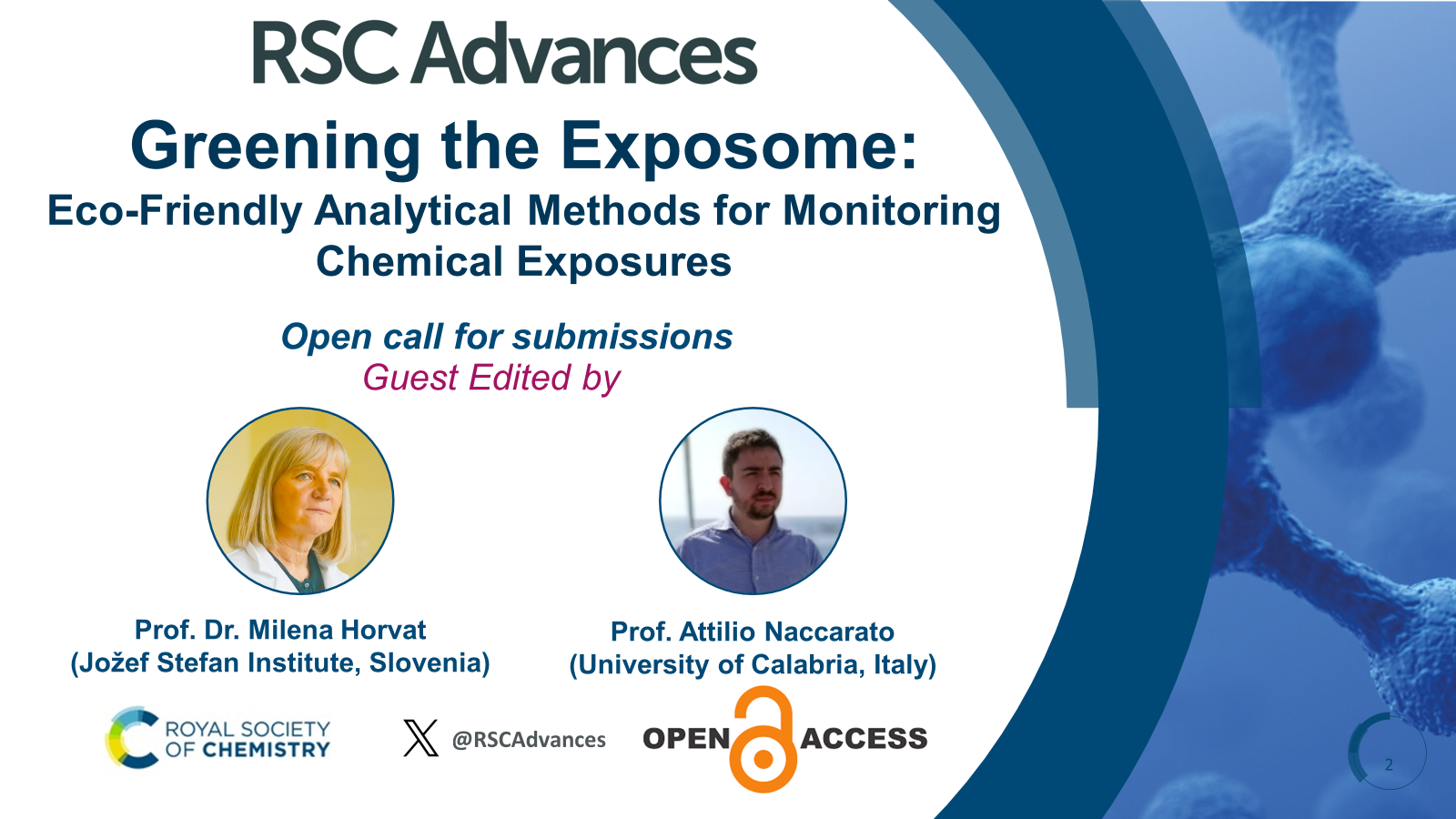
RSC Advances is delighted to announce a new themed collection entitled Greening the Exposome: Eco-Friendly Analytical Methods for Monitoring Chemical Exposures.

This collection is Guest Edited by Prof. Attilio Naccarato (University of Calabria, Italy) and Prof. Dr. Milena Horvat (Jožef Stefan Institute, Slovenia).

We welcome your submission to the series!

The exposome, encompassing all environmental exposures throughout life, plays a crucial role in human health and disease. Monitoring chemical exposures from various sources, including the environment and food, is essential for understanding their impact on health outcomes. However, traditional analytical methods often rely on harsh chemicals, generate hazardous waste, and contribute to environmental burdens.

RSC Advances is pleased to announce a themed collection dedicated to innovative and eco-friendly analytical methods for monitoring chemical exposures within the exposome framework. This special issue aims to showcase recent advancements in sustainable analytical strategies for assessing human exposure to environmental and foodborne contaminants, offering valuable insights that can benefit the fields of epidemiology, clinical chemistry, and environmental medicine.

Topics of interest include, but are not limited to:

1. Advancements in eco-friendly analytical techniques: Innovative analytical methods for exposome analysis designed to minimize environmental impact, including the use of green solvents, sustainable sample preparation techniques, and miniaturized analytical platforms.

2. Microfluidics and Lab-on-a-Chip technologies: Application of Microfluidics and Lab-on-a-Chip technologies for high-throughput analysis of environmental and biological samples to rapidly detect contaminants and biomarkers.

3. High-throughput screening for exposome-wide chemical analysis: Innovative approaches for conducting exposome-wide chemical analysis, including high-throughput screening methods and advanced data processing techniques for mapping exposure profiles and potential health risks.

4. Use of novel sensors: Implementation of biosensors, in-situ sensors, on-site, and personal sensing devices for monitoring exposures.

5. Analytical challenges and solutions: Addressing key analytical challenges with exposome investigations, such as sample complexity, matrix effects, and data integration, with a focus on novel analytical solutions and methodologies.

6. Quality assurance and quality control (QA/QC) procedures: Emphasizing the critical role of robust QA/QC procedures to ensure the reliability and validity of exposome data. Topics could include calibration strategies, method validation, proficiency testing, and inter-laboratory comparisons, metrological challenges, and analytical data interpretation in line with the FAIR (Findable, Accessible, Interoperable, and Reusable) data principles.

Authors are encouraged to submit original research articles and reviews that address the theme of greening the exposome through sustainable analytical methods.

Submission deadline: 31st January 2025

Submit your article to this collection

Both Papers and Review articles will be considered for this themed collection. All submissions will be subject to an initial assessment by Associate Editors and, if suitable for the journal, they will be subject to rigorous peer review to meet the usual high standards of RSC Advances.

RSC Advances’ article processing charge (APC) is among the lowest in chemistry and waivers are also available for authors who meet the eligibility criteria outlined here. We have a number of Read & Publish deals in place with institutions, please see Chronoshub for more information on specific institutions and funders.

If you would like to submit to this themed collection the manuscript should be prepared according to our article guidelines and submitted via our online system any time before the submission deadline of 31 01 2025. During submission, authors will be asked if they are submitting for a themed collection and should include the name of the themed collection. If you would like to submit but require additional time to prepare your article, please do let us know by contacting the journal.

Submit to RSC Advances today! Check out our author guidelines for information on our article types or find out more about the advantages of publishing in a Royal Society of Chemistry journal.

Keep up to date with our latest Popular Advances, Reviews, Collections & more by following us on X. You can also keep informed by signing up to our E-Alerts.

Digg This
Reddit This
Stumble Now!
Share on Facebook
Bookmark this on Delicious
Share on LinkedIn
Bookmark this on Technorati
Post on Twitter
Google Buzz (aka. Google Reader)

RSC Advances Science Communications – Lignin Carbon Dots

Carbon dots (CD) have gained significant attention amongst researchers, including Aldakhil and co-workers at King Saud University in Saudi Arabia. CDs are amorphous nanospheres < 10 nm in diameter that are prepared by carbonizing organic precursors. CDs can be doped with heteroatoms depending on the initial organic material, and they can be further modified with polymers to add functional groups to their surface. They have many properties that make them useful, such as being stable photophysically and photochemically, being soluble in water, having low toxicity, being biocompatible, and having a fluorescence (FL) emission and excitation that are highly tunable. Thus, CDs have been explored in photocatalysis, bioimaging, FL probing, and analysis.

Aldakhil et al. created CDs using lignin from date seeds (DS) as a source of carbon. The seeds, abundant agricultural by-products, are made of cellulose, hemicellulose, and lignin. The lignin was obtained by sonicating the seeds with NaOH and precipitating the desired product with dilute sulfuric acid. To synthesize CDs from the isolated lignin, a hydrothermal method was chosen because it is straightforward without needing special equipment. Furthermore, simple modifiers (H3PO4 and HCl) were explored to yield CDs with a reasonable FL quantum yield (QY). This is necessary since pure carbon nanoparticles lack FL, but it is increased by the presence of functional groups.

The optimal process to synthesize CDs with the highest FL from DS-derived lignin involved sonicating 1.50 g lignin in 18 mL 2 M NaOH, 1 mM H3PO4, and 3 mM HCl for 30 min before autoclaving for 16 h at 220 °C. The resulting product (PClCD) was dialyzed and filtered to remove impurities prior to analysis. According to TEM, these PClCDs had an average diameter of 5.08 ± 1.60 nm and XRD results suggest that an amorphous graphene oxide-like structure with several oxygen-containing functional groups was formed. This was further proved by IR and EDX analyses that indicate the presence of carboxylic acid groups and successful phosphorus and chlorine doping. The bandgap of the PClCDs was calculated with UV-vis to be 4.51 eV which is similar to others reported in literature. The photoluminescence (PL) behavior was studied using FL spectroscopy and the highest emission intensity was observed at at λex of 350 nm and compared with that of quinine sulfate to determine that the QY of the synthesized PClCDs was 37.7%. Compared to previous studies using biomass to create CDs, the authors propose that this value is greater because of the electron-withdrawing properties of chlorine and phosphorus atoms.

CDs are often used as fluorescence sensors to detect metal ions, anions, and molecules. They have already been used to detect several drugs because once specific drugs interact with CDs, they quench their emission signal. The researchers developed a fluorimetric method to detect valsartan, an angiotensin II receptor blocker that prevents chronic high blood pressure by stopping the constriction of blood vessels. This detection could be used to evaluate patients seeking assessments and assign risk factors.

The spectrofluorimetric method relied on comparing the change in FL at λex/em of PClCDs by plotting the FL difference (F0 – F) as a function of valsartan concentration (4 – 100 μg mL-1). The results produced strong correlation coefficients and low standard deviations and the percent recovery reported was 100.55 ± 1.19%. The LOD and LOQ were calculated to be 1.23 and 3.71 μg mL-1, respectively. These results were comparable or better than previously reported analytical methods and uses nontoxic and mild conditions. Overall, this study has successfully developed a simple and inexpensive spectrofluorimetric method to detect valsartan in samples with satisfactory results. In future studies, it would be interesting if the concentrations of valsartan and/or other drugs are measured in solutions that mimic bodily fluids instead of water using this spectrofluorimetric method.

Check out the article, recently published in RSC Advances:

Hydrothermal synthesis of modified lignin-based carbon dots derived from biomass waste for fluorescence determination of valsartan
Fatehmah Aldakhil, Nawal A. Alarfaj, Salma A. Al-Tamimi and Maha F. El-Tohamy

RSC Adv., 2024,14, 19969-19982

About the Web Writer:

Sarah Boudreau is a 3rd year PhD candidate at Memorial University of Newfoundland (MUN) in St. John’s, NL, Canada, studying under the supervision of Dr. Francesca Kerton. In 2021, she completed her BSc (Honours) in Chemistry at Cape Breton University, NS, Canada while researching the extraction of birch bark-oil (Maskwiomin) with Dr. Matthias Bierenstiel using an Indigenous Two-eyed seeing approach. She is currently an Ocean Graduate Excellence Network (OGEN) scholar who works in collaboration with the National Research Council of Canada (NRC) to transform wasted by-products of the seafood processing industry to nanomaterials with applications in high-value sectors. Sarah is particularly interested in applying the principles of Green Chemistry to help achieve a circular economy and net zero goals.

Submit to RSC Advances today! Check out our author guidelines for information on our article types or find out more about the advantages of publishing in a Royal Society of Chemistry journal.

Keep up to date with our latest Popular Advances, Reviews, Collections & more by following us on Twitter. You can also keep informed by signing up to our E-Alerts.

Digg This
Reddit This
Stumble Now!
Share on Facebook
Bookmark this on Delicious
Share on LinkedIn
Bookmark this on Technorati
Post on Twitter
Google Buzz (aka. Google Reader)

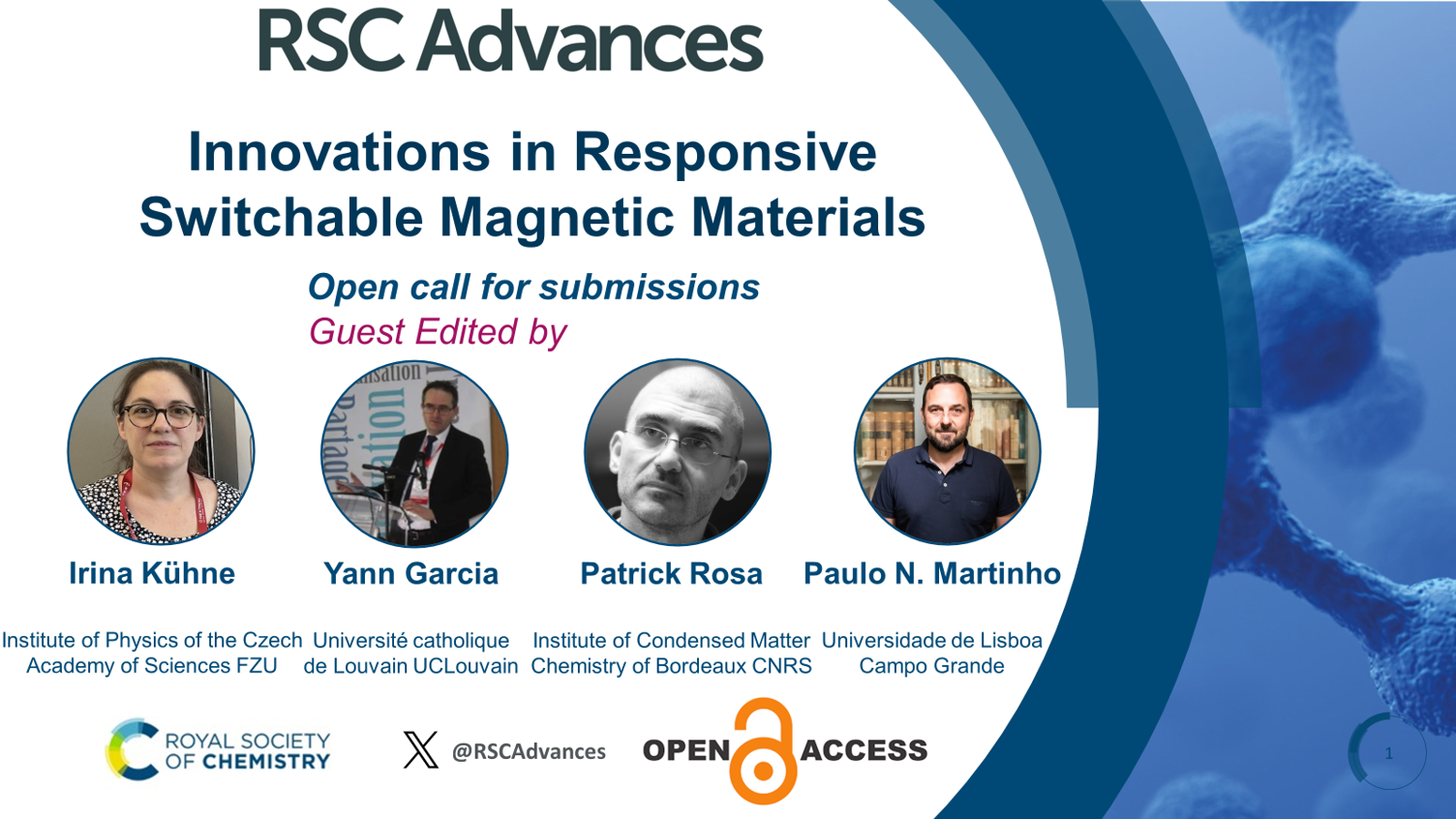
Open Call for Papers – Innovations in Responsive Switchable Magnetic Materials

RSC Advances is delighted to announce innovations in responsive switchable magnetic materials, a new themed collection.

This collection is Guest Edited by Irina Kühne (Institute of Physics of the Czech Academy of Sciences FZU, Czech Republic), Yann Garcia (Université catholique de Louvain UCLouvain, Belgium), Patrick Rosa (Institute of Condensed Matter Chemistry of Bordeaux CNRS, France) and Paulo Nuno Martinho (Universidade de Lisboa Campo Grande, Portugal).

This themed collection in RSC Advances aims to develop our current knowledge of responsive switchable magnetic materials, offering opportunities for the development of technologies.

Spin crossover (SCO) compounds are a unique class of materials characterised by their ability to switch between two spin states, low-spin and high-spin. This switching occurs in response to external stimuli, such as temperature, pressure, magnetic and electric fields, or light. The transition is often accompanied by dramatic changes in the physical properties of the material, making SCO compounds highly desirable for applications in sensors, data storage, and smart materials. The study of SCO materials is at the forefront of materials science, offering opportunities for the development of responsive and adaptive technologies.

Current challenges in the field of SCO materials include achieving precise control over the SCO phenomenon and developing scalable synthetic methods for SCO compounds. Opportunities lie in the integration of SCO materials into nanotechnology and electronics, exploring new stimuli-responsive mechanisms, and using their unique properties for applications in smart devices, data storage, and sensing technologies. Advances in computational studies also offer opportunities to predict and design materials with well-defined properties.

Research topics of interest:
• Synthesis and characterisation of responsive switchable magnetic materials.
• Studies on the mechanisms of responsiveness and switching behaviour at the molecular or material level.
• Development and optimisation of fabrication techniques for scalable production.
• Integration of responsive magnetic materials into devices and systems.
• Theoretical and computational studies to predict and optimise the behaviour of switchable magnetic materials.
• Review articles that summarise recent advances, challenges, and future directions in the field.

We welcome your submission to the series.

Submission deadline: 30th November 2024

Submit your article to this collection

Both Papers and Review articles will be considered for this themed collection. All submissions will be subject to an initial assessment by Associate Editors and, if suitable for the journal, they will be subject to rigorous peer review to meet the usual high standards of RSC Advances.

RSC Advances’ article processing charge (APC) is among the lowest in chemistry and waivers are also available for authors who meet the eligibility criteria outlined here. We have a number of Read & Publish deals in place with institutions, please see Chronoshub for more information on specific institutions and funders.

If you would like to submit to this themed collection the manuscript should be prepared according to our article guidelines and submitted via our online system any time before the submission deadline of 30th November 2024. During submission, authors will be asked if they are submitting for a themed collection and should include the name of the themed collection. If you would like to submit but require additional time to prepare your article, please do let us know by contacting the journal.

Submit to RSC Advances today! Check out our author guidelines for information on our article types or find out more about the advantages of publishing in a Royal Society of Chemistry journal.

Keep up to date with our latest Popular Advances, Reviews, Collections & more by following us on X. You can also keep informed by signing up to our E-Alerts.

Digg This
Reddit This
Stumble Now!
Share on Facebook
Bookmark this on Delicious
Share on LinkedIn
Bookmark this on Technorati
Post on Twitter
Google Buzz (aka. Google Reader)

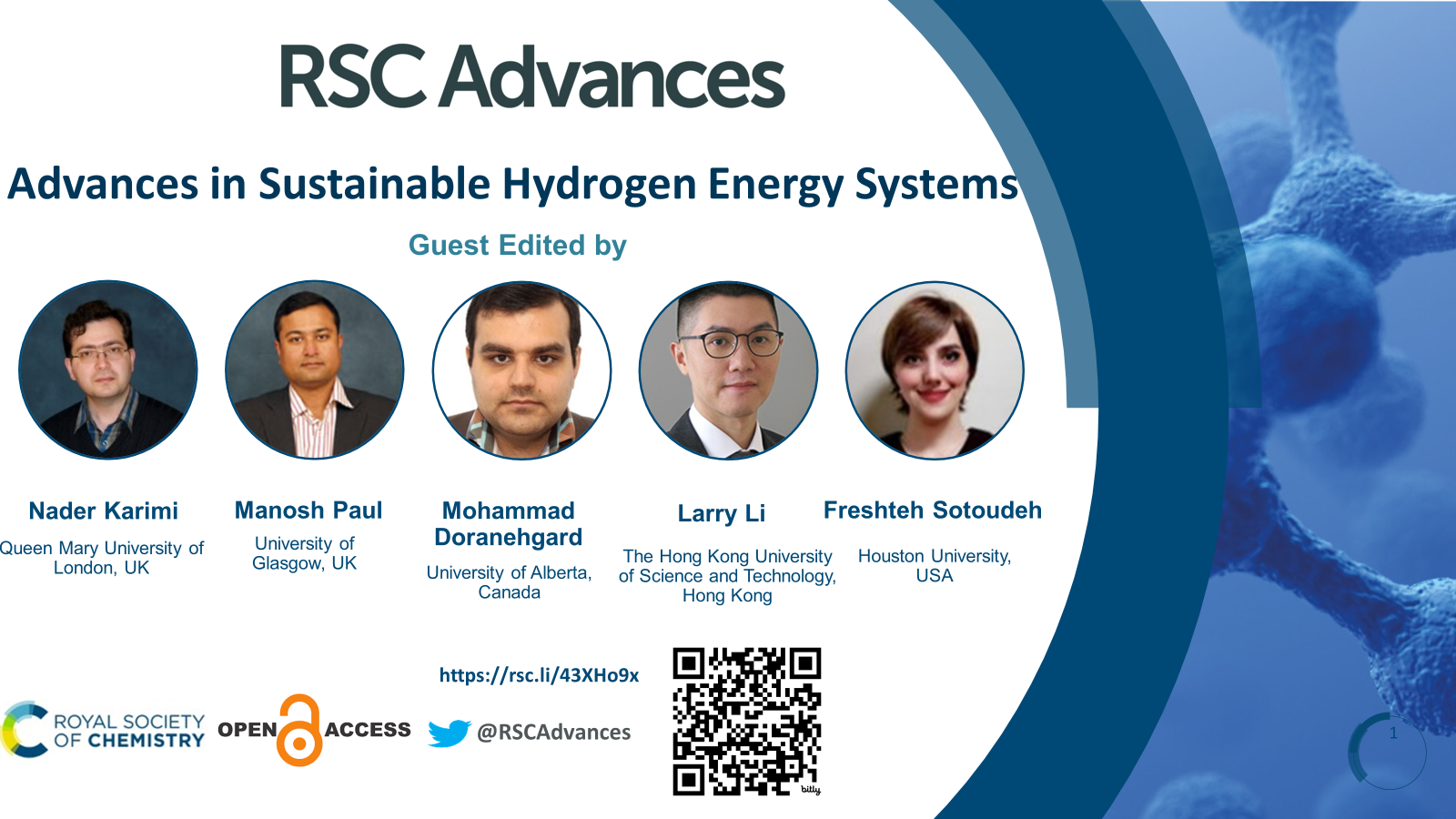
Themed Collection – Advances in Sustainable Hydrogen Energy

RSC Advances is delighted to present a themed collection on Advances in Sustainable Hydrogen Energy!

This themed collection has been motivated by the new wave of research on the design, analysis, and assessment of future hydrogen energy systems. Thermodynamic, technoeconomic and environmental analyses are central to such efforts to complement elements of socioeconomics and policy making. The purpose of this collection is to bring together the latest research findings of the international, multidisciplinary community of hydrogen energy on the system-level analyses of hydrogen technologies.

This collection is Guest Edited by Nader Karimi (Queen Mary University of London, UK), Manosh C. Paul (University of Glasgow, UK), Mohammad Hossein Doranehgard (University of Alberta, Canada), Larry K. B. Li (The Hong Kong University of Science and Technology, Hong Kong), and Freshteh Sotoudeh (Houston University, USA).

A selection of articles have been highlighted below, and you can view the full collection here.

Microwave-enhanced hydrogen production: a review
Jun Zhao, Duanda Wang, Lei Zhang, Minyi He, Wangjing Ma and Sui Zhao
RSC Adv., 2023,13, 15261-15273

Effects of throat sizing and gasification agents in a biomass downdraft gasifier: towards CO2-free syngas production
Ahmed M. Salem and Manosh C. Paul
RSC Adv., 2023,13, 10221-10238

H2-rich syngas production from gasification involving kinetic modeling: RSM-utility optimization and techno-economic analysis
Ajay Sharma and Ratnadeep Nath
RSC Adv., 2023,13, 10308-10321

View the full collection here

We welcome you to contribute to this collection. Please contact the Editorial Office to highlight your interest in submitting to this collection.


RSC Advances Royal Society of Chemistry

Submit to RSC Advances today! Check out our author guidelines for information on our article types or find out more about the advantages of publishing in a Royal Society of Chemistry journal.

Keep up to date with our latest Popular Advances, Reviews, Collections & more by following us on X. You can also keep informed by signing up to our E-Alerts.

Digg This
Reddit This
Stumble Now!
Share on Facebook
Bookmark this on Delicious
Share on LinkedIn
Bookmark this on Technorati
Post on Twitter
Google Buzz (aka. Google Reader)

Bioinorganic Chemistry (GRS) – Interview with Caitlin Palmer

On 19th – 22nd January 2024, the Bioinorganic Chemistry Gordon Research Seminar (GRS) took place. This annual seminar provides an opportunity for young doctoral and post-doctoral researchers to present and discuss their work. GRS encourages active participation and engaged discussion from all attendees, in order to encourage scientific collaboration.

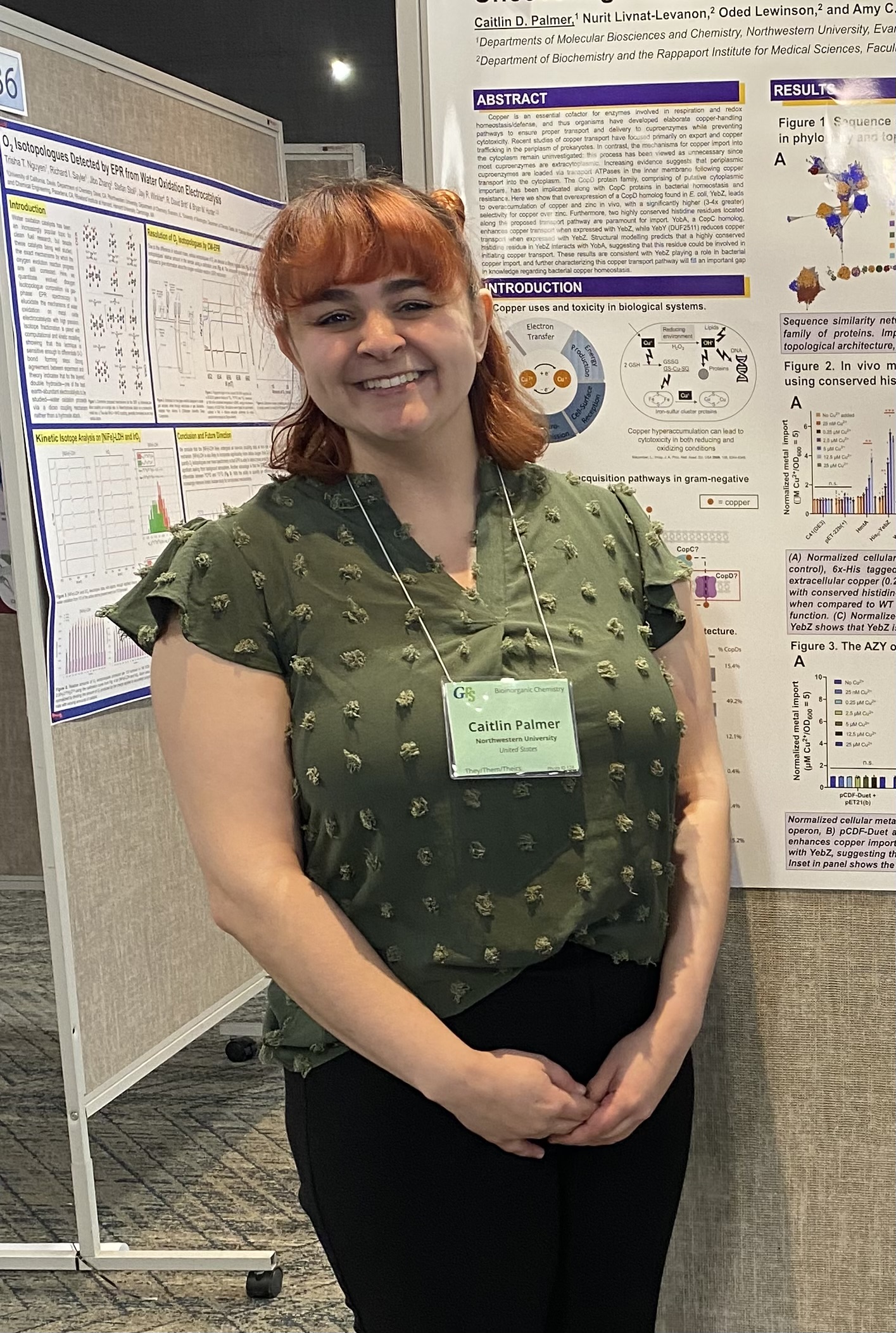
This year, the conference focused on Elucidating the Influence of Metals on Biological Processes and RSC Advances were lucky enough to sponsor the event and support attendance of early career researcher! Caitlin Palmer is a graduate student at Northwestern University, United States. She completed her BS in Chemistry and Biochemistry and MS in Inorganic Chemistry at East Carolina University.

Caitlin Palmer

At the conference, Caitlin presented her research on “Uncovering the Role of CopD in Methanotroph Copper Homeostasis”.

Caitlin has told us about her research and discussed the triumphs and challenges she has faced throughout her career so far. She also provided some advice for other students and early career researchers.

What is the focus of your research and why it is of current interest?

The focus of my research is how metals are trafficked, stored, and delivered to essential enzymes in bacteria. Specifically, I work on a new class of copper transport proteins that are only found in bacteria, and potentially deliver copper to enzymes involved in carbon metabolism and antibiotic resistance pathways. Because of this, my lab is very interested in studying the mechanism of how this class of proteins is involved in copper homeostasis, and how they can be targeted for drug therapies down the line.

What are the key design considerations for your study?

The key design considerations for my study include finding ample controls for some of the in vivo assays I’ve created to monitor a copper transport in bacteria. In addition, since this class of proteins is a membrane protein, it’s been very important to optimize its stable expression and purification for in vitro assays.

Which part of the research so far has proved to be the most challenging?

I think the most challenging portion of my research so far was the switch to membrane proteins – during my undergraduate and masters, I worked with soluble metal binding proteins that had been established in the literature for many years, which were relatively easy to purify and characterize for my experiments. Now in my PhD, working with membrane proteins has been a challenge due to their solubility and instability issues during purification. I’ve had to work with numerous constructs (+30 homologs and tag configurations) in order to optimize stable expression and purification of these proteins.

What aspect of the work are you most excited about?

I think I’m most excited about the structural aspect of my project – I’ve been working on collecting cryoEM data recently, so I am very excited to start my foray into structural characterization, especially since cryoEM is such a hot field right now.

What advice would you give to students and early career researchers in a similar situation to yourself?

The best advice I was given came from a postdoctoral scholar in our lab – she told me that the best way to get through some of the lows and “failed experiments” in grad school is to keep your energy and excitement up throughout it, even when it feels like everything is going horribly. My project has been really difficult, and at times when I’ve felt like nothing is going right, I’ve really leaned into this thought of staying excited about my research and why it is so exciting for me to do.

What are some of the challenges you have faced as a researcher starting out in your career and what positive progress have you seen throughout your career so far?

Since I’m a graduate student, I’m not too far into my career just yet, but at least from my transition from undergraduate to graduate studies, I’ve noticed my confidence in my research and my technical abilities has really increased – during my undergraduate research experience, I had the unfortunate experience of being viewed as only a tech and someone who only ran data for others (rather than contributing to science and doing thoughtful experiments), so that really hurt my confidence in my abilities. However, as I’ve grown my skills and spent more time in the lab as a graduate student, I’ve gained more confidence and respect as a researcher, which has been a very restorative experience.

Do you have any recommendations for improving the STEM workforce to create an environment that better supports early career researchers? Is there anything publishers such as the RSC can do to help?

I think the biggest advice I can give is to provide more funding and support for early career researchers, especially from minority and LGBT/queer communities, because these researchers represent more of the type of graduate students and postdoctoral scholars that are being attracted to STEM careers, including myself. One of the biggest influences on my career was an early career faculty member at my undergraduate institution who is queer and a minority – seeing him thrive in the face of adversity really shaped my perspective as a young queer researcher, and gave me the spark to love my research even more and continue on my graduate school career. To the second part of your question, I think journals and publishers should strive to publish articles and thought pieces from a diverse range of researchers, and really try to support these historically underrepresented communities (in the form of publishing, scholarships, travel awards, funding, etc) to help them achieve greater success. It really takes a village to support early career researchers, so any support from the community is paramount to their success.

Anything else to note?

I also love to plug my cat in any interview I do, so please find attached to this email a copy of my cat (Miss Sammie) who keeps me sane during graduate school. She has also donated many whiskers to our lab for crystallography experiments, so she is an active “researcher” in my lab as well!

Miss Sammie

Submit to RSC Advances today! Check out our author guidelines for information on our article types or find out more about the advantages of publishing in a Royal Society of Chemistry journal.

Keep up to date with our latest Popular Advances, Reviews, Collections & more by following us on Twitter. You can also keep informed by signing up to our E-Alerts.

Digg This
Reddit This
Stumble Now!
Share on Facebook
Bookmark this on Delicious
Share on LinkedIn
Bookmark this on Technorati
Post on Twitter
Google Buzz (aka. Google Reader)

MASC Meeting 2023 – RSC Poster Prize Winners

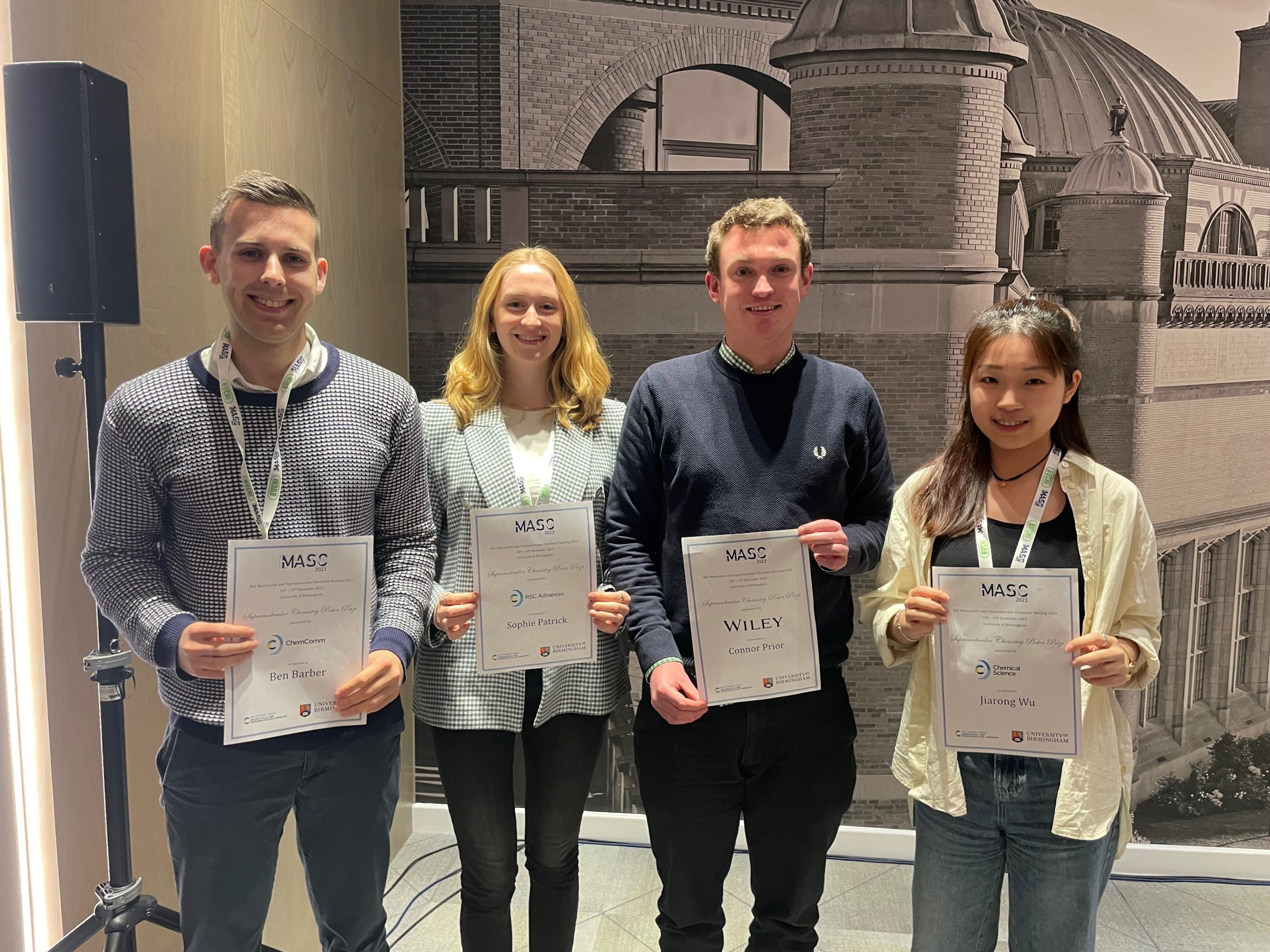
The RSC Macrocyclic and Supramolecular Chemistry (MASC) Group meeting took place at the University of Birmingham on the 18th and 19th December 2023. The meeting brought together researchers working in the diverse and growing field of modern macrocyclic and supramolecular chemistry, and included an exciting collection of invited talks from leaders in the field, as well as oral and poster presentations.

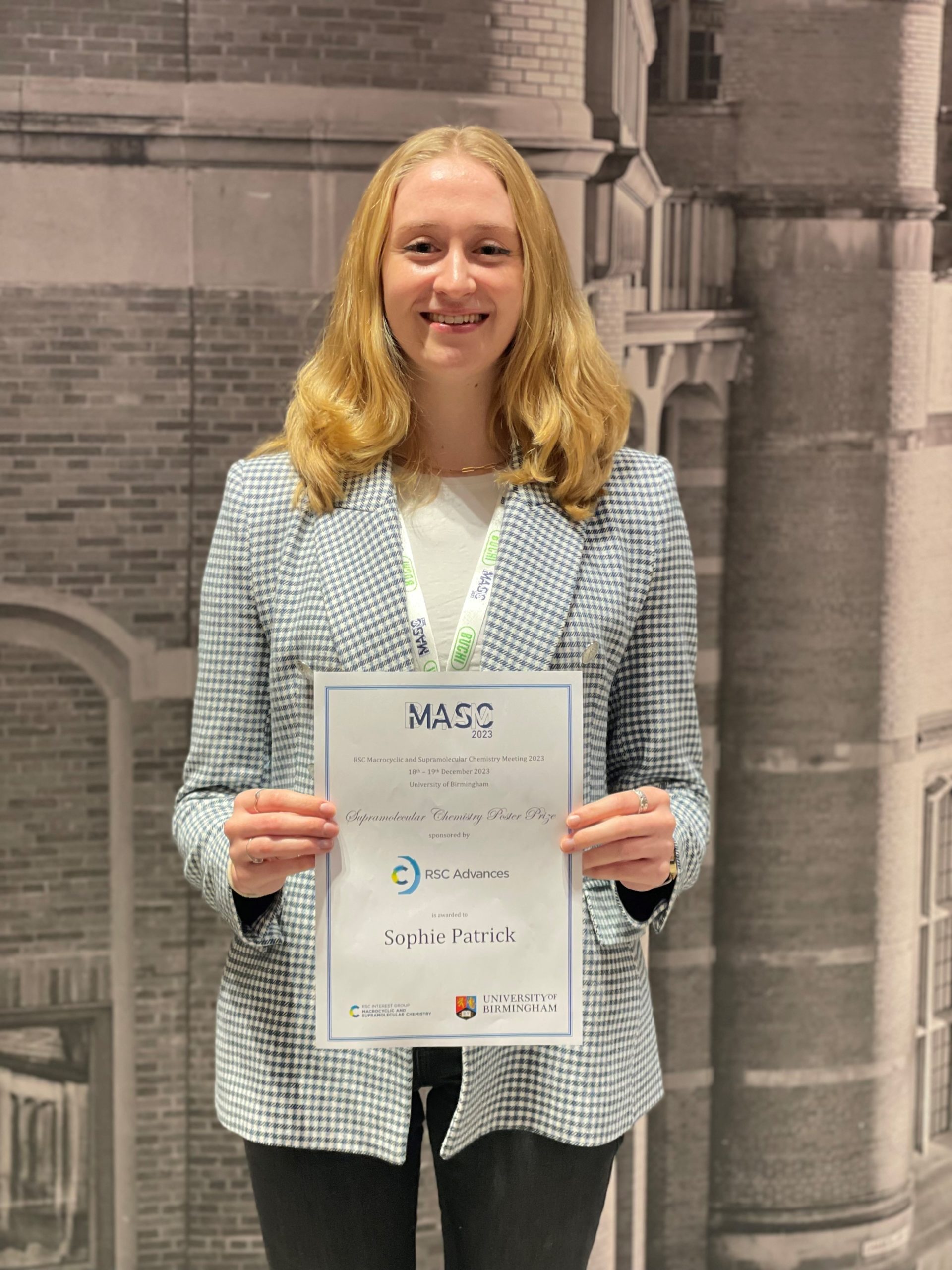
We are delighted that the conference was such a success and we would like to wish a huge congratulations to the poster prize winners, Ben Barber, Francis Crick Institute (Chemical Communications), Sophie Patrick, University of Oxford (RSC Advances), and Jiarong Wu, Universität Würzburg and (Chemical Science).

Sophie Patrick, University of Oxford

A group photo of the poster prize winners

Submit to RSC Advances today! Check out our author guidelines for information on our article types or find out more about the advantages of publishing in a Royal Society of Chemistry journal.

Keep up to date with our latest Popular Advances, Reviews, Collections & more by following us on Twitter. You can also keep informed by signing up to our E-Alerts.

Digg This
Reddit This
Stumble Now!
Share on Facebook
Bookmark this on Delicious
Share on LinkedIn
Bookmark this on Technorati
Post on Twitter
Google Buzz (aka. Google Reader)

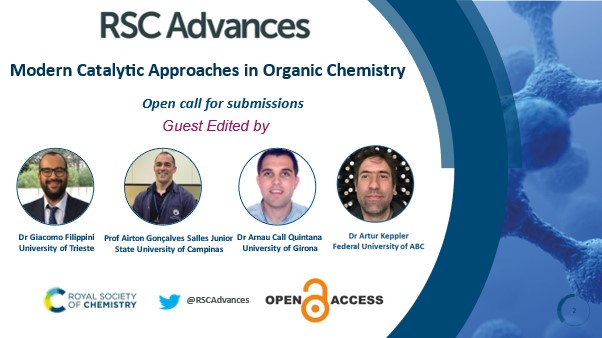
Open Call for Papers – Modern Catalytic Approaches in Organic Chemistry

RSC Advances is delighted to announce a new themed collection on Modern Catalytic Approaches in Organic Chemistry.

This collection is Guest Edited by Dr Giacomo Filippini (University of Trieste, Italy), Prof Airton Gonçalves Salles Junior (State University of Campinas, Brazil), Dr Arnau Call Quintana (University of Girona, Spain), and Dr Artur Keppler (Federal University of ABC, Brazil).

Catalysis has a fundamental role to solve arduous tasks in synthetic chemistry and is thus involved in the global economy in many industrial fields. In fact, in the last 50 years, catalysis has seen enormous progress in the development of optimized large-scale productions within the area of pharmaceutical, agrochemical and petrochemical industry. Moreover, a catalytic approach presents multiple benefits for business and sustainability compared to stoichiometric processes. These include cost reduction, time and energy saving, waste reduction, carbon-footprint minimization, among others. For these reasons, it is estimated that more than 90% of all chemical productions have at least one catalytic step in their manufacture. Not surprisingly, an ever-growing interest in developing novel catalytic transformations has been exhibited both from academia and industry, in order to resolve the related present-day challenges in organic synthesis.

Thus, in this themed collection, we would like to invite researchers to submit contributions directed to deepen the current knowledge of catalytic organic transformations. Potential research topics include:

– Use of organocatalysts for the synthesis of organic compounds.
– Use of photocatalysts for the production of relevant organic molecules.
– Exploitation of nano-catalytic systems in the synthesis of organic compounds.
– New catalytic strategies for the valorisation of biomasses.
– Catalytic methods for the degradation of organic molecular pollutants.
– Biocatalytic processes for the synthesis of organic compounds.

We welcome your submission to the series!

The deadline for manuscript submission is the 30th of June 2024.

All manuscripts will be subject to the journal’s usual peer review process. Accepted manuscripts will be published in a regular issue of the journal as soon as possible and then added to the themed collection on the journal webpage.

RSC Advances’ article processing charge (APC) is among the lowest in chemistry and waivers are also available for authors who meet the eligibility criteria outlined here. We have a number of Read & Publish deals in place with institutions, please see Chronoshub for more information on specific institutions and funders.

If you would like to submit to this themed collection the manuscript should be prepared according to our article guidelines and submitted via our online system any time before the submission deadline of 30 04 2024. During submission, authors will be asked if they are submitting for a themed collection and should include the name of the themed collection. If you would like to submit but require additional time to prepare your article, please do let us know by contacting the journal.

Submit to RSC Advances today! Check out our author guidelines for information on our article types or find out more about the advantages of publishing in a Royal Society of Chemistry journal.

Keep up to date with our latest Popular Advances, Reviews, Collections & more by following us on Twitter. You can also keep informed by signing up to our E-Alerts.


Digg This
Reddit This
Stumble Now!
Share on Facebook
Bookmark this on Delicious
Share on LinkedIn
Bookmark this on Technorati
Post on Twitter
Google Buzz (aka. Google Reader)

RSC Advances Emerging Investigators Series 2022 – Author Spotlight

Welcome to our Emerging Investigators Series 2022! This series, led by Prof Shirley Nakagaki (Federal University of Paraná, Brazil) and Dr Fabienne Dumoulin (Acıbadem Mehmet Ali Aydınlar Universit, Türkiye), highlights the very best work from early-career researchers in all areas of chemistry. 10 papers were published as part of the collection spanning the breadth of chemistry on topics ranging from green and environmental chemistry, to biological and bioinorganic chemistry, as well as papers that propose theoretical calculations as solutions to chemistry problems. You can read all about the contributions in this accompanying Editorial prepared by Shirley.

We would like to take this opportunity to highlight an author from the series, . We interviewed Ivaldo Itabaiana Junior to find out more about his area of research and his contribution to the series.

Lipase-catalyzed acylation of levoglucosan in continuous flow: antibacterial and biosurfactant studies
Marcelo A. do Nascimento, Juan P. C. Vargas, José G. A. Rodrigues, Raquel A. C. Leão, Patricia H. B. de Moura, Ivana C. R. Leal, Jonathan Bassut, Rodrigo O. M. A. de Souza, Robert Wojcieszake and Ivaldo Itabaiana, Jr
RSC Adv., 2022,12, 3027-3035

Professor Ivaldo Itabaiana Junior holds a degree in Pharmacy from the Federal University of Rio Janeiro (UFRJ), Brazil (2009), a PhD in Pharmaceutical Science from UFRJ (2013) with a sandwich period at the National Hellenic Research Foundation (Athens, Greece), as well as a post-doctorate in Biocatalysis from the Institute of Chemistry of UFRJ, and a Post-doctorate in hybrid catalysis from UCCS – CNRS (Lille, France).

Since 2014, he is an adjunct professor at the School of Chemistry of UFRJ, where he has been developing research on the application of the concepts of biocatalysis, biotransformation, photocatalysis and hybrid catalysis in the valorization of residual lignocellulosic biomass aiming at obtaining value-added compounds, such as enzymes, surfactants, polymers and building blocks, in order to obtain a zero-waste biorefinery. He has more than 58 published papers, and international collaborations, such as UCCS-Lille (France), UCL (Belgium), Universidad de Córdoba (Spain), EIE (Greece), and others. He has more than 12 graduate students, and is currently vice-coordinator of the Graduate Program in Chemical and Biochemical Process Engineering at UFRJ. In his career, he has won awards such as the best doctoral thesis at UFRJ (2014), as well as the Capes Thesis Award, at the national level. He also has projects funded by being a Young Scientist, and a research productivity fellow.

Could you briefly explain the focus of your article to the non-specialist (in one or two sentences only) and why it is of current interest?

This article aimed to obtain a compound with antibacterial and surfactant properties from a precursor derived from agro-industrial waste, as a form of reuse, aiming at an environmentally friendly process.

How big an impact could your results potentially have?

This work can generate an industrial product that presents great biosurfactant and antibacterial capacity, produced under mild conditions of reaction, since it comes from an enzymatic way and presents as substrate the levoglucosan, originated from residual biomass pyrolysis. Therefore, our results move towards a possible construction of an integrated process of valorisation of lignocellulosic biomass, with probability of low cost steps.

Could you explain the motivation behind this study?

My research currently involves the valorization of Brazilian and worldwide residual biomass, aiming to obtain molecules that contribute to the society in general, in order to contribute to the improvement of the quality of life. The lignocellulosic residues, as a reflection of the increase in life expectancy of the world population and the consequent industrialization, have increased alarmingly, and new processes to add these components back into the productive chain are required. Our group has work in this challenging area, where this article is part of a project of valorisation of levoglucosan, a compound that has origin in the fast pyrolysis of these biomasses.

In your opinion, what are the key design considerations for your study?

Levoglucosan (LG) is a challenging molecule since it is obtained through pyrolysis of residual lignocellulosic biomass. Our group has been studying better conditions to obtain LG through fast pyrolysis of several biomasses. As it is a complex mixture of compounds, pyrolysis products also challenge us to develop new technologies for the best use of these fractions, and with this, my line of research has been based on the coupling of biocatalysis, photocatalysis, and hybrid catalysis in obtaining new compounds that can add value and return the residual biomass to the production chain, as a way of establishing future zero biorefineries.
LG chemically challenges us in obtaining compounds of industrial importance, since it presents a structure with steric hindrance, and there are still few published works where this molecule is applied as a substrate or starting reagent for obtaining derived compounds. Therefore, we seek to fill a gap in the literature, and we hope to succeed.

Which part of the work towards this paper proved to be most challenging?

In my opinion, the characterization of the esterification reaction products were the most challenging, since levoglucosan presents a differentiated stereochemistry, generating the possibility of formation of more than one product. Thus, some previous steps of separation and characterization with different physical methods were necessary to evaluate and quantify the products formed. Moreover, the biomass pyrolysis and optimization step to obtain larger amounts of levoglucosan also deserves attention due to the complexity of lignocellulosic materials.

What aspect of your work are you most excited about at the moment?

At this point in our research, we were able to couple important results on photocatalysis and biocatalysis in the construction of new catalysts that managed to improve the reaction selectivity of LG with other compounds, in order to obtain new molecules with biosurfactant potential. We are advancing in this part and managing to build new catalytic systems for the valorization of other molecules from residual biomass.
We are also investing in collaborations for process modeling and building robust models for the prediction of better catalytic conditions, which are more economically viable and sustainable, and we are obtaining encouraging results.

How has your research evolved from your first article to this particular article?

My first paper in my scientific career was published demonstrating the phytochemical study of medicinal plants with antimicrobial properties. Currently, we seek, through the valorization of lignocellulosic biomass, to obtain new molecules that also have this application. It is interesting to carry out this relationship, where I could realize that over time, I could follow the evolution of science and technology, and couple the knowledge acquired in my work, without escaping my main objectives, which are to find molecules that can improve the quality of life of the world population.

What is the next step? What work is planned?

Some molecules derived from lignocellulosic biomass showed potential biological activity, and in this sense, the next steps will be to improve yields and selectivity in obtaining these compounds, increase the scale of production and perform new more specific assays to determine mechanism of action and new models of activity. We hope to continue publishing new processes, technologies and integrated results of synthesis and application.

Why did you want to publish in RSC Advances?

The publication of the article in RSC Advances came from a prior invitation from the editor, which we were very happy about. The journal has a relevant impact in the area of biocatalysis and biotechnology, with very inspiring works. Our group already has previous works in this journal, the impact was very positive.

What are your thoughts on open access publishing?

In my opinion Open Access publishing should be a standard within the academic world. The dissemination of knowledge is a fundamental pillar for science, which is the one that produces knowledge. Unfortunately, the capitalist world still imposes many barriers for scientists to know the work of other colleagues, or to carry out more grandiose research, which could improve the quality of life of the world population. And it all starts with greater access to information.

RSC Advances Royal Society of Chemistry

Submit to RSC Advances today! Check out our author guidelines for information on our article types or find out more about the advantages of publishing in a Royal Society of Chemistry journal.

Keep up to date with our latest  Popular Advances articles, Reviews, Collections & more by following us on Twitter. You can also keep informed by signing up to our E-Alerts.

Digg This
Reddit This
Stumble Now!
Share on Facebook
Bookmark this on Delicious
Share on LinkedIn
Bookmark this on Technorati
Post on Twitter
Google Buzz (aka. Google Reader)