2015 Polymer Chemistry Lectureship awarded to Richard Hoogenboom

It is with great pleasure that we announce Professor Richard Hoogenboom (Ghent University) as the recipient of the inaugural 2015 Polymer Chemistry Lectureship award.

This award, which will be an annual event for the journal, honours an early-stage career researcher who has made significant contribution to the polymer chemistry field. The recipient is selected by the Polymer Chemistry Editorial Board from a list of candidates nominated by the community.

Read on to find out more about Richard…

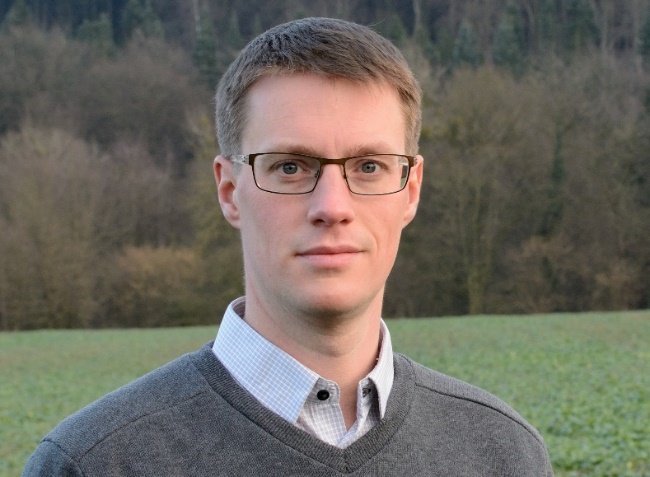
Richard Hoogenbloom 2015 Polymer Chemistry Lectureship winner

Professor Richard Hoogenboom was born in 1978 in Rotterdam (the Netherlands) and studied chemical engineering at the Eindhoven University of Technology (the Netherlands). In 2005, he obtained his Ph.D. under the supervision of Professor Ulrich S. Schubert and continued working as a project leader for the Dutch Polymer Institute, partially combined with a position as senior product developer at Dolphys Medical BV. After postdoctoral training at the RWTH Aachen with Professor Martin Moeller and at the Radboud University Nijmegen with Professor Roeland Nolte, he was appointed as associate professor at Ghent University in 2010 and in October 2014 he was promoted to full professor. His research focuses on adaptive and responsive materials based on stimuli-responsive polymers, supramolecular polymers, and poly(2-oxazoline)s. Professor Hoogenboom has published more than 260 refereed scientific articles (h-index 47) and is currently Associate Editor for European Polymer Journal and Australian Journal of Chemistry.

To learn more about Richard’s research why not read his recent articles:

Dye immobilization in halochromic nanofibers through blend electrospinning of a dye-containing copolymer and polyamide-6
Iline Steyaert, Gertjan Vancoillie, Richard Hoogenboom and Karen De Clerck
Polym. Chem., 2015, 6, 2685-2694

Thermoresponsive polymeric temperature sensors with broad sensing regimes
Qilu Zhang, Gertjan Vancoillie, Maarten A. Mees and Richard Hoogenboom
Polym. Chem., 2015, 6, 2396-2400

Accelerated living cationic ring-opening polymerization of a methyl ester functionalized 2-oxazoline monomer
Petra J. M. Bouten, Dietmar Hertsen, Maarten Vergaelen, Bryn D. Monnery, Marcel A. Boerman, Hannelore Goossens, Saron Catak, Jan C. M. van Hest, Veronique Van Speybroeck and Richard Hoogenboom
Polym. Chem., 2015, 6, 514-518

We would like to thank everybody who nominated a candidate for the Lectureship; we received many excellent nominations, and the Editorial Board had a difficult task in choosing between some outstanding candidates.

Please join us in congratulating Richard by adding your comments below.

Digg This
Reddit This
Stumble Now!
Share on Facebook
Bookmark this on Delicious
Share on LinkedIn
Bookmark this on Technorati
Post on Twitter
Google Buzz (aka. Google Reader)

Paper of the week: Patterning of individual Staphylococcus aureus bacteria onto photogenerated polymeric surface structures

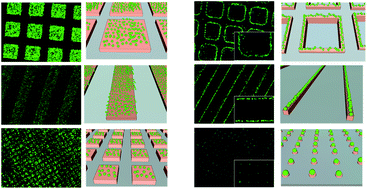
Palacios-Cuesta et al. describe the patterning of individual Staphylococcus aureus bacteria onto photogenerated polymeric surface structures.

Microorganisms have a remarkable ability to adhere to virtually any type of abiotic surface, proliferate and subsequently form biofilms.  Since materials may need to interact differently with microorganisms, the adherent or repellent properties of materials towards bacteria are an extremely important consideration in their design. For example, materials used as implants need to remain free from contamination, in order to reduce device-associated infections, and hence, antifouling surfaces are prepared using water repellent polymers or by anchoring antimicrobial compounds. Conversely, surfaces capable of controlled immobilization and removal of microorganisms have been equally explored for a rather broad range of applications, including sophisticated systems such as biosensors or biomolecular motors. Thus far, precise immobilisation of microorganisms, and in particular bacteria, onto surfaces has been achieved by using a range of different fabrication approaches. However, there are relatively few examples of controlled immobilisation of single bacteria that don’t involve expensive approaches or time-consuming multistep procedures.

In this paper, Palacios-Cuesta and colleagues describe the development of different surface patterns using a photolithographic-based technique that does not require the use of high resolution masks or clean rooms and produces surface patterns with micrometer and submicrometer resolution. The procedure is based on the cross-linking and degradation processes occurring in polystyrene upon exposure to UV light. Together, these processes produce different patterns depending, not only on the mask, but also on the experimental conditions employed. With this approach it is possible to produce patterns with nanoscale resolution without expensive fine focalisation settings. Of particular interest, the authors demonstrate the feasibility of this strategy to incorporate functional groups to modulate the affinity between the bacteria and the surface. In particular, hydrophilic segments, i.e. poly(acrylic acid) that favour bacterial immobilisation are introduced. The strategy employed allows not only the incorporation of functional groups, but also enables the fine tuning of the amount of hydrophilic functional groups. This unique feature is used by the authors to determine the role of surface hydrophilicity on the adhesion of Staphylococcus aureus onto the different surface patterns. Finally, those surfaces on which both photodegradation and photo-cross-linking occur produce thin patterns largely below the micrometer that are then used to prepare arrays of isolated S. aureus bacteria. The formation of bacterial arrays of S. aureus on the single-cell level has been a challenge since they exhibit a large tendency to grow in clusters. This technology is exciting given its potential for enabling the isolation of single bacteria for diagnosis, and the study of bacterial populations at the single cell level.

Patterning of individual Staphylococcus aureus bacteria onto photogenerated polymeric surface structures by Marta Palacios-Cuesta, Aitziber L. Cortajarena, Olga García and Juan Rodríguez-Hernández, Polym. Chem., 2015, 6, 2677-2684.

Remzi Becer is a web-writer and Advisory Board member for Polymer Chemistry. He is currently a Senior Lecturer in Materials Science and the director of the Polymer Science and Nanotechnology masters programme at Queen Mary, University of London. Visit www.becergroup.com for more information.

Digg This
Reddit This
Stumble Now!
Share on Facebook
Bookmark this on Delicious
Share on LinkedIn
Bookmark this on Technorati
Post on Twitter
Google Buzz (aka. Google Reader)

2015 International Polymer Colloids Group Conference

We are pleased to announce the 2015 International Polymer Colloids Group Conference to be held on June 28 – July 3, 2015 at The University of New Hampshire, Durham, USA.

The 2015 program will bring together world leading scientists to discuss the latest developments in the area of colloidal polymer science. The talks of the invited speakers will feature a balance of traditional and emerging applications for polymer colloids, following the themes of colloids for life, engineering colloids, and colloidal machines. You can see a list of confirmed speakers here.

You can register for the 2015 IPCG Conference here.

SCIENTIFIC COMMITTEE

ORGANIZING COMMITTEE

Digg This
Reddit This
Stumble Now!
Share on Facebook
Bookmark this on Delicious
Share on LinkedIn
Bookmark this on Technorati
Post on Twitter
Google Buzz (aka. Google Reader)

Paper of the week: Nucleobase-functionalized acrylic ABA triblock copolymers and supramolecular blends

Long et al describe the synthesis of nucleobase-functionalized acrylic triblock copolymers.

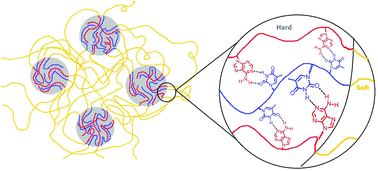
Reversible addition-fragmentation chain transfer (RAFT) polymerization afforded the unprecedented synthesis of well-defined acrylic ABA triblock copolymers with nucleobase-functionalized external blocks and a central poly(n-butyl acrylate) (PnBA) block. Size exclusion chromatography (SEC) confirmed the molecular weight and molecular weight distribution of the central block. 1H NMR spectroscopy revealed the successful chain extension of the PnBA macro-chain transfer agent (CTA) using adenine or thymine-functionalized acrylic monomers. The acrylic monomer with a flexible spacer to the pendant nucleobases promoted intermolecular recognition of nucleobases and long range segmental motion of polymer main chains. The external block glass transition temperatures (Tg‘s) of thymine (T) and adenine (A) functionalized blocks were 52 °C and 76 °C, respectively. Thermomechanical and morphological analysis revealed the effect of processing conditions on self-assembly and microphase-separated morphology of nucleobase-functionalized ABA copolymers. Thymine and adenine-functionalized ABA triblocks formed a thermodynamically stable, hydrogen-bonded complex upon blending. The supramolecular blend exhibited a cylindrical microphase-separated morphology with an extended plateau window compared to the individual block copolymers. The complementary hydrogen bonding between adenine and thymine formed a thermally labile, physically crosslinked, network that exhibited enhanced mechanical performance with melt processability. Thus, these ABA nucleobase-functionalized block copolymers demonstrate potential as thermoplastic elastomers for hot melt adhesives and coatings.

Nucleobase-functionalized acrylic ABA triblock copolymers and supramolecular blends by Keren Zhang, Motohiro Aiba, Gregory B. Fahs, Amanda G. Hudson, William D. Chiang, Robert B. Moore, Mitsuru Ueda and Timothy E. Long Polym. Chem., 2015,6, 2434-2444

Remzi Becer is a web-writer and Advisory Board member for Polymer Chemistry. He is currently a Senior Lecturer in Materials Science and the director of the Polymer Science and Nanotechnology masters programme at Queen Mary, University of London. Visit www.becergroup.com for more information.

Digg This
Reddit This
Stumble Now!
Share on Facebook
Bookmark this on Delicious
Share on LinkedIn
Bookmark this on Technorati
Post on Twitter
Google Buzz (aka. Google Reader)

Author of the Month: Prof. Philipp Vana

Philipp Vana studied Chemistry at the University of Vienna, Austria, were he obtained a Master of Natural Sciences in 1996 and a Doctor of Natural Sciences in 1999 after investigating chain-length dependent termination kinetics in radical polymerisation in Professor Oskar-Friedrich Olaj’s group. Parallel to his PhD, he studied economics and law and obtained a diploma from the Technical University Vienna and a Master of Business Administration from the Danube-University Krems, Austria. Between 2001 and 2003 he was a Schrödinger-Fellow of the Austrian Science Fund at the Centre for Advanced Macromolecular Design (CAMD) at the University of New South Wales, Australia, were he work in the group of Professor Tom Davis in the field of RAFT polymerisation kinetics. In 2003, he established an independent research group at the University of Göttingen, Germany, specifically focusing on macromolecular design and functional polymer materials. In 2005 he became a Fellow of the Japan Society for the Promotion of Science at Kyoto University in Professor Takeshi Fukuda’s group, were he moved into the field of polymer brushes and surface modifications. In 2008 he was granted the prestigious Heisenberg-Professorship of the German Research Foundation (DFG) at the University of Göttingen, where he finally became a Full Professor for Macromolecular Chemistry in 2010 after declining offers from Leipzig University and Duisburg-Essen University. Since 2013 he has been the director of the Institute of Physical Chemistry in Göttingen. Philipp has published more than 100 original research papers in addition to several book chapters, reviews and patents.

His scientific interests are macromolecular chemistry with a focus on tailored polymer microstructures and topologies as well as kinetic and mechanistic studies of polymerisation processes. He works on biomimetic high-performance polymers, polymer brushes and films on solid surfaces, functionalised polymers, printing inks, tire materials, liquid crystal displays and UV-switchable block copolymers. He also works on kinetics and mechanisms of radical polymerisations, which are studied via pulsed laser methods coupled with highly time-resolved EPR spectroscopy as well as via computer simulations. A special focus in polymer analytics is on soft ionisation mass spectrometry, AFM, mechanical testing of polymers, ellipsometry, and IR-spectroscopy.

Find out more about Philip Vana’s research by visiting his group Web-site.

What was your inspiration in becoming a chemist?

I am from a family of natural scientists – my father was a physicist, my mother a chemist and so I got in touch with all the interesting aspects of natural science very early on. However, I noticed during my childhood that my interests lay more in the field of biology and living matter and so I decided to study biochemistry; I was worried about the career perspectives of a pure biologist. During my studies I got in touch with chemistry and quickly noticed that it was extremely exciting and interesting, this changed my original plan and I switched to chemistry. I haven’t regretted the decision ever since and I am very happy to be a synthetic chemist. I then chose the field of polymer chemistry, I think it is the most exciting area of chemistry due to its large diversity. In the end, I came back to my original interests in biology by working on bio-inspired materials.

What was the motivation to write your Polymer Chemistry article?

I was always intrigued by the complexity and beauty of natural systems. I find it exciting to learn from nature by copying important aspects of natural materials and transpose them to purely synthetic fabrics. When I was writing a grant application several years ago, I accidently saw a picture of titin on the transparency of a conference talk. For me, as a polymer chemist, the structure looked like a very regular polymer made of individual ring-like monomers. At the time I was a PI in a graduate school in which hydrogen bonds were investigated in great detail. I started to interconnect all these aspects and came up with a project plan that aimed to fabricate a synthetic titin. To our delight, the project was granted but it then took some time to arrive at the final material because we first had to explore and optimise all the individual components of the system, including ring polymers. However, we are very happy that we could indeed mimic the structure of titin.

Why did you choose Polymer Chemistry to publish your work?

Honestly, this was the first time that I published in Polymer Chemistry. Many of our earlier work was very much related to physical chemistry, engineering, analytics and physics of polymers and I did not consider our work as being pure polymer chemistry. Nevertheless, I was very much impressed by the rise of this journal, in which many of my friends and colleagues are deeply involved. I also find the topics that are covered extremely interesting, especially the strong focus on controlled radical polymerisation, I am a loyal reader of this beautiful journal. Within this context, I find it amusing that my first paper in Polymer Chemistry is not related to controlled radical polymerisation at all, but we present a new way of forming modular polycyclic structures via step-growth, which we had never used before. In any case, I found this topic to be exactly in scope of Polymer Chemistry, which made it easy for me to chose it for this publication.

In which upcoming conferences may our readers meet you?

As I will shortly become dean of our faculty for the next two years, I cannot make exact plans for the near future but you can always meet my students and colleagues from my group at different conferences world-wide presenting our work. A group of my students, for instance will present our results in the field of nano-composite materials at the Fourth International Conference on Multifunctional, Hybrid and Nanomaterials in Sitges, Spain, 9 – 13 March 2015.

How do you spend your spare time?

I have a family with four small children and my wife and I are both work full days. This means that most of my time outside of the university is spent taking care of my children and organising daily life, which I very much enjoy. There is consequently not much time left for personal hobbies in the moment, but the time with my family gives me strength for my scientific endeavours as it clears my mind and wipes away old thoughts making room for new ideas.

Which profession would you choose if you were not a scientist?

Actually, I am very pleased with my job and enjoy most of my time being a Professor of Macromolecular Chemistry. The second best choice for me would have been an architect. I always loved making construction designs and graphics and I would love to design buildings from scratch. In a way, this would be similar to what I am doing now, but aiming at much larger structures. As an architect of molecules, however I am also very happy, although I haven’t found any inhabitants for our little macromolecular constructions yet!


Titin-mimicking polycyclic polymers with shape regeneration and healing properties

Jan-Hendrik Schuetz,   Peng Wentao and   Philipp Vana
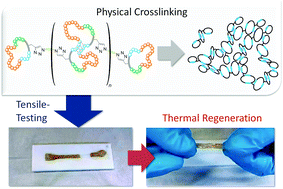
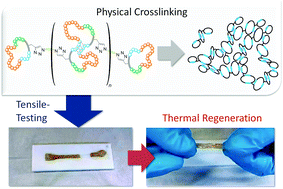
Polycyclic polymers based on cyclic (ABC)n-multiblock-copolymers are formed via stepwise polymerisation of three individual blocks and exploiting the ring merging reaction of these ring polymers. The so-obtained precursor ring-polymers were interconnected via click reaction. Small blocks within the rings with the ability to form self-complementary hydrogen bonds lead to intra- and intermolecular links between polycyclic polymers. The obtained materials, which mimic nature’s paragon Titin, have some extraordinary material properties concerning elasticity and energy dissipation.


Cyrille Boyer is a guest web-writer for Polymer Chemistry. He is currently an Associate Professor and an ARC-Future Fellow in the School of Chemical Engineering, University of New South Wales (Australia) and deputy director of the Australian Centre for NanoMedicine.


Digg This
Reddit This
Stumble Now!
Share on Facebook
Bookmark this on Delicious
Share on LinkedIn
Bookmark this on Technorati
Post on Twitter
Google Buzz (aka. Google Reader)

Paper of the week: Renewable, fluorescent, and thermoresponsive cellulose copolymers

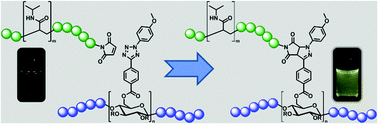
Hufendiek et al. report the preparation of renewable, fluorescent, and thermoresponsive cellulose copolymers via light-induced ligation in solution copolymers.


Hufendiek et al. introduce a mild photochemically driven strategy for the synthesis of fluorescent cellulose copolymers using filter paper as the starting material. Thermoresponsive behaviour in water is imparted to the brush-like structures by grafting of poly(N-isopropylacrylamide) side chains. All reactions take place in homogenous solutions, allowing the design of novel advanced materials from renewable resources.

Renewable, fluorescent, and thermoresponsive: cellulose copolymers via light-induced ligation in solution by Andrea Hufendiek, Christopher Barner-Kowollik and Michael A. R. Meier, Polym. Chem., 2015, 6, 2188-2191

Remzi Becer is a web-writer and Advisory Board member for Polymer Chemistry. He is currently a Senior Lecturer in Materials Science and the director of the Polymer Science and Nanotechnology masters programme at Queen Mary, University of London. Visit www.becergroup.com for more information.

Digg This
Reddit This
Stumble Now!
Share on Facebook
Bookmark this on Delicious
Share on LinkedIn
Bookmark this on Technorati
Post on Twitter
Google Buzz (aka. Google Reader)

Paper of the week: Nanoscale detection of metal-labeled copolymers in patchy polymersomes

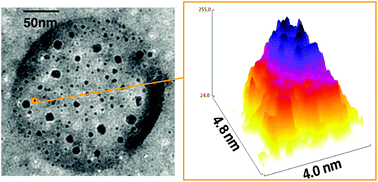
Ruiz-Pérez et al. report the nanoscale detection of metal-labelled copolymers in patchy polymersomes.

The synthesis of polymersome-forming block copolymers using two different synthetic routes based on Atom Transfer Radical Polymerisation (ATRP) and Reversible Addition Fragmentation chain Transfer (RAFT) polymerisation is reported. Functionalisation with 1,4,7,10-tetraazacyclododecane-1,4,7,10-tetraacetic acid (DOTA) allowed the block copolymer chains to be labelled with electron-dense metal ions (e.g. indium). The resulting metal-conjugated copolymers can be visualised by transmission electron microscopy with single chain resolution, hence enabling the study of polymer/polymer immiscibility and phase separation on the nano-scale.

Nanoscale detection of metal-labeled copolymers in patchy polymersomes by Lorena Ruiz-Pérez, Jeppe Madsen, Efrosyni Themistou, Jens Gaitzsch, Léa Messager, Steven P. Armes and Giuseppe Battaglia, Polym. Chem., 2015, 6, 2065-2068.

Remzi Becer is a web-writer and Advisory Board member for Polymer Chemistry. He is currently a Senior Lecturer in Materials Science and the director of the Polymer Science and Nanotechnology masters programme at Queen Mary, University of London. Visit www.becergroup.com for more information.

Digg This
Reddit This
Stumble Now!
Share on Facebook
Bookmark this on Delicious
Share on LinkedIn
Bookmark this on Technorati
Post on Twitter
Google Buzz (aka. Google Reader)

Author of the Month: Dr. Antoine Debuigne

Dr. Antoine Debuigne is currently a Research Associate of the National Fund for Scientific Research (F.R.S. – FNRS) at the University of Liege, Belgium. He graduated in 1999 from the University of Namur, Belgium, following a master’s thesis in organic chemistry. In 2004, he obtained his Ph.D. degree from the Center for Education and Research on Macromolecules (CERM), University of Liege, Belgium, directed by Prof. R. Jérôme. He then moved to the University of Toronto, Canada, and conducted post-doctoral research in Prof. M.K. Georges’ group, who pioneered the field of controlled radical polymerisation. In 2006, he returned to the CERM in Liege as a FNRS post-doctoral researcher and was promoted to FNRS Research Associate in 2010 in the same group. His research interests include controlled radical polymerisation, organometallic chemistry, macromolecular engineering and emulsion polymerisation.

To find out more about the CERM please follow the link.

What was your inspiration in becoming a chemist?

Several members of my family are scientists, even chemists, so “I fell early into chemistry”. During my scholarship, I also met excellent science teachers who taught me how important science is for understanding the world we are living in. So, I decided to make it my job. Among all scientific fields, I chose chemistry because it appeared to me as a central and practical discipline.

What was the motivation to write your Polymer Chemistry article?

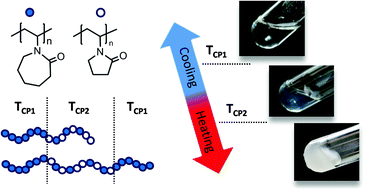
Recent progress in controlled radical polymerisation (CRP) is impressive. The increasing precision and complexity of polymer structures achievable and their use in a broad range of applications might suggest that challenges in CRP may soon be non-existent. However, this is not the case and efforts still need to be expended to improve the existing tools and discover new ones in order to finely tune polymer properties. This is what the present Polymer Chemistry article is about. Indeed, poly(N-vinylcaprolactam) (PNVCL) combines valued properties such as water solubility, biocompatibility and thermo-responsiveness, but has not reached its full potential so far due to limitations in macromolecular engineering techniques. Nevertheless, the Organometallic-Mediated Radical Polymerisation (OMRP), a CRP method developed in the lab for many years, permitted us to produce a series of well-defined N-vinylcaprolactam and N-vinylpyrrolidone-based copolymers including statistical, diblock and triblock copolymers, having single or dual thermo-responsive behaviour in water. The high level of control afforded by OMRP allowed us to highlight the crucial impact of the copolymer composition, block length and architecture on the cloud point temperature of each segment and to tune their multistep assembly behaviour. The reversible temperature triggered assembly of such block copolymers in water opens new perspectives in the field of stimuli-responsive encapsulation/release applications.

Why did you choose Polymer Chemistry to publish your work?

My co-authors and I chose Polymer Chemistry because it provides high quality manuscripts in polymer science to a broad audience. This last aspect was crucial in the selection of a journal because our contribution contains progress in both macromolecular engineering and characterisation of the thermal response of copolymers in solution.

In which upcoming conferences may our readers meet you?

My agenda is still unclear for the next few months but I really would like to attend the Gordon Research Conference on Polymers, South Hadley, MA, USA  in June 2015.

How do you spend your spare time?

I enjoy spending time with my 6-year old son, friends and relatives. I also like reading novels and practice more and more photography. In this respect, I warmly recommend a visit to the photography museum of Charleroi in Belgium.

Which profession would you choose if you were not a scientist?

Maybe architect because this profession requires both technical and artistic skills. Having said that, I have no regret at all.

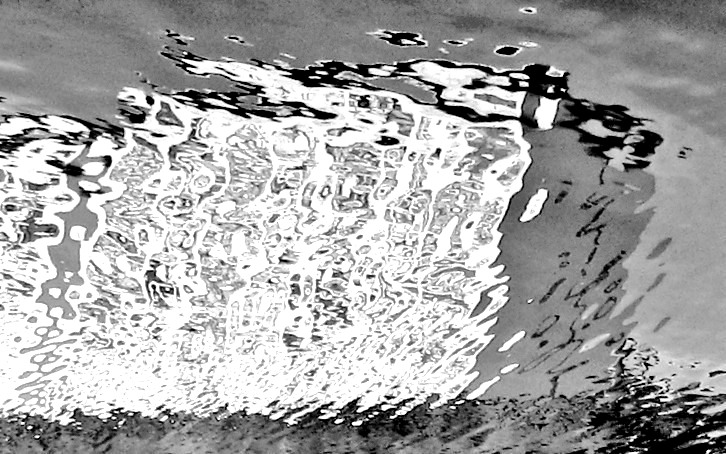
One of my pictures. “Building reflected on water”


Double thermo-responsive hydrogels from poly(vinylcaprolactam) containing diblock and triblock copolymers

Jean-Michel Thomassin,  Kevin Mathieu,   Anthony Kermagoret,   Charles-André Fustin,   Christine Jérôme and   Antoine Debuigne

The thermally-induced gelation and gel properties of concentrated aqueous solutions of double thermoresponsive poly(N-vinylamide)-based di- and triblock copolymers are studied by rheology. The copolymers under investigation, prepared by cobalt-mediated radical polymerisation and coupling reactions, are composed of poly(vinylcaprolactam) (PNVCL) blocks and of a statistical poly(vinylcaprolactam-stat-vinylpyrrolidone) segment with a cloud point temperature (TCP) higher than that of PNVCL. Heating the di- and triblock solutions beyond the first phase transition temperature favours gel formation while heating above the second TCP leads to opaque gels without macroscopic demixing. Moduli of the triblock hydrogels are systematically higher than those of the corresponding diblocks, even above the second transition. Rheological data suggest distinct micellar structures for each copolymer architecture: densely packed micelles of diblocks and 3-D networks of bridged micelles for triblocks. Strain sweep experiments also emphasize the positive effect of the micelle bridging on the elasticity and stability of the hydrogels. The formation and properties of the obtained gels are also shown to depend on the copolymer concentration, block length, and composition. Addition of salt also allows us to tune the phase transition temperatures of these double thermoresponsive hydrogels.


Cyrille Boyer is a guest web-writer for Polymer Chemistry. He is currently an Associate Professor and an ARC-Future Fellow in the School of Chemical Engineering, University of New South Wales (Australia).


Digg This
Reddit This
Stumble Now!
Share on Facebook
Bookmark this on Delicious
Share on LinkedIn
Bookmark this on Technorati
Post on Twitter
Google Buzz (aka. Google Reader)

Paper of the week: Titin-mimicking polycyclic polymers with shape regeneration and healing properties

Schuetz et al. describe polycyclic polymers with shape regeneration and healing properties.

Polycyclic polymers based on cyclic (ABC)n-multiblock-copolymers are formed via stepwise polymerization of three individual blocks and exploiting the ring merging reaction of these ring polymers. The so-obtained precursor ring-polymers were interconnected via click reaction. Small blocks within the rings with the ability to form self-complementary hydrogen bonds lead to intra- and intermolecular links between polycyclic polymers. The obtained materials, which mimic nature’s paragon Titin, have some extraordinary material properties concerning elasticity and energy dissipation.

Titin-mimicking polycyclic polymers with shape regeneration and healing properties by Jan-Hendrik Schuetz, Peng Wentao and Philipp Vana, Polym. Chem., 2015,6, 1714-1726.

Remzi Becer is a web-writer and Advisory Board member for Polymer Chemistry. He is currently a Senior Lecturer in Materials Science and the director of the Polymer Science and Nanotechnology masters programme at Queen Mary, University of London. Visit www.becergroup.com for more information.

Digg This
Reddit This
Stumble Now!
Share on Facebook
Bookmark this on Delicious
Share on LinkedIn
Bookmark this on Technorati
Post on Twitter
Google Buzz (aka. Google Reader)

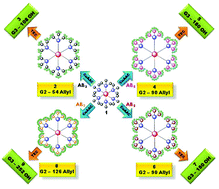
Paper of the week: A fast track strategy toward highly functionalized dendrimers with different structural layers

Sharma et al. describe a fast track strategy toward highly functionalized dendrimers with different structural layers: an “onion peel approach”

An accelerated strategy depending on different chemical building blocks between each layer, coined “onion peel”, was used to construct a library of third generation dendrimers with 108, 180 and 252 hydroxyl surface groups using a combination of microwave assisted highly efficient CuAAC and thiol–ene reactions. These dendrimers were conveniently acquired with high purity and good yields in a divergent manner using a variety of orthogonal and dense AB3, AB5, and AB7building blocks. The resulting polyhydroxylated dendrimers tested in several human cell types did not impair mitochondrial metabolic function or cell viability suggesting that they are good candidates for applications in biological investigations.

A fast track strategy toward highly functionalized dendrimers with different structural layers: an “onion peel approach” by Rishi Sharma, Issan Zhang, Leïla Abbassi, Rabindra Rej, Dusica Maysinger and René Roy, Polym. Chem., 2015, 6, 1436-1444.

Remzi Becer is a web-writer and Advisory Board member for Polymer Chemistry. He is currently a Senior Lecturer in Materials Science and the director of the Polymer Science and Nanotechnology masters programme at Queen Mary, University of London. Visit www.becergroup.com for more information.

Digg This
Reddit This
Stumble Now!
Share on Facebook
Bookmark this on Delicious
Share on LinkedIn
Bookmark this on Technorati
Post on Twitter
Google Buzz (aka. Google Reader)