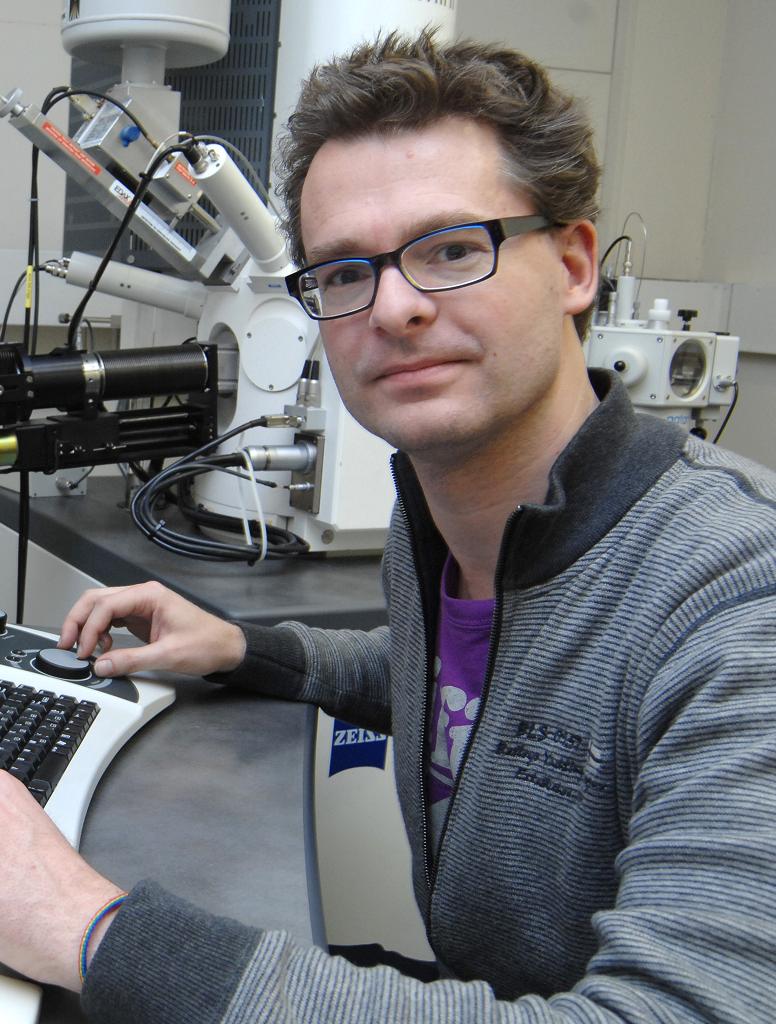

 Dr Kristofer Thurecht graduated from the University of Queensland, Australia, in 2005 with a PhD in polymer chemistry. He took up a postdoctoral position in the UK working on polymer synthesis in supercritical CO2 with Prof. Steve Howdle at Nottingham University. In 2007, Dr Thurecht was simultaneously awarded a Ramsay Centenary Fellowship and 1851 Research Fellowship in the UK. Dr Thurecht returned to Australia in 2008 on an ARC Australian Postdoctoral Fellowship. He currently holds a joint position with the Centre for Advanced Imaging (CAI) and the Australian Institute for Bioengineering and Nanotechnology (AIBN) at the University of Queensland. His current interests lie in developing polymer architectures for theranostics. He is an ARC Future Fellow.
What was your inspiration in becoming a chemist?
When I was in high school I had a fantastic science teacher who set up a lunch-time science club. He encouraged us to do many different experiments across all disciplines of science including biology, chemistry and physics. We made rockets, studied fossils and of course, blew things up! This was what piqued my interest in science and this carried through to University. I think this early excitement with the broader sciences has dictated my career path into polymer chemistry where research now is very much an interdisciplinary field.
What was the motivation behind the research in your recent Polymer Chemistry Minireview (DOI:10.1039/C2PY20132A)?
Nanomedicine is an extremely dynamic field that bridges various disciplines. One important component of nanomedicine is the ability to diagnose and monitor diseases, and ultimately, probe the efficacy of a treatment/therapy. An integral part of this research is the development of more sensitive molecular imaging agents. Polymers offer obvious advantages for molecular imaging, in particular the ability to control circulation times in vivo, excretion mechanisms as well as allowing the possibility for multi-modal imaging. We are particularly motivated by the exciting development of new hardware that allows dual imaging in a single instrument – advancement of this technology can only be realised by concomitant development of biologically relevant imaging probes. We believe that polymers will (and already do) play a significant role in this field and this inspired us to write the current research article.
Why did you choose Polymer Chemistry to publish your work?
In the two years since its inception, Polymer Chemistry has consistently published high quality articles in the various streams related to polymer research. I thought this was a great forum to describe the evolving application of polymers in molecular imaging. RSC journals also have a very fast publication rate which always is a bonus!
In which upcoming conferences may our readers meet you?
- 3rd International Nanomedicine Conference, Sydney, Australia, July 2-4, 2012.
- Warwick2012, Warwick, UK, July 9-12, 2012.
- World Molecular Imaging Congress, Dublin, Ireland, September 5-8, 2012.
How do you spend your spare time?
My spare time is almost always spent with the family. We love camping and fishing in particular, and also spend a lot of time in our vege garden (also a good way to get kids to eat their vegetables!!!!).
Which profession would you choose if you were not a scientist?
If I wasn’t a chemist, I would probably have been a veterinarian, or maybe a marine biologist – working on the Barrier Reef every day is somewhat appealing!
(Posted on behalf of Cyrille Boyer)




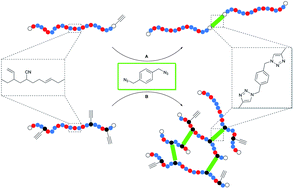
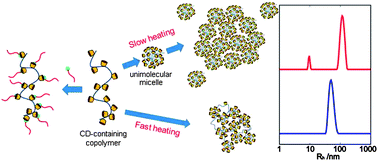
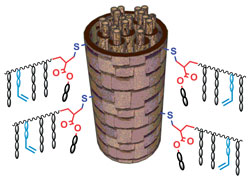


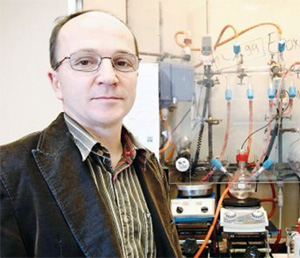 Henri Cramail received his engineering degree from the Ecole Nationale Supérieure de Chimie et de Physique de Bordeaux in 1987. He obtained his PhD from the LCPO, University of Bordeaux 1, in 1990 for studies in the field of ring-opening metathesis polymerization under the supervision of Profs Alain Soum and Michel Fontanille. After a post-doctoral stay with Prof. W.J. Feast at the University of Durham, U.K., he became an Assistant Professor of Polymer Chemistry at the University of Bordeaux 1 and, since 1999, he has been appointed Professor of Polymer Chemistry at the same University. In 2004, he was awarded the position of Junior Member of the ‘Institut Universitaire de France’. Since 2007, he is the Director of the Laboratoire de Chimie des Polymères Organiques (LCPO). His research interests concern (i) the coordination polymerization of olefins with a specific focus on single-site catalyst organic supports, (ii) step-growth polymerizations in dispersed media (organic phase, water, super critical CO2) to design core-shell particles with specific properties and, more intensively today, (iii) the development of new bio-based polymers from renewable resources (vegetable oils, terpenes) through green pathways (catalysis and processes).