


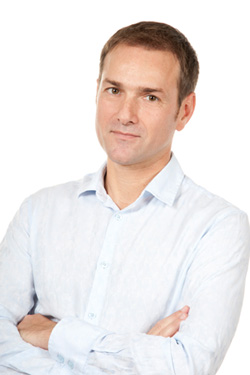
 Pr. Mathias Destarac was born in Nogent sur Marne, France, in 1970. He undertook his undergraduate studies in France at the University of Montpellier and obtained his “Diplome d’Ingenieur” in 1993 in the field of materials science. He received his PhD in 1997 from the University of Montpellier for his studies on controlled radical polymerization. He then got a postdoctoral fellow position in Pr. Matyjaszewski’s group at Carnegie Mellon University in Pittbursgh, USA, where he focused his research work on atom transfer radical polymerization. He moved to Rhodia France in late 1998 to undertake the challenge of industrial research. His Rhodia research has mainly focussed on developing the RAFT/MADIX polymerization. Over the course of his career at Rhodia, he occupied successive positions as Senior Research Fellow, Project Manager and Scientific Expert. He originated and supervised a great deal of academic collaborations on various aspects of polymerization chemistry.
He left industry for academia in 2007 when he was appointed Professor of Chemistry at the University Paul Sabatier of Toulouse, France. He started his own research group (Free-Radical Polymerization: Macromolecular Engineering and Architectures) in the Fundamental and Heterochemistry Laboratory. His research interests lie in various fields related to controlled radical polymerization (mostly RAFT) including the design of novel controlling agents, polymerization kinetics, double hydrophilic and amphiphilic controlled architectures, and polymer-inorganic nanohybrids.
He published sixty scientific articles, contributed three book chapters and was co-inventor for more than sixty patents.
Please follow the link for further information on Mathias’s research group and his recent paper in Polymer Chemistry.
What was your inspiration in becoming a chemist?
I was studying sciences and had the luck to meet a very inspirational chemistry teacher who made me want to find out more. Polymers came later, once again after I met an excellent teacher.
What was the motivation behind the research in your recent Polymer Chemistry paper? (DOI: 10.1039/C1PY00209K)
During my years working in industry, one of my main research topics of interest was the synthesis of amphiphilic block copolymers and their use in various fields of applications as emulsion stabilisers. When I moved to academia, I met Dr. Jean-Daniel Marty who is an expert in the physicochemical behavior of polymers in unusual media. We thought that combining our two fields of expertise would lead to interesting science such as our project described in this paper on the solubility behavior of new RAFT/MADIX amphiphilic block copolymers in supercritical carbon dioxide.
Why did you choose Polymer Chemistry to publish your work?
I was excited that the Royal Society of Chemistry was setting up a journal in my field. After I read the first couple of issues, I thought it would quickly become a high impact journal.
In which upcoming conferences may our readers meet you?
2011 was the international year of chemistry, so I attended many interesting conferences in my field. Next year will be quieter and so far, I plan to attend Warwick 2012, UK, next July. I also wish to mention an event special to my heart: next June (5-7) in Toulouse, I co-organize the first French conference on synthesis, properties and applications of amphiphilic copolymers (Copamphi 2012). More details about the event will come out soon !
How do you spend your spare times?
I work hard, but I try to spend as much time as possible with my family and friends. My ideal day would be a morning playing with my kids followed by a long lunch with good food and good company with an indie rock soundtrack, afterwards a siesta and then another long dinner with everyone I love around me.
Which profession would you choose if you were not a scientist?
I think I would like to be a guitar player but I never had the time to learn.


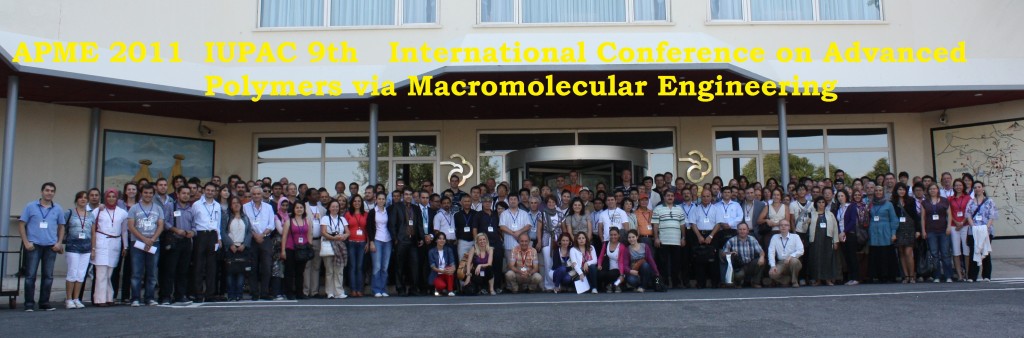
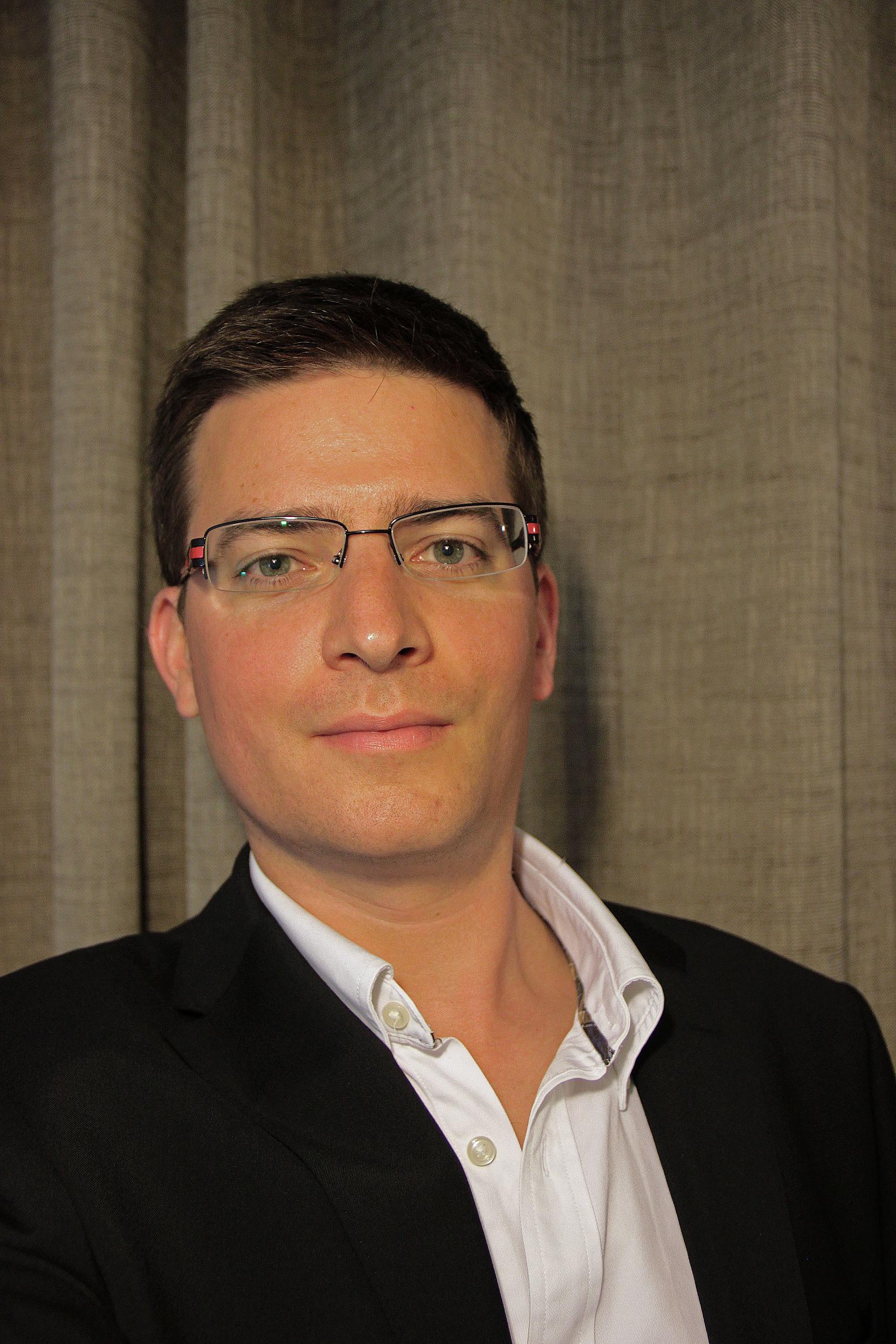
 Didier Bourissou, born in Nice (1972) studied chemistry at the Ecole Normale Superieure in Paris. He obtained his Ph D. degree in 1998 under the supervision of G. Bertrand at the Laboratory of Coordination Chemistry, University of Toulouse (Dina Surdin Award from the French Chemical Society). He then worked as a research associate with F. Mathey and P. Le Floch at the Ecole Polytechnique in Palaiseau. He is currently CNRS Director of Research at the “Laboratoire Hétérochimie Fondamentale et Appliquée” in Toulouse (University Paul Sabatier, CNRS) and Associate Professor at the Ecole Polytechnique in Palaiseau. His research interests span a wide range of topics in main group, transition metal and polymer chemistry. These include the interplay between ambiphilic derivatives and metal fragments as well as small molecules; the coordination of indenyl rings featuring donor sidearms to get access to original low-hapticity complexes; the synthesis and applications of biodegradable polymers (new activated/functionalized monomers, controlled organo-catalyzed ring-opening polymerization, drug delivery systems). He was awarded the Bronze Medal of the CNRS (French National Research Council), the Clavel Lespiau Distinction (French Academy of Sciences) and the Acros Award (French Chemical Society) in recognition of this work.
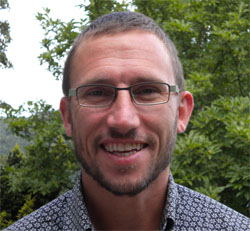 Christophe Detrembleur was born in Verviers (Belgium) in 1974 and he studied chemistry at the University of Liège (Belgium). In March 2001, he obtained his PhD under the supervision of Prof. Robert Jérôme at the Center for Education and Research on Macromolecules (CERM), University of Liège, Belgium. His major research topic was the search for new regulators for the controlled radical polymerisation of (meth)acrylic monomers. In parallel, he also contributed to the development of new functional aliphatic polyesters. He was an invited researcher at IBM, Almaden Research Center, California (USA) under the supervision of Dr. J. Hedrick for three months in 1998. In May 2001, he joined the Research Center of Bayer AG in Leverkusen (Germany), where he worked on materials synthesis and polymer processing. In January 2003, he moved to the polyurethane research division at Bayer, where he was involved in the development of new high performance UV coatings. In October 2003, he was awarded a permanent Research Associate position at CERM under the auspices of the National Fund for Scientific Research (F.R.S.-FNRS). In October 2008, he was promoted Senior Research Associate by the F.R.S.-FNRS and heads a research team at CERM. His main research projects are in the field of new controlled radical polymerisation techniques, preparation of new polymeric materials by these techniques, and contribution of macromolecular engineering to nanotechnology.