Survival in the face of the unknown

Swarming E. coli.

There are an estimated 1030 bacteria on Earth. The number of bacteria is greater than the number of stars in the Universe and is growing exponentially.

Bacteria are generally studied in the laboratory in Petri dishes under very well defined conditions. However, bacteria also thrive in more complex environments where the conditions are constantly varying. Some of these environmental changes are regular e.g. variations in light intensity from day to night, while others are random e.g. temperature, food availability and the presence of toxins or other bacteria.

Bacteria have developed a number of strategies to survive in these fluctuating environments. In the opening talk of the DPG spring meeting in Berlin last week, Stanislas Leibler from the Rockefeller University, New York and the Institute for Advance Studies, Princeton, discussed recent experimental and theoretical studies exploring the complex behaviour observed in bacterial colonies.

Consider a growing colony of bacteria. When an environmental change occurs one of two things may happen if the colony is to survive. (1) The bacteria ‘senses’ the change and changes to a state that is adapted for this new environment. This is known as responsive switching. (2) A small minority of the bacteria in the colony are poorly adapted to the initial environment. However, they become the most-adapted when the environment changes and survive while the rest are killed; the minority becomes the majority. This is known as stochastic switching.

So which is it? For colonies of bacteria with antibiotic persistence, experiments suggest that stochastic switching is the dominant behaviour. Leibler’s group added Ampicillin to growing colonies of Escherichia coli. The majority of the colony dies, but a few resistant bacteria survive. These resistant bacteria are able to grow, forming a new colony, once the antibiotic is removed. The persistent bacteria have a different phenotype to the rest of the colony. Under normal conditions, they grow much more slowly than the non-resistant bacteria, but are not killed when the antibiotics are added. Although the presence of these persistent cells leads to a lower population fitness, they act as an insurance policy and ensure that the colony can survive in the event of an antibiotic encounter. Leibler believes that this heterogeneity of bacterial populations is important for their ability to adapt to fluctuating environments and the persistence of bacterial infections.

While important when considering antibiotic resistant infections, these results may have much wider implications in areas ranging from cancer treatments, to models of financial investments, to information theory and statistical mechanics.

For more information see:

Balaban, N.Q. et al., Bacterial persistence as a phenotypic switch, Science, 2004.

Kussell, E. et al., Bacterial persistence: A model of survival in changing environments, Genetics, 2005.

Rivoire O, Leibler S, The value of information for populations in varying environments, J. Statist. Phys., 2011.

The image is taken from: Bacterial swarming: a model for studying dynamic self-assembly, Soft Matter, 2009, and shows a swarming colony of E. coli bacteria.

Digg This
Reddit This
Stumble Now!
Share on Facebook
Bookmark this on Delicious
Share on LinkedIn
Bookmark this on Technorati
Post on Twitter
Google Buzz (aka. Google Reader)

Martien Cohen Stuart talks to Soft Matter about his research on self assembly

Martien Cohen Stuart talks to Russell Johnson about his research on self assembly and what he thinks are the hot topics in soft matter research. Watch the video interview on YouTube here:

 Martien Cohen Stuart talks to Soft Matter about his research on self assembly

If you’re interested to know more about Professor Cohen Stuart’s research you can read a selection of his articles here:


To keep up-to-date with all the latest research, sign up for the Soft Matter e-Alert or RSS feeds or follow Soft Matter on Twitter or Facebook.

Digg This
Reddit This
Stumble Now!
Share on Facebook
Bookmark this on Delicious
Share on LinkedIn
Bookmark this on Technorati
Post on Twitter
Google Buzz (aka. Google Reader)

Hot Paper: Surface and bulk flow of a molecular glass former

Read for free until 3 May>

There is a growing interest in studying mobilitiy at the surface of low molecular weight glass formers. This Hot Paper describes nanoparticle embedding studies in the molecular glass former 1,3-bis-(1-naphthyl)-5-(2-naphthyl)benzene. By measuring both surface and bulk dynamics, the researchers provide a quantitative measure for the enhancement of surface dynamics relative to the bulk.

Comparing surface and bulk flow of a molecular glass former
C. R. Daley,  Z. Fakhraai,  M. D. Ediger and J. A. Forrest
Soft Matter, 2012, 8, 2206-2212
DOI: 10.1039/C2SM06826E

Digg This
Reddit This
Stumble Now!
Share on Facebook
Bookmark this on Delicious
Share on LinkedIn
Bookmark this on Technorati
Post on Twitter
Google Buzz (aka. Google Reader)

Conference: 31st IUBS General Assembly and Conference on Biological Sciences and Bioindustry Suzhou, China, 5-9 July 2012

Soft Matter will be awarding a poster prize at The International Union of Biological Sciences (IUBS) is holding its 31st General Assembly (GA) and Conference on Biological Sciences and Bioindustry. This meeting will be held 5th – 9th July 2012, in Suzhou, China. The theme of the conference is “Promoting Biological Sciences for a Better Life”.

Over 100 international scientists will deliver presentations on their research including plenary speeches by: Giorgio Bernardi (Italy), Zhonghe Zhou (China) and Nils Chr. Senseth (Norway).

You can find details about the conference program about registration on the conference website: http://iubs.csp.escience.cn

Digg This
Reddit This
Stumble Now!
Share on Facebook
Bookmark this on Delicious
Share on LinkedIn
Bookmark this on Technorati
Post on Twitter
Google Buzz (aka. Google Reader)

Hot Paper: Patchy colloidal particles

Read for free until 3 May>>

Researchers investigate the thermodynamics and percolation regimes of model binary mixtures of patchy colloidal particles in this Hot Paer. Up to four percolated strucuters at low temperature were found. Modelling such as this is of interest for tailoring the self-assembly of colloids into functional structures.

patchy colloids

Bicontinuous and mixed gels in binary mixtures of patchy colloidal particles
Daniel de las Heras,  José Maria Tavares and Margarida M. Telo da Gama
Soft Matter, 2012, 8, 1785-1794
DOI: 10.1039/C1SM06948A

Digg This
Reddit This
Stumble Now!
Share on Facebook
Bookmark this on Delicious
Share on LinkedIn
Bookmark this on Technorati
Post on Twitter
Google Buzz (aka. Google Reader)

Focus on: Ferrofluids and ferromagnetic soft matter

Read some of our recently published work on ferrofluids and ferromagnetic soft matter. All free to download for a limited time.

Review Article:
Magnetorheological fluids: a review
Juan de Vicente,  Daniel J. Klingenberg and Roque Hidalgo-Alvarez
Soft Matter, 2011, 7, 3701-3710, DOI: 10.1039/C0SM01221A

Full Papers:
Enhanced hardening of soft self-assembled copolymer gels under homogeneous magnetic fields
Haining An,  Stephen J. Picken and Eduardo Mendes
Soft Matter, 2010, 6, 4497-4503, DOI: 10.1039/C0SM00216J

Growth mechanism of nanostructured superparamagnetic rods obtained by electrostatic co-assembly
M. Yan,  J. Fresnais and J.-F. Berret
Soft Matter, 2010, 6, 1997-2005, DOI: 10.1039/B919992F

Magnetic sensitivity of a dispersion of aggregated ferromagnetic carbon nanotubes in liquid crystals
Oleksandr Buluy,  Sergej Nepijko,  Victor Reshetnyak,  Elena Ouskova,  Victor Zadorozhnii,  Albrecht Leonhardt,  Manfred Ritschel,  Gerd Schönhense and Yuriy Reznikov
Soft Matter, 2011, 7, 644-649, DOI: 10.1039/C0SM00131G

Templated self-assembly in three dimensions using magnetic levitation
Filip Ilievski,  Katherine A. Mirica,  Audrey K. Ellerbee and George M. Whitesides
Soft Matter, 2011, 7, 9113-9118, DOI: 10.1039/C1SM05962A

Ferrofluids with shifted dipoles: ground state structures
Sofia Kantorovich,  Rudolf Weeber,  Juan J. Cerda and Christian Holm
Soft Matter, 2011, 7, 5217-5227, DOI: 10.1039/C1SM05186E

Non-linear response of dipolar colloidal gels to external fields
Patrick Ilg and Emanuela Del Gado
Soft Matter, 2011, 7, 163-171, DOI: 10.1039/C0SM00592D

Digg This
Reddit This
Stumble Now!
Share on Facebook
Bookmark this on Delicious
Share on LinkedIn
Bookmark this on Technorati
Post on Twitter
Google Buzz (aka. Google Reader)

Registration is now open for Soft Matter Approaches to Structured Foods: Faraday Discussion 158

Registration is now open for Soft Matter Approaches to Structured Foods: Faraday Discussion 158

Food materials are unusual as soft matter. They are highly complex, operating on multiple length scales and phases and structured via multiple externally applied fields.

To join a discussion with top experts in the field make sure you register now, and take advantage of the best prices:

•    Early bird discount – £50 saving on the standard fee

•    Member rate – available to RSC members

•    Student rate – available to undergraduates and postgraduates on a
      full time course

•    Bursaries – a limited number offered to students and younger members of the RSC in
      the early stages of their career – worth £150

Taking part in a Faraday Discussion is a great way to get your research work better known. You can also have your own poster abstract space at the meeting, so submit yours now.

Registration is quick and simple via our online booking system, so act today to be able to exchange views with food scientists and non-food experts from the soft matter community.

Dr Ruud van der Sman and the rest of the Scientific Committee look forward to welcoming you to Wageningen in July 2012

Digg This
Reddit This
Stumble Now!
Share on Facebook
Bookmark this on Delicious
Share on LinkedIn
Bookmark this on Technorati
Post on Twitter
Google Buzz (aka. Google Reader)

Soft Matter papered featured by the BBC

A recently published Soft Matter paper has been featured on the BBC website: ‘Avalanche research aids search for tastier ice cream’.

Avalanche experts were consulted for a study on how ice cream’s structure changes when it is stored in a household freezer. The structure within the ice cream is important for the taste of the food.

Read the original research here:
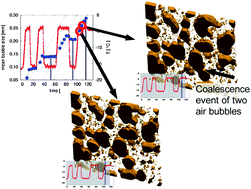
3D-characterization of three-phase systems using X-ray tomography: tracking the microstructural evolution in ice cream
B. R. Pinzer ,  A. Medebach ,  H. J. Limbach ,  C. Dubois ,  M. Stampanoni and M. Schneebeli
Soft Matter, 2012, Advance Article
DOI: 10.1039/C2SM00034B

Digg This
Reddit This
Stumble Now!
Share on Facebook
Bookmark this on Delicious
Share on LinkedIn
Bookmark this on Technorati
Post on Twitter
Google Buzz (aka. Google Reader)

Hot Paper: Time-composition equivalence

Read for free until 25 April>>

Time–temperature rheological equivalence is an important concepts with regard to the viscoelastic behavior of polymers. In this Hot Paper, the generality of an analogous relationship, time–composition equivalence, in several series of ternary block copolymer/cosolvent systems at ambient temperature was explored. In particular, triblock copolymers solvated with a miscible mixture of midblock-selective solvents which yield physical gels were studied.

Factors affecting time–composition equivalence in ternary block  copolymer/cosolvent systems
Arjun S. Krishnan and Richard J. Spontak
Soft Matter, 2012, 8, 1334-1343
DOI: 10.1039/C1SM06672B

Digg This
Reddit This
Stumble Now!
Share on Facebook
Bookmark this on Delicious
Share on LinkedIn
Bookmark this on Technorati
Post on Twitter
Google Buzz (aka. Google Reader)

Conference: Physics of Cells 2nd – 8th September 2012

We are pleased to announce that Soft Matter will be awarding poster prizes at De Gennes Days on Physics of Cells – from Soft to Living Matter, to be held 2nd – 8th September 2012, in Hyères, France.

The meeting will consist of the Advanced School on Cellular Biophysics and the 2nd Conference in the EMBO Series on Cell Biophysics. Both the school and the conference will cover topics from various aspects of cell and tissue biophysics including cell mechanics, membranes, adhesion, mechanosensing, morphogenesis, transcription, and motility. Participation of young and emerging scientists is highly encouraged.

For more information, please visit www.physcell2012.com.

Digg This
Reddit This
Stumble Now!
Share on Facebook
Bookmark this on Delicious
Share on LinkedIn
Bookmark this on Technorati
Post on Twitter
Google Buzz (aka. Google Reader)