Archive for July, 2023

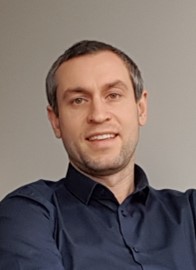
Soft Matter Emerging Investigator – Dmitry Fedosov

Dmitry A. Fedosov received his Bachelor’s degree in mathematics from Novosibirsk State University, Novosibirsk, Russia in 2002. After earning a MS degree in aerospace engineering from the Pennsylvania State University in 2004, he moved to Brown University, where he pursued a PhD degree in applied mathematics. Dmitry received a MS degree in applied mathematics in 2007 and his PhD in 2010. His thesis work was on multiscale modelling of blood flow and polymeric soft matter systems. His thesis work was recognized with the 2011 Nicholas Metropolis Award for outstanding doctoral thesis work in computational physics from the American Physical Society. After completing his PhD, Dmitry moved to Forschungszentrum Juelich in Germany, and received the Sofja Kovalevskaja Award from the Humboldt foundation to build up an independent research group. Currently, he continues to work as a group leader at Forschungszentrum Juelich with a research focus on non-equilibrium physics, including various complex systems in biophysics and active matter.

Read Dmitry Fedosov’s Emerging Investigator article: http://xlink.rsc.org/?doi=10.1039/D3SM00004D


How do you feel about Soft Matter as a place to publish research on this topic?

Soft Matter is a good match for the research on active matter systems, as I feel it reaches out to the research community interested in this topic.

What aspect of your work are you most excited about at the moment and what do you find most challenging about your research?

I am fascinated by active non-equilibrium systems which can exhibit very complex structures, dynamics, and responses to various external conditions and manipulations. Even though diverse properties of these systems make their investigation very challenging, they also lead to great opportunities for finding novel physical mechanisms and for using these systems in many technological and biomedical applications.

In your opinion, what are the most important questions to be asked/answered in this field of research?

I think one of the most important questions is the emergence of complex structures, dynamics, and responses of active soft systems from interactions between their internal simple constituents. Can we explain, tune, and control the behaviour of active systems?

Can you share one piece of career-related advice or wisdom with other early career scientists?

Be persistent and follow your ideas and dreams no matter what difficulties you meet on the way. Eventually, it will pay off in some expected or unexpected way.


Digg This
Reddit This
Stumble Now!
Share on Facebook
Bookmark this on Delicious
Share on LinkedIn
Bookmark this on Technorati
Post on Twitter
Google Buzz (aka. Google Reader)

We are very pleased to announce that Professor Lixin Wu has been appointed as an Associate Editor for Soft Matter

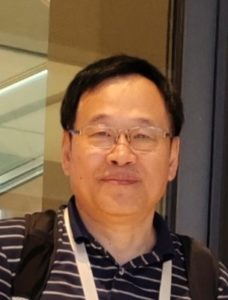
Profile picture of Professor Lixin Wu


Professor Lixin Wu is currently the outstanding Tang Auching Professor in College of Chemistry at Jilin University and a PI of the State Key Laboratory of Supramolecular Structure and Materials of China. He is also a member of Colloids and Interface Chemistry Division of the Chinese Chemistry Society. His research interests mainly focus on the fabrication and structure studies of supramolecular hybrid assemblies comprising of inorganic nanoclusters and organic amphiphiles. By regulating non-covalent interactions and incorporating functional units, his group would like to develop flexible framework structures and those composites toward precisely nano colloid-separation, near-infrared photothermal transformation, and environment friendly catalytic and bio-applicable materials.


Professor Wu has given his thoughts on the future of the soft matter field and the role of Soft Matter:

Soft Matter deals with interdisciplinary areas relevant to surface/interface, colloids, assemblies and behaviors, and polymers. In the present stage, the boundary among the traditional areas is getting ambiguous, which makes those clear topics in soft matter become extended greatly. More importantly, the extension of the originally focused fields generates new challenges in theory and applied materials. In this context, the soft matter field will go in two directions which are unambiguous. One is various applied materials based on soft matter concept and the other is the matched theory in searching and understanding for such kinds of materials. 


Read Professor Wu’s recent Soft Matter articles

Synergistically enhanced photothermal transition of a polyoxometalate/peptide assembly improved the antibiofilm and antibacterial activities
Yu Wang, Gang Chen, Rongrong Liu, Xuexun Fang, Feu Li, Lixin Wu and Yuqing Wu

Soft Matter, 2022, 18, 2951-2958

Recent advances on porous interfaces for biomedical applications
Jing Liang, Bao Li and Lixin Wu

Soft Matter, 2020, 16, 7231-7245


Professor Wu’s favourite recent Soft Matter articles

Professor Wu has selected some recent publications in Soft Matter that they found particularly interesting or insightful. These articles are all free to read until 31 August 2023.

Progress in the self-assembly of organic/inorganic polyhedral oligomeric silesquioxane (POSS) hybrids
Mohamed Gamal Mohamed and Shiao-Wei Kuo

Soft Matter, 2022, 18, 5535-5561

Membrane mixing and dynamics in hybrid POPC/poly(1,2-butadiene-block-ethylene oxide) (PBd-b-PEO) lipid/block co-polymer giant vesicles
Rashmi Seneviratne, Rosa Catania, Michael Rappolt, Lars J. C. Leuken and Paul A. Beales

Soft Matter, 2022, 18, 1294-1301

Polypyrrole and polyaniline nanocomposites with high photothermal conversion efficiency
Lorena Ruiz-Pérez, Loris Rizzello, Jinping Wang, Nan Li, Giuseppe Battaglia and Yiwen Pei
Soft Matter, 2020, 16, 4569-4573

Recent progress in the science of complex coacervation
Charles E. Sing and Sarah L. Perry
Soft Matter, 2020, 16, 2885-2914

A review on recent advances in polymer and peptide hydrogels
Sanjoy Mondal, Sujoy Das and Arun K. Nandi
Soft Matter, 2020, 16, 1404-1454

Fabrication of novel MXene (Ti3C2)/polyacrylamide nanocomposite hydrogels with enhanced mechanical and drug release properties
Peng Zhang, Xiu-Jie Yang, Peng Li, Yingyuan Zhao and Qingshan Jason Niu
Soft Matter, 2020, 16, 162-169

Dynamic surface-assisted assembly behaviours mediated by external stimuli
Xuan Peng, Fengying Zhao, Yang Peng, Jing Li and Qingdao Zeng
Soft Matter, 2020, 16, 54-63

Facile preparation of self-assembled hydrogels constructed from poly-cyclodextrin and poly-adamantane as highly selective adsorbents for wastewater treatment
Nan Hou, Ran Wang, Rui Geng, Fan Wang, Tifeng Jiao, Lexin Zhang, Jingxin Zhou, Zhenhua Bai and Qiuming Peng
Soft Matter, 2019, 15, 6097-6106


All these articles are currently FREE to read until 31 August 2023!


Digg This
Reddit This
Stumble Now!
Share on Facebook
Bookmark this on Delicious
Share on LinkedIn
Bookmark this on Technorati
Post on Twitter
Google Buzz (aka. Google Reader)

We are very pleased to announce that Professor Roberto Cerbino has been appointed as an Associate Editor for Soft Matter

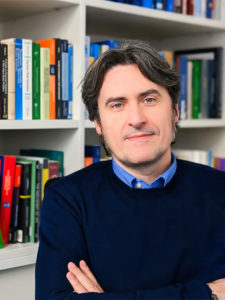
Profile picture of Roberto Cerbino


Professor Roberto Cerbino is a Professor of Experimental Soft Matter Physics at the University of Vienna, Austria. Before joining in 2021, he held a tenure for 14 years at the Faculty of Medicine of the University of Milan, Italy. Roberto’s research encompasses the structure, dynamics, rheology, and instabilities of active and passive complex fluids, with a particular emphasis on colloidal and cellular collectives. He is credited with inventing Differential Dynamic Microscopy (DDM), a technique that utilizes optical microscopy to extract multi-scale activity in complex fluids and biological systems. In addition to DDM, he employs a range of cutting-edge optical techniques and image analysis methods to gain in-depth insights into the behaviour of soft materials.


Professor Cerbino has also given his insight and thoughts on the future of the soft matter field and the role of Soft Matter:

At a time when sustainability is of utmost importance, scientists from all disciplines are intensifying their efforts to preserve our planet and its invaluable resources. A significant part of this global dialogue revolves around soft matter, encompassing a broad range of materials present in our daily lives. Taking action toward the biocompatible, sustainable, and eco-friendly production, use, and disposal of soft materials, such as developing biodegradable alternatives to conventional plastics or designing energy-efficient processes for the production of detergents, paints, and coatings, is essential for creating a better future. Facing all these challenges requires merging knowledge from different disciplines in an endeavor well-suited to the collaborative spirit inherent in the community of soft matter scientists.


Along a similar line of thought, soft matter science also offers a unique interdisciplinary lens to unravel biological systems. These insights range from the microscopic biomechanics and dynamics of cell membranes, DNA, and proteins, to larger-scale phenomena such as the behaviors of cytoskeletal filaments, the mechanics of tissues, and the flow of blood. Looking ahead, I expect that the role of soft matter in understanding these and numerous other biological systems will only gain importance. This could also involve developing new therapeutic approaches based on soft matter principles for targeted drug delivery or for designing biomimetic materials to be used in regenerative medicine. Therefore, continued interdisciplinary research and collaboration in the field of soft matter science will be essential for future breakthroughs in biology and medicine.


Finally – and strongly influenced by my own approach to soft matter science – I view the creation of innovative methods and technologies as vital in pushing the boundaries of what is possible and attainable, particularly in terms of accessible spatial and temporal scales. In this area, too, the continuous discussion between different disciplines remains highly essential.


As a hub for these types of collaborative endeavors, Soft Matter has the potential to lead the way, being an established, reliable, and powerful platform for dialogue, research dissemination, and increased visibility of interdisciplinary research. As an Associate Editor, I’m fully committed to using my role effectively to help navigate us toward these exciting opportunities.


Read Professor Cerbino’s recent Soft Matter articles

Deformation profiles and microscopic dynamics of complex fluids during oscillatory shear experiments
Paolo Edera, Matteo Brizioli, Giuliano Zanchetta, George Petekidis, Fabio Giavazzi and Roberto Cerbino

Soft Matter, 2021, 17, 8553-8566

Disentangling collective motion and local rearrangements in 2D and 3D cell assemblies
Roberto Cerbino, Stefano Villa, Andrea Palamidessi, Emanuela Frittoli, Giorgio Scita and Fabio Giavazzi

Soft Matter, 2020, 16, 3550-3559


Professor Cerbino’s favourite recent Soft Matter articles

Professor Cerbino and Professor Wu have selected some recent publications in Soft Matter that they has found particularly interesting or insightful. These articles are all free to read until 31 August 2023.

Physics of smart active matter: integrating active matter and control to gain insights into living systems
Herbert Levine and Daniel I. Goldman

Soft Matter, 2023, 19, 4204-4207

Non-linear properties and yielding of enzymatic milk gels
Julien Bauland, Mathieu Leocmach, Marie-Hélène Famelart and Thomas Croguennec

Soft Matter, 2023, 19, 3562-3569

Green, tough and highly efficient flame-retardant rigid polyurethane foam enables by double network hydrogel coatings

Yubin Huang, Jinming Zhou, Ping Sun, Lei Zhang, Xiaodong Qian, Saihua Jiang and Congling Shi
Soft Matter, 2021, 17, 10555-10565


All these articles are currently FREE to read until 31 August 2023!

Digg This
Reddit This
Stumble Now!
Share on Facebook
Bookmark this on Delicious
Share on LinkedIn
Bookmark this on Technorati
Post on Twitter
Google Buzz (aka. Google Reader)