Author Archive

Green Liquids and Solvents

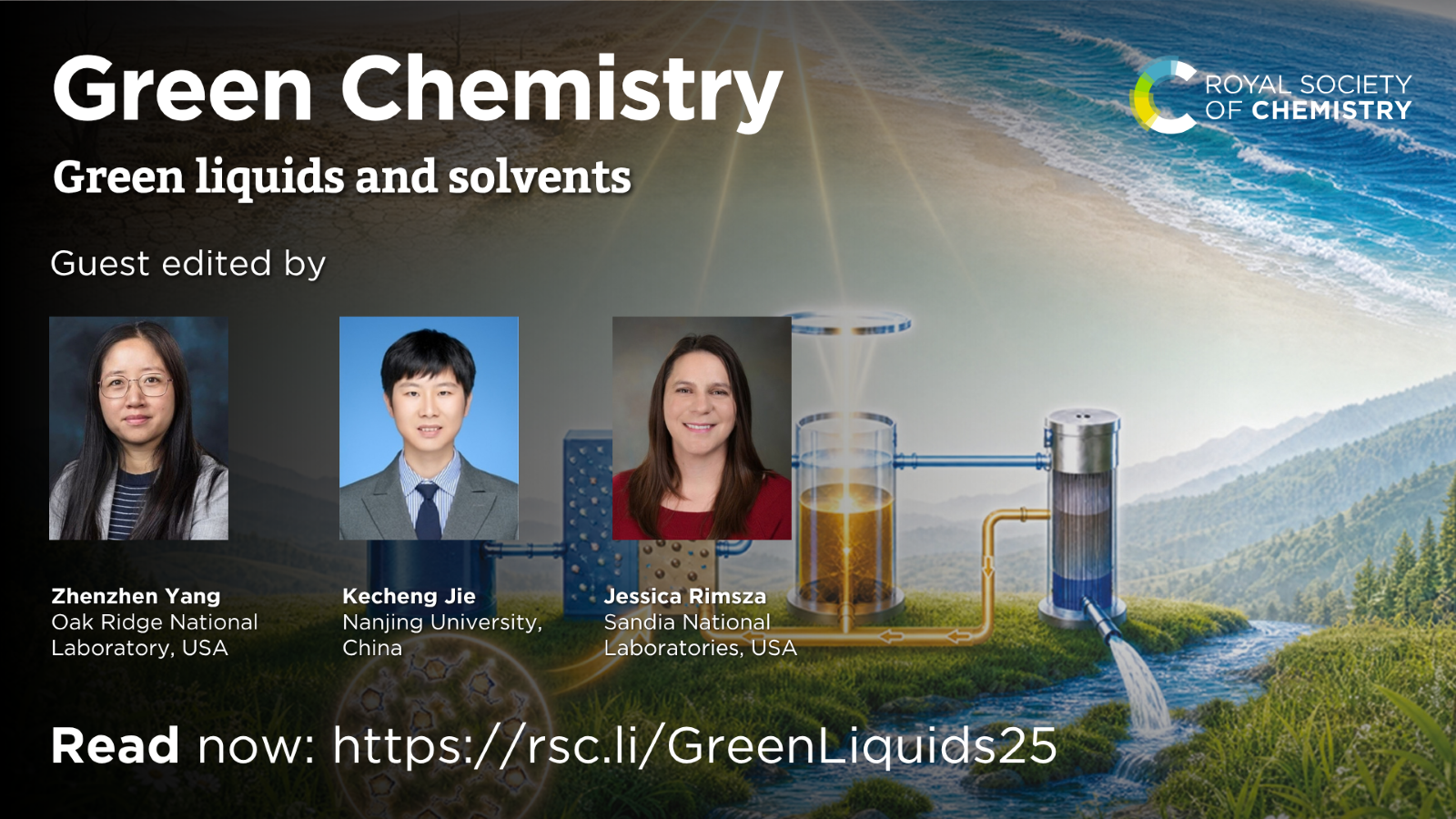
Green Chemistry is delighted to announce that our latest themed collection, Green Liquids and Solvents, is now online and free to access until 7th February 2027. Guest Edited by Zhenzhen Yang (Oak Ridge National Laboratory, USA), Kecheng Jie (Nanjing University) and Jessica Rimsza (Sandia National Laboratories, USA).


About this Collection

Sustainable liquid media play a crucial role in separation, catalysis, energy storage, and beyond. Ionic liquids (ILs), deep eutectic solvents (DESs), water, supercritical fluids, and bio-based solvents remain at the forefront of green chemistry, demonstrating transformative properties across diverse applications. Recent research has explored innovative strategies to integrate these solvents with other material categories, unlocking new functionalities.

This themed collection showcases recent advances in sustainable liquid technologies, with a particular emphasis on green synthesis strategies, facile fabrication techniques, advanced characterization methods, computational modelling, theoretical frameworks, fundamental structure-function investigations, and cutting-edge applications in separation, catalysis, energy storage, and beyond.


Read the Collection

Explore a selection of articles from the collection below, or discover the complete collection here.


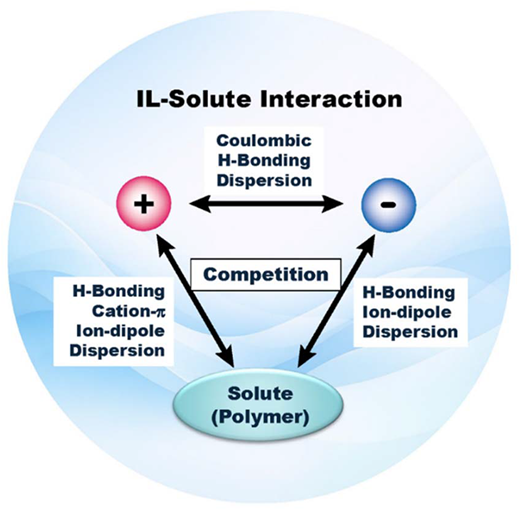
Polymers in ionic liquids and ionic liquids in polymers: critical factors for compatibility and materialization

 M. Watanabe

 Green Chem. (2026) 28 (23): 9594–9612.

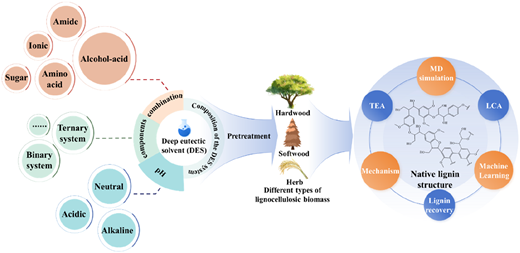
Deep eutectic solvents in lignocellulosic biorefineries: a comprehensive review of mechanistic insights, molecular modeling, and artificial intelligence

K. Huang, M. Mohan, K. Su, C. Gao, Y. Chen, X. Xu, Y. Cai, J. Guo, Y. Xu, X. Zhou and J. C. Smith

Green Chem. (2026) 28 (30): 12505–12548.


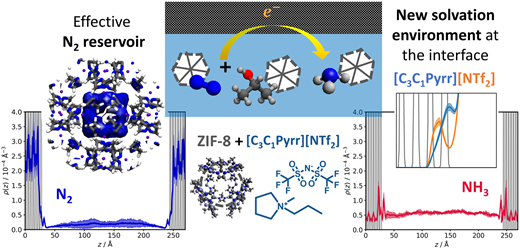
Porous ionic liquids with enhanced nitrogen availability for electrochemical synthesis of ammonia

C. Corsini, C. M. Correa, M. C. Gomes, A. Padua

Green Chem. (2026) 28 (37): 15064–15074.


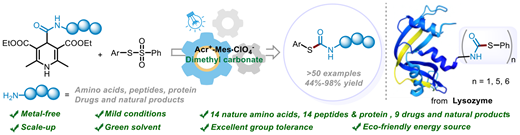
Photocatalytic carbamoylation to access thiocarbonyl amino acid/peptide derivatives in a sustainable solvent

F-L. Zeng, Y-X. Luo, J-N. Chen, Z. Jia, B. Yu and T-P. Loh

Green Chem. (2026) 28 (6): 2753–2760.


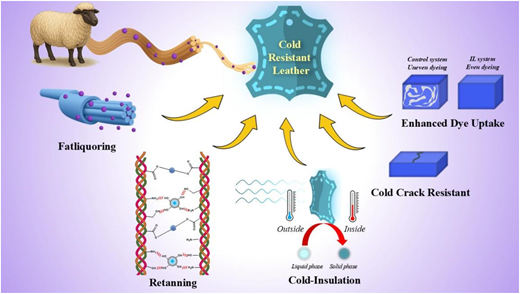
Ionic liquid capsules for cold-resistant leathers: connecting the three pillars of green chemicals, clean processes and green products

K. Selladurai, M. K. Meganathan, S. Ramalingam, N. F. Nishter and R. R. Jonnalagadda

Green Chem. (2026) 28 (8): 3731–3744.


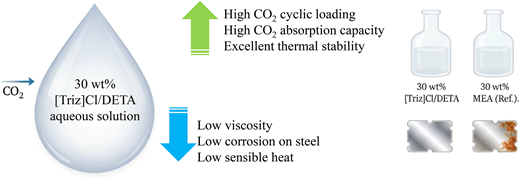
Development and systematic evaluation of aqueous triazole chloride-based deep eutectic solvents for efficient CO2 capture

Q. Shi, K. Jia, X. Zhang, C. Wang, P. Cobden, A-M. B. Amnéus, D. Muren and X. Ji

Green Chem. (2026) 28 (3): 1804–1816.


Engage with us and stay tuned for more news

Digg This
Reddit This
Stumble Now!
Share on Facebook
Bookmark this on Delicious
Share on LinkedIn
Bookmark this on Technorati
Post on Twitter
Google Buzz (aka. Google Reader)

A selection of articles on sustainable polymer chemistry and circular materials in Green Chemistry

Circular materials and plastic waste reduction are fundamental to building a future in which society can continue to benefit from advanced materials while reducing and managing the environmental impact, resource consumption and carbon emissions. In this selection of articles from Green Chemistry, explore cutting‑edge depolymerisation, catalysis, and biological reactions that valorise waste plastics, with the aim of achieving a more circular economy.


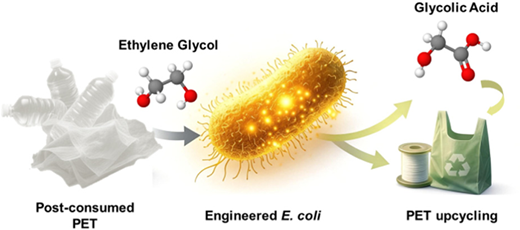
Bioconversion of ethylene glycol to glycolic acid for waste polyethylene terephthalate upcycling

H. Lin, R. Wang, C. Qiu, X. Zhou, A. Xu, X. Qian, W. Dong and M. Jiang

Green Chem. (2026) 28 (8): 3628–3637.


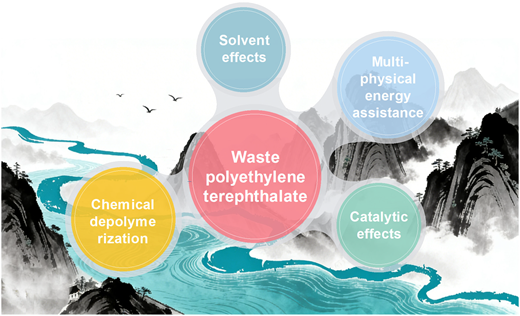
Cutting-Edge advances in chemical depolymerization-based recycling of waste polyethylene terephthalate plastics

L. Dong, W. Zhi and F. Li

Green Chem. (2026) 28 (39): 15452–15479.


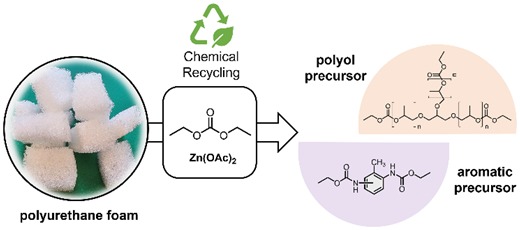
Polyurethane depolymerization by dialkyl carbonates: toward sustainable chemical recycling 

E. Hosgor, R. P. Martinho, J. S. Hoogland, Y. Jia, A. Morales Gomez, W. Verboom, J-P Lange and J. Huskens

Green Chem. (2025) 27 (38): 11782–11793.


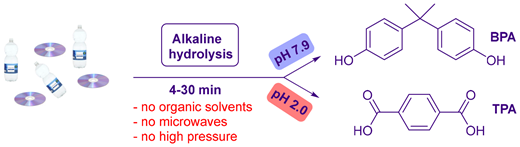
Catalytic alkaline hydrolysis of PET and BPA-PC waste in minutes at atmospheric pressure without microwaves or organic solvents

 A. Jain and S. J. Connon

Green Chem. (2025) 27 (18): 4986–4994.


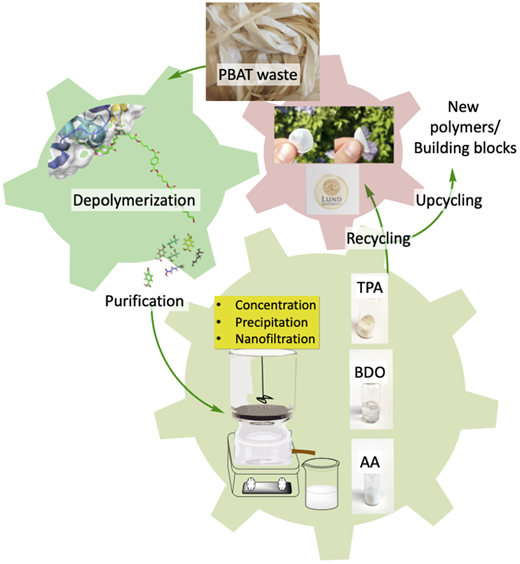
Closing the loop for poly(butylene-adipate-co-terephthalate) recycling: depolymerization, monomers separation, and upcycling

 M. Ismail, A. Abouhmad, N. Warlin, S-H. Pyo, O. E. Örn, B. Al-Rudainy, C. Tullberg, B. Zhang, R. Hatti-Kaul

Green Chem. (2024) 26 (7): 3863–3873.


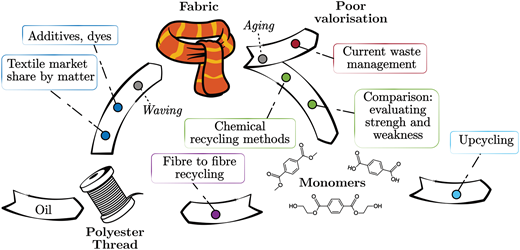
Chemical recycling of polyester textile wastes: shifting towards sustainability

 T. El Darai, A. Ter-Halle, M. Blanzat, G. Despras, V. Sartor, G. Bordeau, A. Lattes, S. Franceschi, S. Cassel, N. Chouini-Lalanne, E. Perez, C. Déjugnat and J-C. Garrigues

Green Chem. (2024) 26 (12): 6857–6885.


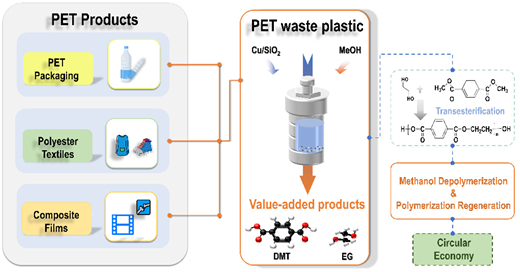
Copper-supported catalysts for sustainable PET depolymerization: a cost-effective approach towards dimethyl terephthalate (DMT) production

Y. Zhang, J. Gao, C. Jiang, G. Luo, J. Fan, J. H. Clark and S. Zhang

Green Chem. (2024) 26 (11): 6748–6759.


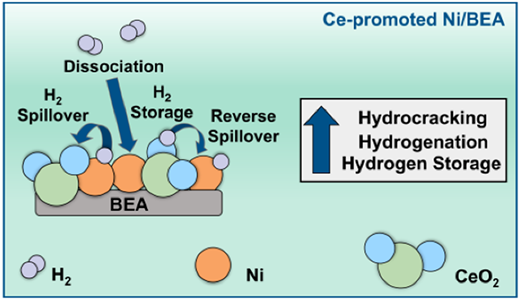
Hydrocracking of polyolefins over ceria-promoted Ni/BEA catalysts

 J. A. Sun, E. Selvam, A. Bregvadze, W. Zheng and D. G. Vlachos

Green Chem. (2025) 27 (15): 3905–3915.


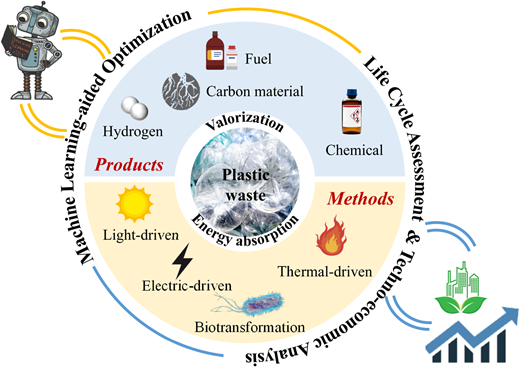
Sustainable thermochemical plastic valorization towards a circular economy: a critical review

 L. Chen, C. Zhao, X. Yuan, H. Zhang, M. Senanayake, O. Mašek, C. He and Y. Sik Ok

Green Chem. (2025) 27 (18): 4867–4897.

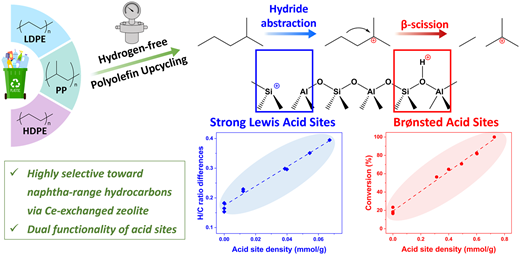
Complementary acid site mechanisms in hydrogen-free polyethylene upcycling: elucidating the distinct roles of Brønsted and Lewis sites in Ce-modified zeolites

 T. Kwon, J. Park, K. H. Kang, D. S. Jung, W. Won and I. Ro

Green Chem. (2025) 27 (38): 11769–11781.


This selection highlights only a small snapshot of recent Green Chemistry research in sustainable polymer chemistry. For more exciting research, explore the full journal at https://rsc.li/green-chem or discover some of our themed collections carefully curated by our Editorial Board:

🔹Measuring Green Chemistry: Methods, Models, and Metrics

🔹Organic Chemistry in Green Chemistry: Key Highlights

🔹Biomass Conversion in Green Chemistry: Key Highlights

🔹Catalysis in Green Chemistry: Key Highlights


Engage with us and stay tuned for more news

Digg This
Reddit This
Stumble Now!
Share on Facebook
Bookmark this on Delicious
Share on LinkedIn
Bookmark this on Technorati
Post on Twitter
Google Buzz (aka. Google Reader)

Green Chemistry Emerging Investigators Series – Bo Shen

Green Chemistry is proud to present the Green Chemistry Emerging Investigators Series, showcasing work being conducted by Emerging Investigators. This collection aims to highlight the excellent research being carried out by researchers in the early stages of their independent career from across the breadth of green chemistry.  For more information about this series, click here

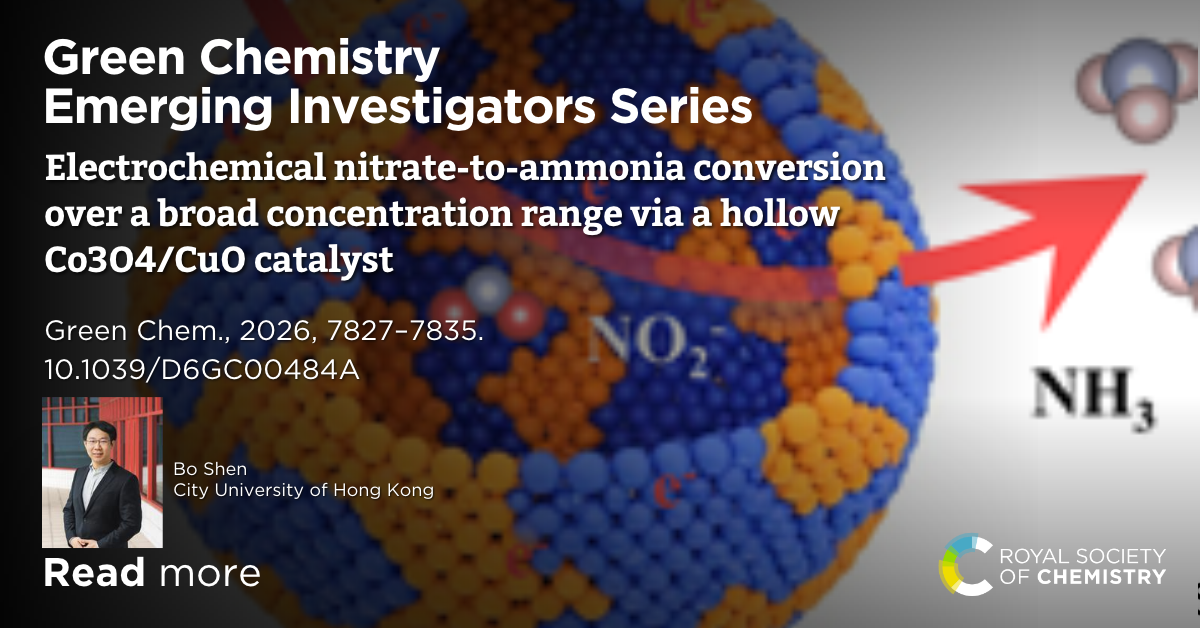
Among the contributions to this series is a Paper entitled Electrochemical nitrate-to-ammonia conversion over a broad concentration range via a hollow Co3O4/CuO catalyst

Read our interview with the corresponding author Bo Shen below.

Could you briefly explain the focus of your article to the non-specialist?

What if a water pollutant could become a useful chemical instead of simply being removed? In this work, we developed a catalyst that uses renewable electricity to efficiently convert nitrate into ammonia under mild conditions. The approach could help both cleaner ammonia production and wastewater treatment.


How would you set this article in a wider context?

The future of sustainable chemistry is not only about producing chemicals more cleanly, but also about rethinking what we consider waste. From the perspective of a circular economy, waste streams can become valuable sources of raw materials instead of environmental burdens. By linking pollution control with resource recovery, this work points towards a more circular and sustainable way of managing nitrogen.


What is the motivation behind this work?

I was fascinated by a simple contradiction: we invest tremendous effort in removing nitrate from water, while separately consuming enormous amounts of energy to produce ammonia from atmospheric nitrogen. This led us to ask whether these two challenges could be addressed together. We therefore explored how electrochemistry could bridge these seemingly separate challenges.


What aspects of this work are you most excited about at the moment and what do you find most challenging about it?

The most exciting part is not that we made a better catalyst, but that we are beginning to understand why it works. By uncovering how the local structure of the catalyst influences reaction pathways and product selectivity, we can move beyond trial and error towards more rational catalyst design. The most challenging part is that electrocatalysts are dynamic under operating conditions, so identifying the true active structure and connecting atomic-scale behaviour with device-level performance remain difficult.


What is the next step? What work is planned?

A catalyst is only the beginning. Our next step is to move from catalyst discovery towards technology development. We plan to evaluate the system under conditions that are closer to real operation, including high current densities, continuous-flow reactors, long-term testing, and complex wastewater streams. Ultimately, we hope to develop a scalable process that can treat nitrate-containing wastewater while producing ammonia at the same time.


Please describe your journey to becoming an independent researcher.

Looking back, every major step in my career involved starting over and learning to see science from a new perspective. My interest in chemistry grew from simple experiments in high school to a deeper understanding at university of how closely chemistry is connected to everyday life and industrial progress. I later moved to the United States for my PhD and postdoctoral training, where Professors Shouheng Sun and Chad A. Mirkin helped me develop complementary perspectives on nanomaterial synthesis, catalysis, and materials discovery. These experiences helped me define the scientific questions I wanted to pursue independently and the kind of research environment I hoped to create. I eventually chose Hong Kong because of its vibrant international research community, which brings together diverse academic and cultural perspectives. At City University of Hong Kong, I am building an interdisciplinary research programme at the intersection of materials science, chemistry, data science, and engineering to address challenges in sustainable catalysis.


Can you share one piece of career-related advice or wisdom with other early career scientists?

Think big, stay curious, and be willing to step outside our comfort zones. Some of the most rewarding research comes from crossing disciplinary boundaries and tackling questions that once seemed impossible.


Why did you choose to publish in Green Chemistry?

I wanted this work to reach readers who care not only about better catalysts, but also about how chemistry can contribute to a more sustainable future. Green Chemistry provides an ideal platform for this kind of research because it brings together scientists working across catalysis, materials science, environmental chemistry, and sustainable chemical manufacturing. I also appreciate the journal’s emphasis on connecting fundamental discoveries with real-world sustainability challenges.


Meet the author

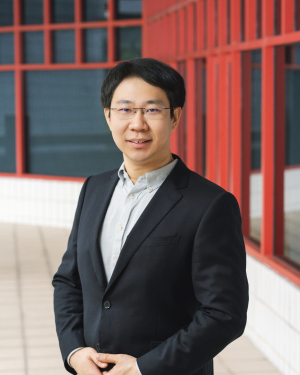
Dr Bo Shen

ORCiD: 0000-0001-8011-7134

Website

Dr. Bo Shen is a Presidential Assistant Professor in the Department of Materials Science and Engineering at City University of Hong Kong. He received his Ph.D. in Chemistry from Brown University under the supervision of Professor Shouheng Sun in 2019 and completed his postdoctoral training with Professor Chad A. Mirkin at Northwestern University. His research combines precise nanomaterial synthesis, high-throughput experimentation, and data-driven approaches to accelerate the discovery of catalysts for sustainability. His group is particularly interested in developing materials and technologies that realize resource circularity, clean energy conversion, and environmental remediation.

Engage with us and stay tuned for more news

Digg This
Reddit This
Stumble Now!
Share on Facebook
Bookmark this on Delicious
Share on LinkedIn
Bookmark this on Technorati
Post on Twitter
Google Buzz (aka. Google Reader)

A selection of articles on sustainable battery materials and technologies in Green Chemistry

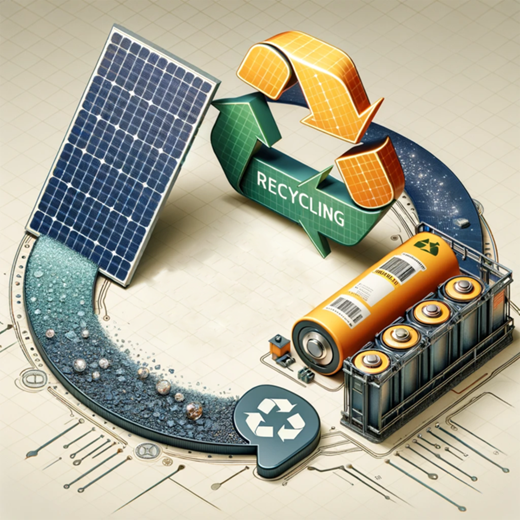
As batteries become increasingly embedded in everyday life, from portable electronics and electric vehicles to renewable energy storage systems, the development of sustainable battery technologies is essential to minimise environmental impacts, reduce reliance on critical raw materials, and support a circular economy. This selection of articles from Green Chemistry highlights advances in greener battery manufacturing, novel battery electrolytes and materials and, recycling of battery materials for a circular economy.

Advancing sustainable end-of-life strategies for photovoltaic modules with silicon reclamation for lithium-ion battery anodes

O. Wang, Z. Chen  and X. Ma

Green Chem. (2024) 26 (7): 3688–3697.


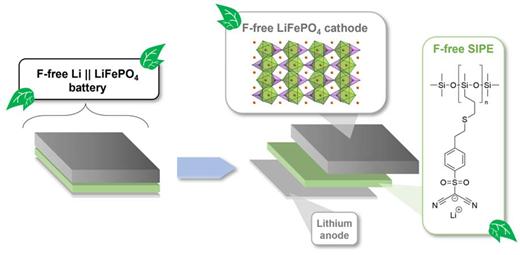
Fluorine-free polysiloxane-based single-ion-conducting polymer electrolyte for lithium–metal batteries

L. Gräber, V. Marangon, M. Kumar, M. Weil and D. Bresser

Green Chem. (2025) 27 (27): 8226–8236.


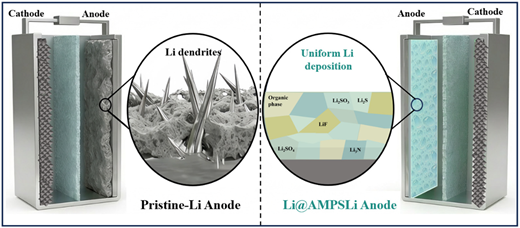
A molecular precursor pre-anchoring strategy for constructing stable solid electrolyte interphase in carbonate-based lithium metal batteries

X. Liu, W. Guo, M. Wang, H. Guo, P. Li, L. Cao, J. Zhang, X. Li and Q. Xia

Green Chem. (2026) 28 (29): 12321–12333.


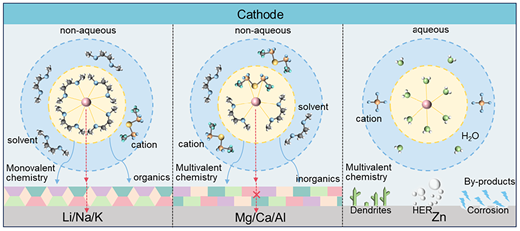
Electrolyte design and interphase chemistry in monovalent and multivalent metal batteries

Q. Sun, S. Luo, Q. Liu, X. Yan and S. Yan

Green Chem. (2026) 28 (29): 12059–12086.


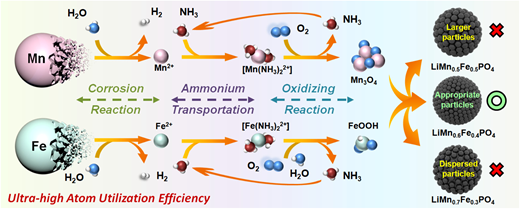
A promising corrosion engineering-based strategy for the green synthesis of LiMnxFe1−xPO4 cathodes for lithium-ion batteries

X. Sun, T. Wang, E. Xu, H. Wu, W. Cai, Y. Zhang, Z. Liu and K. Wu

Green Chem. (2026) 28 (2): 1256–1268.


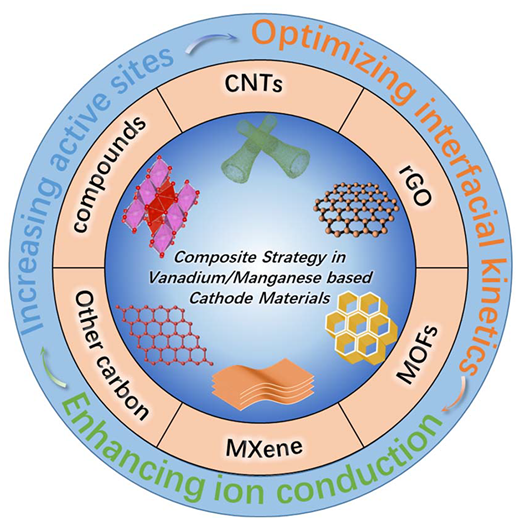
Advances and future perspectives of composite strategies in vanadium-/manganese-based cathode materials for aqueous zinc-ion batteries

T. Song, W. Fan, Y. Hu, H. Zhang, Y. Bai

Green Chem. (2025) 27 (34): 10071–10093.


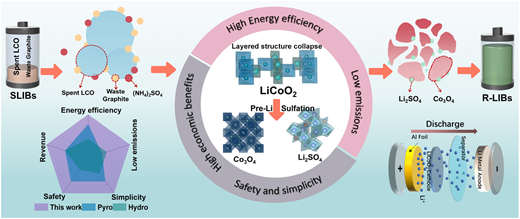
A green strategy for selective recovery of valuable metals from spent lithium-ion batteries through a waste graphite-assisted sulfation process

M. He, F. Zhou, S. Rohani, C. Q. Jia, D. Wang, W. Yu, L. Teng, F. Meng, Q. Liu, W. Liu

Green Chem. (2025) 27 (26): 7991–8006.


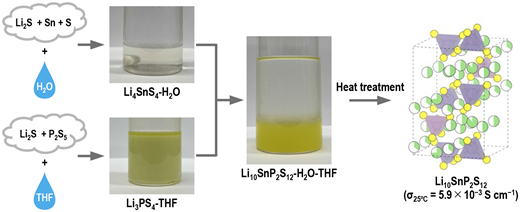
Aqueous solution synthesis of lithium-ion conductive tin-based sulphide electrolytes

T. Kimura, H. Tanigaki, A. Sakuda, M. Tatsumisago, A. Hayashi

Green Chem. (2024) 26 (16): 9264–9269.


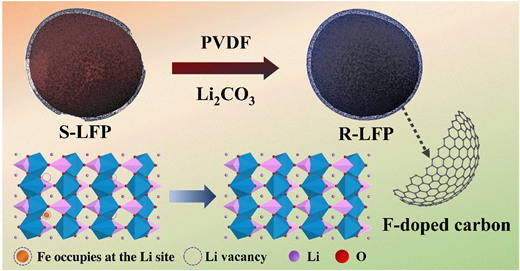
Direct regeneration of fluorine-doped carbon-coated LiFePO4 cathode materials from spent lithium-ion batteries

Y. Han, Y. Fang, M. Yan, H. Qiu, Y. Han, Y. Chen, L. Lin, J. Qian, T. Mei and X. Wang

Green Chem. (2024) 26 (18): 9791–9801.


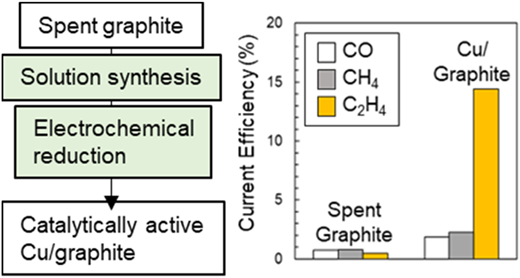
Facile synthesis of electrocatalytically active Cu/graphite using the negative electrode of spent Li-ion batteries

H. Itahara, N. Sakamoto, N. Takahashi, S. Kosaka and Y. Takatani

Green Chem. (2024) 26 (4): 2190–2197.

This selection highlights only a small snapshot of recent Green Chemistry research in sustainable battery technology. For more exciting research, explore the full journal at https://rsc.li/green-chem or discover some of our themed collections carefully curated by our Editorial Board:

🔹Measuring Green Chemistry: Methods, Models, and Metrics

🔹Organic Chemistry in Green Chemistry: Key Highlights

🔹Biomass Conversion in Green Chemistry: Key Highlights

🔹Catalysis in Green Chemistry: Key Highlights


Engage with us and stay tuned for more news

Digg This
Reddit This
Stumble Now!
Share on Facebook
Bookmark this on Delicious
Share on LinkedIn
Bookmark this on Technorati
Post on Twitter
Google Buzz (aka. Google Reader)