Archive for the ‘Uncategorized’ Category

A selection of articles on Mechanochemistry in Green Chemistry

Mechanochemistry is transforming the way chemists design and carry out chemical transformations, offering solvent-free or solvent-minimized routes that reduce waste, improve efficiency and enable access to novel reactivity.

This selection of articles highlights recent contributions published in Green Chemistry that showcase the breadth of mechanochemical approaches. It includes works on sustainable organic synthesis, polymer functionalisation, plastic recycling, battery materials recovery and biomass valorisation.

Chemical recycling of polycarbonate and polyester without solvent and catalyst: mechanochemical methanolysis

Hyo Won Lee, Kwangho Yoo, Lars Borchardt and Jeung Gon Kim.

Green Chem. (2024) 26 (4): 2087–2093

Driving the rapid regeneration of LiFePO4 from spent lithium-ion batteries through one-pot mechanochemical activation

 Chenyan Wang, Xuejing Qiu, Gaoyang Shen, Xizhuo Chen, Jiamei Wang, Lingling Xie, Qing Han, Limin Zhu, Jingjing Li and Xiaoyu Cao

Green Chem. (2024) 26 (3): 1501–1510.

Mechanochemical-assisted decarboxylative sulfonylation of α,β-unsaturated carboxylic acids with sodium sulfinate salts

Barakha Saxena, Roshan I. Patel, Shruti Sharma and Anuj Sharma

Green Chem. (2024) 26 (5): 2721–2729.

A solvent-free mechanochemical electrophilic C–H thiocyanation of indoles and imidazo[1,2-a]pyridines using a cost-effective combination of N-chlorosuccinimide-NaSCN and tandem C–C and C–S bond formation

Soumik Saha, Abigail B. Pinheiro, Amrita Chatterjee, Zigmee T. Bhutia and Mainak Banerjee

Green Chem. (2024) 26 (10): 5879–5889.

One-pot mechanochemical hydrogenation and acetylation of 4-nitrophenol to 4-aminophenol and paracetamol

Jimin Park, Jacob S. Maier, Caria Evans, Marta Hatzell, Stefan France, Carsten Sievers and Andreas S. Bommarius

 Green Chem. (2024) 26 (7): 4079–4091.

Ball milling-promoting difunctionalization of alkynyl sulfonium salts with sulfinic acids towards (Z)-1,2-disulfonylethenes

Li-Hua Yang, Bei Li, Lin Chen, Wen-Shi Yao, Han-Yue Peng, Sha Peng and Long-Yong Xie

Green Chem. (2024) 26 (24): 12070–12075.

Mechanochemical and aging-based reductive amination with chitosan and aldehydes affords high degree of substitution functional biopolymers

Galen Yang; Sophie Régnier; Noah Huin; Tracy Liu; Edmond Lam and Audrey Moores

Green Chem. (2024) 26 (9): 5386–5396.

Comparison of greenness and whiteness of selected mechanochemical and solution-based reactions using a new RGBsynt model

Paweł Mateusz Nowak; Michał Kamiński; Wojciech Trybała; Vittorio Canale and Paweł Zajdel

Green Chem. (2025) 27 (4): 1102–1112.

Mechanochemical ball milling as an emerging tool in chemical recycling and upcycling of waste polymers

Anamarija Briš, Davor Margetić and Vjekoslav Štrukil

Green Chem. (2025) 27 (45): 14401–14435.

Mechanochemical transformations of polysaccharides to value added products: a review with Green Chemistry evaluation

 Galen Yang; Yasmeen Jaberi; Edmond Lam and Audrey Moores

 Green Chem. (2026) 28 (7): 3006–3042.

Mechanochemical sulfenylation of maleimides

Sebastián Martin-Martínez; Camilo Morales-Manrique; Gustavo Marín and Diego Gamba-Sánchez

Green Chem. (2026) 28 (26): 11162–11169.

Engage with us and stay tunned for more news

Digg This
Reddit This
Stumble Now!
Share on Facebook
Bookmark this on Delicious
Share on LinkedIn
Bookmark this on Technorati
Post on Twitter
Google Buzz (aka. Google Reader)

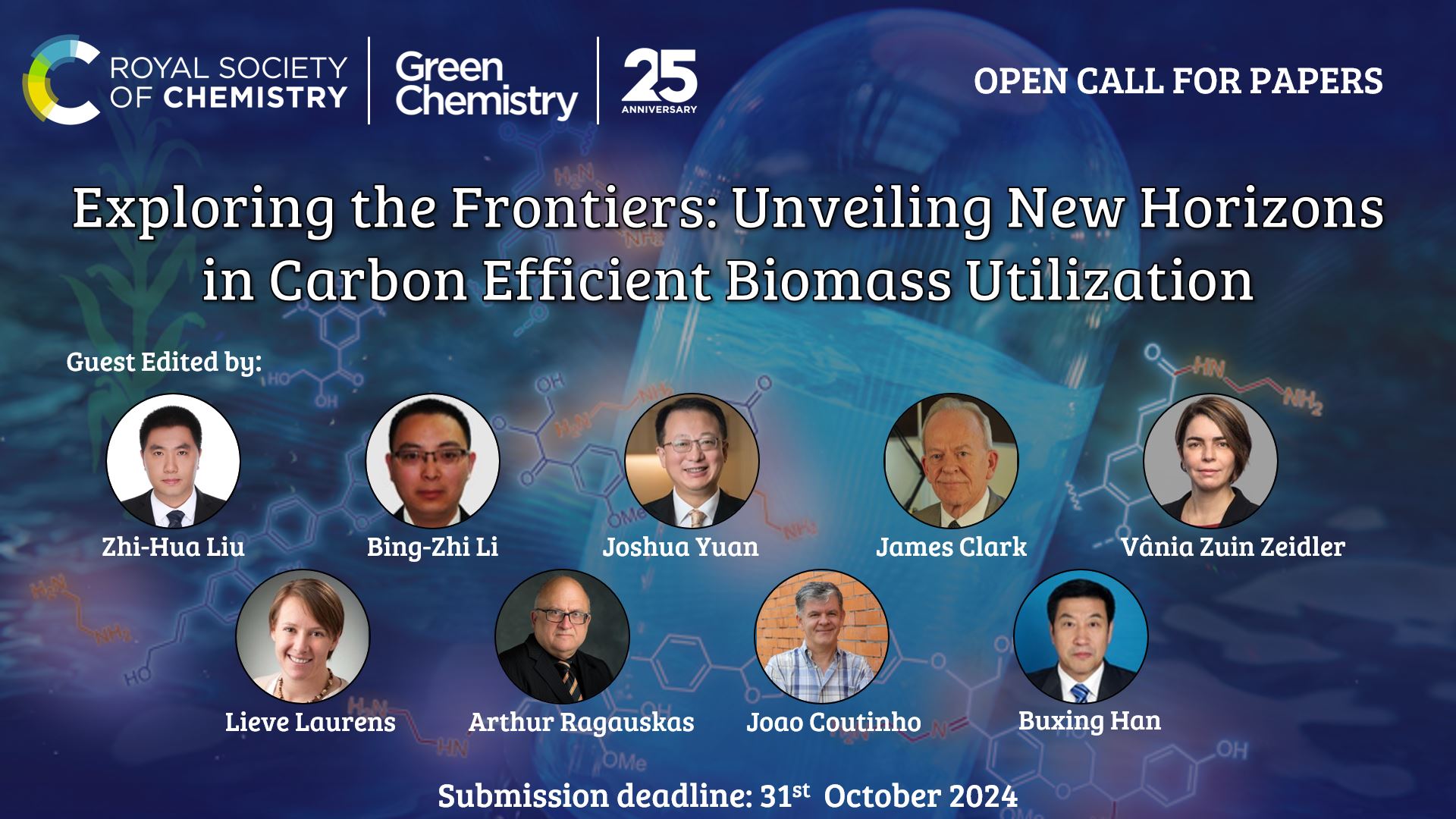
Call for Papers: Exploring the Frontiers: Unveiling New Horizons in Carbon Efficient Biomass Utilization

Green Chemistry is delighted to announce a call for papers for its latest themed collection on Exploring the Frontiers: Unveiling New Horizons in Carbon Efficient Biomass Utilization themed collection of Green Chemistry, Guest Edited by Zhi-Hua Liu (Tianjin University), Bing-Zhi Li (Tianjin University), Joshua Yuan (Washington University in St. Louis), James Clark (University of York), Vânia Zuin Zeidler (Leuphana Universitat Luneburg), Lieve Laurens (National Renewable Energy Laboratory), Arthur Ragauskas (The University of Tennessee Knoxville), Joao Coutinho (CICECO-Universidade de Aveiro) and Buxing Han (Institute of Chemistry, Chinese Academy of Sciences).  Open for submissions until October 31, 2024.

Lignocellulosic biomass, which is the most plentiful source of renewable energy, serves as a vital storehouse of energy within chemical bonds formed during photosynthetic CO2 reduction. The utilization of this abundant natural resource has a transformative role in the advancement of sustainable development and human civilization. Biomass conversion employs environmentally friendly techniques to convert renewable bioresources into valuable products such as biofuels, chemicals, and materials. Biomass utilization contributes significantly to the transition towards bio-economy, green chemistry, and carbon neutrality.

About this Themed Collection

This themed collection intends to showcase cutting-edge research, advancements, and innovations in carbon efficient biomass utilization, with a particular focus on uncovering new possibilities and opportunities in this field. It also aims to showcase innovative biotechnical solutions that can effectively transform biomass for a wide range of applications, while also addressing the current challenges and prospects in the field of carbon efficient biomass utilization. We believe that this themed collection will be of great interest to researchers in various fields such as green chemistry, synthetic biology, artificial intelligence, enzyme engineering, lignin valorization, biorefineries, sustainability, and environmental studies, among others.

Preferred topics include but are not limited to:

  • Biomass fractionation technologies: Exploration of emerging deconstruction and fractionation approaches to enhance the accessibility and convertibility of the biomass.
  • Enzymatic and microbial conversion: Prospecting novel enzymes and microorganisms for efficient bioconversion of carbohydrates and lignin into value-added biofuels, biochemicals, and biomaterials.
  • Synthetic biology approaches: Highlighting the application of synthetic biology principles to design microbial cell factory for improved biomass conversion; designing biosensors to regulate metabolic networks and enhance microbial cell factory performance.
  • Biocatalysis and enzyme engineering: Showcasing advancements in biocatalysis and enzyme engineering to enhance their efficiency, specificity, and stability in carbohydrates and lignin conversion.
  • Artificial intelligence (AI) technology: Exploiting cutting-edge AI and machine learning techniques for screening, mining, engineering, and de novo design of vital ligninolytic enzymes and other important enzymes in biomass and lignin valorization.
  • Design and evaluation of sustainable and carbon efficient biomass utilization: Exploring innovative approaches and routes to enhance the sustainability and carbon efficiency of biomass and lignin valorization; developing a synthesis solution for producing biodegradable and sustainable materials from biomass utilization; promoting a circular carbon economy and striving towards carbon neutrality in biomass utilization.
  • Other innovative technical strategies for carbon efficient biomass utilization.

This call for papers is open for the following article types:

  • Communications
  • Full papers
  • Reviews

How to Submit

If you would like to contribute to this themed collection, you can submit your article directly through the journal’s online submission service at https://mc.manuscriptcentral.com/gc before the deadline (October 31, 2024). Please answer the themed collection question in the submission form when uploading your files to say that this is a contribution to the themed collection and add a “Note to the Editor” that this is from the Open Call.

About the Journal

Green Chemistry provides a unique forum for the publication of innovative research on the development of alternative green and sustainable technologies. The journal publishes original and significant cutting-edge research that is likely to be of wide general appeal. Recently we have produced a YouTube video explaining the green advance requirement for Green Chemistry, which can be found here (alternative link here). A more detailed video summarising some of the benchmarking metrics to satisfy this requirement can be found here (alternative link here). We hope these are helpful to you during the writing process. For more information on the journal, please visit the journal homepage and see this editorial.

Digg This
Reddit This
Stumble Now!
Share on Facebook
Bookmark this on Delicious
Share on LinkedIn
Bookmark this on Technorati
Post on Twitter
Google Buzz (aka. Google Reader)

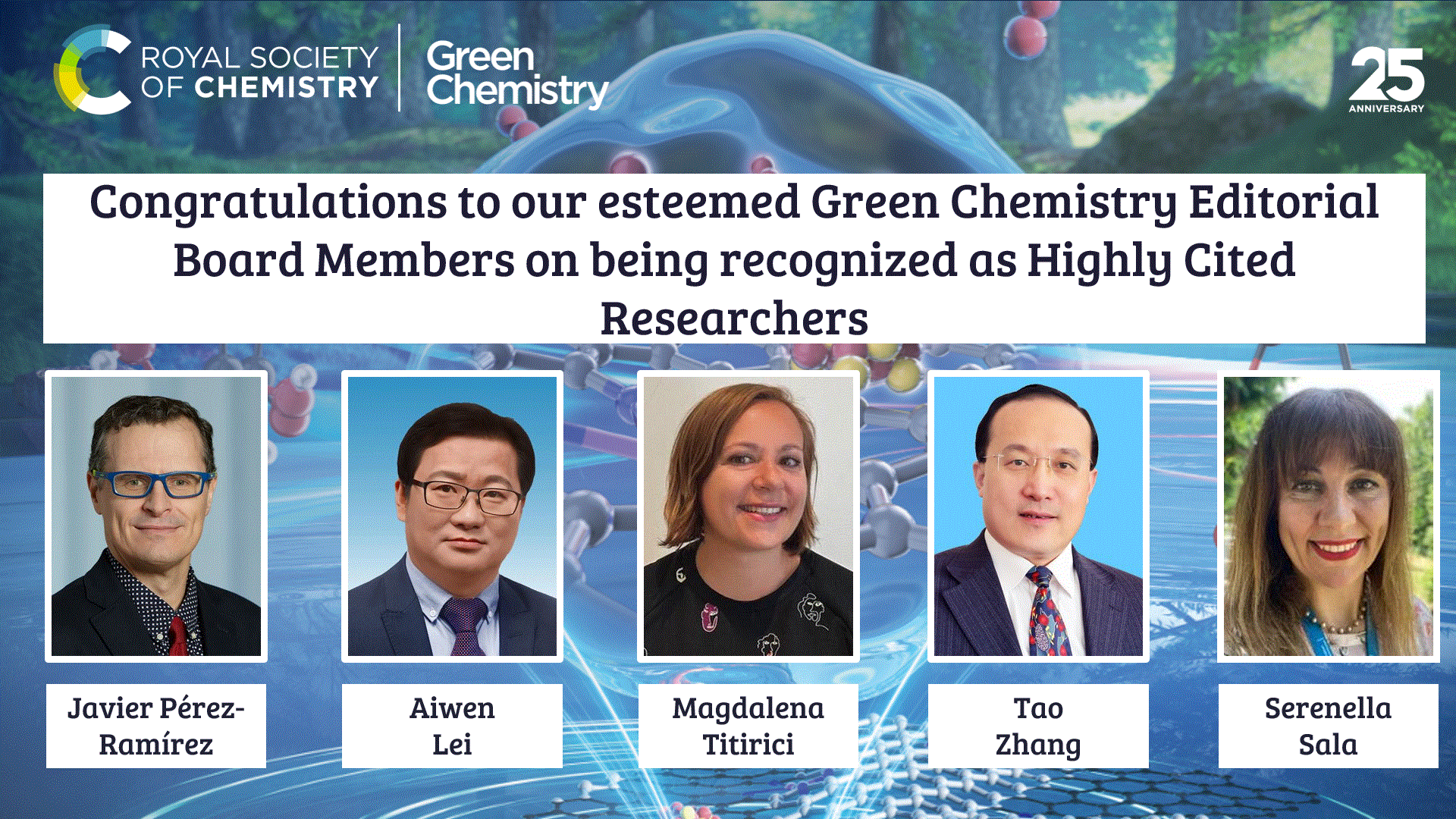
Congratulations to our esteemed Green Chemistry Editorial Board Members on being recognized as Highly Cited Researchers

Congratulations to the Green Chemistry Editorial Board Members that have been featured on Clarivate’s Highly Cited Researchers list for 2023:

Chair
Javier Pérez-Ramírez  (ETH Zurich, Switzerland)

Associate Editor

  • Aiwen Lei (College of Chemistry and Molecular Sciences, The Institute for Advanced Studies, Wuhan University, P. R. China)
  • Magdalena Titirici (Imperial College London, UK)

Editorial Board Member 

  • Serenella Sala (European Commission – Joint Research Centre)
  • Tao Zhang (Dalian Institute of Chemical Physics, Chinese Academy of Sciences, China)

This prestigious recognition reflects the calibre of individuals who guide and shape the quality of research published in our journals. We would like to extend our congratulations to all members of the Green Chemistry community who have been recognised this year.

Follow the latest news on Twitter/X @green_rsc and our new LinkedIn Sustainable Chemistry Showcase and browse the latest HOT research in our 2023 Green Chemistry HOT articles collection.

Explore recent papers from our companion journal RSC Sustainability

Digg This
Reddit This
Stumble Now!
Share on Facebook
Bookmark this on Delicious
Share on LinkedIn
Bookmark this on Technorati
Post on Twitter
Google Buzz (aka. Google Reader)

Congratulations to the winners of the Green Chemistry and Reaction Chemistry & Engineering poster prizes at the Electrosynthesis Faraday Discussion!

The Faraday Discussion on Electrosynthesis was held from 12-14 July 2023, in Edinburgh, UK and online. Green Chemistry and Reaction Chemistry & Engineering were pleased to support best poster prize awards at this event and we would like to congratulate our winners!

Green Chemistry winner

Mickaël Avanthay (University of Bristol, UK)

Poster title: Mediated Silane Oxidation: A practical and metal-free counter-electrode process for electrochemical reduction reactions

Mickaël completed his undergraduate studies at ETH Zürich and then completed the AstraZeneca R&D graduate program in Sweden before starting a PhD in the Lennox Lab (Bristol) to investigate reductive electrochemical methods. His areas of interest are novel defluorination methods and new techniques to make electrochemical reductions more practical and scalable.

Reaction Chemistry & Engineering winner

Zach Nguyen (University of Utah, USA)

Poster title: Electrolyte Induced Cage Effects for Enantioselective Electrosynthesis

Zach is currently completing his Ph.D. studies with Shelley Minteer at the University of Utah, where he also received a B.S. in chemistry. His current research interests are sustainable electro organic synthesis and mechanistic investigations using electrochemistry. Outside of chemistry, he enjoys exploring the Wasatch mountains, where he enjoys being an avid photographer, skier, and fisherman.

Digg This
Reddit This
Stumble Now!
Share on Facebook
Bookmark this on Delicious
Share on LinkedIn
Bookmark this on Technorati
Post on Twitter
Google Buzz (aka. Google Reader)

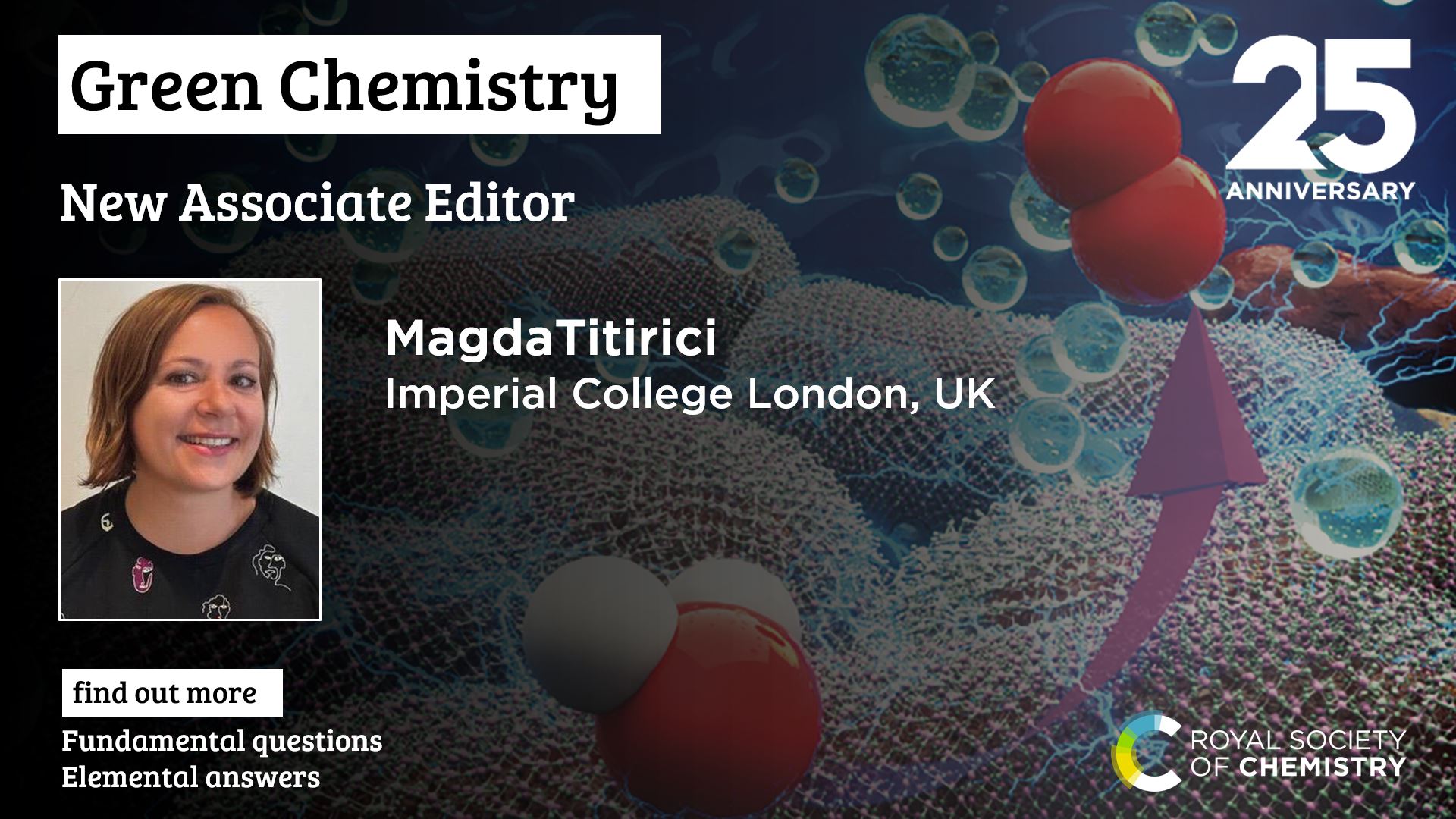
Green Chemistry Announcement: Magdalena (Magda) Titirici, our new Associate Editor

We are delighted to announce that Prof. Magdalena (Magda) Titirici (Imperial College London, UK) has been appointed as a new Associate Editor in Green Chemistry.

Magda Titirici, FRSC, is a Chair in Sustainable Energy Materials at Imperial College London in the Department of Chemical Engineering. She studied Chemistry at the University of Bucharest and received her PhD from TU Dortmund. She was a postdoc at the Max-Planck Institute of Colloids and Interfaces where she also become an independent group leader for 5 years. Prior to Imperial, Magda worked at the School of Engineering and Materials Science at the Queen Mary University of London as a Professor of Sustainable Materials Chemistry.

Her research interests are the design and fundamental understanding of sustainable materials for energy storage and conversion technologies including batteries beyond Li-ion, sustainable chemicals from biomass electrolysis as well as the development of sustainable, critical metal-free electrocatalysts for oxygen and carbon dioxide reduction.

She is a Highly Cited Researcher in the field of materials chemistry and her work has been recognized by several awards such as the RSC Corday Morgan Prize, IoMM3 Rosenhain and Griffith Medal and Prize and the Royal Society Kavli Medal and Lecture. She is a Wallenberg Initiative Materials for Science and Sustainability (WISE) guest professor at Stockholm University in the Department of Materials and Environmental Chemistry and an international investigator at the Advanced Institute for Materials Research (AIMR) Tohoku University. She is also passionate to build a more tolerant, inclusive and diverse environment in academia where everyone can thrive.


“I am delighted to join the Green Chemistry family in our global quest for more sustainable materials, chemicals and technologies”. Magda Titirici


Read some of Magda’s Open Access papers in Green Chemistry:

Read more of Magda’s Royal Society of Chemistry publications here.


Please join us in welcoming Magda in her new role in Green Chemistry!


Digg This
Reddit This
Stumble Now!
Share on Facebook
Bookmark this on Delicious
Share on LinkedIn
Bookmark this on Technorati
Post on Twitter
Google Buzz (aka. Google Reader)

New Editorial Board Member: Laurel Schafer

We are delighted to announce that Laurel Schafer has joined the Editorial Board of Green Chemistry.

Dr Laurel L. Schafer has received her BSc from the University of Guelph and her PhD from the University of Victoria. She then went on to the University of California-Berkley to complete an NSERC post-doctoral fellowship with Prof. T. D. Tilley. In 2001, she joined the University of British Columbia in Vancouver where she is now a professor and a Tier I Canada Research Chair in Catalyst Development. The Schafer group has developed a family of N,O-chelated early transition metal complexes for atom-economic catalysis to prepare amines, heterocycles, and amine-containing polymers. For this work Laurel has received numerous awards including a Schlenk Lecture Award from the University of Tübingen (2021), a CSC Award, a Humboldt Award, a Killam Research Fellowship, and a Killam Award for Graduate Student Mentorship.

Read more about The Schafer group here.

Welcome on board Laurel, we’re looking forward to working with you!

Digg This
Reddit This
Stumble Now!
Share on Facebook
Bookmark this on Delicious
Share on LinkedIn
Bookmark this on Technorati
Post on Twitter
Google Buzz (aka. Google Reader)

Green Chemistry research nominated as a finalist for the 2019 German Future Award

On 11 September 2019, the use of CO2 as raw material for the production of polyurethane polymers was nominated as one of three finalists to be considered for the German Future Award.


The research carried out by a team including Professor Walter Leitner, Advisory Board member and previous Editorial Board Chair of Green Chemistry, shows how carbon dioxide can be transformed into a component for plastics and fuels.


Professor Leitner is delighted to see that green chemistry is being recognised and celebrated in this way, and shares that the scientific basis for the innovation has featured prominently in two Green Chemistry papers:

Carbon dioxide (CO2) as sustainable feedstock for polyurethane production
Langanke, A. Wolf, J. Hofmann, K. Böhm, M. A. Subhani, T. E. Müller, W. Leitner and C. Gürtler
Green Chem., 2014, 16, 1865-1870. DOI: 10.1039/C3GC41788C


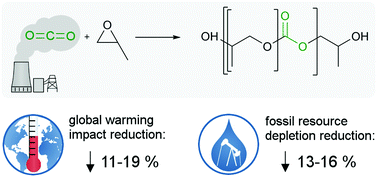
Life cycle assessment of polyols for polyurethane production using CO2 as feedstock: insights from an industrial case study
Niklas von der Assen and André Bardow
Green Chem., 2014, 16, 3272-3280. DOI: 10.1039/C4GC00513A


The German Future Award is the highest national distinction for innovation in Germany and will be awarded on 27 November 2019 in Berlin, in presence of the President of Germany, Frank-Walter Steinmeier.


Find out more and read the Press Releases here:

Covestro: https://press.covestro.com/news.nsf/id/BFWFVX-In-the-finals-for-the-German-Presidents-Award?

RWTH Aachen: https://www.rwth-aachen.de/cms/root/Die-RWTH/Aktuell/Pressemitteilungen/September-2019/~dmqpe/Kreis-der-Besten-um-den-Deutschen-Zukunf/lidx/1/

Max Planck Institute: https://www.mpg.de/13876376/in-the-finals-for-the-german-future-prize


Digg This
Reddit This
Stumble Now!
Share on Facebook
Bookmark this on Delicious
Share on LinkedIn
Bookmark this on Technorati
Post on Twitter
Google Buzz (aka. Google Reader)

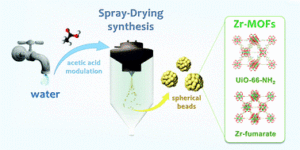
Green Chemistry research leads to major milestone in MOFs development

Following publication in Green Chemistry of:

Aqueous production of spherical Zr-MOF beads via continuous-flow spray-drying

Ceren Avci-Camur, Javier Troyano, Javier Pérez-Carvajal, Alexandre Legrand, David Farrusseng, Inhar Imaz and Daniel Maspoch
Green Chem., 2018, 20, 873-878. DOI: 10.1039/C7GC03132G

EU project partners research team have successfully developed synthesis processes enabling the manufacture of metal organic framework (MOFs) materials at an industrial scale. These innovative methods have reduced production costs permitting MOFs to be priced competitively against many current market leading materials. Being able to offer MOFs at an economically viable cost and utilising their superior performance, these materials are perfectly suited to meet tomorrow’s big challenges in energy, environmental and health related application areas.


Find out more and read the press releases:

http://www.prodia-mof.eu/news.html

http://www.axel-one.org/press


Digg This
Reddit This
Stumble Now!
Share on Facebook
Bookmark this on Delicious
Share on LinkedIn
Bookmark this on Technorati
Post on Twitter
Google Buzz (aka. Google Reader)

Killam Research Fellowships – Congratulations to winner Chao-Jun Li

The Royal Society of Chemistry is delighted to announce that Green Chemistry Associate Editor Chao-Jun Li as one of this year’s recipients of the 2018 Killam Research Fellowships, awarded by the Canada Council for the Arts.

This year’s honorees, chosen by a selection committee of their peers, have pioneered some of the world’s forefront cultural, medical and scientific discoveries to date. From understanding language acquisition in infants to revolutionizing the way we look at the universe, documenting cultural and technological milestones to improving the quality of life for those living with disease or ailments, this year’s Killam recipients have made it their mission to find solutions that positively change and better the lives of millions of Canadians and beyond. In fact, these recipients have not only dedicated their careers to making ground-breaking discoveries, but they are teaching and inspiring the future generations of leaders in their field.

Congratulations to Professor Li for winning this prestigious award!

Digg This
Reddit This
Stumble Now!
Share on Facebook
Bookmark this on Delicious
Share on LinkedIn
Bookmark this on Technorati
Post on Twitter
Google Buzz (aka. Google Reader)

Introducing new Green Chemistry Editorial Board member: François Jérôme

François Jérôme, University of Poitiers, France

François received his PhD degree in chemistry from the University of Burgundy (France) in 2000 in the group of Prof. R. Guilard. Then, he moved as a postdoc to the University of California of Davis (USA) and the group of Prof. K. M. Smith followed by a second postdoctoral position at the University of Rennes 1 under the guidance of Prof. P. H. Dixneuf where he worked on ruthenium-catalyzed reactions. In 2002, he joined the CNRS as a permanent researcher in the Laboratoire de Catalyse en Chimie Organique located at the University of Poitiers. In 2011, he was promoted as a CNRS research director at the Institut de Chimie des Milieux et Matériaux de Poitiers. In 2015, he created the research federation INCREASE, hosted by the CNRS, gathering scientists from academia working together with chemical companies on the design of sustainable chemicals.

He is now deputy of the Institut de Chimie des Milieux et Matériaux de Poitiers, member of the executive committee of the French division of Catalysis and chairman of the International Symposium on Green Chemistry (ISGC); editions 2013, 2015, 2017 and 2019.

His main research interests concern the development of technologies capable of activating and converting concentrated feed of renewable polyols (glycerol, mono- and polysaccharides) to specialty chemicals.


Digg This
Reddit This
Stumble Now!
Share on Facebook
Bookmark this on Delicious
Share on LinkedIn
Bookmark this on Technorati
Post on Twitter
Google Buzz (aka. Google Reader)