Archive for January, 2026

Green Chemistry Emerging Investigators Series – Jiayu Wan

Green Chemistry is proud to present the Green Chemistry Emerging Investigators Series, showcasing work being conducted by Emerging Investigators. This collection aims to highlight the excellent research being carried out by researchers in the early stages of their independent career from across the breadth of green chemistry.  For more information about this series, click here

Among the contributions to this series is a Paper entitled Ultrafast, in situ transformation of a protective layer on lithium-rich manganese-based layered oxides for high-performance Li-ion batteries (DOI: 10.1039/D4GC02349H).

Read our interview with the corresponding author Prof. Jiayu Wan below.

Could you briefly explain the focus of your article to the non-specialist?

 We developed an ultrafast heating strategy that requires only 8 seconds to form a protective surface layer on lithium-ion battery cathode materials. This process generates an oxygen-vacancy-rich spinel phase at the surface while preserving the internal layered structure, leading to substantial improvements in battery performance and lifetime. Unlike conventional methods that require hours and involve toxic gases, our approach is environmentally benign, highly efficient, and compatible with industrial-scale production.

How would you set this article in a wider context?

The rapidly increasing demand for electric vehicles and renewable energy storage underscores the need for high-energy-density, cost-effective lithium-ion batteries to enable sustainable transportation and grid-scale storage. This study addresses a key obstacle to the commercialization of lithium-rich manganese-based cathodes: their inherent surface instability. By offering a scalable and environmentally friendly manufacturing strategy, our work helps bridge the gap between laboratory research and practical commercial deployment.

What is the motivation behind this work?

This work was motivated by the limitations of existing surface modification approaches for lithium-rich cathodes, which are typically time-intensive, environmentally problematic, and difficult to scale. We recognized the potential of ultrafast high-temperature heating to achieve, within seconds, structural transformations that conventionally require hours. Importantly, this strategy eliminates the need for toxic reducing agents and specialized sealed reactors.

What aspects of this work are you most excited about at the moment, and what do you find most challenging about it?

I am particularly excited by the practical implications of achieving complete surface modification in just 8 seconds, which opens realistic pathways toward roll-to-roll manufacturing and commercial adoption. The primary challenge was the precise control of heating parameters to induce the desired surface spinel phase and oxygen vacancies without disrupting the internal layered structure. Addressing this challenge required extensive optimization and comprehensive characterization.

What is the next step? What work is planned?

We are currently scaling up this technology to pilot-scale production and evaluating its applicability across cathode materials with varying compositions. In parallel, we are investigating the fundamental mechanisms underlying rapid phase transformations during ultrafast heating to further improve process control and optimization. We are also exploring the integration of this approach to accelerate the discover of energy materials and beyond.

Please describe your journey to becoming an independent researcher

My research career began with a strong interest in energy storage science during my doctoral studies with Prof. Liangbing Hu at the University of Maryland, College Park. I subsequently conducted postdoctoral research at Stanford University under the guidance of Professors Yi Cui and Zhenan Bao, where I gained extensive experience in advanced materials characterization and device fabrication. After joining the Global Institute of Future Technology at Shanghai Jiao Tong University, I established an independent research program focused on innovative battery technologies and the application of artificial intelligence in energy storage.

Can you share one piece of career-related advice or wisdom with other early career scientists?

Do not hesitate to challenge established approaches, as many impactful innovations arise from questioning conventional practices. Open to adjacent disciplines and emerging technologies, as interdisciplinary perspectives often lead to breakthrough solutions. In addition, consider potential pathways to commercialization early in the research process, rather than treating them as an afterthought.

Why did you choose to publish in Green Chemistry?

Green Chemistry was a natural choice because this work closely aligns with the journal’s mission to promote sustainable chemical processes. Our ultrafast heating strategy eliminates toxic gases, reduces energy consumption, and minimizes environmental impact, embodying the core principles of green chemistry. Furthermore, the journal’s strong standing within the materials and energy communities ensures that our work reaches a highly relevant academic and industrial audience.

Meet the author

Jiayu Wan is an Associate Professor at the Global Institute of Future Technology, Shanghai Jiao Tong University. He did postdoctoral research at Stanford University with Professors Yi Cui and Zhenan Bao. He obtained his Ph.D. degree from the University of Maryland, College Park with Prof. Liangbing Hu. His research interests primarily focus on energy storage and AI, in which he has authored over 110 articles with citation over 16,000 times. In recognition of his outstanding work, Prof. Wan has been honored with a number of awards including the and “Clarivate Highly Cited Researchers” the “Dorothy M. and Earl S. Hoffman Award” by the American Vacuum Society.


Digg This
Reddit This
Stumble Now!
Share on Facebook
Bookmark this on Delicious
Share on LinkedIn
Bookmark this on Technorati
Post on Twitter
Google Buzz (aka. Google Reader)

Green Chemistry Emerging Investigators Series – Pradip Pachfule

Green Chemistry is proud to present the Green Chemistry Emerging Investigators Series, showcasing work being conducted by Emerging Investigators. This collection aims to highlight the excellent research being carried out by researchers in the early stages of their independent career from across the breadth of green chemistry.  For more information about this series, click here

Among the contributions to this series is a Tutorial Review entitled Covalent organic frameworks as heterogeneous photocatalysts for cross-coupling reactions (DOI: 10.1039/D4GC03467H).

Read our interview with the corresponding author, Dr Pradip Pachfule.

Could you briefly explain the focus of your article to the non-specialist?

This article explores the potential of covalent organic frameworks (COFs) as solid, reusable photocatalysts that facilitate significant bond-forming reactions in organic chemistry using visible light. COFs offer a greener alternative to conventional metal-based homogeneous catalysts by combining structural order, porosity, and light-harvesting ability. The review highlights how these materials enable sustainable cross-coupling reactions, which are relevant to the production of pharmaceuticals and fine chemicals.

How would you set this article in a wider context?

 Cross-coupling reactions are indispensable in modern synthesis, but they often rely on catalysts that are expensive, toxic, and difficult to recycle. In the broader context of green and sustainable chemistry, there is a strong push toward heterogeneous, light-driven catalytic systems that reduce waste and energy input. This article examines the intersection of COFs with materials chemistry, photocatalysis, and organic synthesis; highlighting their growing significance as a bridge between fundamental design and practical sustainability.

What is the motivation behind this work?

 The motivation stems from the need to replace conventional homogeneous photocatalysts with robust, recyclable, metal-efficient systems that perform just as well. COFs provide a distinctive platform that enables the translation of molecular-level design into solid-state photocatalysts with tunable optoelectronic properties. Our goal was to evaluate how these features could be used to make cross-coupling chemistry more sustainable and scalable.

What aspects of this work are you most excited about at the moment and what do you find most challenging about it?

 We are particularly excited by our ability to design COF backbones with precise control over light absorption, charge separation, and proximity of catalytic sites, features that are difficult to achieve simultaneously in other materials. However, the most challenging aspect remains establishing clear structure–activity relationships and unambiguously identifying active catalytic pathways in complex, heterogeneous photocatalytic systems.

What is the next step? What work is planned?

 The next step is to transition from proof-of-concept reactions to more general, scalable, and mechanistically well-understood COF-based photocatalytic systems. Our focus is on developing fully metal-free or earth-abundant metal COFs, improving quantum efficiencies, and expanding to more synthetically demanding transformations such as C-H and C-F activation. Integrating operando spectroscopic techniques to probe charge-transfer pathways is also a key priority.

Please describe your journey to becoming an independent researcher

My journey has been shaped by interdisciplinary training in porous materials, catalysis, and energy-related chemistry, as well as strong mentorship during my doctoral and postdoctoral research in India, Japan, and Germany. These experiences have helped me to appreciate the importance of a fundamental understanding that is also applicable to the real world. My independent research program allows me to explore long-term questions in COF chemistry with a strong emphasis on sustainability.

Can you share one piece of career-related advice or wisdom with other early career scientists?

Choose research problems that genuinely excite you and that have long-term relevance, even if progress feels slow at times. Building depth and originality matters more than following trends. At the same time, collaborating with others and being open to learning across disciplines can significantly accelerate scientific and personal growth.

Why did you choose to publish in Green Chemistry?

Green Chemistry is a leading journal that emphasizes sustainability, innovation, and real impact. It values that align closely with our work on photocatalysis and recyclable materials. With its broad, interdisciplinary reach, the journal is an ideal platform to demonstrate the importance of COF-based photocatalysts to chemists and materials scientists alike.

Meet the author

Dr Pradip Pachfule studied chemistry at Solapur University, India, and graduated in 2008. He received his Ph.D. from the CSIR-National Chemical Laboratory, Pune, India, under the supervision of Prof. Rahul Banerjee in 2014. Later, he worked as a JSPS postdoctoral research fellow in the laboratory of Prof. Qiang Xu at AIST, Kansai, Japan. This was followed by working in the group of Prof. Arne Thomas as an Alexander von Humboldt postdoctoral fellow and a postdoctoral research fellow at the Technische Universität Berlin, Germany (2017–2021). He is currently working as an associate professor at S. N. Bose National Centre for Basic Sciences, Kolkata, India. His research is focused on covalent organic frameworks and their applications in photocatalytic organic transformation, water splitting, and energy storage.
Digg This
Reddit This
Stumble Now!
Share on Facebook
Bookmark this on Delicious
Share on LinkedIn
Bookmark this on Technorati
Post on Twitter
Google Buzz (aka. Google Reader)

Green Chemistry Emerging Investigators Series – Hui Luo

Green Chemistry is proud to present the Green Chemistry Emerging Investigators Series, showcasing work being conducted by Emerging Investigators. This collection aims to highlight the excellent research being carried out by researchers in the early stages of their independent career from across the breadth of green chemistry.  For more information about this series, click here

Among the contributions to this series is a Tutorial Review entitled Fundamental, technical and environmental overviews of plastic chemical recycling (DOI: 10.1039/D4GC03127J).

Read our interview with the corresponding author Dr Hui Luo below.

Could you briefly explain the focus of your article to the non-specialist?

 Our article provides a clear and critical overview of how different chemical recycling technologies can be used to tackle plastic waste that cannot be effectively recycled mechanically. We compare how various plastics respond to different chemical processes and assess not only their technical feasibility, but also their environmental and economic impacts. The goal is to clarify where chemical recycling truly adds value in a circular plastics economy.

How would you set this article in a wider context?

Plastic pollution, resource depletion and climate change are tightly connected challenges. While mechanical recycling remains essential, it cannot deal with all plastic waste streams or maintain material quality indefinitely. Chemical recycling is increasingly seen as a complementary solution, and our article helps position these technologies realistically within broader waste management systems, industrial infrastructure and net-zero ambitions.

What is the motivation behind this work?

As a material scientist and chemical engineer, I got into the research of plastic chemical recycling about 3-4 years ago when developing my own independent research. There was a lot to learn and I noticed different technologies often discussed in isolation or without sufficient sustainability assessment. Through talking with the other co-authors working on different aspects of plastic recycling, we were motivated to bring together fundamental chemistry, process engineering and life-cycle perspectives to provide a balanced, evidence-based guide. Ultimately, the aim was to help researchers, policymakers and industry identify which technologies make sense for which plastics, and under what conditions.

What aspects of this work are you most excited about at the moment, and what do you find most challenging about it?

I’m particularly excited by emerging technologies or processes that can handle mixed or contaminated waste streams more effectively. The biggest challenge chemical recycling faces in regards to mechanical recycling, is how to reduce energy consumption, especially at scale, to allow the process to be profitable and attractive. I think a lot of efforts are putting into addressing this challenge in both academia and industry as we speak.

What is the next step? What work is planned?

The next step is to take all the learnings on board to develop recycling processes that are lower-energy, more contaminant-tolerable, and validating them at larger scales. In my group, we develop a mechanocatalytic process, which utilises mechanical forces and catalysts to depolymerise different plastics into monomers or other value-added chemicals. We aim to develop it into a technology that operates with low temperature at ambient temperature, to minimise energy consumption and maximise the product yields.

Please describe your journey to becoming an independent researcher

I obtained my PhD in 2019 from Queen Mary University of London, working on waste-derived carbon materials for solar hydrogen conversion in Prof. Magda Titirici’s group. I then followed an academic path to work as a postdoctoral research associate at Imperial College London, where I initiated and led the sub-group on electrochemical biomass conversion. In 2022, I decided to see how research can make real-life impact by taking the senior test engineer role in Ceres Power and learned from this short industrial experience about technology translation and scaling-up. Inspired by how innovative technology can reshape industrial sectors, In 2023, I returned academia and started at University of Surrey as a Future Fellow to work on my original and independent research of combining mechanocatalysis and electrocatalysis for plastic recycling, and later been awarded the Royal Academy of Engineering Research Fellow in 2024.

Can you share one piece of career-related advice or wisdom with other early-career scientists?

Try to build both depth and perspective: develop strong technical expertise, but also understand how your work fits into bigger societal and industrial contexts. Also, personal development is equally important to research development, make sure to build your own research vision and the necessary technical/soft skill sets to transit into independence.

Why did you choose to publish in Green Chemistry?

Green Chemistry is always a place to look for sustainable and novel chemical processes ever since I was doing my PhD. Over the years I have also published and peer-reviewed for Green Chemistry, so I am certain the journal’s emphasis on environmental performance, systems thinking and responsible innovation aligns perfectly with the goals of this review and with the broader direction of our research

Meet the author

Dr Hui Luo received her Ph.D. in Materials Science from the Queen Mary University of London in 2019, before moving to Imperial College London as a Research Associate. She then worked in the green hydrogen industry for a year before taking an independent Surrey Future Fellowship at the University of Surrey in 2023. Her research focuses on developing and up-scaling efficient chemical recycling and electrolysis technologies to convert biomass and plastic wastes into green hydrogen and high-value commodity chemicals, with low energy consumption and minimal carbon footprints.
Digg This
Reddit This
Stumble Now!
Share on Facebook
Bookmark this on Delicious
Share on LinkedIn
Bookmark this on Technorati
Post on Twitter
Google Buzz (aka. Google Reader)

Read our latest themed collection: Make polymers sustainable, why and how?

Green Chemistry, Polymer Chemistry and RSC Sustainability are delighted to announce that our latest cross journal themed collection, Make polymers sustainable, why and how?, is now online and free to access until the end of April 2026.

Guest Edited by Maiyong Zhu (Jiangsu University), Gerard Lligadas (Universitat Rovira i Virgili), Fiona L. Hatton (Loughborough University), Garret Miyake (Colorado State University), and Antoine Buchard (University of York).

About this Themed Collection

This collection brings together a selection of outstanding reviews, perspectives, papers and communications, which collectively provide a panoramic view of the field’s current vitality. The works range from recycling of polymer wastes, substitution of polymer carbon with oxygen (or sulfur), utilization of biomass to replace petroleum-based polluting polymers, copolymerization of CO2 with other monomers, and converting polymers (either natural or synthetic ones) into platform chemicals.

Read the Editorial: Introduction to “Make polymers sustainable, why and how?”

The collection includes:

Lignin valorization through microbial production of polyhydroxyalkanoates: recent trends, challenges and opportunities

Green Chem., 2025,27, 5920-5946
DOI: 10.1039/D5GC00370A

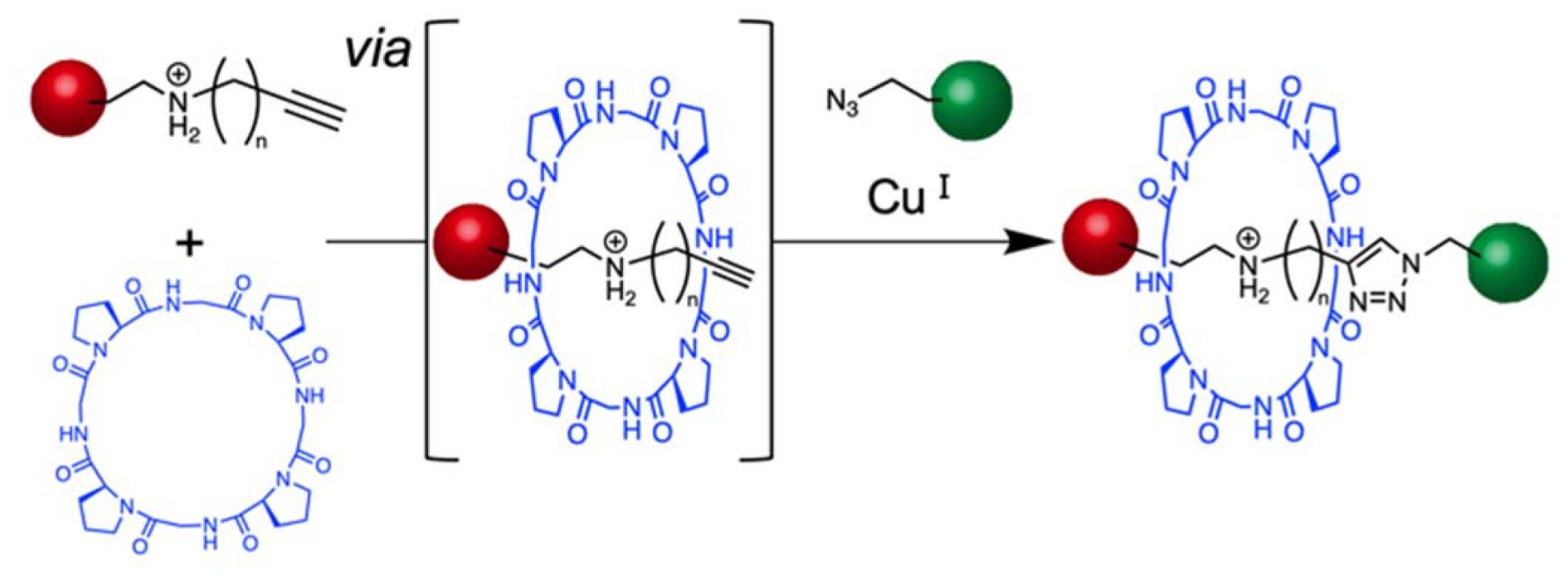
Synthesis of cyclic peptide-based [2]rotaxanes via copper-catalyzed azide–alkyne cycloaddition

Polym. Chem., 2025,16, 409-414
DOI: 10.1039/D4PY01169D

High-strength, self-healable, transparent castor-oil-based waterborne polyurethane barrier coatings enabled by a dynamic acylhydrazone co-monomer

Green Chem., 2025,27, 2220-2229
DOI: 10.1039/D4GC06103A

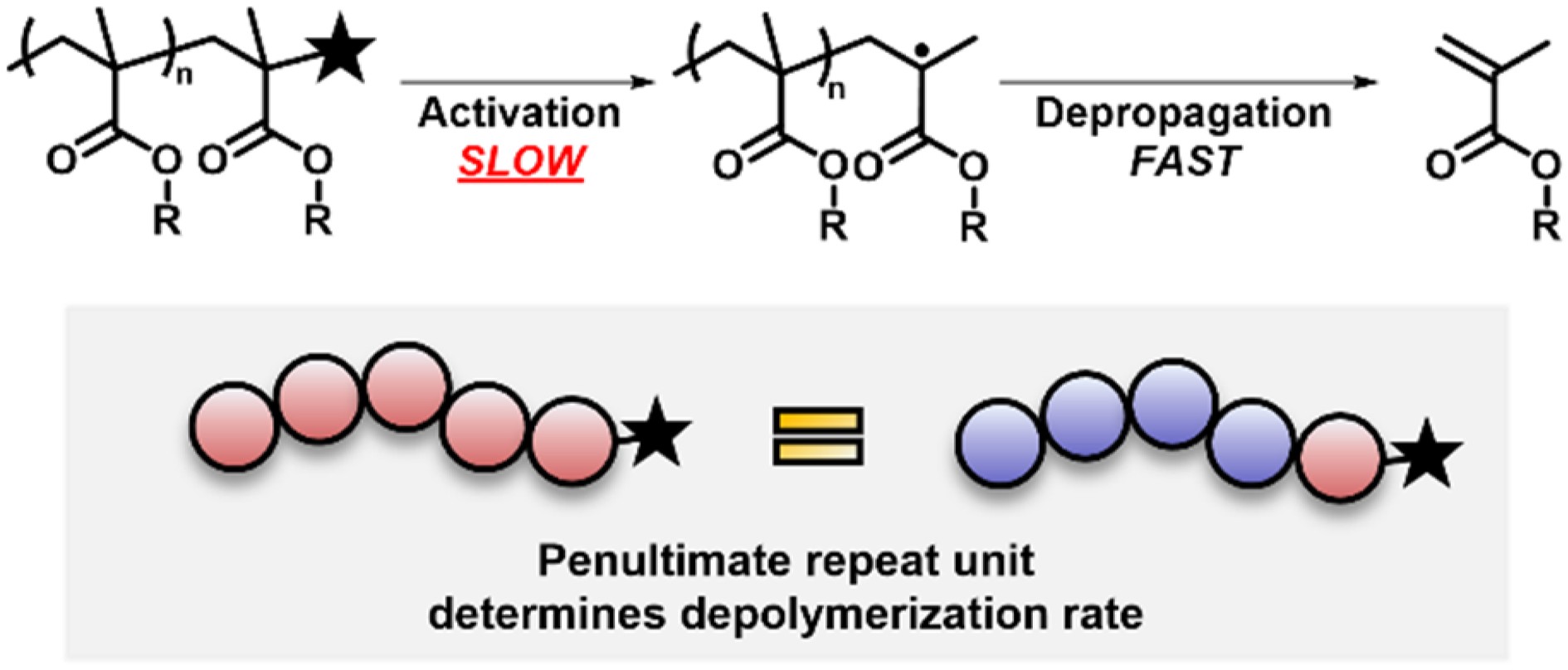
Unravelling the effect of side chain on RAFT depolymerization; identifying the rate determining step

Polym. Chem., 2025,16, 1822-1828
DOI: 10.1039/D5PY00212E

Read the Collection: https://rsc.li/SusPol24

We hope you enjoy reading the articles in this collection.

Digg This
Reddit This
Stumble Now!
Share on Facebook
Bookmark this on Delicious
Share on LinkedIn
Bookmark this on Technorati
Post on Twitter
Google Buzz (aka. Google Reader)