Archive for December, 2012

Happy holidays from Soft Matter!

All of us in the Soft Matter Editorial team would like to wish you all a merry Christmas and a happy new year! The Editorial office will be closed from 21 December 2012 and will reopen on 2 January 2013.

We’re really looking forward to 2013, which will see some great themed issues in Soft Matter as well as the 2013 Soft Matter Lectureship (opening for nominations early in the year).

Don’t miss out on all the journal news – follow us on twitter @softmatter and like us on Facebook!

Digg This
Reddit This
Stumble Now!
Share on Facebook
Bookmark this on Delicious
Share on LinkedIn
Bookmark this on Technorati
Post on Twitter
Google Buzz (aka. Google Reader)

Hot paper: Layer-by-layer assembled stimuli-responsive nanoporous membranes

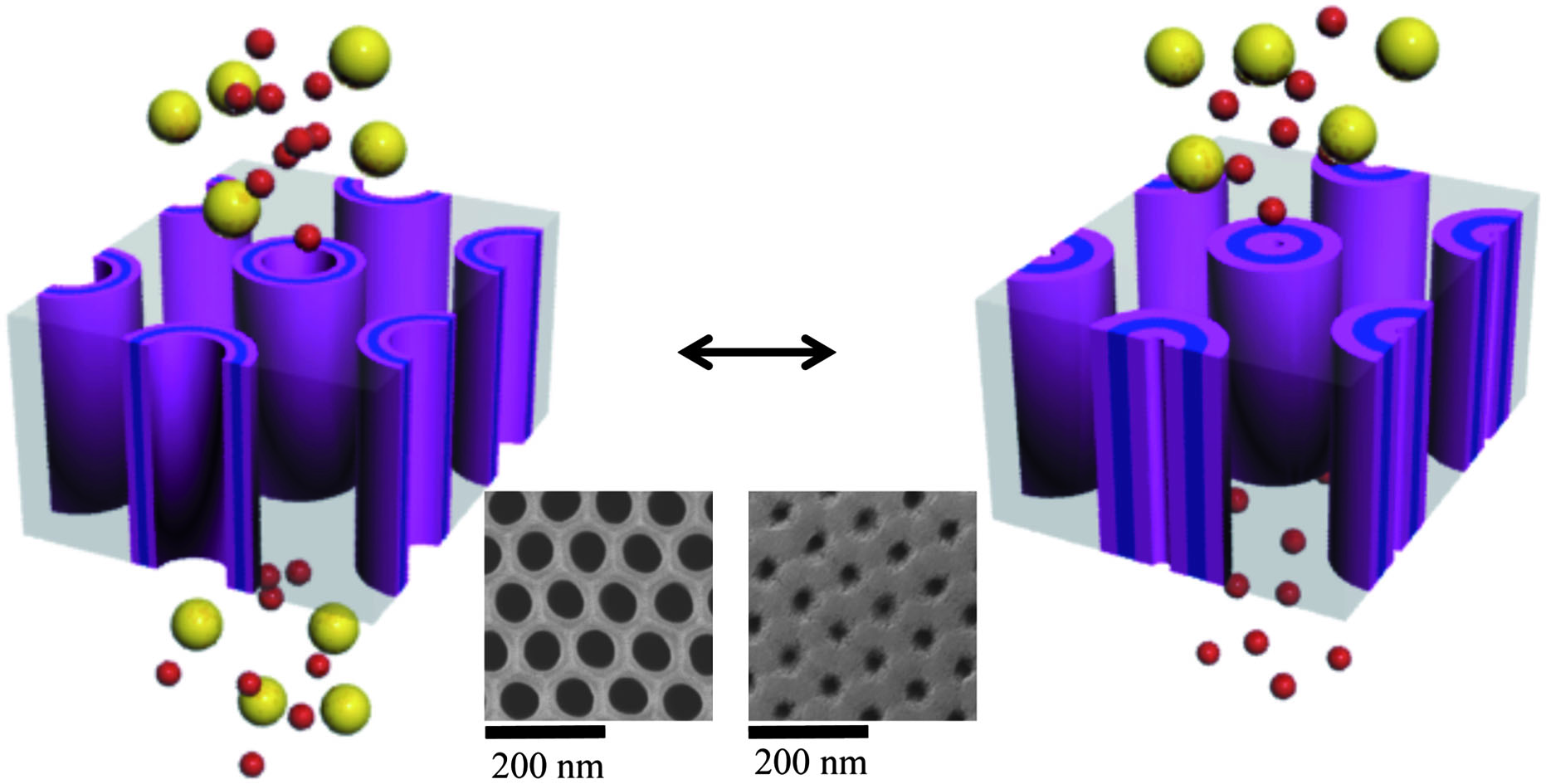
Stimuli-responsive materials have received much attention recently because of their ability to switch their physical and chemical properties in response to external environmental conditions such as irritation with light, temperature or pH. Layer-by-layer multilayer films have been studied because they can be quite sensitive to external stimuli such as pH, temperature and ionic strength. Most studies have focussed on the formation of multilayer films on supporting porous templates or deposition with micro-sized pores. Nano-sized cylindrical porous membranes with tunable pore diameters by external stimuli are important in understanding molecular translocation through membranes by stimuli-responsive porous membranes.
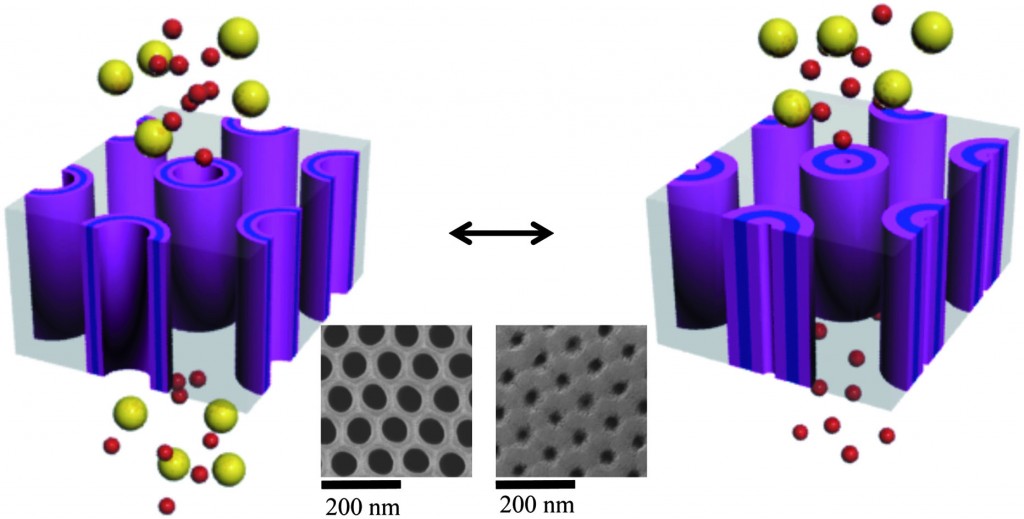
In this hot paper, Char and colleagues from Seoul National University deposited pH sensitive multilayer films on the sidewalls of pores with diameter sub-100 nm. The authors carefully control the molecular weight of the polyelectrolytes during the deposition and use multivalent salts. It is suggested that this approach can be applied to stimuli-driven gating devices that mimic living membranes.

Layer-by-layer assembled stimuli-responsive nanoporous membranes
Soft Matter, 2012, 8, 10271.  DOI: 10.1039/c2sm26562a
(free to read for a short time)

Follow the latest journal news on Twitter @softmatter or go to our Facebook page.

To keep up-to-date with all the latest research, sign-up to our RSS feed or Table of contents alert.


Digg This
Reddit This
Stumble Now!
Share on Facebook
Bookmark this on Delicious
Share on LinkedIn
Bookmark this on Technorati
Post on Twitter
Google Buzz (aka. Google Reader)

Hot paper: MD simulation of the mesomorphic behaviour of 1-hexadecyl-3-methylimidazolium nitrate

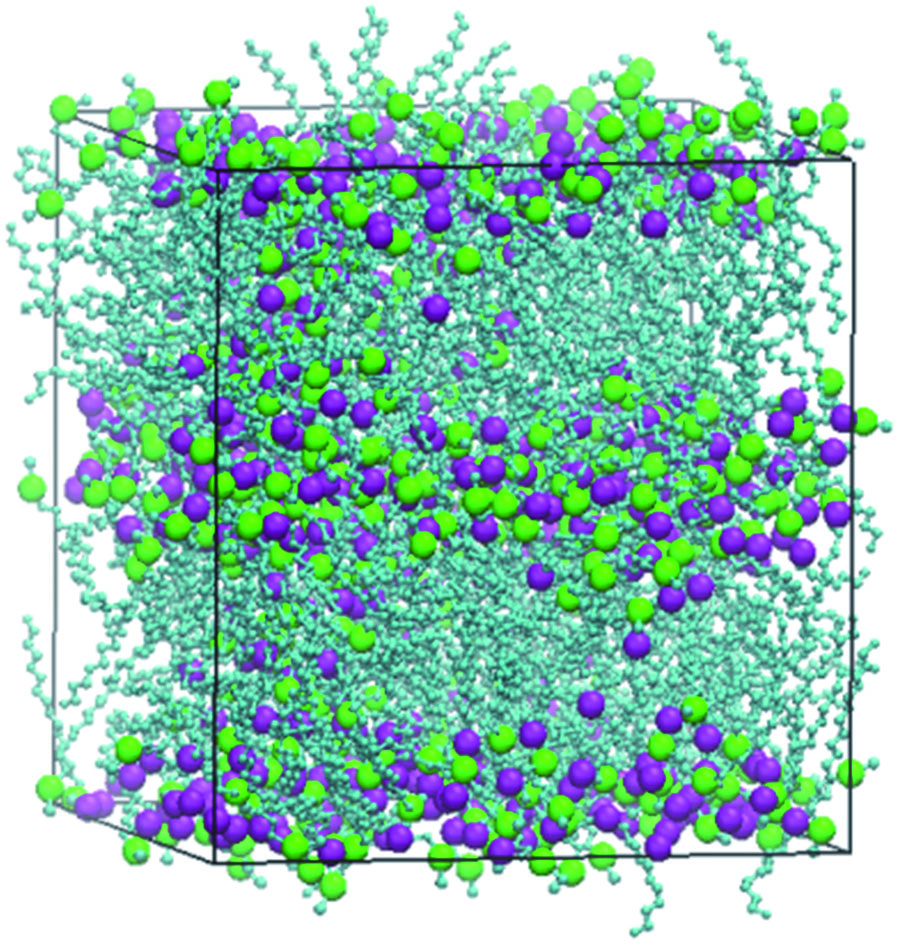
Ionic liquid crystals (ILCs) are closely related to ionic liquids. They have one key different feature compared to ionic liquids in that they consist of at least one long alkyl chain. This also differentiates them from liquid crystals where the alkyl chains are usually short and must contain a rigid core. The applications of ILCs tend to exploit their anisotropic ion conductivity, and they have been used as ordered reaction media or templates for the synthesis of mesoporous materials. A clear understanding of the many molecular factors influencing the ionic mesophases from experimental efforts is lacking.

In this hot paper, Saielli uses molecular dynamics stimulations (coarse-grained force fields) to give a semi-quantitative description of the mesomorphic behaviour of 1-hexadecyl-3-methylimidazolium nitrate. The author shows that coarse-grained force fields can be tuned to better reproduce the thermal range of stability of the mesophase.

MD simulation of the mesomorphic behaviour of 1-hexadecyl-3-methylimidazolium nitrate: assessment of the performance of a coarse-grained force field
Soft Matter, 2012, 8, 10279.  DOI: 10.1039/c2sm26376a
(free to read for a short time)

Follow the latest journal news on Twitter @softmatter or go to our Facebook page.

To keep up-to-date with all the latest research, sign-up to our RSS feed or Table of contents alert.

Digg This
Reddit This
Stumble Now!
Share on Facebook
Bookmark this on Delicious
Share on LinkedIn
Bookmark this on Technorati
Post on Twitter
Google Buzz (aka. Google Reader)

Hot paper: Lyophilised protein dynamics

The dynamics in protein folding on the slower and larger length scale are facilitated by atomic fluctuations in the pico- and nano-second time scale. To understand the complexity of biomacromolecular materials the details of the structure-dynamics-function relationships at these scales must be analysed.

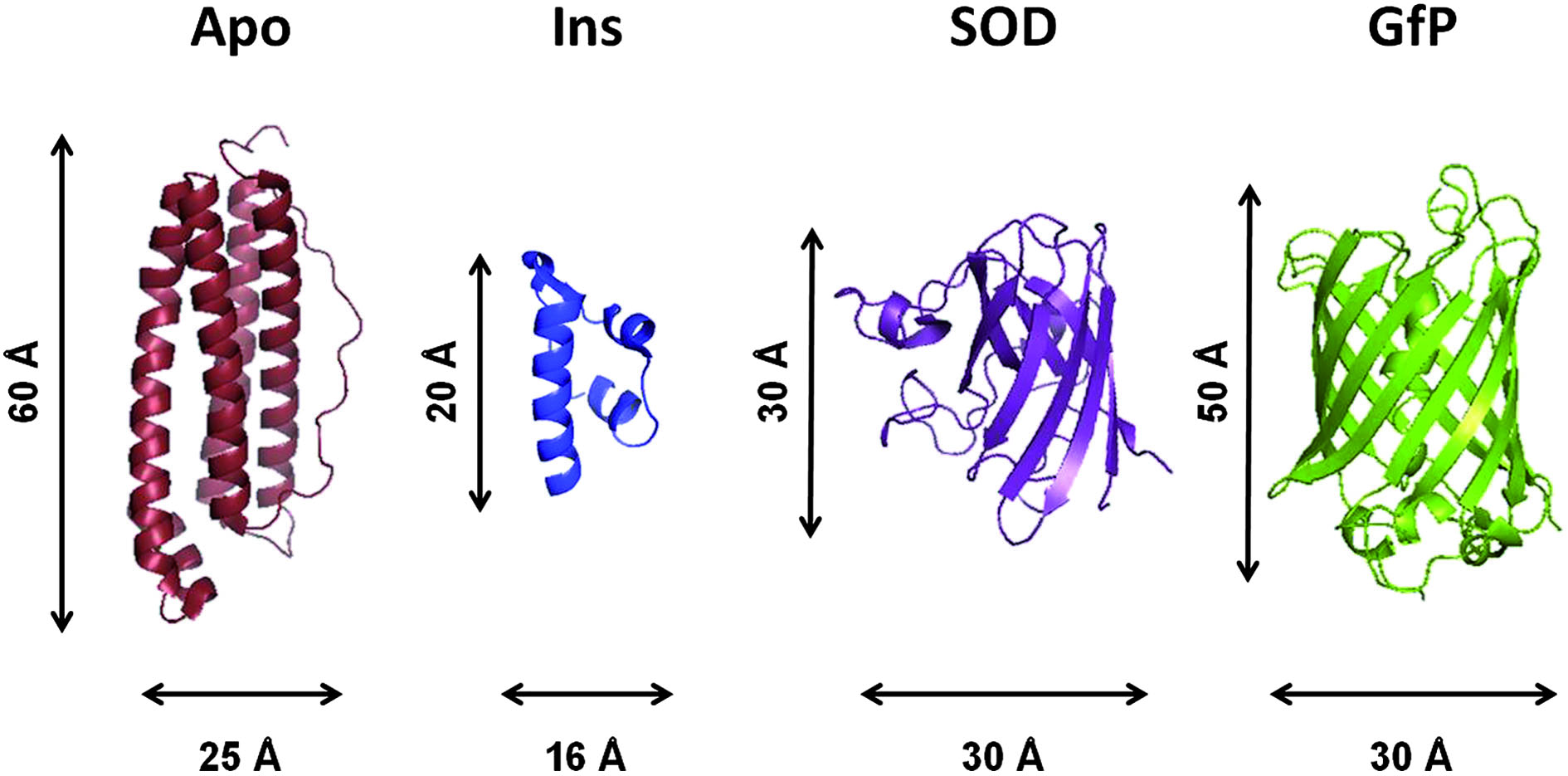
In this hot paper communication Telling and colleagues report the systematic study of macromolecular dynamics in green fluorescent protein, superoxide dismutase and insulin. The authors use neutron spectroscopy as a non-destructive and selective technique in the study, specifically elastic fixed window scattering and the newly developed technique of inelastic fixed window scattering. They find that the proteins show very different structures, but have similar methyl group compositions.

Lyophilised protein dynamics: more than just methyls?
Soft Matter, 2012, 8, 9529.  DOI: 10.1039/c2sm26540k
(free to read for a short time)

Follow the latest journal news on Twitter @softmatter or go to our Facebook page.

To keep up-to-date with all the latest research, sign-up to our RSS feed or Table of contents alert.

Digg This
Reddit This
Stumble Now!
Share on Facebook
Bookmark this on Delicious
Share on LinkedIn
Bookmark this on Technorati
Post on Twitter
Google Buzz (aka. Google Reader)

Hot paper: Mechanistic study of droplets coalescence in Pickering emulsions

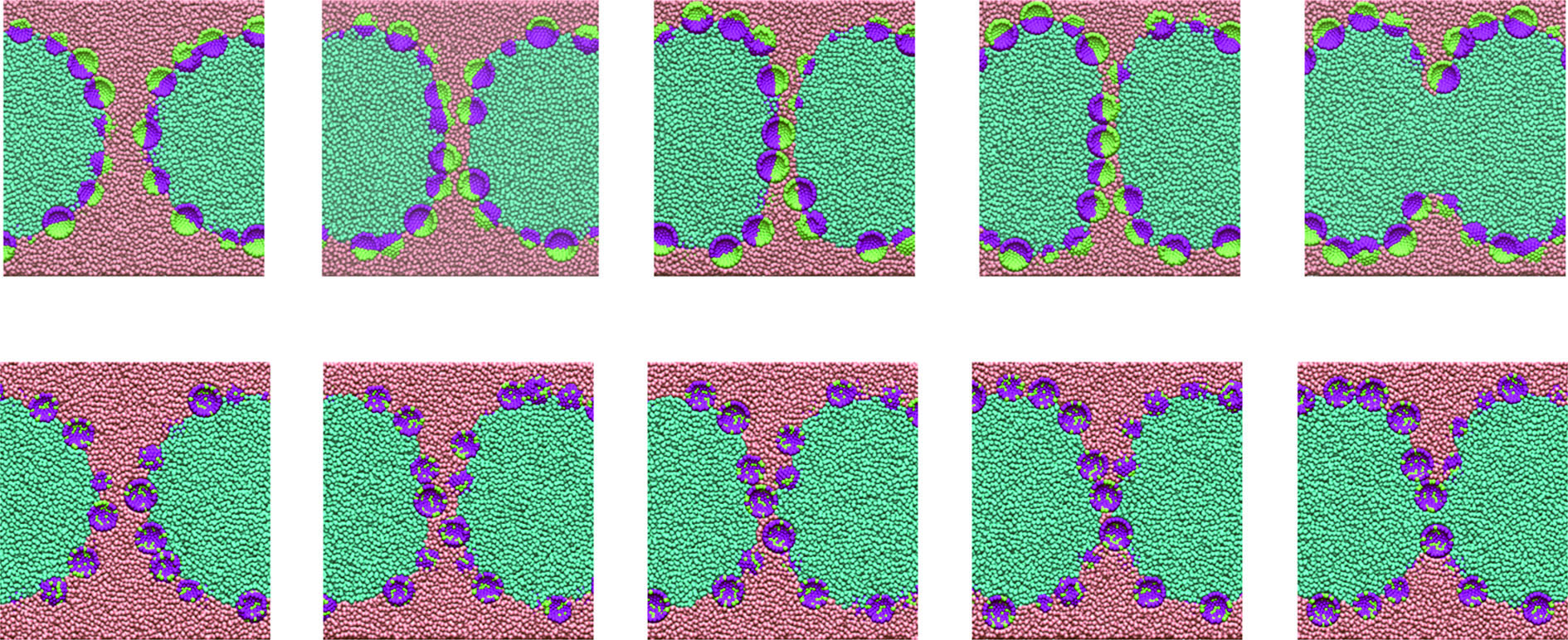
Pickering emulsions are currently a ‘hot topic’ in the field because of their applications in cosmetics, foodstuffs, waste-water treatment and energy. Emulsification is regulated by two fundamental steps: coalescence and fragmentation. Emulsions can be stabilised by solid particles which impede coalescence.

This hot paper by the Striolo group from the University of Oklahoma, describes the coalescence of droplets stabilised by solid particles. The authors use dissipative particle dynamics simulations to study water (oil) droplets dispersed in oil (water) in the presence of various nanoparticles. The droplets are forced to coalesce and the process is observed at the molecular level. The results could be used to help design more stable Pickering emulsions.

Mechanistic study of droplets coalescence in Pickering emulsions
Soft Matter, 2012, 8, 9533.  DOI: 10.1039/c2sm26416a
(free to read for a short time)

Follow the latest journal news on Twitter @softmatter or go to our Facebook page.

To keep up-to-date with all the latest research, sign-up to our RSS feed or Table of contents alert.

Digg This
Reddit This
Stumble Now!
Share on Facebook
Bookmark this on Delicious
Share on LinkedIn
Bookmark this on Technorati
Post on Twitter
Google Buzz (aka. Google Reader)