
Nanoceria themed issue

Environmental Science: Nano is proud to present the latest research on the field of nanoceria

We are delighted to introduce our latest themed issue focused on the exciting topic of nanoceria!

This issue contains perspectives from a workshop on nanoceria held last November in California, preceding the Second Sustainable Nanotechnology Organization Conference.

Recognising that there was little communication but controversy among researchers investigating nanocerias’s beneficial and adverse effects, Robert Yokel proposed a workshop to bring together researchers to discuss its yang and yin.

This event was organized and attended by expert researchers actively investigating the beneficial and untoward effects of nanocerias.

“Nanoceria is expected to have future application in fuel cells and batteries, and has shown benefit in treating numerous medical conditions that have inflammatory and oxidative injury components.”

Robert A. Yokel, Guest Editor
Read his editorial online
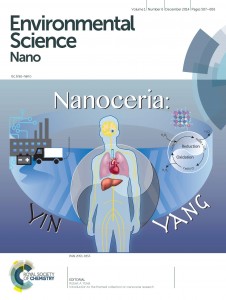
This focused issue contains interesting perspectives and original research reports of studies focusing on nanocerias. The aim of this collection has been trying to understand the bases of nanocerias’ divergent effects.

The first part of this issue addresses what we currently know, which are the identified data gaps, and recommends what needs to be determined about the chemical, biological, human health, and environmental aspects of nanoceria.

Previously unpublished results of research studies of nanocerias comprise the second part of this collection.

This collection is the most comprehensive and current source of information on the chemistry, biology, and beneficial and untoward effects of nanocerias.

Robert’s research papers on nanoceria biodistribution and retention in rats and on adverse health perspectives of nanoceria were included in this collection. We would like to thank him for guest editing this tremendously exciting issue.

Read some of the papers included in this remarkable collection for free*:

Tutorial Review:
Exploring the properties and applications of nanoceria: is there still plenty of room at the bottom?
Kenneth Reed, Alastair Cormack, Aniruddha Kulkarni, Mark Mayton, Dean Sayle, Fred Klaessig and Brad Stadler
DOI: 10.1039/C4EN00079J

Critical Review:
Behavior of nanoceria in biologically-relevant environments
Amit Kumar, Soumen Das, Prabhakaran Munusamy, William Self, Donald R. Baer, Dean C. Sayle and Sudipta Seal
DOI: 10.1039/C4EN00052H

Articles:
Effect of cerium oxide nanoparticles on asparagus lettuce cultured in an agar medium
Di Cui, Peng Zhang, Yuhui Ma, Xiao He, Yuanyuan Li, Jing Zhang, Yuechun Zhao and Zhiyong Zhang
DOI: 10.1039/C4EN00025K

Metabolomic effects in HepG2 cells exposed to four TiO2 and two CeO2 nanomaterials
Kirk T. Kitchin, Eric Grulke, Brian L. Robinette and Benjamin T. Castellon
DOI: 10.1039/C4EN00096J

Read the full collection on our website

*Access is free through a registered RSC account – click here to register

Digg This
Reddit This
Stumble Now!
Share on Facebook
Bookmark this on Delicious
Share on LinkedIn
Bookmark this on Technorati
Post on Twitter
Google Buzz (aka. Google Reader)

Predicting nanoparticle behaviour in the real world

an article by Paramjeet Pati, PhD Candidate

You and I are not friends, for you are a fish and I am a clam. We are uneasy neighbours. The river water is your playground, the sediment – my sanctuary. If we were living in the Elk River in West Virginia, both of us would have been worried on January 9, 2014. Something changed in the water that day, as crude 4-methylcyclohexanemethanol (MCHM) poured into the river from a leaky storage tank. Would the MCHM have dissolved in the water or bound to sediment? Which of us would have been in more danger – the resident of the water or the denizen of the sediment?

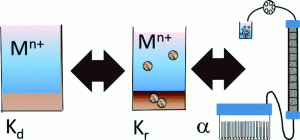
But you are no fish and I am no clam. So, we could try to answer these questions by doing some batch experiments: Take some sediment sample in a bottle, add some water and MCHM, close the bottle tight and shake it for some time. Then measure the concentrations of MCHM and to figure out whether it loves the water or prefers the sediment. We could also run column experiments: Mix some MCHM in water, flow through a packed column and measure the concentrations at the column inlet and outlet to see how much of the MCHM attaches to the column and how much is still left in water at the outlet.

The information gleaned from these experiments regarding the relative concentrations in the sediment, the water or the packed column, are called fate descriptors. Researchers have calculated fate descriptors for thousands of chemicals to figure out whether they partition into the water or the sediment, or volatilize into the air. Fate descriptors help us predict who faces the greatest danger – the clam, the fish or the dragonfly hovering over the water.

Can we run these batch and column experiments to reliably predict the behaviour of nanoparticles in the environment? The concept of fate descriptors calculated from batch and column experiments was established for molecular chemicals.

But nanoparticles have distinctly different properties and do not behave as single molecules. The use of some previously established fate descriptors to predict the environmental fate and transport of nanoparticles has come under criticism.

In a recent perspective article, Dr. Geert Cornelis has discussed the challenges in developing environmentally relevant fate descriptors for nanoparticles. In the same vein, at the 3rd Sustainable Nanotechnology Organization Conference, Dr. Mark Wiesner and Dr. Greg Lowry stressed on the need to develop functional assays that provide nano-specific fate descriptors.

Like the batch and column experiments, these functional assays need to be operationally simple and of relatively short duration. Indeed, as mentioned in in the perspective article, “[t]he most appropriate method is most likely a compromise between technical accuracy and operational simplicity…”.

You can read more about these challenges and potential solutions in the full article for free*:
“Fate descriptors for engineered nanoparticles: the good, the bad, and the ugly”
Geert Cornelis
Environ. Sci.: Nano, 2015, Advance Article
DOI: 10.1039/C4EN00122B

—————-

About the webwriter

Paramjeet Pati is a PhD Candidate at the Virginia Tech Center for Sustainable Nanotechnology (@VTSuN).
You can find more articles by him in the VTSuN blog, where he writes using the name
coffeemug.

—————-

*Access is free through a registered RSC account – click here to register

Digg This
Reddit This
Stumble Now!
Share on Facebook
Bookmark this on Delicious
Share on LinkedIn
Bookmark this on Technorati
Post on Twitter
Google Buzz (aka. Google Reader)

Introducing Advisory Board Member, Rajender S. Varma

We are delighted to introduce Rajender S. Varma as an Advisory Board Member for our journal Environmental Science: Nano.

Rajender S. Varma
Raj is a Senior Scientist in the Sustainable Technology Division of the US Environmental Protection Agency in Cincinnati.

Raj’s research expertise covers a number of multi-disciplinary topics, including development of environmentally benign synthetic methods and chemical protocols using alternate energy input. He is also an expert in greener synthesis of nanomaterials and nanocomposites and their applications in catalysis, as well as in sustainable remediation of hazardous pollutants

His long term goals are to contribute broad expertise in chemistry to evaluate novel and safer environmental protocols in industrial chemistry and its impact in human health and environmental sciences.

Raj’s passion:

“I have a passion for research, especially for a sustainable way of thinking to address research problems.”

Rajender S. Varma, Advisory Board Member, Environmental Science: Nano

Make sure you don’t miss out on the latest journal news by registering your details to receive the regular Environmental Science: Nano e-alert.

Follow us on Twitter @EnvSciRSC.

Digg This
Reddit This
Stumble Now!
Share on Facebook
Bookmark this on Delicious
Share on LinkedIn
Bookmark this on Technorati
Post on Twitter
Google Buzz (aka. Google Reader)

Detecting Multi-Walled Carbon Nanotubes in Soot and Soil using AFFFF – MALS

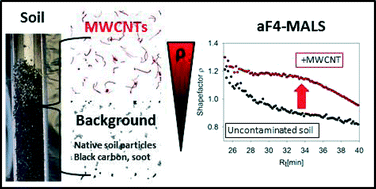
Multi-walled carbon nanotubes (MWCNT) are the preferred choice of nanotubes for many applications as they has a lower cost than the single walled carbon nanotubes (SWCNT). Therefore the chances of them getting into air, natural water systems and soil is extremely probable. Although many beneficial effects are postulated for MWCNTs direct applications such as incorporation into fertilizer to enhance water uptake, seed germination and cell growth can increase their levels in the environment, especially in soil. Since there is evidence of some negative affects on soil microbial communities as well as plants it is always better to have means of monitoring and controlling their levels in the environment. However, methods to detect and quantify MWCNTs in soil and sediments are still not well established. Therefore, Alexander Gogos and co-workers from the Agroscope, Institute for Sustainability Sciences in Switzerland have developed and evaluated a novel approach using asymmetric field flow fractionation (A4F) coupled with multi-angle light scattering (MALS) to differentiate MWCNTs in soil.

Here the high aspect ratios of MWCNT’s have been exploited to differentiate between MWCNTs, soot and native soil particles. The shape factors (ρ) for these materials were calculated by taking the ratio between the radius of gyration (rg) and the hydrodynamic radius (rh). Simply, the rg corresponds to the weighted average of all possible radii of a particle from its center of mass and rh is approximated for non-spherical particles as the radius of a sphere with same diffusion behavior. Elaborately, presence of MWCNTs in the mixtures resulted in increased ρ-values. The fractions of MWCNTs in the mixtures were calculated using the ρ-values obtained from A4F-MALS. They were cross-validated by comparing with the results obtained from automated electron microscopy analysis and were found to be in reasonable agreement. Since natural soils exhibited lower ρ-values consistently this method can be used in specific identification of MWCNTs as well as other high aspect ratio nanomaterials in soil.

To access the full article, download a copy for free* by clicking the link below.

Capabilities of asymmetric flow field-flow fractionation coupled to multi-angle light scattering to detect carbon nanotubes in soot and soil.
Alexander Gogos, Ralf Kaegi, Renato Zenobi, Thomas D. Bucheli
DOI: 10.1039/C4EN00070F

*Access is free through a registered RSC account – click here to register

Digg This
Reddit This
Stumble Now!
Share on Facebook
Bookmark this on Delicious
Share on LinkedIn
Bookmark this on Technorati
Post on Twitter
Google Buzz (aka. Google Reader)

John Jeyes Award 2014

Professor Vicki Grassian, Chair of Environmental Science: Nano was awarded the John Jeyes Award 2014 this week for her pioneering contributions to the chemistry of environmental interfaces, heterogeneous atmospheric chemistry and the environmental implications of nanomaterials.

The John Jeyes Award, founded in 1975, is a biennial award for chemistry in relation to the environment. John Jeyes was a prolific inventor and scientist who in 1877 invented one of the first disinfectants, which is still used today. This is one of the six awards and prizes that are given by the Environment, Sustainability and Energy Division of the Royal Society of Chemistry.


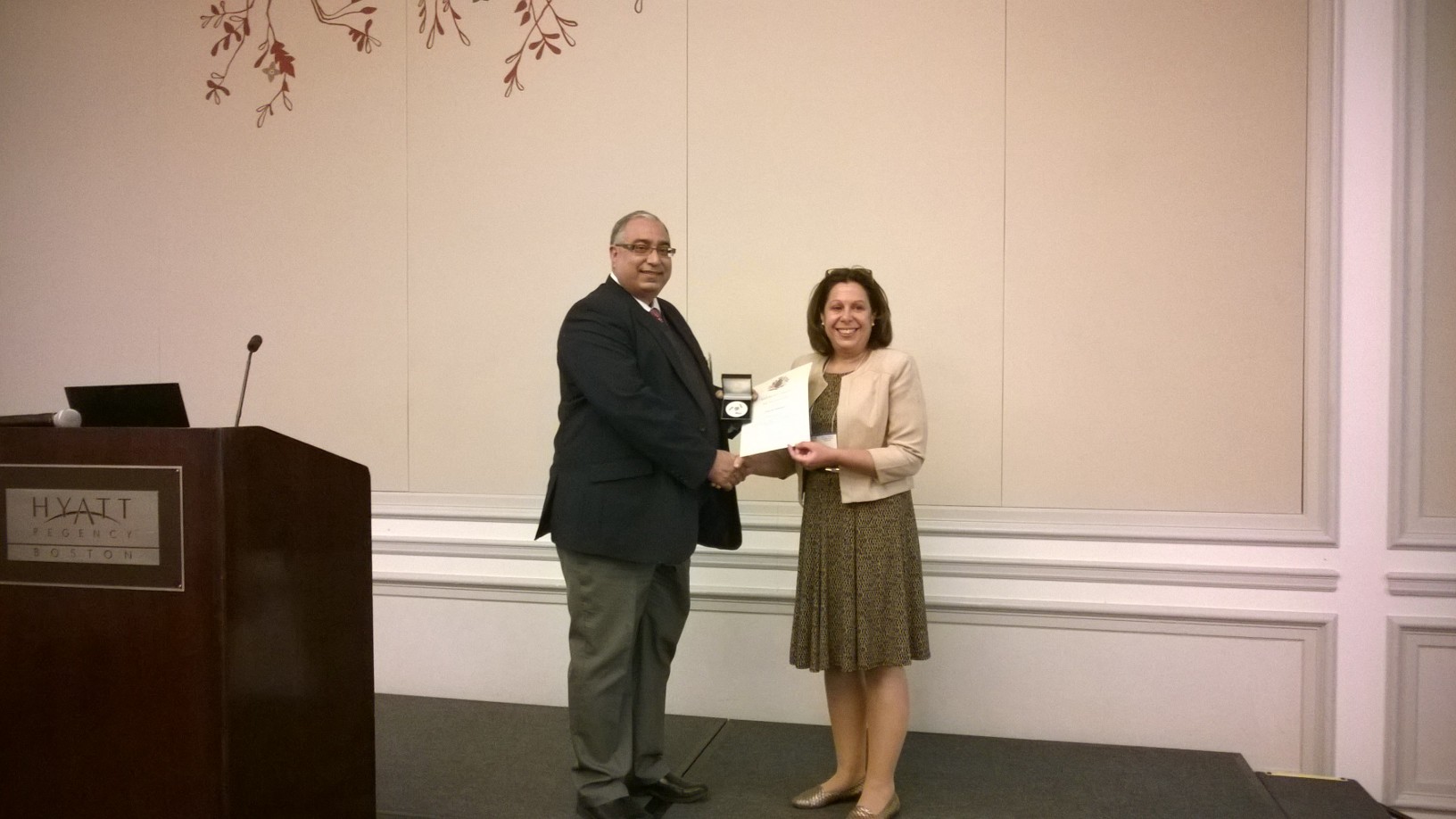
The picture shows Environmental Science:Nano Executive Editor, Harpal Minhas, presenting
Vicki Grassian with the John Jeyes award at the 2014 SNO Conference.

Vicki Grassian, Founding Director of the Nanoscience and Nanotechnology Institute at the University of Iowa, has mentored over one hundred students and postdocs in her laboratory with many of them now having their own research programs focused on energy and the environment and developed the chemical sciences track of the undergraduate degree program in environmental science.


“The John Jeyes Award is wonderful recognition of the research that has been done by the students and postdoctoral associates who have worked in my laboratory”


We would like to congratulate Vicki on her achievement and take this opportunity to thank her for her pioneering contributions to Environmental Science: Nano , bringing together a variety of communities to publish their work on nanoscience and the implications for the environment, health and sustainability.

Vicki’s latest Environmental Science: Nano paper ‘Iron oxide nanoparticles induce Pseudomonas aeruginosa growth, induce biofilm formation and inhibit antimicrobial peptide function‘ (C3EN00029J) is included in a dedicated themed collection of papers celebrating the 2014 RSC Prize and Award winners.


Each year the Royal Society of Chemistry gives out over 60 awards and prizes that recognise excellence in the chemical sciences. Our 2015 awards and prizes are open for nomination now, why not nominate someone today?

Digg This
Reddit This
Stumble Now!
Share on Facebook
Bookmark this on Delicious
Share on LinkedIn
Bookmark this on Technorati
Post on Twitter
Google Buzz (aka. Google Reader)

SNO Emerging Investigator

And the winner is….Debora Rodrigues

The SNO Emerging Investigator gives recognition to emerging scientists and engineers working in the area of Sustainable Nanotechnology. Environmental Science: Nano is pleased to announce the inaugural winner is Professor Debora Rodrigues. Professor Rodrigues research on carbon-based materials is well recognized and covers both applications of nanomaterials for improving water quality and implications on the safety of nanomaterials.  As an independent investigator, she has published widely in these areas.  In 2012 she received a U.S. National Science Early CAREER Award  “Toxicology of graphene-based nanomaterials: A molecular biotechnology approach”.  At the University of Houston, Professor Rodrigues is known as an outstanding researcher, a passionate educator and a role model.  Editor-in-Chief Vicki Grassian says that Professor Rodrigues was selected because of her pioneering and outstanding contributions to the field of sustainable nanotechnology including nanotoxicology and applications of nanotechnology in water remediation.


The picture shows Environmental Science: Nano Editor-in-Chief, Vicki Grassian (Left) and Executive Editor, Harpal Minhas (right) presenting Debora Rodrigues (middle) with her award at the 2014 SNO Conference.


About Debora

After completing her Ph.D. in Microbiology and Molecular Genetics at Michigan State University in 2007, Debora moved to Yale University focusing her research on investigating the antimicrobial effects of carbon nanotubes on viruses and bacteria as well as their impact on soil microbial community. In 2010 she became an Assistant Professor in the Department of Civil and Environmental Engineering at the University of Houston.

Digg This
Reddit This
Stumble Now!
Share on Facebook
Bookmark this on Delicious
Share on LinkedIn
Bookmark this on Technorati
Post on Twitter
Google Buzz (aka. Google Reader)

Nano2014 Winners!

The 9th International Conference on the Environmental Effects of Nanoparticles and Nanomaterials

Following our recent entry regarding the 9th International Conference on the Environmental Effects of Nanoparticles and Nanomaterials (Nano2014), we proudly present the award winners of this inspiring conference.

This year, the conference was held from September 7th –11th in Columbia, South Carolina, and the awards were jointly granted by Environmental Chemistry and Environmental Science: Nano.

With no further delay, let’s introduce the names of the winners!

Best Poster: Daniel Starnes (University of Kentucky)
Silver Nanoparticles, they get better with age

Runner up: Seyyedali Mirshahghassemi (University of South Carolina)
Separation of oil from wastewater using iron oxide nanoparticles

Best Oral Presentation: Maryam Khaksar (University of South Australia)
In situ study of the chemical transformation of surface functionalized silver nanoparticles along the water-sediment continuum

Runner up: Van Ortega (University of Alberta)
The effects of nanoparticle exposures on the phagocytic capacity of immune cells

Congratulations to all of the winners! The judges of the prize thought the quality of the presentations were really high and, from the Environmental Science: Nano team, we would like to thank all the students that attended or presented at the meeting.

To mark this special occasion, Environmental Science: Nano is proud to announce an exciting web collection that will gather together review articles, original research papers and communications covering topics discussed at the conference.


We welcome submissions from key research areas including but not limited to:

– Physical and chemical properties of nanoparticles as related to the environment and health
– Ageing and effects of fate and behaviour
– Toxicology and ecotoxicology
– Social and regulatory sciences
– Innovation and applications of nanotechnology to environmental and health issues

For more information on the scope of Environmental Science: Nano, our article types and author guidelines, please visit our website or contact us at esnano-rsc@rsc.org.

Please note that all submitted manuscripts will be subject to peer review in accordance to the journals high quality standards.

Submission Deadline: 18th December 2014

We hope to receive a manuscript from you or your group soon.

Digg This
Reddit This
Stumble Now!
Share on Facebook
Bookmark this on Delicious
Share on LinkedIn
Bookmark this on Technorati
Post on Twitter
Google Buzz (aka. Google Reader)

Nanoceria biodistribution and retention

Nanoceria (nanoparticle form of CeO2, cerium(IV) oxide) is quickly becoming a trending topic in Environmental Science. After recently discussing its health effects, today we present a fascinating paper regarding its biodistribution and retention in rats.

Currently, the main use for nanoceria is as an abrasive catalyst, especially important for the industry in silicon integrated circuit fabrication. In addition to that, and thanks to its autocatalytic behaviour, encouraging results have been presented in the past regarding its use as an antineoplastic agent. Nevertheless, there is concern on the topic of its toxicity in organisms.

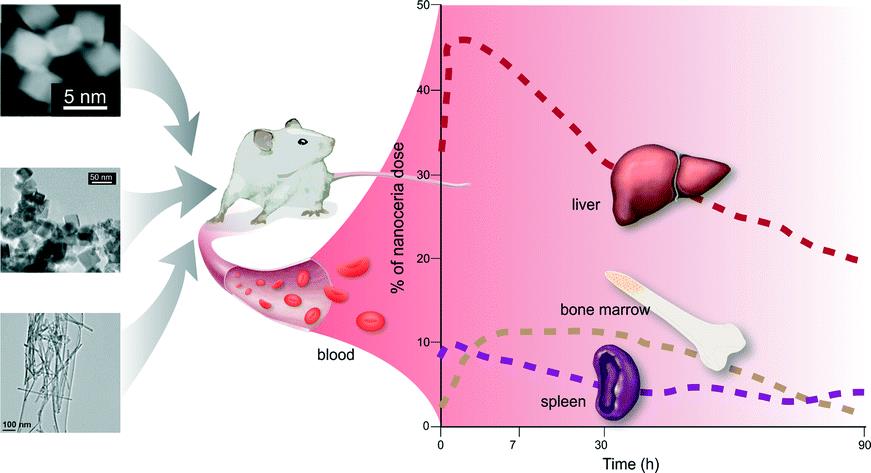
Dr Robert A. Yokel and colleagues from the University of Kentucky have conducted an extensive investigation on the distribution and retention of several nanocerias after their systemic administration to rats.

The aim of their study was to determine if and how the biodistribution and persistence of nanocerias are modified according to the doses administered.

Additionally, interesting discussions regarding nanoceria shape and its influence on its toxicity, retention and disposition have been presented.

Moving forward, it will be exceptionally exciting to learn more about nanoceria’s clinical properties and effects on animals. In any case, this work is a big step forward in its research, helping us to clarify and consolidate our knowledge of the behaviour of nanocerias in mammalian organisms.

To access the full article, download a copy for free* by clicking the link below:

Nanoceria biodistribution and retention in the rat after its intravenous administration are not greatly influenced by dosing schedule, dose, or particle shape
Robert A. Yokel, Jason M. Unrine, Peng Wu, Binghui Wang and Eric A. Grulke
Environ. Sci.: Nano, 2014, Advance Article
DOI: 10.1039/C4EN00035H

The paper mentioned today is part of our Nanoceria Research themed collection, which is the most comprehensive and current source of information on the chemistry, biology, and beneficial and untoward effects of nanocerias.

*Access is free through a registered RSC account – click here to register

Digg This
Reddit This
Stumble Now!
Share on Facebook
Bookmark this on Delicious
Share on LinkedIn
Bookmark this on Technorati
Post on Twitter
Google Buzz (aka. Google Reader)

Health effects of nanoceria

Webwriter, Laurel Hamers @arboreal_laurel discusses a critical review by Nanoceria Themed Issue Guest Editor, Robert Yokel Laurel Hamers

Nanomaterials have shown such great potential to advance science and engineering that sometimes research on their applications can skip ahead of safety tests.

Nanoceria, a commonly used nanomaterial, is one such substance. These fine grains of cerium oxide have been proposed for use in fuels, sunscreens, and even pharmaceutical treatments, but the effects of long-term exposure have not been comprehensively investigated. Now, in a critical review published in Environmental Science: Nano’s themed issue, a team of pharmacists and environmental chemists have compiled and analyzed the available research on nanoceria’s health effects.

Nanoceria appears to have minimal effects when applied to the skin, and is not absorbed into the body through the digestive tract. However, once it makes its way into the bloodstream, whether through inhalation or direct injection, it can travel throughout the body.

Nanoceria is biopersistent, meaning that it does not dissolve or break down in the body, but instead builds up. When it finds its way into certain organs—such as the lungs or the liver—it can take months to completely leave, and can lead to inflammation and abnormal tissue growth. As with many hazardous materials, the risks are greater with higher doses or longer-term exposure.

The researchers propose that nanoceria’s toxic effects occur through inducing oxidative stress, an imbalance between oxidizing molecules and antioxidants that can disrupt biochemical pathways in the body. Because the surface properties of nanomaterials are believed to have the greatest influence on their potential toxicity, the authors suggest that coating the particles with a biologically inert material or altering their surface structure could reduce their impacts.

Nanoceria should not be indiscriminately avoided based on these findings—and some research has found positive biological applications for the substance, and even essential chemicals like water can be toxic in high enough doses. Rather, scientists working with these particles should understand their potential risks and work to minimize them.

To access the full article, download a copy for free* by clicking the link below.

The yin: an adverse health perspective of nanoceria: uptake, distribution, accumulation, and mechanisms of its toxicity
DOI: 10.1039/c4en00039k
R. Yokel et al.

Liked this blog? Find out more about Laurel in her first Environmental Science: Nano blog on rare earth elements.

*Access is free through a registered RSC account – click here to register

Digg This
Reddit This
Stumble Now!
Share on Facebook
Bookmark this on Delicious
Share on LinkedIn
Bookmark this on Technorati
Post on Twitter
Google Buzz (aka. Google Reader)

Nanoparticle studies leave the lab

written by Megan Tyler

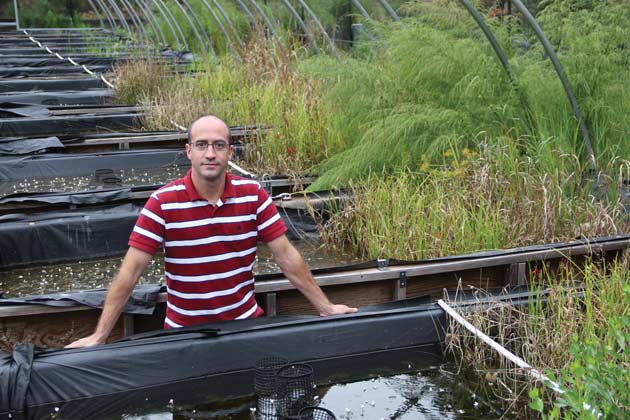
Scientists have gone beyond laboratory based experiments and have used a mesocosm to accurately study the fate of single walled carbon nanotubes (SWNTs) in wetland ecosystems, showing that SWNTs accumulate and persist in aquatic sediments.

Lee Ferguson and his team constructed a wetland mesocosm to examine the fate of carbon nanotubes in the aquatic environment © Pratt School of Engineering at Duke University, US

Single walled carbon nanotubes are an intriguing class of nanoparticle, and their unique properties have led to their use in a wide variety of applications, ranging from microelectronics to energy storage and even drug delivery. However, the impact of SWNTs on the environment is not fully understood. As the use of SWNTs in industry increases, environmental contamination due to spills of SWNT-containing waste or weathering of SWNT-containing products becomes ever more likely, and so the importance of studies focusing on the fate of SWNTs in the environment is growing.

To read the full article, please visit Chemistry World.

Download the full article for free*:

Fate of single walled carbon nanotubes in wetland ecosystems
Ariette Schierz, Benjamin Espinasse, Mark R. Wiesner, Joseph H. Bisesi, Tara Sabo-Attwood and P. Lee Ferguson
DOI: 10.1039/C4EN00063C, Paper

* Access is free through a registered RSC account – click here to register

Digg This
Reddit This
Stumble Now!
Share on Facebook
Bookmark this on Delicious
Share on LinkedIn
Bookmark this on Technorati
Post on Twitter
Google Buzz (aka. Google Reader)