Archive for the ‘Emerging Investigator Series’ Category

Nanoscale Horizons 10th Anniversary ‘Community Spotlight’ – Meeting our Emerging Investigators

Nanoscale Horizons 10th Anniversary ‘Community Spotlight’ – Meeting our Emerging Investigators

Celebrating our Nanoscale Horizons Emerging Investigators!

Last year, we were pleased to celebrate the 10th anniversary of Nanoscale Horizons. We are so grateful to our fantastic community of authors, reviewers, board members and readers, and wanted to showcase some of them in a series of ‘Community Spotlight’ blog articles.

In our latest ‘Community Spotlight’ blog, we feature some of our Nanoscale Horizons Emerging Investigators. Our Emerging Investigators are rising stars in the early stages of their independent careers, who have been identified as having the potential to influence future directions in the field.


Dr Shalini Singh, Emerging Investigator

University of Limerick, Ireland


Shalini Singh is an associate professor in the Department of Chemical Sciences at the University of Limerick, where she heads the Functional Nanomaterial Research Group. She also serves as the Energy Research Pillar Lead at the Bernal Institute. Her research centres on the development and synthesis of compositionally intricate inorganic nanocrystals and nanocomposites, with a focus on understanding their structural and surface properties and exploring their roles in energy conversion, storage technologies, and catalytic systems. She has published over 50 peer-reviewed articles. Her work is funded by Research Ireland and Horizon Europe, and she is a funded investigator within the AMBER and SSPC research centres.


1) How do you feel about the Emerging Investigator collection in Nanoscale Horizons as a place to showcase research from early career researchers in nanoscience and nanotechnology?

I feel it is a great venue for early career researchers. It gives increased visibility for researchers who are building their independent research programs, applying for their independent grants and establishing their labs. Also, when these articles are highlighted on the social media posts by RSC or Nanoscale Horizons handles, community engagement is really good. You get appreciated by your peers and senior scientists in the field. This collection also defines a cohort of rising scientists, which helps with building connections at conferences and within research communities.

2) In your opinion, how could members of the community be more involved with the journal?

Beyond submitting your excellent research, I think peer review is a very good way to engage with the journal. Especially for young researchers, volunteering to be a reviewer gives you the opportunity of seeing good science first hand and to provide them with constructive feedback. The editorial board can also recommend new board members to diversify expertise and geography. I like that Nanoscale Horizons has a broad landscape that allows for collaborative submissions that bridge subfields. This can also be used as way to submit conceptual advancements that hybrids chemistry, physics, engineering at the nanoscale. These submissions should be encouraged to raise the impact of the journal.

Read Shalini’s Emerging Investigator article here:

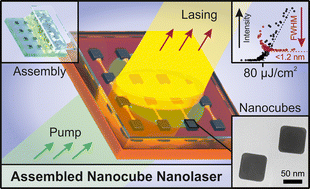
Colloidal synthesis of the mixed ionic–electronic conducting NaSbS2 nanocrystals

Maria Zubair, Syed Abdul Ahad, Ibrahim Saana Amiinu, Vasily A. Lebedev, Mohini Mishra, Hugh Geaney, Shalini Singh and Kevin M. Ryan

Nanoscale Horiz., 2023, 8, 1262-1272


Valentina Castagnola, Emerging Investigator

Italian Institute of Technology, Italy


Valentina Castagnola is a chemist by training, with a research profile strongly rooted in a multidisciplinary approach at the interface of chemistry, biology, and physics. She obtained her Master’s degree in Photochemistry and Materials Chemistry from the University of Bologna.
She carried out her PhD at the Laboratory for Analysis and Architecture of Systems (LAAS) in Toulouse, part of the French National Centre for Scientific Research (CNRS). During her doctoral training, Dr. Castagnola pioneered a new line of research within the laboratory focused on the development of highly biocompatible neuroprosthetic devices for chronic implantation, particularly brain–machine interfaces. Her work was recognized with the Best PhD Thesis Award from the doctoral school.To deepen her understanding of molecular mechanisms occurring at the interface between nanomaterials and biological systems, Dr. Castagnola joined the Centre for BioNano Interactions (CBNI) at University College Dublin, Ireland, a centre of excellence directed by Prof. Kenneth Dawson. From 2015 to 2019, she worked as a postdoctoral fellow on several projects investigating fundamental nanoscale biological interactions, participating in several EU large consortia projects.

In 2020, she became a Researcher at the Center for Synaptic Neuroscience and Technology (NSYN) of the Italian Institute of Technology (IIT), directed by Prof. Fabio Benfenati. There, she further expanded her expertise in neuroscience, contributing to projects addressing both the physiopathology of the blood–brain barrier and the interactions between functional nanomaterials and the nervous system.

Since 2025, Dr. Castagnola has joined the Nanomedicine Platform at the Fondazione Pisana per la Scienza, where she was awarded a tenure track grant to establish her own independent research activity. Her current work focuses on the development of minimally invasive, targeted, biomimetic strategies aimed at rescuing neural function loss in neurodegenerative diseases.


1) Where do you see the nanoscience field in the next 10 years?

I envision the nanoscience field increasingly supported at multiple levels by modeling and atomistic-level simulations through machine learning tools, enabling a transition toward personalized medicine.

2) How has your research progressed on from the work published in your Emerging Investigators article?

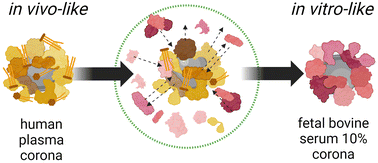
Given the limitations that have emerged in the in vitro screening of solid nanoparticles in accurately recapitulating the in vivo complexity of biomolecular corona formation (Nanoscale Horizons 9(5), 2024: 799–816), I am now moving toward a biomimetic strategy. This approach aims to endow functional nanomaterials with a biologically derived corona that is minimally altered by the physiological environment.

Read Valentina’s Emerging Investigator article here:

Sources of biases in the in vitro testing of nanomaterials: the role of the biomolecular corona

Valentina Castagnola, Valeria Tomati, Luca Boselli, Clarissa Braccia,e Sergio Decherchi, Pier Paolo Pompa, Nicoletta Pedemonte, Fabio Benfenati and Andrea Armirotti

Nanoscale Horiz., 2024, 9, 799-816


Pengzhan Sun, Emerging Investigator

University of Macau, China


Pengzhan Sun is an assistant professor at the Institute of Applied Physics and Materials Engineering, University of Macau. He obtained his Bachelor’s degree in Mechanical Engineering and Automation (2012) and Ph.D. degree in Materials Science and Engineering (2016), both from Tsinghua University. From 2016 to 2022, he was a research associate at University of Manchester. His research interests include fundamental understanding of molecular transport under confinement, the synthesis and processing of 2D crystals building blocks and their rationally designed assemblies for emerging technologies in environment, energy, informatics, etc. He has published many papers as first/corresponding authors in decent journals including Nature, PNAS, Nature Communications, Science Advances, etc. Also, he has been awarded many important prizes including MIT Technology Review 35 Innovators Under 35 (China), Materials Research Society (MRS, USA) Graduate Student Award (Silver), NSFC Excellent Young Scientist Fund, etc.


1) How do you feel about the Emerging Investigator collection in Nanoscale Horizons as a place to showcase research from early career researchers in nanoscience and nanotechnology?

As one of the early career researchers that have been highlighted in the Emerging Investigator collection, I feel this collection is really an ideal platform for showcasing young researchers’ outputs and further spreading them to a wider community. Getting started from zero is always challenging for independent and early career researchers, who will face numerous difficulties and unimaginable pressure. It would be difficult to get funding and would be rather slow to publish papers at a short period and more importantly, it would be difficult for early career researchers to have applications from promising students or postdocs. In this context, the help from this platform is pretty valuable. On one hand, the interview with an author of a newly published paper gives readers a feeling that research is not only about publishing a paper but more about the research itself. Readers would have a better view about the newly published research through the in-depth introduction by the corresponding author. On the other hand, the journal and the Emerging Investigator collection themselves are powerful platforms for spreading new and important research in the nanoscience field to a wider community, which would also in turn help others to know more about the early career researchers, and further develop connections and collaborations with others.

2) Could you provide a brief summary of your most recent Nanoscale Horizons publication?

My recently published research is about ion transport through micrometer size and solid state pores. This is an old and seemingly well-established research area. From a theoretical perspective, ion transport through such large pores under an electric field can be described well by the Hall equation, which involves only the bulk conductivity. Surface conduction is predicted to be important only for dilute solutions and the importance would become more pronounced in nanometer size pores. Nonetheless, this theoretical claim remains unsupported by experiments, especially for micropores, where the experimentally observed ion conductance is intuitively thought to be dominated by bulk conduction (because of the good fitting to the Hall equation involving only bulk conductivity). In the newly published paper (Nanoscale Horiz., 2026, DOI: 10.1039/D5NH00582E), our electrical measurements of ion transport through silicon nitride pores having diameters ranging from sub-µm up to a few µm show that the surface conduction can be significant and non-negligible in such large pore systems, especially for dilute solutions. The surface conduction can be further enhanced by modifying the wettability of the silicon nitride surface, for example, by coating it with two-dimensional crystals such as graphene, graphene oxide, or monolayer titania sheets. The resulting surface conductivity is seen to increase upon increasing the solution concentration and can be increased by up to one or two orders of magnitude. We believe these experimental observations are important because they provide insights into ion transport in micropore systems and further suggest the possibility of exploiting surface conduction in such large pores for new technologies that were previously believed to apply only to nanopores.

Read Pengzhan’s Emerging Investigator article here:

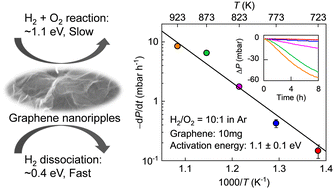
Catalytic selectivity of nanorippled graphene

Yu Liu, Wenqi Xiong, Achintya Bera, Yu Ji, Miao Yu, Shi Chen, Li Lin, Shengjun Yuan and Pengzhan Sun

Nanoscale Horiz., 2024, 9, 449-455


Mita Dasog, Emerging Investigator

Dalhousie University, Canada


Dr. Mita Dasog (she/her), FRSC (UK), is an Associate Professor and Tier 1 Canada Research Chair at Dalhousie University, jointly appointed in the Departments of Chemistry and Civil Engineering. She earned her B.Sc. in Chemistry from the University of Saskatchewan and her Ph.D. from the University of Alberta. Following a research stay at the Technical University of Munich as a Green Talents visiting scholar, she completed postdoctoral work at the California Institute of Technology. Dr. Dasog returned to Canada in 2016 to establish her research group at Dalhousie University, where her team develops porous silicon and refractory plasmonic nanomaterials for sustainable fuel production, water purification, and passive mining. Her work integrates green chemistry, materials science, and environmental engineering to advance renewable energy and circular economy solutions.


1) Could you provide a brief summary of your most recent Nanoscale Horizons publication?

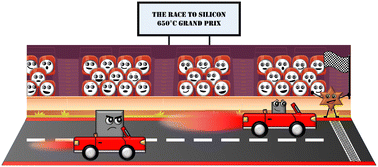
Magnesiothermic reduction is widely used because it offers a practical, scalable, and comparatively low-temperature route for converting silica into porous silicon while retaining the structural features of the starting material. This is particularly important given the growing demand for porous silicon, whose high surface area and tunable porosity make it attractive for application in lithium-ion batteries, photocatalysis, sensing, drug delivery, and optoelectronics. In our recent Nanoscale Horizons paper, we investigated the reduction mechanism using in-situ powder X-ray diffraction experiments carried out at the SLAC beamline, allowing us to directly follow product evolution during the reaction. We found that the reaction initiates at lower temperatures than previously assumed, that magnesium particle size strongly influences the reaction pathway, and that magnesium silicide functions as a key intermediate rather than the byproduct it had long been considered to be. By resolving how intermediates are formed and consumed as a function of temperature, this work provides a clearer mechanistic picture of porous silicon formation and offers practical insight for improving reaction efficiency, product purity, and structural control in scalable production.

2) How has your research progressed on from the work published in your Emerging Investigators article?

Since our Emerging Investigators article, we have expanded the work by examining how silica particle size influences the magnesiothermic reduction process. We found that similar to magnesium, silica particle size affects not only reaction kinetics and heat distribution, but also the mechanistic pathway itself, including the formation and evolution of intermediate phases. Variations in particle size can shift the balance between competing reactions, ultimately impacting silicon yield and product purity. Building on this deeper understanding of how both magnesium and silica particle sizes govern reaction behavior and mechanism, we are now applying these insights to scale-up efforts. By accounting for particle-size effects and the associated mechanistic changes, we aim to maintain structural control, reproducibility, and product quality as the process is translated to larger batch sizes.

Read Mita’s Emerging Investigator article here:

Unlocking the secrets of porous silicon formation: insights into magnesiothermic reduction mechanism using in situ powder X-ray diffraction studies

Sarah A. Martell, Maximilian Yan, Robert H. Coridan, Kevin H. Stone, Siddharth V. Patwardhan and Mita Dasog

Nanoscale Horiz., 2024, 9, 1833-1842


We sincerely hope you enjoy reading about some of our Emerging Investigators! Keep an eye out for our future Community Spotlight blogs highlighting more of our Emerging Investigators.

Digg This
Reddit This
Stumble Now!
Share on Facebook
Bookmark this on Delicious
Share on LinkedIn
Bookmark this on Technorati
Post on Twitter
Google Buzz (aka. Google Reader)

Congratulations to our latest Emerging Investigator Dr Luiz Henrique Vieira

Nanoscale Horizons Emerging Investigator Series

Congratulations to our latest Emerging Investigator Dr Luiz Henrique Vieira (São Carlos Institute of Chemistry at the University of São Paulo, Brazil).

Since the launch of Nanoscale Horizons, the journal has had a clear vision to publish exceptionally high-quality work whilst acting as a resource to researchers working at all career levels. We continue to be impressed by the quality of the research published and at the same time are looking for new ways of recognising and promoting the outstanding authors behind articles published in the journal. 

We launched our Emerging Investigator Series to showcase the exceptional work published by early-career researchers in the journal and regularly select a recently published Communication article to feature in an interview-style Editorial article with the corresponding author. We hope that the series will also benefit the nanoscience community by highlighting the exciting work being done by its early-career members. 

We are excited to share our latest Emerging Investigator, Dr Luiz Henrique Vieira (São Carlos Institute of Chemistry at the University of São Paulo, Brazil)! 


Image showing a picture Emerging Investigator Dr Luiz Henrique Vieira. Text on the slide says "Royal Society of Chemistry. Nanoscale Horizons Interview with Dr Luiz Henrique Vieira."

Read our interview with Luiz here


Dr Luiz Henrique Vieira is an assistant professor at the São Carlos Institute of Chemistry at the University of São Paulo (IQSC/USP), Brazil. He received his BSc (2012), MSc (2014) and PhD in chemistry (2018) from the Institute of Chemistry at São Paulo State University – UNESP. During his doctoral studies, he also spent a research period as a visiting scholar at the Georgia Institute of Technology. His research focuses on heterogeneous catalysis, materials chemistry, and adsorption processes for sustainable chemical transformations. During his graduate studies, he worked on the development of bifunctional lamellar catalysts derived from zeolitic structures for the upgrading of renewable feedstocks into industrially relevant products. From 2018 to 2021, he was a postdoctoral researcher at IQSC/USP within the Research Centre for Greenhouse Gas Innovation (RCGI), a São Paulo Research Foundation and Shell initiative, where he developed catalytic systems for the conversion of CH4, CO2, and CO. Between 2021 and 2023, he was a researcher and visiting professor at the Federal University of São Carlos (UFSCar), working on technological trends in the biofuels sector within the Brazilian National Agency for Petroleum, Natural Gas and Biofuels (ANP) through the Human Resources Program (PRH). His current research focuses on the development of inorganic and hybrid organic–inorganic materials for catalytic processes and gas separation, with particular emphasis on CO2 capture and the conversion of environmentally relevant small molecules into value-added chemicals.

Congratulations to Luiz for his excellent work! You can read his featured Emerging Investigator article from Nanoscale Horizons below.


Advances in the direct conversion of CH4 and CO2 into acetic acid over bimetallic catalysts supported on H-ZSM-5

Gabriel F. Lopes, Alessandra F. Lucrédio, Luiz H. Vieira and Elisabete M. Assaf

Nanoscale Horiz., 2025, 10, 3051-3060

D5NH00496A

We hope you enjoy reading our interview and featured article and are looking forward to sharing our future Emerging Investigators with you! 

Do you publish innovative nanoscience and nanotechnology research? Submit your latest work to Nanoscale Horizons now. If you are eligible for the Emerging Investigators series, you could be considered to feature in one of our future interviews! Find out more about the eligibility criteria and the process in this editorial introducing the series. 

Digg This
Reddit This
Stumble Now!
Share on Facebook
Bookmark this on Delicious
Share on LinkedIn
Bookmark this on Technorati
Post on Twitter
Google Buzz (aka. Google Reader)

Congratulations to our latest Emerging Investigator Dr Shelly Conroy

Nanoscale Horizons Emerging Investigator Series. 

Congratulations to our latest Emerging Investigator Dr Shelly Conroy (Imperial College London, UK)! 

Since the launch of Nanoscale Horizons, the journal has had a clear vision to publish exceptionally high-quality work whilst acting as a resource to researchers working at all career levels. We continue to be impressed by the quality of the research published and at the same time are looking for new ways of recognising and promoting the outstanding authors behind articles published in the journal. 

We launched our Emerging Investigator Series to showcase the exceptional work published by early-career researchers in the journal and regularly select a recently published Communication article to feature in an interview-style Editorial article with the corresponding author. We hope that the series will also benefit the nanoscience community by highlighting the exciting work being done by its early-career members. 

We are excited to share our latest Emerging Investigator, Dr Shelly Conroy, (Imperial College London, UK)!


Image showing a picture Emerging Investigator Shelly Conroy. Text on the slide says "Royal Society of Chemistry. Nanoscale Horizons Interview with Shelly Conroy."

Read our interview with Shelly here 


Dr Shelly Conroy is an associate professor in the Department of Materials at Imperial College London. Her research centres on understanding how interfaces in materials evolve under real operating conditions, particularly in systems relevant to energy and quantum technologies. Her work spans both the growth of thin films and the atomic-scale characterisation of the dynamic processes that govern their behaviour.

Her group develops and applies advanced correlative characterisation approaches, combining in situ electron microscopy, electrochemical measurements, hard X-ray beamline experiments and cryogenic atom probe tomography. By bringing together techniques across multiple length scales, her research links dynamic behaviour directly to atomic-scale chemistry and structure, enabling complex interfaces to be studied in ways that were not previously possible.

Conroy is supported by a Royal Society Tata University Research Fellowship and an ERC Consolidator Grant (DISCO). She was previously a Research Ireland Industry Fellow at Analog Devices and a Staff Scientist at Pacific Northwest National Laboratory. She is also currently a Mercator Fellow at the University of Erlangen–Nuremberg and a Principal Researcher in Advanced Electron Microscopy at Tyndall National Institute.

Congratulations to Shelly for her excellent work! You can read her featured Emerging Investigator article from Nanoscale Horizons below. 


A workflow for correlative in situ nanochip liquid cell transmission electron microscopy and atom probe tomography enabled by cryogenic plasma focused ion beam

Neil Mulcahy, James O. Douglas, Syeda Ramin Jannat, Lukas Worch, Geri Topore, Baptiste Gault, Mary P. Ryan and Michele Shelly Conroy

Nanoscale Horiz., 2025, 10, 3486-3498

D5NH00310E


We hope you enjoy reading our interview and featured article and are looking forward to sharing our future Emerging Investigators with you! 

Do you publish innovative nanoscience and nanotechnology research? Submit your latest work to Nanoscale Horizons now. If you are eligible for the Emerging Investigators series, you could be considered to feature in one of our future interviews! Find out more about the eligibility criteria and the process in this editorial introducing the series. 

Digg This
Reddit This
Stumble Now!
Share on Facebook
Bookmark this on Delicious
Share on LinkedIn
Bookmark this on Technorati
Post on Twitter
Google Buzz (aka. Google Reader)

Congratulations to our latest Emerging Investigator Professor Chunlan Wang

Nanoscale Horizons Emerging Investigator Series

Congratulations to our latest Emerging Investigator Professor Chunlan Wang (Xi’an Polytechnic University, China)! 

Since the launch of Nanoscale Horizons, the journal has had a clear vision to publish exceptionally high-quality work whilst acting as a resource to researchers working at all career levels. We continue to be impressed by the quality of the research published and at the same time are looking for new ways of recognising and promoting the outstanding authors behind articles published in the journal. 

We launched our Emerging Investigator Series to showcase the exceptional work published by early-career researchers in the journal and regularly select a recently published Communication article to feature in an interview-style Editorial article with the corresponding author. We hope that the series will also benefit the nanoscience community by highlighting the exciting work being done by its early-career members. 

We are excited to share our latest Emerging Investigator, Professor Chunlan Wang (Xi’an Polytechnic University, China)! 

Read our interview with Chunlan here

Chunlan Wang is currently a Professor at Xi’an Polytechnic University in China. She received her doctoral degree in Condensed Matter Physics from Wuhan University (2015). She is one of the Fifth Batch of “Young Talents Support Program” for Universities in Shaanxi Province, part of the Experts of the Science and Technology Think Tank of Xi’an Science and Technology Association (First Batch), and one of the Ministry of Education’s “Young Backbone Teachers of Central and Western Universities for Domestic Visiting Scholars”.

Congratulations to Chunlan for her excellent work! You can read her featured Emerging Investigator article from Nanoscale Horizons below.

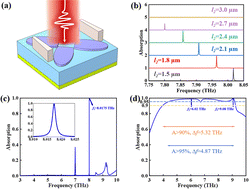
A multifunctional terahertz device based on vanadium dioxide metamaterials that switches between ultra-broadband absorption and ultra-high-Q narrowband absorption

Tao Liu, Chunlan Wang, Gengliang Zou, Jiaying Ji and Zao Yi

Nanoscale Horiz., 2025, 10, 3105-3115, 10.1039/D5NH00320B

We hope you enjoy reading our interview and featured article and are looking forward to sharing our future Emerging Investigators with you! 

Do you publish innovative nanoscience and nanotechnology research? Submit your latest work to Nanoscale Horizons now. If you are eligible for the Emerging Investigators series, you could be considered to feature in one of our future interviews! Find out more about the eligibility criteria and the process in this editorial introducing the series. 

Digg This
Reddit This
Stumble Now!
Share on Facebook
Bookmark this on Delicious
Share on LinkedIn
Bookmark this on Technorati
Post on Twitter
Google Buzz (aka. Google Reader)

Nanoscale Horizons 10th Anniversary ‘Community Spotlight’ – Meeting our Emerging Investigators

Nanoscale Horizons 10th Anniversary ‘Community Spotlight’ – Meeting our Emerging Investigators

Celebrating our Nanoscale Horizons Emerging Investigators!

Last year, we were pleased to celebrate the 10th anniversary of Nanoscale Horizons. We are so grateful to our fantastic community of authors, reviewers, board members and readers, and wanted to showcase some of them in a series of ‘Community Spotlight’ blog articles.

In our latest ‘Community Spotlight’ blog, we feature some of our Nanoscale Horizons Emerging Investigators. Our Emerging Investigators are rising stars in the early stages of their independent careers, who have been identified as having the potential to influence future directions in the field.


Dr Leslie Schoop, Emerging Investigator

Princeton University, USA


Dr. Schoop received her Diploma in Chemistry from Johannes Gutenberg University (2010) and PhD in Chemistry from Princeton University (2015). She then went on to work as a Minerva fast-track fellow under Professor Bettina Lotsch at the Max Planck Institute for Solid State Research (2015-2017). Dr. Schoop joined the Princeton University Department of Chemistry Faculty in 2017, was tenured in 2022 and promoted to full professor in 2024. Since 2024 she directs the Princeton Center for Complex Materials, an NSF-funded MRSEC. In 2019 she won the Beckman Young Investigator Award and became a Moore foundation EPiQS Materials Synthesis Investigator. In 2020 she was awarded the Packard fellowship for science and engineering and in 2021 the Sloan fellowship in Chemistry and the DOD Office of Naval Research Young Investigator award. In 2022 she was awarded the NSF CAREER award and in 2025 the Presidential Early Career Award for Scientists and Engineers (PECASE). The Schoop lab studies Quantum Materials for a chemical perspective. They consider paradigms from chemistry such as chemical bonding to predict, synthesize and characterize new quantum materials. They also use novel synthetic approaches, aided by inorganic chemistry to synthesize yet unreleased quantum materials, both in bulk and 2D form. For example, they have established the use of liquid exfoliation as a valid route to synthesize 2D quantum materials and their inks.

1) Could you provide a brief summary of your most recent Nanoscale Horizons publication?

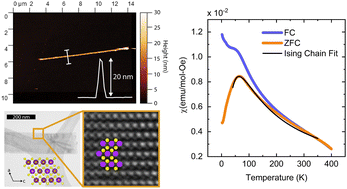
In our most recent Nanoscale Horizon publication, we report the first synthesis of free standing CrOCl monolayers. CrOCl has been researched for its unresting magic properties, especially when thin. Its exfoliation was not quite staring forward and needed some chemical tricks, which is the main advancement of the paper.

2) How has your research progressed on from the work published in your Emerging Investigators article?

Since we published the Emerging Investigator article, which was about using chemical exfoliation to synthesize 1D materials, we have deepened our knowledge about many specific aspects of chemical exfoliation. When are intercalates important, which kind of intercalates and modification of bulk structures are possible, and if we can make other 1D materials that way.

Read Leslie’s Emerging Investigator article here:

Chemical exfoliation of 1-dimensional antiferromagnetic nanoribbons from a non-van der Waals material

Mulan Yang, Guangming Cheng, Nitish Mathur, Ratnadwip Singha, Fang Yuan, Nan Yao and Leslie M. Schoop

Nanoscale Horiz., 2024, 9, 479-486


Dr Ahu Gumrah Dumanli-Parry, Emerging Investigator

University of Manchester, UK


Dr Ahu Gumrah Dumanli-Parry is a Lecturer in Bioinspired Soft Matter at the University of Manchester and PI of the Bioinspired Functional Materials (BioFuM) research group. Her research sits at the intersection of materials science, biology, and design, developing adaptive and sustainable photonic materials inspired by nature’s hierarchical architectures.

She investigates bottom-up self-assembly in natural polymers such as cellulose and chitin, translating molecular order into responsive optical systems for sensing, smart textiles, and sustainable packaging. Her work integrates soft matter physics, advanced optical characterisation, and scalable nanomanufacturing strategies to engineer structural colour with precision and efficiency.

She established her independent laboratory in 2019 as a bp-ICAM Kathleen Lonsdale Research Fellow and was selected as a Nanoscale Horizons Emerging Investigator in 2023 for her work on edible cellulose-based colorimetric systems. Her research has since expanded into translational innovation, including the founding of Colorolicious, a university spin-out developing edible liquid-crystal colourants for food applications.

1) How do you feel about the Emerging Investigator collection in Nanoscale Horizons as a place to showcase research from early career researchers in nanoscience and nanotechnology?

Having been part of the Emerging Investigator collection myself, I know first-hand how impactful this platform can be. Early-career academics often produce highly original work but can struggle for visibility in a competitive publishing landscape. The RSC Emerging Investigator series provides precisely that visibility as these highlight independence and scientific creativity.
Importantly, I appreciate that the series recognises that academic careers are not linear. “Emerging” does not simply mean young or newly appointed; many researchers reach independence through diverse and sometimes non-traditional trajectories. By acknowledging this, the RSC demonstrates an inclusive and progressive understanding of what early-stage leadership in science truly means. That recognition matters deeply for building confidence and community within nanoscience.

2) Where do you see the nanoscience field in the next 10 years?

I may be biased, but I believe the future of nanoscience lies firmly in interdisciplinary and cross-disciplinary fileds. The grand challenges we face such as sustainability, energy transition, water security, food systems, waste reduction, health technologies, robotics, biotechnology, and AI (and so on) cannot be solved within isolated disciplinary silos.

Nanoscience will increasingly serve as the connective tissue between physics, chemistry, biology, materials science, and engineering. In my own work, bioinspired approaches provide a powerful framework. Nature has already solved many complex functional challenges at the nanoscale. By understanding and adapting those strategies, we can develop materials that are not only high-performing but also sustainable and adaptive.

3) In your opinion, how could members of the community be more involved with the journal?

I think focused thematic issues around emerging frontiers, for example sustainable nanomanufacturing, bioinspired photonics, AI-enabled nanomaterials could further energise the community. These curated themes help build identity and momentum around new directions.

I would also welcome more interactive community-building activities led by the journal workshops, panel discussions, or small focused symposia aligned with major conferences. Creating spaces where authors, reviewers, and editors can interact beyond manuscript submission strengthens scientific exchange. I would be very happy to contribute to such initiatives.

4) Could you provide a brief summary of your most recent Nanoscale Horizons publication?

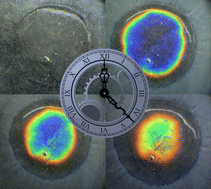
In our recent Nanoscale Horizons paper (actually it has been 2 years since it is published), we developed an edible colorimetric timer based on the dynamic structural colour changes of the cholesteric cellulose mesophases. Water-based cholesteric phases of cellulose naturally change colour as a function of hydration and pitch variation. We created a binary system and coated the cholesteric layer. By carefully tuning the coating architecture and controlling evaporation and hydration kinetics, we engineered a system in which colour evolution correlates with time.

The result is a fully edible, biodegradable timer that visually reports hydration state or elapsed processing time. This concept opens opportunities for food quality monitoring, smart packaging, and environmentally responsive sensing technologies.

5) How has your research progressed on from the work published in your Emerging Investigators article?

The Emerging Investigators article marked the beginning of a much larger research direction for my group. Since then, we have expanded from proof-of-concept edible colour systems to a broader programme on structural colour engineering and scalable nanomanufacturing.

We are now developing stretchable cholesteric filaments, flow-controlled photonic architectures, cold-chain colour sensors, and biosensing platforms based on cellulose and other sustainable biopolymers.

Importantly, this work has also translated beyond academia. It led to the founding of a spin-out company focused on edible structural colour technologies, demonstrating how fundamental nanoscience can move toward real-world impact. For me, this progression reflects the exciting space where rigorous soft-matter physics meets sustainable innovation.

Read Ahu’s Emerging Investigator article here:

Edible cellulose-based colorimetric timer

Gen Kamita, Silvia Vignolini and Ahu Gümrah Dumanli

Nanoscale Horiz., 2023, 8, 887-891


Dr Saptarshi Das, Emerging Investigator

Pennsylvania State University, USA


Saptarshi Das is an Endowed Professor of Engineering Science and Mechanics at Penn State University, where he leads the Das Research Group. His research focuses on two-dimensional (2D) materials and their integration into next generation nanoelectronic systems spanning logic, memory, neuromorphic computing, and intelligent sensing. His group works at the intersection of materials, devices, and circuits, with an emphasis on scalable synthesis, contact engineering, monolithic 3D integration, and physics-driven computation. He is actively involved in advancing 2D CMOS, in-memory and in-sensor computing, and energy-efficient hardware architectures inspired by biological systems.

His research aims to uncover new device physics in 2D and van der Waals materials and translate them into scalable, system-level technologies. Key directions include:

  • Contact and interface engineering for high-performance 2D transistors
  • 3D monolithic integration of 2D materials for compact logic and memory
  • Neuromorphic and in-sensor computing using material-native dynamics
  • Cryogenic and extreme-environment electronics
  • Intelligent sensing platforms that merge materials innovation with AI

1) How do you feel about the Emerging Investigator collection in Nanoscale Horizons as a place to showcase research from early career researchers in nanoscience and nanotechnology?

The Emerging Investigator collection plays an important role in amplifying bold, forward-looking research from early career scientists. At this stage of one’s career, researchers often take intellectual risks and explore unconventional directions. Providing a visible, high-quality platform for such work not only accelerates individual careers but also helps shape the trajectory of the field. In nanoscience, where interdisciplinary thinking is essential, this kind of spotlight fosters creativity, visibility, and community building.

2) Where do you see the nanoscience field in the next 10 years?

Over the next decade, I expect nanoscience to transition even more strongly from material discovery to system-level impact. We will likely see tighter integration between novel low-dimensional materials, advanced device architectures, and AI-driven design methodologies. Beyond performance scaling, key themes will include energy efficiency, 3D integration, heterogeneous architectures, and functionality under extreme conditions (cryogenic, high temperature, radiation). The most exciting developments will come from co-design across materials, devices, and computation, where physics itself becomes part of the information-processing paradigm.

Read Saptarshi’s Emerging Investigator article here:

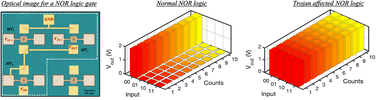
Hardware Trojans based on two-dimensional memtransistors

Akshay Wali, Harikrishnan Ravichandran and Saptarshi Das

Nanoscale Horiz., 2023, 8, 603-615


We sincerely hope you enjoy reading about some of our Emerging Investigators! Keep an eye out for our future Community Spotlight blogs highlighting more of our Emerging Investigators.

Digg This
Reddit This
Stumble Now!
Share on Facebook
Bookmark this on Delicious
Share on LinkedIn
Bookmark this on Technorati
Post on Twitter
Google Buzz (aka. Google Reader)

Congratulations to our latest Emerging Investigator Dr Yinan Zhang

Nanoscale Horizons Emerging Investigator Series

Congratulations to our latest Emerging Investigator Dr Yinan Zhang (Tongji University, China)! 

Since the launch of Nanoscale Horizons, the journal has had a clear vision to publish exceptionally high-quality work whilst acting as a resource to researchers working at all career levels. We continue to be impressed by the quality of the research published and at the same time are looking for new ways of recognising and promoting the outstanding authors behind articles published in the journal. 

We launched our Emerging Investigator Series to showcase the exceptional work published by early-career researchers in the journal and regularly select a recently published Communication article to feature in an interview-style Editorial article with the corresponding author. We hope that the series will also benefit the nanoscience community by highlighting the exciting work being done by its early-career members. 

We are excited to share our latest Emerging Investigator, Dr Yinan Zhang (Tongji University, China)!

Image showing a picture Emerging Investigator Dr Yinan Zhang. Text on the slide says "Royal Society of Chemistry. Nanoscale Horizons Interview with Dr Yinan Zhang."

Read our interview with Yinan here

Dr Yinan Zhang is a Distinguished Researcher and Doctoral Supervisor at the School of Chemical Science and Engineering and the Advanced Research Institute, Tongji University. He received his BS degree in Materials Science and Engineering from Shandong University (2012) and his PhD from the Shanghai Institute of Applied Physics, Chinese Academy of Sciences (2017) under the supervision of Academician Chunhai Fan. Dr Zhang conducted postdoctoral research at the Shanghai Institute of Applied Physics (2017–2019) with Academician Chunhai Fan and Prof. Nadrian Seeman (NAS member), and at Arizona State University (2020–2021) with Prof. Hao Yan (NAI/AIMBE Fellow). Before joining Tongji University in 2022, he served as Senior Manager for Drug Delivery at Henlius Biopharma.

Dr Zhang’s research focuses on developing nucleic acid-based nanostructures and molecular machines. Utilizing DNA/RNA as engineering materials and harnessing principles of nucleic acid self-assembly, his group constructs precise nanoscale architectures to address specific biomedical and nanotechnological challenges.

He has published about 40 research papers, including approximately 30 as first or corresponding author in leading journals such as Science AdvancesNature CommunicationsJ. Am. Chem. Soc. and Angew. Chem. Int. Ed. His contributions have been recognized with the CAS President’s Award (2017) and selection as a Shanghai High-Level Overseas Talent (2020). Dr Zhang also serves as a Youth Editorial Board Member for Nano-Micro LettersResearchExploration, and Molecules.

Congratulations to Yinan for his excellent work! You can read his featured Emerging Investigator article from Nanoscale Horizons below.  

A picture of Dr Yinan Zhang

Structure-based DNA memory with Boolean random access, Yanyu Zhou, Lanyang Gao, Chu Jiang, Yuxi Li, Qi Liu, Chengguo Xu, Yingying Liu, Huajie Liu and Yinan Zhang, Nanoscale Horiz., 2025, 10, 3447-3452, 10.1039/D5NH00502G

We hope you enjoy reading our interview and featured article and are looking forward to sharing our future Emerging Investigators with you! 

Do you publish innovative nanoscience and nanotechnology research? Submit your latest work to Nanoscale Horizons now. If you are eligible for the Emerging Investigators series, you could be considered to feature in one of our future interviews! Find out more about the eligibility criteria and the process in this editorial introducing the series. 

Digg This
Reddit This
Stumble Now!
Share on Facebook
Bookmark this on Delicious
Share on LinkedIn
Bookmark this on Technorati
Post on Twitter
Google Buzz (aka. Google Reader)

Congratulations to our latest Emerging Investigator Verónica Mora Sanz

Nanoscale Horizons Emerging Investigator Series

Congratulations to our latest Emerging Investigator Dr Verónica Mora Sanz (Basque Research and Technology Alliance (BRTA), Spain)!

Since the launch of Nanoscale Horizons, the journal has had a clear vision to publish exceptionally high-quality work whilst acting as a resource to researchers working at all career levels. We continue to be impressed by the quality of the research published and at the same time are looking for new ways of recognising and promoting the outstanding authors behind articles published in the journal.

We launched our Emerging Investigator Series to showcase the exceptional work published by early-career researchers in the journal and regularly select a recently published Communication article to feature in an interview-style Editorial article with the corresponding author. We hope that the series will also benefit the nanoscience community by highlighting the exciting work being done by its early-career members.

We are excited to share our latest Emerging Investigator, Dr Verónica Mora Sanz (Basque Research and Technology Alliance (BRTA), Spain)!

Read our interview with Verónica here

Dr Verónica Mora Sanz holds a bachelor’s degree in chemistry from the University of Zaragoza (2015) and a master’s degree in nanostructured materials for nanotechnological applications from the same university (2016). Between 2016 and 2017, she worked as a junior researcher at the Institute of Nanoscience of Aragon (INA). In 2017, she began her PhD in applied chemistry and polymeric materials at the University of the Basque Country (UPV/EHU), under the supervision of Dr Valery Pavlov (CIC biomaGUNE) and Dr Nerea Briz (Tecnalia), obtaining the highest distinction, “summa cum laude”. Her doctoral research focused on the preparation of antibody atomic cluster conjugates and their application in bioanalytical assays. From this work, she obtained a patent, titled “Nanoclusters-antibodies conjugates and uses thereof”, as well as two first-author scientific publications. In 2020, she joined the Biomaterials Area of the Health Division at Tecnalia (San Sebastián), where she focused her research on the development of bioanalytical assays, including enzymatic reactions and immunoassays, and on the design of novel nanomaterials to enhance assay sensitivity. She also contributed to the development of lab-on-a-chip devices for in vitro diagnostics. In September 2025, she joined CIRCE (Research Centre for Energy Resources and Consumption) in Zaragoza, a technology centre dedicated to energy, sustainability, and digitalization, to begin a new stage in her professional career within the Funding and Technology Transfer Unit, supporting the development of European project proposals.

Congratulations to Verónica for her excellent work! You can read her featured Emerging Investigator article from Nanoscale Horizons below. 


Dot-blot immunoassay based on antibody-nanocluster biohybrids as tags for naked-eye detection

Verónica Mora-Sanz, Laura Saa, Valeri Pavlov, Aitziber L. Cortajarena, Bergoi Ibarlucea and Nerea Briz 

Nanoscale Horiz., 2025, 10, 1674-1683

DOI: D5NH00045A

We hope you enjoy reading our interview and featured article and are looking forward to sharing our future Emerging Investigators with you!

Do you publish innovative nanoscience and nanotechnology research? Submit your latest work to Nanoscale Horizons now. If you are eligible for the Emerging Investigators series, you could be considered to feature in one of our future interviews! Find out more about the eligibility criteria and the process in this editorial introducing the series.

Digg This
Reddit This
Stumble Now!
Share on Facebook
Bookmark this on Delicious
Share on LinkedIn
Bookmark this on Technorati
Post on Twitter
Google Buzz (aka. Google Reader)

Congratulations to our latest Emerging Investigator Fangfang Cao

Nanoscale Horizons Emerging Investigator Series

Congratulations to our latest Emerging Investigator Dr Fangfang Cao (Beihang University, China)!

Since the launch of Nanoscale Horizons, the journal has had a clear vision to publish exceptionally high-quality work whilst acting as a resource to researchers working at all career levels. We continue to be impressed by the quality of the research published and at the same time are looking for new ways of recognising and promoting the outstanding authors behind articles published in the journal.

We launched our Emerging Investigator Series to showcase the exceptional work published by early-career researchers in the journal and regularly select a recently published Communication article to feature in an interview-style Editorial article with the corresponding author. We hope that the series will also benefit the nanoscience community by highlighting the exciting work being done by its early-career members.

We are excited to share our latest Emerging Investigator, Dr Fangfang Cao (Beihang University, China)!

Read our interview with Fangfang here


Dr Fangfang Cao is a professor at the School of Engineering Medicine, Beihang University. She received her PhD in inorganic chemistry from Changchun Institute of Applied Chemistry, Chinese Academy of Sciences, in 2019 under the supervision of Prof. Jinsong Ren and Prof. Xiaogang Qu, and later conducted postdoctoral research at the National University of Singapore under the mentorship of Prof. Xiaoyuan Chen. Dr Cao’s research centres on cell and microbial therapies for translational medicine, as well as nanocatalytic medicine based on artificial enzymes, bioorthogonal and plasma catalysis, and piezoelectric materials. Her pioneering work on constructing “nanozyme-probiotic hybrids” to improve intestinal disease therapy led to her selection for the 2024 MIT Technology Review Innovators Under 35 China (TR35). She currently serves as a Community Board Member of Nanoscale Horizons.

Congratulations to Fangfang for her excellent work! You can read her featured Emerging Investigator article from Nanoscale Horizons below. 

MOF-derived nanozymes loaded with botanicals as multifunctional nanoantibiotics for synergistic treatment of intracellular antibiotic-resistant bacterial infection

Yaling Liu, Shuwen Sun, Chunyao Shang, Rongji Liu, Chenhao Zhang, Jing Yu, Kai Dong, Chen Xu and Fangfang Cao

Nanoscale Horiz., 2025, 10, 1377-1389

DOI: D5NH00137D

We hope you enjoy reading our interview and featured article and are looking forward to sharing our future Emerging Investigators with you!

Do you publish innovative nanoscience and nanotechnology research? Submit your latest work to Nanoscale Horizons now. If you are eligible for the Emerging Investigators series, you could be considered to feature in one of our future interviews! Find out more about the eligibility criteria and the process in this editorial introducing the series.

Digg This
Reddit This
Stumble Now!
Share on Facebook
Bookmark this on Delicious
Share on LinkedIn
Bookmark this on Technorati
Post on Twitter
Google Buzz (aka. Google Reader)

Congratulations to our latest Emerging Investigator Siwen Zhang

Nanoscale Horizons Emerging Investigator Series

Congratulations to our latest Emerging Investigator Dr Siwen Zhang (Liaoning University, China)!

Since the launch of Nanoscale Horizons, the journal has had a clear vision to publish exceptionally high-quality work whilst acting as a resource to researchers working at all career levels. We continue to be impressed by the quality of the research published and at the same time are looking for new ways of recognising and promoting the outstanding authors behind articles published in the journal.

We launched our Emerging Investigator Series to showcase the exceptional work published by early-career researchers in the journal and regularly select a recently published Communication article to feature in an interview-style Editorial article with the corresponding author. We hope that the series will also benefit the nanoscience community by highlighting the exciting work being done by its early-career members.

We are excited to share our latest Emerging Investigator, Dr Siwen Zhang  (Liaoning University, China)!

Read our interview with Siwen here

Dr Siwen Zhang has been engaged in research on electrochemical energy storage, including supercapacitors and aqueous batteries. To date, he has published over 60 SCI-indexed papers in the field of electrochemical energy storage. Among these, he has authored more than 30 SCI papers as first author or corresponding author in internationally renowned journals such as Advanced MaterialsAngewandte Chemie International EditionEnergy & Environmental ScienceAdvanced Functional MaterialsEnergy Storage MaterialsNano EnergyNano-Micro LettersJournal of Materials Chemistry A, and the Chemical Engineering Journal. His papers have been cited over 3000 times, with an H-index of 29. Additionally, four of his publications have been recognized as ESI Highly Cited Papers (top 1% worldwide), and one paper has been identified as an ESI Hot Paper (top 0.1% worldwide). He holds 5 authorized invention patents and has over 10 patent applications under review. In 2024, he was awarded the Second Prize of the Natural Science Academic Achievement Award of Shenyang City, among other honors. He has served as principal investigator or participant in more than 10 national and provincial-level projects. Additionally, he is a young editorial board member for six journals, including Battery Energy and Carbon Neutralization. He also acts as an independent reviewer for over 20 journals such as Nature CommunicationsAdvanced MaterialsAdvanced Energy MaterialsAdvanced Functional Materials, and InfoMat.

Congratulations to Siwen for his excellent work! You can read his featured Emerging Investigator article from Nanoscale Horizons below. 

PVP pre-intercalation engineering combined with the V4+/V5+ dual-valence modulation strategy for energy storage in aqueous zinc-ion batteries

Wenhui Mi, Bosi Yin, Haixi Gu, Hanyu Wen, Zhibiao Wang, Hui Li, Ziqian Yuan, Siwen Zhang and Tianyi Ma

Nanoscale Horiz., 2025, 10, 1365-1376

DOI: D5NH00236B

We hope you enjoy reading our interview and featured article and are looking forward to sharing our future Emerging Investigators with you!

Do you publish innovative nanoscience and nanotechnology research? Submit your latest work to Nanoscale Horizons now. If you are eligible for the Emerging Investigators series, you could be considered to feature in one of our future interviews! Find out more about the eligibility criteria and the process in this editorial introducing the series.

Digg This
Reddit This
Stumble Now!
Share on Facebook
Bookmark this on Delicious
Share on LinkedIn
Bookmark this on Technorati
Post on Twitter
Google Buzz (aka. Google Reader)

Nanoscale Horizons Emerging Investigators Series

Nanoscale Horizons Emerging Investigators Series

Explore the collection

Since the launch of Nanoscale Horizons, the journal has had a clear vision to publish exceptionally high-quality work whilst acting as a resource to researchers working at all career levels. We continue to be impressed by the quality of the research published and at the same time are looking for new ways of recognising and promoting the outstanding authors behind articles published in the journal.

The Nanoscale Horizons Emerging Investigators Series showcases early-career researchers who have published exceptional work in the journal. The Editorial Office and Editorial Board select outstanding Emerging Investigators who have published high-quality work from a pool of eligible authors, highlighting the researcher and their recently published work in an interview Editorial.

Discover our Emerging Investigators Series


Find a selection of featured Emerging Investigators and read their Nanoscale Horizons research below:

Dr Yuefei Wang, Tianjin University, China

 Read the Editorial Interview

Read the Emerging Investigator Series article:

Full-color peptide-based fluorescent nanomaterials assembled under the control of amino acid doping
Yuhe Shen, Yulin Sun, Yaoyu Liang, Xiaojian Xu, Rongxin Su, Yuefei Wang and Wei Qi
Nanoscale Horiz., 2025,10, 158-164


Dr Jiang Zhou, Central South University, Hunan, China

 Read the Editorial Interview

Read the Emerging Investigator Series article:

An ionically cross-linked composite hydrogel electrolyte based on natural biomacromolecules for sustainable zinc-ion batteries
Haoyang Ge, Liping Qin, Bingyao Zhang, Long Jiang, Yan Tang, Bingan Lu, Siyu Tian and Jiang Zhou
Nanoscale Horiz., 2024,9, 1514-1521


Dr Jovana Milić, University of Fribourg, Switzerland

 Read the Editorial interview

Read the Emerging Investigator Series article:

Resistive switching memories with enhanced durability enabled by mixed-dimensional perfluoroarene perovskite heterostructures
Michalis Loizos, Konstantinos Rogdakis, Weifan Luo, Paul Zimmermann, Alexander Hinderhofer, Jovan Lukić, Marinos Tountas, Frank Schreiber, Jovana V. Milić and Emmanuel Kymakis
Nanoscale Horiz., 2024,9, 1146-1154


Dr Leslie Schoop, Princeton University, USA

Read the Editorial interview

Read the Emerging Investigator Series article:

Chemical exfoliation of 1-dimensional antiferromagnetic nanoribbons from a non-van der Waals material
Mulan Yang, Guangming Cheng, Nitish Mathur, Ratnadwip Singha, Fang Yuan, Nan Yaob and Leslie M. Schoop
Nanoscale Horiz., 2024, 9, 479-486


Dr Mohammad Malakooti, University of Washington, USA

 Read the Editorial interview

Read the Emerging Investigators article:

Green synthesis of iron-doped graphene quantum dots: an efficient nanozyme for glucose sensing
Xinqi Li, Guanyou Lin, Lijun Zhou,   Octavia Prosser, Mohammad H. Malakooti and Miqin Zhang
Nanoscale Horiz., 2024,9, 976-989


Dr Kayoko Kobayashi, Kyoto University, Japan

Read the Editorial interview

Read the Emerging Investigators article:

Atomic-scale dents on cellulose nanofibers: the origin of diverse defects in sustainable fibrillar materials
Tomoki Ito, Kazuho Daicho, Shuji Fujisawa, Tsuguyuki Saito and Kayoko Kobayashi
Nanoscale Horiz., 2022,7, 1186-1191


We hope you have enjoyed finding out more about our Emerging Investigators. If you are an independent early-career researcher within 10 years of your PhD or within 5 years of your independent position, submit your best primary research to Nanoscale Horizons to be considered in the Emerging Investigator Series. More information about our eligibility and selection process can be found in this introductory editorial.

Nanoscale Horizons is a leading journal for the publication of exceptionally high-quality, innovative nanoscience and nanotechnology. The journal places an emphasis on work that demonstrates a novel concept or a breakthrough advance in nanoscience. Whatever your career stage, consider submitting your next quality work to Nanoscale Horizons. More information on our platform.


Digg This
Reddit This
Stumble Now!
Share on Facebook
Bookmark this on Delicious
Share on LinkedIn
Bookmark this on Technorati
Post on Twitter
Google Buzz (aka. Google Reader)