


Nanoscale Horizons 10th Anniversary ‘Community Spotlight’ – Meeting our Emerging Investigators
Celebrating our Nanoscale Horizons Emerging Investigators!
Last year, we were pleased to celebrate the 10th anniversary of Nanoscale Horizons. We are so grateful to our fantastic community of authors, reviewers, board members and readers, and wanted to showcase some of them in a series of ‘Community Spotlight’ blog articles.
In our latest ‘Community Spotlight’ blog, we feature some of our Nanoscale Horizons Emerging Investigators. Our Emerging Investigators are rising stars in the early stages of their independent careers, who have been identified as having the potential to influence future directions in the field.
Baisheng Sa, Emerging InvestigatorFuzhou University, China |
 |
Baisheng Sa received his B.Sc. (2008) in Materials Science and Engineering and Ph.D. (2014) in Materials Physics and Chemistry from Xiamen University. He is currently a professor in School of Materials Science and Engineering at Fuzhou University. His research interests are the data- and AI-driven rational materials design (AI + Materials) of novel low-dimensional materials and van der Waals heterostructures for energy, environment, and electronic applications. He was awarded as one of the top 1% of highly cited authors in Royal Society of Chemistry journals (2019) and Outstanding Young Scientists Foundation of Fujian Province of China (2021), Second Prize in the Materials Genome Engineering Young Scientist Award (2024), and Minjiang Young Scholar of Fujian Province (2025). |
1) How do you feel about the Emerging Investigator collection in Nanoscale Horizons as a place to showcase research from early career researchers in nanoscience and nanotechnology?
I believe the Emerging Investigator collection in Nanoscale Horizons provides an excellent platform for early career researchers. It not only offers a professional venue to publish and promote the latest research progress of young scientists, but also, through a less formal interview component, gives early career researchers an opportunity to showcase their personalities and fully express their creativity and imagination. For example, my colleagues who enjoy playing basketball are quite envious that I can publish expressions such as “The feeling of shooting a long-range three-pointer is truly delightful” in a high-level academic journal like Nanoscale Horizons. Thanks to the Emerging Investigator collection in Nanoscale Horizons!
2) Could you provide a brief summary of your most recent Nanoscale Horizons publication?
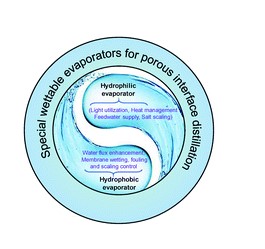
My recent Nanoscale Horizons publication [Nanoscale Horiz., 2025,10, 2960-2971] reports a floatable cellulose nanofiber aerogel with a gradient, directional porous structure for solar-driven hydrogen production and steam generation. A large-channel bottom layer enables rapid water transport, while a small-channel, floatable top layer enhances gas separation and hosts active materials; a micron-scale embossed surface boosts light absorption1. Integrated with a CTF-BIP photocatalyst, the aerogel achieves a hydrogen evolution rate of 60.7 mmol m2·h-1, and with MXene/r-GO as a photothermal layer, it delivers a water evaporation rate of 1.62 kg·m2·h-1 with excellent salt resistance and stable outdoor desalination performance. Next, I will focus on modifying nanomaterials using AI-driven approaches to advance research on solar-based thermal energy absorption and conversion.
Read Baisheng’s Emerging Investigator article here:
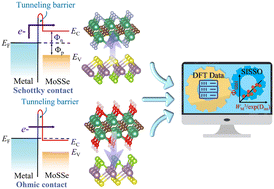
Contact engineering for 2D Janus MoSSe/metal junctions
Yu Shu, Ting Li, Naihua Miao, Jian Gou, Xiaochun Huang, Zhou Cui, Rui Xiong, Cuilian Wen, Jian Zhou, Baisheng Sa and Zhimei Sun
Nanoscale Horiz., 2024, 9, 264-277
Jovana Milić, Emerging InvestigatorUniversity of Turku, Finland |
 |
Jovana V. Milić has been an Associate Professor in Materials Chemistry at the University of Turku in Finland since September 2024, leading the Smart Energy Materials group as part of the Sustainable Materials & Manufacturing (SUSMAT) programme. She was an Assistant Professor and Swiss National Science Foundation PRIMA Fellow at the Adolphe Merkle Institute of the University of Fribourg in Switzerland since 2021.
She obtained her Dr.Sc. Degree in the Department of Chemistry and Applied Biosciences of ETH Zurich in 2017, and she was a postdoctoral scientist in the Laboratory of Photonics and Interfaces at EPFL in Switzerland, before establishing an independent academic career in 2020. She is an International Science Council Fellow and a member of the Young Academy of Europe as well as the Swiss and Global Young Academies. Her research focuses on the development of bioinspired supramolecular materials that can respond to external stimuli and adapt to their operating conditions in smart and sustainable (nano)technologies, with a special interest in photovoltaics and neuromorphic systems. Jovana has been a Scientific Editor for Nanoscale Horizons since October 2025. |
1) How do you feel about the Emerging Investigator collection in Nanoscale Horizons as a place to showcase research from early career researchers in nanoscience and nanotechnology?
The Emerging Investigator collection of Nanoscale Horizons provides a unique platform to showcase research by early-career researchers. This especially refers to the focus on highlighting conceptual advances and breakthroughs in nanoscience and nanotechnology, a distinctive quality that increases the visibility and impact of early-career researchers.
2) How has your research progressed on from the work published in your Emerging Investigators article?
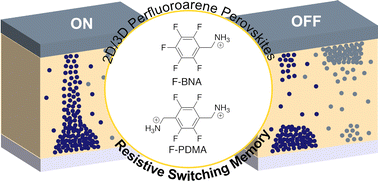
Since we last published the work highlighted in the Emerging Investigator series, which explored the use of perovskite solar cell architectures in neuromorphic computing based on mixed-dimensional perovskite heterostructures, we have expanded the concept to other light-controlled and “self-powered” neuromorphic systems. In particular, we realised the potential of more environmentally friendly lead-free materials in this context and employed unique light-responsive supramolecular systems, enabling their prolonged operational stability for IoT applications.
Read Jovana’s Emerging Investigator article here:
Resistive switching memories with enhanced durability enabled by mixed-dimensional perfluoroarene perovskite heterostructures
Michalis Loizos, Konstantinos Rogdakis, Weifan Luo, Paul Zimmermann, Alexander Hinderhofer, Jovan Lukić, Marinos Tountas, Frank Schreiber, Jovana V. Milić and Emmanuel Kymakis
Nanoscale Horiz., 2024, 9, 1146-1154
Mindaugas Juodėnas, Emerging InvestigatorKaunas University of Technology, Lithuania |
 |
Mindaugas Juodėnas received his M.Sc. and Ph.D. degrees in materials engineering in 2017 and 2021, respectively, from Kaunas University of Technology, Kaunas, Lithuania. His main topic has been the fabrication and study of surface lattice resonances in self-assembled plasmonic lattices with applications involving sensing and nanolasing. He was a postdoc at Chalmers University of Technology, where he worked on the monolithic integration of dielectric metasurfaces with GaAs vertical-cavity surface-emitting lasers (VCSELs) for biophotonics. Currently he is a senior researcher in Kaunas University of Technology, working on dielectric metasurfaces for high power laser applications.
Research interests:
|
1) How do you feel about the Emerging Investigator collection in Nanoscale Horizons as a place to showcase research from early career researchers in nanoscience and nanotechnology?
I think the Emerging Investigator platform is an excellent and necessary initiative. Early career researchers are often the driving force behind scientific progress, juggling grant writing, student supervision, teaching, and networking, all while very often still staying deeply involved in hands-on benchwork and manuscript preparation. Despite doing this heavy lifting, it can be easy for early career researchers to be overshadowed by more established, senior colleagues. A dedicated collection like this in Nanoscale Horizons gives a direct platform to showcase our contributions and build our identities within the nanoscience community.
2) Could you provide a brief summary of your most recent Nanoscale Horizons publication?
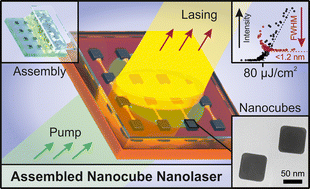
We demonstrated a scalable way to build plasmonic nanolasers. Instead of relying on cleanroom lithography, we used a template-assisted method to assemble mass-produced, monocrystalline silver nanocubes into periodic arrays. When paired with a fluorescent dye, these self-assembled arrays act as excellent resonators, emitting a highly directed laser beam at an impressively low energy threshold. Our work shows that these bottom-up arrays can match the performance of perfectly ordered top-down devices, paving the way for cheaper integration into diagnostics and optical communications equipment.
Read Mindaugas’ Emerging Investigator article here:
Lasing in an assembled array of silver nanocubes
Mindaugas Juodėnas, Nadzeya Khinevich, Gvidas Klyvis, Joel Henzie, Tomas Tamulevičius and Sigitas Tamulevičius
Nanoscale Horiz., 2025, 10, 142-149
Christoph Wolf, Emerging InvestigatorIBS Center for Quantum Nanoscience, South Korea |
 |
Christoph Wolf is currently a group leader/ principal investigator at the IBS Center for Quantum Nanoscience in Korea. His research focuses on theory aspects of quantum coherent systems at the atomic scale, which are realized using individual atoms or molecules engineered with the sub-nm precision of scanning probe techniques such as scanning tunneling microscopy or atomic force microscopy. He has pioneered coherent state manipulation of individual spins using exchange fields – virtual fields that emerge in magnetic transport junctions – which enable all-electric control of spins states without the need of time-varying magnetic fields. |
1) How do you feel about the Emerging Investigator collection in Nanoscale Horizons as a place to showcase research from early career researchers in nanoscience and nanotechnology?
I think it is a great idea to bring thought leaders in the community together and highlight their work. Especially for researchers in the early stages of their career it is critical – and often very difficult – to get the visibility their work deserves. The “Emerging Investigator” series plays a vital role in highlighting these contributions and the people behind it!
2) Where do you see the nanoscience field in the next 10 years?
Ten years is an extremely long timframe to predict or anticipate in such a fast moving research field. I believe that given the current progress in atomic-scale quantum systems which can be built and studied using scanning probe techniques and atom manipulation there is a real chance for technological applications – maybe in the next ten years but hopefully sooner!
Read Christoph’s Emerging Investigator article here:
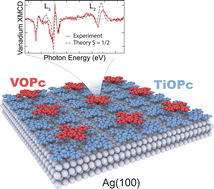
Template-directed 2D nanopatterning of S = 1/2 molecular spins
Kyungju Noh, Luciano Colazzo, Corina Urdaniz, Jaehyun Lee, Denis Krylov, Parul Devi, Andrin Doll, Andreas J. Heinrich, Christoph Wolf, Fabio Donati and Yujeong Bae
Nanoscale Horiz., 2023, 8, 624-631
We sincerely hope you enjoy reading about some of our Emerging Investigators! You can explore the full Nanoscale Horizons Emerging Investigator series here.









 Dr. Renren Deng is a professor at the School of Materials Science and Engineering, Zhejiang University (ZJU), China. In 2014, He received Ph.D. in Chemistry from National University of Singapore (NUS). From 2014−2016, he subsequently worked as a postdoctoral researcher at NUS and Cavendish Laboratory at Cambridge University. His research focuses on developing luminescent nanomaterials for applications in photovoltaics and biomedicine and understanding energy transfer through organic molecule−inorganic nanocrystal hybrid systems. Dr. Deng has published over 40 peer-reviewed papers in a range of prestigious journals including Nature, Nature Nanotechnology with 10,000+ combined citations. He has a number of awards including 2021 NSFC Excellent Young Scholars, and 2022 DPC’s Sturge Prize.Dr. Renren Deng is a professor at the School of Materials Science and Engineering, Zhejiang University (ZJU), China. In 2014, He received Ph.D. in Chemistry from National University of Singapore (NUS). From 2014−2016, he subsequently worked as a postdoctoral researcher at NUS and Cavendish Laboratory at Cambridge University. His research focuses on developing luminescent nanomaterials for applications in photovoltaics and biomedicine and understanding energy transfer through organic molecule−inorganic nanocrystal hybrid systems. Dr. Deng has published over 40 peer-reviewed papers in a range of prestigious journals including Nature, Nature Nanotechnology with 10,000+ combined citations. He has a number of awards including 2021 NSFC Excellent Young Scholars, and 2022 DPC’s Sturge Prize.













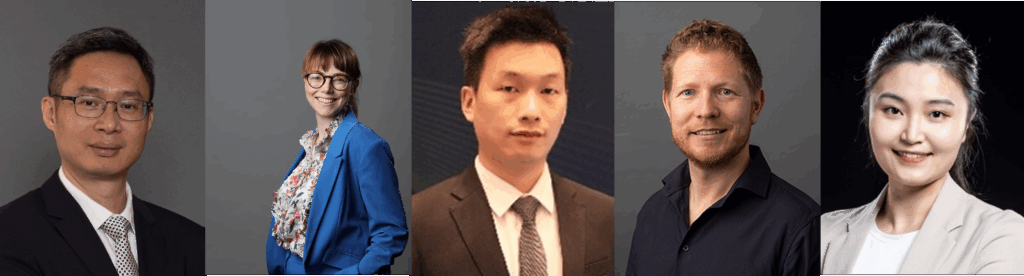





 Amina Benchohra started her studies at Sorbonne Université where she successively obtained a Bachelor in Biology-Chemistry and a Master Degree in Molecular Chemistry. She completed her Ph.D, in 2019, on the design of switchable hybrid materials based on magnetic molecular complexes, at the Institut Parisien de Chimie Moléculaire (IPCM, Paris) under the supervision of Prof David Kreher and Prof Rodrigue Lescouëzec. She then joined Moltech-Anjou (Angers, France), to work with Dr Sébastien Goeb on self-assembled materials for solar cells applications. After moving to the design of Cr(III)-Ln assemblies for energy-transfer upconversion -as post-doctoral researcher and then as a junior lecturer- in the group of Prof Piguet (Geneva), she took up an assistant professor position at the Université de Bretagne Occidentale (Brest, France) in 2023. Her current research focuses on functional molecular materials.
 Fangfang Cao received her Ph.D. in Inorganic Chemistry from the University of Science and Technology of China in 2019, under the co-supervision of Prof. Jinsong Ren and Prof. Xiaogang Qu. She then pursued postdoctoral research at the National University of Singapore under the guidance of Prof. Xiaoyuan Chen. Her research focuses on nanocatalytic medicine, encompassing artificial enzymes, bioorthogonal catalysts, plasma catalysts, and piezoelectric materials for the treatment of cancer, infections, and inflammation. More recently, her work has expanded to microbial therapy, leveraging probiotics and viruses for translational medicine.
 Dr. Jaime Andrés Pérez Taborda received the Engineering Physics degree (Hons.) from the Technological University of Pereira, Colombia, in 2011, and the master\’s degree in synchrotron radiation and particle accelerators from the Universitat Autònoma de Barcelona in 2013, as well as his Ph.D (Cum laude) from the Institute of Microelectronics of Madrid, Complutense University of Madrid, and Higher Council of Scientific Research CSIC, Spain. He has published research articles and book chapters on various subjects including piezoelectric nanostructures for acoustic wave sensors, nanoengineering new thermoelectric materials with high efficiencies obtained by physical methods, such as sputtering and pulsed laser deposition. In addition, he is also a co-founder and President of the Colombian Society of Physics Engineering.
 Jiandong Yao obtained his B.S. degree in Materials Physics from School of Physics Science & Engineering, Sun Yat-sen University (2013) and his Ph.D. degree in Condensed Matter Physics from School of Physics, Sun Yat-sen University (2018). Then, he served as a research fellow in Nanyang Technological University. Currently, he is an Associate Professor of School of Materials Science & Engineering, Sun Yat-sen University (One Hundred Talents Program). The focus of his research lies in the synthesis of novel nanomaterials and their application in electronic/optoelectronic devices
 Jianfang Wang obtained his BS degree in inorganic chemistry and software design in 1993 from the University of Science and Technology of China, his MS degree in inorganic chemistry in 1996 from Peking University, and his PhD degree in physical chemistry in 2002 from Harvard University. He did postdoctoral study in the University of California Santa Barbara from 2002 to 2005. He joined the Department of Physics, The Chinese University of Hong Kong (CUHK) in 2005 as an assistant professor. He became an associate professor in 2011 and a full professor in 2015. He was the Assistant Dean (Education) of the Faculty of Science of CUHK from August 2015 to July 2021 and has been the Chairperson of the Department of Physics of CUHK since August 2021. His current research interests are nanoplasmonics, nanophotonics, and photocatalysis. He has published more than 310 papers with a total citation of more than 48,200 and an h-index of 103.