
Nanoscale Horizons 10th Anniversary ‘Community Spotlight’ – Meeting our Emerging Investigators
Celebrating our Nanoscale Horizons Emerging Investigators!
Last year, we were pleased to celebrate the 10th anniversary of Nanoscale Horizons. We are so grateful to our fantastic community of authors, reviewers, board members and readers, and wanted to showcase some of them in a series of ‘Community Spotlight’ blog articles.
In our latest ‘Community Spotlight’ blog, we feature some of our Nanoscale Horizons Emerging Investigators. Our Emerging Investigators are rising stars in the early stages of their independent careers, who have been identified as having the potential to influence future directions in the field.
Dr Shalini Singh, Emerging InvestigatorUniversity of Limerick, Ireland |
 |
Shalini Singh is an associate professor in the Department of Chemical Sciences at the University of Limerick, where she heads the Functional Nanomaterial Research Group. She also serves as the Energy Research Pillar Lead at the Bernal Institute. Her research centres on the development and synthesis of compositionally intricate inorganic nanocrystals and nanocomposites, with a focus on understanding their structural and surface properties and exploring their roles in energy conversion, storage technologies, and catalytic systems. She has published over 50 peer-reviewed articles. Her work is funded by Research Ireland and Horizon Europe, and she is a funded investigator within the AMBER and SSPC research centres. |
1) How do you feel about the Emerging Investigator collection in Nanoscale Horizons as a place to showcase research from early career researchers in nanoscience and nanotechnology?
I feel it is a great venue for early career researchers. It gives increased visibility for researchers who are building their independent research programs, applying for their independent grants and establishing their labs. Also, when these articles are highlighted on the social media posts by RSC or Nanoscale Horizons handles, community engagement is really good. You get appreciated by your peers and senior scientists in the field. This collection also defines a cohort of rising scientists, which helps with building connections at conferences and within research communities.
2) In your opinion, how could members of the community be more involved with the journal?
Beyond submitting your excellent research, I think peer review is a very good way to engage with the journal. Especially for young researchers, volunteering to be a reviewer gives you the opportunity of seeing good science first hand and to provide them with constructive feedback. The editorial board can also recommend new board members to diversify expertise and geography. I like that Nanoscale Horizons has a broad landscape that allows for collaborative submissions that bridge subfields. This can also be used as way to submit conceptual advancements that hybrids chemistry, physics, engineering at the nanoscale. These submissions should be encouraged to raise the impact of the journal.
Read Shalini’s Emerging Investigator article here:
Colloidal synthesis of the mixed ionic–electronic conducting NaSbS2 nanocrystals
Maria Zubair, Syed Abdul Ahad, Ibrahim Saana Amiinu, Vasily A. Lebedev, Mohini Mishra, Hugh Geaney, Shalini Singh and Kevin M. Ryan
Nanoscale Horiz., 2023, 8, 1262-1272

Valentina Castagnola, Emerging InvestigatorItalian Institute of Technology, Italy |
 |
Valentina Castagnola is a chemist by training, with a research profile strongly rooted in a multidisciplinary approach at the interface of chemistry, biology, and physics. She obtained her Master’s degree in Photochemistry and Materials Chemistry from the University of Bologna. She carried out her PhD at the Laboratory for Analysis and Architecture of Systems (LAAS) in Toulouse, part of the French National Centre for Scientific Research (CNRS). During her doctoral training, Dr. Castagnola pioneered a new line of research within the laboratory focused on the development of highly biocompatible neuroprosthetic devices for chronic implantation, particularly brain–machine interfaces. Her work was recognized with the Best PhD Thesis Award from the doctoral school.To deepen her understanding of molecular mechanisms occurring at the interface between nanomaterials and biological systems, Dr. Castagnola joined the Centre for BioNano Interactions (CBNI) at University College Dublin, Ireland, a centre of excellence directed by Prof. Kenneth Dawson. From 2015 to 2019, she worked as a postdoctoral fellow on several projects investigating fundamental nanoscale biological interactions, participating in several EU large consortia projects. |
In 2020, she became a Researcher at the Center for Synaptic Neuroscience and Technology (NSYN) of the Italian Institute of Technology (IIT), directed by Prof. Fabio Benfenati. There, she further expanded her expertise in neuroscience, contributing to projects addressing both the physiopathology of the blood–brain barrier and the interactions between functional nanomaterials and the nervous system.
Since 2025, Dr. Castagnola has joined the Nanomedicine Platform at the Fondazione Pisana per la Scienza, where she was awarded a tenure track grant to establish her own independent research activity. Her current work focuses on the development of minimally invasive, targeted, biomimetic strategies aimed at rescuing neural function loss in neurodegenerative diseases.
1) Where do you see the nanoscience field in the next 10 years?
I envision the nanoscience field increasingly supported at multiple levels by modeling and atomistic-level simulations through machine learning tools, enabling a transition toward personalized medicine.
2) How has your research progressed on from the work published in your Emerging Investigators article?
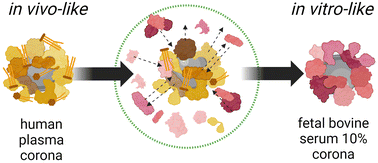
Given the limitations that have emerged in the in vitro screening of solid nanoparticles in accurately recapitulating the in vivo complexity of biomolecular corona formation (Nanoscale Horizons 9(5), 2024: 799–816), I am now moving toward a biomimetic strategy. This approach aims to endow functional nanomaterials with a biologically derived corona that is minimally altered by the physiological environment.
Read Valentina’s Emerging Investigator article here:
Sources of biases in the in vitro testing of nanomaterials: the role of the biomolecular corona
Valentina Castagnola, Valeria Tomati, Luca Boselli, Clarissa Braccia,e Sergio Decherchi, Pier Paolo Pompa, Nicoletta Pedemonte, Fabio Benfenati and Andrea Armirotti
Nanoscale Horiz., 2024, 9, 799-816
Pengzhan Sun, Emerging InvestigatorUniversity of Macau, China |
 |
Pengzhan Sun is an assistant professor at the Institute of Applied Physics and Materials Engineering, University of Macau. He obtained his Bachelor’s degree in Mechanical Engineering and Automation (2012) and Ph.D. degree in Materials Science and Engineering (2016), both from Tsinghua University. From 2016 to 2022, he was a research associate at University of Manchester. His research interests include fundamental understanding of molecular transport under confinement, the synthesis and processing of 2D crystals building blocks and their rationally designed assemblies for emerging technologies in environment, energy, informatics, etc. He has published many papers as first/corresponding authors in decent journals including Nature, PNAS, Nature Communications, Science Advances, etc. Also, he has been awarded many important prizes including MIT Technology Review 35 Innovators Under 35 (China), Materials Research Society (MRS, USA) Graduate Student Award (Silver), NSFC Excellent Young Scientist Fund, etc. |
1) How do you feel about the Emerging Investigator collection in Nanoscale Horizons as a place to showcase research from early career researchers in nanoscience and nanotechnology?
As one of the early career researchers that have been highlighted in the Emerging Investigator collection, I feel this collection is really an ideal platform for showcasing young researchers’ outputs and further spreading them to a wider community. Getting started from zero is always challenging for independent and early career researchers, who will face numerous difficulties and unimaginable pressure. It would be difficult to get funding and would be rather slow to publish papers at a short period and more importantly, it would be difficult for early career researchers to have applications from promising students or postdocs. In this context, the help from this platform is pretty valuable. On one hand, the interview with an author of a newly published paper gives readers a feeling that research is not only about publishing a paper but more about the research itself. Readers would have a better view about the newly published research through the in-depth introduction by the corresponding author. On the other hand, the journal and the Emerging Investigator collection themselves are powerful platforms for spreading new and important research in the nanoscience field to a wider community, which would also in turn help others to know more about the early career researchers, and further develop connections and collaborations with others.
2) Could you provide a brief summary of your most recent Nanoscale Horizons publication?
My recently published research is about ion transport through micrometer size and solid state pores. This is an old and seemingly well-established research area. From a theoretical perspective, ion transport through such large pores under an electric field can be described well by the Hall equation, which involves only the bulk conductivity. Surface conduction is predicted to be important only for dilute solutions and the importance would become more pronounced in nanometer size pores. Nonetheless, this theoretical claim remains unsupported by experiments, especially for micropores, where the experimentally observed ion conductance is intuitively thought to be dominated by bulk conduction (because of the good fitting to the Hall equation involving only bulk conductivity). In the newly published paper (Nanoscale Horiz., 2026, DOI: 10.1039/D5NH00582E), our electrical measurements of ion transport through silicon nitride pores having diameters ranging from sub-µm up to a few µm show that the surface conduction can be significant and non-negligible in such large pore systems, especially for dilute solutions. The surface conduction can be further enhanced by modifying the wettability of the silicon nitride surface, for example, by coating it with two-dimensional crystals such as graphene, graphene oxide, or monolayer titania sheets. The resulting surface conductivity is seen to increase upon increasing the solution concentration and can be increased by up to one or two orders of magnitude. We believe these experimental observations are important because they provide insights into ion transport in micropore systems and further suggest the possibility of exploiting surface conduction in such large pores for new technologies that were previously believed to apply only to nanopores.
Read Pengzhan’s Emerging Investigator article here:
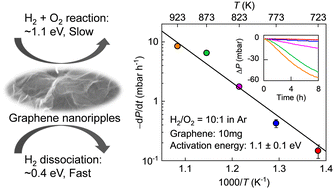
Catalytic selectivity of nanorippled graphene
Yu Liu, Wenqi Xiong, Achintya Bera, Yu Ji, Miao Yu, Shi Chen, Li Lin, Shengjun Yuan and Pengzhan Sun
Nanoscale Horiz., 2024, 9, 449-455
Mita Dasog, Emerging InvestigatorDalhousie University, Canada |
 |
Dr. Mita Dasog (she/her), FRSC (UK), is an Associate Professor and Tier 1 Canada Research Chair at Dalhousie University, jointly appointed in the Departments of Chemistry and Civil Engineering. She earned her B.Sc. in Chemistry from the University of Saskatchewan and her Ph.D. from the University of Alberta. Following a research stay at the Technical University of Munich as a Green Talents visiting scholar, she completed postdoctoral work at the California Institute of Technology. Dr. Dasog returned to Canada in 2016 to establish her research group at Dalhousie University, where her team develops porous silicon and refractory plasmonic nanomaterials for sustainable fuel production, water purification, and passive mining. Her work integrates green chemistry, materials science, and environmental engineering to advance renewable energy and circular economy solutions. |
1) Could you provide a brief summary of your most recent Nanoscale Horizons publication?
Magnesiothermic reduction is widely used because it offers a practical, scalable, and comparatively low-temperature route for converting silica into porous silicon while retaining the structural features of the starting material. This is particularly important given the growing demand for porous silicon, whose high surface area and tunable porosity make it attractive for application in lithium-ion batteries, photocatalysis, sensing, drug delivery, and optoelectronics. In our recent Nanoscale Horizons paper, we investigated the reduction mechanism using in-situ powder X-ray diffraction experiments carried out at the SLAC beamline, allowing us to directly follow product evolution during the reaction. We found that the reaction initiates at lower temperatures than previously assumed, that magnesium particle size strongly influences the reaction pathway, and that magnesium silicide functions as a key intermediate rather than the byproduct it had long been considered to be. By resolving how intermediates are formed and consumed as a function of temperature, this work provides a clearer mechanistic picture of porous silicon formation and offers practical insight for improving reaction efficiency, product purity, and structural control in scalable production.
2) How has your research progressed on from the work published in your Emerging Investigators article?
Since our Emerging Investigators article, we have expanded the work by examining how silica particle size influences the magnesiothermic reduction process. We found that similar to magnesium, silica particle size affects not only reaction kinetics and heat distribution, but also the mechanistic pathway itself, including the formation and evolution of intermediate phases. Variations in particle size can shift the balance between competing reactions, ultimately impacting silicon yield and product purity. Building on this deeper understanding of how both magnesium and silica particle sizes govern reaction behavior and mechanism, we are now applying these insights to scale-up efforts. By accounting for particle-size effects and the associated mechanistic changes, we aim to maintain structural control, reproducibility, and product quality as the process is translated to larger batch sizes.
Read Mita’s Emerging Investigator article here:
Unlocking the secrets of porous silicon formation: insights into magnesiothermic reduction mechanism using in situ powder X-ray diffraction studies
Sarah A. Martell, Maximilian Yan, Robert H. Coridan, Kevin H. Stone, Siddharth V. Patwardhan and Mita Dasog
Nanoscale Horiz., 2024, 9, 1833-1842
We sincerely hope you enjoy reading about some of our Emerging Investigators! Keep an eye out for our future Community Spotlight blogs highlighting more of our Emerging Investigators.