Archive for May, 2015

A photochemical method for separating rare earth metals

Rare earth metals are notoriously hard to separate from one another, due to the similarity of their chemical properties. At present, the complex series of solvent extraction steps to extract rare earths from their ores are only carried out in China. With their increasing utilisation in modern technologies, scientists have been collaborating to develop cleaner less intensive methods of rare earth separation.

Tom Van Gerven and Koen Binnemans of the University of Leuven in Belgium have worked together to combine their expertise and develop a photochemical method for extracting the europium and yttrium from an ionic liquid solution. Both elements are present in their trivalent state, but if europium absorbs light of the correct wavelength (provided by a low pressure mercury lamp) it will reduce to the divalent state and be precipitated out.

Want to know more?

Read the full article in Chemistry World by Jonathan Midgley.

Or, take a look at the original article which is free to access until 8th July 2015:

Photochemical recycling of europium from Eu/Y mixtures in red lamp phosphor waste streams” by B Van den Bogaert et al., DOI:10.1039/c4gc02140a

Digg This
Reddit This
Stumble Now!
Share on Facebook
Bookmark this on Delicious
Share on LinkedIn
Bookmark this on Technorati
Post on Twitter
Google Buzz (aka. Google Reader)

Recent HOT articles in Green Chemistry

Check out the following HOT articles, these have all been made free to access for a limited time:

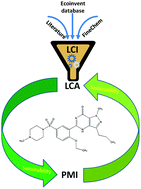
Graphical Abstract
Life Cycle Inventory improvement in the pharmaceutical sector: assessment of the sustainability combining PMI and LCA tools

Daniele Cespi, Evan S. Beach, Thomas E. Swarr, Fabrizio Passarini, I. Vassura, Peter J. Dunn and Paul T. Anastas
Green Chem., 2015, Advance Article
DOI: 10.1039/C5GC00424A

Conventional and microwave assisted hydrolysis of urban biowastes to added value lignin-like products
Daniele Rosso, Jiajun Fan, Enzo Montoneri, Michele Negre, James Clark and Davide Mainero
Green Chem., 2015, Advance Article
DOI: 10.1039/C5GC00357A

Efficient Bromination of Olefins, Alkynes, and Ketones with Dimethyl Sulfoxide and Hydrobromic Acid

Song Song, Xinwei Li, Xiang Sun, Yizhi Yuan and Ning Jiao
Green Chem., 2015, Advance Article
DOI: 10.1039/C5GC00528K

Nanoclusters of Cu (II) Supported on Nanocrystalline W (VI) Oxide: A Potential Catalyst for Single-Step Conversion of Cyclohexane to Adipic Acid
Shankha S. Acharyya, Shilpi Ghosh and Rajaram Bal
Green Chem., 2015, Advance Article
DOI: 10.1039/C5GC00379B

Digg This
Reddit This
Stumble Now!
Share on Facebook
Bookmark this on Delicious
Share on LinkedIn
Bookmark this on Technorati
Post on Twitter
Google Buzz (aka. Google Reader)

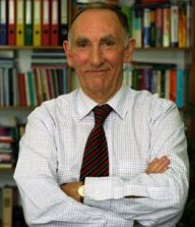
Professor Roger A. Sheldon elected Fellow of the Royal Society

We would like to congratulate Professor Roger Sheldon, of Delft University of Technology and Green Chemistry Advisory Board member, in being elected as a fellow of the Royal Society. Fellows of the Royal Society are elected for life through a peer review process on the basis of excellence in science.

As Professor of Biocatalysis & Organic Chemistry, Roger is recognised for leading a distinguished career in which he has made pioneering contributions to catalytic oxidation, biocatalysis and green chemistry and has enabled the gap between organic synthesis and catalysis to be bridged. He also introduced the E-factor which has played a major role in drawing attention to the problem of waste generation in chemicals manufacture and provides an impetus for developing cleaner and more sustainable processes. In his most recent appointment as Distinguished Professor of Biocatalysis Engineering at the School of Chemistry at the University of the Witwatersrand, Johannesburg, Republic of South Africa, Roger will be involved in the development of green (enantio)selective biocatalytic processes. Roger is also Chief Executive Officer of CLEA Technologies B.V., a Biotech company specializing in the development of green biocatalytic processes and the cost-effective immobilization of enzymes as cross-linked enzyme aggregates.

Roger is revered by the green chemistry community as one of the founding fathers of the field and of this journal.

Read a selection of Roger’s papers – free to access until 15th June 2015:

The E Factor: fifteen years on, Roger A. Sheldon, Green Chem., 2007,9, 1273-1283
DOI: 10.1039/B713736M,

Green solvents for sustainable organic synthesis: state of the art, Roger A. Sheldon, Green Chem., 2005,7, 267-278
DOI: 10.1039/B418069K,

Biocatalysis in ionic liquids, Roger A. Sheldon, Rute Madeira Lau, Menno J. Sorgedrager, Fred van Rantwijk and Kenneth R. Seddon, Green Chem., 2002,4, 147-151
DOI: 10.1039/B110008B,

Professor Dr Roger A. Sheldon—65 years on, Ilya I. Moiseev,   Shun-Ichi Murahashi,   Martyn Poliakoff,  Kenneth R. Seddon and   Vytas K. Švedas, Green Chem., 2008,10, 270-270
DOI: 10.1039/B719347P

Digg This
Reddit This
Stumble Now!
Share on Facebook
Bookmark this on Delicious
Share on LinkedIn
Bookmark this on Technorati
Post on Twitter
Google Buzz (aka. Google Reader)