Outstanding Reviewers for Environmental Science: Processes & Impacts in 2019

We would like to highlight the Outstanding Reviewers for Environmental Science: Processes & Impacts in 2019, as selected by the editorial team, for their significant contribution to the journal. The reviewers have been chosen based on the number, timeliness and quality of the reports completed over the last 12 months.

We would like to say a big thank you to those individuals listed here as well as to all of the reviewers that have supported the journal. Each Outstanding Reviewer will receive a certificate to give recognition for their significant contribution.

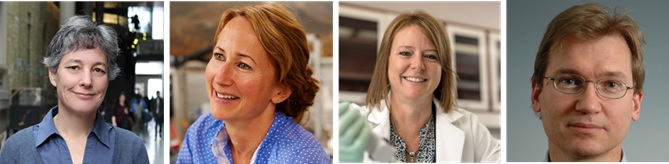
Jonathan Benskin, Stockholm University, ORCID: 0000-0001-5940-637X
Delphine Farmer, Colorado State University, ORCID: 0000-0002-6470-9970
Paul Helm, University of Toronto Scarborough, ORCID: 0000-0002-7462-4217
Gerrad Jones, Oregon State University, ORCID: 0000-0002-1529-9506
Tara Kahan, University of Saskatchewan, ORCID: 0000-0001-5074-1155
Anne Soerensen, Stockholm University, ORCID: 0000-0002-8490-8600
Roxana Sühring, Stockholm University, ORCID: 0000-0002-7285-8044
Patricia Tcaciuc, Massachusetts Institute of Technology, ORCID: 0000-0001-7881-2314
Zhanyun Wang, ETH Zürich, ORCID: 0000-0001-9914-7659
Cora Young, York University, ORCID: 0000-0002-6908-5829

We would also like to thank the Environmental Science: Processes & Impacts board and the Environmental Nanotechnology community for their continued support of the journal, as authors, reviewers and readers.

If you would like to become a reviewer for our journal, just email us with details of your research interests and an up-to-date CV or résumé.  You can find more details in our author and reviewer resource centre

Digg This
Reddit This
Stumble Now!
Share on Facebook
Bookmark this on Delicious
Share on LinkedIn
Bookmark this on Technorati
Post on Twitter
Google Buzz (aka. Google Reader)

Latest HOT, Review and Open Access content from ESPI


We are delighted to share with you a hand-picked selection of papers recently published in Environmental Science: Processes & Impacts (ESPI).

HOT papers – as recommended by our referees

Evidence for a kinetically controlled burying mechanism for growth of high viscosity secondary organic aerosol
Barbara J. Finlayson-Pitts et al

Predicting Cr(VI) adsorption on soils: the role of the competition of soil organic matter
Zhenqing Shi et al

Risk-based water quality thresholds for coliphages in surface waters: effect of temperature and contamination aging
Alexandria B. Boehm

Read more HOT papers at rsc.li/espi-hot

Reviews & Perspectives – timely overviews of key topics in environmental science

The concept of essential use for determining when uses of PFASs can be phased out
Ian T. Cousins et al

Photochemistry of iron in aquatic environments
Caroline Schmidt et al

Positive matrix factorization on source apportionment for typical pollutants in different environmental media: a review
Fengwen Wang et al

Read more Reviews at rsc.li/espi-reviews

Open Access – read for free!

Comprehensive screening of quaternary ammonium surfactants and ionic liquids in wastewater effluents and lake sediments
Sarah G. Pati and William A. Arnold

Emerging investigator series: use of behavioural endpoints in the regulation of chemicals
Marlene Ågerstrand et al

The molecular interactions of organic compounds with tire crumb materials differ substantially from those with other microplastics
Thorsten Hüffer, Maren Wehrhahn and Thilo Hofmann

Read more Open Access content at rsc.li/espi-oa

**************************************************

We hope you enjoy reading these papers, and we welcome your future submissions to the journal.

Digg This
Reddit This
Stumble Now!
Share on Facebook
Bookmark this on Delicious
Share on LinkedIn
Bookmark this on Technorati
Post on Twitter
Google Buzz (aka. Google Reader)

13th International Symposium on Biogeochemistry of Wetlands

The 13th International Symposium on Biogeochemistry of Wetlands will take place on March 22-25 2021, at the Hilton Baton Rouge Capitol Center in Baton Rouge, Louisiana, USA.

Wetland biogeochemistry is dynamic and involves cycling or exchange or flux of materials between living and non-living components of an ecosystem. Biogeochemistry is an interdisciplinary science which includes the study of interactive biological, geological and chemical processes regulating the fate and transport of nutrients and contaminants in soil, water and atmospheric components of an ecosystem. Biogeochemistry also provides a framework to integrate physical, chemical and biological processes functioning in an ecosystem at various spatial and temporal scales. This international symposium provides a framework for scientists to share technical information on various topics related to coupled biogeochemical cycling of macro-elements and associated organic and inorganic contaminants. The goal is to improve our understanding of the role wetlands perform in regulating and mitigating impacts of global climate change and sea level rise.

Registration Information

Gov’t, Corporate & Non-Profit Attendees
Early Bird Discounted Registration $525 
Regular Reduced Registration $575 
Late Registration $625 
To register, visit the conference website here.

To find out more about the conference and register, visit the conference website: https://conference.ifas.ufl.edu/biogeo2021/

Digg This
Reddit This
Stumble Now!
Share on Facebook
Bookmark this on Delicious
Share on LinkedIn
Bookmark this on Technorati
Post on Twitter
Google Buzz (aka. Google Reader)

Environmental Chemistry of Water, Sediment, Soil and Air: Early careers meeting

Join us for this one-day meeting on the Environmental Chemistry of Water, Sediment, Soil and Air for PhD students, postdoctoral researchers, and early career scientists in industry.

You will have the opportunity to share your research in a supportive environment, network with fellow early career scientists, and hear about the career opportunities available to Environmental Chemists.

When and Where

11th March 2020 09:30-17:30

The Royal Society of Chemistry, Burlington House, Piccadilly, London, W1J 0BA, United Kingdom

Abstract Submission

We invite you to present your latest research as either a platform presentation or as a poster.

A prize will be awarded for the best oral and poster presentation.

Please use the template provided to prepare your abstract and email it to Dr Tom Sizmur (t.sizmur@reading.ac.uk) by 9am on Monday 17th February 2020

Registration

This event is FREE for RSC members who submit an abstract for a poster or oral presentation before 9am on Monday 17th February 2020 (a code will be provided that enables registration without charge).

Otherwise, registration is £25 for RSC members and £45 for non-members registering before the early bird deadline on Monday 17th February 2020 (£35 for RSC members and £55 for non-members up to the standard registration deadline on Monday 2nd March 2020).

Please register here

Keynote Speakers

Dr Laura Carter

Laura Carter is a University Academic Fellow in Soil Science at the University of Leeds. Laura’s research focuses on understanding the fate and uptake of emerging contaminants in the natural environment, with particular focus on soil-plant systems. Laura has recently been awarded a UKRI Future Leaders Fellowship (£1.2M) to investigate the risks of emerging contaminants in agricultural systems, following land application of sludges and wastewater (e.g. pharmaceuticals, microplastics).

Antony Poveda

Antony originally studied Neuroscience at the University of Manchester. This was followed, eventually, by a Masters in Science Communication from UWE. He has been part of the team running the online STEM engagement project I’m a Scientist since 2015. In that time Antony has supported hundreds of scientists in taking part, helping early career researchers engage school students across the country whilst developing their own communication skills.

Digg This
Reddit This
Stumble Now!
Share on Facebook
Bookmark this on Delicious
Share on LinkedIn
Bookmark this on Technorati
Post on Twitter
Google Buzz (aka. Google Reader)

Emerging Investigator Series: Marlene Ågerstrand

Marlene Ågerstrand is an Assistant Professor at the Department of Environmental Science (ACES) at Stockholm University. She received a PhD from the Royal Institute of Technology in Stockholm in 2012, and did a post doc at Stockholm University 2012-2016. Her research concerns regulatory (eco)toxicology, with a focus on the assessment and management of chemicals. Aspects of interests include the use of expert judgment and science in hazard and risk assessments. The aim of her work is to improve the understanding of the decision-making process in chemicals regulation.

Read Marlene Ågerstrand’s Emerging Investigator Series article “Use of behavioural endpoints in regulation of chemicals” and read more about her in the interview below:

Your recent Emerging Investigator Series paper focuses on use of behavioural studies in chemicals regulation. How has your research evolved from your first article to this most recent article?

I started my career evaluating the importance of voluntary environmental initiatives from the pharmaceutical industry, and then moved on to evaluating chemicals regulation. Through various collaborations throughout my career I have had the opportunity to broaden my knowledge and research field. Currently, I look forward to continue the collaboration with the group of ecologists and ecotoxicologists I meet when writing this paper on the use of behavioural studies in chemicals regulation. It has been extremely rewarding to be introduced into this research field. It is such a privilege to have a work that constantly offers the opportunities to learn new stuff, and animal behaviour is such a fascinating field.

What aspect of your work are you most excited about at the moment?

I have two PhD-students that are starting just now and I look forward to working with them. They both have valuable experiences from experimental work and human health assessments that I think will benefit our joint projects. We will continue evaluating the European chemicals regulation, focusing for example on the REACH regulation. When doing my PhD I had a really supportive supervisor and I look forward to developing my tutor skills.

In your opinion, what are the most important questions to be asked/answered in this field of research?

Research on regulation of chemicals has largely focused on how science is used in decision-making but we also know that other factors, like value judgements and economic considerations, can influence how decisions are made. To fully address and understand the complexity of decision-making natural science researchers need to collaborate with social science researchers. I look forward to doing that.

What do you find most challenging about your research?

Since my research to a large extent is based on literature studies, lack of transparency in the regulatory system is a limiting factor. One of my overarching research goal is to understand how science is used, or not used, in decision-making. If hazard and risk assessments (i.e the basis of chemicals management) and the underlying studies are not publicly available it limits the possibilities to perform the research. But I sense that change is coming. Everywhere in society we see demands for increased transparency, and also in this field.

In which upcoming conferences or events may our readers meet you?

I usually attend the SETAC Europe meeting but I will unfortunately not go to the meeting in Dublin. I am trying to reduce my CO2-emissions so flying is not an option at the moment. I have travelled by train to several meetings in Europe and it works surprisingly good so I will stick to that for a while. It helps to have a department that supports environmental friendly choices, e.g. by paying the difference between the flight ticket and the train ticket.

How do you spend your spare time?

With family and friends, preferably doing outdoor activities. Climbing, orienteering, mountain biking, cross-country skiing and skating are preferred sports. Eating Vietnamese food is also prioritized. I have always prioritized my spare time (and sleeping) and I think that has been important for my health and thereby my continued career in academia.

Which profession would you choose if you were not a scientist?

I need to feel strongly motivated to do a good job, so if I worked outside academia it would have to be something within sustainable development. We only have one planet.

Can you share one piece of career-related advice or wisdom with other early career scientists?

The best thing I did in my early career was to start networking. It has opened so many doors and resulted in interesting and rewarding research collaborations. I also think it has contributed to making my research more relevant for stakeholders, and thereby increased the societal impact of my work. I started by attending meetings, emailing people I wanted to get to know, and organising sessions and other events. This is time-consuming in the beginning but after a while it gets self-generating and you can enjoy the fruits of your labour.

Digg This
Reddit This
Stumble Now!
Share on Facebook
Bookmark this on Delicious
Share on LinkedIn
Bookmark this on Technorati
Post on Twitter
Google Buzz (aka. Google Reader)

Air pollution science and policy – a Christmas conference

It seems that everyday we open our newspapers there’s another story on air pollution. In the last few months I’ve seen reports that air pollution is damaging my brain, my eyesight and evenmaking me go bald. It’s not just traffic that’s to blame. I read that the solvents in my home printer are adding to the problem and that there are air pollution problems near airports, on the underground and in train stations.

This December Burlington House, home of the Royal Society of Chemistry, will once again host an air pollution conference that will explore the science behind these issues. It’s not all bad news. Looking beyond the newspaper headlines there’s some positive stories too.

Cities are investigating and introducing new measures to meet legal limits for air pollution and protect their citizens. The demonstrators who are taking to the streets and demanding urgent action to tackle our climate crisis are also demanding clean air.

In 2019 the UK Government launched its new Air Quality Strategy, embracing the science that says that air pollution stems from many sources and that we need to tackle them all. That includes traffic (of course) but also less obviously wood burning and agriculture. Increasing numbers of countries and cities are making long-term commitments to phasing out petrol and diesel cars but that will not end air pollution from transport as more and more evidence is emerging about the particle pollution that comes from tyre, brake and road wear.

Building on the success of this long-running annual event, the 2019 conference will present an update on a range of relevant topics. The presenters will include internationally recognised experts, and there will also be a range of contributed talks and posters, providing a broad and up-to-date survey of the measurement, regulatory and scientific issues affecting air quality.

The conference will again be held in collaboration with Defra’s Air Quality Expert Group (AQEG), with sessions based on the group’s recently-published reports, including those on non-exhaust particle emissions and assessing the effectiveness of interventions intended to improve air quality. Presentations will also be made on topics that AQEG are currently investigating, including developments in vehicle exhaust emissions and non-methane volatile organic compounds. There will also be a session devoted to recent advances in airborne particle measurements, linked to the European AEROMET project.

The conference takes place on 10th and 11th December and spaces are still available see: http://www.rsc.org/events/detail/41198/air-quality-responding-to-new-challenges to book your place.

Gary Fuller

Gary Fuller is an air pollution scientist at King’s College London. His book, The Invisible Killer is published by Melville House and explores the past, present and future of air pollution.

Digg This
Reddit This
Stumble Now!
Share on Facebook
Bookmark this on Delicious
Share on LinkedIn
Bookmark this on Technorati
Post on Twitter
Google Buzz (aka. Google Reader)

Emerging Investigator Series: Adrien Mestrot

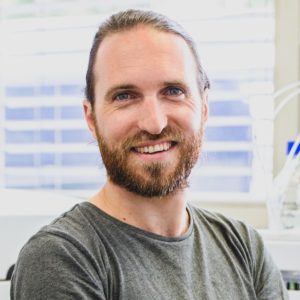
Adrien Mestrot is Assistant Professor Tenure-Track for Soil Science at the Institute of Geography of the University of Bern (Switzerland). He graduated from the Université de Pau et des Pays de l’Adour (UPPA, France) and obtained his Ph.D. from the University of Aberdeen (UK) in 2011. He then worked with the Soil Science Group at the University of Bern where he received a Marie Curie IEF Fellowship in 2013 and a SNSF Professorship in 2016.

Read Adrien Mestrot’s Emerging Investigator Series article “Mercury mobility and methylmercury formation in a contaminated agricultural flood plain: Influence of flooding and manure addition” and read more about him in the interview below:

Your recent Emerging Investigator Series paper focuses on Mercury mobility and methylmercury formation in a contaminated agricultural flood plain: Influence of flooding and manure addition. How has your research evolved from your first article to this most recent article?

During my PhD at the University of Aberdeen, I studied the biovolatilisation of arsenic from soil and my first paper described a new method to trap, identify and quantify volatile arsenic species. Biovolatilisation and biomethylation of arsenic are intrinsically linked and these two mechanisms are still not well understood. Having gained knowledge on speciation analysis and arsenic transformations in soils, I set out to explore the fate of other trace elements that are redox sensitive and undergo biomethylation and biovolatilisation in soils. I was particularly interested in antimony and mercury. I continued with this line of research as a Marie Sklodowska Curie fellow at the Institute of Geography of the University of Bern, where I could take full advantage of the state-of-the-art laboratory. During this time, I modified, developed and validated extraction and analytical techniques to measure volatile and dissolved forms of these three toxic elements in soils, soil solution and the atmosphere. After the fellowship, I obtained a SNSF Professorship and I more recently became Assistant Professor tenure-track for Soil Science – all in the same institute. I am now able to use these extraction and analysis techniques to understand the drivers behind the formation of these chemical species, while focusing on the effect of climate change (flooding, temperature) and agricultural practices (manure amendments) on the release, biomethylation and biovolatilisation of mercury, antimony and arsenic in soils.

What aspect of your work are you most excited about at the moment?

What currently excites me a lot as a new faculty member is the opportunities that are given to me to talk about the research conducted in my group. I assume people hear that a new person has been appointed and are curious to know more. During the last couple of years I have received several invitations to give talks in other research groups and Federal Offices in Switzerland. This is a great chance for me to tell the bigger story behind the various current projects and provides opportunities for building a diverse professional network in Switzerland.

In your opinion, what are the most important questions to be asked/answered in this field of research?

Generally, soils are seen as sinks for trace elements since these can bind to different soil components such as e.g. iron and manganese (oxy-)hydroxides, clays or organic matter. However, when flooding occurs, trace elements bound to iron and manganese (oxy-)hydroxides are released through a mechanism called reductive dissolution. Once released to the soil solution, the trace elements are available to soil organisms and plants and could be transported to groundwater. Microorganisms can also then take-up these elements and transform them to more toxic (e.g. methylmercury), more mobile or even volatile species. Current global climate predictions tell us that extreme weather events with heavy rains and flooding will become more frequent, thus turning soils into a potential source of trace elements. Therefore, for me, the most important question is about the potential influence of climate change on the release and the speciation of trace elements in soils and if it can influence their global biogeochemical cycle.

What do you find most challenging about your research?

In order to understand and characterise the release, biomethylation and biovolatilisation of trace elements in soils, one must have a very broad set of skills. From soil science to advanced analytical chemistry and a sound understanding of microbial processes. However, this means that collaborations are necessary which is always interesting and an opportunity to extend one’s research horizon.

In which upcoming conferences or events may our readers meet you?

I try to attend as few conferences as necessary, both for family reasons (I have a young son) and to reduce my carbon footprint. I tend to favour conferences that are local or can be reached by train although this is not always possible! Every year I attend the Swiss Geoscience Meeting and every two years there is ICOBTE. Of course I try to go to Goldschmidt as often as possible since it is an important conference in my field. This year I will attend ContaSed, which we are organising in Bern, and Eurosoil, which will be taking place in August 2020 in Geneva.

How do you spend your spare time?

I like gardening and DIY. These are activities that allow me to focus for a few hours on an object or task through a well-defined activity with a start and an end, which is very different from our day-to-day work as scientists. I also love hiking, climbing and spending time with my family and friends.

Which profession would you choose if you were not a scientist?

I would choose to be a science journalist, a science communicator or a managing editor for a journal. I don’t think I would enjoy working in a non-science related job.

Can you share one piece of career-related advice or wisdom with other early career scientists?

My advice for early career researchers is to take part in the different commissions of your institution and become a representative for your peers (e.g. PhD or postdoc representative). It will allow you to network with more senior members of your institutions (lecturers, professors etc..) while contributing to shape your place of work and potentially your university and beyond. In my opinion, the most pressing issues to be addressed in research include improving gender equality, work-life balance and sustainability.  I think that early career researchers and newly appointed faculty members have strong leverage to push forward the required changes in academia.

Digg This
Reddit This
Stumble Now!
Share on Facebook
Bookmark this on Delicious
Share on LinkedIn
Bookmark this on Technorati
Post on Twitter
Google Buzz (aka. Google Reader)

International Year of the Periodic Table: ESPI Themed Issue on Mercury

To celebrate the International Year of the Periodic Table 2019 (IYPT) we are delighted to share with you ESPI’s recent collection on Mercury Biogeochemistry, Exposure, and Impacts

 Edited by ESPI Associate Editor Helen Hsu-Kim (Duke University) and Guest Editors Chris Eckley (EPA) and Noelle Selin (MIT), this issue highlights a selection of high-quality research relating to the fate and effects of mercury on humans and the environment. We’ve made these articles free to access until 30th November – we hope you enjoy reading them!

Read the full collection

Highlights include:

Hg isotopes reveal in-stream processing and legacy inputs in East Fork Poplar Creek, Oak Ridge, Tennessee, USA
Jason Demers et al

Responses of deposition and bioaccumulation in the Great Lakes region to policy and other large-scale drivers of mercury emissions
Judith Perlinger et al

Microbial community structure with trends in methylation gene diversity and abundance in mercury-contaminated rice paddy soils in Guizhou, China
Dwayne Elias et al

Mining legacy across a wetland landscape: high mercury in Upper Peninsula (Michigan) rivers, lakes, and fish
Charles Kerfoot et al

Emerging investigator series: methylmercury speciation and dimethylmercury production in sulfidic solutions
Andrew M. Graham et al

Also, why not browse more of our great element-focussed work on Arsenic, Iron, Cadmium and the Radioelements

Click here to return to the Journal homepage

Digg This
Reddit This
Stumble Now!
Share on Facebook
Bookmark this on Delicious
Share on LinkedIn
Bookmark this on Technorati
Post on Twitter
Google Buzz (aka. Google Reader)

Halogenated (semi)volatile organic compounds (“X(S)VOCs”) Themed Issue

Environmental Science: Processes & Impacts (ESPI) seeks your high-impact research for our upcoming Themed Issue on Halogenated (semi)volatile organic compounds (“X(S)VOCs”).

Guest Edited by Elizabeth Edwards (University of Toronto), Lucy Carpenter (University of York), Sarah Blossom (University Arkansas Medical Science) and ESPI Associate Editor Paul Tratnyek (Oregon Health & Science University) this issue will focus especially on chlorinated solvents (TCE), their metabolites, disinfection byproducts (THMs), etc. and their environmental occurrence, fate, effects, and remediation. A wide range of contributions are encouraged, from any compartment (air, soil, water, biota, etc.).

Submissions for this Themed Issue are due by 1st November 2019 – if you would like to submit to this Themed Issue, please contact the Environmental Science: Processes & Impacts Editorial Office at espi-rsc@rsc.org to let us know.


Guest Editors (Left to Right): Elizabeth Edwards (University of Toronto), Lucy Carpenter (University of York), Sarah Blossom (University Arkansas Medical Science) and ESPI Associate Editor Paul Tratnyek (Oregon Health & Science University)

Click here to return to the journal homepage

Digg This
Reddit This
Stumble Now!
Share on Facebook
Bookmark this on Delicious
Share on LinkedIn
Bookmark this on Technorati
Post on Twitter
Google Buzz (aka. Google Reader)

Cryosphere Chemistry: Themed Issue in ESPI

Environmental Science: Processes & Impacts (ESPI) seeks your high-impact research for our upcoming Themed Issue on Cryosphere Chemistry.  

Guest Edited by Rose Cory and Kerri Pratt (University of Michigan) this issue will showcase studies on chemical processes in sea ice, snow, glaciers, ice sheets, permafrost soils as well as studies on waters draining permafrost soils. A wide range of contributions are encouraged, from atmospheric chemistry (e.g. atmospheric aerosols and trace gases) to biogeochemistry (e.g. chemical weathering or organic matter chemistry). Laboratory, field or modeling studies from diverse environments (e.g. glaciers, high latitude and high altitude systems) are welcomed.

Submissions for this Themed Issue are due by 29th February 2020 – if you would like to submit to this Themed Issue, please contact the Environmental Science: Processes & Impacts Editorial Office at espi-rsc@rsc.org to let us know.


Guest Editors (Left to Right): Rose Cory (University of Michigan) and Kerri Pratt (University of Michigan)

Click here to return to the journal homepage

Digg This
Reddit This
Stumble Now!
Share on Facebook
Bookmark this on Delicious
Share on LinkedIn
Bookmark this on Technorati
Post on Twitter
Google Buzz (aka. Google Reader)