Archive for May, 2022

Emerging Investigator Series: Chiara Giorio

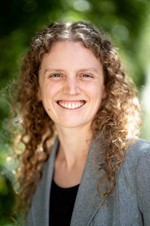
Chiara Giorio is Assistant Professor in Atmospheric Chemistry at the Yusuf Hamied Department of Chemistry of the University of Cambridge. Chiara graduated in Chemistry in 2008 from the University of Padua (Italy), where she remained for her PhD in Molecular Sciences (awarded in 2012). She was a postdoc at the University of Cambridge in the group of Professor Markus Kalberer until 2016, a researcher at the French National Centre for Scientific Research (CNRS) in 2017, and tenure-track Assistant Professor at the University of Padua until the beginning of 2020, when she returned to Cambridge. She is now leading a multidisciplinary research group working on air quality and climate science. She is the recipient of the 2021 RSC Environment, Sustainability & Energy Division Early Career Award and a Fellow of the Community for Analytical Measurement Science (CAMS).

Read Chiara’s Emerging Investigator Series article “Aqueous-phase processing of atmospheric aerosol influences dissolution kinetics of metal ions in an urban background site in the Po Valley” and read more about her in the interview below:

Your recent Emerging Investigator Series paper focuses on Aqueous-phase processing of atmospheric aerosol influences dissolution kinetics of metal ions in an urban background site in the Po Valley. How has your research evolved from your first article to this most recent article?

I had the fortune to touch many different aspects of environmental science research during my career so far. My first paper concerned the environmental fate of systemic pesticides and exposure routes of honeybees. Back then I was already working on air pollution too. These two, apparently very distinct, research lines had something in common. One of the exposure routes for honeybees was through dust (containing pesticides) emitted in the atmosphere during sowing of corn fields. Now my work is mainly focused on air pollution, trying to understand the mechanisms of toxicity but also monitoring people exposure to air pollution.

What aspect of your work are you most excited about at the moment?

I am part of collaborative research projects aiming at monitoring air quality in people’s homes and testing strategies to improve the quality of the air they breathe through available technologies but also behavioural change. I am really excited about this because I feel I can make a positive impact on people’s lives.

In your opinion, what are the most important questions to be asked/answered in this field of research?

We are on the verge of a climate catastrophe and current research is focusing on mitigation strategies. However, we don’t know how air pollution, currently killing more than 7 million people per year worldwide, is going to be affected by climate change. How can we  improve air quality as well as mitigating climate change?

What do you find most challenging about your research?

My research is interdisciplinary and requires a wide range of expertises. It can be very challenging to put together the right team and promote a good communication between people with different backgrounds but at the same time it can be very exciting and rewarding.

In which upcoming conferences or events may our readers meet you?

I will be at the RSC “Analytical Research Forum 2022” in London in June and at the RSC “#EnvChem2022: Chemistry of the Whole Environment Research” in York in July.

How do you spend your spare time?

I love cooking, sports, and tv series but, right now, in my spare time I am mostly a mum of a lovely little boy.

Which profession would you choose if you were not a scientist?

I am very happy to be a scientist, but if I had to choose another job I would probably be a chef in a small restaurant. I love cooking and I like small characteristic restaurants that base their menu on local products. They always have a unique flavour and unique atmosphere.

Can you share one piece of career-related advice or wisdom with other early career scientists?

My advice is to believe in yourself, in your ability to reach your objectives and to not get discouraged by people and events.

Digg This
Reddit This
Stumble Now!
Share on Facebook
Bookmark this on Delicious
Share on LinkedIn
Bookmark this on Technorati
Post on Twitter
Google Buzz (aka. Google Reader)

Emerging Investigator Series: Rachel C. Scholes

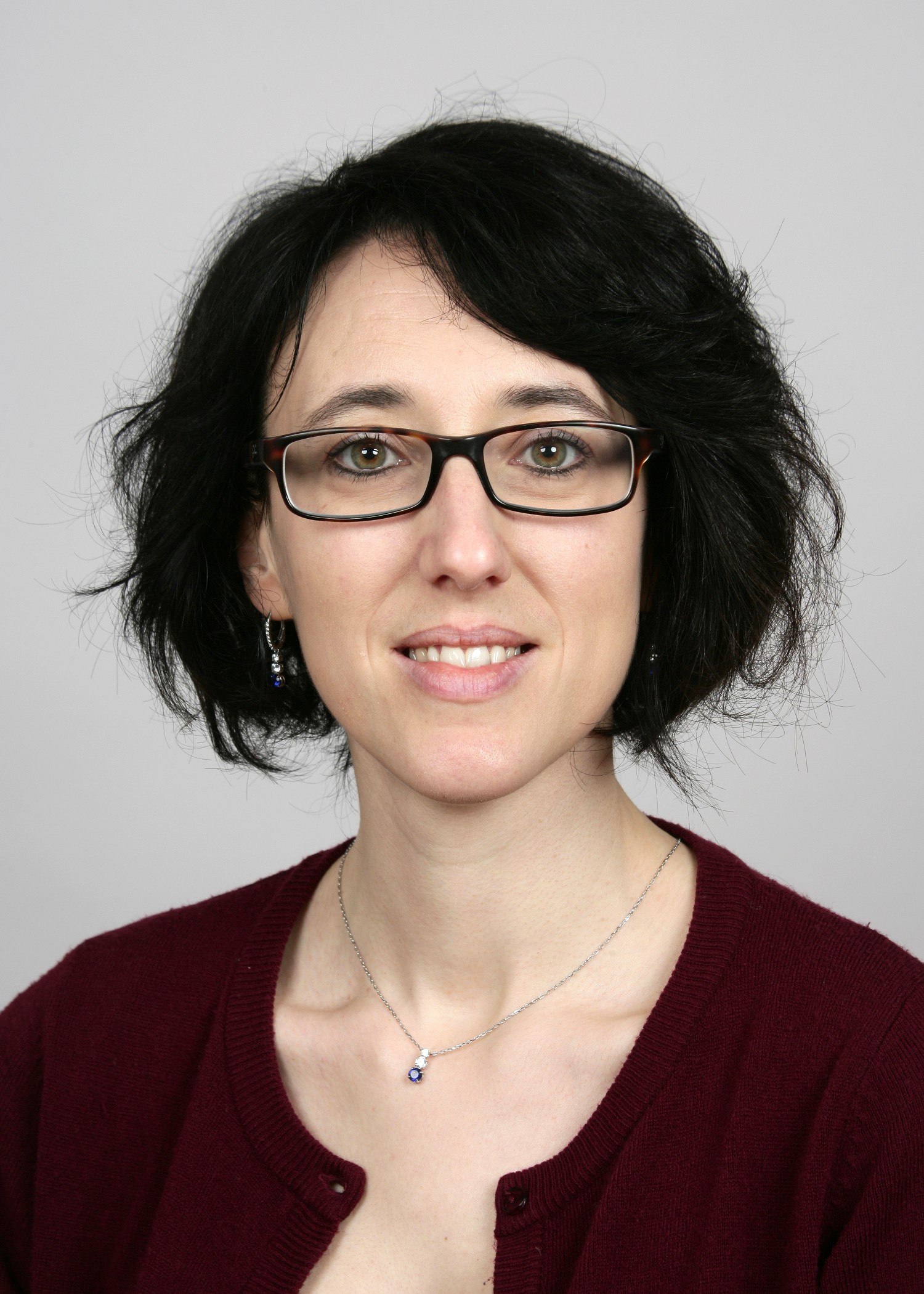
Rachel Scholes is an Assistant Professor in the Department of Civil Engineering at the University of British Columbia, where she leads a research group in environmental engineering. Her research focuses on trace organic contaminants and their fate in treatment systems for water and wastewater. Currently, her group is investigating photochemical transformations of emerging contaminants and the formation of oxidized and nitrogenous byproducts, as well as the fate of trace organic contaminants in nature-based treatment systems. Her research aims to address the implications of trace contaminants for human health, ecotoxicity, and the development of safer alternatives to hazardous chemicals. Prior to joining UBC, she completed a postdoctoral appointment at the U.S. Department of Agriculture’s Bioproducts Research Unit, where she conducted hazard analyses of emerging contaminants and evaluated safer alternatives to chemical antimicrobials. She earned an M.S. and Ph.D. in Environmental Engineering from the University of California, Berkeley, and a B.S. in Chemical Engineering from Northwestern University, and she completed a Fulbright Graduate Student Fellowship in the Department of Chemistry at the University of Otago.

Read Rachel’s Emerging Investigator Series article “Contributions of Reactive Nitrogen Species to Transformations of Organic Compounds in Water: A Critical Review” and read more about her in the interview below:

Your recent Emerging Investigator Series paper focuses on Contributions of Reactive Nitrogen Species to Transformations of Organic Compounds in Water: A Critical Review. How has your research evolved from your first article to this most recent article?

I was very fortunate to have opportunities to explore research as an undergraduate student, and I discovered a deep interest in environmental chemistry, particularly the fate of trace organic contaminants. Since then, I have approached trace contaminants from multiple perspectives. My first, first-author paper is from my Fulbright research in an environmental chemistry laboratory, which focused on the bioaccumulation of halogenated pesticides in trout from a large river system on New Zealand’s South Island. My studies in New Zealand allowed me to develop strong analytical chemistry skills and an understanding of contaminant fate and transport. I brought that background in environmental chemistry to my PhD research in environmental engineering. In my subsequent research, I queried the fate of pharmaceuticals and urban-use pesticides in engineered wetlands, and worked with green chemistry experts to assess lower-hazard alternatives to harmful chemicals. Each of these experiences has allowed me to refine my approach to addressing trace contaminants and their impacts. When I was studying open-water wetlands during my PhD, I became very interested in photochemical transformations, and reactive nitrogen species in particular. This most recent article builds on my PhD research by focusing on reactive nitrogen species and the resulting formation of toxic byproducts in water treatment processes.

What aspect of your work are you most excited about at the moment?

I recently started my position as a faculty member at UBC and am very excited to develop my own research group. I really enjoy sharing the excitement of doing research with my students. I am most looking forward to working with them to further advance our understanding of trace contaminant transformations and mitigate the risks posed by toxic chemicals.

In your opinion, what are the most important questions to be asked/answered in this field of research?

Transformation products are increasingly being considered in environmental engineering research, especially as high-resolution mass spectrometry becomes more widely available in research laboratories. With hundreds of thousands of parent compounds, it is unrealistic to experimentally assess all of the possible transformation products. Even if we know which products will form, we often do not have sufficient information about their toxicity and fate. As advanced analytical tools enable us to better detect the plethora of chemicals present in the environment, we need methods to prioritize which ones are of highest concern. This is one reason why I am interested in reactive nitrogen species – because they result in the formation of nitrated and nitrosated byproducts, which are often more toxic and less easily degraded than the parent compounds.

What do you find most challenging about your research?

Being somewhere between an environmental chemist and engineer presents the challenge that my research often spans a wide range from fundamental to applied. My research requires that we expand our mechanistic understanding of contaminant transformations while studying realistically complex environmental systems. For example, when we look at constructed wetlands, we have multiple processes directly affecting contaminant transformation (e.g., sorption, biotransformation, photolysis) as well as design parameters that influence these processes indirectly, such as hydraulic retention time, flow paths, and redox conditions. As someone who loves to understand the underlying principles of a system and the practical implications, I am constantly trying to bridge the gap between fundamentals and applications.

In which upcoming conferences or events may our readers meet you?

I will be at the American Chemical Society meeting this August in Chicago, and I hope to be attending more in-person conferences soon.

How do you spend your spare time?

I spend as much of it outdoors as possible. I love trail running, backpacking, and exploring the Pacific Northwest. I am also a musician. On stormy days you’ll likely find me playing my French horn or reading a novel.

Which profession would you choose if you were not a scientist?

When choosing an undergraduate major, I pretty seriously considered becoming a music teacher. In fact, I started out in a dual degree program majoring in music education and chemical engineering. If I was not a scientist, I would probably be directing music groups and teaching kids to play musical instruments.

Can you share one piece of career-related advice or wisdom with other early career scientists?

Spend the time to forge strong relationships and learn from your peers. Learning about research directions adjacent to your own can spur new ideas and building strong relationships with other students and postdocs can help you create a network of support in your future career. I keep in touch with friends from graduate school both inside and out of academia. Being in touch with other new faculty members has provided me with an incredibly helpful support system.

Digg This
Reddit This
Stumble Now!
Share on Facebook
Bookmark this on Delicious
Share on LinkedIn
Bookmark this on Technorati
Post on Twitter
Google Buzz (aka. Google Reader)