
Emerging Investigator Series: Carrie McDonough
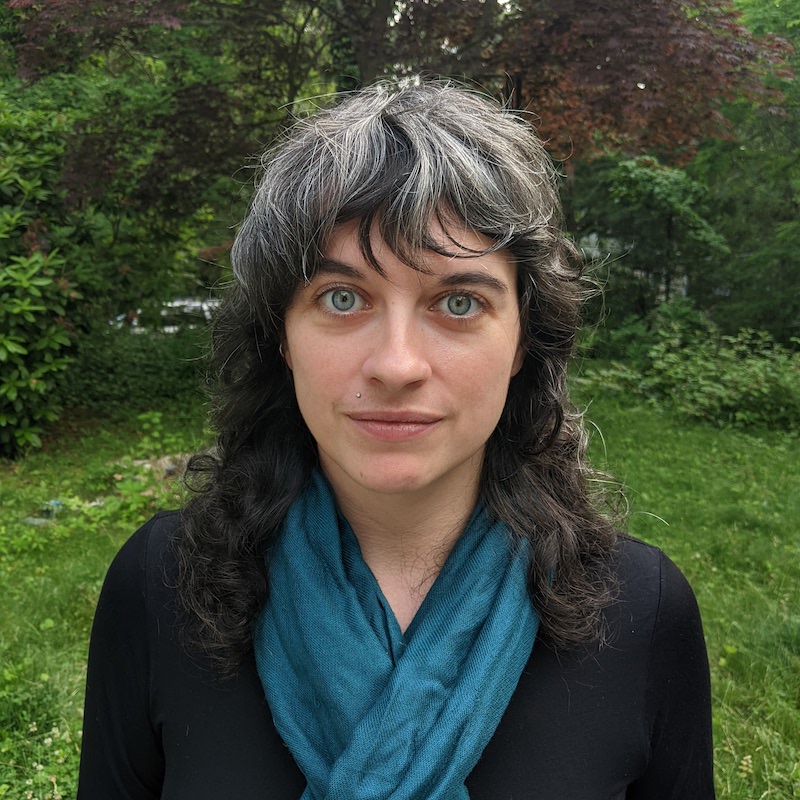
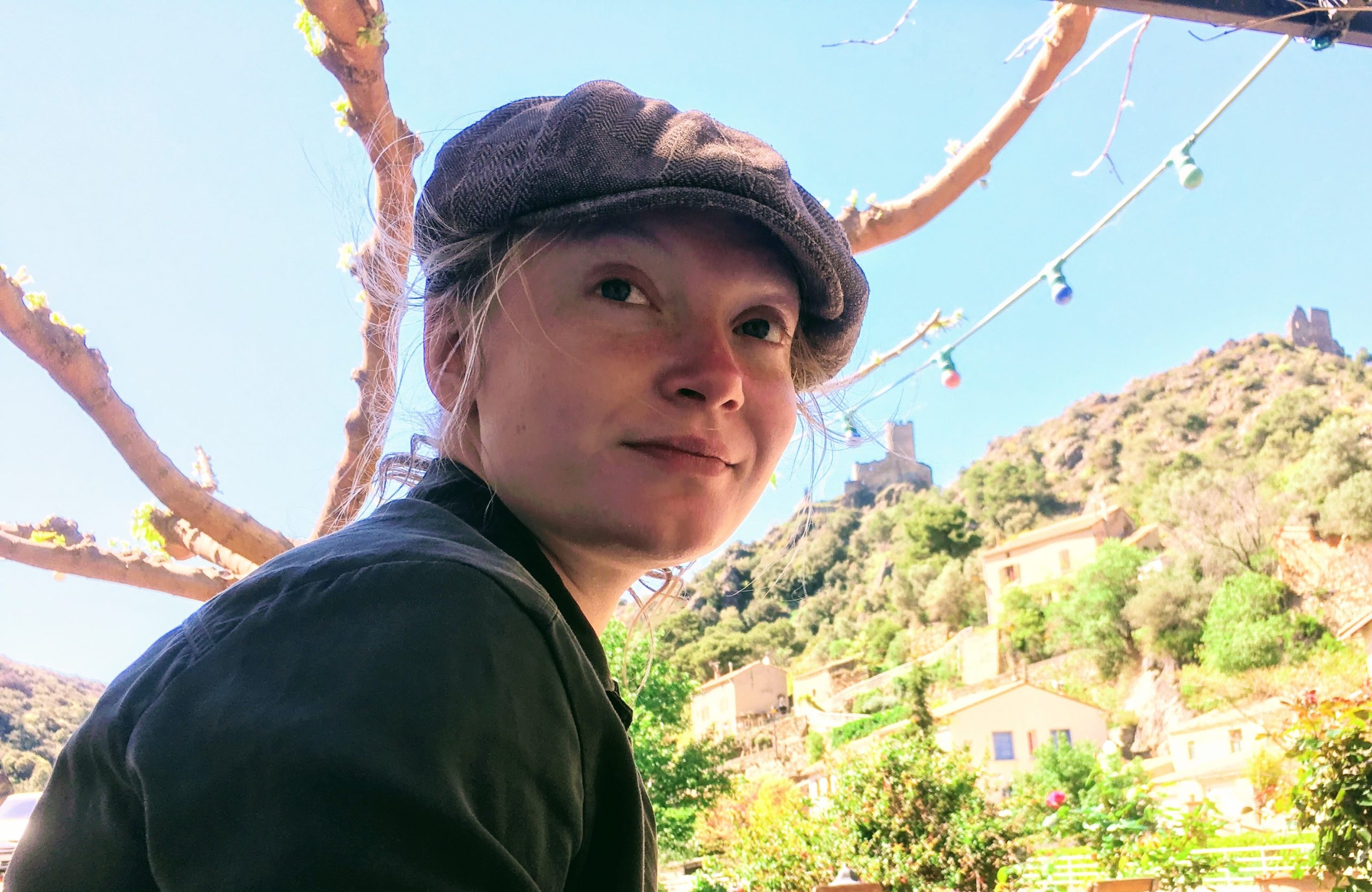
Carrie McDonough, Ph.D. is an associate professor without tenure in the Department of Chemistry at Carnegie Mellon University (CMU), where she leads a research group focused on environmental analytical chemistry and chemical biology. She teaches two courses at CMU, Analytical Chemistry and Environmental Exposure & Risk Assessment. McDonough works at the intersection of analytical chemistry, environmental chemistry, and chemical biology. She received her B.Sc. in Chemistry from the Massachusetts Institute of Technology (MIT) in 2008 and Ph.D. in Chemical Oceanography from the University of Rhode Island Graduate School of Oceanography (URI GSO) in 2017. Her dissertation focused on measuring air-water diffusive exchange of hydrophobic organic contaminants in the Great Lakes and Canadian Arctic using polyethylene passive samplers. She then completed a postdoctoral fellowship at Colorado School of Mines, where she developed nontarget high-resolution mass spectrometry methods for per/polyfluoroalkyl substances (PFASs) in biological fluids to investigate toxicokinetics of complex PFAS mixtures and human exposure to novel PFASs. Broadly, McDonough’s current research explores how the molecular structure and chemical properties of pollutants influence their accumulation in living organisms. Her overarching objective is to develop analytical and bioanalytical strategies to identify and prioritize particular contaminants of concern for remediation and toxicological investigation.
Read Carrie’s Emerging Investigator Series article “Identification and transformation of per/polyfluoroalkyl substances (PFASs) in residential wastewater and effluent from alternative treatment systems” and learn more about her in the interview below:
Your recent Emerging Investigator Series paper focuses on PFAS in residential septic waste and their transformation/fate in nitrogen-removing biofilters. How has your research evolved from your earliest work to this most recent article at the start of your research career?
My work is evolving to explore more strategies for interpreting nontarget analytical data. While we continue to do a lot of “top-down” suspect screening as an initial way to process nontarget datasets, Dr. Smolinski’s work compared suspect screening workflows to “bottom-up” untargeted workflows. These workflows prioritize high resolution mass spectrometry (HRMS) features based on trends indicative of homologous series. This paper is also one of the first from my group to use ion mobility spectrometry. Ion mobility allows for orthogonal separation of mixtures based on molecular size and shape, which is a new tool for us to incorporate into our workflows to tease out isomers and prioritize halogenated species based on their unique mass-to-size (m/z to collision cross section) trends.
Dr. McDonough, you’ve worked in many different academic departments in the U.S. and have such interdisciplinary experience in Chemistry, Engineering, and Oceanography. How does it feel to be in a Chemistry department and continuing to expand your independent research career at Carnegie Mellon University?
This is my first time back in a Chemistry department since earning my Bachelor’s, and I’m very excited to be here! Being in a Chemistry department makes a lot of sense for my group, as we are working to move beyond studies of what chemicals are in the environment and in our bodies, to studies of why these chemicals are in the environment and in our bodies. In other words, what fundamental properties make a molecule accumulate and persist in the body, and what mechanisms drive this accumulation. I was fortunate to find a Chemistry Department at CMU where applying Chemistry to environmental questions is a major focus and I can explore these questions.
In your Emerging Investigators paper, you use the pluralized PFASs acronym. What is your hot take on the PFAS vs PFASs controversy?
My take is that it’s just grammar! Both are technically correct as long as the acronym is defined and used consistently. Saying “PFAS compounds” is never correct (substances compounds). I like explicitly pluralizing the acronym because it allows me to distinguish between a specific PFAS and multiple PFASs. This makes it more clear that PFASs are multiple diverse compounds, not just one material. When communicating with the public using non-pluralized PFAS can be misleading. For example, if someone says “This technology removes PFAS”, what they really mean is “This technology removes some PFASs.”
What aspect of your work are you most excited about at the moment?
I’m really excited about re-purposing technologies developed for drug discovery and using them to assess the bioavailability and bioaccumulation potential of synthetic chemicals. There are a lot of promising tools like biomimetic chromatography and predictive computational strategies, for learning about how chemicals behave in the body. Most were developed with the goal of improving drugs but they can also be harnessed to learn about how to design safer chemicals for everyday uses.
In your opinion, what are the most important questions to be asked/answered in this field of research?
I think one of the most important questions is: How can we design safer chemicals from the start? How can we integrate environmental and human health risk assessment directly into the development pipeline and teach the next generation of chemists that this is a critical part of novel substance development.
What do you find most challenging about your research?
Right now, the most challenging thing about my research is difficulties getting sustained, impartial, nonpolitical funding for scientific research in the United States. We are under tremendous pressure to change the way we frame our research in ways that are harmful to our academic freedom and scientific integrity.
In which upcoming conferences or events may our readers meet you?
I am almost always at the American Chemical Society (ACS) meeting, where I often help organize sessions focused on chemical exposure and emerging contaminants. I’ll be giving a talk in the James Morgan Awards session at ACS New Orleans in Spring 2027.
How do you spend your spare time?
I recently re-discovered my love of reading (and I highly recommend re-reading 1984 if you haven’t for a while). I also like brewing beer, playing guitar, and spending time with my two dogs.
Which profession would you choose if you were not a scientist?
I would probably be a writer. I used to write a lot of horror fiction. I also love writing songs.
Can you share one piece of career-related advice or wisdom with other early career scientists?
Remember that as scientists, our job is to tell people what they need to know, not what they want to hear. This is such an important responsibility, and it’s the reason that people give us their trust, which is a precious thing.