


Emerging Investigator Series: Roxana Sühring
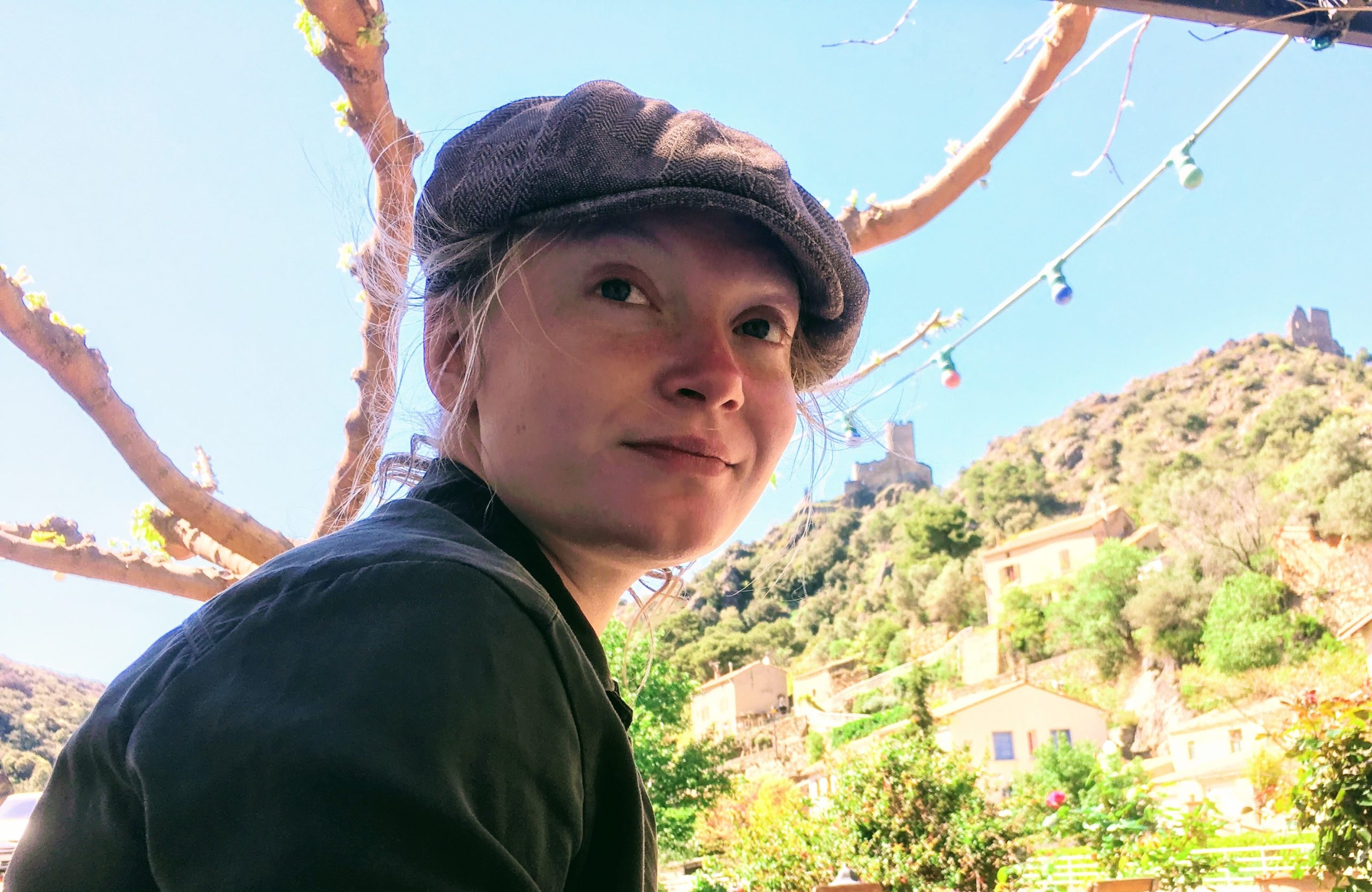
Roxana Sühring is an associate professor in environmental analytical chemistry at the Department of Chemistry and Biology and Toronto Metropolitan University in Toronto, Canada. Sühring’s research focuses on emerging contaminants from plastic-based consumer products such as microplastics and plastic additives. Her interdisciplinary research encompasses the development of analytical strategies for characterization of contaminants as well as the investigation of chemical, physical and socio-economic factors that drive pollution in the environment. Sühring holds a diploma (MSc equivalent) in environmental engineering from the University of Applied Science Luebeck and a doctor of natural sciences (D. rer. nat.) in environmental chemistry from Leuphana University Lueneburg and Helmholtz-Zenrum Geesthacht, both in Germany. After graduation, Sühring completed postdoctoral fellowships at the University of Toronto and Stockholm University and also worked as a government policy advisor in the United Kingdom and The Netherlands.
Read Roxana’s Emerging Investigator Series article “Unpacking PET: comparative analysis of leachable and extractable contaminants from virgin and recycled polyethylene terephthalate bottles and textiles” and learn more about her in the interview below:
Your recent Emerging Investigator Series paper focuses on leachable chemical additives in virgin and recycled bottles and textiles. You’ve published 7 papers in our RSC family of Environmental Science journals and we thank you for your support! How has your research evolved from your earliest work to this most recent article at the start of your research career?
From the start of my master’s thesis (German Diplomarbeit), I have been incredibly fortunate to work with a variety of fantastic PIs who have encouraged me to explore my interests as an environmental scientist. I have always viewed environmental contamination as a justice question, even though that understanding was relatively “fuzzy” initially, it shaped how I approached research. Early on, I developed analytical methods to quantify halogenated flame retardants. However, I quickly expanded my research questions from “is it there?” and “how do we measure it” to the identification of local patterns, chemical fingerprinting, and source tracking. I was very much driven by the question of “what can we do about contamination”. This question also led me to leave academia to work for the UK and Netherlands governments as a policy advisor and scientific risk assessor for offshore chemicals. This was a transformative experience, both in teaching me about processes in regulatory chemical risk assessment and research and my preference for applied academic research, which led me to a postdoctoral position at Stockholm University. Also a transformative experience, because the project integrated non-targeted analysis and bioaccumulation studies. This combined my love for mass-spectrometry and pattern analysis with mechanistic evaluations of chemical fate. My research program at Toronto Metropolitan University is a culmination of these experiences.
I am fascinated with characterization of complex mixtures and mechanistic evaluations on the fate of these mixtures in the environment. At the same time, my regulatory/policy experience strongly informs the question we are asking in the lab – looking e.g. at opportunities for chemical prioritization and identifying potential candidates for regulatory action.
You completed a foundational education in Germany and then you gained career experience all over the world before joining the faculty at Toronto Metropolitan University. What would you like to share about the experience of repeatedly starting afresh in new locations?
This has been one of the things that most drew me towards a career as a scientist: the ability to work in a lot of different places and contexts with a lot of different people. I know this is definitely not for everyone, but I am a traveler at heart and it’s been a wonderful adventure.
The plastic bottle is an immediate visual icon for consumer plastics. However, in your Emerging Investigators paper, you also studied plush toys and pillows (as well as bottles and children’s clothing). Do you think we are any closer to reducing plastic use in society?
I think that there is a lot more awareness across society about potential downsides to plastics than there was even a few years ago. This is a very positive development in my opinion, even if we are nowhere near solving the global plastic pollution problem that we have. This increased awareness is a very important step towards making sure that e.g. stricter regulation and reduction measures for plastic use will be accepted by society. The problem is that plastics are so integrated into everyone’s daily lives, our products, and processes that there is definitely no “quick fix” to reducing plastic pollution. One area where I think we could make a huge difference though is by standardizing the use of plastic additives. Currently, we have thousands of plastic additives that are used in a variety of combinations in plastic products with next to no standardization regarding the application or combination of additives. This is a huge problem for potential leaching of hazardous chemicals from plastic products, but also for recyclability of plastics, because, the chemical additive cocktail in recycled products is almost impossible to predict and that is a problem for material quality and potential chemical interactions when manufacturers want to use recycled plastics for a new product that yet again needs specific functional additives.
What aspect of your work are you most excited about at the moment?
We have been working on how to identify representative chemical mixtures for different plastic products or pollution sources to help identify local sources/polluters and to inform potential remediation. We are now expanding this approach to identify representative exposure patterns from different product uses/ environments. I am very excited about this approach, because it directly informs solutions to the pollution we are seeing locally. We have project funding to apply this approach to water and air contamination. I am most excited about co-developing research with the “users” of the information; including government agencies and local communities.
In your opinion, what are the most important questions to be asked/answered in this field of research?
In my opinion, one of the most important research directions in my field is the characterization of chemical mixtures, their interactions, fate, and exposure pathways. The increasing availability of high-resolution mass-spectrometry is now enabling us to do this kind of work, but I think there are still open questions regarding the validity and quality assurance of non-targeted data, as well as a need for more pattern analysis using non-targeted data. We still often use non-targeted data only as a tool for the identification of “novel” pollutants rather than to understand the fate of contaminant mixtures. Identifying new pollutants is very important, but the chemical complexity of environmental pollution is too high to characterize one compound at a time.
What do you find most challenging about your research?
Definitely the ever-increasing amount of bureaucracy! I love research and I actually really enjoy the creativity of coming up with a new grant proposal, but the number of forms to fill, financial planning and reporting, etc. are definitely not my favorite part.
In which upcoming conferences or events may our readers meet you?
The next one will actually be one that I am hosting: The annual conference of the International Network for Environmental Forensics 2027 in Toronto 😊, which is from an interest group within the Royal Society of Chemistry. Apart from that, I am planning on traveling to the Dioxin Symposium in Guangzhou and the IUPAC-Canadian Society for Chemistry 2027 conference in Montreal.
How do you spend your spare time?
Mostly running after my two little boys 😊. Apart from that, I love partner dancing. I have been dancing Swing (Lindy hop) and Blues for over 10 years and recently got into Salsa.
Which profession would you choose if you were not a scientist?
Before starting my PhD, I considered becoming a diplomat. Again, I love traveling and I just love the opportunity to live in different places, experience different cultures, and meet lots of different people.
Can you share one piece of career-related advice or wisdom with other early career scientists?
Finding your “scientific niche” means exploring your interests and, sometimes, putting yourself out of your comfort zone. Working with different people who had completely different approaches and perspectives to environmental sciences has allowed me to find my own path as a scientist. This would have never been possible if I “just” continued with the research I did during my PhD. Diversify your skills, look past the boundaries of your immediate “discipline” and definitely take the advantage to travel and connect with people if that is for you.


