
Meet Our Authors from May and June 2014

NJC presents two authors whose papers were published in May and June.

Dr Thu HuongDr Tran Thu Huong focuses her research on materials science, especially rare-earth-doped luminescent materials and nano-structured materials for biomedical applications. She works at the Institute of Materials Science (IMS) within the Vietnam Academy of Science and Technology (VAST).

In their paper, Tran and co-workers show the influences of chemical composition and pH on the size, shape, morphology and luminescence properties of EuPO4•H2O materials during the fabrication process. The authors also demonstrated that the materials act as an alternative labelling tool for recognizing the measles virus.

The project was initiated in response to a request from biologists for strongly luminescent materials for labelling. According to Tran, the success of the study relied on efficient teamwork, support and provision of research facilities from the IMS, and the wonderful collaboration with scientists at the Vietnamese Center for Vaccine Research and Production of Biologicals.

Tran is very proud of General Vo Nguyen Giap, one of the most important figures in the history of Vietnam and well known throughout the world as a prominent commander who won victories in the Dien Bien Phu battle as well as during the Vietnam War. She adds: “In my opinion, he was also a leader with a strategic vision as he showed a special interest for culture and science. He often attended cultural events and meetings with scientists where his speech always focused to favour development.”

Read Tran’s NJC article:

Fabrication and optical characterization of multimorphological nanostructured materials containing Eu(III) in phosphate matrices for biomedical application
T. T. Huong, L.T. Vinh, T. K. Anh, H. T. Khuyen, H. T. Phuong and L. Q. Minh
New J. Chem., 2014, 38, 2114–2119. DOI: 10.1039/c3nj01206a

Dr Marcela Gazitúa López works at the Universidad del Desarrollo in Chile and specializes in physical chemistry, chemical kinetics and computational chemistry.

Dr Marcela GazituaHer paper describes an experimental study of the effect of solvation on the mechanisms of nucleophilic substitution reactions. Marcela and her colleagues compared the results in water with those in 20 conventional organic solvents (COS) and 17 ionic liquids on the basis of solvent polarity indicators.

The work began in 2012 as part of a postdoctoral project covering the experimental-theoretical study of conventional solvents and ionic liquids as reaction media. Marcela is proud to present her first postdoctoral work in NJC which, according to her, is a “a chemistry journal that will rise in impact because of a wide scope that will appeal to a broad readership”.

Her favourite historical figure is Albert Einstein whom she admires for the importance and magnitude of his discoveries.

Read Marcela’s NJC article:

Mechanistic pathways in aromatic nucleophilic substitution in conventional solvents and ionic liquids
Marcela Gazitúa, Ricardo A. Tapia, Renato Contreras and Paola R. Campodónico
New J. Chem., 2014, 38, 2611–2618DOI: 10.1039/C4NJ00130C

Digg This
Reddit This
Stumble Now!
Share on Facebook
Bookmark this on Delicious
Share on LinkedIn
Bookmark this on Technorati
Post on Twitter
Google Buzz (aka. Google Reader)

NJC issue 6 out now

Read the June 2014 issue online!

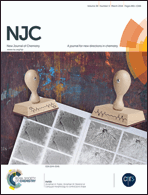
NJC June 2014 front cover

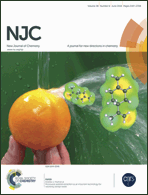
This month’s front cover illustrates the article by Dr Andrew Hunt (University of York, UK) and co-workers. The authors’ work demonstrated that microwave assisted extraction is an efficient green technology for the recovery of D-limonene from orange waste.

The study details the microwave assisted extraction (MAE) of D-limonene from oranges and focuses on understanding the MAE mechanism based on kinetic analysis of the process.

It was shown that microwave radiation favourably interacts with the sample during extraction, causing simultaneous cell rupture and diffusion and resulting in a greater yield. These results provide an important insight into the development of extraction processes for orange peel.

Microwave assisted extraction as an important technology for valorising orange waste
Thomas M. Attard , Baillie Watterson , Vitaliy L. Budarin , James H. Clark and Andrew J. Hunt.
New J. Chem., 2014, 38, 2278–2283. DOI: 10.1039/C4NJ00043A.

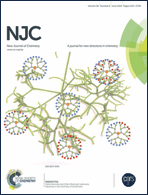
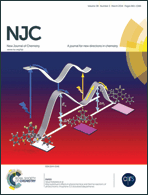
NJC June 2014 inside coverThe inside cover was designed by Prof. Zofia Urbanczyk-Lipkowska (Polish Academy of Sciences). In their perspective, Zofia and her colleague Marta Sowinska wanted to provide insight into currently available synthetic methods that yield dendrimers with various morphologies, placing emphasis on the evaluation of their advantages and limitations.

The review outlines the spectacular benefits of recent applications of several novel approaches to the synthesis of dendrimers. In particular, accelerated methods and click chemistry have opened new alternative ways to obtain the high generation, defect-free dendrimeric molecules with high efficacy that was previously unreachable.

Advances in the chemistry of dendrimers
Marta Sowinska and Zofia Urbanczyk-Lipkowska.
New J. Chem., 2014, 38, 2168–2203. DOI: 10.1039/C3NJ01239E.


Access the full issue here.

Digg This
Reddit This
Stumble Now!
Share on Facebook
Bookmark this on Delicious
Share on LinkedIn
Bookmark this on Technorati
Post on Twitter
Google Buzz (aka. Google Reader)

Discover the NJC themed issue on Advanced Complex Inorganic Nanomaterials

NJC presents the May 2014 themed issue on Advanced Complex Inorganic Nanomaterials (ACIN). We would like to address warm thanks to the authors for their participation.

This month, NJC is delighted to present the special issue on Advanced Complex Inorganic Nanomaterials (ACIN), composing 10 review articles and 29 research reports. These articles provide an update of recent innovations in both fundamental and applied aspects of inorganic nanomaterials.  

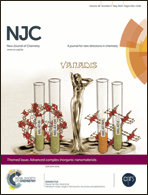
 ACIN issue May 2014 OFCIn their perspective, Prof. Pascal Van Der Voort (Ghent University, Belgium) and his colleagues, who designed the outside cover, describe the Vanadium-containing metal–organic frameworks that have been developed since the first systematic reports on MOFs almost 15 years ago. According to their studies, these materials show interesting behaviour in oxidation catalysis and gas sorption, opening perspectives towards the development of even more active and selective catalysts.


Vanadium metal–organic frameworks: structures and applications
Pascal Van Der Voort, Karen Leus, Ying-Ya Liu, Matthias Vandichel, Veronique Van Speybroeck, Michel Waroquier and Shyam Biswas.
New J. Chem.
, 2014, 38, 1853–1867. DOI: 10.1039/C3NJ01130E. 

May 2014 ACIN IFC  

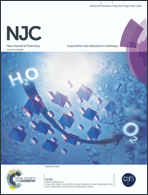
The inside cover was designed by Prof. Matthias Driess (Technische Universität Berlin, Germany). In their  article, the authors report the synthesis of multi-faceted versus irregular shaped Ag3PO4 microparticles for the visible light driven non-sacrificial water oxidation. According to the authors, non-sacrificial water oxidation with multi-faceted silver phosphate particles could lead to overall water splitting by successful coupling of the material with an efficient hydrogen evolution catalyst.


Visible light driven non-sacrificial water oxidation and dye degradation with silver phosphates: multi-faceted morphology matters
Arindam Indra, Prashanth W. Menezes, Michael Schwarze and Matthias Driess.
New J. Chem.
, 2014, 38, 1942–1945. DOI: 10.1039/C3NJ01012K.

Access the full list of articles comprising this dedicated issue here!

Digg This
Reddit This
Stumble Now!
Share on Facebook
Bookmark this on Delicious
Share on LinkedIn
Bookmark this on Technorati
Post on Twitter
Google Buzz (aka. Google Reader)

Meet NJC Editors at 2014 Summer Conferences

New Journal of Chemistry (NJC) is sponsoring 5 conferences this summer; in addition the editors will be present at many other meetings between June and August of 2014, at which we invite you to meet us.

NJC is sponsoring several conferences during the coming summer months, starting in just a couple of weeks. We look forward to meeting you at one of these events.

15th French-American Chemical Society Meeting Logo Managing Editor Denise Parent will be attending the 15th French-American Chemical Society Meeting: June 1–5 in Avignon (France), at which Dr Rémi Chauvin will give the NJC Lecture.
97th Canadian Chemistry Conference and Exhibition Logo NJC is a sponsor of two symposia at the Canadian Chemistry Society Conference: June 1–5 in Vancouver (Canada). The sponsored symposia are “pi-Conjugated Materials: From Design to Application” (Chairs: Jaclyn Brusso and Dwight Seferos) and “Functional Inorganic and Hybrid Polymers” (Chairs: Thomas Baumgartner, Derek Gates, Jens Müller).
1st International Symposium on Halogen Bonding logo Denise Parent will also be attending the 1st International Symposium on Halogen Bonding: June 18–22 in Porto Cesareo (Italy), for which NJC is a sponsor.
20th International Conference on Phosphorus Chemistry Assistant Editor Laurent Vial will represent NJC at the 2014 International Conference on Phosphorus Chemistry: June 28–July 2 in Dublin (Ireland). NJC will sponsor a coffee break for attendees.
12th European Biological Inorganic Chemistry Conference Logo NJC is also sponsoring the 12th European Biological Inorganic Chemistry Conference: August 24–28 in Zurich (Switzerland).
 

NJC‘s editors will also be attending a number of other conferences this summer. Feel free to contact our editors if you too will be attending one of these events.

• Assistant Editor Yannick Guari is an invited speaker at the annual Gecom-CONCOORD meeting: May 18–23 in Vers (France).

• Assistant Editor Ling Peng will be giving a lecture at the BioDendrimer 2014 meeting: June 18–20 in Lugano (Switzerland), which NJC has also supported in the past.

• Associate Editor Peter Junk will be a participant in the 27th Rare Earth Research Conference: June 22–26 in Lake Tahoe (USA).

Yannick Guari will also be at the 14th International Conference on Molecule-Based Magnets: Juy 5–10 in St Petersburg (Russia).

• Associate Editor Jaïrton Dupont, as a member of the International Advisory Board, will be attending the 19th International Symposium on Homogenous Catalysis: July 6–11 in Ottawa (Canada).

• In July Peter Junk will attend meetings on 3 continents. Look for him at the following meetings:
Terrae Rare: July 7–12 in Cologne (Germany); XXVI International Conference on Organometallic Chemistry: July 13–18 in Sapporo (Japan); 8th Australian Organometallic Chemistry Symposium: July 22–25 in Magnetic Island (Australia).

Ling Peng will be attending Challenges in Organic Chemistry (ISACS14): August 7–10 in Shanghai (China).

Jaïrton Dupont is an invited lecturer at the Gordon Conference on Ionic Liquids: August 17–22 at the Sunday River Resort (USA).

Digg This
Reddit This
Stumble Now!
Share on Facebook
Bookmark this on Delicious
Share on LinkedIn
Bookmark this on Technorati
Post on Twitter
Google Buzz (aka. Google Reader)

Update for the NJC Symposia in Sweden

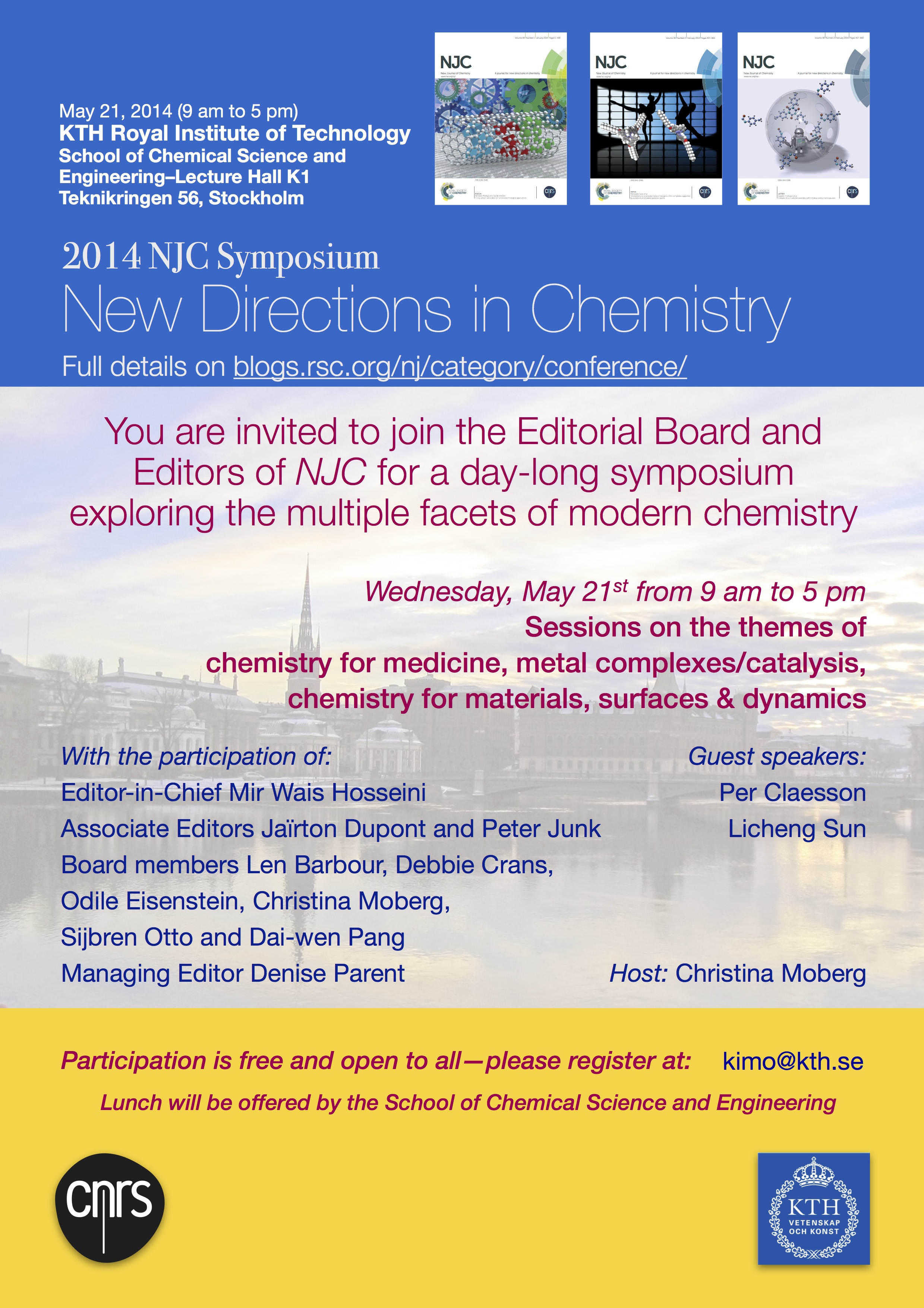
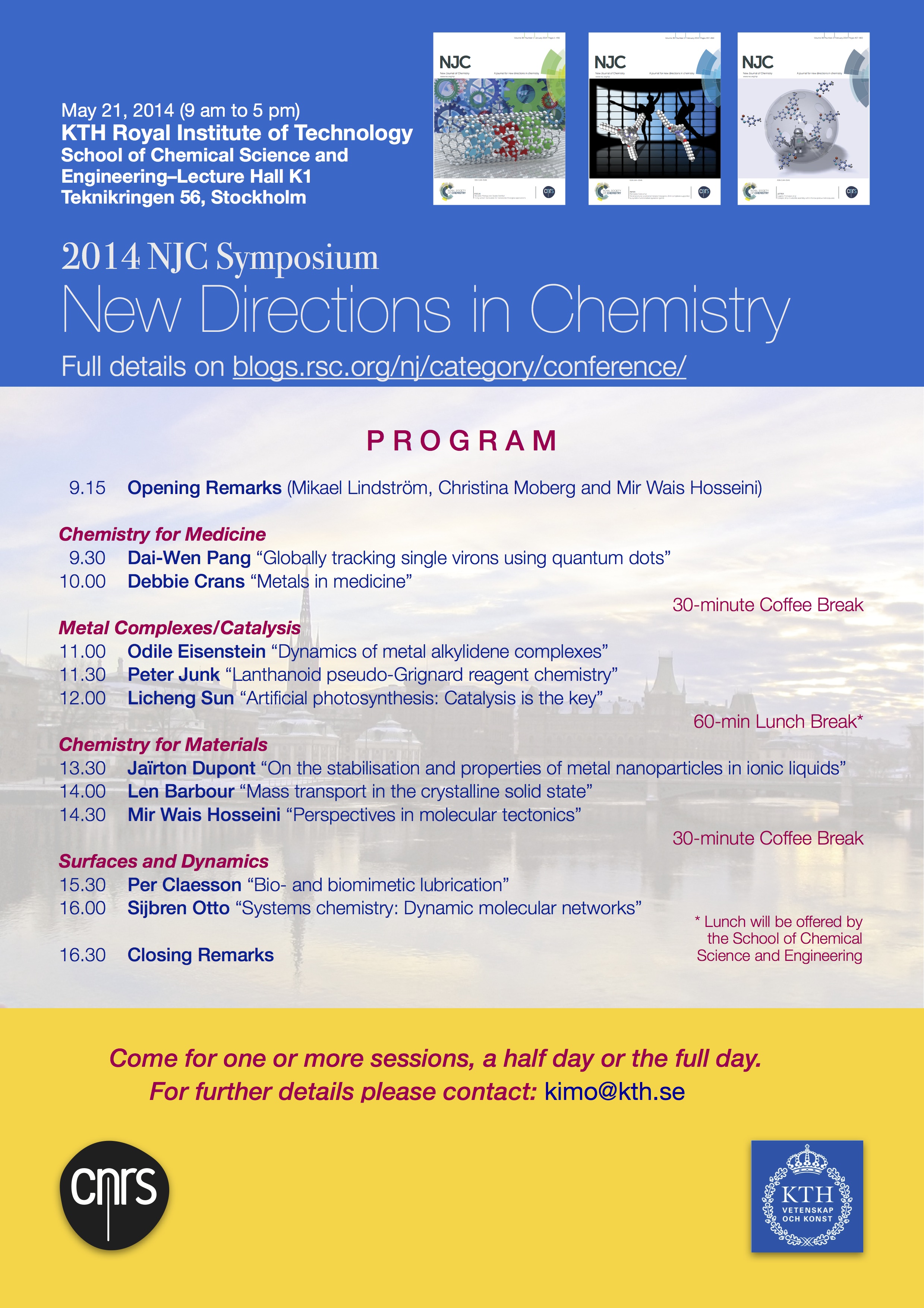
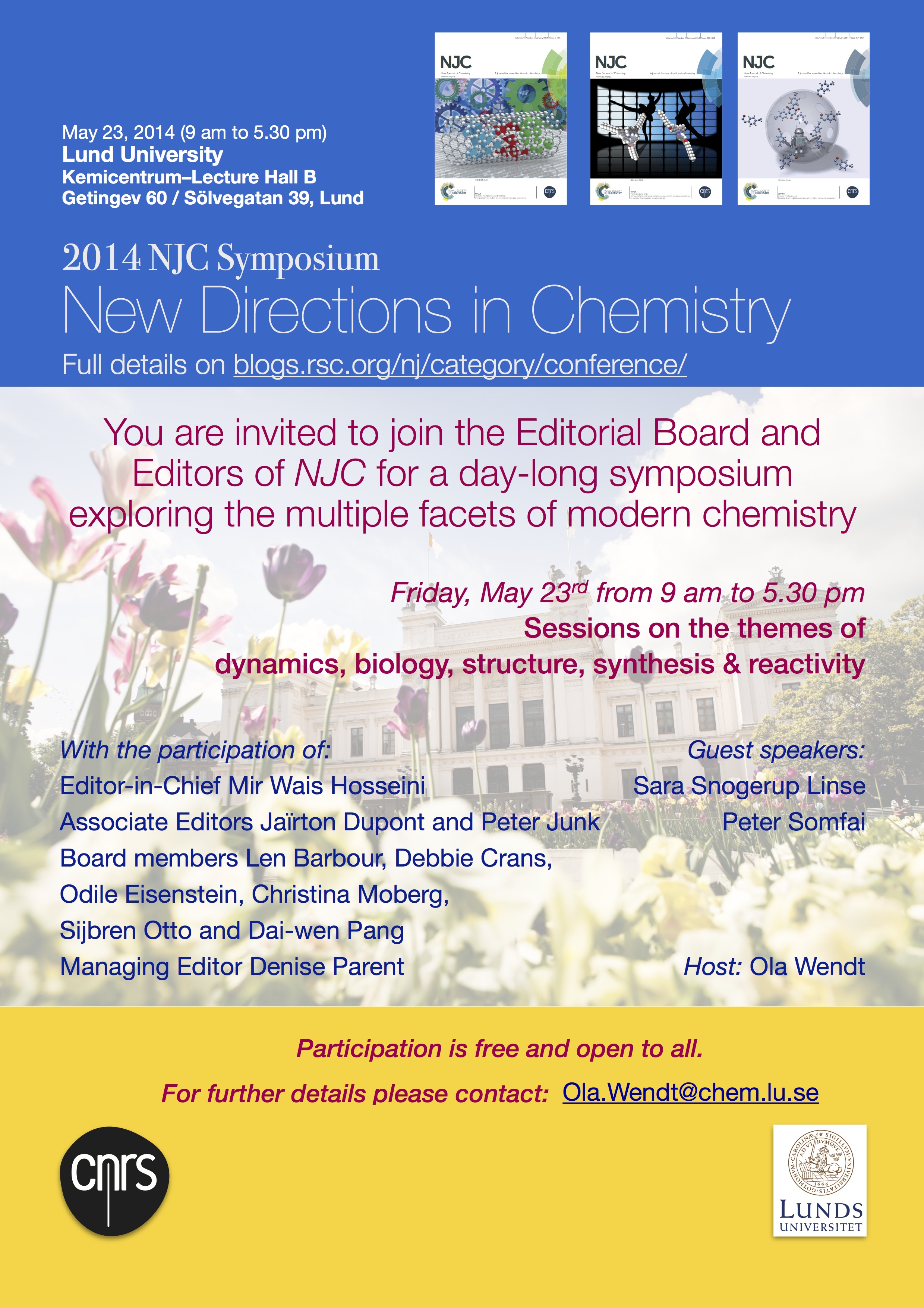
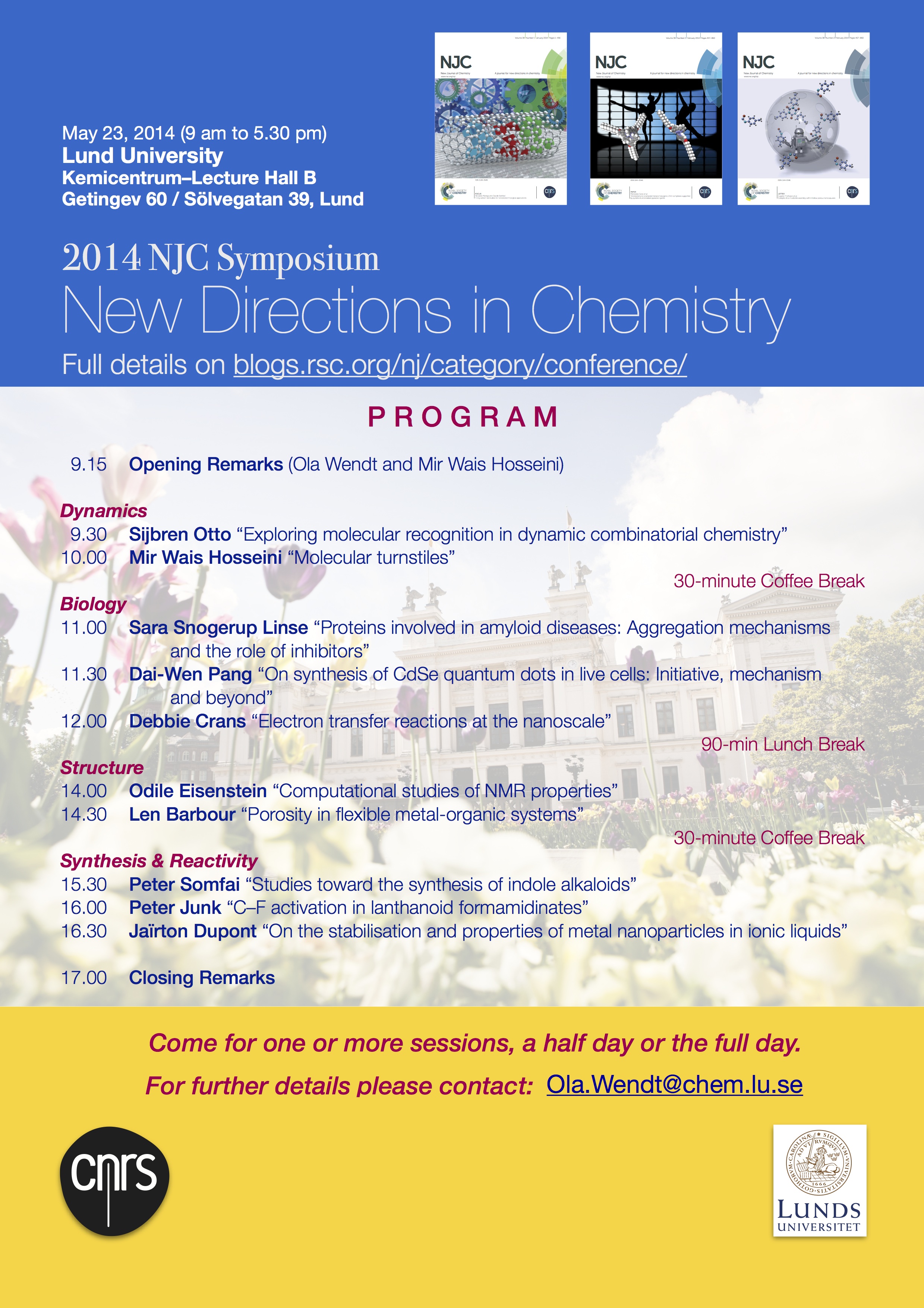
The programs for the two NJC Symposia in Stockholm and Lund are now posted.

Last announcement! The 3rd series of NJC Symposia: New Directions in Chemistry will take place in May 2014. These symposia are being organised with the collaboration of KTH in Stockholm and Lund University. The NJC Board and editors are being hosted by Profs Mikael Lindström and Christina Moberg at KTH and Prof. Ola Wendt in Lund. We warmly thank the hosts and their institutions for their support in making these events possible.

Schedule
May 21st: KTH Royal Institute of Technology, School of Chemical Science & Engineering, Lecture Hall K1, from 9 am to 5 pm
May 23rd: Lund University, Kemicentrum, Lecture Hall B, from 9 am to 5:30 pm

We hope to meet many colleagues from Sweden but also Denmark, Norway and Finland during these 2 days.

If you wish to attend, please contact either Christina Moberg (kino ‘at’ kth.se) for the Stockholm date or Ola Wendt (Ola.Wendt ‘at’ chem.lu.se) for the Lund date to register your interest.

Full details are on the flyers and programs below (click on an image to see a larger image).

NJC Symposium at KTH on May 21, 2014NJC Symposium at KTH on May 21, 2014
NJC Symposium at Lund University on May 23, 2014NJC Symposium at Lund University on May 23, 2014

Digg This
Reddit This
Stumble Now!
Share on Facebook
Bookmark this on Delicious
Share on LinkedIn
Bookmark this on Technorati
Post on Twitter
Google Buzz (aka. Google Reader)

Meet Our Authors – April 2014

This month, our three authors discuss their work and talk about the dream they would like to achieve.

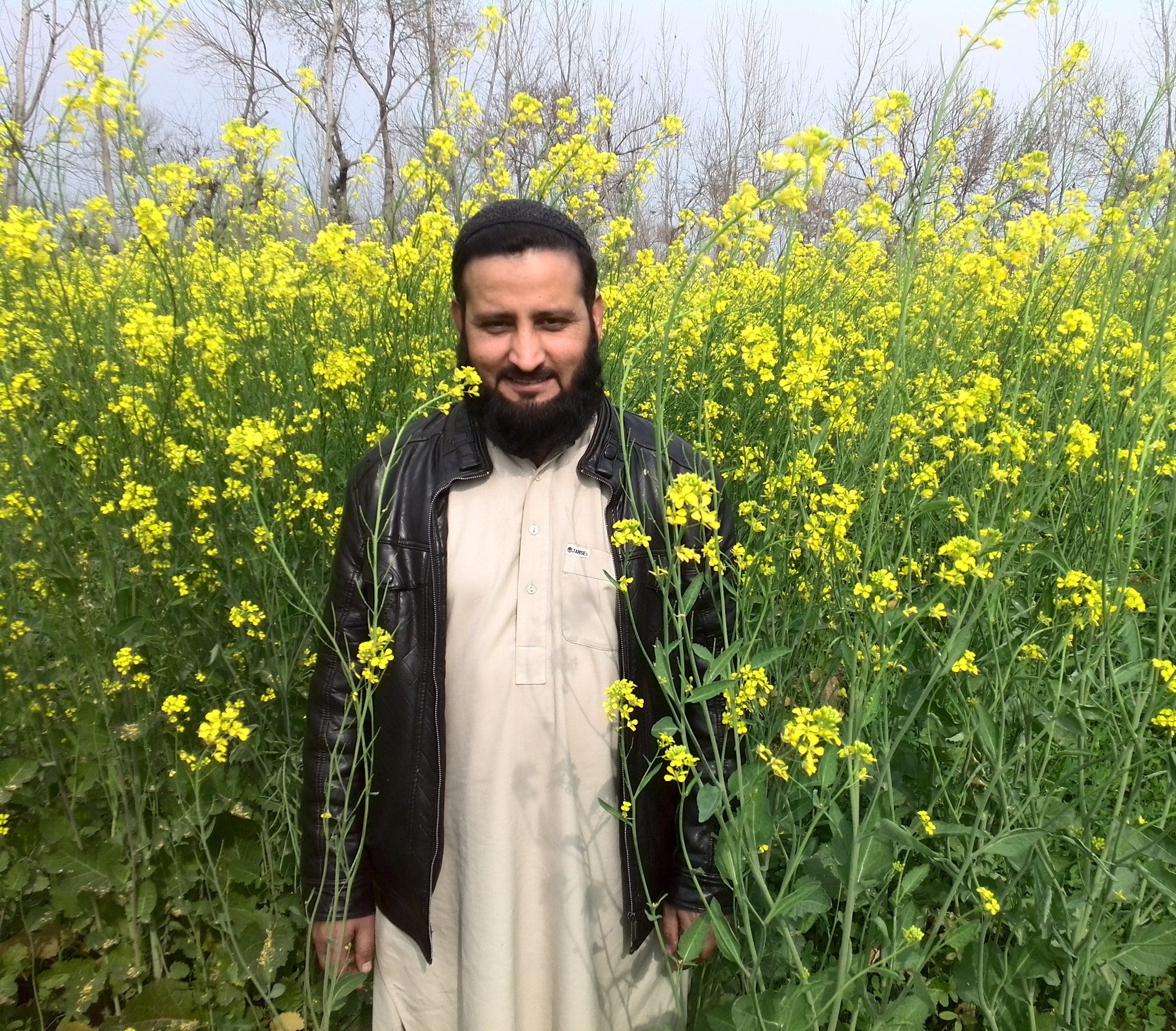
Dr Abdul HameedDr Abdul Hameed, Assistant Professor at Kohat University of Science and Technology (Pakistan), focuses his research on the synthesis of noble metal nanoparticles and their applications in the field of medicine and analytical chemistry. 

According to Abdul and his co-workers, their NJC paper, dealing with the use of noble metal nanoparticles in the field of enzyme inhibition, opens the gates for future research into this field.

Abdul is a synthetic organic chemist who loves nanotechnology, especially noble metal nanoparticles. His work in this area is, however, hampered by the lack of facilities in Pakistan. This is one of the reasons why his group recorded TEM images for the paper in South Korea.

Abdul’s dream is “to dive in the depth of nanotechnology” by going abroad to work with other hard-working research groups. “I hope I will find it very soon”, he says, to which we wish him the best of luck! 

Synergistic enzyme inhibition effect of Cefuroxime by conjugation with gold and silver
Abdul Hameed, Sehrish Fatima, Faiz Ur Rahman, Tae-Ho Yoon, Andaleeb Azam,  Shaukat Khan, Ajmal Khan and Nazar Ul Islam.
New J. Chem., 2014, 38, 1641-1646. DOI: 10.1039/C3NJ00974B (Paper)


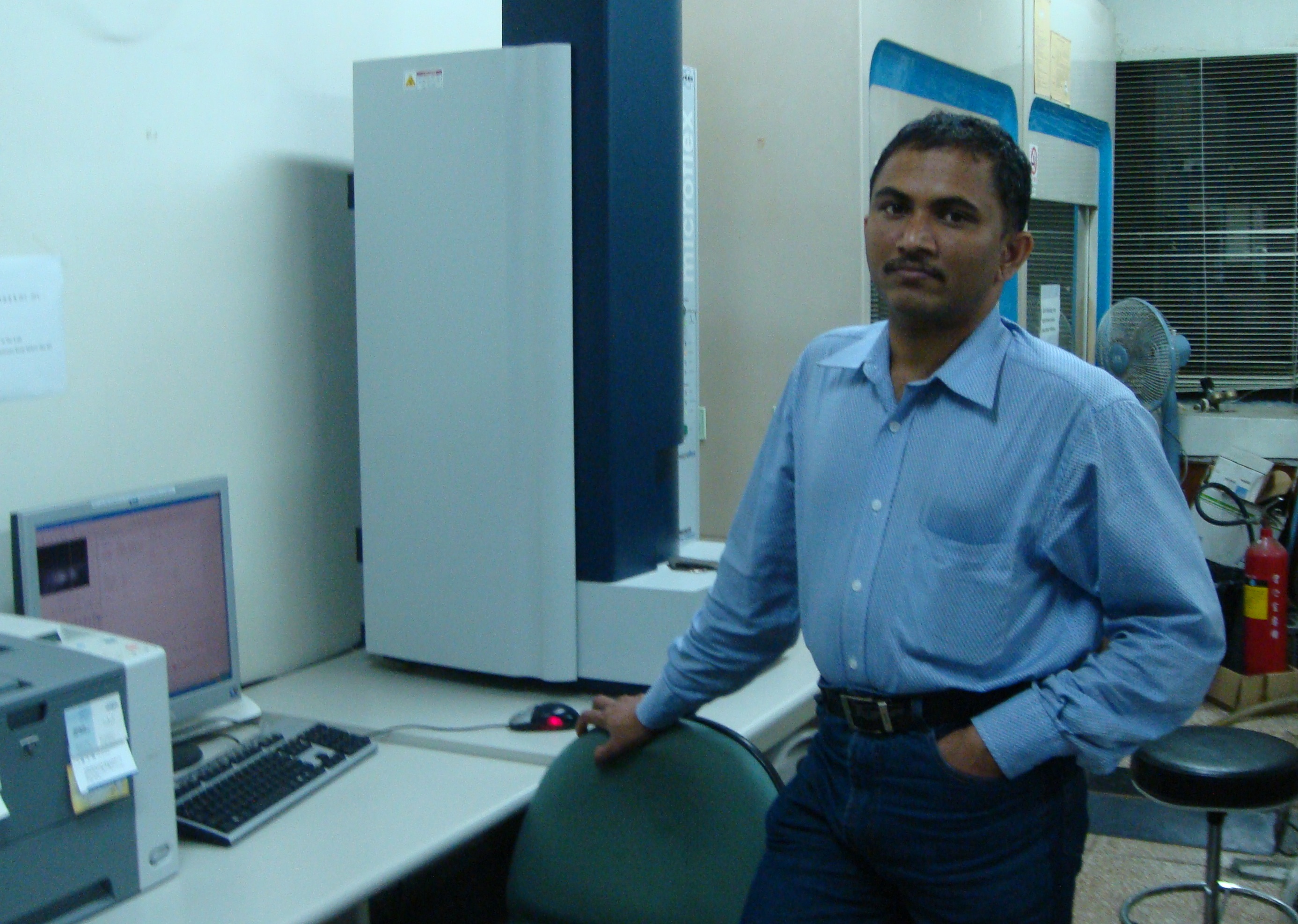
Our second author, Dr Suresh Kumar Kailasa, is an Assistant Professor at the S. V. National Institute of Technology (India). Suresh is principally interested in nano- and bio-analytical chemistry, mass spectrometry, sensors and proteomics.Dr Suresh Kumar Kailasa

In their paper, Suresh Kumar and his colleagues report the use of p-amino salicylic acid dithiocarbamate functionalized gold nanoparticles (NPs) as colourimetric sensors for selective and sensitive determination of Fe3+ ions in plasma.

The results show that the Fe3+ ion induces the aggregation of the modified Au NPs via the formation of a covalent coordination bond between it and an organic derivative on the surface of the Au NPs, leading to a colour change from red to blue that can be observed with the naked eye.

They have developed straightforward methods for both the functionalization of Au NPs and the characterization of the NP aggregation induced by the Fe3+ ion. The functionalized Au NPs did not react with other metal ions and, therefore, were demonstrated to be selective for Fe3+ in both biological and environmental samples.

 Suresh Kumar’s dream is to develop miniaturized, nanomaterial-based analytical tools for inorganic, organic and biomolecule assays.

 Sensitive and selective colorimetric sensing of Fe3+ ion by using p-amino salicylic acid dithiocarbamate functionalized gold nanoparticles
Vaibhavkumar N. Mehta, Suresh Kumar Kailasa and Hui-Fen Wu.
New J. Chem., 2014, 38, 1503-1511. DOI: 10.1039/C3NJ01468A (Paper)


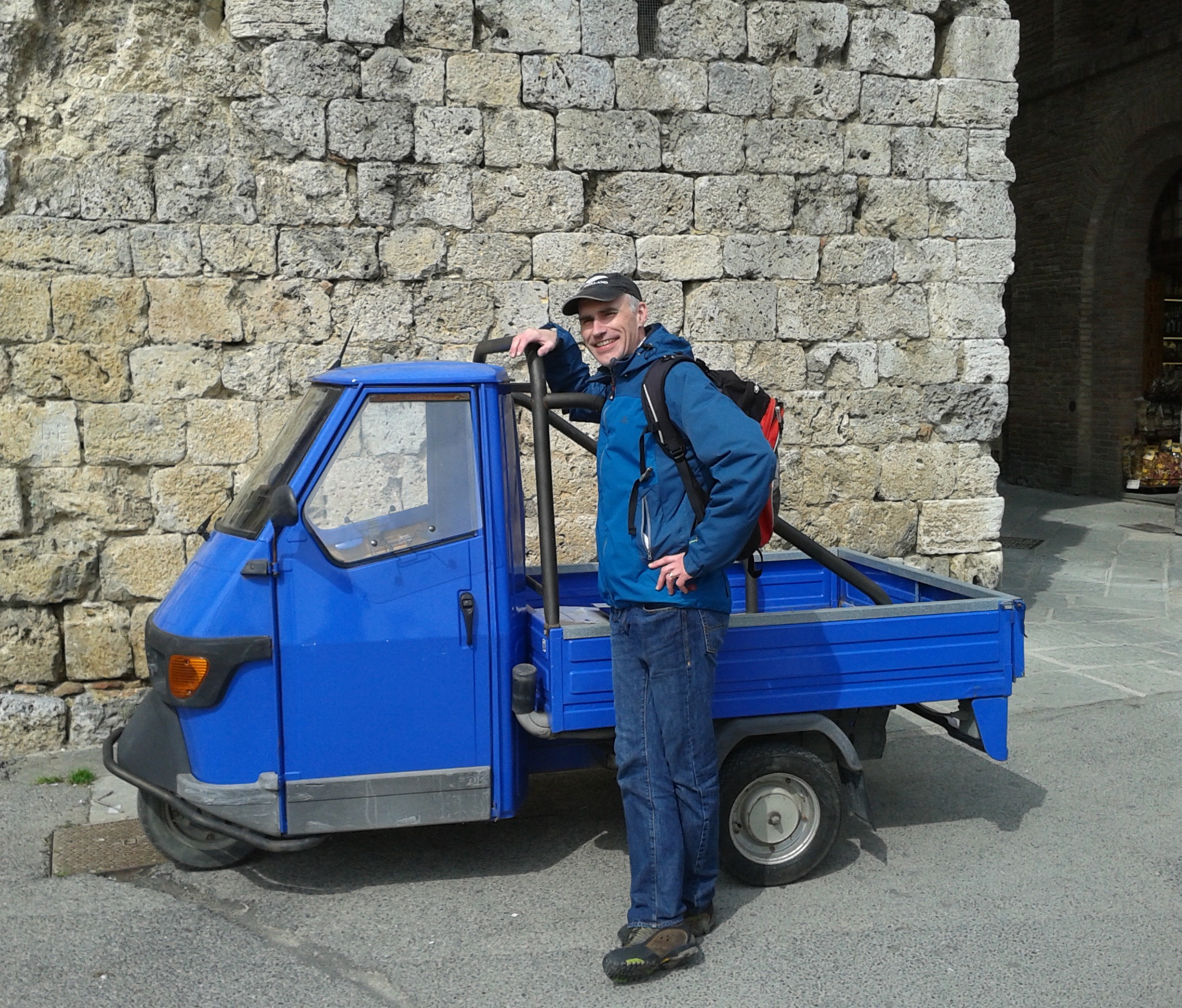
With his research group, Prof. William Skene works on conjugated materials prepared via simple methods and assesses their optoelectronic properties at the University of Montreal (Canada). 

Prof. William SkeneMany organic materials undergo visible colour changes either when oxidized or reduced  however there are few materials which can do both. 
In their paper, Will and his co-workers demonstrated that a reversible colour change upon both oxidation and reduction was possible with an easily-prepared, conjugated construct consisting of motifs known for their reversible redox properties.

This research started as a summer project with a different aim before the unusual colour change behavior of the material was keenly observed by the student conducting the experiments.

 In order to delight taste buds, Will confesses that his dream is to be an outstanding pastry chef!

 Towards Multichromatic Electrochromes from Ambipolar Conjugated Azomethines
Michael E. Mulholland, Daminda Navarathne, Samim Khedri and W. G. Skene
New J. Chem., 2014, 38, 1668-1674. DOI: 10.1039/C4NJ00027G  (Paper)


Thanks to Abdul, Suresh and Will for sharing a bit of themselves with our readers. Join us again next month for more portraits in “Meet Our Authors”.

Digg This
Reddit This
Stumble Now!
Share on Facebook
Bookmark this on Delicious
Share on LinkedIn
Bookmark this on Technorati
Post on Twitter
Google Buzz (aka. Google Reader)

NJC issue 4 out now

NJC is delighted to present the April 2014 issue.
by Cynthia Challencin, Publishing Assistant

NJC issue 4 outside cover An article by Shiguo Sun (Northwest A&F University, China) and co-workers features on this month’s front cover. In their work, the authors of this paper employed the host–guest chemistry between CB[8] and acridine orange to investigate its interaction with DNA/RNA.

The results highlighted that the host–guest chemistry of CB[8] provides a convenient and efficient way to solve the autofluorescence problem of the tricyclic basic dyes, and that the method can be employed to fluorescence discriminate DNA from RNA and quantitatively detect trace levels of DNA.

Discrimination of DNA from RNA with the host–guest complexes of tricyclic basic dyes and cucurbit[8]uril
Fusheng Li, Yongqian Xu, Hongjuan Li, Chaoxia Wang, Aiping Lu and Shiguo Sun.
New J. Chem., 2014, 38, 1396–1400. DOI: 10.1039/C3NJ01178J.


NJC issue 4 inside cover

The inside cover was designed by Magda Blosi (Institute of Science and Technology for Ceramics, Italy). In their paper, Dr Blosi and her colleagues focused on developing a green synthesis process for the production of PVP-coated noble metal nanoparticles in the form of stable nanosols.

The focus on the colloidal stability together with the eco-friendly method represents a key point in view of a large-scale production. In fact, dealing with nanoparticles in form of suspensions represents an essential goal both from a safety point of view and for the subsequent process steps.

According to them, the synthesis versatility and the strong variation of the catalytic activity detected for different metals, make this process very promising for the production of bimetallic nanostructures enabling synergistic effects.

Green and easily scalable microwave synthesis of noble metal nanosols (Au, Ag, Cu, Pd) usable as catalysts
M. Blosi, S. Albonetti, S. Ortelli, A. L. Costa, L. Ortolani and M. Dondi.
New J. Chem., 2014, 38, 1401-1409. DOI: 10.1039/C3NJ00894K.


Read all 59 articles in this month’s issue here.

Digg This
Reddit This
Stumble Now!
Share on Facebook
Bookmark this on Delicious
Share on LinkedIn
Bookmark this on Technorati
Post on Twitter
Google Buzz (aka. Google Reader)

Read the March issue of NJC

The March 2014 issue of New Journal of Chemistry is available online.

by Cynthia Challencin, Publishing Assistant

NJC March outside front coverThe March issue outside front cover was designed by Jonathan Steed (Durham University), former NJC Associate Editor, and Jonathan Foster (University of Cambridge). The two authors and co-workers wrote a paper dealing with supramolecular gelators with different fibre morphologies used as templates to form mesoporous covalent polymers with different pore shapes. These materials have found use in applications such as filtration, storage, catalysis, cell growth, drug delivery and as rewritable materials.

Using gel morphology to control pore shape by Jonathan A. Foster, David W. Johnson, Mark-Oliver M. Pipenbrock and Jonathan W. Steed, New J. Chem., 2014, 38, 927-932. DOI: 10.1039/C3NJ01295F.

In their article, Seiya Kobatake, who designed the inside front cover, and his colleaguesNJC March inside front cover report on photochemical and thermal reaction behavior of thiophene-S,S-dioxidized diarylethenes having various alkyl groups at the reactive positions. Their results provide the new strategy for molecular design to make the molecules showing light-starting irreversible thermosensors.

Alkyl substituent effects in photochemical and thermal reactions of photochromic thiophene-S,S-dioxidized diarylethenes by Hiroaki Shoji, Daichi Kitagawa and Seiya Kobatake, New J. Chem., 2014, 38, 933-941. DOI: 10.1039/C3NJ01246H.

Do not hesitate to read the whole issue available online at: NJC 2014, issue 3

Digg This
Reddit This
Stumble Now!
Share on Facebook
Bookmark this on Delicious
Share on LinkedIn
Bookmark this on Technorati
Post on Twitter
Google Buzz (aka. Google Reader)

Meet Our Authors – February & March 2014

We would like to thank our authors from the February & March issues of NJC for their participation.

By Cynthia Challencin, Publishing Assistant

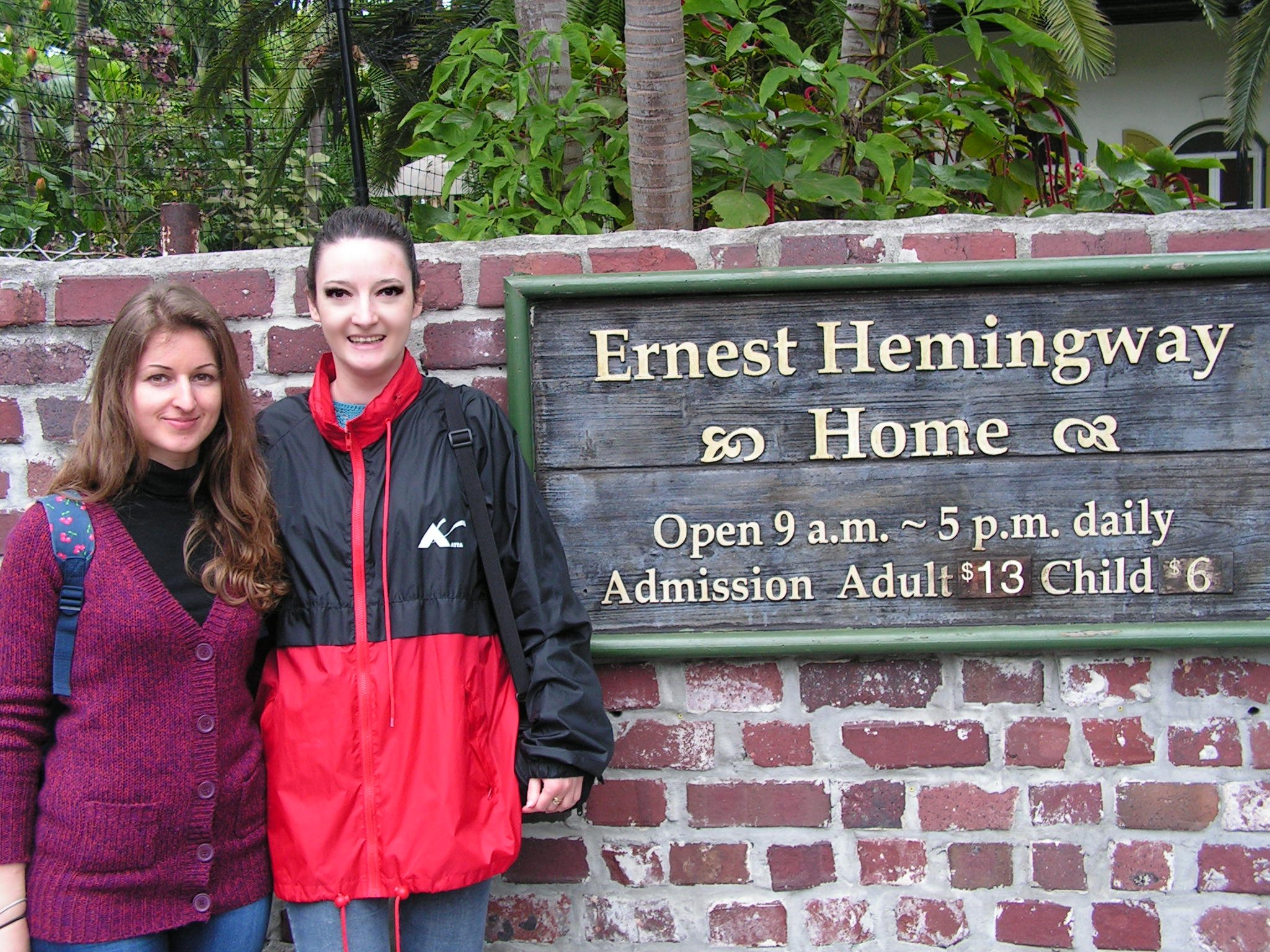
Éva Józsa and Katalin Ősz in front of Ernest Hemingway's house (Key West)

Katalin Ősz, Associate Professor at the University of Debrecen (Hungary), focuses her work on kinetics of inorganic (photo)reactions.

In their NJC Paper, Katalin and her colleagues studied the structure-reactivity relationships in the oxidation of water-soluble quinones, which are sensitive to light and may have an important role in utilizing solar power. It was learned that otherwise nonreactive substituents can change several redox and kinetic properties and thus tune the reactivity. She also explains that NJC seemed to be an ideal venue because it offers a nice selection of papers from all the fields of chemistry for a general audience.

During her spare time, Katalin enjoys listening to classical music, hiking (mostly downhill), reading and traveling. The latest is demonstrated by the photo picturing the first author of the article, Éva Józsa (on the left), and herself in front of Ernest Hemingway’s house in Key West (Florida), which they visited while attending a GRC conference on Inorganic Reaction Mechanisms.

Kinetic studies of hydroxyquinone formation from water soluble benzoquinones by Éva Józsa, Mihály Purgel, Marianna Bihari, Péter Pál Fehér, Gábor Sustyák, Balázs Várnagy, Virág Kiss, Eszter Ladó and Katalin Ősz, New J. Chem., 2014, 38, 588-597. DOI: 10.1039/C3NJ01274C (Paper)

Dr Bong-Hyun Jun and familyBong-Hyun Jun, Assistant Professor at Konkuk University (Korea), works on the synthesis of nanoparticles (metal, QDs, silica) and their applications, but also on organic synthesis and surface modification.

In their NJC Letter, Bong-Hyun and co-workers report the fabrication of a dye-sensitized solar cell (DSSC) using silica-coated quantum dot-embedded silica nanoparticles (SiO2/QD/SiO2 NPs) as a light-harvesting layer. According to them, these nanoparticles, which are brighter than single QDs, enable an easier handling because of their bigger size. The fact that they can be prepared in large quantity shows that they could be applied to several fields such solar cells, protein detection and in vivo imaging.

Bong-Hyun studied at UC Berkeley in California and traveled to several places with his family. He reports: “I was impressed by the natural landscape of California. Especially, Yosemite National Park was outstanding and we had a really great time there.” He now would like to have the chance to visit Europe!

Dye-sensitized solar cell with silica-coated quantum dot-embedded nanoparticles used as a light harvesting layer by Won-Yeop Rho, Jung-Woo Choi, Hea-Yeon Lee, San Kyeong, Sang Hun Lee, Heung Su Jung, Seunho Jung, Yung-Eun Sung, Yoon-Sik Leeb and Bong-Hyun Jun*, New J. Chem., 2014, 38, 910-913. DOI: 10.1039/C3NJ01345F (Letter)

Our second author, Miss Shan Peng, Ph.D. student at the South China University of Technology, focuses her work on biomimetic/fabrication and performance characterization of superhydrophobic surfaces based on an Al substrate.

After the discovery of the hierarchical macroporous alumina template, Shan and her collegues introduced a simple template-wetting method to prepare superhydrophobic PMMA macroporous surfaces with diverse water adhesion reported in their NJC Paper.

Shan’s favorite place in China is Guangzhou, one of the most developed cities. She appreciates the convenience of the public transport and the warm weather even during winter, since she does not like cold weather. Moreover, Guangzhou is famous for its variety of flowers, which has given it the name of Flower city’.

A facile approach for preparing biomimetic polymer macroporous structures with petal or lotus effects by Shan Peng and Wenli Deng*, New J. Chem., 2014, 38, 1011-1018. DOI: 10.1039/C3NJ01156A (Paper)

Panayiotis Andreas Koutentis (aka Pani) is Associate Professor in Organic chemistry at the University of Cyprus. His team focuses on heteroatom rich systems. There is no specific target, but rather they identify heterocyclic systems that are potentially useful but under-exploited. Students then develop their technical, theoretical and more importantly creative skills by exploring these systems. “I encourage my students to adopt an orthogonal approach to their work, except of course when they must publish!”

Dr Panayotis KoutentisIn their NJC Paper, Pani and co-workers describe the magnetic properties of a readily prepared and structurally interesting fused Blatter radical. According to them, the information provided could assist in the design of radicals with tailor-made solid-state properties, which can potentially find use in a range of organic electronic applications.

Pani would like to address special thanks to Prof. Fred Wudl as he worked for him on benzotriazinyls as a post doc. “Fred gave me his blessing to continue exploring the chemistry of the system once I started my independent career.”

Pani has travelled extensively and India is by far the most exciting country he has visited. According to him, the people are friendly and hospitable, the food is excellent and there is an incredible diversity on many levels.

Effective exchange coupling in alternating-chains of a π-extended 1,2,4-benzotriazin-4-yl by Christos P. Constantinides, Andrey A. Berezin, Maria Manoli, Gregory M. Leitus, Michael Bendikov, Jeremy M. Rawson and Panayiotis A. Koutentis*, New J. Chem., 2014, 38, 949-954. DOI: 10.1039/ C3NJ01235B (Paper)

Digg This
Reddit This
Stumble Now!
Share on Facebook
Bookmark this on Delicious
Share on LinkedIn
Bookmark this on Technorati
Post on Twitter
Google Buzz (aka. Google Reader)

Top Ten most accessed NJC articles from October to December 2013

During October, November and December, the following articles were the Top Ten most accessed:

MOFs, MILs and more: concepts, properties and applications for porous coordination networks (PCNs)
Christoph Janiak and Jana K. Vieth  
New J. Chem., 2010,34, 2366-2388
DOI: 10.1039/c0nj00275e

One-pot hydrothermal synthesis of graphene quantum dots surface-passivated by polyethylene glycol and their photoelectric conversion under near-infrared light
Jianhua Shen, Yihua Zhu, Xiaoling Yang, Jie Zong, Jianmei Zhang and Chunzhong Li
New J. Chem., 2012,36, 97-101
DOI: 10.1039/c1nj20658c

Women in chemistry: a life devoted to science
Alexander Yu. Rulev and Mikhail G. Voronkov  
New J. Chem., 2013,37, 3826-3832
DOI: 10.1039/c3nj00718a

Preparation, electrochemical properties, and adsorption kinetics of Ni3S2/graphene nanocomposites using alkyldithiocarbonatio complexes of nickel(ii) as single-source precursors
Shugang Pan, Junwu Zhu and Xiaoheng Liu  
New J. Chem., 2013,37, 654-662
DOI: 10.1039/c2nj40854f

Preparation of graphene–TiO2 composites with enhanced photocatalytic activity
Kangfu Zhou, Yihua Zhu, Xiaoling Yang, Xin Jiang and Chunzhong Li  
New J. Chem., 2011,35, 353-359
DOI: 10.1039/c0nj00623h

Vanillin and o-vanillin oligomers as models for dendrimer disassembly
Robert M. Kevwitch, Charles S. Shanahan and Dominic V. McGrath
New J. Chem., 2012,36, 492-505
DOI: 10.1039/c1nj20841a

The metathesis reactions: from a historical perspective to recent developments
Didier Astruc
New J. Chem., 2005,29, 42-56
DOI: 10.1039/b412198h

Immobilized Cu(ii) and Co(ii) salen complexes on graphene oxide and their catalytic activity for aerobic epoxidation of styrene
Zhifang Li, Shujie Wu, Hong Ding, Dafang Zheng, Jing Hu, Xu Wang, Qisheng Huo, Jingqi Guan and Qiubin Kan
New J. Chem., 2013,37, 1561-1568
DOI: 10.1039/c3nj00099k

Self-assembled three-dimensional interpenetrating porous graphene aerogels with MnO2 coating and their application as high-performance supercapacitors
Chen-Chen Ji, Mao-Wen Xu, Shu-Juan Bao, Zheng-Jiang Lu, Chang-Jun Cai, Hui Chai, Rui-Ying Wang, Fan Yang and Hua Wei  
New J. Chem., 2013,37, 4199-4205
DOI: 10.1039/c3nj00599b

The generation of mesostructured crystalline CeO2, ZrO2 and CeO2–ZrO2 films using evaporation-induced self-assembly
Torsten Brezesinski, Markus Antonietti, Matthijs Groenewolt, Nicola Pinna and Bernd Smarsly  
New J. Chem., 2005,29, 237-242
DOI: 10.1039/b412306a

Please leave your comments or thoughts on any of these articles in the comment box below.

Do you have an article that you would like to submit to NJC? Why not submit to us here today?

Digg This
Reddit This
Stumble Now!
Share on Facebook
Bookmark this on Delicious
Share on LinkedIn
Bookmark this on Technorati
Post on Twitter
Google Buzz (aka. Google Reader)