Archive for October, 2013

Top Ten most access NJC articles from July to September 2013

Here are the Top Ten most cited New Journal of Chemistry articles in July, August and September 2013

MOFs, MILs and more: concepts, properties and applications for porous coordination networks (PCNs)
Christoph Janiak and Jana K. Vieth
New J. Chem., 2010,34, 2366-2388
DOI: 10.1039/c0nj00275e

One-pot hydrothermal synthesis of graphene quantum dots surface-passivated by polyethylene glycol and their photoelectric conversion under near-infrared light
Jianhua Shen, Yihua Zhu, Xiaoling Yang, Jie Zong, Jianmei Zhang and Chunzhong Li  
New J. Chem., 2012,36, 97-101
DOI: 10.1039/c1nj20658c

Preparation of graphene–TiO2 composites with enhanced photocatalytic activity
Kangfu Zhou, Yihua Zhu, Xiaoling Yang, Xin Jiang and Chunzhong Li
New J. Chem., 2011,35, 353-359
DOI: 10.1039/c0nj00623h

MOFs as acid catalysts with shape selectivity properties
Ugo Ravon, Marcelo E. Domine, Cyril Gaudillère, Arnold Desmartin-Chomel and David Farrusseng  
New J. Chem., 2008,32, 937-940
DOI: 10.1039/b803953b

The third evolution of ionic liquids: active pharmaceutical ingredients
Whitney L. Hough, Marcin Smiglak, Héctor Rodríguez, Richard P. Swatloski, Scott K. Spear, Daniel T. Daly, Juliusz Pernak, Judith E. Grisel, Richard D. Carliss, Morgan D. Soutullo, James H. Davis, Jr. and Robin D. Rogers  
New J. Chem., 2007,31, 1429-1436
DOI: 10.1039/b706677p

Luminescent carbon quantum dots and their application in cell imaging
Hui Ding, Li-Wei Cheng, Ying-Ying Ma, Ji-Lie Kong and Huan-Ming Xiong  
New J. Chem., 2013,37, 2515-2520
DOI: 10.1039/c3nj00366c

Small-molecular blue phosphorescent dyes for organic light-emitting devices
Cheuk-Lam Ho and Wai-Yeung Wong  
New J. Chem., 2013,37, 1665-1683
DOI: 10.1039/c3nj00170a

Porous copper catalyzed click reaction in water
Chen Zhang, Bo Huang, Ying Chen and Dong-Mei Cui  
New J. Chem., 2013,37, 2606-2609
DOI: 10.1039/c3nj00468f

Bimetallic nanoparticles—novel materials for chemical and physical applications
Naoki Toshima and Tetsu Yonezawa  
New J. Chem., 1998,22, 1179-1201
DOI: 10.1039/a805753b

4,4′-Di(pyren-1-yl)-1,1′-biphenyl as an efficient material for organic light-emitting diodes and thin-film transistors
Jongchul Kwon, Jung-Pyo Hong, Seonghoon Lee and Jong-In Hong  
New J. Chem., 2013,37, 2881-2887
DOI: 10.1039/c3nj00295k

If you found this article of interest and have some comments, please leave these below in the comment box.

Do you have an article that you think would be suitable for the New Journal of Chemistry? We welcome you to submit this to us here today!

Digg This
Reddit This
Stumble Now!
Share on Facebook
Bookmark this on Delicious
Share on LinkedIn
Bookmark this on Technorati
Post on Twitter
Google Buzz (aka. Google Reader)

Hot article: Glutathione detection using gold nanoparticle assembly

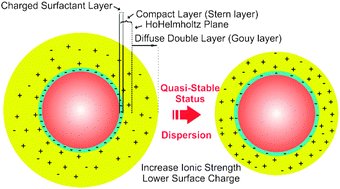
In this NJC paper, Peng Zhang and co-workers (University of Cincinnati, US) have reported the development of a highly sensitive and selective colorimetric detection method for glutathione (GSH) over cysteine (Cys) or homocysteine (Hcy) using gold nanoparticles (AuNPs).

The detection scheme is based on the quasi-stable state of AuNPs in the presence of sodium nitrate and GSH. The significant differences in interparticle forces and the assembly process of AuNPs enable the discrimination of GSH over Cys and Hcy. The presence of GSH can be detected by the naked eye and its concentration determined by UV/Vis spectrometry.

Selective colorimetric detection of glutathione based on quasi-stable gold nanoparticles assembly by Bo Hu, Xian Cao and Peng Zhang New J. Chem., 2013, Advance Article DOI: 10.1039/C3NJ00978E

Interested in reading further? Why not download the full article now, FREE to access for a period of 4 weeks!

Digg This
Reddit This
Stumble Now!
Share on Facebook
Bookmark this on Delicious
Share on LinkedIn
Bookmark this on Technorati
Post on Twitter
Google Buzz (aka. Google Reader)

Peer Review and Editorial Responsibility

Last month I attended the joint meeting of two societies for scientific editors (EASE and ISTME) that took place in the seaside resort town of Blankenberge in Belgium. Two days filled with presentations, discussions and networking attracted about 85 participants from around the world. Most were scientific editors who occupy a variety of positions in the public or private sector or work as freelance editors. But there were also consultants in the publishing field, translators, and an internet content expert.

I was particularly inspired by the presentation of Dr Irene Hames (member of COPE, the Committee on Publication Ethics) who was the opening keynote lecturer. Dr Hames spoke on peer review: what is it? what problems does it face? how to improve it? what does the future hold?

Here I will focus on just one aspect of her presentation, adding some of my own views (the full presentation can be viewed here).

Quality peer review, highly valued by authors, depends on reviewers and editors working together. The time and effort furnished by voluntary reviewers are indispensible for the good functioning of the peer review system. Editors expect reviewers to be able to judge the quality of a manuscript, and ideally to give an opinion on the suitability of the work for the particular journal that has sent it out for review. But this is a lot to ask for! It is indeed difficult for any reviewer to master in detail the editorial policies of all journals that they review for so as to determine what is a suitable manuscript for a given journal.

An editor who knows his or her journal well is the best placed to judge what is suitable for publication in the journal. An editor who simply counts “votes” is abdicating their responsibility towards their journal. Editors need to read the manuscript, fashion their own opinion, then analyse the reports they receive to make a decision that takes into consideration their journal’s scope and editorial policy. Reviewers give advice and recommendations, but the final decision rests with the editor, who needs to fully shoulder that responsibility.

The dedication of scientific reviewers allows the peer review system to function. The skill, insight and judgement of the editor are essential factors in making it function well. Peer review does not absolve an editor from taking responsibility for the editorial decisions that she or he makes.

NJC‘s editors all strive to offer fair and impartial peer review of high quality to our authors, while respecting the work of the voluntary peer reviewers.

“Reviewers advise, editors decide.”

Digg This
Reddit This
Stumble Now!
Share on Facebook
Bookmark this on Delicious
Share on LinkedIn
Bookmark this on Technorati
Post on Twitter
Google Buzz (aka. Google Reader)

New NJC Hot Articles

Here are the latest Hot Articles published in NJC, as recommended by the referees. All are FREE to access for one month, so why not take your pick and have a read now?

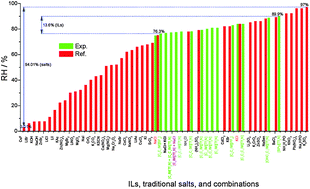
A new way to tune relative humidity: by saturated ionic liquid aqueous solutions by Yuanyuan Cao, Yu Chen and Tiancheng Mu ; New J. Chem., 2013, Advance Article; DOI: 10.1039/C3NJ00661A, Paper

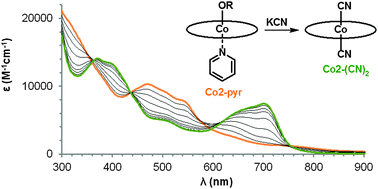
Serendipitous synthetic entrée to tetradehydro analogues of cobalamins by Richard M. Deans, Olga Mass, James R. Diers, David F. Bocian and Jonathan S. Lindsey; New J. Chem., 2013, Advance Article; DOI: 10.1039/C3NJ00574G, Paper

Octupolar chimeric compounds built from quinoline caged acetate moieties: a novel approach for 2-photon uncaging of biomolecules by Sébastien Picard, Emilie Genin, Guillaume Clermont, Vincent Hugues, Olivier Mongin and Mireille Blanchard-Desce; New J. Chem., 2013, Advance Article; DOI: 10.1039/C3NJ00833A, Paper

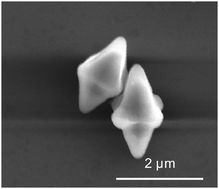
Synthesis of novel Mn3O4 concave octahedral microcrystals and their anomalous magnetic properties by Yong-Xing Zhang and Yong Jia; New J. Chem., 2013, Advance Article; DOI: 10.1039/C3NJ00840A, Letter

Fancy submitting an article to New Journal of Chemistry? Then why not submit to us today.

Digg This
Reddit This
Stumble Now!
Share on Facebook
Bookmark this on Delicious
Share on LinkedIn
Bookmark this on Technorati
Post on Twitter
Google Buzz (aka. Google Reader)

Meet our authors of the October issue of NJC

We are pleased to present a selection of our authors of the October issue of NJC. We thank each of them for accepting our invitation and having kindly taken some of their time to answer a few questions for us.

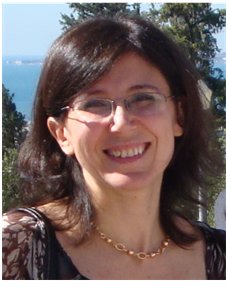
Our first author is Fatima C. Teixeira who is a Researcher at the Laboratorio Nacional de Energia e Geologia in Lisboa (Portugal). Her current research interests are in the field of organic chemistry, especially in the synthesis and characterization of heterocyclic compounds containing phosphonate groups. Currently, her research is focused on the preparation of precursors for new materials for proton exchange membranes with high conductivity for fuel cells. In her NJC paper, Fatima and co-workers report on a new strategy for the synthesis of new diphosphonated azaheterocyclic compounds to become precursors for novel membrane materials for fuel cells. Also, the NMR analysis shows, for a benzimidazole derivative, the presence of only one or both tautomeric forms on the NMR timescale, depending on the solvent and concentration of the solution.

When asked what led to the publication of this article at NJC, Fatima responds: “We choose NJC due to its multidisciplinarity, with a broad and diverse readership, fast publishing time and high quality”.

Out of the lab, Fatima likes to spend time with her family, going to cinema, swimming, reading or travelling.

If Fatima could not be a scientist, she will probably be an engineer.

New azaheterocyclic aromatic diphosphonates for hybrid materials for fuel cell applications by Fátima C. Teixeira, C. M. Rangel and António P. S. Teixeira, New J. Chem., 2013,37, 3084-309 DOI: 10.1039/C3NJ00585B.

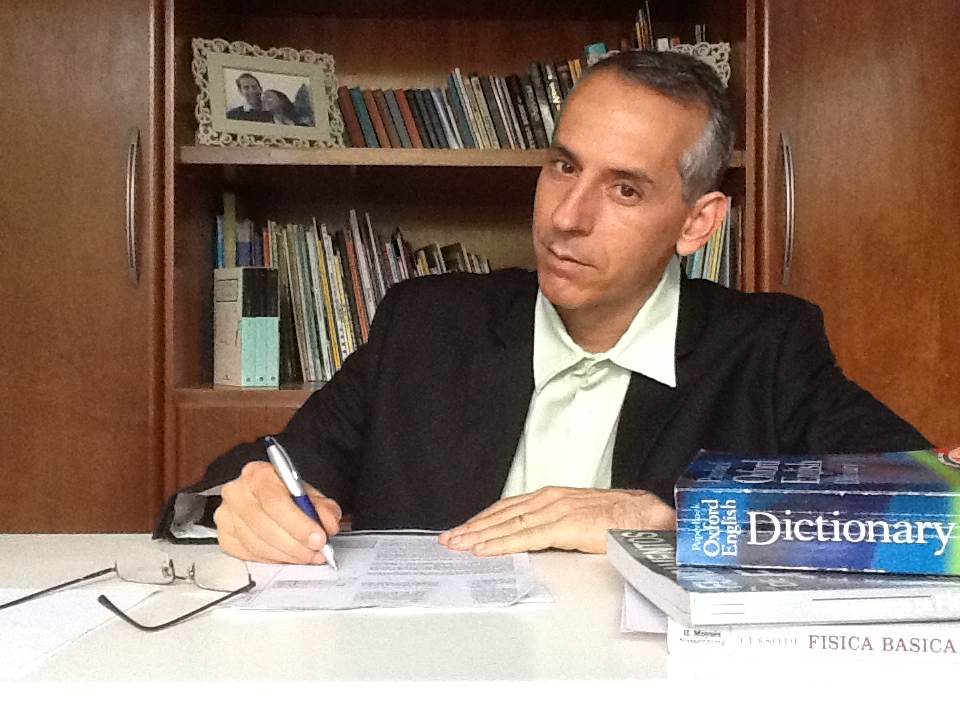
Our next author is Ricardo Gargano, Professor at the Institute of Physics of the University of Brasilia (Brazil). Ricardo’s research interests focus on electronic structure calculation and kinetic and dynamic of molecular systems.

In this issue of NJC, Ricardo has authored the article An extensive investigation of reactions involved in the nitrogen trifluoride dissociation by Simone S. Ramalho, Wiliam F. da Cunha, Alessandra F. Albernaz, Pedro H. O. Neto, Geraldo Magela e Silva and Ricardo Gargano, New J. Chem., 2013, 37, 3244-3251 DOI: 10.1039/C3NJ00553D. “The results obtained in our work are of potential use for comparison in future theoretical and experimental works in the NF3 decomposition mechanism”, explains Ricardo who chooses NJC for publication of this article as NJC publishes innovative, original and significant works in Chemistry.

In his free time, Ricardo loves playing soccer and if he was not a scientist, he would like to be a soccer player.

Closing this month’s author selection, Christophe Den Auwer is Professor at the University of Nice Sophia Antipolis in the Institut de Chimie de Nice (France).

His current research interest is radiochemistry – Actinide chemistry in interaction with biotope and human toxicology

He has authored in this NJC issue the paper Multi-edge X-ray absorption spectroscopy of thorium, neptunium and plutonium hexacyanoferrate compounds by Thomas Dumas, Marie Christine Charbonnel, Iraida A. Charushnikova, Steven D. Conradson, Clara Fillaux, Christoph Hennig, Philippe Moisy, Sébastien Petit, Andreas C. Scheinost, David K. Shuh, Tolek Tyliszczak and Christophe Den Auwer, New J. Chem., 2013,37, 3003-3016 DOI: 10.1039/C3NJ00318C3. “This paper which is part of the PhD thesis of Thomas Dumas describes some fundamental aspects of actinide chemistry. Few years ago when I was at Commissariat à l’Energie Atomique (CEA) we launched this work on actinide hexacynometallates because the cyanometallate chemistry is so rich.” says Christophe.

Out of the lab, Christophe favourite activities are Mountain hiking and back country skiing.

To the question, If you could not be a scientist but could be anything else, what would you be? Christophe answers “It is of course difficult to answer but I would have liked to work in another type of creating occupation because imagination in science or in artistic fields is the most enjoyable part of our work.”

Digg This
Reddit This
Stumble Now!
Share on Facebook
Bookmark this on Delicious
Share on LinkedIn
Bookmark this on Technorati
Post on Twitter
Google Buzz (aka. Google Reader)