Graphene and 2D Materials for Healthcare
Guest edited by Laura Ballerini, Alberto Bianco, Kostas Kostarelos and Maurizio Prato
Over the past decade, the Graphene Flagship Division II (Health, Medicine, Sensors) has contributed immensely to developments in graphene-based technologies for biomedical applications, safe and sustainable graphene and related materials, and high-performance sensors with a variety of applications, from detecting disease biomarkers, to piezoresistive devices for microphones and speakers. This collection coincides with the celebration of the achievements and completion of this programme of work.
All of the articles in the collection are free to access until the 10 June 2025.
Read some of the featured articles below:
Emergence of graphene as a novel nanomaterial for cardiovascular applications
Paniz Memarian, Zohreh Bagher, Sheida Asghari, Mina Aleemardani and Alexander Seifalian
Nanoscale, 2024,16, 12793-12819
DOI: 10.1039/D4NR00018H
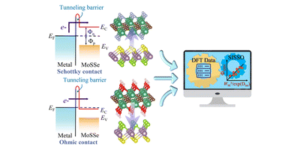
Biocomposites of 2D layered materials
Mert Vural and Melik C. Demirel
Nanoscale Horiz., 2025,10, 664-680
DOI: 10.1039/D4NH00530A
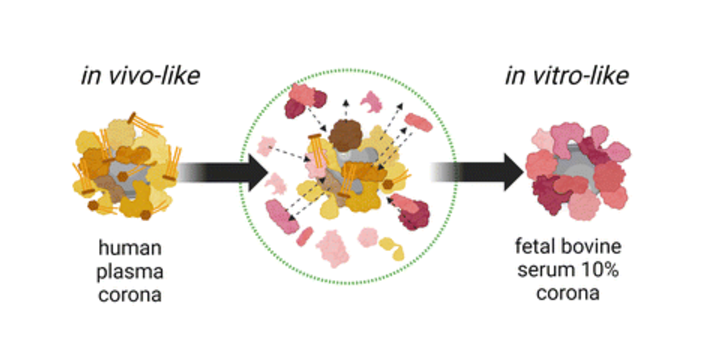
Efficient skin interactions of graphene derivatives: challenge, opportunity or both?
Fatemeh Zabihi, Zhaoxu Tu, Sabine Kaessmeyer, Fabian Schumacher, Fiorenza Rancan, Burkhard Kleuser, Christoph Boettcher, Kai Ludwig,f Johanna Plendl, Sarah Hedtrich, Annika Vogt and Rainer Haag
Nanoscale Adv., 2023,5, 5923-5931
DOI: 10.1039/D3NA00574G
Our nanoscience journals are always interested in considering high-quality articles on graphene and 2D materials and we would be delighted if you would consider the journal for your next submission, which can be made via our online submission service. All submissions will be subject to initial assessment and peer review as appropriate according to the respective journal’s guidelines.
We hope you enjoy reading this collection and look forward to seeing how this field progresses! Please continue to submit your exciting work on graphene and 2D materials to Nanoscale Horizons, Nanoscale and Nanoscale Advances.


Amina Benchohra started her studies at Sorbonne Université where she successively obtained a Bachelor in Biology-Chemistry and a Master Degree in Molecular Chemistry. She completed her Ph.D, in 2019, on the design of switchable hybrid materials based on magnetic molecular complexes, at the Institut Parisien de Chimie Moléculaire (IPCM, Paris) under the supervision of Prof David Kreher and Prof Rodrigue Lescouëzec. She then joined Moltech-Anjou (Angers, France), to work with Dr Sébastien Goeb on self-assembled materials for solar cells applications. After moving to the design of Cr(III)-Ln assemblies for energy-transfer upconversion -as post-doctoral researcher and then as a junior lecturer- in the group of Prof Piguet (Geneva), she took up an assistant professor position at the Université de Bretagne Occidentale (Brest, France) in 2023. Her current research focuses on functional molecular materials.
Fangfang Cao received her Ph.D. in Inorganic Chemistry from the University of Science and Technology of China in 2019, under the co-supervision of Prof. Jinsong Ren and Prof. Xiaogang Qu. She then pursued postdoctoral research at the National University of Singapore under the guidance of Prof. Xiaoyuan Chen. Her research focuses on nanocatalytic medicine, encompassing artificial enzymes, bioorthogonal catalysts, plasma catalysts, and piezoelectric materials for the treatment of cancer, infections, and inflammation. More recently, her work has expanded to microbial therapy, leveraging probiotics and viruses for translational medicine.
Dr. Jaime Andrés Pérez Taborda received the Engineering Physics degree (Hons.) from the Technological University of Pereira, Colombia, in 2011, and the master\’s degree in synchrotron radiation and particle accelerators from the Universitat Autònoma de Barcelona in 2013, as well as his Ph.D (Cum laude) from the Institute of Microelectronics of Madrid, Complutense University of Madrid, and Higher Council of Scientific Research CSIC, Spain. He has published research articles and book chapters on various subjects including piezoelectric nanostructures for acoustic wave sensors, nanoengineering new thermoelectric materials with high efficiencies obtained by physical methods, such as sputtering and pulsed laser deposition. In addition, he is also a co-founder and President of the Colombian Society of Physics Engineering.
Jiandong Yao obtained his B.S. degree in Materials Physics from School of Physics Science & Engineering, Sun Yat-sen University (2013) and his Ph.D. degree in Condensed Matter Physics from School of Physics, Sun Yat-sen University (2018). Then, he served as a research fellow in Nanyang Technological University. Currently, he is an Associate Professor of School of Materials Science & Engineering, Sun Yat-sen University (One Hundred Talents Program). The focus of his research lies in the synthesis of novel nanomaterials and their application in electronic/optoelectronic devices
Jianfang Wang obtained his BS degree in inorganic chemistry and software design in 1993 from the University of Science and Technology of China, his MS degree in inorganic chemistry in 1996 from Peking University, and his PhD degree in physical chemistry in 2002 from Harvard University. He did postdoctoral study in the University of California Santa Barbara from 2002 to 2005. He joined the Department of Physics, The Chinese University of Hong Kong (CUHK) in 2005 as an assistant professor. He became an associate professor in 2011 and a full professor in 2015. He was the Assistant Dean (Education) of the Faculty of Science of CUHK from August 2015 to July 2021 and has been the Chairperson of the Department of Physics of CUHK since August 2021. His current research interests are nanoplasmonics, nanophotonics, and photocatalysis. He has published more than 310 papers with a total citation of more than 48,200 and an h-index of 103.