Archive for the ‘Themed collection’ Category

Congratulations to our latest Emerging Investigator Dr Yinan Zhang

Nanoscale Horizons Emerging Investigator Series

Congratulations to our latest Emerging Investigator Dr Yinan Zhang (Tongji University, China)! 

Since the launch of Nanoscale Horizons, the journal has had a clear vision to publish exceptionally high-quality work whilst acting as a resource to researchers working at all career levels. We continue to be impressed by the quality of the research published and at the same time are looking for new ways of recognising and promoting the outstanding authors behind articles published in the journal. 

We launched our Emerging Investigator Series to showcase the exceptional work published by early-career researchers in the journal and regularly select a recently published Communication article to feature in an interview-style Editorial article with the corresponding author. We hope that the series will also benefit the nanoscience community by highlighting the exciting work being done by its early-career members. 

We are excited to share our latest Emerging Investigator, Dr Yinan Zhang (Tongji University, China)!

Image showing a picture Emerging Investigator Dr Yinan Zhang. Text on the slide says "Royal Society of Chemistry. Nanoscale Horizons Interview with Dr Yinan Zhang."

Read our interview with Yinan here

Dr Yinan Zhang is a Distinguished Researcher and Doctoral Supervisor at the School of Chemical Science and Engineering and the Advanced Research Institute, Tongji University. He received his BS degree in Materials Science and Engineering from Shandong University (2012) and his PhD from the Shanghai Institute of Applied Physics, Chinese Academy of Sciences (2017) under the supervision of Academician Chunhai Fan. Dr Zhang conducted postdoctoral research at the Shanghai Institute of Applied Physics (2017–2019) with Academician Chunhai Fan and Prof. Nadrian Seeman (NAS member), and at Arizona State University (2020–2021) with Prof. Hao Yan (NAI/AIMBE Fellow). Before joining Tongji University in 2022, he served as Senior Manager for Drug Delivery at Henlius Biopharma.

Dr Zhang’s research focuses on developing nucleic acid-based nanostructures and molecular machines. Utilizing DNA/RNA as engineering materials and harnessing principles of nucleic acid self-assembly, his group constructs precise nanoscale architectures to address specific biomedical and nanotechnological challenges.

He has published about 40 research papers, including approximately 30 as first or corresponding author in leading journals such as Science AdvancesNature CommunicationsJ. Am. Chem. Soc. and Angew. Chem. Int. Ed. His contributions have been recognized with the CAS President’s Award (2017) and selection as a Shanghai High-Level Overseas Talent (2020). Dr Zhang also serves as a Youth Editorial Board Member for Nano-Micro LettersResearchExploration, and Molecules.

Congratulations to Yinan for his excellent work! You can read his featured Emerging Investigator article from Nanoscale Horizons below.  
A picture of Dr Yinan Zhang

Structure-based DNA memory with Boolean random access, Yanyu Zhou, Lanyang Gao, Chu Jiang, Yuxi Li, Qi Liu, Chengguo Xu, Yingying Liu, Huajie Liu and Yinan Zhang, Nanoscale Horiz., 2025, 10, 3447-3452, 10.1039/D5NH00502G

We hope you enjoy reading our interview and featured article and are looking forward to sharing our future Emerging Investigators with you! 

Do you publish innovative nanoscience and nanotechnology research? Submit your latest work to Nanoscale Horizons now. If you are eligible for the Emerging Investigators series, you could be considered to feature in one of our future interviews! Find out more about the eligibility criteria and the process in this editorial introducing the series. 
Digg This
Reddit This
Stumble Now!
Share on Facebook
Bookmark this on Delicious
Share on LinkedIn
Bookmark this on Technorati
Post on Twitter
Google Buzz (aka. Google Reader)

DNA Nanotechnology Themed Collection

Explore the articles in this themed collection 

We are delighted to share this themed collection in Nanoscale Horizons on ‘DNA Nanotechnology’. This collection is guest edited by Professors Chunhai Fan (Shanghai Jiaotong University, China), Wenlong Cheng (University of Sydney, Australia), Chengde Mao (Purdue University, USA), Shelley Wickham (University of Sydney, Australia), Young Hoon Roh (Yonsei University, South Korea) and Laura Na Liu (University of Stuttgart, Germany) and aims to provide an impactful platform to showcase the state-of-the-art progress as well as address future challenges and opportunities in the field of DNA nanotechnology. 


Read the collection

Read the editorial


We encourage you to explore the high-quality and exciting research presenting novel concepts in DNA nanotechnology.  

All of the articles in the collection are free to access until 27 February 2026. Read some of the featured articles below. 

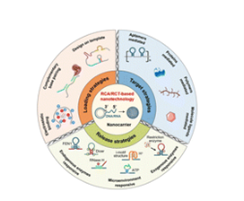
Rolling circle amplification/transcription-based nanotechnology for efficient delivery of nucleic acid drugs

 Xun You, Qingxuan Zeng, Tianshuang Xia, Xiaocui Guo, Chi Yao and Dayong Yang 

Nanoscale Horiz., 2025, DOI: 10.1039/D5NH00364D 

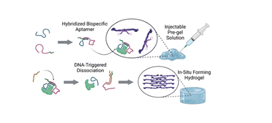
DNA-triggered activation of aptamer-neutralized enzyme for in situ formation of injectable hydrogel 

Connie Wen, Yixun Wang, Kyungsene Lee, Xuelin Wang and Yong Wang 

Nanoscale Horiz.2025, 101703-1716, DOI: 10.1039/D5NH00314H 

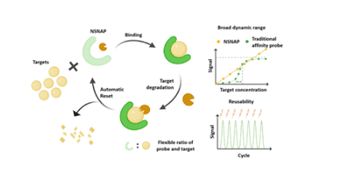
Non-saturated nucleic acid probes with a broad dynamic range 

Xinmiao Kang, Yu Liu, Dandan Tian, Zuhao Shen, Shihui Wang and Xin Su 

Nanoscale Horiz., 2025, 101684–1691, DOI: 10.1039/D5NH00218D 

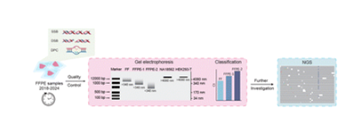
A nanoscale quality control framework for assessing FFPE DNA integrity in cancer research 

Zixuan Huang, Yunpei Si, Yi Zhang, Zicheng Huang, Xuehao Xiu, Yunshan Wang, YuDong Wang, Chunhai Fan and Ping Song 

Nanoscale Horiz., 2025, 101692–1702, DOI: 10.1039/D5NH00176E 

Nanoscale Horizons is always interested in considering exceptional articles on nanomaterials for DNA technology and we would be delighted if you would consider the journals for your future submissions. Submissions to the journals can be made via the Nanoscale Horizons online submission service. All submissions are subject to a full assessment by the editorial team according to the journals’ guidelines, and peer review and acceptance cannot be guaranteed. 


We hope you enjoy reading this collection! 

Digg This
Reddit This
Stumble Now!
Share on Facebook
Bookmark this on Delicious
Share on LinkedIn
Bookmark this on Technorati
Post on Twitter
Google Buzz (aka. Google Reader)

Celebrating the 120th anniversary of the National University of Singapore

Discover the latest nanoscience research in this Nanoscale Horizons, Nanoscale and Nanoscale Advances collection:


Read the celebratory collection
Read the introductory editorial


Founded in 1905 as a medical school, the National University of Singapore (NUS) has evolved into a world-leading university with a strong global presence. Recognized for its research excellence and diverse academic programs, NUS plays a key role in the furthering of nanoscience and nanotechnology.

This cross-journal collection highlights the breadth of high-quality work of the institute by featuring articles from researchers currently affiliated with NUS, esteemed alumni, and researchers with strong connections and extensive collaborations with the university. The collection covers the most recent research progress across the breadth of nanoscience and nanotechnology.

All articles in the collection are free to read until 31 December 2025.


Check out some of the featured articles below:

Multifunctional MEMS, NEMS, micro/nano-structures enabled by piezoelectric and ferroelectric effects
Mengyao Xiao, Aolei Xu, Zhouli Sui, Wenjie Zhang, Huajun Liu and Chengkuo Lee
Nanoscale Horiz., 2025, 10, 2744-2771
DOI: 10.1039/D5NH00386E
Graphene oxide/DNA-aerogel pressure and acoustic sensor
Siyu Chen, Pengxiang Zhang, Jinpei Zhao, Kostya S. Novoselov and Daria V. Andreeva
Nanoscale Horiz., 2025, 10, 1405-1413
DOI: 10.1039/D5NH00117J
Antimicrobial peptide-conjugated graphene coatings for prevention and treatment of bacterial infections
Xiao Zhu, Nhan Dai Thien Tram, Dhanya Mahalakshmi Murali, Veluchamy Amutha Barathi, Mayandi Venkatesh, Rajamani Lakshminarayanan and Pui Lai Rachel Ee
Nanoscale, 2025, 17, 19914-19927
DOI: 10.1039/D5NR01674F
Atomic-level characterization of crystal defects in a polycrystalline silicon-diamond structure
Yuxuan Yang, Kaige Chen, Xinlu Xue, Tong Song, Zhihao Zhao, Xianghong Zhou, Yang Zhang, Rong Qin, Fei Li, Xiangdong Ding, Jun Suna and Haijun Wu
Nanoscale Adv., 2025, 7, 5377-5383
DOI: 10.1039/D5NA00262A


We hope you enjoy reading some of the latest nanoscience research from the National University of Singapore and join us in congratulating its 120 years of impactful research!


Guest Editors

Bin Liu
National University of Singapore
Xiaogang Liu
National University of Singapore
Zhiqun Lin
National University of Singapore
Ghim Wei Ho
National University of Singapore
David Leong
National University of Singapore


Submit your latest research to Nanoscale Horizons, Nanoscale or Nanoscale Advances today!

Digg This
Reddit This
Stumble Now!
Share on Facebook
Bookmark this on Delicious
Share on LinkedIn
Bookmark this on Technorati
Post on Twitter
Google Buzz (aka. Google Reader)

Graphene and 2D Materials for Healthcare

Graphene and 2D Materials for Healthcare

Guest edited by Laura Ballerini, Alberto Bianco, Kostas Kostarelos and Maurizio Prato

Over the past decade, the Graphene Flagship Division II (Health, Medicine, Sensors) has contributed immensely to developments in graphene-based technologies for biomedical applications, safe and sustainable graphene and related materials, and high-performance sensors with a variety of applications, from detecting disease biomarkers, to piezoresistive devices for microphones and speakers. This collection coincides with the celebration of the achievements and completion of this programme of work.

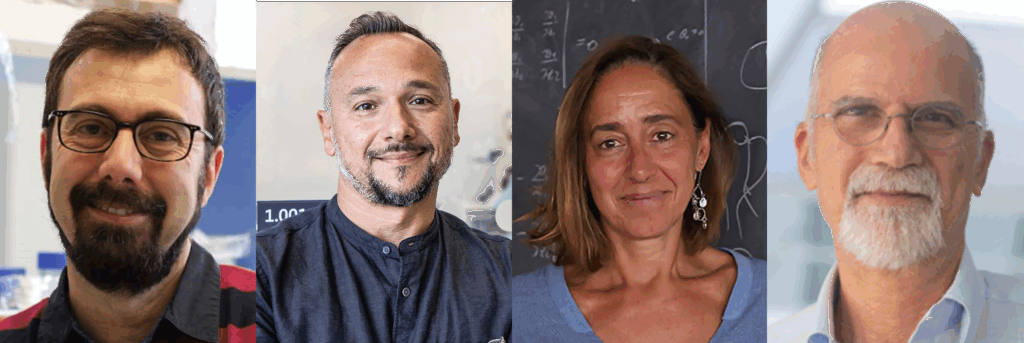
Photos of guest editors from left, Alberto Bianco, Kostas Kostarelos, Laura Ballerini and Maurizio Prato

All of the articles in the collection are free to access until the 10 June 2025.

Read some of the featured articles below:

Emergence of graphene as a novel nanomaterial for cardiovascular applications

Paniz Memarian, Zohreh Bagher, Sheida Asghari, Mina Aleemardani and Alexander Seifalian
Nanoscale,
2024,16, 12793-12819

DOI: 10.1039/D4NR00018H

Biocomposites of 2D layered materials

Mert Vural and Melik C. Demirel

Nanoscale Horiz., 2025,10, 664-680

DOI: 10.1039/D4NH00530A

Efficient skin interactions of graphene derivatives: challenge, opportunity or both?

Fatemeh Zabihi, Zhaoxu Tu, Sabine Kaessmeyer, Fabian Schumacher, Fiorenza Rancan,   Burkhard Kleuser, Christoph Boettcher, Kai Ludwig,f   Johanna Plendl, Sarah Hedtrich, Annika Vogt  and  Rainer Haag

Nanoscale Adv., 2023,5, 5923-5931

DOI: 10.1039/D3NA00574G

Our nanoscience journals  are always interested in considering high-quality articles on graphene and 2D materials and we would be delighted if you would consider the journal for your next submission, which can be made via our online submission service. All submissions will be subject to initial assessment and peer review as appropriate according to the respective journal’s guidelines.

We hope you enjoy reading this collection and look forward to seeing how this field progresses! Please continue to submit your exciting work on graphene and 2D materials to Nanoscale Horizons, Nanoscale and Nanoscale Advances.


Digg This
Reddit This
Stumble Now!
Share on Facebook
Bookmark this on Delicious
Share on LinkedIn
Bookmark this on Technorati
Post on Twitter
Google Buzz (aka. Google Reader)

Celebrating the 150th anniversary of Vanderbilt University

Celebrating the 150th anniversary of Vanderbilt University

Guest edited by De-en Jiang, Janet E. Macdonald and Sharon M. Weiss

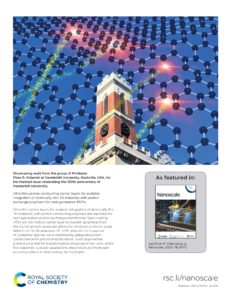
Piran R. Kidambi et al’s cover for their article on ultra-thin proton conducting carrier layers for scalable integration of atomically thin 2D materials with proton exchange polymers for next-generation PEMs.

We were delighted to celebrate the 150th anniversary of Vanderbilt University at the end of last year and into the start of 2024 with a special collection in Nanoscale Horizons, Nanoscale and Nanoscale Advances highlighting the breadth of high-quality work from the institute and commemorating the university’s sesquicentennial. We’re pleased to share this excellent collection of research and reviews with you, providing a snapshot of the nanoscale science and engineering research from Vanderbilt faculty, alumni, and collaborators in 2023 and 2024.

We’re also delighted to showcase the work of Piran R. Kidambi et al, which featured on the cover of Nanoscale!

You can explore the collection and read the introductory editorial from our guest editors below, with all articles free to access until the end of August 2024.

Read the collection

Professors De-en Jiang, Janet Macdonald and Sharon Weiss served as guest editors for this collection and highlight the history of Vanderbilt University and the significance of the Vanderbilt Institute of Nanoscale Science and Engineering (VINSE) in their introductory editorial.

Photos of De-en Jiang, Janet Macdonald and Sharon Weiss.

Read the introductory editorial

All of the articles in the collection are free to access until the end of August 2024. Read some of the featured articles below.

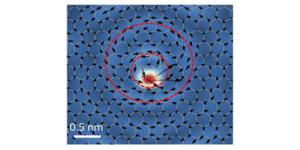
Graphical abstract image for ‘Phonon vortices at heavy impurities in two-dimensional materials’.

Phonon vortices at heavy impurities in two-dimensional materials
De-Liang Bao, Mingquan Xu, Ao-Wen Li, Gang Su, Wu Zhou and Sokrates T. Pantelides
Nanoscale Horiz., 2024, DOI: 10.1039/D3NH00433C


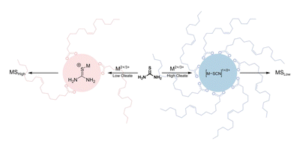
Graphical abstract image for ‘Role of carboxylates in the phase determination of metal sulfide nanoparticles’.

Role of carboxylates in the phase determination of metal sulfide nanoparticles
Andrey A. Shults, Guanyu Lu, Joshua D. Caldwell and Janet E. Macdonald
Nanoscale Horiz., 2023, DOI: 10.1039/D3NH00227F


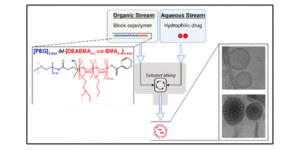
Graphical abstract image for ‘Engineering endosomolytic nanocarriers of diverse morphologies using confined impingement jet mixing’.

Engineering endosomolytic nanocarriers of diverse morphologies using confined impingement jet mixing
Hayden M. Pagendarm, Payton T. Stone, Blaise R. Kimmel, Jessalyn J. Baljon, Mina H. Aziz, Lucinda E. Pastora, Lauren Hubert, Eric W. Roth, Sultan Almunif, Evan A. Scott and John T. Wilson
Nanoscale, 2023, DOI: 10.1039/D3NR02874G


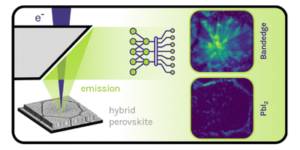
Graphical abstract image for ‘Hyperspectral mapping of nanoscale photophysics and degradation processes in hybrid perovskite at the single grain level’.

Hyperspectral mapping of nanoscale photophysics and degradation processes in hybrid perovskite at the single grain level
Ethan J. Taylor, Vasudevan Iyer, Bibek S. Dhami, Clay Klein, Benjamin J. Lawrie and Kannatassen Appavoo
Nanoscale Adv., 2023, DOI: 10.1039/D3NA00529A


Nanoscale Horizons and Nanoscale are high-impact international journals, publishing high-quality experimental and theoretical work across the breadth of nanoscience and nanotechnology. Nanoscale Advances is our gold open access member of the nanoscale journal family. Our broad scope covers cross-community research that bridges various disciplines, and the journal series allows full coverage of interdisciplinary advances in nanoscience and nanotechnology. We hope you will consider Nanoscale Horizons, Nanoscale and Nanoscale Advances for your future submissions.

We hope you enjoy reading this collection and look forward to showcasing more work from Vanderbilt faculty and alumni in the future. Please continue to submit your exciting work to Nanoscale Horizons, Nanoscale and Nanoscale Advances.

Digg This
Reddit This
Stumble Now!
Share on Facebook
Bookmark this on Delicious
Share on LinkedIn
Bookmark this on Technorati
Post on Twitter
Google Buzz (aka. Google Reader)

Celebrating the 20th anniversary of NCNST

Celebrating the 20th anniversary of NCNST

Guest edited by Xinfeng Liu, Qing Dai, Zhixiang Wei, Chunying Chen and Yuliang Zhao


Cover for NCNST anniversary collection featuring some of the previous Nanoscale Horizons and Nanoscale covers from NCNST researchers over the last 20 years.


Last year we were delighted to celebrate the 20th anniversary of the National Center for Nanoscience and Technology (NCNST) with a special collection in Nanoscale Horizons, Nanoscale and Nanoscale Advances highlighting the breadth of high-quality work from the institute. We’re pleased to share this collection of research and reviews covering the most recent research progress in a wide spectrum of nanoscience and nanotechnology from researchers currently affiliated with NCNST as well as esteemed alumni.

You can explore the collection and read the introductory editorial from our guest editors below, with all articles free to access until the end of April 2024.

Read the collection

Professor Xinfeng Liu, Professor Qing Dai, Professor Zhixiang Wei, Professor Chunying Chen and Professor Yuliang Zhao served as guest editors for this collection and highlight the history of NCNST and significance of this anniversary in their introductory editorial.

Photos of Xinfeng Liu, Qing Dai, Zhixiang Wei, Chunying Chen and Yuliang Zhao.

Read the introductory editorial

All of the articles in the collection are free to access until the end of April 2024. Read some of the featured articles below.

Reviews

Graphical abstract image for Nanostructures in Chinese herbal medicines (CHMs) for potential therapy.

Nanostructures in Chinese herbal medicines (CHMs) for potential therapy
Ya-Li Zhang, Ya-Lei Wang, Ke Yan, Qi-Qi Deng, Fang-Zhou Li, Xing-Jie Liang and Qian Hua
Nanoscale Horiz., 2023, DOI: 10.1039/D3NH00120B


Graphical abstract image for Strategies and applications of generating spin polarization in organic semiconductors.

Strategies and applications of generating spin polarization in organic semiconductors
Ke Meng, Lidan Guo and Xiangnan Sun
Nanoscale Horiz., 2023, DOI: 10.1039/D3NH00101F


Communications

Graphical abstract image for Stereoselective coronas regulate the fate of chiral gold nanoparticles in vivo.

Stereoselective coronas regulate the fate of chiral gold nanoparticles in vivo
Didar Baimanov, Liming Wang, Ke Liu, Mengmeng Pan, Rui Cai, Hao Yuan, Wanxia Huang, Qingxi Yuan, Yunlong Zhou, Chunying Chen and Yuliang Zhao
Nanoscale Horiz., 2023, DOI: 10.1039/D3NH00124E


Graphical abstract image for Modulation of the assembly fashion among metal–organic frameworks for enantioretentive epoxide activation.

Modulation of the assembly fashion among metal–organic frameworks for enantioretentive epoxide activation
Jun Guo, Xiaomin Xue, Fangfang Li, Meiting Zhao, Youcong Xing, Yanmin Song, Chang Long, Tingting Zhao, Yi Liu and Zhiyong Tang
Nanoscale Horiz., 2024, DOI: 10.1039/D3NH00419H


Graphical abstract image for Improving the efficiency of ternary organic solar cells by reducing energy loss.

Improving the efficiency of ternary organic solar cells by reducing energy loss
Mengni Wang, Yanan Shi, Ziqi Zhang, Yifan Shen, Min Lv, Yangjun Yan, Huiqion Zhou, Jianqi Zhang, Kun Lv, Yajie Zhang, Hailin Peng and Zhixiang Wei
Nanoscale Horiz., 2023, DOI: 10.1039/D3NH00122A


Nanoscale Horizons and Nanoscale are high-impact international journals, publishing high-quality experimental and theoretical work across the breadth of nanoscience and nanotechnology. Nanoscale Advances is our gold open access member of the nanoscale journal family. Our broad scope covers cross-community research that bridges various disciplines, and the journal series allows full coverage of interdisciplinary advances in nanoscience and nanotechnology. We hope you will consider Nanoscale Horizons, Nanoscale and Nanoscale Advances for your future submissions.

We hope you enjoy reading this collection and look forward to showcasing more work from NCNST in the future. Please continue to submit your exciting work to Nanoscale Horizons, Nanoscale and Nanoscale Advances.

Digg This
Reddit This
Stumble Now!
Share on Facebook
Bookmark this on Delicious
Share on LinkedIn
Bookmark this on Technorati
Post on Twitter
Google Buzz (aka. Google Reader)

Carbon-based nanomaterials

Carbon-based nanomaterials

A collection of recent articles from Nanoscale Horizons and Nanoscale

Nanoscale Horizons and Nanoscale are pleased to present a collection highlighting the latest research published in the journals on carbon-based nanomaterials.

Read the collection

Check out this selection of articles from the collection, with many more available online.

Boosting efficiency of luminescent solar concentrators using ultra-bright carbon dots with large Stokes shift
Jiurong Li, Haiguang Zhao, Xiujian Zhao and Xiao Gong
Nanoscale Horiz., 2023, DOI: 10.1039/D2NH00360K

Graphene foam membranes with tunable pore size for next-generation reverse osmosis water desalination (Open Access)
Duc Tam Ho, Thi Phuong Nga Nguyen, Arun Jangir and Udo Schwingenschlögl
Nanoscale Horiz., 2023, DOI: 10.1039/D2NH00475E

Water-soluble green-emitting carbon nanodots with enhanced thermal stability for biological applications
Waheed Ullah Khan, Liying Qin, Abid Alam, Ping Zhou, Yong Peng and Yuhua Wang
Nanoscale, 2021, DOI: 10.1039/D0NR09131F

Progress in the use of organic potassium salts for the synthesis of porous carbon nanomaterials: microstructure engineering for advanced supercapacitorsQian Zhang, Bing Yan, Li Feng, Jiaojiao Zheng, Bo You, Jiayun Chen, Xin Zhao, Chunmei Zhang, Shaohua Jiang and Shuijian He
Nanoscale, 2022, DOI: 10.1039/D2NR01986H

We would be delighted if you would consider Nanoscale Horizons or Nanoscale for your next submission, which can be made using the link below.

Submit your research

Nanoscale Horizons and Nanoscale are high-impact international journals, publishing high-quality experimental and theoretical work across the breadth of nanoscience and nanotechnology. Our broad scope covers cross-community research that bridges the various disciplines involved with nanoscience and nanotechnology.

We hope you enjoy reading this collection and will consider Nanoscale Horizons and Nanoscale for your future submissions.

Digg This
Reddit This
Stumble Now!
Share on Facebook
Bookmark this on Delicious
Share on LinkedIn
Bookmark this on Technorati
Post on Twitter
Google Buzz (aka. Google Reader)

2024 Lunar New Year Collection

Happy Lunar New Year

Happy Chinese and Lunar New Year from everyone on the Nanoscale Horizons, Nanoscale and Nanoscale Advances teams! To celebrate the start of the Year of the Dragon, we are delighted to highlight some of the most popular articles published in our nanoscience journals last year by corresponding authors based in countries celebrating the Lunar New Year.

Read the collection now

Nanoscale Horizons, Nanoscale and Nanoscale Advances Lunar New Year promotional graphic with a red background and an image of a gold dragon surrounded by clouds and fireworks. Text reads: " Wishing you a Happy Lunar New Year 2024, May you enjoy a very prosperous and productive year of the Dragon".

All of the articles in these collections are free to access until the end of March 2024. We hope you enjoy reading these popular articles and wish you a happy, healthy and prosperous year of the dragon!

Digg This
Reddit This
Stumble Now!
Share on Facebook
Bookmark this on Delicious
Share on LinkedIn
Bookmark this on Technorati
Post on Twitter
Google Buzz (aka. Google Reader)

Call For Papers: Memristors and Neuromorphic Systems

Call For Papers: Memristors and Neuromorphic Systems

Submit your latest work to Nanoscale Horizons and Materials Horizons now!

We are delighted to announce an open call for submissions to our Nanoscale Horizons and Materials Horizons cross-journal themed collection on Memristors and Neuromorphic Systems, guest edited by Professor Xiaodong Chen (Nanyang Technological University, Singapore), Professor Cheol Seong Hwang (Seoul National University, South Korea), Professor Francesca Santoro (Forschungszentrum Jülich, Germany) and Professor Yoeri Van de Burgt (Eindhoven University of Technology, The Netherlands).

Memristors and neuromorphic systems open call graphic. Includes photos of the guest editors Xiaodong Chen, Cheol Seong Hwang, Francesca Santoro and Yoeri Van de Burgt.

The research field dedicated to mimicking the brain is called neuromorphic engineering, and covers a wide range of disciplines, including electrical engineering, computing, materials science, chemistry, physics, and even psychology. Yet, conventional CMOS-based hardwares are based on the von-Neumann architecture which operates sequentially (instead of in parallel) shuffling data back and forth between processing and memory, and thus barely fulfil the low-energy requirements for neuromorphic engineering. Memristors, which can be synaptic, neural, or even a combination of both, offer a potential solution and as such have been the focus of enhanced research efforts. In addition to their low-energy cost requirements, new materials properties employed by memristors may lead to new algorithms or help solve conventionally challenging tasks, such as NP-hard problems.

This themed collection in Materials Horizons and Nanoscale Horizons aims to report the latest developments in memristive materials. Exploring their fabrication, characterization, circuit design, and performance for applications in the future of neuromorphics. Collaborative work between diverse fields is especially encouraged.

This call for papers is open for original research articles only. Please note that primary research is accepted in the form of Communications for both journals and require a ‘New Concepts statement’ to help ascertain the significance of the research. General guidance and examples can be found here.

Open for submissions until 30 November 2023

If you wish to contribute, please submit your manuscript directly to the submissions platform through the Nanoscale Horizons submission system or the Materials Horizons submission system. Please mention that this submission is a contribution to the Memristors and Neuromorphic Systems collection in the “Themed issues” section of the submission form and add a “Note to the Editor” that this is from the Open Call. The Editorial Office reserves the right to check suitability of submissions in relation to the scope of both the journal and the collection, and inclusion of accepted articles in the final themed issue is not guaranteed.

Please also note that all submissions will undergo the normal peer review processes including an initial assessment prior to peer review, and that peer review and acceptance are not guaranteed.

We sincerely hope that you will be able to submit some of your latest work to this themed collection. If you have any questions, please contact the Editorial Office.

With best wishes,

Professor Xiaodong Chen (Nanyang Technological University, Singapore)
Professor Cheol Seong Hwang (Seoul National University, South Korea)
Professor Francesca Santoro (Forschungszentrum Jülich, Germany)
Professor Yoeri Van de Burgt (Eindhoven University of Technology, The Netherlands)

Digg This
Reddit This
Stumble Now!
Share on Facebook
Bookmark this on Delicious
Share on LinkedIn
Bookmark this on Technorati
Post on Twitter
Google Buzz (aka. Google Reader)

Nanoparticle synthesis

Nanoparticle synthesis

A collection of recent articles from Nanoscale Horizons and Nanoscale

Nanoscale Horizons and Nanoscale are pleased to present a collection highlighting the latest research published in the journals on nanoparticle synthesis.

Read the collection

Check out this selection of articles from the collection, with many more available online.

Role of carboxylates in the phase determination of metal sulfide nanoparticles (Open Access)
Andrey A. Shults, Guanyu Lu, Joshua D. Caldwell and Janet E. Macdonald
Nanoscale Horiz., 2023, DOI: 10.1039/D3NH00227F

Oleic acid/oleylamine ligand pair: a versatile combination in the synthesis of colloidal nanoparticles
Stefanos Mourdikoudis, Melita Menelaou, Nadesh Fiuza-Maneiro, Guangchao Zheng, Shuangying Wei, Jorge Pérez-Juste, Lakshminarayana Polavarapu and Zdeněk Sofer
Nanoscale Horiz., 2022, DOI: 10.1039/D2NH00111J

Peptoid-directed assembly of CdSe nanoparticles
Madison Monahan, Bin Cai, Tengyue Jian, Shuai Zhang, Guomin Zhu, Chun-Long Chen, James J. De Yoreo and Brandi M. Cossairt
Nanoscale, 2021, DOI: 10.1039/D0NR07509D

Intelligent control of nanoparticle synthesis through machine learning
Honglin Lv and Xueye Chen
Nanoscale, 2022, DOI: 10.1039/D2NR00124A

We would be delighted if you would consider Nanoscale Horizons or Nanoscale for your next submission, which can be made using the link below.

Submit your research

Nanoscale Horizons and Nanoscale are high-impact international journals, publishing high-quality experimental and theoretical work across the breadth of nanoscience and nanotechnology. Our broad scope covers cross-community research that bridges the various disciplines involved with nanoscience and nanotechnology.

We hope you enjoy reading this collection and will consider Nanoscale Horizons and Nanoscale for your future submissions.

Digg This
Reddit This
Stumble Now!
Share on Facebook
Bookmark this on Delicious
Share on LinkedIn
Bookmark this on Technorati
Post on Twitter
Google Buzz (aka. Google Reader)