Author Archive

Congratulations to our latest Emerging Investigator Professor Chunlan Wang

Nanoscale Horizons Emerging Investigator Series

Congratulations to our latest Emerging Investigator Professor Chunlan Wang (Xi’an Polytechnic University, China)! 

Since the launch of Nanoscale Horizons, the journal has had a clear vision to publish exceptionally high-quality work whilst acting as a resource to researchers working at all career levels. We continue to be impressed by the quality of the research published and at the same time are looking for new ways of recognising and promoting the outstanding authors behind articles published in the journal. 

We launched our Emerging Investigator Series to showcase the exceptional work published by early-career researchers in the journal and regularly select a recently published Communication article to feature in an interview-style Editorial article with the corresponding author. We hope that the series will also benefit the nanoscience community by highlighting the exciting work being done by its early-career members. 

We are excited to share our latest Emerging Investigator, Professor Chunlan Wang (Xi’an Polytechnic University, China)! 

Read our interview with Chunlan here

Chunlan Wang is currently a Professor at Xi’an Polytechnic University in China. She received her doctoral degree in Condensed Matter Physics from Wuhan University (2015). She is one of the Fifth Batch of “Young Talents Support Program” for Universities in Shaanxi Province, part of the Experts of the Science and Technology Think Tank of Xi’an Science and Technology Association (First Batch), and one of the Ministry of Education’s “Young Backbone Teachers of Central and Western Universities for Domestic Visiting Scholars”.

Congratulations to Chunlan for her excellent work! You can read her featured Emerging Investigator article from Nanoscale Horizons below.

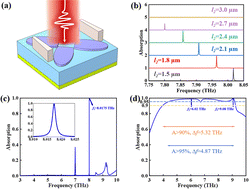
A multifunctional terahertz device based on vanadium dioxide metamaterials that switches between ultra-broadband absorption and ultra-high-Q narrowband absorption

Tao Liu, Chunlan Wang, Gengliang Zou, Jiaying Ji and Zao Yi

Nanoscale Horiz., 2025, 10, 3105-3115, 10.1039/D5NH00320B

We hope you enjoy reading our interview and featured article and are looking forward to sharing our future Emerging Investigators with you! 

Do you publish innovative nanoscience and nanotechnology research? Submit your latest work to Nanoscale Horizons now. If you are eligible for the Emerging Investigators series, you could be considered to feature in one of our future interviews! Find out more about the eligibility criteria and the process in this editorial introducing the series. 

Digg This
Reddit This
Stumble Now!
Share on Facebook
Bookmark this on Delicious
Share on LinkedIn
Bookmark this on Technorati
Post on Twitter
Google Buzz (aka. Google Reader)

Beyond Li Ion Batteries: From Materials Discovery to Interface Engineering

Submit your latest work to Nanoscale Horizons and Materials Horizons now

We are pleased to announce an open call for submissions to this themed collection on Beyond Li Ion Batteries: From Materials Discovery to Interface Engineering running across Nanoscale Horizons and Materials Horizons. This themed collection is guest edited by Professor Haegyum Kim (Lawrence Berkeley National Laboratory, U.S.A.), Professor Raju Kumar Gupta (Indian Institute of Technology Kanpur, India), Professor Fang Liu (University of Wisconsin-Madison, U.S.A.) and Professor Lingzi Sang (University of Alberta, Canada).


As energy storage demands surpass the limits of conventional Lithium-ion systems, the field is rapidly pivoting toward high-performance, sustainable alternatives. We are pleased to announce a Themed Collection on Beyond Li Ion Batteries, aiming to bridge fundamental materials discovery with rigorous surface/interface engineering and economic viability. We invite communications and reviews covering diverse chemistries (e.g., Na-ion, K-ion, multivalent, and solid-state systems) to Nanoscale Horizons and Materials Horizons. This collection specifically seeks to connect theoretical innovation with practical realization and standardization.

This themed collection particularly welcomes submissions from the following research topics:

  • Computational & AI-Driven Material Discovery: First-principles modeling, simulations, and ML algorithms for materials screening and discovery.
  • Experimental Synthesis: Novel electrodes and electrolytes, scalable synthesis.
  • Interface Engineering: Stabilization strategies for electrode-electrolyte interphases.
  • Advanced Diagnostics: Characterization of failure modes and degradation mechanisms.
  • Standardization: Development of unified testing protocols to ensure data reliability and comparability.
  • Technoeconomics & Sustainability: Life cycle analysis (LCA), cost modeling, and environmental impact assessments of emerging battery technologies.

Join us in establishing the benchmarks for the next generation of energy storage technologies. We look forward to your contributions.


The submissions deadline for this collection is 30 November 2026


Submissions to the journal should fit within the scope of Nanoscale Horizons or Materials Horizons. We invite authors to select the journal that best suits their submission. Please see the journal webpages for more information on the journals’ scopes, standards, article types and author guidelines, which can be accessed below.

Nanoscale Horizons

Materials Horizons


Submission to the Collection

Manuscripts should be submitted via the Royal Society of Chemistry’s online submission service available here for Nanoscale Horizons and here for Materials Horizons. Please ensure that during the submission process you indicate that this is an invited submission for a themed collection. Please note that primary research is accepted in the form of Communications for both journals and require a ‘New Concepts statement’ to help ascertain the significance of the research. General guidance and examples can be found here.

For Nanoscale Horizons, we welcome exceptionally high-quality studies across all fields of nanoscience and nanotechnology in the form of Communications and Review-type articles (Reviews and Focus articles). For Materials Horizons, we welcome exceptionally high-quality materials science in the form of Communications and Review-type articles (Reviews, Opinions and Focus articles).

Please inform the Editorial Office at nanoscalehorizons-rsc@rsc.org as soon as possible if you plan to submit to the themed collection and state which journal you would like to submit to. If you are interested in submitting a review-type article, please contact the Editorial Office in the first instance with a proposed title and abstract as initial approval is required before submission to avoid potential topic overlap.

Nanoscale Horizons and Materials Horizons are hybrid journals, meaning you can choose to publish your work open access or you can choose to publish your work for subscription-only audiences.  When you submit to Nanoscale Horizons or Materials Horizons you may wish to consider the option of publishing your research open access. Publishing open access with RSC journals unlocks the full potential of your research – bringing increased visibility, wider readership and higher citation potential to your work. You can use ourJournal Findertool to check if your institute currently has an agreement with the RSC that may entitle you to publish open access without needing to pay an article processing charge (APC).

Please note that all submissions are subject to rigorous assessment by our Editors before being sent for peer review if appropriate. Manuscripts must meet the journal requirements and as such we cannot guarantee peer review or acceptance.

Submit to Nanoscale Horizons

Submit to Materials Horizons


We sincerely hope that you will be able to submit to this themed collection and we look forward to receiving your contribution.


Professor Haegyum Kim
Lawrence Berkeley National Laboratory, United States
ORCID: 0000-0002-5962-8244
Professor Raju Kumar Gupta
Indian Institute of Technology Kanpur, India
ORCID: 0000-0002-5537-8057
Professor Fang Liu
University of Wisconsin-Madison, United States
ORCID: 0000-0003-0885-5604
Professor Lingzi Sang
University of Alberta, Canada
ORCID: 0000-0002-1052-8947


Digg This
Reddit This
Stumble Now!
Share on Facebook
Bookmark this on Delicious
Share on LinkedIn
Bookmark this on Technorati
Post on Twitter
Google Buzz (aka. Google Reader)

Nanoscale Horizons 10th Anniversary ‘Community Spotlight’ – Meeting our Emerging Investigators

Nanoscale Horizons 10th Anniversary ‘Community Spotlight’ – Meeting our Emerging Investigators

Celebrating our Nanoscale Horizons Emerging Investigators!

Last year, we were pleased to celebrate the 10th anniversary of Nanoscale Horizons. We are so grateful to our fantastic community of authors, reviewers, board members and readers, and wanted to showcase some of them in a series of ‘Community Spotlight’ blog articles.

In our latest ‘Community Spotlight’ blog, we feature some of our Nanoscale Horizons Emerging Investigators. Our Emerging Investigators are rising stars in the early stages of their independent careers, who have been identified as having the potential to influence future directions in the field.


Dr Leslie Schoop, Emerging Investigator

Princeton University, USA


Dr. Schoop received her Diploma in Chemistry from Johannes Gutenberg University (2010) and PhD in Chemistry from Princeton University (2015). She then went on to work as a Minerva fast-track fellow under Professor Bettina Lotsch at the Max Planck Institute for Solid State Research (2015-2017). Dr. Schoop joined the Princeton University Department of Chemistry Faculty in 2017, was tenured in 2022 and promoted to full professor in 2024. Since 2024 she directs the Princeton Center for Complex Materials, an NSF-funded MRSEC. In 2019 she won the Beckman Young Investigator Award and became a Moore foundation EPiQS Materials Synthesis Investigator. In 2020 she was awarded the Packard fellowship for science and engineering and in 2021 the Sloan fellowship in Chemistry and the DOD Office of Naval Research Young Investigator award. In 2022 she was awarded the NSF CAREER award and in 2025 the Presidential Early Career Award for Scientists and Engineers (PECASE). The Schoop lab studies Quantum Materials for a chemical perspective. They consider paradigms from chemistry such as chemical bonding to predict, synthesize and characterize new quantum materials. They also use novel synthetic approaches, aided by inorganic chemistry to synthesize yet unreleased quantum materials, both in bulk and 2D form. For example, they have established the use of liquid exfoliation as a valid route to synthesize 2D quantum materials and their inks.

1) Could you provide a brief summary of your most recent Nanoscale Horizons publication?

In our most recent Nanoscale Horizon publication, we report the first synthesis of free standing CrOCl monolayers. CrOCl has been researched for its unresting magic properties, especially when thin. Its exfoliation was not quite staring forward and needed some chemical tricks, which is the main advancement of the paper.

2) How has your research progressed on from the work published in your Emerging Investigators article?

Since we published the Emerging Investigator article, which was about using chemical exfoliation to synthesize 1D materials, we have deepened our knowledge about many specific aspects of chemical exfoliation. When are intercalates important, which kind of intercalates and modification of bulk structures are possible, and if we can make other 1D materials that way.

Read Leslie’s Emerging Investigator article here:

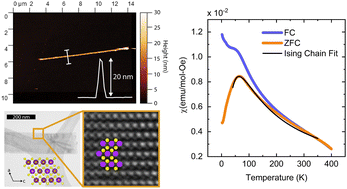
Chemical exfoliation of 1-dimensional antiferromagnetic nanoribbons from a non-van der Waals material

Mulan Yang, Guangming Cheng, Nitish Mathur, Ratnadwip Singha, Fang Yuan, Nan Yao and Leslie M. Schoop

Nanoscale Horiz., 2024, 9, 479-486


Dr Ahu Gumrah Dumanli-Parry, Emerging Investigator

University of Manchester, UK


Dr Ahu Gumrah Dumanli-Parry is a Lecturer in Bioinspired Soft Matter at the University of Manchester and PI of the Bioinspired Functional Materials (BioFuM) research group. Her research sits at the intersection of materials science, biology, and design, developing adaptive and sustainable photonic materials inspired by nature’s hierarchical architectures.

She investigates bottom-up self-assembly in natural polymers such as cellulose and chitin, translating molecular order into responsive optical systems for sensing, smart textiles, and sustainable packaging. Her work integrates soft matter physics, advanced optical characterisation, and scalable nanomanufacturing strategies to engineer structural colour with precision and efficiency.

She established her independent laboratory in 2019 as a bp-ICAM Kathleen Lonsdale Research Fellow and was selected as a Nanoscale Horizons Emerging Investigator in 2023 for her work on edible cellulose-based colorimetric systems. Her research has since expanded into translational innovation, including the founding of Colorolicious, a university spin-out developing edible liquid-crystal colourants for food applications.

1) How do you feel about the Emerging Investigator collection in Nanoscale Horizons as a place to showcase research from early career researchers in nanoscience and nanotechnology?

Having been part of the Emerging Investigator collection myself, I know first-hand how impactful this platform can be. Early-career academics often produce highly original work but can struggle for visibility in a competitive publishing landscape. The RSC Emerging Investigator series provides precisely that visibility as these highlight independence and scientific creativity.
Importantly, I appreciate that the series recognises that academic careers are not linear. “Emerging” does not simply mean young or newly appointed; many researchers reach independence through diverse and sometimes non-traditional trajectories. By acknowledging this, the RSC demonstrates an inclusive and progressive understanding of what early-stage leadership in science truly means. That recognition matters deeply for building confidence and community within nanoscience.

2) Where do you see the nanoscience field in the next 10 years?

I may be biased, but I believe the future of nanoscience lies firmly in interdisciplinary and cross-disciplinary fileds. The grand challenges we face such as sustainability, energy transition, water security, food systems, waste reduction, health technologies, robotics, biotechnology, and AI (and so on) cannot be solved within isolated disciplinary silos.

Nanoscience will increasingly serve as the connective tissue between physics, chemistry, biology, materials science, and engineering. In my own work, bioinspired approaches provide a powerful framework. Nature has already solved many complex functional challenges at the nanoscale. By understanding and adapting those strategies, we can develop materials that are not only high-performing but also sustainable and adaptive.

3) In your opinion, how could members of the community be more involved with the journal?

I think focused thematic issues around emerging frontiers, for example sustainable nanomanufacturing, bioinspired photonics, AI-enabled nanomaterials could further energise the community. These curated themes help build identity and momentum around new directions.

I would also welcome more interactive community-building activities led by the journal workshops, panel discussions, or small focused symposia aligned with major conferences. Creating spaces where authors, reviewers, and editors can interact beyond manuscript submission strengthens scientific exchange. I would be very happy to contribute to such initiatives.

4) Could you provide a brief summary of your most recent Nanoscale Horizons publication?

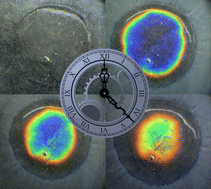
In our recent Nanoscale Horizons paper (actually it has been 2 years since it is published), we developed an edible colorimetric timer based on the dynamic structural colour changes of the cholesteric cellulose mesophases. Water-based cholesteric phases of cellulose naturally change colour as a function of hydration and pitch variation. We created a binary system and coated the cholesteric layer. By carefully tuning the coating architecture and controlling evaporation and hydration kinetics, we engineered a system in which colour evolution correlates with time.

The result is a fully edible, biodegradable timer that visually reports hydration state or elapsed processing time. This concept opens opportunities for food quality monitoring, smart packaging, and environmentally responsive sensing technologies.

5) How has your research progressed on from the work published in your Emerging Investigators article?

The Emerging Investigators article marked the beginning of a much larger research direction for my group. Since then, we have expanded from proof-of-concept edible colour systems to a broader programme on structural colour engineering and scalable nanomanufacturing.

We are now developing stretchable cholesteric filaments, flow-controlled photonic architectures, cold-chain colour sensors, and biosensing platforms based on cellulose and other sustainable biopolymers.

Importantly, this work has also translated beyond academia. It led to the founding of a spin-out company focused on edible structural colour technologies, demonstrating how fundamental nanoscience can move toward real-world impact. For me, this progression reflects the exciting space where rigorous soft-matter physics meets sustainable innovation.

Read Ahu’s Emerging Investigator article here:

Edible cellulose-based colorimetric timer

Gen Kamita, Silvia Vignolini and Ahu Gümrah Dumanli

Nanoscale Horiz., 2023, 8, 887-891
 

Dr Saptarshi Das, Emerging Investigator

Pennsylvania State University, USA


Saptarshi Das is an Endowed Professor of Engineering Science and Mechanics at Penn State University, where he leads the Das Research Group. His research focuses on two-dimensional (2D) materials and their integration into next generation nanoelectronic systems spanning logic, memory, neuromorphic computing, and intelligent sensing. His group works at the intersection of materials, devices, and circuits, with an emphasis on scalable synthesis, contact engineering, monolithic 3D integration, and physics-driven computation. He is actively involved in advancing 2D CMOS, in-memory and in-sensor computing, and energy-efficient hardware architectures inspired by biological systems.

His research aims to uncover new device physics in 2D and van der Waals materials and translate them into scalable, system-level technologies. Key directions include:

  • Contact and interface engineering for high-performance 2D transistors
  • 3D monolithic integration of 2D materials for compact logic and memory
  • Neuromorphic and in-sensor computing using material-native dynamics
  • Cryogenic and extreme-environment electronics
  • Intelligent sensing platforms that merge materials innovation with AI

1) How do you feel about the Emerging Investigator collection in Nanoscale Horizons as a place to showcase research from early career researchers in nanoscience and nanotechnology?

The Emerging Investigator collection plays an important role in amplifying bold, forward-looking research from early career scientists. At this stage of one’s career, researchers often take intellectual risks and explore unconventional directions. Providing a visible, high-quality platform for such work not only accelerates individual careers but also helps shape the trajectory of the field. In nanoscience, where interdisciplinary thinking is essential, this kind of spotlight fosters creativity, visibility, and community building.

2) Where do you see the nanoscience field in the next 10 years?

Over the next decade, I expect nanoscience to transition even more strongly from material discovery to system-level impact. We will likely see tighter integration between novel low-dimensional materials, advanced device architectures, and AI-driven design methodologies. Beyond performance scaling, key themes will include energy efficiency, 3D integration, heterogeneous architectures, and functionality under extreme conditions (cryogenic, high temperature, radiation). The most exciting developments will come from co-design across materials, devices, and computation, where physics itself becomes part of the information-processing paradigm.

Read Saptarshi’s Emerging Investigator article here:

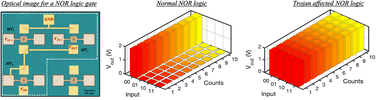
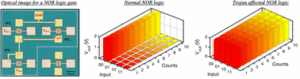
Hardware Trojans based on two-dimensional memtransistors

Akshay Wali, Harikrishnan Ravichandran and Saptarshi Das

Nanoscale Horiz., 2023, 8, 603-615


We sincerely hope you enjoy reading about some of our Emerging Investigators! Keep an eye out for our future Community Spotlight blogs highlighting more of our Emerging Investigators.


Digg This
Reddit This
Stumble Now!
Share on Facebook
Bookmark this on Delicious
Share on LinkedIn
Bookmark this on Technorati
Post on Twitter
Google Buzz (aka. Google Reader)

Discover the Nanoscale Horizons HOT papers collection

We are delighted to share some of the excellent and timely articles published in Nanoscale Horizons. These articles have been marked as HOT by our reviewers and cover a range of exciting topics in nanoscience .


Explore the Nanoscale Horizons HOT papers collection


Led by our Editorial Board Chair Professor Katharina Landfester, Max Planck Institute for Polymer Research, Germany, Nanoscale Horizons publishes exceptionally high quality, innovative primary articles and reviews across the breadth of nanoscience and nanotechnology. With an impact factor of 6.6 and an average time to first decision of 41 days, research articles in the journal are highly visible and receive high numbers of downloads and citations. As a society publisher, we re-invest all surplus back into the global scientific community, providing support for authors, researchers and educators. Whether you’re a first-time author or a senior academic you can trust us to handle your submission fairly and efficiently.

We hope you enjoy exploring the inspiring work in our ongoing HOT papers collection and consider submitting some of your next research to Nanoscale Horizons.

Check out a selection of articles featured in our HOT papers collection:

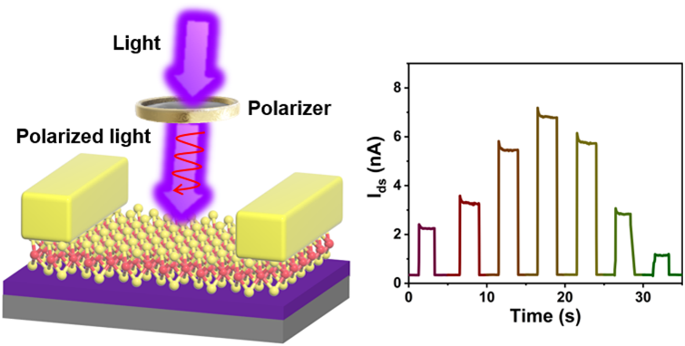
Development and challenges of polarization-sensitive photodetectors based on 2D materials
Liang Yu, Huafeng Dong, Wei Zhang, Zhaoqiang Zheng, Ying Liang and Jiandong Yao
Nanoscale Horiz., 2025, 10, 847-872
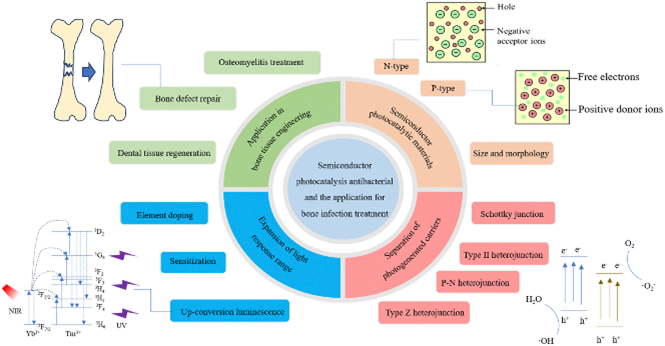
Semiconductor photocatalytic antibacterial materials and their application for bone infection treatment
Ruizhong He, Yulong Gu, Jiye Jia, Feng Yang, Ping Wu, Pei Feng and Cijun Shuai
Nanoscale Horiz., 2025, 10, 681-698
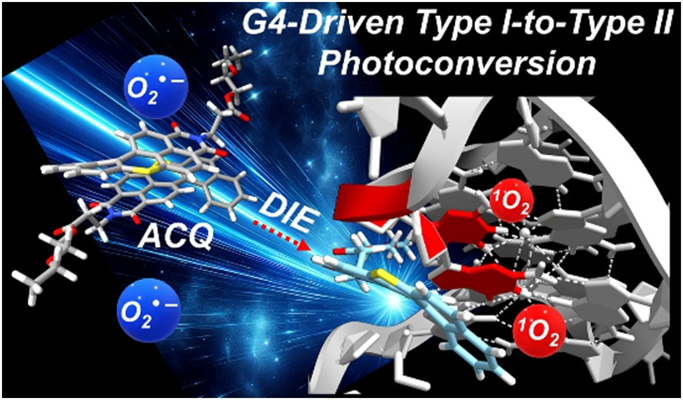
G-quadruplex-driven molecular disassembly and type I-to-type II photophysical conversion of a heavy-atom-free photosensitizer for site-specific oxidative damage
Karolina Saczuk, Maria V. Cottini, Marta Dudek, Leszek M. Mazur, Dario Puchán Sánchez, Lucía López-Pacios, Ahmad Kassem, Katarzyna Matczyszyn, Juan J. Nogueira, Cyrille Monnereau, Lara Martínez-Fernández, Jan Jamroskovic, Clément Cabanetos and Marco Deiana
Nanoscale Horiz., 2025, 10, 1660-1673
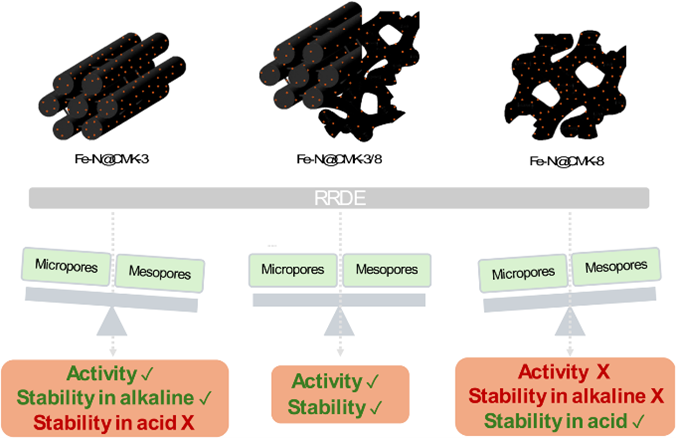
Pore structure engineering via hard-template synthesis: unlocking the high oxygen reduction reaction activity and stability of Fe–N@C electrocatalysts
Giulia Gianola, Mirtha A. O. Lourenço, Luca Basile, Tiago Morais, Luís Mafra, Candido Pirri, Stefania Specchia and Juqin Zeng
Nanoscale Horiz., 2025, 10, 1975-1987
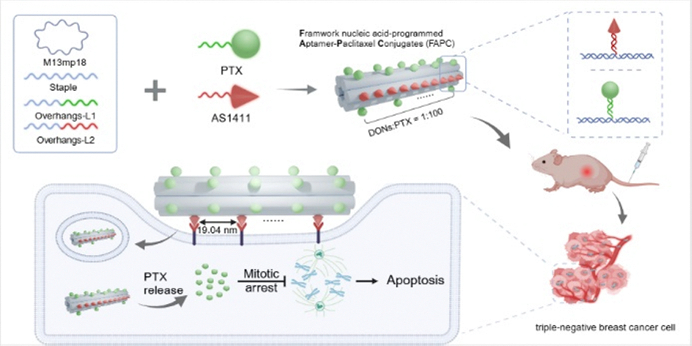
Framework nucleic acid-programmed aptamer–paclitaxel conjugates as targeted therapeutics for triple-negative breast cancer
Lin Li, Pengyao Wei, Tong Kong, Bo Yuan, Pan Fu, Yong Li, Yuhui Wang, Jianping Zheng and Kaizhe Wang
Nanoscale Horiz., 2025, 10, 873-884
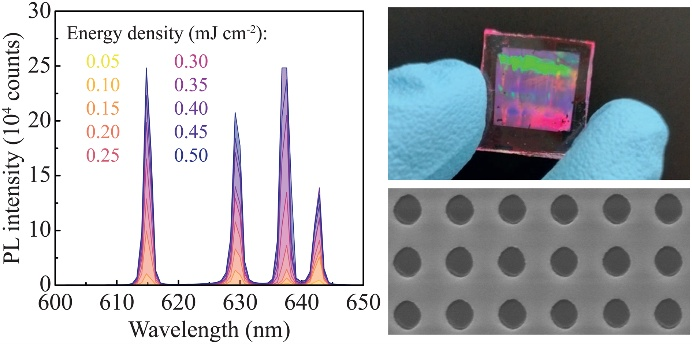
High-refractive-index 2D photonic structures for robust low-threshold multiband lasing
Ana Conde-Rubio, Juan R. Deop-Ruano, Luis Cerdán, Alejandro Manjavacas and Agustín Mihi
Nanoscale Horiz., 2025, 10, 724-732


The Nanoscale journal family

If you work on any area in nanoscience or nanotechnology research, consider submitting your next manuscript to one of the journals in the Nanoscale family. Each journal has different requirements to remain relevant to our broad community and we encourage you to check out the journal platforms to find out more.

Check out the scope, article types and Editorial Board of the journals in the Nanoscale family: Nanoscale Horizons, Nanoscale and Nanoscale Advances.


Digg This
Reddit This
Stumble Now!
Share on Facebook
Bookmark this on Delicious
Share on LinkedIn
Bookmark this on Technorati
Post on Twitter
Google Buzz (aka. Google Reader)

Celebrating the 120th anniversary of the National University of Singapore

Discover the latest nanoscience research in this Nanoscale Horizons, Nanoscale and Nanoscale Advances collection:


Read the celebratory collection
Read the introductory editorial


Founded in 1905 as a medical school, the National University of Singapore (NUS) has evolved into a world-leading university with a strong global presence. Recognized for its research excellence and diverse academic programs, NUS plays a key role in the furthering of nanoscience and nanotechnology.

This cross-journal collection highlights the breadth of high-quality work of the institute by featuring articles from researchers currently affiliated with NUS, esteemed alumni, and researchers with strong connections and extensive collaborations with the university. The collection covers the most recent research progress across the breadth of nanoscience and nanotechnology.

All articles in the collection are free to read until 31 December 2025.


Check out some of the featured articles below:

Multifunctional MEMS, NEMS, micro/nano-structures enabled by piezoelectric and ferroelectric effects
Mengyao Xiao, Aolei Xu, Zhouli Sui, Wenjie Zhang, Huajun Liu and Chengkuo Lee
Nanoscale Horiz., 2025, 10, 2744-2771
DOI: 10.1039/D5NH00386E
Graphene oxide/DNA-aerogel pressure and acoustic sensor
Siyu Chen, Pengxiang Zhang, Jinpei Zhao, Kostya S. Novoselov and Daria V. Andreeva
Nanoscale Horiz., 2025, 10, 1405-1413
DOI: 10.1039/D5NH00117J
Antimicrobial peptide-conjugated graphene coatings for prevention and treatment of bacterial infections
Xiao Zhu, Nhan Dai Thien Tram, Dhanya Mahalakshmi Murali, Veluchamy Amutha Barathi, Mayandi Venkatesh, Rajamani Lakshminarayanan and Pui Lai Rachel Ee
Nanoscale, 2025, 17, 19914-19927
DOI: 10.1039/D5NR01674F
Atomic-level characterization of crystal defects in a polycrystalline silicon-diamond structure
Yuxuan Yang, Kaige Chen, Xinlu Xue, Tong Song, Zhihao Zhao, Xianghong Zhou, Yang Zhang, Rong Qin, Fei Li, Xiangdong Ding, Jun Suna and Haijun Wu
Nanoscale Adv., 2025, 7, 5377-5383
DOI: 10.1039/D5NA00262A


We hope you enjoy reading some of the latest nanoscience research from the National University of Singapore and join us in congratulating its 120 years of impactful research!


Guest Editors

Bin Liu
National University of Singapore
Xiaogang Liu
National University of Singapore
Zhiqun Lin
National University of Singapore
Ghim Wei Ho
National University of Singapore
David Leong
National University of Singapore


Submit your latest research to Nanoscale Horizons, Nanoscale or Nanoscale Advances today!

Digg This
Reddit This
Stumble Now!
Share on Facebook
Bookmark this on Delicious
Share on LinkedIn
Bookmark this on Technorati
Post on Twitter
Google Buzz (aka. Google Reader)