Archive for the ‘Meet our Authors’ Category

Hear from our authors: Stefano L. Oscurato and I Komang Januariyasa

Stefano Oscurato and Komang Januariyasa have developed a groundbreaking technique that uses holographically structured light to mold three-dimensional azopolymer microstructures with unprecedented precision. Their work could impact everything from microrobotics to advanced optical devices.

Read ‘Molding three-dimensional azopolymer microstructures with holographically structured light’ in RSC Applied Interfaces, and learn more about this work in the interview below.

(more…)

Hear from our author: Swapnil Das

RSC Applied Interfaces publishes interdisciplinary work with an applied focus, which can be read for free here. To celebrate the excellent articles that have been published so far in our journal, we asked some of our authors to discuss their work in more detail.

In this post, we hear from Swapnil Das at New Jersey Institute of Technology, as they discuss their recently published article entitled ‘Interaction of vapor-phase and liquid organophosphonates with inorganic surfaces‘.

(more…)

Meet our authors: Marcella Salvatore, Francesco Reda, Fabio Borbone and Stefano Luigi Oscurato

RSC Applied Interfaces publishes interdisciplinary work with an applied focus, which can be read for free here. To celebrate the excellent articles that have been published so far in our journal, we asked some of our authors to discuss their work in more detail.

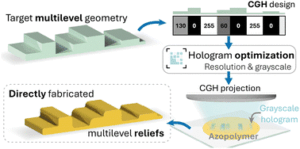
In this post, we hear from Marcella Salvatore, Francesco Reda, Fabio Borbone and Stefano Luigi Oscurato at University of Naples Federico II, as they discuss their recently published communication article entitled ‘Multilevel azopolymer patterning from digital holographic lithography‘.


Discover the full article here


Multilevel azopolymer patterning from digital holographic lithography

Marcella Salvatore, Francesco Reda, Fabio Borbone and Stefano Luigi Oscurato

RSC Appl. Interfaces, 2025,2, 56-60. DOI: 10.1039/D4LF00358F


(more…)

Hear from our authors: Amaury Baret

RSC Applied Interfaces publishes interdisciplinary work with an applied focus, which can be read for free here. To celebrate the excellent articles that have been published so far in our journal, we asked some of our authors to discuss their work in more detail.

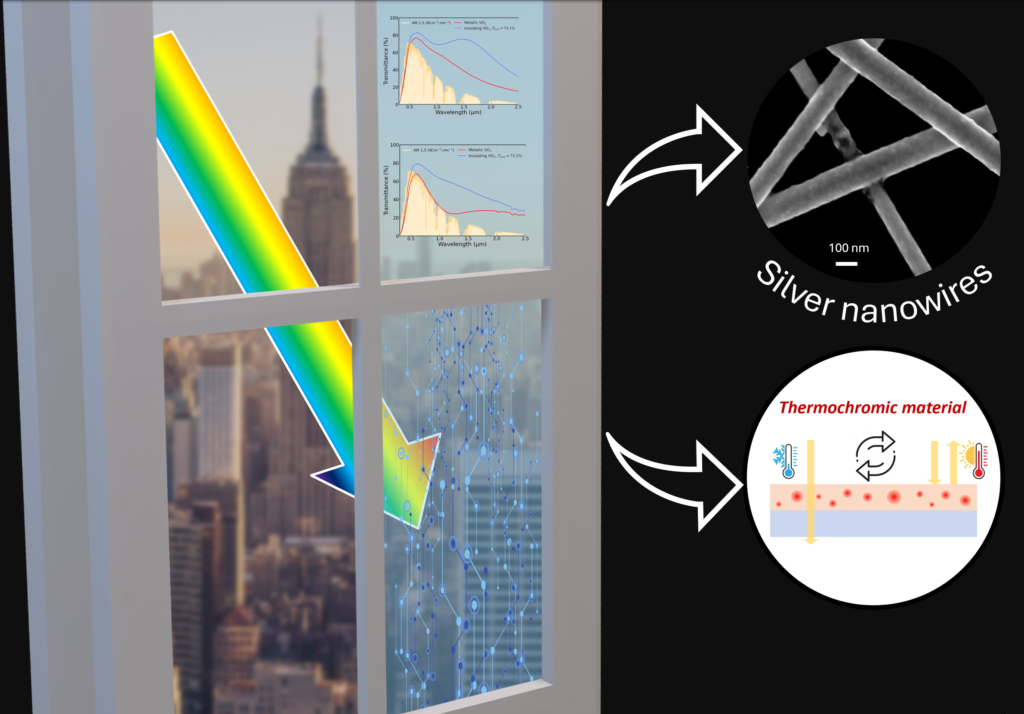
In this post, we hear from Amaury Baret at University of Liège, Belgium, as they discuss their recently published article entitled ‘Low-emissivity fine-tuning of efficient VO2-based thermochromic stacks with silver nanowire networks’.


Discover the full article here

Low-emissivity fine-tuning of efficient VO2-based thermochromic stacks with silver nanowire networks

Amaury Baret, Ambreen Khan, Aline Rougier, Daniel Bellet and Ngoc Duy Nguyen

RSC Appl. Interfaces, 2025, 2, 94-103. DOI: 10.1039/D4LF00234B
 

Meet the author

I am a PhD researcher in physics at the University of Liège (ULiège), working under the supervision of Prof. Nguyen, head of the SPIN (Solid State Physics, Interfaces and Nanostructrures) research group. Our research focuses on the physics of materials for energy applications. This highlighted work has been performed within the framework of the INSTEAD project. This collaborative effort is funded by the European M.ERA-NET program and brings together with ULiège a consortium of four partners contributing with their expertise to the development of new materials for smart windows : LMGP Grenoble INP, Université de Grenoble Alpes (Prof. D. Bellet); ICMCB, Université de Bordeaux, (Dr. A. Rougier); Middle East Technical University in Turkey, (Prof. H. Emrah Ünalan).


About the INSTEAD Project

The INSTEAD project aims to develop innovative coatings with advanced functionalities, particularly through the use of heterostructures that combine different materials, including chromogenic compounds. These materials have the potential to dynamically regulate their properties in response to environmental changes, making them highly promising for energy-efficient applications such as smart windows. Additionally, this project explores the incorporation of silver nanowire networks into these complex material stacks, utilizing them as transparent electrodes for electrochromic materials. In the discussed paper, we also investigate their potential as low-emissivity coatings for thermochromic stacks, highlighting their multifunctional role in enhancing the performance of thermochromic stacks for window panes. Our work within this project is part of a broader, coordinated effort to understand and optimize these materials through theoretical and experimental approaches.


What Excites Me About This Research

Working in the field of energy materials is incredibly rewarding, as it allows me to contribute—however modestly—to addressing pressing global challenges. I find great satisfaction in working on abstract physical concepts that have tangible real-world applications. From a scientific perspective, one of the most exciting aspects of this work is the ability to explore complex physical interactions within heterostructure coatings, shaped by both material composition and morphological features. One of the central challenges in our field lies in reconciling two typically opposing properties: electrical conductivity and optical transparency. This trade-off is clearly illustrated by the contrasting behavior of metals, which are excellent conductors but optically opaque, and dielectrics, which are often transparent but insulating. Our research leverages computational modeling to gain deeper insights into these interactions, providing a cost-effective means of understanding their behavior at a fundamental level and paving the way for material-efficient application designs. The coupling of multiple physical phenomena within these materials also opens up fascinating discussions and challenges, making the research both stimulating and impactful.


The Challenges We Face

One of the most challenging aspects of this work lies in interpreting and comparing simulation results with experimental data and existing literature. Ensuring that our models accurately capture the intricate behaviors of these materials requires a careful balance of theoretical insight and empirical validation. Overcoming these challenges is an integral part of the scientist’s work, pushing us to refine our approaches and deepen our understanding of the physical mechanisms at play. Of course, these challenges are not just obstacles but the very essence of scientific research—they fuel our curiosity, drive our passion, and push us to expand, even marginally, the boundaries of human knowledge.


What’s Next?

As part of my ongoing PhD research, I will continue exploring additional physical mechanisms within these materials, with a particular focus on their thermal emissivity properties, a subset of phenomena related to the interaction between matter and electromagnetic radiations. This aligns with the perspectives outlined in our recent publication, where we discuss strategies for optimizing the balance between optical transparency and electrical conductivity. After completing my PhD, I intend to continue conducting research and will therefore be looking for postdoctoral opportunities to further develop my expertise in this area.

Hear from our authors: Inbar Anconina and Diana Golodnitsky

RSC Applied Interfaces publishes interdisciplinary work with an applied focus, which can be read for free here. To celebrate the excellent articles that have been published so far in our journal, we asked some of our authors to discuss their work in more detail.

In this post, we hear from Inbar Anconina and Diana Golodnitsky at Tel Aviv University, Israel, as they discuss their recently published article entitled ‘Electrophoretically deposited artificial cathode electrolyte interphase for improved performance of NMC622 at high voltage operation’.

Discover the full article here

Electrophoretically deposited artificial cathode electrolyte interphase for improved performance of NMC622 at high voltage operation
Inbar Anconina and Diana Golodnitsky
RSC Appl. Interfaces, 2025, 2, 261-278. DOI: 10.1039/D4LF00319E


(more…)

Hear from our author: Raz Jelinek

RSC Applied Interfaces publishes interdisciplinary work with an applied focus, which can be read for free here. To celebrate the excellent articles that have been published so far in our journal, we asked some of our authors to discuss their work in more detail.

In this post, we hear from Professor Raz Jelinek at Ben Gurion University of the Negev, as they discuss their recently published article entitled ‘High-performance functionalized anthracene organic supercapacitors‘.

(more…)

Hear from our authors: Ranjana Venugopal

RSC Applied Interfaces publishes interdisciplinary work with an applied focus, which can be read for free here. To celebrate the excellent articles that have been published so far in our journal, we asked some of our authors to discuss their work in more detail.

In this post, we hear from Ranjana Venugopal at CSIR-National Institute for Interdisciplinary Science and Technology (CSIR-NIIST), India, as they discuss their recently published article entitled Electrochromic properties of MnO2/WO3 bilayered electrodes for enhanced charge storage and superior stability’.

(more…)

Hear from our authors: Monalisa Mukherjee, Radhika Chaurasia and Omnarayan Agrawal

RSC Applied Interfaces publishes interdisciplinary work with an applied focus, which can be read for free here. To celebrate the excellent articles that have been published so far in our journal, we asked some of our authors to discuss their work in more detail.

In this post, we hear from Monalisa Mukherjee, Radhika Chaurasia and Omnarayan Agrawal at Amity University, India, as they discuss their recently published article entitled Propene-bridged cyanurate tetramers decorated on carbon nanosheets with antibacterial activity: insights from molecular modeling and in vitro studies.

(more…)

Hear from our authors: Zhilu Liu, Wei Li and Song Li

RSC Applied Interfaces publishes interdisciplinary work with an applied focus, which can be read for free here. To celebrate the excellent articles that have been published so far in our journal, we asked some of our authors to discuss their work in more detail.

In this post, we hear from the research team led by Associate Professor Song Li from Huazhong University of Science and Technology, as they provide insight into their recently published article entitled High-efficiency prediction of water adsorption performance of porous adsorbents by lattice grand canonical Monte Carlo molecular simulation.

Discover the full article here

GA for article D4LF00354C.High-efficiency prediction of water adsorption performance of porous adsorbents by lattice grand canonical Monte Carlo molecular simulation
Zhilu Liu, Wei Li and Song Li

RSC Appl. Interfaces, 2025, 2, 230-242, DOI: 10.1039/D4LF00354C


(more…)

Meet our authors: Annabelle Hadley, Sakshi Gautam and Byron Gates

RSC Applied Interfaces has published its first articles which can be read for free here. To celebrate publishing our first articles, we asked some of our authors to discuss their work in more detail.

In this post, we hear from Annabelle Hadley, Sakshi Gautam and Byron Gates from Simon Fraser University, Canada, as they discuss their recently published article entitled ‘Niobium oxide coatings on nanostructured platinum electrocatalysts: benefits and limitations’.

This article highlights a simple method for improving the stability of a platinum electrocatalyst with nanoscale surface features. Nanoscale thin coatings of niobium oxide on platinum preserved the electrochemically active surface area while enabling access to the catalyst surface.

Discover the full article here

Niobium oxide coatings on nanostructured platinum electrocatalysts: benefits and limitations

Annabelle M. K. Hadley, Sakshi Gautam and Byron D. Gates

RSC Appl. Interfaces, 2024, Advance Article, DOI: 10.1039/D4LF00211C


Meet the authors

Annabelle Hadley is a PhD candidate in the Chemistry Department at Simon Fraser University. She received her B.Sc. from Mount Allison University in NB, Canada. Ever since she had the opportunity to conduct research as an undergraduate student, she has been interested in molecular-scale interactions at interfaces, including the interface between nanomaterials and nanomaterials and their surrounding environment. She has most recently extended this interest to the development of nanostructures with applications in electrocatalysis.


Sakshi Gautam obtained her PhD under the supervision of Professor Byron Gates in the Department of Chemistry at Simon Fraser University. Following her doctoral studies, she was a postdoctoral researcher at the National Renewable Energy Laboratory in the United States. She holds a Scientist position at Chakr Innovation in Gurugram, India. Her research focuses on nanomaterials fabrication, electrodeposition, material chemistry, and electrochemistry with applications in fuel cells, electrolyzers, and metal-air batteries.


Byron Gates is a Professor of Chemistry at Simon Fraser University (SFU). He obtained his B.Sc. from Western Washington University, studying high-temperature catalysts with Prof. Mark Bussell. He studied under Prof. Younan Xia at the University of Washington for his Ph.D. in developing synthetic methods for nanomaterials and creating materials through self-assembly techniques. He also studied under Prof. George Whitesides at Harvard as a postdoctoral fellow to pursue the limits of soft lithography, patterning of electrets, and creation of nanolithography techniques. Prof. Gates has held a Canada Research Chair in Surface Chemistry and received the Faculty of Science Excellence in Teaching Award at SFU, where his research interests lie at the intersection of materials chemistry, surface science, and analytical science, which he utilizes to create, study, and apply advanced nanomaterials to applications in chemical transformations, chemical sensing, photonics, energy storage, and energy conversion.