Archive for the ‘Themed Collections’ Category

Must read: Organic semiconductors

We are delighted to share a selection of “must read” articles published in RSC Applied Interfaces in the field of organic semiconductors. The articles explore the application of organic semiconductor materials in photovoltaics, transistors, neuromorphic computing, and sensing. 

Organic photovoltaics 

There are different strategies to improve organic photovoltaic performance through interface engineering. The papers below show how the charge-state formation at interfaces affect charge-transfer properties and ultimately device performance, as well as more sustainable processing methods. 
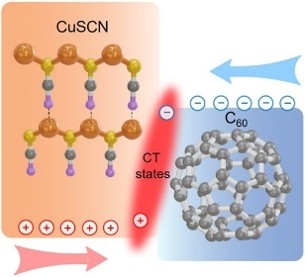
            Solution treatment controls charge-transfer states and energy-level alignment at hybrid CuSCN-organic interfaces 

Yingying Li, Zhewei Chen, Wenjie Zhou, Qi Wang, Yuan Zhang, Tao Song, Baoquan Sun, Steffen Duhm 

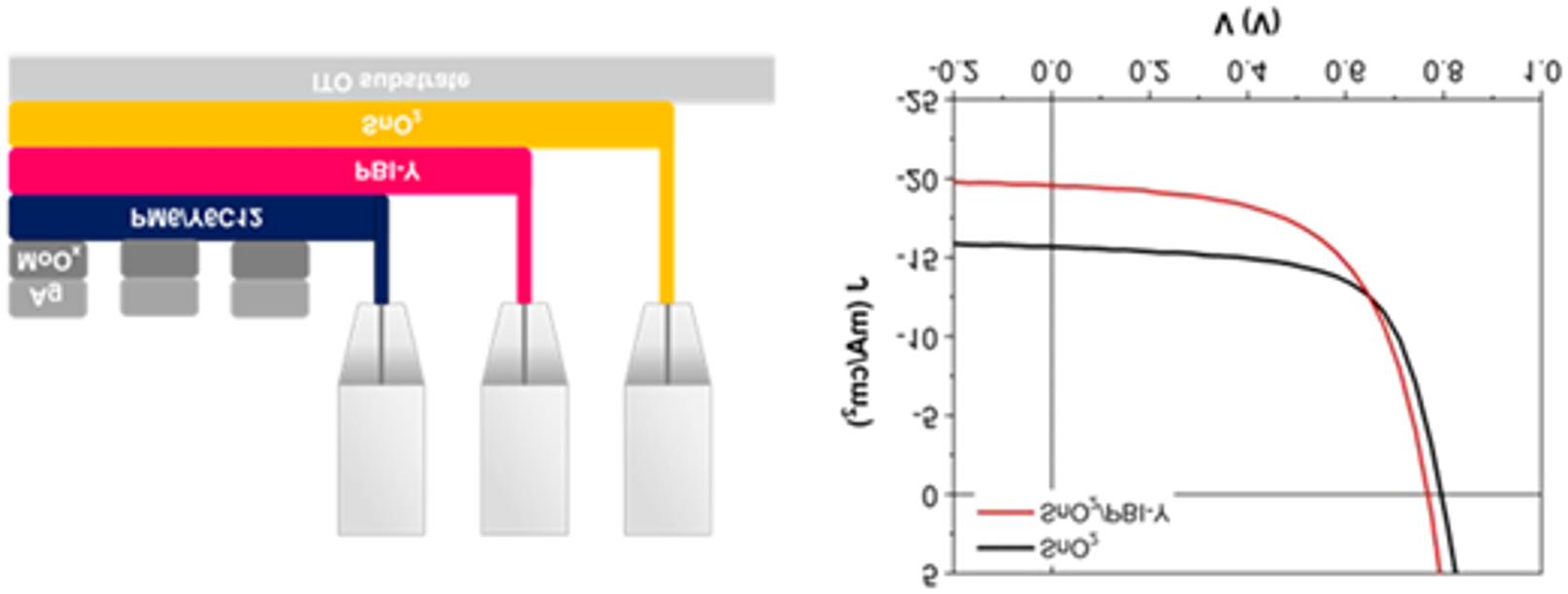
  All slot-die coated organic solar cells using an amine processed cathode interlayer based upon an amino acid functionalised perylene bisimide 

Rebecca E. Ginesi, Muhammad R. Niazi, Gregory C. Welch, Emily R. Draper 

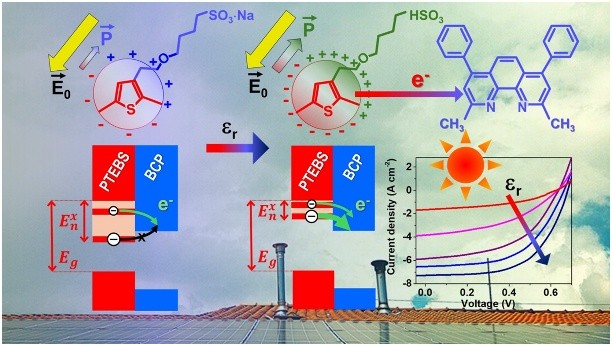
  Dielectric-constant effects on the exciton dissociation and photovoltaic conversion efficiency of water-soluble green conducting polymers 

Xin Wei, Daniel Williams, Giovanni Fanchini 


Organic transistors for neuromorphic computing  

These studies explore organic transistor devices that reproduce aspects of neural and synaptic behaviour. They examine how operating voltage and material properties such as polymer molecular weight and film thickness affect the speed and dynamics of neuromorphic devices. 
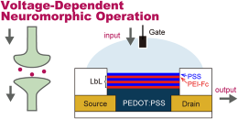
  Voltage-dependent time constants for neuromorphic organic electrochemical transistor applications 

Shunsuke Yamamoto, Nanako Kanazumi, Masaya Mitsuishi 

  Exploring response time and synaptic plasticity in P3HT ion-gated transistors for neuromorphic computing: impact of P3HT molecular weight and film thickness 

Ramin Karimi Azari, Zhaojing Gao, Alexandre Carrière, Clara Santato 


Organic semiconductors as sensors 

These papers focus on functional sensing devices made using flexible or scalable electronic materials, highlighting practical device functionality and manufacturing scalability. 
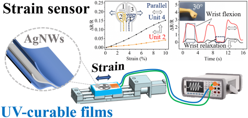
  Flexible strain sensors based on silver nanowires and UV-curable acrylate elastomers for wrist movement monitoring 

Shuhao Li, Wenjin Wu, Yu Chang, Weiquan Chen, Yijie Liu, Zifeng He, Yan Pu, Ivan S. Babichuk, Terry Tao Ye, Zhaoli Gao, Jian Yang 

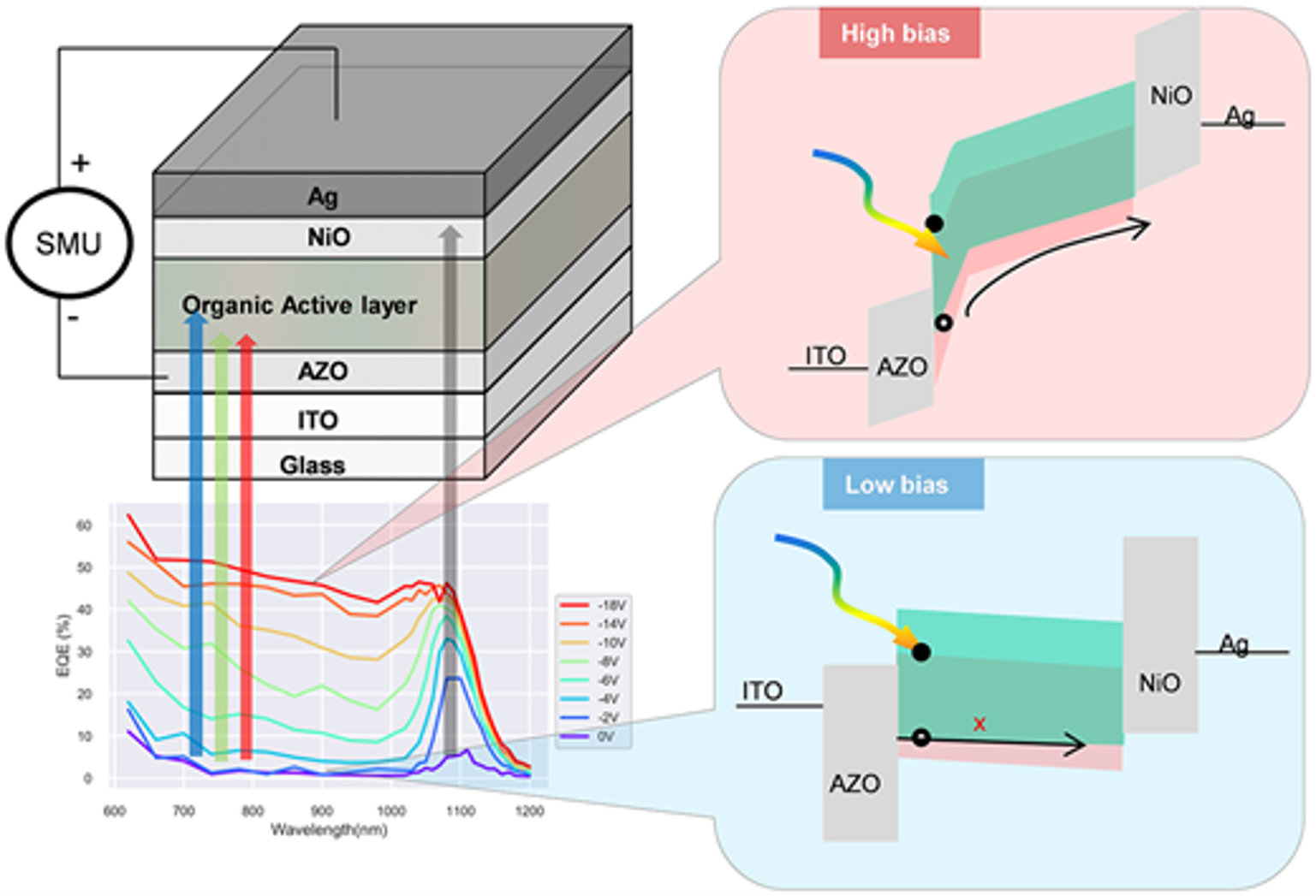
  Bias switchable narrowband/broadband NIR organic photodetector fabricated with a scalable technique 

Lai-Hung Lai, Wei-Hsiang Lin, Chin-Chuan Hsieh, Maria Antonietta Loi 


Thin film optimisation  

The articles below explore how important it is to optimise the molecule structure of organic semiconductor materials to enhance their performance. Molecular design, polymer structure and thin-film organisation all influence application-relevant properties like charge mobility. These studies highlight the need to balance electrical performance and other desirable properties like stretchability or stability. 
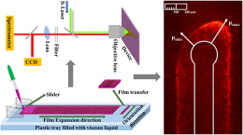
  Anisotropic charge transport study of highly oriented P4T2F-HD thin film fabricated at air–liquid interface through second harmonic generation (SHG) analysis 

Radhe Shyam, Takaaki Manaka, Rajiv Prakash 

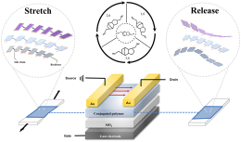
  N-type semiconducting polymers with an improved isotropic mobility–stretchability stability by using structural isomers as conjugation break spacers 

Ming-Han Chen, Yu-Chun Huang, Fu-En Szu, Jung-Yao Chen, Man-kit Leung, Yan-Cheng Lin 


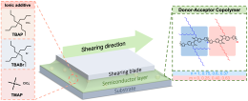
  Enhancing charge transport in isoindigo-based donor–acceptor copolymers by combining ionic doping with polar alkoxy side chains 

Sheng Chuo, Yun-Ching Peng, Thanapon Puangniyom, Qun-Gao Chen, Chu-Chen Chueh,Wen-Ya Lee 

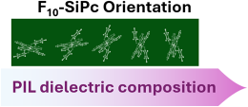
  Polymerized ionic liquid dielectrics tune molecular orientation and operating voltage in silicon phthalocyanine OTFTs 

Bahar Ronnasi, Nicolas Ledos, Benjamin King, Benoît H. Lessard 


Stay up to date with all the latest from RSC Applied Interfaces 

To keep up to date with all the latest news and research, sign up for our e-alerts and keep an eye on our journal webpage and social media for more exciting research.  Thank you for your ongoing support of RSC Applied Interfaces. 

Discover recent research published in RSC Applied Interfaces in the field of electrochemistry

Explore some of the exciting chemistry enabling the clean-energy transition through better hydrogen technologies, safer and more powerful batteries, and more sustainable recycling processes. 

Electrochemistry is playing a central role in solving some of the world’s biggest sustainability and technology challenges because it provides ways to convert, store, and recycle energy using green electricity sources rather than fossil-fuel-based processes. This makes it one of the key technologies for achieving net-zero emissions and a more sustainable energy future. 

To showcase some of the exciting research published in RSC Applied Interfaces in the field of sustainable electrochemistry, we have curated a small section of articles that highlight exciting new research in this area.  

Explore the collection below and discover how researchers are developing practical solutions to real-world challenges.  


Advances in Li-ion batteries 

This section explores advances in Li-ion battery technology. The articles report a mixture of experimental and computational studies that explore the introduction of safer solvents, Li diffusion at interfaces and surface functionalisation for improved performance. 


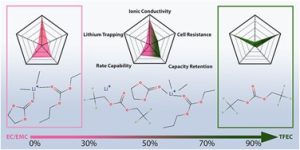
Influence of bis(2,2,2-trifluoroethyl) carbonate flame retarding co-solvent on interfacial chemistry in carbonate ester lithium-ion battery electrolytes 

 M. B. Shemirani, F. Gebert and A. J. Naylor 

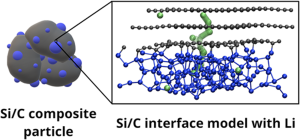
Ab initio study of lithium diffusion at a layered carbon/amorphous silicon interface 

 C. Kirsch and D. Sebastiani 

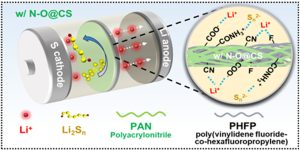
Functional separator with a nitrogen/oxygen-rich interlayer for enhancing performance of Li–S batteries 

 Y. Guo, J. Zhong, J. Liu and W.-H. Zhong 


Green Hydrogen Production  

The articles below explore novel energy solutions through green hydrogen production, reporting advances in both the hydrogen and oxygen evolution reactions.  


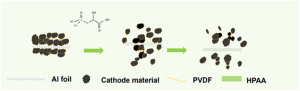
Reaction-passivation-driven delamination of spent LiFePO4 cathodes and their upgrading to highly efficient catalysts for hydrogen evolution 

 J. Yi, J. Hu, C. Gong, Q. Liu and W. Bi 

Hydrogen evolution reaction by Gd-doped transition metal dichalcogenide VSe2 nanoflowers  

 A. Parida, B. Dandasena and R. Naik 

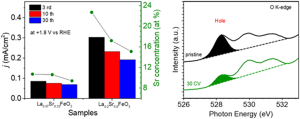
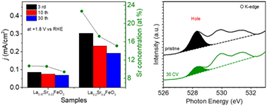
Evaluating the electronic structure and stability of epitaxially grown Sr-doped LaFeO3 perovskite alkaline O2 evolution model electrocatalysts 

 C. Tian, C. Maheu, X. Huang, F. E. Oropeza, M. Major, J. Brötz, M. Einert, W. Donner, K. H. Zhang and J. P. Hoffmann 


Electrochemical applications of graphene oxide materials  

The articles in this section explore the use of graphene oxide in sustainable electrochemical applications, including the oxygen evolution reaction, proton conductivity and Li-ion battery storage. 


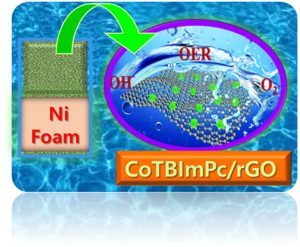
Cobalt–benzimidazole swapped metal–organic macrocycle with reduced graphene oxide as a hybrid electrocatalyst for highly efficient oxygen evolution reaction 

 C. P. K. Prabhu, K. R. Naveen and J. Hur 

Enhanced proton conductivity from phytic acid-intercalated three-dimensional graphene oxide 

 S. Salehpour, L. I. Ardhayanti, Y. Hidaka, X. Liu, T. Tsugawa, K. Hatakeyama, M. S. Islam, Y. Sekine, S. Ida and S. Hayami 

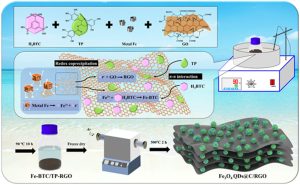
Synthesis of a MOF-derived magnetite quantum dots on surface modulated reduced graphene oxide composite for high-rate lithium-ion storage 

 R. Jia, L. Yu, Z. Han, S. Liu, P. Shang, S. Deng, X. Liu and B. Xu 


With an Impact Factor of 4.6 and time to first decision of 30.5 days, RSC Applied Interfaces is a dedicated, interdisciplinary reference journal for cutting-edge research on the applications of surfaces and interfaces. In addition to the applied focus, work considered for publication in RSC Applied Interfaces is expected to be highly original and of top quality. The journal seeks to report major scientific advances beyond the state of the art, at the cutting edge of this interdisciplinary field. 
 

Photocatalysis in RSC Applied Interfaces
Do you work in an area connected to photocatalysis? We wanted to share with you a small selection of recent articles published in RSC Applied Interfaces which we think are relevant to your research. All articles are open access and free to read.  
 

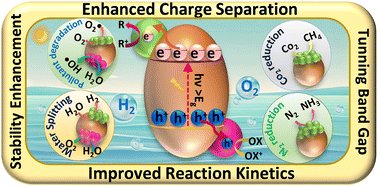
Heterojunction photocatalysts: where are they headed? 

Hanggara Sudrajat and Maya Nobatova 

https://doi.org/10.1039/D5LF00037H  


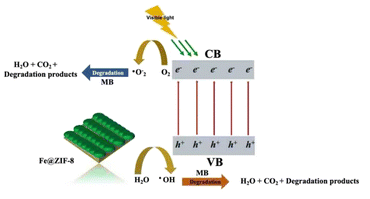
In situ thermal solvent-free synthesis of doped ZIF-8 as a highly efficient visible-light-driven photocatalyst 

Farah Naz, Chun Hong Mak, Zhe Wang, Haihang Tong, Shella Permatasari Santoso, Minshu Du, Ji-Jung Kai, Kuan-Chen Cheng, Chang-Wei Hsieh, Wenxin Niu, Zheng Hu and Hsien-Yi Hsu 

https://doi.org/10.1039/D4LF00410H  


Charge carrier dynamics in semiconductor–cocatalyst interfaces: influence on photocatalytic activities 

Dipendu Sarkar, Jishu Pramanik, Soumita Samajdar, Maitrayee Biswas and Srabanti Ghosh 

https://doi.org/10.1039/D5LF00044K  


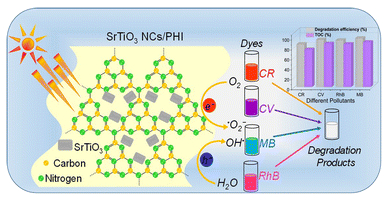
Nano-cubic SrTiO3 on poly(heptazine imide) (PHI) composite for enhancing photodegradation efficiency 

Phyu Phyu Cho, Phyu Phyu Mon, Mohit Kumar, Suryakala Duvvuri, Giridhar Madras, Guo-Ping Chang-Chien, Srinivaas Masimukku and Subrahmanyam Challapalli 

https://doi.org/10.1039/D5LF00120J  


We hope you enjoy reading these articles. Keep an eye on our journal Bluesky account or LinkedIn and sign up for our newsletter to stay up-to-date with the latest journal news. 

 RSC Applied Interfaces offers you an impactful platform for research focusing on the application of materials where the interface plays a pivotal role. Read the latest issues online here and find out more by visiting our webpage or contacting our Editorial Office by email. We would welcome a submission from you in the near future. 
 

2D materials in RSC Applied Interfaces
Do you work on 2D materials? We wanted to share with you a small selection of recent articles published in RSC Applied Interfaces which we think are relevant to your research. Both articles are open access and free to read.  
Advances in van der Waals thermoelectric materials: prospects and challenges 

Marco Fronzi, Paolo Mele, Amanda V. Ellis and Catherine Stampfl 

https://doi.org/10.1039/D4LF00383G  


Electronic coupling and photoluminescence anisotropy in van-der-Waals-stacks of tungsten disulphide with molecular single crystals 

Mohammed Adel Aly, Dominik Muth, Bettina Wagner, Martin Koch, Johanna Heine and Marina Gerhard  

https://doi.org/10.1039/D4LF00351A  


We hope you enjoy reading these articles. Keep an eye on our journal Bluesky account or LinkedIn and sign up for our newsletter to stay up-to-date with the latest journal news. 


RSC Applied Interfaces offers you an impactful platform for research focusing on the application of materials where the interface plays a pivotal role. Read the latest issues online here and find out more by visiting our webpage or contacting our Editorial Office by email. We would welcome a submission from you in the near future. 


Editor’s Choice collection: Ryan Richards

Professor Ryan Richards (Colorado School of Mines & NREL, USA) Associate Editor for RSC Applied Interfaces is delighted to share with you some of his top research highlights published in the journal so far.


Read the collection


Loosely based on a catalysis theme, here are a selection of the papers he has chosen:


Exploring the influence of mesoporosity in hard carbon-templated hierarchical SAPO-5 for ethanol dehydration

Matthew E. Potter, Evangeline B. McShane, Nienke L. Visser, Johannes D. Meeldijk, Lisa J. Allen, Stephen M. King, Marina Carravetta, Petra E. de Jongh, Bart D. Vandegehuchte and Robert Raja


Evaluating the electronic structure and stability of epitaxially grown Sr-doped LaFeO3 perovskite alkaline O2 evolution model electrocatalysts

Chuanmu Tian, Clément Maheu, Xiaochun Huang, Freddy E. Oropeza, Márton Major, Joachim Brötz, Marcus Einert, Wolfgang Donner, Kelvin Hongliang Zhang and Jan P. Hofmann


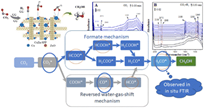
Reaction intermediates recognized by in situ FTIR spectroscopy in CO2 hydrogenation over the Cu/ZnO/SPP-zeolite catalyst

Xiaolong Liu, Guangying Fu, Qiaolin Lang, Ruiqin Ding, Qiangsheng Guo, Ke Liang, Shuman Gao, Xiaobo Yang and Bing Yu


Ryan also shared a video earlier this year discussing a paper by Liyong Ding and Juncheng Hu et al on the construction of a hierarchical heterojunction for photocatalytic hydrogen evolution:


Find out more about Ryan Richards

Ryan M. Richards is a Professor of Chemistry and Materials Science at the Colorado School of Mines (Mines) and holds a joint appointment at the National Renewable Energy Laboratory (NREL) both in Golden, Colorado USA. Additionally, Prof. Richards is the Mines lead for the Mines/NREL Nexus which coordinates, facilitates and promotes all joint activities and appointments. Prof. Richards received his BS from Michigan State University, MS from Central Michigan University and PhD from Kansas State University. During his PhD studies, he was a visiting scientist at the Boreskov Institute of Catalysis in Novosibirsk, Russia. From 2000-2002 he was a Max Planck Fellow at the Max Planck Institute für Kohlenforschung in Mülheim, Germany. In 2002 Ryan joined the International University of Bremen (now Constructor University) then joined Mines in 2007. Prof. Richards has received numerous awards throughout his career including being selected as a Fellow of the American Chemical Society (ACS), Mines Faculty Senate Distinguished Lecturer, ACS Nanoscience Chair and ACS International Affairs Committee (ACS liaison to Nigeria and South Africa). Prof. Richards was accepted as a Fellow of the Royal Society of Chemistry in November 2023.

Research in the Richards group is focused on new synthetic methods to control the size, shape and composition of nanoscale materials and apply them in systems integral to alternative energy technologies, pharmaceuticals, biomass upgrading, batteries, and environmental remediation.


Discover some of Ryan’s research published in RSC journals:

Light-driven interfaces for PFAS detection and destruction

Frank R. A. Schrama, Scott E. Massimi, Michael R. Dooley, Brian G. Trewyn, Shubham Vyas and Ryan M. Richards

RSC Appl. Interfaces, 2024, 1, 833-845. DOI: 10.1039/D4LF00171K


A microwave assisted ionic liquid route to prepare bivalent Mn5O8 nanoplates for 5-hydroxymethylfurfural oxidation

Lifang Chen, Ting Zhang, Hongye Cheng, Ryan M. Richards and Zhiwen Qi

Nanoscale, 2020, 12, 17902-17914. DOI: 10.1039/D0NR04738D


RSC Applied Interfaces

Offers you a dedicated, interdisciplinary home for articles that highlight the impact of applied interfacial and surface research.

Find out more about RSC Applied Interfaces by visiting our webpage or contacting our Editorial Office by email.

Make sure you never miss an update – sign up for our e-alerts and follow us on X, Bluesky and LinkedIn.

Editor’s Choice collection: Jianbin Huang

Professor Jianbin Huang (Peking University, China) Associate Editor for RSC Applied Interfaces is delighted to share with you some of his top research highlights published in the journal so far.


Read the collection


Loosely connected to his soft materials expertise, here are a selection of the papers he has chosen:


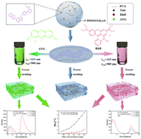
A multifunctional organogel for constructing artificial light harvesting systems with excellent energy transfer efficiency

Xinxian Ma, Jiahong Tang, Tianqi Ren, Jiali Zhang, Yuehua Liang, Jiuzhi Wei and Enke Feng


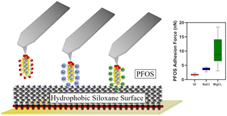
Investigation into the adhesion properties of PFAS on model surfaces

Jack Welchert, McKenna Dunmyer, Lynn Carroll, Irbis Martinez, Trisha J. Lane, Daniel A. Bellido-Aguilar, Suchol Savagatrup and Vasiliki Karanikola


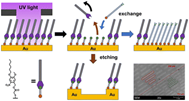
Enhancement of replacement lithography by combination of photocleavable groups with ultrashort thiolates

Christian Fischer, Florian Born and Andreas Terfort


Jianbin also shared a video earlier this year discussing a paper by Yaxun Fan and Yilin Wang et al. on surfactant mixed systems:


Find out more about Jianbin Huang

Jianbin Huang is a Professor and Chief of surfactant and colloid research and development at Peking University. He is interested in the physical chemistry of surfactants, especially in mixed surfactant systems. His group mainly focuses on molecular organized assemblies in aqueous solutions, such as vesicles or micelles, and the formation, molecular structures and phase behaviours of amphiphilic systems. Professor Huang has published over 180 articles in international and Chinese academic journals.


Discover some of Jianbin’s research published in RSC journals:

Cyclodextrin-catalyzed self-assembly of a coordinating fluorescent molecule into microflowers

Ting Gu, Jianbin Huang and Yun Yan

Soft Matter, 2022, 18, 4372-4377. DOI: 10.1039/ D2SM00462C


White emission thin films based on rationally designed supramolecular coordination polymers

Jinghui Yang, Yun Yan, Yonghai Hui and Jianbin Huang

J. Mater. Chem. C, 2017, 5, 5083-5089. DOI: 10.1039/ C7TC01429E


RSC Applied Interfaces

Offers you a dedicated, interdisciplinary home for articles that highlight the impact of applied interfacial and surface research.

Find out more about RSC Applied Interfaces by visiting our webpage or contacting our Editorial Office by email.

Make sure you never miss an update – sign up for our e-alerts and follow us on X, Bluesky and LinkedIn.


Introducing the ‘Sustainable Development Goal 6: Clean Water and Sanitation’ ongoing collection, featuring papers from across RSC Applied Interfaces and RSC Applied Polymers

RSC Applied Polymers and RSC Applied Interfaces are pleased to announce the launch of a new addition to the series of themed collections in support of the Global Sustainable Development Goals initiated by the United Nations.

These collections highlight the current research taking place by scientists across the globe which demonstrates the ways in which chemical science is helping to make the world a better place.

RSC Applied Polymers and RSC Applied Interfaces are delighted to share the new collection centred around:

Sustainable Development Goal 6: Clean Water and Sanitation

This SDG collection focuses on Sustainable Development Goal 6: Clean Water and Sanitation. Articles in this collection showcase the efforts of our chemical scientists in meeting this global need, from providing innovative measures to detect and extract harmful chemicals from the worlds water sources, to developing sustainable methods in sanitation and waste management.


Don’t forget that RSC Applied Polymers and RSC Applied Interfaces are both Gold open access journals, that means all our articles are free to read, including our new Sustainable Development Goals collections! The highly applied and interdisciplinary work included in these collections serve as a perfect example of the kind of papers we would like to see more of in RSC Applied Interfaces and RSC Applied Polymers.


Currently working towards one of the UN global sustainability goals? Submit your manuscript to RSC Applied Polymers or RSC Applied Interfaces to have it included in this ongoing collection!

Please check the journal websites for scope and submission details.

We hope you enjoy reading from our new sustainable development goals collections.

Keep an eye out for our other Sustainable Development Goals collections.

Sustainable Development Goal 3: Good Health and Wellbeing

Sustainable Development Goal 7: Affordable and Clean Energy 

Sustainable Development Goal 12: Responsible Production and Consumption

These collections are not curated in affiliation with the United Nations but are representative of Royal Society of Chemistry’s support for the Global Sustainability Goals initiated by the United Nations.

To find out more about the United Nations Global Sustainability Goals visit https://sdgs.un.org

Introducing the ‘Sustainable Development Goal 12: Responsible Production and Consumption’ ongoing collection, featuring papers from across RSC Applied Interfaces and RSC Applied Polymers

RSC Applied Polymers and RSC Applied Interfaces are pleased to announce the launch of a new series of themed collections in support of the Global Sustainable Development Goals initiated by the United Nations.

These collections highlight the current research taking place by scientists across the globe which demonstrates the ways in which chemical science is helping to make the world a better place.

RSC Applied Polymers and RSC Applied Interfaces are delighted to share the new collection centred around:

Sustainable Development Goal 12: Responsible Production and Consumption

This SDG collection focuses on Sustainable Development Goal 12: responsible production and consumption. Articles in this collection showcase the inventive means in which chemical scientists are striving to improve the synthesis and consumption of materials across various industries by developing sustainable sources and processes which do not rely upon the destruction of the Earth’s resources, and which provides cleaner environmental outcomes.

Don’t forget that RSC Applied Polymers and RSC Applied Interfaces are both Gold open access journals, that means all our articles are free to read, including our new Sustainable Development Goals collections! The highly applied and interdisciplinary work included in these collections serve as a perfect example of the kind of papers we would like to see more of in RSC Applied Interfaces and RSC Applied Polymers.


Take a look at some of the articles featured in the collection:


Rare-metal-free high-performance water-activated paper battery: a disposable energy source for wearable sensing devices

Kosuke Ishibashi, Shimpei Ono, Jun Kamei, Koju Itod  and Hiroshi Yabu

RSC Appl. Interfaces, 2024,1, 435-442

DOI: 10.1039/D4LF00039K


Pristine coconut husk biowaste and 2-ethylhexyl acrylate/methyl acrylate-based novel oleophilic gels for oil spill cleanup

Kavita Devi, Ghanshyam S. Chauhan, Sunita Ranote, Sandeep Chauhan and Kiran Kumar

RSC Appl. Polym., 2023,1, 325-337


DOI: 10.1039/D3LP00118K


Cyclic ketal bridged bisepoxides: enabling the design of degradable epoxy-amine thermosets for carbon fiber composite applications

Benjamin M. Alameda, Margaret S. Kumler, J. Scott Murphy, Jeffrey S. Aguinaga and Derek L. Patton

RSC Appl. Polym., 2023,1, 254-265

DOI: 10.1039/D3LP00095H


Currently working towards one of the UN global sustainability goals? Submit your manuscript to RSC Applied Polymers or RSC Applied Interfaces to have it included in this ongoing collection!

Please check the journal websites for scope and submission details.

We hope you enjoy reading from our new sustainable development goals collections.

Keep an eye out for our other Sustainable Development Goals collections.

Sustainable Development Goal 3: Good Health and Wellbeing

Sustainable Development Goal 7: Affordable and Clean Energy 

These collections are not curated in affiliation with the United Nations but are representative of Royal Society of Chemistry’s support for the Global Sustainability Goals initiated by the United Nations.

To find out more about the United Nations Global Sustainability Goals visit https://sdgs.un.org

Introducing the ‘Sustainable Development Goal 7: Affordable and Clean Energy’ ongoing collection, featuring articles across RSC Applied Interfaces and RSC Applied Polymers

RSC Applied Polymers and RSC Applied Interfaces are pleased to announce the launch of a new series of themed collections in support of the Global Sustainable Development Goals initiated by the United Nations.

These collections highlight the current research taking place by scientists across the globe which demonstrates the ways in which chemical science is helping to make the world a better place.

RSC Applied Polymers and RSC Applied Interfaces are delighted to share the new collection centred around:

Sustainable Development Goal 7: Affordable and Clean Energy

This SDG collection focuses on Sustainable Development Goal 7: affordable and clean energy. These articles reflect the intensive work and strategies being developed to tackle the worlds energy needs and the initiatives devised to improve the efficiency of clean sustainable energy sources.

Don’t forget that RSC Applied Polymers and RSC Applied Interfaces are both Gold open access journals, that means all our articles are free to read, including our new Sustainable Development Goals collections! The highly applied and interdisciplinary work included in these collections serve as a perfect example of the kind of papers we would like to see more of in RSC Applied Interfaces and RSC Applied Polymers.


Take a look at some of the articles featured in the collection:


Recent advances in semiconductor heterojunctions: a detailed review of the fundamentals of photocatalysis, charge transfer mechanism and materials

Aniket Balapure, Jayati Ray Dutta and Ramakrishnan Ganesan

RSC Appl. Interfaces, 2024,1, 43-69

DOI: 10.1039/D3LF00126A


Inherent limitations of the hydrogen-bonding UPy motif as self-healing functionality for polymer electrolytes

Cuc Thu Mai, Harish Gudla, Guiomar Hernández, Kristina Edström and Jonas Mindemark

RSC Appl. Polym., 2024,2, 374-383

DOI: 10.1039/D4LP00017J


The effects of selectively blocking the electron transport layer of n-i-p perovskite solar cells with polymer particles on device performance

Amal Altujjar, Ran Wang, Xuelian Wang,  Jennifer M. Saunders,a   Zhenyu Jia, Ben Spencer, Nigel Hodson,  Janet Jacobs, Osama M. Alkhudhari, Andrew Thomas, Richard Curry  and Brian R. Saunders

RSC Appl. Interfaces, 2024,1, 591-599

DOI: 10.1039/D4LF00062E


Currently working towards one of the UN global sustainability goals? Submit your manuscript to RSC Applied Polymers or RSC Applied Interfaces to have it included in this ongoing collection!

Please check the journal websites for scope and submission details.

We hope you enjoy reading from our new sustainable development goals collections.

Keep an eye out for our other Sustainable Development Goals collections.

Sustainable Development Goal 3: Good Health and Wellbeing

Sustainable Development Goal 12: Responsible Production and Consumption

These collections are not curated in affiliation with the United Nations but are representative of Royal Society of Chemistry’s support for the Global Sustainability Goals initiated by the United Nations.

To find out more about the United Nations Global Sustainability Goals visit https://sdgs.un.org

Introducing the ‘Sustainable Development Goal 3: Good Health and Wellbeing’ ongoing collection, featuring articles from across RSC Applied Interfaces and RSC Applied Polymers

RSC Applied Polymers and RSC Applied Interfaces are pleased to announce the launch of a new series of themed collections in support of the Global Sustainable Development Goals initiated by the United Nations.

These collections highlight the current research taking place by scientists across the globe which demonstrates the ways in which chemical science is helping to make the world a better place.

RSC Applied Polymers and RSC Applied Interfaces are delighted to share the new collection centred around:

Sustainable Development Goal 3: Good Health and Wellbeing

This Sustainable Development Goal collection focuses on Sustainable Development Goal 3: good health and well-being, with articles that explore procedures, practices and technology in modern medicine which can help address the growing concerns for world health and ensure sustainable and affordable future health outcomes for everyone.

Don’t forget that RSC Applied Polymers and RSC Applied Interfaces are both Gold open access journals, that means all our articles are free to read, including our new Sustainable Development Goals collections! The highly applied and interdisciplinary work included in these collections serve as a perfect example of the kind of papers we would like to see more of in RSC Applied Interfaces and RSC Applied Polymers.


Take a look at some of the articles featured in the collection:


Triblock copolymer micelles enhance solubility, permeability and activity of a quorum sensing inhibitor against Pseudomonas aeruginosa biofilms

Karolina Kasza, Fadi Soukarieh, Manuel Romero, Kim R. Hardie, Pratik Gurnani, Miguel Cámara and Cameron Alexander

RSC Appl. Polym., 2024,2, 444-455

DOI: 10.1039/D3LP00208J


Recent advances in removal of pharmaceutical pollutants in wastewater using metal oxides and carbonaceous materials as photocatalysts: a review

Suneel Kumar Srivastava

RSC Appl. Interfaces, 2024,1, 340-429

DOI: 10.1039/D3LF00142C


Matrix metalloproteinase responsive hydrogel microplates for programmed killing of invasive tumour cells

Alexander B. Cook, Annalisa Palange, Michele Schlich, Elena Bellotti, Sayanti Brahmachari,a   Martina di Francescoa and Paolo Decuzzia

RSC Appl. Polym., 2023,1, 19-29

DOI: 10.1039/D3LP00057E


Currently working towards one of the UN global sustainability goals? Submit your manuscript to RSC Applied Polymers or RSC Applied Interfaces to have it included in this ongoing collection!

Please check the journal websites for scope and submission details.

We hope you enjoy reading from our new sustainable development goals collections.


Keep an eye out for our other Sustainable Development Goals collections.

Sustainable Development Goal 7: Affordable and Clean Energy

Sustainable Development Goal 12: Responsible Production and Consumption

These collections are not curated in affiliation with the United Nations but are representative of Royal Society of Chemistry’s support for the Global Sustainability Goals initiated by the United Nations.

To find out more about the United Nations Global Sustainability Goals visit https://sdgs.un.org