First papers are now out!

Today we published our first advance articles in Environmental Science: Nano, and we’re really pleased that there’s already been significant interest in the journal.

One article in particular has gained readers’ attention on social media, owing to its title: “A chemical free, nanotechnology-based method for airborne bacterial inactivation using engineered water nanostructures”. Some people found it quite strange to read “chemical free” in an article published in a chemical science journal.

People find many different meanings in the phrase “chemical free”, and we’re interested in hearing what you think. We will be publishing the author’s views later, as a follow up to this post. In the interim, we would like to know your views on the phrase “chemical free”? Tell us in the comments section below. If you’re interested in reading more about how people view chemicals, check out this recent feature in Chemistry World (we’ve made it free to access).


Posted 28th Nov 2013


Note from Dr Harpal Minhas, Managing Editor.

Thank you for your comments – I acknowledge the title of this paper is controversial and I’d like to address some of the issues you’ve raised below and on social media.

The titles of research articles and other content in peer reviewed journals are the responsibility of the authors concerned and do not necessarily reflect the views of Editors or Publishers. However, in this case, we can understand why people would object to the title.

From now on we’re adding specific checks and balances in our editorial process to hopefully avoid these issues in the future. When we pick up “chemical free” language being used in titles, abstracts or article text, we’ll change it at proof stage to what we feel is a more appropriate term, explaining carefully to the author why we’ve made that specific change. We suspect most authors will welcome this guidance.

I can assure you that we did not suggest this title to the author, and we would never alter titles for any promotional activities. The title of any paper is decided by the author and their co-workers based on what they feel are the most important/relevant aspects of the research it represents. This ensures that they are able to frame the work in the way they feel is most appropriate to the community that the work addresses. Reviewers can comment on the title and ask for modifications. In this case they did not, but they did the rate the paper very highly for its research content. Once a paper is accepted, Editors and Publishers very rarely ask for authors to alter titles, based on their own opinions, as the paper has been appropriately approved by relevant peer review process. However, as noted above, we feel that the additional checks and balances would help authors to express themselves more clearly in controversial cases such as this.

With regards to the suggestion of retracting the article, we are a member of the Committee of Publication Ethics (COPE) and we follow their recommendation and guidelines. Articles are only retracted under a specific set of circumstances; these are outlined here and this case does not fall into these categories.

I’d like to specifically thank Mark Lorch for his message and comments about this article, and I want to take this opportunity to say that we agree with him when he says that it is wrong to use this phrase as an advertising slogan. Mark wrote a very interesting article on this subject for the BBC Magazine recently.

As has been pointed out, we have been critical of the phrase “chemical free” in the past and will continue to be. We try to engage with everyone about their perceptions of the word “chemicals” and really appreciate the passion from the community.


Posted 2nd Dec 2013


Digg This
Reddit This
Stumble Now!
Share on Facebook
Bookmark this on Delicious
Share on LinkedIn
Bookmark this on Technorati
Post on Twitter
Google Buzz (aka. Google Reader)

Barbara Karn joins the Environmental Science: Nano Editorial Board

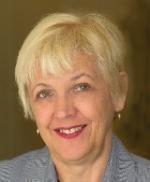
The team at Environmental Science: Nano would like to welcome Dr Barbara Karn on to the Editorial Board, where she is co-opted as a member of The Sustainable Nanotechnology Organization. Barbara is currently the Program Director at the National Science Foundation, Virginia, senior advisor to the Project on Emerging Nanotechnologies at the Woodrow Wilson International Center for Scholars, and co-founder of the Sustainable Nanotechnology Organization.

Barbara completed Masters degrees at Case Western Reserve University and Cleveland State University, before reading for a Ph.D. in Biology and Environmental Sciences at Florida International University.

Barbara has a huge amount of experience within the environmental sector, with a particular focus on nanotechnology. Previously, she has worked as an environmental scientist at the US Environment Protection Agency (EPA) and built a research program in Nanotechnology and the Environment. She continues to work in the National Nanotechnology Initiative, a part of the U.S. Office of Science and Technology Policy.

Barbara is a Nanotechnology Scholar, awarded by Georgetown University’s Program on Science in the Public Interest, and was also named one of the top ten experts in nanotechnology environment, health and safety issues by Nanotechnology Law and Business.

Barbara’s enthusiasm and experience will be an invaluable asset to the Environmental Science: Nano Editorial Board and will input into the shape and development of the journal both at this exciting time in our early history, and in the future. Welcome to the team!

Digg This
Reddit This
Stumble Now!
Share on Facebook
Bookmark this on Delicious
Share on LinkedIn
Bookmark this on Technorati
Post on Twitter
Google Buzz (aka. Google Reader)

How well do you know the Environmental Science: Nano team? Fact 4

You’ve seen them at conferences, you’ve read their papers but how well do you really know the people behind Environmental Science: Nano?

Over the next few months, we’ll be revealing little known facts about our team. Will there be skeletons in the closet or peculiar pastimes? Stay tuned to find out!

Fact 4 features Vice Chair Christy Haynes. Can you guess her unusual hobby..?

In the last few years, Haynes has become slightly obsessed with “urban scavenger hunts.” In these events, teams (Haynes teams with some of her graduate students) race on foot or using public transportation, solving clues that lead to 12 destinations all over the city.  Teams can follow whatever route they deem best and often have to do silly stunts or take particular photos at each destination. Haynes and her teammates started out doing these races just for fun, with no expectation of winning, but have since become quite good and have done them in numerous US cities. They’ve finished 1st in more than one race (even one where Haynes was 6 months pregnant!) and have competed in national championship races under the team name SPORK (Scientists phor Outdoor Recreation and Knowledge).

Now I bet that gets the heart racing.

Have you read Fact 3?

Digg This
Reddit This
Stumble Now!
Share on Facebook
Bookmark this on Delicious
Share on LinkedIn
Bookmark this on Technorati
Post on Twitter
Google Buzz (aka. Google Reader)

A welcome to Environmental Science: Nano – Professor Wei-xian Zhang joins the Editorial Board

Here at Environmental Science: Nano we would like to welcome Wei-xian to the team. Find out a bit more about him here!

Wei-xian graduated from Tongji University in Shanghai, from where he moved to John Hopkins University to complete his PhD in Environmental Engineering. Wei-xian has also served as a Professor of environmental engineering and director of the Institute of Sustainable Nanotechnology at Lehigh University, PA.

 Presently, Wei-xian is based at the UNEP-Tongji Institute of Environment for Sustainable Development, and his research focuses on chemical and biological transformation of environmental contaminants and heavy metal ions. Wei-xian has produced a number of incredibly well-cited research papers focusing on environmental nanotechnology, including Nanoscale iron particles for environmental remediation: An Overview (Journal of Nanoparticle Research, 2003, 5, 323, DOI: 10.1023/A:1025520116015).

Wei-xian’s work on environmental nanotechnology has received extensive media attention in the past with feature articles appearing in the New York Times, Popular Science, Wall Street Journal and MIT Technology Review. In addition, Wei-xian has experience as a consulting engineer for the Ministry of Electronic Industry of China.

We are very excited to add Wei-xian to our editorial board; Wei-xian’s vast wealth of experience and expertise will contribute to the development and progression of Environmental Science: Nano. Welcome aboard!

Digg This
Reddit This
Stumble Now!
Share on Facebook
Bookmark this on Delicious
Share on LinkedIn
Bookmark this on Technorati
Post on Twitter
Google Buzz (aka. Google Reader)

How well do you know the Environmental Science: Nano team? Fact 3

You’ve seen them at conferences, you’ve read their papers but how well do you really know the people behind Environmental Science: Nano?

Over the next few months, we’ll be revealing little known facts about our team. Will there be skeletons in the closet or peculiar pastimes? Stay tuned to find out!

Fact 3: Did you know…..?

Editorial board member Michael Hochella has been an aviator for nearly 40 years. Mike’s father was a famous pilot, so flying is in his blood. He loves mountain and wilderness flying, especially piloting to remote airstrips deep into the wilds of Montana and other far-away destinations around the Pacific Northwest of the US, where he flies every summer. For an Earth scientist, this is heaven.

Sounds all Wright to us!

Have you read Fact 2?

Digg This
Reddit This
Stumble Now!
Share on Facebook
Bookmark this on Delicious
Share on LinkedIn
Bookmark this on Technorati
Post on Twitter
Google Buzz (aka. Google Reader)

How well do you know the Environmental Science: Nano team? Fact 2

You’ve seen them at conferences, you’ve read their papers but how well do you really know the people behind Environmental Science: Nano?

Over the next few months, we’ll be revealing little known facts about our team. Will there be skeletons in the closet or peculiar pastimes? Stay tuned to find out!

Fact 2: Did you know…..?

Vicki Grassian, Editor-in-Chief, was the first woman in the Department of Chemistry at the University of Iowa to be tenured and promoted through the ranks.  She is currently the F. Wendell Miller Professor of Chemistry and holds appointments in the College of Engineering and College of Public Health.  Dr. Grassian’s colleagues describe her as someone who didn’t just break the “glass ceiling,” she pulverised it!

Smashing!

Have you read Fact 1?

Digg This
Reddit This
Stumble Now!
Share on Facebook
Bookmark this on Delicious
Share on LinkedIn
Bookmark this on Technorati
Post on Twitter
Google Buzz (aka. Google Reader)

Dr. Michael F. Hochella Jr. joins Environmental Science: Nano Editorial Board

Environmental Science: Nano, the new Royal Society of Chemistry journal which investigates the effect of nanomaterials on environmental and biological systems, welcomes Mike Hochella to its Editorial Board.

Michael is a University Distinguished Professor at Virginia Tech, where he works in environmental science and geoscience. His research interests include nanoscience and mineral surface geochemistry, and elucidating the role that these play in earth science, with particular interest in environmental issues. In addition to this, Mike’s team work on mineral-microbe interactions from both a geochemical and biochemical perspective and characterise aqueous partitioning reactions at oxide and silicate surfaces.

Michael completed his PhD at Stanford University and throughout his career has published a number of high-impact articles, covering both primary research and review content. These include a perspective on Nanominerals, mineral nanoparticles and Earth systems1 and a research paper looking into bacterial recognition of mineral surfaces.2

Michael is an incredibly respected and established scientist and has held Fellow positions at the European Association of Geochemistry, the American Geophysical Union and the American Association for the Advancement of Science. Throughout his career he has received numerous awards for his contribution to earth sciences and has held advisory positions at various U.S. national agencies, including the National Science Foundation and the Department of Energy.  He has also served as President of the Geochemical Society and the Mineralogical Society of America.

We are delighted to welcome Mike to the Editorial Board for Environmental Science: Nano, where his expertise and enthusiasm will input into the quality and development of this new and exciting journal.

1. MF Hochella, SK Lower, PA Maurice, Science, 2008, 319, 1631-1635
2. SK Lower, MF Hochella and TJ Beveridge, Science, 2001, 292, 1360-1363

Digg This
Reddit This
Stumble Now!
Share on Facebook
Bookmark this on Delicious
Share on LinkedIn
Bookmark this on Technorati
Post on Twitter
Google Buzz (aka. Google Reader)

How well do you know the Environmental Science: Nano team? Fact 1

You’ve seen them at conferences, you’ve read their papers but how well do you really know the people behind Environmental Science: Nano?

Over the next few months, we’ll be revealing little known facts about our team. Will there be skeletons in the closet or peculiar pastimes? Stay tuned to find out!

Fact 1: Did you know…..?

Jim HutchisonAssociate Editor Jim Hutchison is an award-winning ski patroller.

He won the National Outstanding Alpine Ski Patroller of the Year in 2011 for his efforts as a volunteer ski patroller at his local ski area.

Cool!

Digg This
Reddit This
Stumble Now!
Share on Facebook
Bookmark this on Delicious
Share on LinkedIn
Bookmark this on Technorati
Post on Twitter
Google Buzz (aka. Google Reader)

Christy Haynes: vice-Chair of Environmental Science: Nano

We are very pleased to announce our vice-Chair, Professor Christy Haynes, at Environmental Science: Nano – the new RSC Journal which investigates the impacts of nanomaterials on biology and
the environment.

Christy Haynes is an Associate Professor at the University of Minnesota. Her research group focuses on the applications of analytical chemistry in the fields of immunology and toxicology, with particular interest in nanotoxicology.

Christy herself studied at Macalester College in St. Paul, MN, where she graduated with a major in Chemistry and minors in Mathematics & Spanish. She then moved to Northwestern University in Evanston, IL, for doctoral work in plasmonic nanoparticles, where she completed a thesis titled: “Fundamentals and Applications of Nanoparticle Optics and Surface-Enhanced Raman Scattering.” Previous to her current position at the University of Minnesota, Christy completed post-doctoral research at the University of North Carolina, Chapel Hill, where she focused on applying microelectrode amperometry to probe single immune cell exocytosis. Christy has published over 80 refereed papers and in 2013 won the Kavli Foundation Emerging Leader in Chemistry Lecture to discuss her group’s nanotoxicology research.

Christy’s vast knowledge and experience within the nanotoxicology field make her a fantastic asset to the Environmental Science: Nano editorial board and we are privileged to welcome her involvement in the development of this new cutting-edge Journal.

Digg This
Reddit This
Stumble Now!
Share on Facebook
Bookmark this on Delicious
Share on LinkedIn
Bookmark this on Technorati
Post on Twitter
Google Buzz (aka. Google Reader)

Environmental Science: Nano now open for submissions!

Submit nowGreat news: Environmental Science: Nano‘s Editorial Offices are now open!

Associate Editors James Hutchison (University of Oregan) and Gregory Lowry (Carnegie Mellon University) are welcoming submissions of high quality research on the interactions of nanomaterials with biological and environmental systems.

But what’s different about this journal?

Until now there has been no high impact society journal dedicated to publishing the latest findings on the interaction of nanomaterials with environmental and biological systems, which, as Editor-in-Chief Vicki Grassian puts it, ‘is an enormously important aspect of the development of sustainable nanotechnologies for improving human and environmental health’. Find out more about the scope

Why should you submit?

Environmental Science: Nano will be:

  • High impact – only publishing the most novel and exciting advances
  • A leader – the Editorial Board will drive scientific development, with the Associate Editors responsible for peer review and editorial decisions
  • Interdisciplinary – connecting scientists working in a range of areas, including chemistry, earth sciences, engineering, ecotoxicology and nanoscience
  • Internationally visible – free access to all content published during 2014 and 2015, guaranteeing maximum exposure
  • Rapid – offering the speedy publication and excellent service for which the Royal Society of Chemistry is renowned

And unlike some other journals, Environmental Science: Nano has no page charges or page limits and it won’t charge you for using colour to enhance scientific understanding of your figures.

When should you submit? And how?

As soon as possible! Submit your manuscript via the website for the chance to be included in the high profile first issue.

Digg This
Reddit This
Stumble Now!
Share on Facebook
Bookmark this on Delicious
Share on LinkedIn
Bookmark this on Technorati
Post on Twitter
Google Buzz (aka. Google Reader)