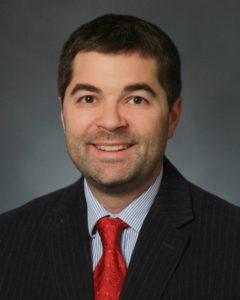
Emerging Investigator Series – Nathaniel R Warner


Nathaniel Warner is currently an Assistant Professor at The Pennsylvania State University in the Department of Civil and Environmental Engineering. Previously, Dr. Warner received a BA from Hamilton College where he majored in Geology, an MS in Hydrogeology from Miami University in Oxford, Ohio and a PhD in Earth and Ocean Sciences from Duke University. He was the Joseph B Obering Postdoctoral Fellow, Dartmouth College, Department of Earth Sciences from 2013-2015. His current research focuses on using B, Sr, and Ra isotope geochemistry to better understand the processes controlling 1) salinization of freshwater 2) the fate and transport of metals in oil and gas produced waters once released to the environment, and 3) treatment technologies for oil and gas produced waters. Dr. Warner’s lab group has used Sr and Ra isotopes to trace the accumulation of metals associated with oil and gas wastewaters in both sediment and freshwater bivalves. His work has been published in Proceedings of the National Academy of Sciences-USA, Environmental Science and Technology, Applied Geochemistry, Geochimica et Cosmochimica Acta, Chemical Geology and Environmental Science: Processes and Impacts.

Read Dr Nathanial Warner’s Emerging Investigator article “Radium accumulation in carbonate river sediments at oil and gas produced water discharges: implications for beneficial use as disposal management” and read more about him in the interview below:

Your recent Emerging Investigator Series paper focuses on radium accumulation in carbonate river sediments at oil and gas produced water discharges. How has your research evolved from your first article to this most recent article?

Based on the results from the first article we expected oil and gas discharges to behave in a similar way, but that was not the case with our recent findings. Instead of radium being associated with barite (which is commonly discussed in the literature) in the most recent study we found the control on radium in sediments was the carbonate precipitation. This leads us to think that each oil and gas basin has varying geochemistry of its produced waters and each could have a different story to tell about fate and transport of radium (or other contaminants of concern) once discharged to the surface.

What aspect of your work are you most excited about at the moment?

Treatment technologies for the high salinity brines. It’s a challenge, but breakthroughs and the chance to make a big difference in how these waters are managed is exciting.

In your opinion, what are the most important questions to be asked/answered in this field of research?

How do we get radium out of high salinity fluids in an economic way? And where does the radium ultimately end up once released to the surface?

What do you find most challenging about your research?

Environmental samples, especially for radium often have large natural variations that can make clear trends or impacts difficult to quantify. We therefore need to make multiple measurements on a variety of samples to get at a reliable data set.

In which upcoming conferences or events may our readers meet you?

Goldschmidt – Barcelona and WRI16 – Siberia

How do you spend your spare time?

Outdoor activities, biking hiking, running.

Which profession would you choose if you were not a scientist?

Astronaut- but I suppose most of those folks are scientists…. How about an artist? I really enjoy creating things with my hands so maybe I would be sculpting.

Can you share one piece of career-related advice or wisdom with other early career scientists?

Don’t give up on your career goals, but also don’t be afraid to take an indirect path to get there. All of the experiences along the way will make you a better researcher.


Digg This
Reddit This
Stumble Now!
Share on Facebook
Bookmark this on Delicious
Share on LinkedIn
Bookmark this on Technorati
Post on Twitter
Google Buzz (aka. Google Reader)

TransCon2019

Understanding and managing microbial biotransformation of environmental contaminants

TransCon2019 will take place this year from 28. April to 3. May, 2019 at the Congressi Stefano Franscini, Monte Verità, Ascona, Switzerland.

Environmental microbial communities are key in detoxifying the environment from chemical contaminants by degrading them to less active substances, but we still lack a sufficiently mechanistic understanding of microbial biotransformation that is essential to progress in different fields of application, including water treatment and chemical risk assessment. Recently, a number of analytical tools have become available that enable scientists to study microbial biotransformation of contaminants and causal links between specific microorganisms and contaminant removal at the level of complex environmental communities and which thus have revolutionized the field. We expect that TransCon2019 will act as a catalyst in contaminant biotransformation research by gathering the leading scientists in the field to take stake of the progress and consolidate our understanding of the principles underlying contaminant biotransformation in natural and engineered environments.

The conference will be structured along four key topics (click on the topic’s title for more details):

  1. Frontiers in analytical and bioinformatics techniques to characterize contaminant biotransformation and microbial community characteristics
  2. Linking contaminant biotransformation to influencing factors and microbial community characteristics
  3. Adopting new knowledge for the design of next-generation biological water treatment systems
  4. Implications for prediction and regulatory assessment of biotransformation

For further information about the event including a full list of confirmed speakers and how to register, please visit the conference website here: https://transcon2019.ch 

Digg This
Reddit This
Stumble Now!
Share on Facebook
Bookmark this on Delicious
Share on LinkedIn
Bookmark this on Technorati
Post on Twitter
Google Buzz (aka. Google Reader)

ICOBTE 2019

We are delighted to announce this year’s 15th International Conference on the Biogeochemistry of Trace Elements (ICOBTE). The conference will be held during May 5th-9th 2019 in Nanjing, China. ICOBTE has been a highly successful conference series and has grown to become one of the most important international meetings on the biogeochemistry of both essential and toxic elements. The general theme of the 15th ICOBTE in Nanjing is “Biogeochemistry of trace elements for improved environmental sustainability and human health”. This theme reflects the great challenges we all face in protecting our environment from contamination by toxic trace elements and in providing sufficient amounts of essential trace elements for human nutrition.

Key deadlines

25th January – Abstract submission

15th March – Abstract acceptance

There will be thirteen different Special Symposia based on different topics related to the Biogeochemistry of Trace Elements. Further details about the Special Symposia, full list of plenary speakers and confirmed talks and information on available prestigious awards can be found on the conference website: http://icobte2019.csp.escience.cn/dct/page/1 

Digg This
Reddit This
Stumble Now!
Share on Facebook
Bookmark this on Delicious
Share on LinkedIn
Bookmark this on Technorati
Post on Twitter
Google Buzz (aka. Google Reader)

PFAS: Themed Issue

Environmental Science: Processes & Impacts (ESPI) seeks your high-impact research for our upcoming Themed Issue on PFAS.

Guest Edited by Lutz Ahrens (Swedish University of Agricultural Sciences), Jonathan Benskin (Stockholm University), Ian Cousins (Stockholm University), Michelle Crimi (Clarkson University, USA) and Chris Higgins (Colorado School of Mines, USA), this issue will showcase studies which advance our understanding of the unique properties of PFASs and the risks these chemicals pose to the environment and human health, along with innovative approaches for chemical analysis, exposure assessment, modelling, and remediation of PFASs.

Examples of specific topics of interest for this Themed Issue include, but are not limited to:

  • Sources, transport and fate of PFASs.
  • Bioaccumulation in wildlife and human exposure pathways, including PFAS temporal and spatial trends in humans and wildlife.
  • Emerging analytical methods for addressing the number and diversity of PFASs (e.g. total oxidation, suspect- and non-target screening, total organic fluorine, targeted approaches for emerging PFASs).
  • Ecotoxicology and human toxicology, including mechanisms of action.
  • Risk characterization and management.
  • Regulation (e.g. short-chain and alternative PFASs).

This issue will be part a pair of Themed Issues on PFASs organized in collaboration with ESPI’s sister journal Environmental Science: Water Research & Technology (ESWRT). The ESPI Themed Issue will focus on occurrence, fate, behaviour and effects of PFAS; whereas the ESWRT issue will focus on treatment, remediation, and management of PFASs. Find out more about the ESWRT issue here.

Submissions for this Themed Issue are due by 31st May – If you would like to submit to this Themed Issue, please contact the Environmental Science: Processes & Impacts Editorial Office at espi-rsc@rsc.org to let us know.

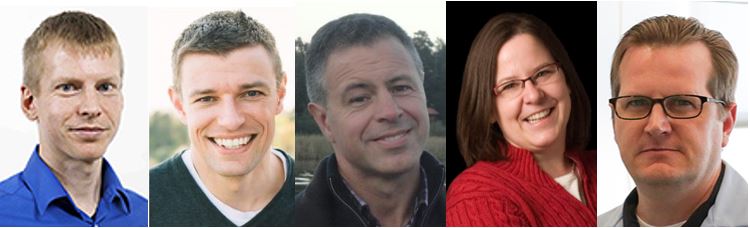
Guest Editors: Left to Right – Lutz Ahrens (Swedish University of Agricultural Sciences, Sweden), Jonathan Benskin (Stockholm University), Ian Cousins (Stockholm University), Michelle Crimi (Clarkson University, USA) and Chris Higgins (Colorado School of Mines, USA)

Digg This
Reddit This
Stumble Now!
Share on Facebook
Bookmark this on Delicious
Share on LinkedIn
Bookmark this on Technorati
Post on Twitter
Google Buzz (aka. Google Reader)

Passive samplers for indoor applications: a step closer to a broader use

Written by Rachele Ossola

Polychlorinated biphenyls (PBCs) are a wide class of compounds with numerous everyday applications such as electrical insulators, cooling fluids, plasticizers and flame retardants – just to name a few. However,  back in the 1970s evidence started accumulating on their environmental persistency and on their toxicity as human carcinogens. In 1978, PBCs production was terminated and an international ban followed their inclusion in the Stockholm convention of Persistent Organic Pollutants. Interestingly though, PBCs are still present in our houses and schools today. A recent study conducted in rural and urban schools in the US measured indoor PBCs concentrations one to two orders of magnitude higher than outdoor values.1 Another study measured PBCs in residential homes and found kitchen cabinets to act as an indoor source of these semivolatile compounds.2 Considering their adverse health effects and their widespread occurrence, non-invasive, easy-to-use and cheap detectors are needed to monitor indoor PBCs levels.

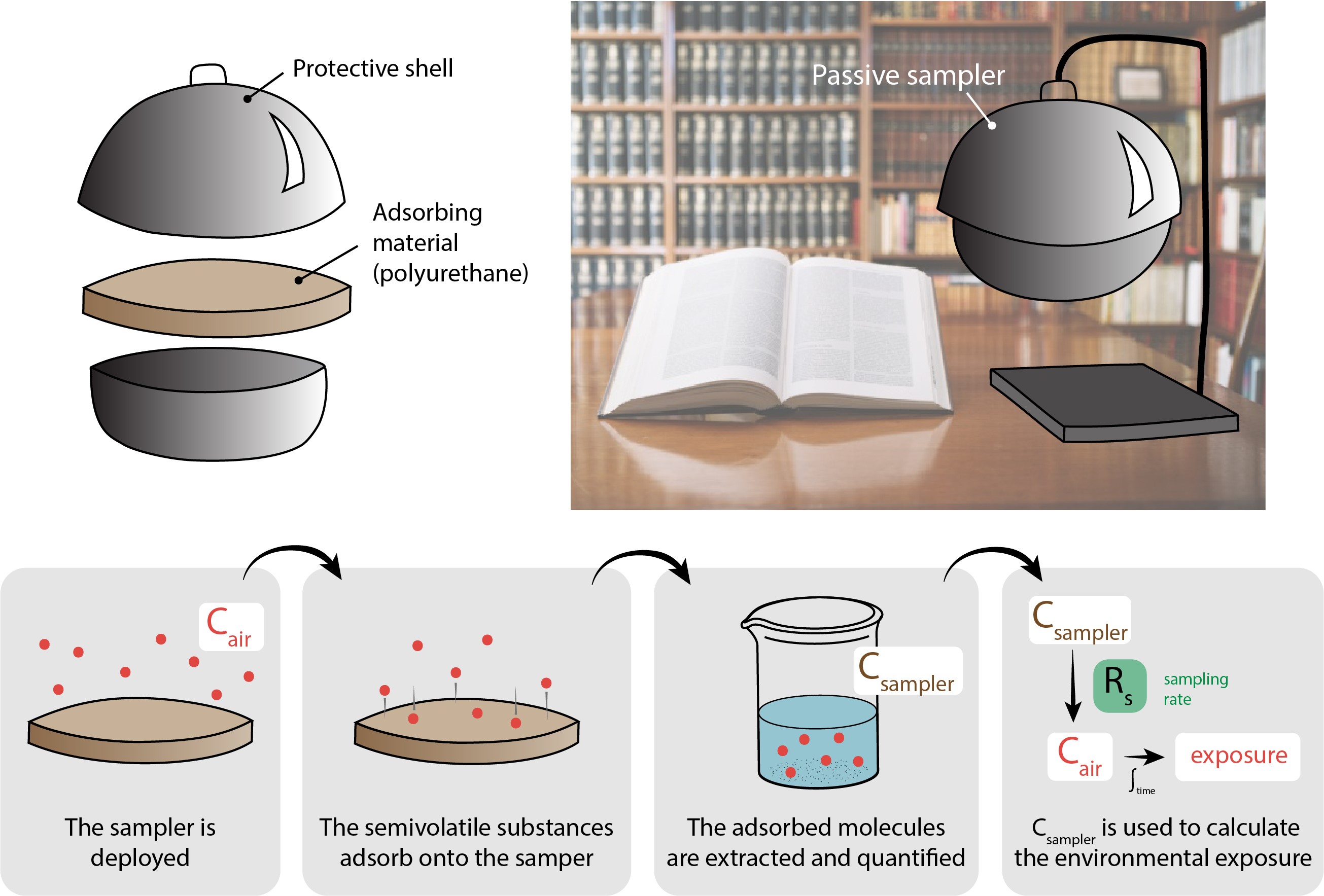
In this respect, passive samplers represent a valid alternative to conventional sampling techniques. They consist of a disc of polymeric material placed into a protective shell. After the sampler is deployed in the environment, semivolatile compounds diffuse into the chamber and get absorbed onto the polymer. After a certain exposure time, the passive sampler is withdrawn from the field, and the absorbed compounds are extracted and quantified. The “on-the-sampler” concentration (Csampler) is then used to obtain environmental exposure values.


However, using passive samplers in an accurate and reliable manner is challenging. One of the most critical but elusive parameters is the sampling rate (Rs), which represents the volume of air sampled per unit of time and is required to correctly convert Csampler into exposure data. In outdoor applications the sampling rate is commonly measured using a “depuration compound”, an isotopically-labelled version of the species of interest that is adsorbed onto the polymeric disc before deploying the sampler in the field. The sampling rate is simply estimated from the loss of the depuration compound. This technique is effective, but the toxicity of these reference molecules makes it unsuitable for indoor applications. Another possibility involves the calibration of the passive sampler before its use, but this approach is time consuming and requires the use of an additional independent sampling method (for instance, an active air sampler).

Alternatively, Rs can be estimated with mathematical models. These models have already been developed for outdoor applications and allow the estimation of Rs from the wind speed data. Starting from this point, Herkert and Hornbuckle in their most recent publication hypothesized that these same models, if adjusted appropriately, can provide Rs from the indoor airflow data. To test their ideas, they set out a two-phase study with the final aim of providing practical recommendations for an accurate use of passive samplers in indoor environments.

In the first phase, they measured the sampling rate of thirty-eight PBCs congeners in a school room using a combination of passive and active samplers, and compared the results with the modelled values. The predicted Rs values were obtained from the room-averaged wind speed, a parameter that can be easily measured with an anemometer. Their results showed that the difference between the empirical and the simulated values was on overall less than 25%, demonstrating that mathematical models represent a reasonably good method to access sampling rates.

In a second phase, they investigated how the position of the passive sampler within the room influenced the value of the sampling rate. They observed that location did matter, as different zones of the room experienced different air flow. Specifically, fluid dynamics simulation of a typical room showed that samples placed close to the walls (< 30 cm), the ceiling (< 30 cm), the air diffuser (< 50 cm) or placed on surfaces experience unrepresentative wind speeds, while open or closed doors seem to have a minimal effect. They thus concluded that Rs can be modelled accurately if the passive samplers are placed appropriately, opening up this technology for use in indoor settings.

To download the full article for free*, click the link below:

Effects of room airflow on accurate determination of PUF-PAS sampling rates in the indoor environment

Nicholas J. Herkert and Keri C. Hornbuckle

Environ. Sci.: Processes Impacts, 2018, 20, 757

DOI: 10.1039/c8em00082d


About the Webwriter:

Rachele Ossola is a PhD student in the Environmental Chemistry group at ETH Zurich. Her research focuses on photochemistry of dissolved organic matter in the natural environment.


References in article:

(1)        Marek et al., Environ. Sci. Technol. 2017, 51 (14), 7853–7860.

(2)        Herkert et al., Environ. Sci. Technol. 2018, 52 (9), 5154–5160.

*Article free to access until the 1st of January 2019


Digg This
Reddit This
Stumble Now!
Share on Facebook
Bookmark this on Delicious
Share on LinkedIn
Bookmark this on Technorati
Post on Twitter
Google Buzz (aka. Google Reader)

Latest Advances in the Analysis of Complex Environmental Matrices

We are delighted to highlight the Latest Advances in the Analysis of Complex Environmental Matrices meeting that takes place at the Royal Society of Chemistry’s London office, Burlington House on 22nd February 2019. 

The meeting highlights advances in the analysis of complex environmental matrices (soils and sediments, water and air) by GC, HPLC and MS and also the use of cheminformatics and it will include a number of interesting talks from keynote speakers listed below.  There will be coffee and lunch breaks and a vendors’ exhibition around midday. For the full schedule, click the link below:

Find out more about the event and register here

Keynote speakers and talks include:

Mixing high-resolution chemical analysis and machine learning in ecotoxicology for aquatic invertebrates

Dr Leon Barron (King’s College London)

Temporal and spatial variation in pharmaceutical concentrations in an urban river system

Prof. Alistair B.A Boxall (University of York)

Liquid chromatography/quadrupole time-of-flight mass spectrometry screening of polar pollutants sequestered by passive sampling devices at the river catchment scale

Prof. Gary Fones (University of Portsmouth)

Micro- and nano-plastic pollution of freshwater and wastewater treatment systems

Dr Caroline Gauchotte Lindsay (University of Glasgow)

Enhanced confidence in river quality monitoring using passive sampling and GCxGC-ToF- MS with tandem ionisation

Dr Laura McGregor (SepSolve Analytical Ltd.)

Exploring the advantages of automated sample preparation and GC-ToF for SVOC and pesticide analysis in environmental waters

Dr John Quick (ALS Environmental Ltd.)

GCxGC-ToF for remote monitoring – Cape Verde Atmospheric Observatory (CVAO)

Dr Katie Read (University of York)

Environmental cheminformatics to identify unknown chemicals and their effects

Dr Emma Schymanski (University of Luxembourg)

Use of ion chromatography with mass spectrometry for the measurement of problematic herbicides in water

Ms Wai-Chi Man, (Thermo Fisher Scientific, Hemel Hempstead, UK)

Committee:

Dr Roger Reeve (Environmental Chemistry Group)  

Prof. Graham Mill (University of Portsmouth)

Dr Lee Williams (University of Sunderland)

___________________________________________________________

Registration information:

Standard Registration deadline: 19th February 2019

Members £90.00 (and of BMSS or Chromatographic Society, discount code needed)

Non-members £120.00

Students RSC members, retired members and unwaged (discount code needed) £25.00, Students, non-members £35.00

Discount codes:

BMS and Chromatographic Society members 19BMC14

Retired/ unwaged 19RU22

Register here on the Royal Society of Chemistry’s Conference and Events database 

Digg This
Reddit This
Stumble Now!
Share on Facebook
Bookmark this on Delicious
Share on LinkedIn
Bookmark this on Technorati
Post on Twitter
Google Buzz (aka. Google Reader)

Emerging Investigator Series – Lin Du

Lin Du is a Professor of Environmental Sciences at the Environment Research Institute at Shandong University. He got his PhD in 2008 at the Institute of Chemistry, Chinese Academy of Sciences, and then he worked as postdoctoral fellow at University of Leuven in Belgium. In 2010, he moved to University of Copenhagen in Denmark and worked as postdoctoral researcher until 2013. He then took an assistant professor position at University of Copenhagen. In 2014, he was awarded the national 1000-plan talents program and joined Shandong University as a professor. His current research interest is environmental surface chemistry, and his group works with experimental tools to explain the surface reaction mechanisms at the molecular level. He has published more than 80 internationally refereed papers.

Read his Emerging Investigator article “Exploring the surface properties of aqueous aerosols coated with mixed surfactants” and read more about him in the interview below: 

Your recent Emerging Investigator Series paper focuses on surface properties of mixed surfactants coated aqueous aerosols. How has your research evolved from your first article to this most recent article?

I worked on atmospheric gas phase reactions kinetics when I stepped into science as a PhD student at Institute of Chemistry, Chinese Academy of Sciences. My first few articles focused on ozone reaction kinetics and thereafter, through the experience of radical kinetics and infrared spectroscopy studies of the reactions and interactions of the volatile organic compounds in the atmospheric environment, I moved my research interest into environmental surface chemistry after I joined Shandong University. It has been quite straightforward to come from gas phase research and go for heterogeneous study, since both happens in the same environment. This newest paper published in ESPI shows a nice representative work of my surface study.

What aspect of your work are you most excited about at the moment?

It is very exciting to observe a single layer of molecules at the air-water interface, and more importantly, the strong and weak interactions between the molecules could also be monitored.

In your opinion, what are the most important unanswered questions about understanding air-sea exchange?

Huge amount of bubbles in the sea water bring a lot of substances into the atmosphere and the aerosol particles could also “drop” into the sea. However, different chemical composition exhibits different feature in the transferring processes. To make these processes clear at the molecular level and to “sum-up” the effects caused by these transferring at a global scale, would be one of the most important questions to solve for the air-sea exchange.

What do you find most challenging about your research?

I would say that, the challenging part for research is to find more tools to complement what we have observed with our techniques. It would be great if more collaboration with the right techniques can promote the understanding of processes occurring at the aerosol surfaces.

In which upcoming conferences or events may our readers meet you?

Currently, as a member of the local organization committee and one of the conveners of the “Smog chamber and the related lab studies” Session, I am actively involved in the 24th National Conference of Atmospheric Environment in China, which will be held on Nov. 2-4, 2018, at Qingdao. The conference is definitely a nice place where we can meet. If you cannot catch this soon-to-come conference, I will also show up at the 11th Asian Aerosol Conference (AAC) in Hong Kong, May 27-30, 2019.

How do you spend your spare time?

Spending time with my family is always on the top of my wish list. Sometimes I travel with my 9-year-old son to visit different cities, and I enjoy very much this kind of father-and-son-only trip. Staying at home and taking care of my 9-month-old daughter is also something I enjoy as a father since the day she was born. Bringing my wife to a nice restaurant and having a memorable dinner is also my favorite.

Which profession would you choose if you were not a scientist?

I would choose to be a diplomat. I feel as a diplomat, one can bring benefits to general public and a country. Just as a scientist, we spend great efforts to create and spread the knowledge, to let the public all benefit.

Can you share one piece of career-related advice or wisdom with other early career scientists?

There are so many things to learn as an early career scientist, however there is no text book showing exactly what and how to learn. My advice is to communicate with others including early career scientists, and also senior established scientists. They might not give you the direct answers to your questions, but they definitely can bring you new ideas and help you. This advice is valid for hands-on research, career development, soft skills, and so on.

Digg This
Reddit This
Stumble Now!
Share on Facebook
Bookmark this on Delicious
Share on LinkedIn
Bookmark this on Technorati
Post on Twitter
Google Buzz (aka. Google Reader)

Canadian Ecotoxicity Workshop – Poster Prize Winner!

We are delighted to announce the winner of the Canadian Ecotoxicity Workshop that took place in Vancouver from 30th September – 3rd October 2018. The best poster was awarded to Jordana Van Geest of Golder Associates with her poster title: “A sulfite and total dissolved solids (TDS) toxicity interaction study for coal mine influenced waters in British Columbia.” The award was presented by Curtis Eickhoff at the annual general meeting luncheon that took place on Wednesday 3rd October.

On behalf of the Royal Society of Chemistry, we would like to congratulate Jordana on this outstanding achievement.

Poster prize winner at Canadian Ecotoxicity Workshop 2018: Jordana Van Geest


Digg This
Reddit This
Stumble Now!
Share on Facebook
Bookmark this on Delicious
Share on LinkedIn
Bookmark this on Technorati
Post on Twitter
Google Buzz (aka. Google Reader)

Emerging Investigator Series: Annika Jahnke

Credit: Sebastian Wiedling/UFZ

Dr Annika Jahnke did her PhD in Environmental Chemistry at the Institute for Coastal Research at the Helmholtz Centre Geesthacht and Lüneburg University. She worked at the Department of Applied Environmental Science at Stockholm University as a postdoctoral fellow and research fellow for 7 years before she returned to Germany as a research group leader and deputy head of the Department Cell Toxicology at Helmholtz Centre for Environmental Research – UFZ in Leipzig. Annika’s current research focus lies on the development and application of novel methods based on silicone “Chemometers” in multimedia environments, combined with advanced chemical analysis and bioanalytical profiling of the sampled mixtures of pollutants. Her main goal is to study chemical activities in order to describe processes such as bioaccumulation in the aquatic environment, internal exposure and effects in marine mammals and human exposure (CHEMO-RISK project). Additionally, the impacts of environmental weathering on the transport, fate and effects of microplastic in the marine environment (WEATHER-MIC project) is in Annika’s focus.

Read Annika’s Emerging Investigator article “Effect-based characterization of mixtures of environmental pollutants in diverse sediments” and read more about her in the interview below:

Your recent Emerging Investigator Series paper focuses on effect-based characterization of mixtures of environmental pollutants in diverse sediments. How has your research evolved from your first article to this most recent article?

My first article was based on my Diploma thesis that investigated alkylphenols in the effluent of a large sewage treatment plant. Since this study, I have focused on very different research areas during my PhD (patterns of polyfluorinated compounds in the coastal atmosphere) and my time as a postdoc and research fellow (development of silicone-based Chemometers to assess aquatic bioaccumulation). Another new aspect has been microplastic-related research. I recently broadened my expertise further by including effect-based tools in addition to chemical analysis, and this paper is the first product of this novel research theme at the department Cell Toxicology at UFZ.

What aspect of your work are you most excited about at the moment?

I particularly like the breadth that I am able to cover right now thanks to a grant that allowed me to take a step further from doing all experiments myself to extending my group quite a bit. This project allows us to work on different aspects of the ”Chemometer” in parallel and to achieve substantial advancements in a reasonable time frame. While extending studies that I initiated in the past, we can also move on to new research questions.

In your opinion, what are the most important questions to be asked/answered in this field of research?

The Chemometer can be very versatile, but it is also subject to substantial methodological challenges that we need to overcome before we can answer a large range of research questions. These questions include the thermodynamics of bioaccumulation in aquatic ecosystems, internal exposure and effects within organisms and the extension to assessing human exposure. We want to cover both advanced chemical analysis and bioanalytical profiling to characterize realistic environmental mixtures of chemicals and provide a scientific basis for improved management of chemicals.

What do you find most challenging about your research?

We currently face a lot of methodological challenges, but addressing them in a team makes it much easier to cope with them and overcome them. It can be challenging to collaborate in very interdisciplinary teams, but the opportunity of learning from each other is great, and it also helps to hone your communication skills and present your work in a way that is better suited for a broad audience.

In which upcoming conferences or events may our readers meet you?

I usually attend the SETAC annual meetings in Europe (sometimes in North America, too), but next year I will have to skip the Helsinki meeting because of a research cruise on the German research vessel SONNE to study microplastic in the North Pacific Ocean.

How do you spend your spare time?

I have two wonderful sons that I like to spend my time with. We like outdoor and sports activities, enjoy good food and interacting with people, so we are always on the go.

Which profession would you choose if you were not a scientist?

I believe in the power of images and that they can tell more than a thousand words. Hence I think right now I would choose to start a small company offering the design of science graphics, which would provide an opportunity of still being involved in science. At high school I thought being an interpreter would be interesting, but I liked natural sciences too, in particular interdisciplinary studies, so environmental science with a focus on environmental chemistry was the perfect match for me.

Can you share one piece of career-related advice or wisdom with other early career scientists?

I think an important aspect is to embrace change and take the opportunity of learning novel skills, exploring new work environments and extending your expertise all the time. Working in an interdisciplinary field is the perfect setting since you always work with experts in different fields from your own, and then you should not feel ashamed of asking seemingly stupid questions to maximize interactions and synergies!

Digg This
Reddit This
Stumble Now!
Share on Facebook
Bookmark this on Delicious
Share on LinkedIn
Bookmark this on Technorati
Post on Twitter
Google Buzz (aka. Google Reader)

Environmental Science: Processes & Impacts Collections

Environmental Science: Processes & Impacts (ESPI) is the home for high-impact research that advances our understanding of environmental chemistry in natural matrices. Here, we’ve brought together all of our latest Article Collections, Themed Issues, and Editor’s Choice collections to enable you to easily navigate to content most relevant to you. We hope you enjoy reading the papers in these collections!

Ongoing Collections:

Themed Issues: 


Editors’ Choice Collections: 


Digg This
Reddit This
Stumble Now!
Share on Facebook
Bookmark this on Delicious
Share on LinkedIn
Bookmark this on Technorati
Post on Twitter
Google Buzz (aka. Google Reader)